#366: What Your Cholesterol Numbers Aren’t Telling You: Dr. Daniel Chong Explains ApoB, Lp(a), Plaque, and Disease Prevention
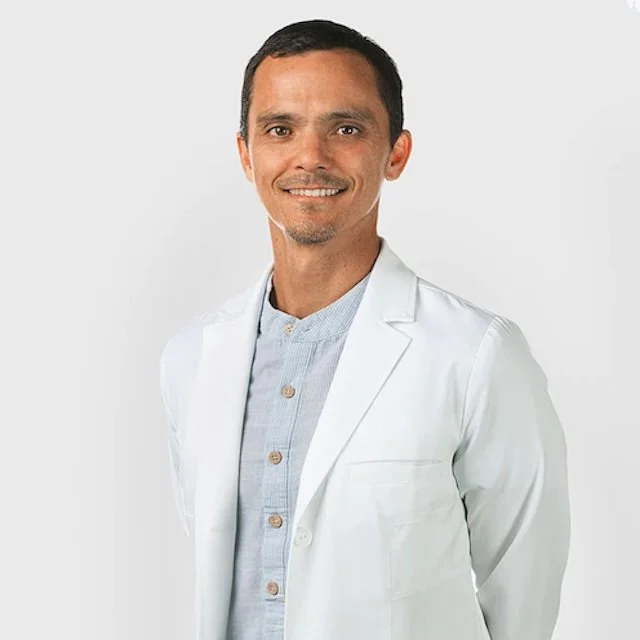
Learn more about Dr. Daniel Chong
Dr. Daniel Chong has spent years helping patients understand their true cardiovascular risk and take meaningful action to prevent heart attacks and strokes.
In this episode, Rip and Dr. Chong dig into the confusing, often polarizing world of cholesterol and heart disease. Is LDL cholesterol really important? How low should it go? Is ApoB a better marker? What about calcium scores, lipoprotein(a), statins, saturated fat, and the growing noise around keto and carnivore diets?
Dr. Chong offers a grounded, practical, and highly nuanced perspective. He explains why standard LDL cholesterol is only part of the picture, why ApoB and LDL particle number may provide a clearer view of risk, and why cardiovascular disease is never about one single factor. Instead, it is about the full internal environment: inflammation, endothelial function, blood flow, plaque stability, lifestyle, and diet.
Rip and Dr. Chong also explore the limits of coronary artery calcium scores, the risks of relying on a “zero” score too early in life, and why soft plaque can still pose a serious threat even when calcified plaque is not detected.
They also discuss saturated fat, heme iron, blood viscosity, hydration, testosterone therapy’s potential effect on red blood cell count, and the fascinating protective layer inside our blood vessels known as the glycocalyx.
This conversation is a reminder that cardiovascular prevention is about building a body that supports vitality from the inside out.
You’ll Learn:
LDL cholesterol matters, but ApoB and LDL particle number may offer a more precise picture of cardiovascular risk.
The longer LDL particles remain elevated, the greater the potential risk over time.
Saturated fat can interfere with the body’s ability to clear LDL particles from the bloodstream.
Coronary artery calcium scores can be useful, but they do not detect soft, non-calcified plaque.
A calcium score of zero does not always mean “clean arteries,” especially in younger people.
Lipoprotein(a), or Lp(a), is an important marker to test at least once.
Dr. Chong recommends looking at a broader cardiovascular panel, including lipids, ApoB, Lp(a), A1C, and hs-CRP.
Heme iron from red meat is absorbed differently than non-heme iron from plants and may contribute to oxidative stress when elevated.
Blood viscosity — or how “thick” your blood is — can influence endothelial function and plaque formation.
Hydration, plant foods, and, in some cases, blood donation may help support healthier blood viscosity.
The glycocalyx is a delicate, hair-like protective layer that supports endothelial function.
A whole food, plant-based lifestyle remains one of the most powerful foundations for vascular health.
Episode Resources
Watch the episode on YouTube: https://youtu.be/H59GHgL0c80
Dr. Chong’s Website: https://www.vital-human.com/
We hope to see YOU at one of our 2026 Live Events! https://plantstrong.com/pages/events
To stock up on the best-tasting, most convenient, 100% PLANTSTRONG foods, check out all of our PLANTSTRONG products: https://plantstrong.com/ Use code: podcast to receive 10% off your first order.
Give us a like on the PLANTSTRONG Facebook Page and check out what being PLANTSTRONG is all about. We always keep it stocked full of new content and updates, tips for healthy living, and delicious recipes, and you can even catch me LIVE on there!
We’ve also got an Instagram! Check us out and share your favorite PLANTSTRONG products and why you love it! Don’t forget to tag us using #goplantstrong 🌱💪
Episode Transcript via AI Transcription Service
I'm Rip Esselstyn, and you're listening to the Plant Strong Podcast.
[0:05] Hello, my strawberry sisters and broccoli brothers. You may have noticed that we have been talking a lot about heart health in recent episodes on the Plant Strong Podcast, and this is for good reason. There's all kinds of new information that continues to come out about the importance of knowing all of your numbers, asking better questions, and understanding.
[0:30] That you may need to look beyond a standard cholesterol panel to get the full picture. In that vein, I am thrilled to welcome Dr. Daniel Chong to the Plant Strong Podcast. Daniel is a naturopathic physician based out of Portland, Oregon, and his practice focuses on helping people prevent heart attacks and strokes, by getting to the root causation and, whenever possible, minimizing the need for medications. In this conversation, we get into the weeds, or shall we say the kale, on heart health, LDL cholesterol, ApoB, lipoprotein little a, coronary artery calcium scores, stents, blood viscosity, endothelial health, and a bunch more. Dr. Chong is thoughtful, evidence-minded, and deeply committed to helping people build the strongest foundation possible, utilizing food, lifestyle, hydration, movement, and the tools that support heart health. You might say that it's a masterclass in understanding your arteries from the inside out. So let's get to the heart of it right after these words from Plant Strong.
[1:48] Your arteries are working for you every second of every day. The question is, are the foods that you eat working for them? At Plant Strong, we make real food for real life. Built around simple ingredients, whole grains, colorful plants, and uncompromising standards. No added oils here, no refined sugars here, no ingredient list that requires a chemistry degree. From hearty chilies and burgers to cereals, granola, baking mixes, milks, and pizza kits, we're making it easier to put satisfying, convenient food on the table from breakfast through dinner. Because supporting your heart does not begin in a doctor's office. It begins with the everyday choices that you make one meal at a time. Visit plantstrong.com to explore the full lineup and find simple ways to start building a stronger plate and a stronger you. That is Plant Strong.com. Now, let's get back to it with Dr. Daniel Chong.
[3:01] Daniel Chong, welcome to the Plant Strong Podcast. It's fantastic to see your smiling face today. Thank you, Rip. Happy to be here. I've been watching you for a long time. Super excited to get to do this. Yeah. Well, it's funny, you know, the world is a small place and I've run into some people that are friends of yours in Portland. And my brother told me that he was at some shinding somewhere at some maybe lake with bonfires and stuff like that. And he said that you guys met each other, and had a wonderful time. So, um, and I, you know, and you've been reaching out to me on, uh, on my Instagram feed and sending me some direct messages. And so it's, it's finally time that we get you on the podcast to, um, to share your wealth of knowledge because, you know, you are a naturopathic doctor. Your specialty, if I'm not mistaken, is helping people prevent heart attacks and strokes while minimizing their need for meds or avoiding them altogether. And I think that the Plant Strong audience will love to hear your take on all that.
[4:20] Yeah, you are now the fifth Esselstyn I'm meeting. So not in person. The other ones have been in person. I had the pleasure about over 10 years ago, I think, of having dinner with your parents and Jane. And I attended your dad's training. And so I got to meet all of them and have known about you guys. You're all so inspiring to me. But yeah, just this last summer, I got to meet Ted in person at a mutual friends major 60th birthday celebration. Yeah, fantastic. Got some more Esselstyn stories. Good. Well, we'll save those for a later date. Let's jump in. Let's jump in. So right now, there is all kinds of chatter everywhere I turn about LDL cholesterol, right? And.
[5:25] LDL is, you know, the lower, the better. LDL cholesterol, it doesn't matter. And so let's start with, like, what's your take on LDL cholesterol? And do we want it low? And if so, how low? And, you know, for how long? Um, I get real picky about that, um, in a, in a lot of different ways, actually for starters, you know, a lot of, a lot of information that's coming out there to people who are sort of in, in the, what you might call the denial camp, like it doesn't matter, et cetera. They draw from studies where they're looking at LDL cholesterol, which is, is technically the type of cholesterol, the type of biomarker that you see on a standard lipid panel. And technically, it's not actually measuring directly what we truly are trying to assess, which is actually the number of LDL particles, which are these, little carrier vehicles for cholesterol and other fats and substances in the bloodstream.
[6:30] So the problem comes, and this is, I want to try to get into detail because it's such a confusing topic out there for people. So just bear with me here. I always give people this analogy that if you are a, let's say you're like a city planner who is trying to determine how many vehicles are on the road during rush hour, okay? And the way that, there's kind of different ways to determine that. You can go and count the vehicles directly, or you can, which is what is similar to LDL cholesterol on a blood test. You can actually go and count how many people are out there on the road and then try to guess how many vehicles that means. So technically, the standard lipid panel that everybody typically gets from their doctor is that assessment. It's like counting how many people or cargo, which is the cholesterol, is out there and then trying to guess how many vehicles there are that are carrying that cargo. And so you might imagine if you have two different cities where one in one city, everybody carpools. So there's like four or five people per car.
[7:40] And in another city, only one person drives per car. If you count the number of people and try to guess how many cars there are, you're going to be very different. You're going to get very different numbers. So in other words, some research studies out there show that high LDL cholesterol doesn't seem to correlate with risk as well as we think it should. Other studies show that people still get heart attacks with low LDL cholesterol, and a lot of that is because it's an estimation and it's not actually reflecting, the exact count when you when you look at other markers like ldl particle number or even better something called abo b which we can talk about later those are more precise counts of the vehicles themselves, look at that you see a very clear like linear relationship in most most research studies where the higher it is especially for the longer the period of time.
[8:37] That it's high in that person's body, the higher the risk goes. So that's why I have like long-winded intro into how I view that number because you started off right asking about LDL cholesterol. And to me, I instantly sort of wince and go, well, it's actually better to talk about the particle number. And then, you know, we can get into other aspects of it. Like a lot of stuff your dad talks about, for example, in terms of And that's only one factor. So it is a crucial risk factor, in my opinion. And we want it as low as we can get it within reason. But there's still other factors to consider as well. And it's just one component, of the whole risk picture. Yeah. Well... All right. Well, I'm trying to figure out how to ask you this next question then. But so.
[9:26] If I want to get my LDL down to a number that would make you really happy, what would that be? So then there's more nuance because to me, it depends on the person. Depends on what their health status is at that point, like what their cardiovascular health is at that point. And then and also what else are they doing? So if we go by sort of like the standard American person, pretty much one in two of whom by the time they're about 35 already has like visible plaque buildup in their arteries um, we it's kind of the lower the better especially if if they're not necessarily going to be doing a variety of other um, factors and approaches to trying to prevent or reverse cardiovascular disease diet lifestyle etc if they're essentially kind of living their standard american life and maybe trying to eat a little more broccoli or something like that but not not a whole lot more, and they have diagnosed cardiovascular disease either from an imaging study or, you know, even having had an event already, a heart attack or something. These days, the research is quite clear. You want it literally as low as you can get it safely. So that's going to be dependent on the person and what kind of medications perhaps they need in order to do that. But on the flip side, in your world, it's not the standard American person that we're usually talking about. I know a lot of your followers are trying to eat.
[10:55] Close to how you eat, how your family eats, et cetera. And then it gets really, in my opinion, complicated because they haven't actually done a research study to verify that the levels need to be as low in those people who are also eating well, also exercising.
[11:14] At the same desired result. And I know your dad's research suggests that that is true. Obviously, in his first study, he was trying to get people's total cholesterol levels down to a certain point, but I also know that, since then, he's also seen many examples of people who don't get that low who still do quite well, whose plaque progression doesn't continue. So, it's a super complicated question, and I just tend to get more aggressive, with every angle that I can, the more serious the situation is and or the less willing the person is to make changes in their life.
[11:57] Well, you know, back when my dad wrote Prevent and Reverse Heart Disease in 2006, you know, his numbers, LDL, I believe that he wanted his patients to get under was 80 milligrams per deciliter. But again, that was 20 years ago.
[12:17] I just read that, you know, there was just a conference of the, I think it was the American College of Cardiology. Yeah. And they kind of came up with some new standards and they like to see a LDL of 55 milligrams per deciliter or lower. And I can tell you, you know, I've been eating this way for almost 40 years, 39 years. I've never seen my LDL cholesterol under 60. I mean, the lowest I've seen it is probably 61, but it's typically between that range of 61 and 75. Right? Yeah, that's pretty good. But I don't know too many people that can get below 55 unless they're also on some sort of meds. Do you? No. I mean... I can't think of a person off the top of my head. And I've been working with your dad's diet and sort of similar versions of that way of eating with people for 12, 13 years. I don't think I've ever seen anybody get below 55 without medication. And admittedly, like, there is still some disagreement, even in.
[13:31] The community of lipidology, where some people are saying, let's just have everybody below 55. Why mess around? And then there's other people who are like, well, let's look at the degree of risk that they have based on various factors in their lives and incrementally go down further and further all the way to, lower than 55 if they're very, very high risk. But again, in somebody like you, I can't imagine that that's not good enough, because of everything else that you're doing. And I use one other analogy with a lot of my patients where I talk about plaque like a fire and thinking about LDL simply like the wood portion of the fire. Certainly, you could argue if you have a fire burning and you're trying to control it or get it to go out, if you take all the wood away, it's going to go out, right?
[14:24] So that is one approach. But at the same time, if you also happen to have, a hose that you can squirt water on it from the other side and the person happens to originally have been squirting lighter fluid on it instead and you take the lighter fluid away and squirt the water on it, you're also going to have some control over the fire from those angles. That don't technically have anything to do with the amount of wood that's in the pile still. So from that perspective, if you think, again, as LDL is like the wood, but all these other things that you're doing with your diet, taking away things, that harm the endothelium, adding things that support the health of the endothelium, it's like taking away lighter fluid and adding water to the picture too. And there's good reason to think that that combination can effectively control things, even if you're not necessarily getting your LDL that low. And again, you know, just going by your dad's work and some other people's work, there's plenty of evidence that people's plaque can start to regress without LDL getting that low. So I tend to think about numbers in that range below 55. Again, the more and more the person is in that standard American category, not necessarily willing to do all of the additional work, um, to, to change their diet lifestyle. Yeah. I was, it's interesting. I was talking to, uh, I had a guy in the podcast just.
[15:46] Um, two days ago and he was a success story. He came to one of our retreats. He totally, you know, went from eating the standard American diet to eating plant strong and his LDL cholesterol went from one 54 to 71. Right. Yeah. And he, He was also, this was not using statins, but he was on, the doctor had him on a statin because he got a 500 on his coronary artery calcium score. And, you know, the cardiologist said this is preventative, you know, let's take this statin. And he tried doing it for like almost a year. And he said he had deep fatigue. He was a big marathoner. He had rhabdomyolysis. he had he had um, he said severe depression and at one point he found himself in a starbucks just crying his lights out and just saying i can't continue like this so he stopped this the statins and he was only on five um, milligrams a day right so not not much at all like the probably the smallest amount um and then he said and then he just went all in on you know whole food plant strong nutrition, got it down to 71, no meds, no statins.
Statins and Side Effects
[17:09] So I think about when the, you know, the ACC puts out these standards and, you know, 55, what percent of the population that's actually going on these meds is having some sort of a, you know, a side effect that is not very appealing? Yeah. Yeah. I mean, that's always a consideration. It's that, classic, you know, risk benefit analysis, you know, how much benefit are you getting from the intervention versus how much you're potentially doing? It's a, as I'm sure you also know, it's a, it's a huge topic out there on the internet, on the internet, the safety of statins, people are worried about all different types of things that it can possibly cause. And my general opinion is that, side effects from statins are absolutely real. Some people can be incredibly sensitive to them. There's actually a genetic test that you can run to assess a higher or lower likelihood of sensitivity to statins.
[18:16] And so, absolutely, anybody that has a side effect show up, that should be listened to, acknowledge. You should try to tweak things and see what you can do. But at the same time, I also acknowledge that there's been some really interesting research looking at, statin side effects where they've they actually took a group of people who had already all of whom had already stopped taking a statin due to intolerant, being intolerant to the side effects yeah and then they split those group that group into two, and they gave one group of placebo and the other group of statin again and they recorded their side effects and they reported essentially equivalent side effects once again, even though one group was on a placebo. So.
[19:06] It's true that there are real negative side effects from statins, especially if you can get blood test evidence of muscle damage like that guy had. But then there are also probably a large portion of people out there who are having a nocebo effect, an actual negative effect that's not technically real. And the hard thing is it's not always easy to tell. And as a doctor, I have to listen to what the person's telling me and respect it and not just say, oh, it's probably just in your mind or something like that. So that's why I always gravitate towards trying to build the foundation of health with diet, lifestyle, et cetera, as much as we can to see how the person's doing, and only add medications together. If apparently still needed or if we're dealing with a real serious train wreck, of a case, because, you know, as I know, you know, the side effects of eating well are usually all just beneficial. So, so beneficial. Right. Yes.
[20:08] I also was reading in the this kind of update by the American College of Cardiology. And I think they called, they referred to it as the, uh, the era of prevent equations. But they said, when you look at kind of the new standards that they're throwing out there, that almost 15 million Americans fall below the treatment threshold. And so almost 15 million Americans have been put on statins that they're now saying didn't need to go on statins. This is something I just literally read yesterday. Right. Yeah. Yeah. And so you may not, may not have seen that, but I just, and it's like, you know, people, I think it's so confusing. Statins are good. Statins are bad. Um, uh, you know, I just had a guy in the podcast, Daniel, uh, an expert in kind of, um, epidemiology. And he was saying how, and I, and I just read up on this to get confirmation that statins actually.
[21:11] Increase will jack up your lp little a 10 to 20 percent and so there's obviously a risk reward you know with with any any time you do a statin which to me it all comes back to, like let's just get to the root causation and do whole food plant-based we're over complicating it. Yeah. Yeah. I mean, you know, there's no such thing as a drug that enhances the vitality and, you know, health of your tissues by its very nature. They're always going to have some potential.
[21:45] Downsides, you know, sometimes very little, but, but it's always a consideration. Lipoprotein A is a crucial example. They're still trying to figure that out. They're still trying to understand, why statins appear to raise, uh, lipoprotein A. They're trying to figure out whether or not that the net effect is negative because they see research where they've given people with high lipoprotein A levels, uh, statins, um, and the levels go up, but they still see a reduction in cardiovascular events. So, you know, my opinion, it's kind of like, but if we can do something else that doesn't raise the lipoprotein A, wouldn't that be even better? That's my goal. So if I see a really serious case where part of the picture is a high lipoprotein A, I'm especially cautious with fatins. My general approach, if medication is needed, is to use the lowest dose possible as infrequently as possible to get the desired result. Even if that means sometimes adding a second medication that's working on LDL levels from a different angle, that's because those other medications, the most common one would be Zetia, typically have a much lower.
[23:03] More minor side effect profile than statins. So even though it sounds weird to people, sometimes I'm recommending they take two drugs versus just one, but keep the statin dose really low and the overall, side effects become less likely than they would be with just a slightly higher dose of a statin by itself. So, and again, you know, I don't want to, it's probably sounding like I'm a huge statin pusher in my practice, which I'm really not. It's a lifestyle nutrition based practice, but I definitely have just come to acknowledge the benefits of them in certain situations, especially again, as I keep saying, like the less somebody is willing to get at that root cause like you were talking about, and do things more aggressively with their lifestyle. You know, one of the things that is.
Saturated Fat Debate
[23:58] You just won't die. It won't go away is the whole, you know, the whole keto, low carb, and now, you know, the carnivore lifestyle diet.
[24:09] What are your thoughts about saturated fat? I mean, how can they legitimately get away with saying that saturated fat is healthy and a good thing? Well, there are some studies that suggest like a neutral effect. I've never seen a single study suggesting health benefits at all whatsoever.
[24:34] A neutral effect, the key thing there is there's, a lot of times they'll point to these meta-analyses of studies where they're looking at the negative effects of or or not of saturated fat and and the analyses are including studies where, they're they're taking a group of people and they're giving them either higher amounts of saturated fat or higher amounts of refined sugar and flours and junk foods from the that side of the equation and they're showing no difference in their neg in any negative effects and they say Therefore, if you, you know, there's no apparent worsening effect, you know, so you have one group of people that's already doing a poor diet and then you just change it around and give them saturated fat instead and there's no difference. Really what they should be saying is added saturated fat is no worse than adding a bunch of sugar and refined carbohydrates and things like that to somebody's diet, but it still makes it look neutral. So they can still claim, oh, there's no apparent negative effects from saturated fat. I've never seen positive effects, but I've seen that claim, no negative effects. And then the other thing is, just to be more technical about it.
[25:49] In the realm of cardiovascular risk, saturated fat can do potentially multiple things. If we're just sticking with LDL, it's clearly definitively been shown to reduce how good of a job a person's body does at removing LDL from the bloodstream. So when LDL gets removed from the bloodstream after it's done whatever it's doing, it has to bind onto these little receptors in the liver to get taken out of the blood. And saturated fat negatively impacts that binding process. Some people have a genetic mutation or predisposition to already not do a good job there. If they saturated fat, that's when you'll see their LDL levels just shoot through the roof. Whereas other people have a genetic predisposition to do that better than normal. And if you give them saturated fat, you don't necessarily see much of a rise in their LDL. So you can still point to those people by themselves and say, look, CLDL didn't go up when we gave them saturated fat. Therefore, it's not a big deal. So, you know, the bottom line to me always, and I steal this from another doc who I'm a huge fan of that I know you know, Joel Kahn. He always says, test don't guess. My bottom line is, yeah, okay, we have a thousand studies saying different things.
[27:11] Let's stop arguing and just whatever a person does, let's look at their body and how their bodies are responding individually and then decide from there where to go. So if somebody goes on a keto diet and their LDL goes.
[27:26] In my opinion, that's not a good thing. I know there's people out there that are arguing, well, maybe it's not that bad if you're on a ketogenic diet, but that's a complicated topic. But in general, there's definitely been nothing shown to suggest that that's not harmful. So that's my bottom line. What happens to your body?
Essential Heart Tests
[27:45] So let's say you have a patient that comes in and you want to get some baseline tests done on them just to kind of see where they stand. Yeah. What tests do you like to have them perform? At the very least, and again, a lot of people's decisions on lab tests are based on insurance coverage and things like that. Most of these tests, even if you pay for them cash now, are quite reasonable in price. So I do do a more extensive panel than is typically done. And usually I do a lipid panel, like a standard lipid panel, where even though that's including the LDL-C, it does include triglycerides and HDL, which are important to look at to get a sort of a general feel for somebody's insulin sensitivity and metabolic health. So a standard lipid panel, I add to that marker I mentioned earlier called ApoB or ApoLipoproteinB, because it's a more, as I mentioned, a more precise count of really what you care about with LDL, these particles that are floating around. And then I always at least once measure lipoprotein A.
[28:52] I like to measure A1C to just get a feel for people's, average blood sugar levels and then a marker called HSCRP which is a general inflammatory marker that does track quite well with risk as well especially if the person also has high LDL. So in other words if you have high LDL plus high inflammation There's this synergistic effect there that that's important to recognize. Um, Beyond that, it kind of depends a little bit more on the person or like that'll usually be a screening panel if along with hopefully some imaging to look at their arteries. If we come back with anything concerning, I'll usually add additional lab tests beyond that just to fine tune anything else I can find that might be contributing. So there's a marker called homocysteine that some research suggests can be a problem. There's a marker called TMAO. I know you know about that one. That can be a problem. I don't usually screen that one right away. Vitamin D levels can sometimes be important. So there's definitely a few other ones, but the initial group I mentioned is kind of the primary movers of risk. There's some research that suggests that excessive iron levels, which actually are starting to happen in a lot of people on carnivore diets, is also important to look at.
[30:19] Explain that to the Plant Strong listener. Why would somebody that's on a carnivore diet get elevated levels of iron? Well, I mean, a lot of those people are eating massive amounts of red meat specifically, which is particularly high in iron. So it's just literally like an amount thing. But beyond that, I think even the more important thing to mention is the type of iron that's in red meat versus the type of iron that you get from plants.
[30:49] So plant foods, a purely plant-based diet can provide you all the iron you need for anything you need to do with it, build red blood cells, et cetera.
[30:58] But the type of iron that you're getting from plant foods is a form called non-heme, H-E-M-E, iron. Whereas the type of iron that you're getting from something like red meat is called heme iron and non-heme iron, your body has some sort of, for lack of a better way of describing it, decision, some sort of capacity to decide how much of it it wants to absorb or not. Whereas the heme iron is very readily and rapidly and easily absorbed. And so you can much more easily end up with excessive amounts floating around in your bloodstream from heme iron than you do if you just choose non-heme iron sources. And there's definitely some research to show already that high heme iron levels do correlate quite strongly with cardiovascular risk and some other issues likely potentially to do with excessive amounts of oxidative stress. So that's actually, I think, what is the most important distinction to make with a carnivore diet beyond just the total amount yeah yeah yeah so yeah, well said i mean my understanding is that with the with the non-heme iron your body can regulate it and dump excessive amounts yeah.
Calcium Scores and Risk
[32:16] Accordingly and then with the heme iron your body it doesn't it doesn't have the capacity to dump it so yeah so yeah um let me ask you this uh about the.
[32:28] Are you a fan of somebody getting a.
[32:33] Coronary artery calcium score to know what's going on there? Yeah, the way that I would look at that is, to some degree, it depends on their age. So the older the person is, the more valuable a calcium score becomes, because technically calcified plaque is a later stage of plaque development that oftentimes takes a while to form. And so if you have a 35-year-old person who might happen to be readily forming a lot of plaque in their arteries, but none of it's calcified yet because it just hasn't been there for long enough, and you run a calcium score on them, you're going to get a zero. And they're going to potentially come away with a false sense of security. Actually, I see that happening a lot in the carnivore community. You see these people coming out there saying, I got a calcium score and it's a zero. my arteries are clean. And I'm like, no, that just means that you don't have any calcified plaque yet, not no plaque. So whereas if you do it, if you do a calcium score on a 70 year old person and they have a zero, that's, that's particularly good to see. And it would suggest that they're, they're likely forming plaque at a really low, slow rate.
[33:47] So that's kind of how I look at that in general. There's no perfect cutoff where there's like an age below, which is no longer valuable. So I also look at family history. Certainly if there's anybody in somebody's family history who has had early onset cardiovascular disease, I'm going to be more prone to recommend calcium score at a younger age in those people, especially if they have a high lipoprotein A as well. But to put that into perspective real quick, I always remember this one patient I had who, I think he was like 50 years old or so, 51.
[34:20] He had a high lipoprotein A. He got a calcium score, it was a zero. He, about two weeks later, started getting chest pain acutely, went in and he had almost a 90% blockage in his LAD, and it was all soft.
[34:38] That was a good reminder to me of what I just told you. Like, it doesn't always tell you you're clear. It's just, it's like a good test for a population basis to sort of get a possible, you know, risk. And one other thing I'll say, because it's such a common topic, you can also, it's also true that you can have two people, same age, with the same calcium score.
[35:01] Who technically have totally different risk for an actual heart attack. Because if one of those people has all of their plaque is calcified, and another person has the same amount of calcified plaque, but an equivalent amount of soft plaque in addition to that, that person's at way higher risk because the soft plaque is usually what the ruptures are resulting from and the heart attacks are resulting from. So it's definitely not a perfect test. It's like part of part of the whole equation of things that I try to run with people to try to get a feel for what for what's going on. So it's it's it's useful, but not but not perfect. That's a good that's a really good overview. I was playing pickleball with a 42 year old the other day and this topic came up and he was telling me how, you know, he's much more in the carnivore camp. And he was telling me how he's got an LDL that's like over 250. But he said his, um, his coronary artery calcium score is zero. And I'm like, yeah, dude, but man, you have no idea what's going on with your non-calcified plaque and other things. So don't, don't think that that's a good thing. Exactly. I hope you beat him. Oh yeah. Oh yeah. Yeah, yeah, yeah, yeah.
[36:15] Um, that's a lot of great information you just gave us on, you know, LDL and LP little a and calcium, coronary artery calcium scores.
Ozone Therapy Explained
[36:26] One of the things that I'm really intrigued with, with you, and I think that you you're a fan of it is medical ozone therapy. I have no idea what it is.
[36:36] Can you tell the plant strong audience if you're a fan of it? Yeah, you know, it's a treatment that I do. And like the work that I do, I work a lot with people remotely, like virtual consultations. But I also have a practice here in Portland, Oregon, where I see people in person. And it's a treatment that I use.
[36:57] Medical ozone therapy is a very general term. It's essentially just saying using ozone for a variety of different potential applications. Ozone, when people don't know about medical ozone therapy, they usually think a bit about it as like that stuff in the sky or a toxin of some sort that's harmful to you. But when applied the right way, it can have a lot of different potential physiological benefits. So to give you kind of just a general idea, the main ways that it's used are injecting. So you're forming a gas, you have like an oxygen tank, and you're using a machine that connects to the oxygen tanks and generates this ozone gas. And you're collecting that gas and you're using it in some way, shape, or form. You can use it directly by injecting it into injured, like chronic injuries, like joint pain, arthritis, poorly healing injuries, things like that. So like literally injecting the gas around in and around the area, it has some anti-inflammatory effects, anti-pain effects, tissue growth, stimulating effects in terms of like repair.
[38:13] When you say inject, what do you mean by inject? Literally, like you fill the syringe with ozone gas. Let's just say I have somebody with an arthritic knee, like osteoarthritis, just degenerated knee. You're actually... Placing the needle into the knee joint under sterile conditions and injecting the gas right into the joint, um, or, you know, a tennis elbow or, or anything like that, just wherever the injury is, you're injecting the gas, which sort of diffuses into the tissue after it's injected, uh, in and around that area. Um, that's a, probably the most common way that ozone is used that you can also do uh, they will bubble ozone through uh something like olive oil and use it topically um for, uh like uh inflamed skin lesions or things like that and it's an endone hair something like that um it's so it's used for a lot topically that way as well, did you say olive oil.
[39:25] I understand, I understand, yeah, yeah. And then the other prime way that it's used is, this one sounds a little more out there, but there's actually some amazing research done that you can look up, like high-level research, especially coming out of Europe, where they're doing this a lot, where they extract a certain amount of blood, so usually about 30 to 60 cc's of blood or so. Put that in an IV bag with an anticoagulant and then mix the ozone gas with the blood and then drip the blood back into the person. And that creates, when you mix ozone with blood proteins, something called ozonides and peroxides are created. And these things, when you put them back in the person's body, they have a bit of what you'd call, if you're familiar with that term, hormesis. Or a hormetic effect where it sort of has this gentle stimulating effect to your body's own antioxidant systems.
[40:25] And it can sort of, so it's like a way, it's almost, a lot of people don't realize this, but something like flavonoids in foods are not actually like good for you. They have an antioxidant stimulating effect on your body. And this is somewhat similar, but you get a more systemic immediate effect from it. Is this something that we'll see the Tour de France riders microdosing with next year? I mean, I would bet you that a lot of them use the straight ozone into sore knees and stuff like that. I know for sure they do that with many European soccer teams and things like that. So it's just one of these things where...
[41:03] As I'm sure you understand, you can't patent ozone. So there's not a lot of interest in investigating it in the pharmaceutical world, which is who's funding all the research. So it's always been kind of, even though it's been around for a long time and, there's like the World Organization of Ozone Therapists, etc. It's a very highly kind of regulated treatment and well studied. It's still not popular. Most people don't know what it is even. You know but yeah and it's a great compliment interestingly enough there's even some research that shows that maybe the blood treatment i mentioned may be beneficial for the endothelium um so enhancing endothelial function which obviously, in these parts we we place that in high regard you know so so i look at it as complimentary it's certainly not something that if if some i want somebody eating better moving their body sleeping doing all the things that, you know the blue zone people do etc, as the foundation of their health and these things are things i use in addition in certain cases that type of thing, so i was looking on your instagram channel daniel and um.
Stents and Restenosis
[42:14] You were talking about how one of your patients was a 50-year-old male. He came in. He had 100% blockage in one artery, 99 in another, 90 in the third. He had eight stents that were placed in there, I think you said, 16 months ago. And he also said that the stents were already, in just 16 months, starting to clog up. And i'm wondering is that is that just because he didn't change his diet is that because the stents somehow were put in incorrectly i mean what is your thought there, in all likelihood i don't know about incorrectly but in all likelihood it's a combination of factors in that person like if they don't change their diet, they don't change their lifestyle they're still going to have a pro-inflammatory, environment in their bloodstream, right? That's more prone to react with inflammation when irritated. And then you put what is technically a piece of metal inside of your artery lining. It's always going to irritate your artery lining to some degree and contribute to the potential for an inflammatory response, a scarring response, It's more of the same process to some degree as it was happening beforehand.
[43:35] They now make drug eluding stents that make that less likely to happen, but it's not 100% foolproof, especially if, again, you have... A still pro-inflammatory environment in the person's body. So if I'm remembering the person, which is, I am, they still hadn't changed, you know, any aspect of their lifestyle nutrition. So it's that classic idea that I know everybody's heard about where you put a stent in, it's like a spot treatment. You're not doing anything other than opening up one section of the artery. If the whole rest of the arterial system is still not functioning optimally and unhealthy, not only are you're going to still get plaques forming in other places. You're probably still going to have a re, you know, re stenosis or closure of that, of that stent more rapidly. So. Yeah. So it's probably very systemic. You know, the people on the podcast have heard this, but my father once told me that he was consulting 47 year old male who had 47 stents, that were put in i've never i've never heard of a number that high so basically these surgeons are just playing surgical whack-a-mole like all right you know what you need another one and come back in we're happy to take care of you, um yeah wow yeah i never heard that i mean that's, insane it is let's um.
Blood Thickness Matters
[45:01] I want to talk because uh you know i read your website looked at your instagram, I want to talk blood viscosity for a second, because this is something that I've never, ever thought about in regards to how thick my blood is. And do I want to take steps to make it thinner for health reasons? So what are your thoughts on that? Yeah, I mean, blood viscosity is essentially just a simple way of saying how thick is your blood, so how many cellular elements there are versus liquids.
[45:36] And the most, so, so there's very clear research that shows that the thicker your blood is, the higher the tendency there is to have plaque form in your arteries. And, and one of the reasons why plaque forms in arteries is, as, as we already know here, is what you generally term endothelial dysfunction. And to keep it simple, thicker blood increases the potential for endothelial dysfunction, especially at certain junction points in the arteries where they bifurcate or split into two other smaller arteries and the blood flow already is disrupted at those sections. If it's also thick or thicker, that's all going to happen worse. So anything that's already contributes to the likelihood of plaque forming. And again, going back really quickly to that fire analogy, I always talk about it's not just about the wood. It's about how fertile the ground is to the fire, right? So it's not just about your LDL. It's about your blood vessel lining and how prone it is to plaque forming. So if it's prone already from the blood flow and then you add thick blood to that equation, it just makes it even more prone to cause all of the things to happen that lead to plaque forming. What do we do to unthicken the blood? Yeah, the simplest thing is literally be hydrated. Don't be dehydrated. That's the simplest way to impact blood viscosity.
[47:00] Some people, for other reasons, have more red blood cells than typical. There is a marker that I also check with everybody in a standard complete blood count called hematocrit, which is going to tell you how thick your blood is very simply and I like to see that essentially, less than about 45, 46 in men and closer to 40 in women.
[47:26] And so once it's getting higher than that, and especially the closer it gets to 50 in men and over, or the more past 45 it gets in women, the more concerning that is for me. But the first thing is almost always when I see that, if I ask the person how good of a job they do drinking water, they go, not that good. So that's the first thing. And then obviously just eating more plant foods, especially if some of them are raw, you're getting hydration from there as well. So that's the most common thing. A lot of men are on testosterone replacement. That can increase your red blood cell production and also make your blood thicker. So that's another thing. And then the last thing I'll say about that is unsurprisingly, based on everything I just said, it's also been shown that people who donate blood periodically, tend to live longer, tend to get less cardiovascular disease. And it's probably partially at least because they're keeping their blood thinner than the average person if they do. How about that? Yeah. Yeah. You mentioned the endothelium and I think that the
[48:29] Plant Strong audience is well acquainted with the endothelium. But you talk about something that I've never heard of before. It's almost like, going, I don't know, you'll have to describe it, but it's the.
Glycocalyx Protection
[48:46] Glycocalyx, I think. Yeah. Yeah. Glycocalyx. Yeah. What in the world is that little hairy thing that looks like a caterpillar or something? Yeah. A lot of times when we think about the endothelium and the endothelial cells, we think about the final layer of cells right before where the blood is flowing, right? Like the interface between the blood and the arteries, the endothelium. But technically, there's a layer of hair-like, structure that is kind of outside of that called the glycocalyx that's made of more sugar-related substances, not sugar in a bad way, just.
[49:31] That type of molecule. And it sort of further enhances, very simply, like further enhances the sort of discriminatory quality of the blood vessel lining in terms of how easily things can get through or not. And there's a lot of different things that can happen to damage that glycocalyx. Poor diet, dehydration, as we were just talking about, two common things. And the more disrupted that gets, the more prone you are then to have endothelial dysfunction and all of the things that come along with that. So it's kind of like, I just kind of look at it in the same light as endothelial health, like it all sort of tracks together. There are companies out there that have patented, you know, supplement formulas to support the.
[50:26] Glycocalyx, which, you know, in my opinion, in all likelihood, it's never been studied. But one of the reasons why your dad's diet is probably so good is it's probably also supportive to the glycocalyx. They just haven't studied that, but there's good reason to think that that's true. So I'm kind of like, I don't really get into that with my patients because it's not going to really change what I'm recommending to them. Yeah. Well, it's a fantastic word to say, glycocalyx. I almost would say it's almost like the little fine hairs that are the hair on the endothelium. Yeah. I mean, essentially that's what it is. That's what it is. You can look up photos of it. It's, it's very cool to look at. It is. But yeah, that's, that's my general understanding. There's a lot more to it than that, but yeah, that's, that's how I would describe it.
[51:24] Daniel, unfortunately I have to go pick up a daughter at school right now. So our, our time is quickly coming to a close, but where, where can people learn more about it? You if somebody wants telehealth, if somebody is in Portland, wants to come see you, give us all the details. Yeah, super simple. My website is vital-human.com V-I-T-A-L dash human.com, and that has everything there that you would need to get a hold of me, send me a message, make an appointment with me one way or the other. There's links there to my Instagram page. I do a lot of facebook uh stuff as well so um, so yeah that's that's the the hub yeah um let me just read this is this is from your website and i really like it and it just is you say, it's a simple truth the vitality that you seek lies within you and is always looking for an opportunity to blossom, Daniel Chong. Woo. Baby glycocalyx.
[52:38] Yeah. Help me someday in person, Rip. I appreciate all that you're doing. And I think it's great. And your whole family is just so inspiring. Your mom just broke the world record. My goodness. Can you believe it? Crazy. I know. And here's the craziest. Well, I'm not surprised. Do you know what the, what her time was? Can you remember? It was well over two minutes. 2.52. The other morning, this is a month later, she went 328, just in training. Animal. Anne is an animal. Absolutely. Amazing. Hey, Daniel, give me a fist bump on the way out, my man. Ready? Plant strong. Woo! Plant strong. Appreciate it. Thank you, Rip. Appreciate your time.
[53:26] I want to thank Daniel for this really valuable conversation and for helping us better understand the full kaleidoscope that is heart health. And I certainly hope that this arms you with more information on your journeys. So this week, test, don't guess, know your numbers, Let's ask thoughtful questions. And above all, remember that every meal is an opportunity to pull away the lighter fluid, add some water to the fire, and create that internal environment where health and vitality can absolutely flourish. Until next week, always keep it plant strong.