#369: Lisa Wargofchik - How to Make Healthy Choices Without Relying on Willpower
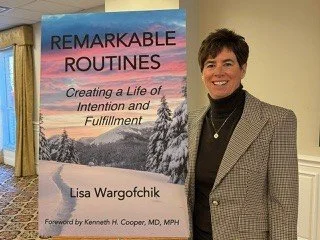
Learn why your motivation is failing you with Lisa Wargofchik
What’s the difference between the life you want to live and the life you’re actually living?
According to Certified High Performance Coach and author Lisa Wargofchik, a lot of it comes down to the routines we build every single day.
In this episode of the Plant Strong Podcast, Rip sits down with Lisa to talk about her book, Remarkable Routines: How Daily Habits Shape a Life of Intention and Fulfillment, and why those small, seemingly ordinary choices can add up to something pretty extraordinary.
Lisa spent nearly 40 years in the employee benefits and wellness world, including leadership roles at Fortune 100 companies and consulting with organizations across the country. Today, she helps people gain more clarity, build more energy, and live with greater purpose — both at work and at home.
And here’s the big idea: routines aren’t supposed to box you in. They can actually set you free.
When the good stuff is already built into your day — movement, healthy food, time for reflection, sleep, learning, even a little fun — you don’t have to keep negotiating with yourself. You don’t have to wake up every morning and ask, “Am I going to do this today?” You’ve already made the decision.
Rip and Lisa talk about how we fuel our bodies, how we start and end our days, why movement matters, how to protect our time and energy, and how a few simple routines can help keep us grounded when life gets messy.
They also dig into courage and purpose. Lisa believes courage is a muscle, and every time you keep a promise to yourself — especially when nobody else is watching — you make that muscle a little stronger.
And if you’re not totally clear on your “purpose” right now? That’s okay. Purpose can change. It can be big or small. Sometimes you just have to get moving, try something new, and, as Lisa says, get the boat away from the dock.
Of course, there’s a perfect Plant Strong connection here, too. Eating well gets a whole lot easier when you stop depending on willpower at every meal and start setting yourself up for success. Prep the oats. Stock the fridge. Put the walk on the calendar. Make the healthy choice the easy choice. Because taking care of yourself isn’t just about a number on the scale, a lab result, or checking another box. It’s about having the energy to show up, serve others, keep learning, chase new experiences, and live a life that feels full and meaningful.
In this episode, you’ll learn:
How routines can turn good intentions into real action
Why structure can actually create more freedom
How to cut down on decision fatigue
Why motivation and willpower aren’t always enough
How keeping promises to yourself builds courage
Why your purpose can change as your life changes
How movement and self-reflection can bring more clarity
Why the way you start — and end — your day matters
How to hold onto a few grounding routines when life goes sideways
Why you need to put yourself on your own calendar
How a little preparation can make eating plant strong much easier
Why taking care of your health is really about being able to do more of what matters
Key takeaways
Stop negotiating with yourself.
If the walk is on the calendar and the overnight oats are already in the fridge, you’ve taken one more decision off your plate.
Routines can create freedom.
The right routines don’t make your life smaller. They free up your energy for the people, experiences, and work that matter most.
Keeping promises builds courage.
Every time you follow through on something you said you would do, you prove to yourself that you can trust yourself.
Purpose doesn’t have to be some giant, earth-shattering mission.
It can change with every chapter of your life. The important thing is to keep growing, contributing, and moving forward.
Set up your life to support your goals.
Healthy eating, movement, rest, and reflection become a whole lot easier when your environment and schedule are working with you instead of against you.
Start small.
You don’t need ten new routines tomorrow morning. Pick one thing that supports the life you want to live, and start there.
Order Remarkable Routines
Episode Resources
Watch the Episode on You Tube: https://youtu.be/TIll7LfJcaM
Order Remarkable Routines
We hope to see YOU at one of our Live Events! https://plantstrong.com/pages/events
To stock up on the best-tasting, most convenient, 100% PLANTSTRONG foods, check out all of our PLANTSTRONG products: https://plantstrong.com/ Use code: podcast to receive 10% off your first order.
Give us a like on the PLANTSTRONG Facebook Page and check out what being PLANTSTRONG is all about. We always keep it stocked full of new content and updates, tips for healthy living, and delicious recipes, and you can even catch me LIVE on there!
We’ve also got an Instagram! Check us out and share your favorite PLANTSTRONG products and why you love it! Don’t forget to tag us using #goplantstrong 🌱💪
Episode Transcript via AI Transcription Service
I'm Rip Esselstyn, and you're listening to the Plant Strong Podcast.
[0:05] As summer winds down here in the U.S., it's time to start looking ahead and bracing ourselves for a busy fall and, dare I say, holiday season. I know, it's becoming that time of the year already. As you know, this is when life gets chaotic, and those early year routines that we worked so hard to establish fall by the wayside as we ride the wave of one holiday to the next. That's why I wanted to kick off the fall season with a bit of a reset and motivational talk from high-performance coach and author Lisa Wargofchik, because here's what I do know.
[0:54] We want to eat well, move our bodies, protect our time, have more energy, be present for the people we love, and spend our lives doing work that feels truly meaningful. But knowing what matters and consistently acting on it are two very different things. That's where routines come into play. Lisa's book, Remarkable Routines, How Daily Habits Shape a Life of Intention and Fulfillment, explains why routines are not restrictive. They are actually freeing. They reduce decision fatigue, create momentum, and help us stay grounded when life changes or throws us a curveball. We talk about how we fuel our bodies, how we begin and end our days. How we protect our time and energy, and why keeping small promises to ourselves builds courage and confidence. Because eating well and taking care of yourself are not simply boxes to check. They give you the energy, clarity, and vitality to serve others.
[2:09] Pursue your purpose, and live a great story. So put yourself on the calendar, stop waiting for motivation, and let's build some remarkable routines with Lisa Wargofchik right after these words from PlanSt trong.
[2:30] What can change in just one week? More than you think. Across more than 900 participant data points, we have seen that a week, immersed in the principles of Plant Strong Living can produce meaningful improvements in key biomarkers, including weight loss, cholesterol, and blood pressure. That's one of the reasons our retreats are so powerful. For six days, you step into an environment where the food, movement, education, support, and community are all working in the same direction. Our Sedona retreat is officially sold out, but registration is now open for our spring Plant Strong retreat in Black Mountain, North Carolina, April 25th through the 30th, 2027. So whether you're looking for a reset, more confidence in the kitchen, better habits, or simply time with people who understand why this matters, Black Mountain is a chance to experience Plant Strong Living fully and take those lessons home with you. Just visit plantstrongevents.com to learn more and reserve your spot.
[3:47] And you don't have to wait for a retreat to start eating this way. Our Plant Strong food line was built around the same nutritional principles that we teach at our retreats. Foods made from whole plants with no added oils, no refined sugar, and no excessive sodium. From chilies and stews to cereals, granola, pizza kits, and a lot more, we created these foods to make PlantStrong living easier in the real world, especially on those days when you don't have time to cook everything from scratch. Visit plantstrong.com and use the code podcast and save 10% on your order today.
Friendship and First Meeting
[4:37] Lisa Wargofchik, welcome to the Plant Strong Podcast. It is so fantastic to see you. Because you are a remarkable person, and I want to talk all about that. But first, I think it's important that we let people know how we know each other. Because there's a little bit of history there. And I honestly, for the life of me, I can't remember what year it was that we actually met, I think, outside the Dallas Fort Worth Airport. But but somehow or another, I needed a ride to go to the Whole Foods that was, I don't know, 20 miles away. And were you planning on going to that event? Yeah. I mean, let's let's be honest, Rip. You didn't just need a ride. And by the way, it was 2012. And I don't know how you did this, but you managed to get on the plane without your wallet.
[5:44] And so I was planning to go to the event, but they were sold out, actually. And so I had left a note, an email to your coordinator to say, if there's any chance, you know, that there's an opening, let me know. And she called me that afternoon and she was like, hey, can you get to the DFW airport and pick up RIP? And I was like, are you kidding me? I'd love to. So yeah, that's what it all came about. Oh my gosh. And I think it was the Park Lane Whole Foods store. And it was this kind of, I was giving a talk, but it also was a dinner event as well. Like a five course catered Whole Foods, Plant Strong dinner. If memory serves me correctly, it was a fun evening. It was really fun. Yeah, we had a great time in the car on the way. We picked the train. I brought a couple of friends with me and we asked him, we did our own little interview from the airport to Park Lane. Yeah, it was fun.
[6:46] Tell me about your last name. I've never, I mean, it's very unique. Wargofchik. Czech-Slovakian? Yeah, Wargofchik. And, you know, it's interesting. There's only me and my brother and my three nephews in the whole United States that still have the last name.
[7:06] That makes you very special. I'm not giving it up, Rip. I'm not. No, I don't think you should. And how was it having that name growing up? I kind of liked it because, you know, it kind of lets you stick out a little bit. So it gave me an opportunity to say a little more when maybe I wouldn't have if I was just a Smith or a Jones. So I enjoyed it. And I also my email is just my last name at Gmail. How many people can say that? I don't even need to use a first initial or anything. And I told my nephews, you know, when I'm gone, I'll leave it to one of you. But for now, I'm more golf chick at Gmail. I mean, I mean, it's funny. I just can't help but think that your name, your first name, your last name, it somehow has a bit of an influence on your personality. I think so. You know, I mean, hey, I'm John Smith or, you know, I am, you know, I'm Rip Torn. I mean, it just carries something with it, right? Yeah. Same with your name. I mean, there's not too many people named Rip, so. Yeah, not too many. But wow, I think Wargofchik takes the cake. Yeah, you got it. Yeah. Rather the kale.
[8:22] So let's let's talk about why I've got you on the podcast, because.
[8:29] This has been, you know, a little time coming here, but it's very apropos because you just wrote a remarkable book called Remarkable Routines. Creating a life of intention and fulfillment. It came out in January, right? That's correct. Yep. Of 2026. So first, let me just say huge congrats on writing a book, getting it out into the universe. That's like, not many people do it. So congrats on that. Yeah. And so why, I think before you talk, before we talk about the book, I'd love to know first, like, what is your profession? I know that you're like a high-performance coach or a life coach or a corporate consultant. How do you refer to yourself? Queen, no.
[9:23] We were on the airplane. I said, Lisa, what do you do? Right? Yeah, so I, as you may recall, I was a corporate wellness and corporate benefits coach. Consultant for quite some time. And before I was a consultant, I was actually director of benefits at a large retailer and before that, a large computer science firm. But I got very interested in the whole wellness program and such. And when I left corporate America, I actually retired from my corporate job about three years ago.
[10:01] I knew I still had a purpose. I knew I still had a lot of energy in me. And so it wasn't really a retirement. It was a little bit more of a transition. And so I have since become certified as a high-performance life coach. And I was certified by a gentleman by the name of Brendan Burchard. You may have heard of him. He's kind of like a Tony Robbins guy. He's one of the best in his field, actually, worldwide. And I became certified as a high performance coach. What that means is we help people perform at their, best in all domains of their life. So not just work, not just personal, not just sports, not just what they eat. All of it together is really what makes people feel more fulfilled. So I'm a high performance coach and then I'm a keynote speaker. So I talk about those sort of topics, clarity, courage, uh, living with intention and and now an author around that, uh with the remarkable routines book so that's what i'm doing post-corporate world i guess you could say i'm semi-retired because i can be a little picky about if i want to play golf or pickleball i just block my calendar yeah.
[11:20] Well, you know, you know, I'm hot to trot with pickleball these days. I know you are. It is. It's one of my favorite pastimes right now. I know. Let me let's let's let's come back to the book. Remarkable routines. Why are you using the term routines instead of, you know, habits? I love the alliteration, but, you know, what's the difference? Yeah. So to me, I think if I back up a little bit, I started really studying, um, you know, actually on social media, uh, just people that really, um, capitalized on the time that they had in a day, right? Like we all have 24 hours and I became really fascinated with the, um, concept of why do some people accomplish so much in those 24 hours? and other people don't. And the more I studied it, and the more I began to interview people that quite frankly, I met on social media, what I realized was those people had what I call remarkable routines.
[12:33] They didn't, you know, habits, yes, habits can be good, habits can be bad. But routines are really take the decision fatigue away from you. In other words, if I have a routine that every morning I wake up and I do actually have this routine, I make my bed every morning as soon as my feet hit the ground. I don't decide, I don't lay there and think, should I make my bed today? Should I not make my bed? It's just become a routine of mine. And there's, you know, five or six things that I add on to that, which I call my morning routine. So to go back, when I looked at these people, you know, some were professional triathletes and medical students at the same time. One individual I interviewed, single moms, all different 75-year-old guy I talked to who still does triathlons. All of these people had routines that they were very insistent about keeping on a regular basis.
[13:43] And the interesting thing is, Rip, they told me that it brings them freedom. It doesn't bring restriction. It brings freedom. And I explored that a little bit with them. And I believe that to be true, because let's just think about something like eating plant strong, right? People are like, okay, I really want to try it, right? And then when they're not doing it after four weeks of trying it, then it really starts to get in their head and they start to feel guilty about it. And they start to think about it and they overthink about it. And then they say, you know, Monday, I'm going to start fresh. And, you know, then Monday comes and they might do breakfast and lunch good, but then by dinner, you know, they're not. And so what that does is it feels like a lot of pressure, right? But once you create a routine like you have and your family has, and many of us have, then you don't think about it. It's not a decision. Am I going to not eat plant strong tomorrow or am I right? It's just now a routine. And that does really create a freedom for us, I think. Yeah. How does...
[14:53] How does a routine go from being like ordinary to remarkable? Is there a difference?
[15:01] Yeah, I think the remarkable ones are the ones that are built with intention. And I talk about this quite a bit in the book.
[15:09] One of my big themes is around living with intention. And what I mean by that is, you know, I'm pretty intentional about how I structure my time. You know, a lot of people say, oh, you're retired. You can do whatever you want, whenever you want. No, I have specific goals. I have a purpose. I believe very strongly in my purpose. And so I have structured my days with intention. And I'll give you an example. I have what I call my intentional living list. And there's like a, I talk about in the book, there's over a hundred things on the list. Now it started way back when I was 30 years old. And one of the things I'm working on right now, which, you know, it's kind of funny, but I wanted to learn to knit, right? It's just a simple thing. I like, you know, it's time I learned to knit. So I bit off a big, big project. I went straight to learn to knit a sweater. And all the people in the knitting class were like, shouldn't you start with a pod holder or a scarf or something? But I started with that knitting a sweater. And so I'm very intentional about each day. There's 30 minutes on my calendar that I spend knitting. Um, and I don't have to think about it. It's on my calendar and at the, you know, I'm close to finishing the sweater and soon I'll be done with it. Now, if I just said, oh, someday I'd like to learn to knit.
[16:38] And I wasn't intentional about putting it into my day and on my calendar, probably wouldn't happen. Or if I started the project and didn't keep it on my calendar, may not finish it. Right? So that's a tiny example. And a bigger example are the people that are, living with intentionality for big projects as well. Yeah. Well, I totally see that and I get that, how if you have, I mean, if you have a big purpose in life that you're going after and you're intentional, how these routines that you kind of build around your intentionality are so incredibly helpful.
Finding Purpose Through Transition
[17:24] So, you know, you talk about how routines can help get you out of being, if you're stuck in your life or, you know, you're going, you're trying to find balance or you're going through a particularly kind of, you know, rough time. Can you talk about that? Yeah. Let's just talk about that word purpose for a second, because I think it's very intimidating to a lot of people.
[17:49] And you know if people aren't clear about their purpose they tend to shy away from it or you know if they're not they don't really want to talk about it or they they kind of have some shame around it like i should note my purpose so i want to clarify a couple things that i tell people that i coach all the time first of all, our purpose doesn't have to be huge like solving world hunger You know, the second thing is we can have multiple purposes at one time, right? Small purposes. I'm a mom. I also am a, you know, a Girl Scout leader. I'm also a painter, right? Like those are all purpose driven type things. And the other thing that I think is really important, especially as you speak about transition, is that. Our purpose, it's okay for our purpose to change. It's okay for us to feel like I'm going to let this purpose go for a little bit and search for another one or pick up something else. And a lot of times my clients that I deal with are really stuck in that transition phase. It's oftentimes.
[19:02] A woman who's gone through a divorce recently or an empty nester. You know, both of the couples are like, you know, now what do we do kind of thing? And what's our purpose now that we've raised these great kids or not so great kids, but they're out of the house now. And what's our purpose? And what I tell people is one of the best ways to try to figure out what your purpose is, is just start. Try something. Get the boat out of the dock. Get moving. Right. So just try a few things and you may realize what you love and what you don't love, but you're never going to learn your purpose by just being stagnant and wishing that you knew your purpose, if that makes sense. Yeah. Why do you think so many people are reluctant to take that boat out of the dock? Yeah, I think it's another topic which I coach on quite a bit. I think it's a lack of courage. It's a fear of failing sort of thing. And one of the biggest questions that I get from my corporate clients and my non-corporate clients is, Lisa, how do I gain more courage? And this is really the simplest thing that I tell them is, you know, courage is a muscle.
[20:23] We're not necessarily born with courage. It's something that we continue to build. And the way we build that muscle is by trying new things. And the bigger thing is the way we really build courage is by keeping commitments to ourselves. Give me an example. And what I mean by that is, I'll give you an example.
[20:45] If I say I'm going to swim three times a week and I'm at the pool and nobody's there to check the box for me, I'm not putting it on social media. Nobody's saying, yay, Lisa. It's 530 in the morning. It's still dark outside. But I made the commitment to myself that I was going to do that. And boy, does that feel good when we keep a commitment to ourselves. And you kind of see the people, you know, walking out of the gym compared to the ones going in like, I did it. I kept my commitment today, right? Like, it's a good feeling. And when we keep commitments to ourselves, we then realize that we are capable of these things, not just at the gym, but I'm, you know, I'm going to make a commitment to prepare for a client meeting. I'm going to make a commitment to try a new painting class. When I go to the first session, I've done it. And that's what gives us courage. That's what builds our courage is by trying things and keeping those commitments to ourselves. Yeah. Would you say you're a courageous person?
[21:53] I say I'm a work in progress and pretty much, you know, I'm getting more and more courageous and I'm more courageous in my old age because I've had kept more personal commitments to myself. The longer life goes, the more courageous I get. Yeah, I would. I would agree with that. It's funny, you know, you talked about kind of finding your purpose or and how it's OK, right if you don't know what that purpose is and you just kind of figure it out, and i just like just for the listener like i look at myself and and in my life path, and i've always been driven by purpose but my purpose it's funny how it it is like it takes 10 year chunks and then my purpose switches, right? As
[22:45] My interest level, my age, just, different dynamics and parameters around what I'm doing change as I'm changing. So just to give you an example, I spent 10 years as a professional triathlete. And then at about age 33, I'm like, you know what? But I was so driven And I was so hungry and I had such purpose. And then it was like, I want to be a firefighter. And that's all I could think about for, you know, 10 years. And then it was, I want to be an author and I want to, you know, help people. And that's all I did. And then I, you know, I joined Whole Foods and I did that for 10 years. And now it's kind of being this, you know, creating this, this, this ecosystem, this entrepreneurial ecosystem around the whole plant strong lifestyle. And that, it's funny how.
[23:38] You know, every one of these transitions has taken, you know, now that we're just like, for me, lots of courage, but it's incredible how you kind of keep going up, that ladder of courage to where it does get easier to have those hard conversations or ask somebody for something, or, you know, I'm finding now in my life, you know, it's a lot of phone calls and talking to people and asking them for things, you know? Yeah, yeah, yeah, yeah, for sure. I mean, think about, you know, and I think this applies to all ages. I mean- your mom's a great example of this right like her purpose isn't to solve world hunger necessarily but she believes in the plan strong lifestyle and she wants to share that message and so that's what she does as, much as she can on a regular basis, and there are also you know um, my mother-in-law writes a uh writes little prayer cards she writes like five little prayer cards to different people that she knows, or they've asked her to pray or whatever. She's 93 years old. Okay. But she pens those five cards on a daily basis. And that's her purpose right now. And man, she hears from those people and it just gets her so excited. And so our purpose is going to be really different.
[25:05] But I think it's really important to have one because that, you know, when you look at like the blue zones, right? Like they tell us when they study old people, those people have a purpose. They eat great. Yeah. But they also have a purpose. Right. And so I think it's really important, especially for people that are retiring or, you know, like I said, going through transition, try to let's try to figure out what your purpose is. It's not, it's not to be in the lazy boy chair exactly exactly clicking through the the you know the the the what is it called the um.
[25:43] Uh, the cable TV channels. Yeah, exactly. Yeah. Yeah. It's funny that you mentioned that because, um, one of the questions I get asked all the time is, you know, I want to try new things, Lisa, but I just don't have time. And again, that's why I go back to the routines because I'm like, you don't have time, but we all have the same amount of time. So I think it's more about how you're using it when you think about the tv thing um you know you you probably already know this but maybe some of the people in your listening audience don't but, you know we adults not teenagers we adults spend almost four hours a day on our phones, and that equates to two months in a year oh my gosh we spend about two and a half to three hours watching television And that equates to another month. So I tell people, I just gave you a whole summer vacation three months. Don't tell me you don't have time. Right. Yeah. You just gave them a quarter of a year. Oh, my gosh.
Avoiding Routine Overload
[26:57] So is there a common routine thing? That you see in high performers that actually is a mistake that they're making? I think the only mistake that I would think about around this is trying to bite off too much at once, right? I'm going to get a morning routine. Here's the 10 things I'm going to do tomorrow morning before 7.30. You know? Like, that's just not – it's just like any other habit, you know? And I mean, Atomic Habits, the king, the great book on this talks about, you know, you got to go a little at a time and build it into ones that you already have. So I think the mistake that I would say I see is that, you know, people tried too much too soon and they get overwhelmed and it just becomes more pressure, takes the freedom away. So there is such a thing as creating too many routines in your day? Yeah.
[28:00] I think it's got to be very different by individual because, you know, I'll go back to the Matthew, the pro triathlete that's also a medical student, right? Like that guy cannot have too many routines because that's how he operates. I mean, he just rolls with it.
[28:20] And other people need a little more freedom in their day. They need that opportunity to just not be on the tight schedule. So I think it's up to the individual on where they see the value and the fine line between value and this is no longer bringing value. It's stressing me. Right. And you have to make that decision. The individual has to make that decision. For me, you know, I'm pretty structured. I have a semi-decent morning routine. I have an evening routine. I have a weekly reset. But I also have...
[28:59] Annual review with myself, um, that I talked about in the book because, um, you know, I think 40 years in the corporate world and I'm like, wow, you know, we had performance reviews every year and somebody was telling me how good I was doing. And I set goals for the next year. And I thought my personal life is equally important to this. Why aren't I doing this in my personal life? And so I go away for two days in December and I review my goals and I make new goals. And so it's like, what books do I want to read? Where do I want to put on my intentional living list? Where do I want to spend my time in the coming year? What people do I want to spend more time with and which people do I want to spend a little less time with?
[29:53] So I kind of go through that process on an annual basis.
Intentional Living List
[30:03] Like what, uh, can you give me one or two things that were on your intentional living list? Oh yeah. So, um, this year, well in the past couple of years, so I had, uh, and these are all kinds of things, places that I want to see people that I want to meet experiences that I want to have and mostly things I want to learn. So, um, I wanted to learn to build a piece of furniture. Um.
[30:30] I was just fascinated by the whole thing. I don't have the tools. I don't have the saw and all that. So I almost always try to find a coach. That's the first thing I do. And it could be a friend or a professional, but somebody who knows the, the skill and somebody that has the tools. Um, and so I got a friend of mine, a good friend of mine. Um, she has the tools and we decided to, uh, I built a chest for sweaters, um, and, you know, and put it at the foot of my bed in my bedroom. And so I learned all about wood. Uh, she taught me how to measure correctly. We used all kinds of saws and I had a blast doing it. And, you know, we talk about that.
[31:16] That, um, state of flow, right? Like that is where you're doing something so intentionally that you're not thinking about everything else. You're not worried about anything else. You don't have time to think of that sort of thing. And that sort, these sort of projects put me in a state of flow because I really have to pay attention because I'm doing this for the first time. Right. And so, so building a piece of furniture was on there. Um i also uh became fascinated with honeybees and so uh, i spent a day i came to austin i hired a guy he took me to his honeybees i learned all about honeybees i got to scrape got to make the honey the whole the whole experience so that was really fun, you came to austin and you did not.
[32:05] Contact me about going to lunch at casa what's up with that If I had known you knew anything about honeybees, I would have given you a call.
[32:15] I love honeybees. Yeah. So, you know, like one of the things on my list, I really want to capture a picture of a baby elk or a baby moose. And it's prime time between June 1st and June 10th in Colorado. So I'm going next week. I hired a guy. I have my camera. I've been working with him over the years to capture some animal pictures. And he teaches me, you know, for a long time, Rip, I had this camera and it just sat in the closet and collected dust. And I was always like, I'm going to get to it someday. The minute I put it on my list, it happened. I started making calls. So anyways, I'm going next week and hopefully capture a picture of, you know, baby elk or baby moose. But the point of it is, this is my list, right? Like not everybody needs to do what I do or whatever. But these are the things that make my life feel very fulfilled, right? I'm not sitting around wondering where I should spend my time. I'm not feeling like I'm wasting my time. I'm trying to make the most while I'm here of learning, experiencing, and most importantly, serving those around me. Yeah. I like that.
[33:35] I think I talk about this in the book as well, but one of the things, um, I experienced a lot of loss in my life. I lost my mom, my dad, and my sister all within seven years in my late twenties. And I, um, yeah. Understand that that was a tough road for me. And I feel now a lot of the reason we go through things is so we can help other people through those things. So I do what I can to help people go through the grieving process. That's where I think I can serve because I experienced it. So, you know, and there's nothing special about me. Everybody in your audience has gone through something or learned something that they can teach to someone else. Would you say that you're naturally a pretty positive, upbeat, happy, interesting, and interested person? That's the vibe that I get from you. I'm just wondering if that clicks with you. Yeah, I think it does. I think the number one thing is.
[34:45] I have a huge desire to continue to grow and learn. Right. When we stop growing. You know, we die basically. So and I try to do everything in my power, not just physically. I try to take care of myself physically from all aspects. And that's the what. Right. But then I feel like there's a why. Why am I taking care of myself physically so that I can, again, enjoy and experience things and serve others? Yeah. Nothing greater than serving others. Exactly. No, really. So you mentioned the first thing you do.
[35:30] Right after your feet hit the floor, I don't think you could do it before so, is you make your bed. Yeah. Yeah, there's a great book. I don't know if you read his book, Make Your Bed by Admiral McRaven. He's a Navy guy. He's a commencement speaker. But, yeah, he talks about the importance of making your bed. Yeah. Well, I have not read the book. But I'm wondering, you know, in working all the people you've worked with, do you find that there's one common routine that all these successful people do that you're like, wow, isn't that interesting? Is it make your bed? Is it brush your teeth in the morning? Is it, you know, meditate for 15 minutes? I have no idea. It's eating plants. No, I'm just kidding.
Reflection Beats Comparison
[36:17] Um, yeah, I, it's a great question. And I think the, uh, one thing is, uh, the common theme is they take a moment to self-reflect. Um, and I think self-reflection is key, whether you spend, however you choose to do that meditation, prayer, journaling, whatever it might be. I think it's people that live with intentionality and have remarkable routines take the time, to reflect on what they're grateful for and what they want to do differently moving forward, what they've learned, that sort of thing. Those, I think, are the people that are making the biggest difference because they're stopping and thinking about how do I do this better? Yeah. Isn't that interesting? That kind of that self-reflection, being grateful.
[37:14] Allowing for that, of introspection, I think, is that the word introspection? Yeah. Or yeah, to, to, to exist within you, um, in a world that is so out there in front of you, you know, you got to take the time to come inward. Yeah, you're exactly right. And I mean, think of the distractions now compared to when we were younger. Right. So we had a little more time like to self-reflect because, Because, you know, I mean, we were outside at night just kind of hanging out, walking around, you know, playing an outdoor game, you know.
[37:54] But these kids today and all of us are just bombarded with information. And quite frankly, it makes it really easy to skip over the need to self-reflect. And unfortunately, I think what some people do instead of self-reflect is they do the dreaded comparison because they're faced with it all day long, right? Like I, you know, I talk about this in my, in one of the keynote talks that I do is, you know, we talk about morning routines and I say, well, here's a typical morning routine, right? Like most people have their phone right next to their bed. They hit the snooze button a few times, then they pick up the phone and they start, they start scrolling or they start reading emails. And so right there, it becomes someone else's agenda as to how they're going to spend their day. They're going to either answer emails, respond to whoever texted them and needs something, or they're going to start looking on social media, comparing themselves to how great somebody else's day is going to be compared to theirs. And so all of that doesn't even leave us time to self-reflect. Do you have a suggestion when it comes to how to...
[39:15] Control our urges to jump on our phones and look at emails and Instagram and all that? Yeah. What I tell people all the time is, um, if, if I almost all my clients, we started to get that phone, like find an alarm clock. I will buy you a $5 alarm clock. You wind, but don't let your phone be your alarm clock. Get it in another room, get it away from you. So you actually have to get out of bed, to get that phone because it's less likely you're going to get it and get back in bed um and then i also tell people whatever your morning routine is, finish that before you check your phone you are more important than anything you're going to read on that phone, right like me getting my a few steps in me you know getting my day started with some sunlight that's more important than whoever left me whatever message on that phone.
Morning Routine Essentials
[40:17] So you mentioned that you have your morning routine and an evening routine. Would you mind sharing like some of what those are besides the bed? Yeah.
[40:31] Make that bed. And then I pretty much grab my dogs and we get outside right away because I like to watch the sunrise. What time do you like to get up? I get up about 535, 45. That's early. It is early, but I go to bed early. And, you know, people say, oh, I don't like to get up early. I think it's more you don't like to go to bed early because it starts the night before. Right. Like I'm not going to. So I've just kind of built that over the years. But I like to get outside with a little walk with the dogs, get moving a little bit. And then I get my workout in early because I know that if I don't get it done, you know, it's not going to happen. Sometimes that's at home. I'll go for a run or something. Sometimes I go to the gym.
[41:26] You know, just kind of depends what my schedule says. And then, I get back and, you know, have my shake and do a little reading, catching up some journaling and then some, you know, reading. Cause I try to read about 20 minutes every morning to make sure I get some reading in every day. People say, well, how do you read so many books? I try to read about 50 books a year. I spend 20 minutes, at least 20 minutes every morning, you know, and I mean, you read a ton of books, you know, as well too. You just have to make the time. And 20 minutes, my math, it probably isn't as good as yours, but if four hours equates to, I think you said three months or a month, four hour or 20 minutes probably equates to, I don't know, 15 days, something like that. Yeah. I mean, you can get some stuff done, right? And, And so, um, I think the most important thing, cause then I jump into my day, but the most important thing about my morning routine is that it's planned the night before. In other words, my calendar's blocked out. I don't, and this was the same when I was working in my corporate job. I had clients wanting things 24 seven. I was under the same pressure. You know, I was a consultant, so I had a lot of clients, people calling all the time.
[42:45] But I didn't think it was unreasonable for me to take time for me first and then you're going to get a better version of me if you wait till 8 30 if I get out of bed at six o'clock and pick up my phone, and start responding to emails that's not good for them and it's certainly not good for me yeah yeah um, what would you say.
Staying Grounded in Crisis
[43:09] You just said, you go to bed and the next day you have everything kind of planned the way you want it. Let's say that life blows up and your routines, your scheduling, your planning has to go down the toilet due to crisis, illness, whatever. How do you recover without some sort of guilt? Yeah, no, that's a great question. I think one thing to keep in mind is, look, life happens. our routines aren't going to stay perfect. The great thing about a routine is if you can pick one or two things out of that, um, and stick with it, it will keep you grounded in moments of crisis. I'll give you an example. Last, um, August, my partner was in the hospital unexpectedly for, uh, a week and it rocked my world, right? Like I I'm driving 45 minutes back and forth. I'm trying to manage the house, trying to make sure everything's okay at the hospital, manage the nurses. That's a whole nother podcast.
[44:17] I made sure that I committed to myself that I would find at least, normally I walk about 45 minutes before I hit the gym, but I was like, you know what? 20 minutes. And if I have to get up 20 minutes earlier than I will, but I've got to at least get 20 minutes in. The other thing I did while I was at the hospital was I still tried to focus on getting those steps, getting some movement. So I'd just walk outside, go for a walk. It helped clear my head. And I stuck to that. Was I perfect with my routine? No, but I still made my bed and I still did my steps, right? So there's a couple things that I still did that helped me feel grounded, help me feel grounded. Yeah.
Routine Over Discipline
[45:06] Let's say that, you want to do something, you're not particularly highly motivated to do it, but you know that it could be a game changer for your life. And I'm going to give you an example. Eat more plants, right? Get more plants into your body, what it can do to help prevent chronic Western disease, all that stuff.
[45:36] How do you go about creating routines that you're not excited about. Yeah. Look, I'm not that excited to make my bed. Let's be honest.
[45:44] I like it at night when it's all fresh and stuff, but in the morning, like, you know, and I mean, I'm not always that excited to work out, right? The thing, and I'm not always excited about eating healthy. Like, yeah, I'd rather, you know, eat the Reese's cups and whatever. But the thing of it is, if we, and you know this, if we rely on discipline, we're going to fail every time because discipline runs out, right? Like if you have to think about this, every single meal, like it's going to run out. And so that's the beauty of a routine. You're not negotiating with yourself. You're no longer negotiating. What's in that pre prepped meal glass container is what I mean for breakfast. I've already planned it, right? I'm not going to wake up and go, should I have waffles or should I have oats or should I have trick cereal? Lucky charms, right? I'm going to fail every time. And so what you got to do is you've got to set up your life to reflect your goals and then you just go with the flow, right? So I know when I get up in the morning, I reach for my glass container of overnight oats done.
[47:08] Well, you're sure you're not reaching for your Rips Big Bowl cereal? And then I chop it with some Rips Big Bowl cereal. There you go. And a little bit of chocolate granola and you're good to go. And a little bit of plant strong milk. And I for sure douse it with some plant strong milk. My favorite is the walnut. Yeah. Yeah, baby. All right. But you see the difference? I mean, we're all going to fail and be exhausted with decision fatigue if we do this to ourself every step of the way. You prepare for it, you put it in your calendar, and you do it. It's no different than a mom whose kid has a doctor's appointment. She doesn't say, should I? Should I? It's in her calendar. She goes.
[47:55] People that work full-time in the corporate world, their calendars from the second they get there to the second they leave, are filled and they don't look at it and go, should I go to this conference call? Should I go to this client meeting? And so I tell people, you do those things because they're on your calendar.
[48:12] Are you not more important than those things? Put yourself on your calendar. Yeah, that's good. Um, you know, it's, it's interesting talking about, you know, food and eating this way and health and intention. Um, I think that, I shouldn't say, I think I know that one of the reasons why I am so adamant at making the plant strong food line work and getting it to become a household name is because I, If we were to ask 80,000 people, how many of you want to be healthy? Probably 79,000 would raise their hand.
Plant Strong by Design
[48:51] But in order to do that, you really, you know, you want to move and you really, you got it. You want to be putting the right fuel into your, into your body. And so to me, what the Plant Strong Food Line does is it creates that intention, and it builds routines that give you the easy button to make that happen. Right. I mean, so, so you got to do a little bit, a little bit of prep, but, but that's where I see the food line really. Like, um, when I was reading the book and looking at, you know, intention and routine and all this stuff, I was like, you know what, this, this makes a lot of sense. Yeah.
The Power of Movement
[49:31] Yeah. Um, yeah. Um, so let me ask you this. If you were to put one routine, if you were to have a hundred people and you'd say, people, this is one routine that I want you to put on your prescription pad, because I know it works well, what would it be besides making your bed? And besides, I mean, like I said, self-reflection I think is the biggest one, but I think next to that is, um, movement, movement, like just move. Yeah. So much better. And you don't have to run just walk just move our heads are more clear um we're more motivated it's just move.
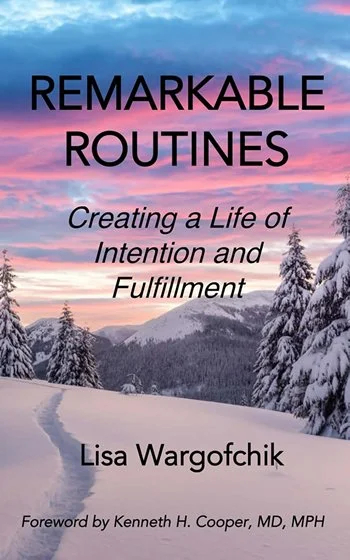
[50:20] So i would say make sure you know that you're putting that on your calendar i'm gonna take 10 minutes between meetings just to go for a quick walk yeah i i i, I can't even tell you how much I love the cover of the book. Thank you. To me, it elicits this feeling that I get when I'm in the Northeast, like usually New York or Vermont or a place like that. That's what I was going for, so thank you. After a great snowfall, and obviously you've got the path. You've got the path, right? Yeah, exactly. That's your routines, right, that give you the –.
Purposeful Living Lessons
[51:07] The purpose and the intention and where we're going. Um, how did, like, is this a photo that you took? Did you find it somewhere? I wish I took it. I tried to use one that I took, but, um, it didn't get, the colors didn't work exact. So I did find it like, I think on iStock or something, but you nailed it. That's exactly the feeling that I was going for here. Um, you know, yeah it's solid it's really solid good and you did did you is the forward of your book from the actual kenneth cooper it is yes, he is and rip let me tell you something uh because your dad met him i actually went to an event where your dad came and and it was at doctor it was at the cooper clinic and your dad spoke and doctor and dr cooper spoke and, um but let me tell you something he's 94. He just turned 94. He just finished writing another book. He said he's not sure if it'll be his last one. But what I love about him and your dad and your mom is that they wake up with purpose every day. Like, look, this guy still goes to work, right? Like Dr. Cooper comes in with his briefcase to the Cooper Clinic every morning. He drives in. He says he's getting a little later than he used to be but i mean so that's i think what uh.
[52:36] Makes brings the joy brings the purpose for waking up most importantly that's one of the reasons why he takes care of himself, so that he can do his work right yeah yeah how do you how do you know him, So I think I mentioned earlier that, you know, several of my family members passed away young. My sister passed away with a brain aneurysm. My mother had a bad heart. My father had cancer. So by 30, I was like, I have the worst genes. I need to do something about this. So I sought out the Cooper Clinic. I found the Cooper Clinic because I was looking for lifestyle management programs. So when I was 29 years old, I started going to the Cooper Clinic for, you know, it's an annual, they do a whole big, you spend a whole day there. You get all kinds of tests done. They do pages and pages of blood work.
[53:35] But I really wanted to know what do I need to be doing? What is my body made up of? What do I need to be doing to ensure longevity the best that I can control it, right? and exact reason why I picked up your book. I wanted to figure out, I want to be here because I feel like I have a lot to do. So I need to take care of myself. And that's how I met Dr. Cooper. Wow. Well, not many people have a book forward by Dr. Kenneth Cooper. Right, I know. Holy Toledo. He's an amazing guy, yeah. Yeah, yeah. Congrats on that. Thanks. And because, I was, I got a little out of my routines this morning. I left your book on my bedside table. Can you tell me who did you, what's the dedication? I always look at the dedication and I forgot. Yeah. No, that's fine. I dedicated to my mom and dad because I grew up in a house with routines and I'm super grateful for that. And, you know, I, I just kind of wrote a note in there. Although their life here wasn't long, what I learned from them, what they taught us as a family, will carry on, you know, in the work off chick name for a long time.
One Takeaway to Start Today
[55:02] Yes, indeed. I got I got one last question for you, Lisa. And that is, if there's one takeaway that you want the Plant Strong listeners to walk away with from Remarkable Routines, ready to start like tomorrow, what would it be? Yeah, so I think the takeaway is, first of all, I think people that listen to the podcast and are in this community, I got to take a moment to congratulate everybody because, right, like we have a lot of temptations around us. And I believe people in this community are taking care of themselves for a greater purpose because they have work to do in the world. And so my challenge is make sure that we all know the reason we're taking care of ourselves. Let's try to figure out that purpose and serve the people that we can and add the value that we can to this world.
[56:12] Amen. Let's go. Let's go. Yeah. Lisa, thoroughly enjoyed it today. Thank you so much for the conversation. Now, if people want to know more about you, purchase the book, or if like me, they're so enamored with you, they would like to have you as their life coach, high performance coach. How can they learn more? Yeah, it's all on my website, which is just It's lisaworkoffchick.com. And you can purchase the book. It links to Amazon. You can hire me as your high-performance coach and also learn about hiring me as a keynote speaker as well, all on the website. Wow. Love it. Love it, love it, love it. Okay. And we'll be sure to put all that information into today's show notes in case you have a hard time spelling the last name.
[57:13] All right well remarkable routines Lisa Wargofchik um, i i appreciate you coming on the show i appreciate you my plant strong sister and um you got to give me a virtual plant strong fist bump on the way out boom keep it real, Lisa's book, Remarkable Routines, is available and I'll be sure to put a link so you can purchase it if you'd like in today's show notes. Let me give you your call to action. Choose one small routine that supports the life that you want to create. Could be a 10-minute walk, five minutes of breath work or stretching, journaling each morning, batch cooking on Sundays. It really doesn't matter. Put it on the calendar, prepare for it in advance, and keep that commitment to yourself this week. These small promises kept consistently help you build healthier, more purposeful lives. And what can be more impactful than that? Until next week, always, always keep it plant strong.