#368: Movement is The Fountain of Youth: Rip Esselstyn on Fitness, Fun, and Community
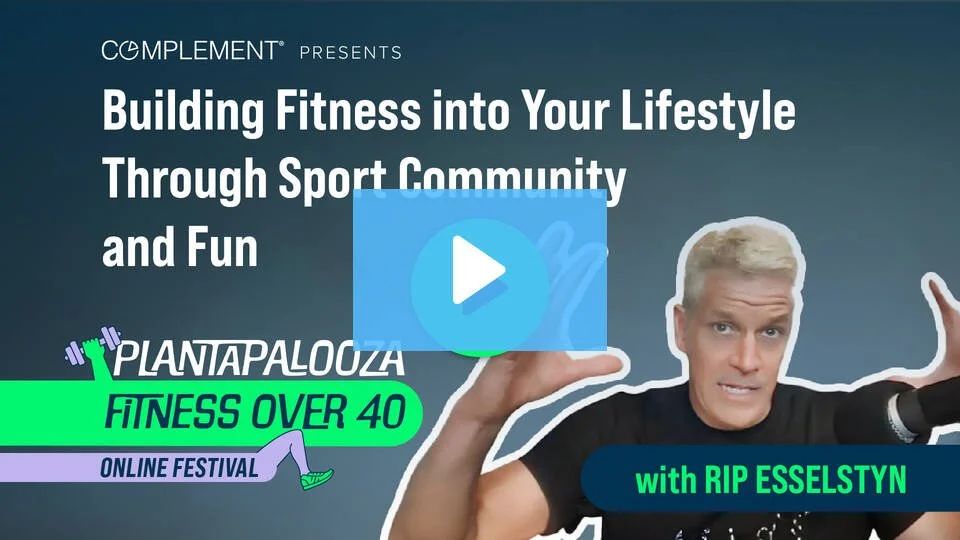
Watch the original interview from 2024 HERE
This conversation with Rip Esselstyn and Complement co-founder Matt Tullman was originally recorded for their Plantapalooza event a couple of years ago. Although some of the ages and dates reflect that original recording, the message about movement, community, nutrition, and healthy aging is timeless.
Rip shares how his relationship with fitness has evolved from competitive swimming and professional triathlon, to master’s swimming, mountain biking, pickleball, bodyweight training, and active adventures with his family.
Together, Rip and Matt explore why exercise is more sustainable when it includes fun, friendship, accountability, and purpose. They also discuss overcoming the inertia of starting something new, removing small obstacles from your routine, preserving muscle after 40, and fueling an active lifestyle with whole, plant-based foods.
Rip’s ultimate advice is simple: just move. Every walk, swim, ride, game, or workout can become a “mini rebirth.”
You’ll Hear:
How to make fitness more social and enjoyable
Why accountability partners improve consistency
How to build an active family culture
Simple ways to remove barriers to exercise
Rip’s approach to fitness and recovery after 40
How whole plant foods support activity and recovery
Why athletes do not need to obsess over protein
The seven pillars of Rip’s Plant Strong approach
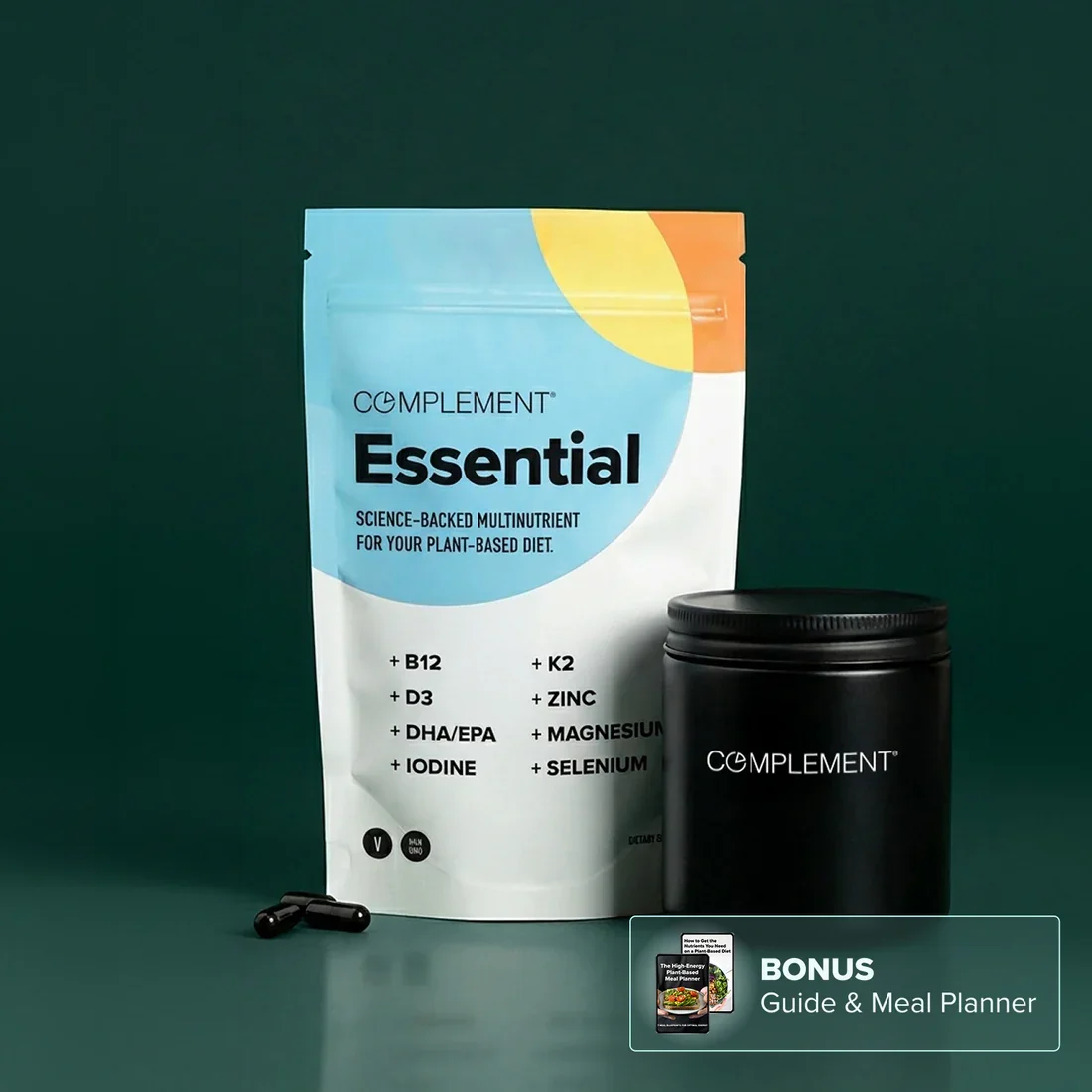
COMPLEMENT was started as the first nutrient company built specifically for plant-based eaters. Matt Tullman and Matt Frazier partnered with leading plant-based doctors to turn the latest research into simple, evidence-based formulas, with nothing hidden and nothing you don't need. Real food comes first, always. COMPLEMENT just fills in what even a well-planned plant-based diet can miss.
Even the healthiest plant-based diets have blind spots, nutrients like B12, D3, iodine, and omega-3s that whole foods alone often can't fully cover. Essential closes those specific gaps in one clean daily formula, with everything you need and nothing you don't, so the diet you've worked hard to build actually delivers everything it promises.
Learn More about Complement Essential
Episode Resources
Watch the interview from 2024: https://lovecomplement.com/pages/life-plantapalooza-fo40-day-2
We hope to see YOU at one of our Live Events! https://plantstrong.com/pages/events
To stock up on the best-tasting, most convenient, 100% PLANTSTRONG foods, check out all of our PLANTSTRONG products: https://plantstrong.com/ Use code: podcast to receive 10% off your first order.
Give us a like on the PLANTSTRONG Facebook Page and check out what being PLANTSTRONG is all about. We always keep it stocked full of new content and updates, tips for healthy living, and delicious recipes, and you can even catch me LIVE on there!
We’ve also got an Instagram! Check us out and share your favorite PLANTSTRONG products and why you love it! Don’t forget to tag us using #goplantstrong 🌱💪
Episode Transcript via AI Transcription Service
I'm Rip Esselstyn, and you're listening to the Plant Strong Podcast.
[0:04] I want to welcome you back to the Plant Strong Podcast. Today, we are reaching into the archives for a conversation that I recorded, a few years back with our friends over at Complement for their live Plantapalooza event. Now, a few things that I mentioned may be a couple years old. My dad and mom are still healthy and vibrant at 93 and 91 respectively, but the message could not be more timely or enduring. So this conversation is all about movement, not as punishment, not as something that you have to grind through, but as a source of joy, connection, energy, and even rebirth, going well beyond our 40s, 50s, and 60s. We get into my own journey from swimming and triathlon to mountain biking and pickleball, the power of workout friends, creating active family traditions, and removing, the obstacles that keep us from getting out the door. We also connect the dots between movement and nutrition, including these simple PlanStrong pillars that have fueled me through decades of my training, racing, work, and family life.
[1:26] Because here's the truth. Our bodies were built to move. And every time that we swim, walk, ride, stretch, lift, dance, or play, we give ourselves another opportunity to come alive. So, yes, this conversation was recorded a few years ago, but the invitation is timeless. Find something that you enjoy, find somebody to do it with, and just move. We'll have this chat right after these messages from PlantStrong.
[2:06] We have received a lot of emails asking this question. Are nutrition nerds allowed to attend the Vital Science Conference? And the answer is absolutely yes. While the Vital Science Conference is designed to help healthcare providers apply lifestyle medicine in the real world, it's also for anyone who loves digging into the science of nutrition, health, and behavior change. So yes, come join us October 18th to the 20th at Case Western Reserve University in good old Cleveland, Ohio, for presentations from Dr. Michael Greger, Dr. Will Bolschewitz, Dr. Lori Marbus, Brian Aspel, and of course my father, Dr. Caldwell B. Esselstyn Jr., and other leading experts in nutrition and behavior change. I'll be your emcee, and I'm especially looking forward to sharing Plant Strong meals, conversations, and three energizing days with all of you. Healthcare provider or nutrition nerd, you are invited. Come join us in Cleveland. Visit plantstrongevents.com and register.
[3:22] Our Sedona, Arizona retreat is officially sold out. And I am so happy and grateful for the incredible response and cannot wait to welcome everyone to the Red Rocks this fall. I'm also pleased to announce that registration is now open for our spring Plant Strong Retreat in Black Mountain, North Carolina, April 15th to the 30th, 2027. And you can come join us for six immersive days of Plant Strong Meals, movement, education, expert guidance, and the loving, kind community that makes lasting change feel possible. So whether you're brand new to this way of living or you're looking for a reset, this retreat is truly a chance to step away from all the noise, reconnect with your health, and build habits that you can bring home with you that last. So the spring registration is now open. You can visit plantstrongevents.com for all the details and reserve your spot.
[4:32] All right. Welcome back, everyone, to the Rip and Matt show. I don't know. We're getting on like three or four recordings that we've done together just in the last few months. So this feels natural at this point. Yeah, thanks. Thanks, Matt. Yeah, no, I think this is the second time that you've had me on one of your summits. And obviously, I had you on the Plant Strong podcast not too long ago. Where we talked all about kind of you and your career and, uh, every, all the great work that you're doing at Complement. So, um, and then of course, you know, I appreciate the, uh, the blossoming friendship that we've had since probably last, uh, September. Yeah. Yeah. Yeah. It's been, we've packed a lot of life into these few months. Um, but today we're talking about building fitness into your lifestyle through sport community and fun i think it is such an awesome topic as we broadly discuss fitness over 40 which i think you're like the poster child, for fitness over 40 i can only hope now that you're approaching what 73 74 years old that uh, and you look great you look great maybe exactly i mean that's a joke for most people but in your family that's not actually like a joke i mean when you look at your mom and dad right caldwell and ann are pushing 90 right and like.
[5:57] Yeah i shared a picture i shared a video of of your mom with my mom and you know ann was dragging a tire up a hill you know tied to her waist or something, she is amazing so in your family those jokes you pushing 70 or 80 years old is not really a joke, right? We all anticipate you'll be doing this at 100. Yeah, well, you mentioned Anne and Essie. Anne and Essie, to me, epitomize what we all can have if we're willing to.
[6:31] Live by a certain set of rules and guidelines. And it's super, super simple. It's not complicated, really. It's just about, you know, eating a whole food, plant-based lifestyle. It is really understanding community and how to bring community into your life on a consistent basis. And of course, it is consistently, consistently moving every day. And you, I can't even explain to you, I'll just, you know, shine a spotlight for a second on my mother, Ann, and how every day she goes to either a yoga class or a, um, some sort of a power, a power class where she's doing kettlebells and stuff like that. She goes cross country skiing. She goes for an hour run, uh, in the summertime, she spends it at our, at our farm in New York. And so she runs around the fields there she swims in in ponds she plays batman she will play pickleball with me whenever i i come home so she's almost at the ready, to do anything any day depending upon what you know is thrown at her and they're neither one of my parents are on any medications either Matt and um.
[7:52] So many people will say to me, I am on meds, but it's just a natural part of the aging process. But you and I both know it's really not a natural part of the aging process, but it is a natural part of the aging process. If you're also not taking care of yourself, if you're eating the standard American diet and and you're not doing kind of these big chunks of things correctly. Yeah, you're more than likely going to be one of the 40, 50% of American adults that are on meds. And movement has always been a huge part of my life. As long as I can remember, I need to move every day. If I don't move, it just doesn't feel like... I become a mess, frankly.
[8:42] It grounds me. It really truly does. It grounds me. And you've probably all heard this saying, but, you know, every day is a great day. But if I get some movement in, like a swim practice or pickleball or a mountain bike as well, it's a fantastic day. Yeah, I couldn't agree more. I require activity. But that's an important distinction. right activity versus exercise as we often think about it and that's what today's conversation is about right is is staying active through sport and there's two other words i used which is community and fun, because i think that's the piece that's really i mean sport community and fun almost, like across the board stop at like 20 years old right like in the best case scenario because a lot of kids are now becoming sedentary.
[9:35] But in the best case scenario, right, typically speaking, you would have sport, right? You would have activity with community, kickball at PE, right? You'd have fun, right? Like you'd run around like flashlight tag. It's, you know, I can only imagine if my kids will ever know what that is, right? Like there are no more flashlights. We can use our phones. But, you know, you think about the natural environment.
[9:59] Human physiology, right? You know, swinging from trees as our primate, you know, cousins do, right? What our bodies are made for the level of activity that we should have, you know, and that's fun. Activity is fun, but it almost invariably stops at like age 20, right? Some very, very few sort of like intramural, you know, whatever sports in their 20s, but it almost always transition to like this kind of grueling orange theory, right? Like, you know, yoga strength thing where I have to go for like 60 minutes and I'm going to kill myself in the gym for 60 minutes, right? And like, that's what I have to do three to four times a week. And it's like a discipline and it's not the fun community and sports, right? That, that I think your, your lifestyle epitomizes. So thank you now, for, for letting me respond with that and kind of tee up the conversation but we dove right in because you and i were chatting before this and i didn't even introduce you i think you need no introduction, for this community but before we dig into a couple pointed questions about, community fun sports a way of of living that that i think you embody so well i'll just quickly say that um rip for those who don't know and i know everyone does, you're a former triathlete former firefighter an educator an author a cookbook author.
[11:25] Uh and and of course the founder of plant strong which is uh not only a food company but some amazing events as well so you've been living this lifestyle for for quite a few years i know like i say uh, you have a family legacy as we've been talking about um and yourself i've been carrying this torch for for decades now So, I know you need no introduction, but I wanted to at least check off that box for folks.
[11:53] With that long-winded introduction, tell us a little bit about your current approach to sports and community and fun and living that active lifestyle. Because you mentioned pickleball, you mentioned biking, you mentioned swimming. Maybe give us a history. How did you end up maintaining this? It sounds like it's always been a part of your life.
From swimming to triathlon
[12:16] Yeah, it's always been a part of my life. So just to kind of review for a little, for everybody. So I was, when I was in high school, I did a number of different sports. I did soccer in the fall. I swam in the winter and I would do tennis in the, in the spring. And I don't want to play you in tennis, Matt, because I know you're really, really good. And I was number one on my high school team, but I think you took it to a whole nother level. But I always have loved growing up at least, just spreading the wealth as far as having the fun factor and swimming is so solitary and you're you're in that pool you're looking at the black line yes you're in a in the pool with a lot of people, and you have a coach that's on deck and you have a pace clock, but I'll say that swimming, is a grind. It's a grind. And so.
[13:19] You need a certain mentality and mindset, I think, to swim. And a lot of people can't stand it. It's gotten to the point, though, where I kind of like the pain and the torture chamber that ensues when I jump in the pool and racing the person next to me and challenging myself on sets.
[13:44] And so that's kind of in my blood now and has been since I was an age group swimmer starting at about age eight, so that I mean that's so swimming each sport to me has a different vibe and energy and ethos to it soccer I love soccer because it was such the team sport, water polo I actually ended up going to a um a boarding school for my last two years of high school and I forgot about soccer and I would do, I did water polo instead. And that's the best of every world. You get to swim, you get to, you get the team sport, you got a ball, all right. And then shoot it and then you're shooting for a goal. So you talk about community sports and then fun factor. Wow. I mean, water polo is something else. And then, so I did that in high school. And then I actually, because swimming was the thing that I was accelerated or accelerated the most at, that is what I did in college. I actually went to the University of Texas at Austin on a swimming scholarship, and, you know, became an All-American, went to the Olympic trials, was successful, but not. And this is another thing, Matt, about swimmers.
[15:02] And most swimmers have this attitude that I want to go to the Olympic games and I want to swim and I want to get a medal. And so I can't even tell you how many people when they found out that, you know, I was a swimmer, I was at University of Texas. They're like, oh, did you go to the Olympics? Did you win a gold medal? And so you're like, nah, I went to the Olympic trials, but I didn't make the Olympic team. Right. And so it's crazy how, I mean, listen, I was a really great swimmer, but most swimmers that don't get to the go to the Olympics or earn a medal think of themselves as disappointments. And I know we're going a little bit outside the conversation here, but I just think it's important for people to understand kind of the mentality that I had.
[15:52] With my next move, which was triathlons. I think that deep down inside, I had such a disappointment that I didn't get to go to the Olympics and all that in swimming, that I wanted to continue my athletic career just to see what I could do and apply this work ethic that maybe I didn't feel like I applied when I was in college. And so for the next decade, That's what I did exclusively. I swam, I biked, I ran. It was almost like a miniature prison that I had for myself because I was so, just focused, so into it. And I did well. I became one of the top 10 triathletes in the United States at what's called the Olympic distance triathlon. A 1.5K swim, a 40K bike, and a 10K run.
[16:47] I ate a whole food plant-based diet And I had an immune system that was like, Impervious to any kind of sickness I recovered like nobody's business I was as lean and mean as you could possibly be And I was eating, you know, four, five, six meals a day, And as hard as I was on myself, I actually, it was a great, decade. It was a great 10 years, right? And then it was after that that I joined the fire department and then I kept training, but it was more for fun. And I transitioned from doing the road, the road triathlons, where you just have to have your head down and you just go and go and go on to doing the Xterra off-road triathlons. And I did those at a world-class level while I was also a firefighter for almost another decade. And, uh, but it was with a different mentality and I had a lot of fun with it. And it also was much more conducive to me finding training partners that I could have fun with, you know, whether it's the mountain bike trail, off-road running, you know, the swimming, uh, in, in an Xterra triathlon is it's always a loop, which is always a little bit more exciting than just going, doing a big, you know, kind of triangle or out and back or something like that uh and so i did that until about 2005 2006.
[18:17] And then and then that's when i started really exploring what was out there with, um so i was 40 years old if i'm not mistaken that's right no that's that's right that that's exactly right? Yeah. And, and that's when I started, like, I would pick up the tennis racket again that I haven't touched in, you know, forever. Uh, A lot more just kind of mountain biking, running just for the pure run of running and the movement that's there. The one thing that I've never stopped, Matt, is swimming.
Building accountability through community
[18:54] I swim every morning, six mornings a week, and I swim with a group of guys and gals that I've been swimming with since probably 2002. And it's almost like a an accountability group that I have, even though it happens to be a master swim program.
[19:17] I will, every morning I'll get in my car, 635, and I will call one or two of my swim buddies and say, hey, you're showing up, right? And they're like, yep, I'll see you there. And then vice versa, right? If I haven't called them by 640, they're calling me saying, hey, you're showing up this morning, right? So I love that accountability that's there as well, that just, you know, it makes it hard to, as much as you want to sometimes, sleep in, right?
[19:48] And so I'm up, I'm up and I'm at them. And I can tell you, Matt, and all your great audience that I have never regretted getting up, making the drive and then swimming afterwards. The hardest part is getting into the car and getting going. But after the swim practice, it's like I'm ready to tackle the day. My endorphins are sky high. The blood flow that's gotten to my brain in my hippocampus is like, wow. You know, there's a study that came out not too long ago and it showed that you just six minutes of exercise will improve, your immune fighting kind of system by 50%, 50%, just six minutes of exercise. And that was in the Journal of Sports Medicine a couple of years ago. So you can't underestimate the power of movement and exercise. And so do whatever you got to do to make that happen. And for me, you know, swimming in this this this group since 2002, when I mountain bike now, I always go with a buddy, a buddy or two or three just to increase the fun factor.
[21:10] And then, of course, the thing that we haven't even begun to touch on, and you and I did a fair amount of it when we were in Sedona in October, is pickleball. And I think pickleball, Matt, it's the fastest growing sport in North America for a very good reason. And that's because it's social, it's fun, it's competitive. It's everything that this summit embodies. And i can't get enough of it yeah i can't get enough of it and i and i and i love, obviously i love doubles and that's the most popular part of it but singles is a workout that to me is just as good as a singles workout in in singles and tennis, so um i'll stop i'll stop there and let you make a comment or two.
[22:01] Yeah well it's it's first of all it's a good introduction to people get to know you and um you know i guess.
Finding your movement tribe
[22:10] Before we get to pickleball uh there's two things that really ring true to me that that i think i want to call out for folks and one is the accountability partners right, and the socialization you know um it kind of reminds me of the the folks who go and and like i said they they buy into the idea that you know if you're just really really active for 60 minutes a day you can kind of check that longevity box but they're not taking care of the other elements of of their life right the other pillars that we know are required.
[22:41] To age vibrantly like the socialization right having purpose right you know that that that connection and just the general lifestyle right to move your body in natural ways for long periods of time throughout the day not just you know lifting heavy weights for 60 minutes right um which i often find myself uh falling trapped uh falling prey to that that lifestyle but then you know so, so the accountability partners and building those physical activities that allow you to check multiple boxes right you're socializing, you know and you're showing up because you've got that accountability partner i think it's just it's so important what is your advice to folks you know it sounds like you developed that group of of uh friends and have been able to maintain it since 2002 almost 20 oh more than 20 years right that's amazing, what is your advice to folks who want to find an accountability partner you know put it up on craigslist or do you think uh.
[23:42] You know but then also maintaining it right do you do you actively say it out loud and say hey guys like you know we're gonna do this for each other or did it happen organically i mean just again if for someone like me who wants who wants that what's your advice to try to create that relationship.
[24:01] I think you have to decide what it is that you're passionate about, what activity, whether it's running, whether it's walking, whether it's pickleball, whether it's swimming, whether it's basketball, volleyball.
[24:16] And then I find, like, I'll give you examples in my life. I now have two different kind of leagues that I'm a part of with pickleball. I'm part of this league in the morning. And every Sunday, the guy that kind of is, the circus leader for the pickleball, he sends out an email saying, send me the time and dates this next week that you want to play. And there's only, you know, there's an eight o'clock time slot, a 9 a.m. and a 10 a.m. And so I'll look at my schedule and I'll put it in there. And he knows everybody's ability levels. And so I usually get paired with people that are of my ability. And I can tell you, I've been playing with these, but like maybe six, seven guys for over two years. And I almost feel as connected and tight with them as I do the swim buddies that I've been swimming with for 23 years. And i think i you know it's it's just it's funny to me how i think it's might have something to do with pickleball, that you you get to see i find you get to see get a glimpse into who they are, when they make all their mistakes they hit good shots you get to see the color of their personality and um.
[25:45] And the friendship is accelerated just in a kind of a weird way. So and so that's the that's in the mornings. And then I've also got a group that I play with on the weekends that's outside of that group. And this is a group that's just like uber incredibly good. And and so we're always texting each other and finding times that we can play on the weekends. The swimming obviously that was more you asked you know was that organic was it always that way i'll tell you that no it wasn't always that way just in the last maybe five years we kind of, have somebody said oh this is this is our you know eight eight or seven a.m accountability you know group right here and it kind of rang true with everybody, that was there about 15 of us, and um and so that's kind of special and then i'll say this Matt, one of the things about that pickleball has done is.
Active family traditions
[26:48] It's allowed our family so our family of five, usually two evenings a week we will go to our community tennis courts that also have pickleball lines and we will play under the lights for an hour and a half just our family our family of five and there's nothing, almost nothing as fun as being able to play something competitive. And we've got a 10-year-old daughter, 14-year-old daughter, 16-year-old son, my wife and myself. And these are incredibly fun, competitive games.
[27:23] And then ping pong. I forgot about ping pong. We got a ping pong table in our backyard. So we have people from the neighborhood that are coming over and playing ping pong all the time. So we just have this wheelhouse of activity that is never ending. It's almost like oxygen in our house and in our lives for all of us.
[27:47] I think it's hard not to get inspired hearing about that. And, you know, as you know, I have much younger kids, but I have that vision, right? Because I last weekend took my kids skiing. It was like the first time that they had skied like the mountain, right? Not like a little practice area where, you know, you just kind of cycle through the chairlifts and hope they don't get hurt too badly. Um uh but we actually like skied down like trying to find whatever greens and there's a couple of iffy spots right and and like so i i have a glimpse of what it could look like to have that, activity together and what you described with your your family uh playing pickleball late at night like it's so healthy right to have well you know yeah, and let me and let me also say that, because our family is so activity-oriented, that's what we do for vacations. So for example, two summers ago, we went to the Boundary Waters and we canoed.
[28:50] For seven days in the Boundary Waters, I don't know if we saw more than two canoes while we were there for seven days. It's one of the most pristine, incredible places on the planet. And we set campsites up and then we looked at the map and we figured out how far we want to canoe each day, 15 miles, 20 miles. And so we're always kind of working towards a destination. Canoeing is actually a really fun activity for people that haven't tried it. And then just this last spring break, we went to Norway, and.
[29:30] We went tobogganing. We actually swam in the 37-degree Norwegian Sea. It was brutal. Five seconds, but we were able to jump in and do that. We actually walked in Three miles to the largest Glacier in Europe and then walked Out in a snowstorm So we're.
[29:55] We just, we got to have activity. Yeah.
Adventure vacations together
[29:59] No, it's like, and you imagine, right, the alternatives for a lot of families on vacation, right? And maybe what the emotional tenor feels like there, right? Like, if you're all sweating and having those endorphins and having that positive, competitive vibe, right, and feeling of satisfaction, fulfillment, post-exercise, right? But you probably have a much healthier, not just physically, but mentally and emotionally, vacation as a family. So, yeah, it's hard not to get inspired. And certainly, I get excited when I think about my kids getting a little older and being able to play ping pong and tennis and pickleball and all these different things. Right now, unfortunately, a three-mile walk would include at least two of them over my shoulders, which is part of the reason why I exercise as much. My wife says, this is why you train. Because my poor three-year-old son, after a day of skiing, his legs were just shot. So I ended up skiing down with him on my shoulder halfway down the mountain.
[31:13] People were looking at me like I was crazy. But it's core strength. It's good. It's funny, in talking about this, I haven't really thought about it in a while, and it's making me very happy inside, thinking about how...
[31:33] And I will say this, you got to go out of your way to, to create these experiences, with your, with your family. It doesn't just happen. And I so appreciate, but like, for example, my wife who will dig in and do the research and figure out, you know, all right, let's do the boundary waters. This is how we're going to make it happen. This is where we're going to rent all the equipment. This is where we're going to put in. This is where we're going to put out. This is the company we're going to get to do all that. Right. I mean, there's some logistical planning, that has to happen around all that. She's the one that made Norway happen. And I was kind of like, really? I mean, we're just going to go all the way over to Europe for seven days and we're going to just be getting over jet lag and we've got to come back. And she's like, hey, the kids are only this age once. Let's bite the bullet and do it. I'm like, okay, let's do it. So grateful that she pushed me to do that. And so sometimes, yeah, you know, I think it's important that you get out of your comfort zone, you get out of the lazy boy, you get off the beach, and, you create these experiences and these memories that before you know it, you know.
[32:48] Our life's done.
Habits over inertia
[32:50] Well, but I think there's two really important parts to call out to the audience. One is about kids, and the other is about habits and inertia, and like you say, getting out of the lazy boy and doing some work. And I'm sure there's a lot of people who are thinking to themselves like, oh, well, it's so easy for Rip because you've been doing it since 2002. You've been playing pickleball. You know the guy, the circus leader who coordinates it. You've got these two groups. because your family knows where to go. But you didn't wake up one day and that wasn't the case. Or rather, you didn't wake up one day and all of a sudden these things were like laid out for you, right? And on a schedule, right? You put in a little work to develop those habits, right? To find the group for Pickleball, to plan that vacation to Norway, to find that accountability group where you're swimming every day.
[33:47] It doesn't take a lot of work, but it does take a little work. To get that started and get the wheel turning. And then, you know, and I want to just call out for folks, right? Like that first day you go to the gym, the first yoga class, you don't know anyone there. You don't know the teacher, right? Whatever it is, the first running group, Nordic skiing, biking, right? These groups are available right now more than ever with social media and using Facebook or just Googling it, you know, local rec centers, right? Like there are so many amenities available to us. And if you put in a little bit of time and you get out of your comfort zone for a relatively short period of time, and all of a sudden you find one teacher that you like at yoga, right?
[34:34] You have one friend at pickleball that you can kind of coordinate timing to show up again, right? And those things, if you can get over the inertia of starting, the discomfort that, as you say, like it's harder than sitting on a lazy boy, right? But if you can get over that, and then it becomes a habit. And that's really the most critical thing, right? Because like, you know, once it becomes, I mean, I'm sure you do it just as I do it, you know, on Friday, Saturday, Sunday, you look at the week ahead, right? And for me, and I'm guessing, for you is like, you figure out, right, like, when am I going to meditate? When am I going to exercise? When am I going to run? You know, when am I going to do yoga? When am I going to, right? And like, you build the week out that way, because it's habit, because it's natural.
[35:23] And you know where your gym clothes are, and you know... Where you park and you know what group you want to run with or whatever it is.
[35:31] But it takes a little bit of time and inertia. And I would just encourage people to recognize that that discomfort is very, very short-lived, right? It takes a little bit, but once you get over it, it becomes habit. Now it just becomes easy. And I'll add to that a couple things.
Showing up in person
[35:51] First, especially after the last three years with COVID, A lot of people have been just staying at home and doing a yoga class, virtually or doing the spin class virtually or whatever class it is. And I will tell you, I think there's something about doing it in person, even if it's a little bit more of a hassle and you have to get in the car and drive a little bit. Because that's when, to me, you're going to develop those friendships and those relationships. And really develop, as you said at the top of this conversation, Matt, that community. You'll get to know your teacher at a much more intimate level. You start asking questions of the person that's to the right of you or the left of you before or after the yoga class. And one of the things that I always find is that it's a lot easier to get to know someone.
[36:52] And I tell my kids this, start asking them questions, ask questions, and then listen. People love it when you ask questions and you show an interest in them as opposed to, you know, not or just you talking, but just ask questions. It's such an easy, wonderful thing to do.
[37:14] And then the other thing I want to say is, and it's in relation to getting up and getting yourself out the door. And I learned this from actually from Doug Lyle when I when I heard him long time ago. But he said, you want to you want to minimize the decision making process as much as possible. So have your your sweatpants, your shoes, your shirt and your jacket and your car keys right there by the side of your bed. So it is so automated. You almost can do it with your eyes closed. I can put on my pants, my sweatpants, put on my shirt, my jacket, my car keys are in my right hand pocket, put on my little, you know, my van, my van shoes. So I don't have to, you know, tie a shoelace or anything like that. Just slide in, walk out the door, turn on the car. And before I know it, two miles into my six mile commute to the pool. Right. Yeah, exactly. But where if I don't if I don't take the time to do that, and I got to find my shoes, I got to find my pants, I got to, you know, all that. It's it's it's an obstacle. And it's another reason in your mind where you're going to say, you know what? No, I'm not going to do it this morning. I'm just going to sleep in.
[38:31] No, exactly. And that's why I say, you know, it takes some time to get over that inertia. But once you do, and all of a sudden, you feel all those positive benefits, then you start making the time to start blocking it on your calendar, you know, we do Friday morning, right? Like, that's my yoga class. That's what I do. Right. And it takes away the decision. Because when someone asks you, can you do this on Friday morning, you say no, like that. That's because I already have a Friday morning routine, but it takes some time. Um you know the other thing i'll call out and uh i have this long list of questions to ask you but but this has been such an organic uh, conversation about motivation and community and fitness that i i think we've covered great bases uh we have to get to nutrition, though because that's a core part of it so i'll ask you one more question on on kind of fitness generally um.
[39:21] I want to also just call out that i think uh the lifestyle um that you describe and kind of the example you set for your kids is so important and and since we're talking about fitness over 40, you know many of us have kids and as we look at, you know child rates of obesity and you know just a sedentary lifestyle and the mental health stuff like i think it's so important you know what you're doing for your family, you know, not only demonstrating, the behavior with swimming and pickleball and biking and everything else, but also incorporating them into that and making your vacations active. I just really, you know, want to give you credit for that and hope people feel as inspired as I do to think about, you know, that is not just ensuring your own fitness, but it's giving them, the behaviors and the mental models to then carry on their own lifestyle so they can be fit over 40 as well. I think that's really important. Matt, I want to make a comment based upon what you just said. And, To everybody listening today, I want you to know that robust physical activity, it is encoded in our DNA as human beings. And if that is absent.
[40:46] There's going to be a lot of other things that I think are missing from your life. And so if you can add that some sort of physical activity to your day, you know, consistently to your week, I think you're going to find that it's very enriching. And there was a study that was done not too long ago by the Kaiser Family Foundation. And what they found is that the average American youth spends seven and a half, hours a day in front of a screen and seven minutes doing some sort of moving. So the uh.
[41:27] Uh i find that to be a very very glaring glaring report that is that is very like.
[41:38] Unfortunately very very heart-wrenching um, that these youths it's it's they're they're not growing up moving like i think you and i were when we were younger, and so it probably makes even that much more difficult for them to then have movement and physical activity and community that in the bonding that comes with that be a habitual part of their adulthood.
[42:04] So I think that what you're doing with this summit and getting the word out here is, is super, super important. Yeah. And you ask, you know, it's like every day we see new statistics about, you know, like the levels of despair in teenagers, right? It's like, well, if you spend seven hours a day looking at screens, which, you know, we can all talk about the dangers of social media and the emotional roller coaster, right? Like you're literally, you know, to crapshoot, you open up any of those apps and you have no idea what you're going to see, right? No idea what's coming through that. It could be depressing. It could be something that just makes you feel bad about yourself. It could be whatever, right? And you think about the positives, the positive mental, literally your physiology, the chemicals in your brain. It's so like, you know, so yeah, seven and a half hours of that versus like seven minutes of the thing that we know will make you feel great. Yeah, it's unsurprising why we keep seeing these statistics that are incredibly concerning about the next generation.
[43:16] And Matt, to add insult to injury, let me give you one more statistic. And that is lack of physical activity has now reached number four on the global causes of death list, right behind high blood pressure, smoking and high blood sugar so this is serious business serious business yeah, uh lack of lack of lack of activity, Not to mention the fact that activity addresses two out of those other four. Yeah. So it's like you can nail all three, you know, just by getting active. And like you say, it doesn't have to be swimming or biking or whatever. It could be as simple as just taking some long walks.
Recovery and aging well
[44:05] Tell me, you know, again, before we transition to briefly talking a little bit about nutrition, I can support your lifestyle after 40 and staying as active as you are. How has your recovery practices changed as you've gotten older? Do you spend more time on mobility, warm-ups, cool-downs, taking days off, stretching? Tell us a little bit about how you think about that and how it's evolved over the years.
[44:35] Yeah, so I'm not recovering like I was when I was in my, you know, my teens or my 20s, but I have noticed that my recovery has not dipped in the last 20 years. I find that it's pretty much the same as long as I get a good night's sleep.
[44:55] And I typically I typically don't I'm not great about warming down, Matt, but what I am good about is warming up. So whether it's in the pool for 10, 15 minutes, stretching before I get in the pool, pickleball, I always will hit and rally and stretch and do things for 10 to 15 minutes. Mountain biking, I always start off kind of nice and easy. I used to just blow and go from the first second that I hit the pool or hit the trails or whatever. But now I'm much, I think, a little smarter about that. I've also noticed that, and this is something that started probably when I was in my early 40s. Every once in a while, I get a little micro tear in either my right or my left calf. And it would be really debilitating. I'd have to give it three weeks before I could do any kind of push-off activity. And, um, and so I I'm doing more little, uh, exercises, calf lifts, um, you know, air squats, um.
[46:08] Pistol squats, things of that nature. I always have loved doing pushups and pull-ups and, and, and body weight exercises, um, I have not been good about getting back into the gym and doing weights, which is going to be the next thing that I want to add back into my my life. And I'd love to start doing that two days a week, even if it's just 45 minutes, some sort of weight bearing activity. Because I know, you know, as we after the age of 40, we are actively losing muscle mass through something called sarcopenia. And I think I've done a pretty good job limiting that, but I, I need to take it to the next level. Um, so yeah. Um, yeah. Any cold plunges, thaunas, bathing at home, anything that you do that we might call recovery work, although there's many benefits, all those things?
[47:13] After a mountain bike ride, especially this time of the year, I'll always jump in. We have a pool in our backyard. And that pool, in the wintertime, it's probably sitting at 42 degrees to 50 degrees. And so love i shouldn't say i love it but i get in that water up to about here typically for, anywhere from two to ten minutes depending upon how i'm feeling and i do that pretty consistently my wife and i uh, have enjoyed doing that you know especially since the whole whim whim hoff thing has kind of taken off in the last, probably seven eight years and and i don't know if there's if this, how much the science truly supports that I've here mixed reports, but I can tell you after doing it, you feel so, you feel so good. You feel so alive. I definitely think that there's something to, uh, you know, the, the cold helping to, uh, expedite the recovery of your working muscles. So, uh, but sauna now, I've never been a sauna guy. I just don't like going in that kind of heat. If I want that, I just stay in Austin, Texas for the summer.
[48:33] Fair enough.
PlantStrong nutrition pillars
[48:36] Let's talk a little about nutrition. The Plant Strong Diet, there's some great pillars if you want to help center people in terms of your belief system. But maybe then you can riff off of that to talk about how you think about those pillars in particular, to fuel such an active lifestyle or to fuel recovery right because uh it's like you know you gotta gotta think about nutrition to both do the work and then you gotta think about nutrition to help your body repair and recover and be prepared to do the work that comes tomorrow so um talk to us a little bit about nutrition, yeah so i think a lot of people over complicate nutrition and i keep it pretty darn basic I don't um.
[49:37] I kind of, for the most part, eat the same thing just about every day, and I don't change it up too much, but I'll just go through quickly the pillars with you, Matt, as far as what I recommend people do. The number one pillar is, to the best of your ability, just eat plants.
[50:02] And then to add a little color to that. Pillar number two is when you're eating plants, try and make sure that it's as close to grown as possible. So we're eating whole plant-based foods. And this is going to be the best thing that you can do to get all those antioxidants, those phytonutrients, that fiber, that water, all these things that will help support your activities, your active lifestyle, keep chronic Western diseases at bay.
[50:31] And keep you off medications. So the foundation of what I'm putting into my mouth on a daily basis is fruits, vegetables, whole grains, beans, limited amounts of nuts and seeds, and water. I really don't drink my calories, which brings me to pillar number three, which is why we want to chew and masticate our food, and we don't want to drink it. And I know there's a lot of people out there that love their smoothies and I'm not taking your smoothies away, but I just would say, you know, where are you right now on your health and on your fitness journeys? And if you're overweight, if you've got elevated blood sugar levels, if you're pre-diabetic, type two diabetic, then you might want to consider not drinking your calories, because of what it can do to spike your blood sugar, your insulin and things of that nature. And it's just, frankly, it's a lot of excessive calories in a very, very short period of time. So I would say make smoothies, kind of...
[51:34] Like a treat, as opposed to the way that you eat or drink your breakfast every day.
[51:42] So, and then the same thing goes with, you know, along the lines of drinking your calories, you know, coffee with sugar and creamer and all, the protein shakes and powders that people are consuming, the coconut waters, the alcoholic beverages, I would say, you know, for a two-week period, just drink water and then see how your body reacts to that. Pillar number four, Matt, it's all about calorie density, which is really when you're eating fruits and vegetables and whole grains and beans. The calorie density is really, for the most part, 650 calories per pound or less. And when you can eat foods that are 100 to 650 calories per pound, on average, you can eat copious amounts of food for breakfast, lunch, and dinner, and you almost have a 0% chance of gaining weight. And on the flip side, you'll typically find your ideal weight, and then it will just kind of hover there once you've reached that place of homeostasis. And that's pretty darn exciting for the hordes of Americans that are constantly fighting with weight gain.
[52:59] And trying to figure out this riddle of how to lose weight when the problem is this riddle is locked inside of a combination box that most people, for whatever reason, have not accessed. And so what you're teaching, what I'm teaching, what my father's teaches, you know, Dr. Fuhrman, Dr. Greger, and a lot of other incredible people is whole food plant-based. And when you can focus in on these calorie-light, nutrient-dense, high-fiber, high-water foods, it's virtually almost impossible to gain weight. And then if you are continuing to gain weight or you're plateauing, you need to adjust the amount of, let's just say, for example, stop the bread, minimize the pasta.
[53:53] Less of the beans, not so many nuts and seeds that are 3,000, 2,800 calories per pound. So you just kind of adjust the ratio and the proportions on your plate until you get to where you want. So, but that's a whole two-hour lecture right there in and of itself is calorie density. Number five, which is something that, you know, as Americans... It's been pummeled into our head that we need more protein. I'll tell everybody on the call, I think you need less. I think that most Americans are protein toxic. And I think that what you'll find is that...
[54:36] If you can get all your protein from plant-based sources, you're going to be in a much better place. You're not going to be getting an inflammatory, calcium leaching, liver.
[54:51] And kidney bashing, and cholesterol-raising type of protein. You'll be getting the Goldilocks form of protein in the perfect amount. And so I'll just give you an example, Matt. I probably consume 4,000 calories a day. Right? I eat a substantial amount during the day. And if I'm getting 10% of my calories from protein, that's a hundred grams. So I'm six, I'm six, almost six to a hundred and 182 pounds.
[55:25] You know, according to the world health organization, you need about 0.8 per kilogram of body weight. So that a hundred grams is actually probably more than I need, but it's just because when you're consuming 3,500 or 4,000 calories, you just automatically are getting more protein. So for all the athletes that are listening to this seminar, this summit, I would tell you just by eating more calories, you're going to get all the protein you need. Like one extra piece of Ezekiel 4-9 toast for me is seven grams of protein. One extra third of a can of black beans is seven to nine grams of protein. One, two ounce, two more ounces of pasta, which is like nothing, will give me, depending upon the pasta, anywhere from on a low end, nine grams of protein into a high end, if I'm doing these red lentil or these black bean pastas, close to 20 grams, right, just for two ounces. So I've never worried about protein.
[56:31] And the only reason I've kind of gone through this exercise and figuring out how much protein I take in over the course of a typical day is because I get asked the question so much. And so I just wanted to let people know that this ain't no thing. And, you know, Matt, I think I've told this 300 times, but in this country, in America, we don't suffer from quashio core, which is the medical term for protein deficiency. And what we do suffer from are all these chronic Western diseases and a huge lack of fiber because, the vast majority of Americans are not consuming fruits, vegetables, whole intact grains, whole grain breads.
[57:18] Or legumes to any meaningful extent. Um, so pillar number five is eat less protein, not more protein. Really don't, don't worry about it. Six is, is why we want to learn to read labels because if you're eating packaged box and canned foods, it's a bit of a lined, uh, a minefield out there. And they're just trying to get you addicted to their salt, sugar, and fatty products. Um, and again, that's a whole nother lecture. But just be mindful and look at how much salt is, how many milligrams of sodium are in there, how many grams of sugar, added sugar are in there. By law now, the manufacturers have to list it on the nutritional facts panel, which you can't see there because I have this in a funky mode, but that's an important thing too. And then look to see if it's a whole grain product. And it has to have the word like hole, spelled hole, W-H-O-L-E, rolled hole.
[58:29] Like rolled oats, stone ground also counts as a whole grain product and whole rolled stone ground and sprouted. So those typically are the four that mean it's a whole grain product. Anything else, durum, semolina, wheat, there's so many different iterations that are out there. It's just a poser it's a poser and then look at the fats see see uh how many if there's any saturated fats in the product if there's any um palm oil coconut oil you know.
[59:07] Plant strong we're not a fan of for the most part any uh extracted oils we just think that they're just a bunch of unnecessary calories and then also look for hidden hidden animal fats that are in there that could be lurking around.
[59:25] So I'll stop there on that one. And then pillar number seven, Matt, is what we've been talking about, movement, right? Exercise and all the wonderful benefits of exercise.
Final movement wisdom
[59:37] You tied it back together, to fitness. So I appreciate that. It makes wrapping up the conversation easily. There's so much more we can dig into in terms of those plant strong pillars. But obviously, folks can find more about you, Rip, and your amazing products. By the way, for anyone listening who aligns or wants to eat more plant strong, you've got some amazing products that you can order online through your website or at a number of different retailers, um i'm partial to, the uh the uh the lentil stew um, i eat that on almost a daily basis sunday mornings and i'll plant strong pancakes or what we call papa pancakes here um it's a lot of a lot of awesome, uh products because as you say like a lot of these uh products you get off their shelf you know they have um, a lot of sodium right a lot of oils a lot of these right because you know people want it to be uh delicious and they don't train their taste buds right to really taste, the vegetables and the complexities and the contours of what um real food tastes like until they just get hammered with you know oils and salts and and they don't realize that they're missing out so um, big fan of your products hope other people's will have other people will check it out.
[1:01:02] Um uh rip we've we've covered a lot of ground um i'm so inspired especially about how you're raising your family, uh is there any last comment about fitness over 40 that you want to share with our community if they if they remember one thing walking away what would that be, just move move figure out a way to figure out a way to move your bodies and, uh and you'll be so much happier for it i uh hmm, I asked my mom, Ann, once, I'm like, Ann, like, why do you always exercise and move? And she said, Rip.
[1:01:51] Because I want to live. And I don't want to be a wilting flower that just dies on the vine, something like that. And.
[1:02:08] I just know that with movement, Matt, every time I subject myself to a swim practice or a pickleball game or a mountain bike ride or a yoga practice or something like that, it's a little mini rebirth of sorts that occurs afterwards. Words. And so I would say, I'll leave everybody with the, with the word rebirth, right? Give yourself the opportunity to be reborn several times a week. It's well worth it. Yeah, that's a, that's a wonderful concept to end on. So Rip, thank you so much for making the time for being an inspiration for, for all of us and, and all you do for our shared mission. Absolutely, Matt, my plant strong brother. It's a pleasure. Our bodies were built to move. And believe me when I say it doesn't have to be a perfect program. Make it easy to begin with. Find people who will keep you showing up and then fuel it with all whole plant foods. Every time that you move, you turn on that fountain of youth. So enjoy and embrace your yoga, your dancing, gardening, walking. You know what I mean. and always, always keep it plant strong.