#374: Mark Sisson - Stop Chasing the Health Hacks. Want to Live Longer? Start with Your Feet.
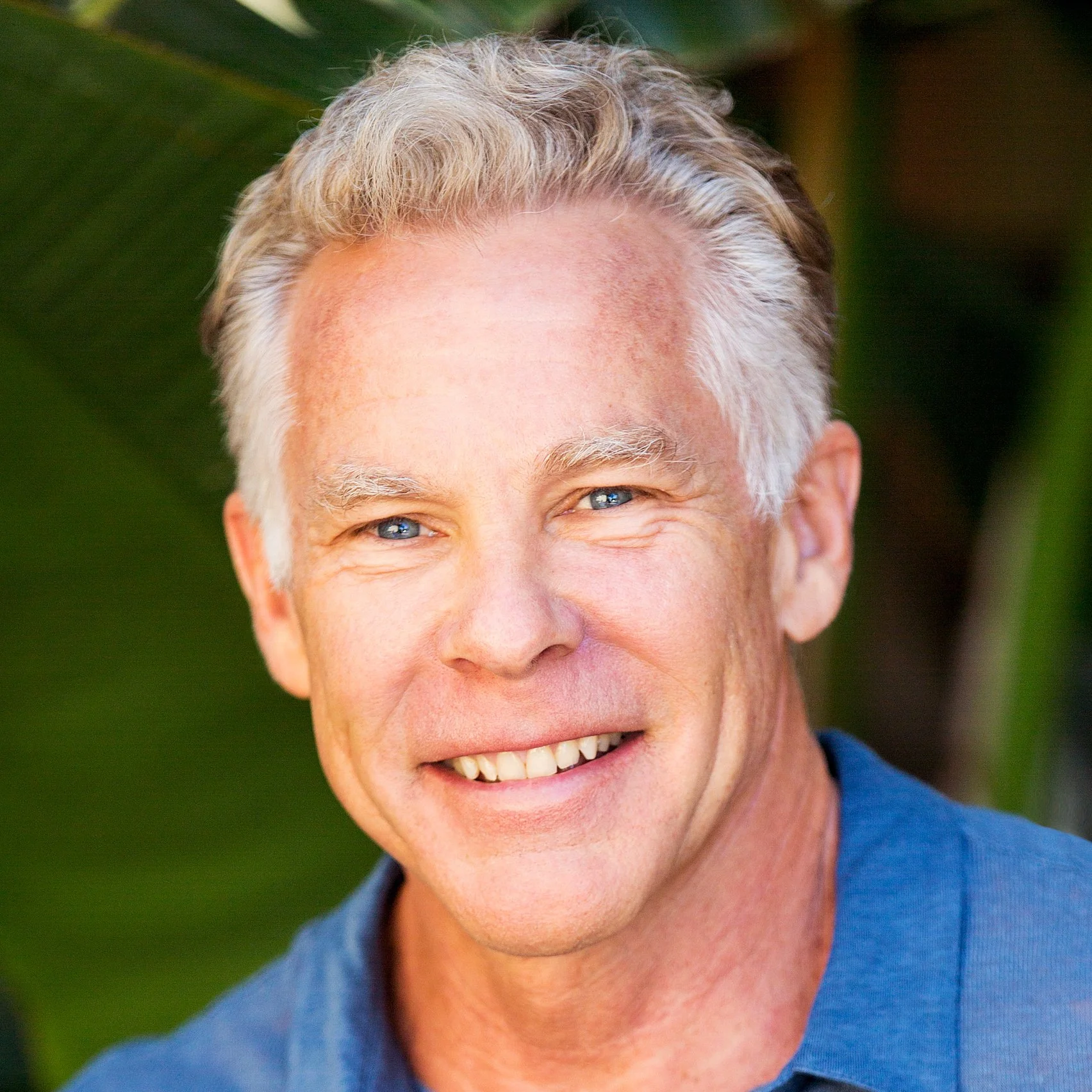
Mark Sisson, entrepreneur and founder of Peluva shoes
Mark Sisson and Rip Esselstyn go way back.
Long before Plant Strong, Primal Kitchen, keto, paleo, podcasts, biohacking conferences or five-toed shoes, they were two friends immersed in the world of endurance sports. Mark even coached Rip for a period during his triathlon career.
Their paths since then?
Let's just say they've taken a few different turns.
Mark became one of the early voices in the paleo and primal movements, built Mark's Daily Apple, wrote The Primal Blueprint, launched Primal Kitchen and eventually sold the company. Rip, of course, went all-in on the power of plants.
So no — these two don't agree on everything.
But Rip has always had mad respect for Mark's entrepreneurial drive, independent thinking, and willingness to take big risks.
And that's what makes this conversation so much fun.
Rather than debate what's on their plates, Rip and Mark dive into four big subjects where Mark has plenty of strong opinions: biohacking, longevity, chronic cardio and foot health.
Mark believes the biohacking world has gotten increasingly complicated — and expensive — while many people are overlooking the fundamentals. His analogy? Biohacking has become “the day trading of health.” Before chasing the newest device, supplement, cold plunge, wearable or longevity protocol, he argues that the real foundation still comes down to things like sleep, movement, stress and nutrition.
They also dig into Mark's longtime criticism of what he calls “chronic cardio” — spending too much time training moderately hard without either building a truly easy aerobic base or going hard enough to develop top-end power.
That's an especially interesting conversation coming from two former high-level endurance athletes who have both put thousands upon thousands of miles on their bodies.
And that leads to perhaps the most valuable part of the conversation: your feet.
Through his new company, Peluva, Mark has become almost evangelical about foot strength, toe mobility, ground feel, and the connection between the feet and the rest of the kinetic chain.
His contention is simple and provocative:
Foot health may be one of the lowest-hanging fruits in longevity.
Because ultimately, this isn't just about shoes. It's about maintaining the ability to move through the world as we age. It's about mobility, balance, strength and independence.
In this episode, Mark explains:
Why he calls biohacking “the day trading of health”
Why he believes the basics should come before gadgets and supplements
His problem with chronic cardio
Why he favors lots of easy movement plus occasional high-intensity work
How his own endurance career changed his thinking about exercise
Why he now walks at least 45 minutes most days
Why mobility matters so much for longevity
Why he believes foot health has been largely ignored
How Peluva grew out of his own search for better footwear
Why maintaining strength, balance and movement matters more and more as we age
What decades of entrepreneurship have taught him about taking risks
Two old-school triathletes. Two very different approaches to food. And plenty of common ground around one big idea:
Keep moving for life.
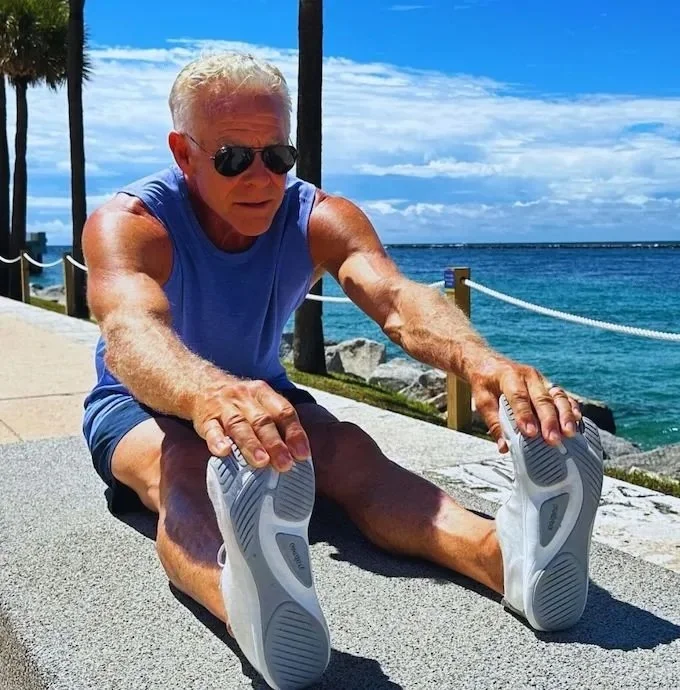
Mobility and foot health are keys to longevity
Episode Resources
Watch the Episode on You Tube: https://youtu.be/dV6vYXI7lfY
We hope to see YOU at one of our Live Events! https://plantstrong.com/pages/events
To stock up on the best-tasting, most convenient, 100% PLANTSTRONG foods, check out all of our PLANTSTRONG products: https://plantstrong.com/ Use code: podcast to receive 10% off your first order.
Give us a like on the PLANTSTRONG Facebook Page and check out what being PLANTSTRONG is all about. We always keep it stocked full of new content and updates, tips for healthy living, and delicious recipes, and you can even catch me LIVE on there!
We’ve also got an Instagram! Check us out and share your favorite PLANTSTRONG products and why you love it! Don’t forget to tag us using #goplantstrong 🌱💪
Episode Transcript via AI Transcription Service
Mark Sisson, I want to welcome you to the Plan Strong Podcast. It's a pleasure. Oh, it's my pleasure to be here, Rip. Good to see you again. Yeah. So what in the world are you and your sidekick, Brad Kearns, doing here in Austin, Texas? So we're winding up a podcast tour. Started in Santa Monica last week. I did seven podcasts in Santa Monica, doing two here today, and then have a live event this evening, all in service to telling the world about my shoe brand, Peluva. Right. But behind that is an entire story about the concept of exercise and the notion that walking is the single best thing that a human being can do better than running, for example, which is my career for a long time. So what we're trying to do is kind of convince the world that movement, just general human movement, which is slow, steady, or, throughout different ranges and planes of motion, is the way that we should kind of orchestrate the baseline of our fitness throughout our lives. Whether you're a teenager or you're 80 years old, you should be spending a lot of time walking, a lot of time doing slow, easy movements. And then once in a while, sure, go to the gym and lift weights. Once in a while, go to the track and swim or go to the pool and do some sprints. But most of our lives should be orchestrated around walking with the appropriate footwear, in which case you're able to regain a normal perfect gait and extend your longevity.
Well into your later years. And this is – what I'm telling people in the last couple of years is that I think foot health is the lowest hanging fruit in the world of longevity. I think that's the new sleep. Like attention to foot health is what we should really be focusing on if we're looking to extend our lives and extend the quality of our lives, which includes mobility, the ability to get around this world when we're older, or when we're younger for that matter. So you say it's the low-hanging fruit. Yes. I don't think I've ever heard anybody else talk about foot health. I know. For longevity. Yeah. So... How, I mean.
Let me, let me take a step back. Yeah. Okay. Yeah. Because, because I want the Plant Strong audience to understand like our history a little bit. So you and I go back, you, you were an amazing triathlete back in the day. I met you and I think it was the early 1990s. Yeah. Um, and I believe you had stopped racing, but you were still in the scene. You were coaching. Yes. You actually coached me for a year. Yeah. Uh, you wrote that book. Racing and training biathlons, if I'm not mistaken. And you had, as usual, you had a nice theory there about not overtraining quality, not quantity. And brilliant. And I followed it with great success. Obviously, I've been good friends with Brad Kearns for a while. You and Brad hooked up years and years ago.
What, I'm just, I've always been fascinated. What has made you such a divergent thinker? You know, a lot of what, I think affects so many thinkers and thought leaders and even entrepreneurs is sort of a recognition that there's something in my life that is missing that I need to fix. And whether that is an understanding of my training methods when I was a marathoner. And I was a marathoner before I was a triathlete. I mean, I only sort of pivoted into triathlon because my marathon career ended with some injuries, some overuse injuries. But all throughout my career, I've been looking at ways in which to improve performance, whether it was training methods or dietary interventions or supplements.
And I think the pursuit of performance has kind of led me into all these different arenas where I've delved and done research. And then my nature is, I think, to want to not just explore but share what I found with other people. So that's what prompted me to write my first book, which was the Runner's World Triathlon training book, 1981 or 1982. Wow. Yeah. And I wrote it in 81. It came out in 82. And then training and racing duathlons, which you read. Duathlons, yeah. Which was a great, I think it was a dissertation of what happens when we over-train.
Again, that was an aha moment, a revelation I had that I was injured and my career ended because I over-trained and I trained in the wrong kind of shoes,
From Performance to Publishing
and I ate the wrong kind of food, even though I was trying to do the right thing the whole time. You know, all of this was in pursuit of me wanting to do the right thing. So when I was in a position to discover some of these secrets that I thought would benefit other people, that's when I started writing books. That's when I started, later on, I started my blog, Mark's Daily Apple, which was just to take a look, not just at athletic performance, but human performance in general. Like, what is the average person? What would benefit that person from understanding how the body works and how we can turn on certain genes that prompt us to grow muscle and turn on genes that cause us to burn fat rather than store fat? And what genes are there to, you know, enhance our immune system rather than trash it?
And all of these different hidden genetic switches that we all have. Yeah. And we all have them just to varying degrees to which these things work. But understanding the behaviors that cause, whether it's an actual behavior like lifting weights versus running or whether it's another behavior like eating a certain type of food. And we've been back and forth over this for the years, Plant Strong, and I'm Mr. Keto. And yet we both arrive at a similar endpoint, which is metabolic flexibility. Right but so my idea was always to find these secrets these hidden genetic secrets that we all have these switches that we can turn on or off and that's kind of informed everything I've done you um.
When did you write, I think it was Primal, the Primal Blueprint. Primal Blueprint was written, it started in 2007 and 2008. And a couple of drafts in, I started shifting my ideas. And then that's when I aligned with Brad to write the version that everybody knows now, the Primal Blueprint, which came out in 2010. Gotcha. Yeah. And when did you start Mark's Daily Apple? Mark's Daily Apple started in 2006. Okay. And it came on the heels of two articles that I'd written for my mentor, Art Devaney. Did you know Art Devaney? I did not. Okay. He was an amazing guy. He was really the original sort of intuitive, anthropological evolution-based, thought leader in this ancestral space. And he had a blog. I didn't even know anything about blogs. but he asked me to write a guest post, the first of which was called A Case Against Chronic Cardio. So he and I shared this belief that people who are spending so much time with their heart rates too high for too long are doing themselves a disservice. They're doing damage to themselves rather than enhancing their longevity and their lifespan or even reducing their risk factor for certain diseases.
So that first post got such acclaim, it just resonated with a lot of people. It pissed a lot of people off too, right? But so that first post...
Led me to think, okay, I have some things, some ideas that I'm willing to share, even though they go against the grain. The next post I wrote, you're going to hate me for this. You're going to hate me for this. It was called Escape from Vegan Island. And it was a post about my one-week experience with John McDougall. Costa Rica? In Costa Rica, yes.
Challenging Diet Dogma
But again, I had a point of view about diabetic people eating 1,000 grams of starch a day, much of it in the form of sugars, and thinking that that was going to somehow cause them to lose weight and manage their blood sugar. So were you one of the first people to really put the stake in the ground for paleo? Oh, yeah. Ancestral diets? I mean, you know, Loren Cordain was the guy. He wrote a book called The Paleo Diet, which preceded mine by a couple years, but it didn't sell very well. And I think based on my blog, which became like one of the top blogs in the world in terms of ancestral health, for quite a number of years until it got supplanted by thousands of other blogs that were sort of aligned with my thinking. Yeah, so I think I'm considered one of the early thought leaders of the paleo world. And then that sort of morphed into the keto sphere. So you're definitely one of the OGs, if not the OG. What are your thoughts on...
What is happening right now with like carnivore lion it just seems to get more and more extreme extreme as far as yeah let's let's just do only meat and salt and water and yeah no i'm not i'm not about that at all, um i think the carnivore diet is therapeutic for some people when done in short bursts, um i think um you know the peterson family sort of made the lion diet uh michaela and uh and and jordan uh a.
Thing um i think that goes overboard even even paul saladino who was kind of one of the original carnivore um.
You know advocates and i wrote the forward to his book when it came out he's receded he's he's pulled it back quite a bit yeah he he recognized that um there are other there are benefits that can be obtained from eating a wider variety of foods. And look, at the end of the day, I like to eat. So I want to be the least restrictive I can in my diet. I don't want to, you know, just on the basis of some scientific study, suggest that all I'm going to eat for the rest of my life is meat. And I mean, Sean Baker's an example of that, who I just, God bless you, man, you're a big guy and you're doing pretty well, but I just don't think it's for everyone. In my case, I want to... I want a wide variety of foods. So I definitely eat a lot of meat, but I also eat vegetables, I eat fruits. I have ice cream once in a while. I have bread once in a while, and I was the anti-grain guy for a long time. I think I literally cured myself of a gluten intolerance to the extent that I can have a little bit of it, right, once in a while. And to the extent that I can do that, I will because I want to have the widest sort of palate available to me just to enjoy life. Not because I'm trying to be, you know, a Dave Asprey or a Brian Johnson and live forever. I just want to enjoy my life from one minute to the next, from one day to the next, from one meal to the next. I want to have – one of the things I want to look forward to is food.
Four Topics, One Conversation
So, this is a great setup. So, I want to talk about four subjects with you on the podcast today. The first is biohacking, kind of what's going on in the biohacking world. The second is longevity. Just get some of your thoughts on longevity, where you stand on that.
Next, I'd like to talk about born to walk, right, and your philosophy on that, chronic cardio. And then lastly, kind of foot function and how important that is. So why don't we start with biohacking? I think that's appropriate because- I think so. You know, yeah, right down the street, I can almost see it from here. Yeah, it's the Biohackers World Conference. And not only that, it's probably the origin of biohacking. Because I think biohacking, the concept started before that was a word, and Dave Asprey claims ownership of it. It existed before Dave did, but he certainly popularized it. But, you know, the Paleo FX was an event that was here in 2010 at the center down here. No, I think, you know, like so many things in this world, it was a good idea at the time, and it got way out of hand, and it's gotten out of hand. I go to these conferences, mostly for entertainment now, to look at all of the devices and the headbands and headsets and infusions and transfusions and chambers and,
The Biohacking Critique
you know, all of the ways in which people are looking to circumvent human biology. The term hack is a – basically, it's a computer, you know, nerd term that involves the concept of inappropriate access to a system. And so biohacking is kind of looking at the ways in which we can shortcut the biological systems to get some benefit in a short term without doing the work.
I may trademark this, I don't know, but I call biohacking the day trading of health. You know, when you're trying to build wealth, it takes discipline, it takes time, it takes research, it takes investing in particular areas that you know about, and that's great, and that's how people generally build wealth. There's a group of people in the money markets that are day traders. They are trying to extract dollars from each other. There is no investment in day trading. Make no mistake. Day trading is not investing. It is a zero-sum game where people are in and out of a market trying to, again, to extract a dollar from somebody else who's trying to extract a dollar from them. And for that reason, most day traders, 90% of all day traders, wind up losing money and or quitting. And the few, the 10% that make money have made it off the ones who quit.
Isn't that something? I think biohacking is similar to that in that when you want to build health, it takes a long-term strategy. It takes understanding how the human body works. It takes an investment in building a broad base. And biohacking has kind of taken over this place where people think they can leapfrog beyond the base building. So they'll buy a piece of machinery that in three minutes you can get the equivalent of a 45-minute bike ride or – Six-minute abs. Yeah, well, that goes back to Tony Horton and Jorge Cruz before that. But yeah, it's become such perverted in the way of understanding how the body works that... And it's to a point where if you haven't done the basics, and the basics are all free, if you haven't dialed in your sleep, if you don't have your diet right, if you haven't figured out your movement patterns appropriately, and if you haven't controlled stress, then no amount of methylene blue is going to save your ass.
I don't even know what that is. Yeah, yeah, yeah. No, but, you know, you go there and they're taking gobs and handfuls of pills and supplements. And they're, again, wearing the headphones and putting on the lights and they've got the, you know, the light blocking glasses. And rather than just freaking going outside and getting some direct, real, free sunlight and then avoiding watching TV or working on their computer after 7 o'clock at night or 8 o'clock at night. There are so many ways in which we can optimize our health before we start to tap into these other modalities and protocols. And by the way, many of these, what you started to see in the biohacking community was already fit people, already healthy people, looking to extract another couple of percent. Now what you're seeing is a baseline of unhealthy people wandering these conventions thinking they're going to find the pot of gold, thinking they're going to find the shortcut without doing the work. And there's no way they're going to extract, or even if they do extract 1% or 2%, it's coming off such a low baseline. It's not going to be relevant for them. Yeah, yeah. So based on all these modalities in different biohacking processes.
Gadgets, Plunges, and Supplements
Techniques that are out there is are there any that you are a fan of and you like, you've tried and you're like yes this is beneficial like i don't know cold plunges sauna's red light there yeah yeah yeah no i i mean look uh okay so cold plunges i think it's a joke i think cold plunges are um.
You know i did them for 15 years i wrote about them i was like i you know i kept my pool in Malibu unheated from 2003 when I was trying to teach myself to not be such a pussy getting into cold water. Because as a triathleta, I hated getting into an 81 degree public pool when I was doing triathlons. I just did not like cold water. But you also had a 3% body fat. Yeah, 3% body fat. Yeah, yeah. So that for me, it was a head trip. Just try to walk into a 48 degree swimming pool at 10 o'clock at night before I went to bed. And the air temperature was maybe 50 degrees and then walk naked out into the pool, walk down, walk into the water slowly, no jumping in, no diving in and just, you know, and it was a total head trip for me. Later on, we find out, oh, you can activate brown fat, you know, by sitting in a cold plunge for, you know, three or four minutes and activating brown fat, you know, increases your ability to burn fat and or it's an anti-inflammatory experience sitting in a cold plunge. But then we find out later that sitting in a cold plunge after a workout negates the value of that workout if you've done a you know when you work out you're trying to increase inflammation and you want your body to respond to that by.
Turning on those genes yeah that in the case of lifting weights built you know build muscle or in the case of you know aerobic capacity improves capillary perfusion and mitochondrial biogenesis now you're going to shut off those signals yeah so you've done two hard things you did a hard workout and then you did a hard cold plunge and they and they offset at each other. So I don't want to rag on cold plunging too much, but I stopped cold plunging two years ago. It's like, it's just a hard thing. And that makes it valuable for a lot of people. Because I think everyone should do something hard every day, you know, to sort of earn the day.
But cold plunging, yeah, I'm not about that. And then the cryo chambers, please. That's just like a parlor trick. There's no benefit to a cryo chamber. What about sauna? Sauna's great. But, you know, sauna's been around for a thousand years. So don't call it a new biohacking thing. Sauna is proven. So it's not even a hack. It's just a real thing. Sauna, by the way, cold plunging has been around for a long time. People chose to do the sauna. They don't choose to get immersed in cold water. Have you ever met Wim Hof? Yeah, yeah, yeah. Okay, so there's outliers everywhere, right? He's a great guy. But, you know, nobody can do what Wim does. Nobody can do it. He's a genetic freak in that regard. And to think that you can train, you know, and do all the things that he does and then somehow, you know, well, you can benefit from it. But, again, it's from doing a hard thing. I can't imagine that there's a biological improved component to it that makes any sense. But, yeah, so saunas are great. But, you know, red light therapy, most of the home use red light stuff doesn't even match whatever studies have been done on red light wavelengths. They use different equipment. So to get a home use kit and then think that you're going to somehow benefit yourself, I'm not buying that.
Supplements. Most of the supplements that you see here, most of them have been around for 60 years. They just rename them. You know, I mean, you know, there's some of the new nicotine derivatives are, you know, they're touting them, but people were taking niacin, you know, flushes 50 years ago. I was doing niacin in the early 80s. So, and that's all that NMR and NMN and NAD and all that stuff is sort of based around that.
Trusting Intuition Over Wearables
You know, I mean, name some more. I just— What about—so I'm looking at your wrist and your fingers right now. Yeah. I don't see an aura or a whoop. No, no, no. I don't do any of them. No, that's what I'm wondering. So what do you think of this whole, like, self-quantification that's going on right now? I'm like the anti-quantified self. That's a line I got from Art Devaney as well. Same thing. I'm the anti-quantified self. Like, I don't—I would rather be intuitive about everything I do. I teach people to be intuitive about how much to eat. And what types of food to eat and whether or not you actually did sleep well. And if you didn't sleep well, how to fix that by turning the temperature down a little bit or closing off the light sources or putting a white noise in your room.
I stayed in Austin last night at my favorite place, the Four Seasons. I love it. Best sleep I've had in a long time just because of the environment. I was thrown off because I flew here and whatever. By the way, the first thing I did when I got here, I went down and rented a paddleboard and went out on the lake and was on the lake for an hour. Paddling hard, came back, watched the bats, came up, had dinner, and went to bed. But where was I going with that? So sleep, yeah. So I don't need a ring or any device to tell me how I slept last night. I know how I slept. And if I didn't sleep well, I know how to fix it. So one of the worst things you can do, I think, is get bad data. And that happens a lot. You know, you wake up thinking, yeah, I had a pretty good sleep lesson. I feel pretty good. And then your device says, no, you didn't. And now you're kind of freaked out. Like, what did I do wrong and how do I fix that? I have a good friend who... Naturally is just anxious yeah and he has said that the aura ring when it, says he hasn't had a good sleep it makes him even that much more anxious no bad data backfires bad data is worse than no data yeah so, the more the more you look at these wearable devices like you know people are wearing cgms all the time continuous glucose monitors i'm like you get whatever information you get within the first couple of days you don't need to wear it for a week or a month or whatever If you haven't learned that.
An extra bowl of rice is going to shoot your blood glucose up to 170 for an hour, but it'll come back down again, if you haven't learned that by now, you're never going to learn it. And by the way, so what if it does? If it comes back down, it's like, how are you going to alter your eating strategy other than what we already know from the science in general about the types of food to eat and when to eat them? Yeah. So we can go on and on about like I have a premature ventricular contractions as a result of all the training I did over the years. I messed my heart up chronic cardio. And you and I know a lot of people knew a lot of people who have died from training or have had, you know, Dave Scott had his open heart surgery and Scott Tinley and we go back and Greggy Welch and Mark Montgomery and all the cats that we knew from those, not all, but a lot of those guys, have had big issues. Well, I have premature ventricular contractions. Thank God I stopped racing when I did.
But when I wear a heart rate HRV monitor, my skipped beats looks like, oh, my God, you're ready to roll today, pal. You've got these great intervals between beats. Well, that's not exactly the case. It's a false positive for training that day. So I'd rather go to the track and go, you know what?
I feel pretty strong today. I think I'm going to go hard. Or, you know what? I'm two intervals in, and I'm just not feeling today. I'm going to shut it down and save it for another day. I'd rather people be
Better Training Starts Here
intuitive about this than depend on a device. What's the best way for somebody that doesn't feel like they're in touch with themselves? Yeah. And that intuitiveness to actually, like, what's a good first step? I mean, I think a good first step would probably be to get a heart monitor if you want to play around with some stuff. And either go for a walk or run. And look at how high your heart rate actually is when you're doing that. And realize that there's a lot of people, the majority of people who claim to be runners, are running at a heart rate that is too high for them to be burning fat. And so they're not teaching their bodies how to burn fat. And yet it's too low a heart rate to be developing power or strength or top end capacity. And so they're in what we call the no man's land of training. And they're in an area where all they're doing is hurting themselves. They're producing cortisol. It's a stress. Look, running is catabolic.
Whenever you do it, it's catabolic. It's generating stress hormones. The body, we're born to be able to run, but we're not born to run every single day metronomically. So the first thing I would do is have people kind of understand that if you can govern yourself, your heart rate, down to a number that is 180 minus your age or below and stay in that range. It's basically zone one and zone two, and spend more time in that range, then you'll build a strong aerobic base. And then if you want to go do some hard work, go real hard. Do some sprints.
So we build a better engine by building a tremendous base, lots of low-end aerobic activity, and then very short bursts of high-end activity. And then when it comes time to say, okay, I think I'll go run five miles today and see what I can do, you'll run faster as a result of that. Yeah. I was playing pickleball yesterday with six other guys, actually seven other guys. Five of the eight of us, we started talking about peptides. Yeah. Five of these guys were taking peptides. They were in their 30s and 40s. I'm 63. Yeah.
One of the guys has taken three. I can't remember all the different numbers, PCK, one, two, three. And I'm like, so why do you take them? He goes, man, he goes, I've got a clear head. I've got erections like nobody's business. I feel like I recover faster. I just feel better.
Peptides and TRT
And it seems to be the rage these days. Yeah, it is. What are your thoughts on peptides? Well, first about your friends. If they're in their 30s and they've got raging erections, they better have those without the peptides at that age. Otherwise, they're in trouble. But I digress. No, I'm not a fan of peptides. I've tried them. I've experimented on them enough to know that whatever labs I was getting them from didn't work for me. I also got some localized inflammation from the injection sites, enough to cause concern for me. Like, this is really, the fact that it's unregulated and that there's no good studies on these, There are no good human studies on peptides, other than the GLP-1s. These are the ones that have the human studies. And there are people, you know, I will submit that are people who've failed at weight loss, who probably should be using GLP-1s to get to where they need to be. Supervised with extra amounts of protein and lots of weight lifting to maintain muscle mass. But most people should not be using these GLP-1s or these GLP-3s, the new ones.
The RETA, which is like, you know. What's the difference between the two? I don't know. The GOP-1 operates at one receptor site and the GOP-3s operate at three different receptor sites. So they're covering a lot of different bases that are shutting off your appetite. And even the GOP-1s, some of the recent research would suggest that how it works is it's anhedonic. It takes away your appetite. It takes away your desire for the hedonistic pleasure of eating. And to that extent, what we're starting to see is it takes away your pleasure for sex. So libido drops in a lot of people who are taking GLP-1s. So their appetite drops. And then it makes sense that their appetite for sex, their libido drops. And then their appetite to work hard, to be participating in a productive environment and making a contribution, that drops too. So like crazy that you would.
Theoretically be unhappy with how you look, and how you look directly affects if you want to get laid or not and meet a mate and then take something that makes you look better but then makes you not want to have sex or not want to work to get money to participate in life. So that's just a small area of the already well-researched GLP-1 aspect of peptides. When we get to some of these copper peptides, GHK-CU and BPC-157 and some of the other, there's a lot of them now, MOTC.
It's just, there's no good, BPH157 is one that most people are taking for recovery. And you'll see a lot of things online now where there are like 135 studies on it, which is, seems like a big number, but out of thousands and thousands and thousands of potential studies and out of something that so many millions of people are taking, you'd think that there would be thousands of study. And many of these studies were abandoned after no results were proven. Uh and there's there are no studies human studies that would show any any sort of benefit to them what we do have is we have like your friends anecdotally saying i feel great and do we do we think that that's uh.
You know a result of uh you know the placebo effect is it an actual result of the peptides is it one of the three they're injecting and the other two aren't working anyway i'm yeah i'm not convinced i i do trt and i have for 10 years so i do testosterone replacement therapy. That's the one thing I do. I'm a big fan of it. I don't overdo it, but I do it just to make, to keep, you know, a level that keeps me, um, able to keep on muscle, uh, energetic, um, you know. And then are you, are you monitoring your, your number? Oh yeah. All the time. Yeah. Yeah. What's all the time? Every six months? Every six months. Yeah. I have, you know, I have a, um, because I have the heart issues, I have a cardiologist who, who wants me to get blood work every six months. And, um, it's also how he gets compensated through the, through the system. So I, I defer, I go in and have my blood drawn and I like to see, you know, I like to see what my numbers are. He's always, you know, amazed at my blood, my cholesterol numbers as well. You know, I'm like it, uh, last one was like 255 total, but you know 87 HDL, triglycerides are 62 my fasting insulin one.
Yeah that's that's as low as it gets if it's zero you're dead but but you want to be as low as possible without getting to zero um, you know a1c is 4.7 i mean i've got you know i i have this how about the ldl, oh i don't even care about the ldl because that's the and it's big it's a big number but it's you know the uh i'm uh april b uh, lpa they're all those are little small numbers so you know all the ones that are really uh significant recently in in uh predicting heart disease are low. So at the end of the day, I don't care about my LDL or my total cholesterol numbers. All my other, others, you know, are, are so impressive. And because I'm metabolically flexible and I'm burning a lot of fat all the time, uh, and I'm transporting fat using cholesterol to do that, it makes sense that I have this transportation system that's, that's, uh, that's handling all that. Yeah. Um, Are you, would you say you're a voracious reader? No, not anymore. I used to be. Yeah. I wish I were.
And right now, all I want to, like, because of the, because of Instagram and all the devices, I'm trying to force myself to actually pick up a book every once in a while and just sit and read a printed page. It's hard. It's hard. Yeah. Yeah. That's, that's something I miss.
Longevity Without Obsession
Let's move on to longevity. Okay. Yeah, sure. You mentioned Brian Johnson earlier. You know, this guy's got a whole medical team. He spends millions of dollars a year doing all of his testing and everything like that.
Do you admire or appreciate some of the things that Brian's doing? And on the other hand, do you think he's nuts? Yeah, both. I don't admire. I appreciate that what he's trying to do. I appreciate that he's an interesting cat. A lot of these tech guys are on the spectrum, are looking for...
Problems that don't exist so they can find a solution for them i see that a lot in in just the tech world in general, um and i mean i i think he's a nice he's a nice enough guy and i i wish him well but i think he's he's missing the forest for the trees i think he's trying to he's missing life on a day-to-day basis uh, following his protocol every day it's way it's you know he's got this schedule and this protocol and these pills and these different things he's doing uh, When he could be living his life, you know, enjoying the moment in real time and not caring about.
I missed, you know, I missed the window between 1 and 2 p.m. When I was supposed to take this pill, and I didn't take it. So I don't admire it. I do appreciate it. I do think he's wacky. But, you know, he's entertaining, and I feel like something's going to go wrong. I really feel like there's going to be one thing that happens as a result of the exploration that's going to... Well, I did see recently that he came down with some autoimmune disease. Yeah. That he's a little bit, you know, he's dealing with it. No, no, no. I mean, look, I wish him well. But I think that's what happens. Look, Ben Greenfield is a great friend of mine. And I think Ben, who recently... I haven't seen his... I heard you were just on his podcast. I was. I was on his podcast. No, we've been great friends for a long time. But sometimes, and I think he's pulled it back, but Ben was like willing to try anything, you know, and at some point, it's like, Jesus, I mean, I learned my lesson. I did a stem cell infusion about three years ago in Costa Rica. And against my better judgment, but I went with a friend who is a senior executive, and he's like, he's on the Buck Institute board. And so he kind of vetted this place that we went to.
And we went as a group, there were six of us went, we all got plasmapheresis and we all got stem cell injections. I didn't notice anything from it. And I think on the plasmapheresis side, I think if you're already healthy, there's not much you can do, again, to enhance your longevity or to clean your blood up. I think whatever it's extracting from your blood, it's also taking some of the good stuff out too. So if you have a real blood disease, plasmapheresis is a great way to go. But if you're already healthy, the risk-benefit analysis, the cost-benefit analysis is probably not worth it. Same with the stem cells i mean i went and got the injection the infusion didn't notice anything i was i was about ready to get my hip replaced and in advance of doing that i thought i'll try this didn't work, three weeks later a friend of mine went to mexico to get the same thing and died of anaphylactic shock on the table so uh that's like that took me a back a you know step or two back, things are getting out of hand here with all of these.
Protocols now some people claim they're having great results I'm not going to argue with that but for myself I'm at an age right now and this is sort of back to the Brian Johnson thing where, you do a risk analysis when you take on some of these things and I'd rather just go with what I know with the wet biology of the human system have you heard about the performance enhanced games that are going on right now Yeah, yeah, yeah. I mean, it was, well, it already took place and it was a bust. Yeah, yeah. I watched some of it. And actually, Brian Johnson was one of the commentators specifically. And because the sun, where he was sitting, the sun was coming out,
Sunlight and Simple Health
he had an umbrella to protect himself from the sun. I just want to know, like, what's your opinion of getting sun, sunscreen? All this stuff is, if you go back to my original book, The Primal Blueprint, which looked at, Like what are the behaviors that exhibited.
Our ancestors experienced that caused enough adaptation and evolution over millions of years to get us to where we are today, to get to this genetic recipe that we have today that expects a lot of these inputs. So our genes expect us to move around a lot at a low level of activity. We're bipedal. We're supposed to move around. Our genes expect us to sprint once in a while, to run for our lives. Our genes expect us to lift heavy things. Our genes expect us to live, to eat plants and animals. Well, our genes expect us to be in the sunlight at some amount of time during the day. I don't care if you're fair-skinned or dark-skinned or where you live, you should expose yourself to some amount of sunlight every day.
Again, I was out on the river last night on the board without a shirt on and getting as much end-of-the-day sun as I could. I live in Miami Beach. I do get sun without protection for 20 or 30 or 40 minutes sometimes. I try to put some sunscreen on my face just because I do know that there's the wrinkling effect. It's too late. I'm too old for that, and it's already happened. How old are you? 73. But it's from a lifetime of you and I knowing, being out there for hours in blazing sun, sweating and squinting and doing all the shit that causes wrinkles and all that stuff. So yeah, I'm paying the price for not just an athletic career, but I was a contractor for for 15 or 20 years from the age of 14 until, mid-30s outside my shirt off all day long generally painting houses monkeying up and down ladders all day long without a shirt on so I spent a lot of time in the Sun I spend less time now but I still want to get, some sunlight every single day if I can and I think it's it's I think it's, important to people for people to understand that that's one of the expectations that our genes have of us to be healthy yeah.
Uh, if you had your druthers, would you like to live to be 120, 150, a hundred? I mean, no, no, my druthers, I mean, 120, but, but, but I don't, there's a caveat and a big one and an asterisk there. I want to be, you know, functional and playful and mobile and have all my thoughts and wits about me. Sure. So knowing what I know about, about human longevity, uh, Brad and I were talking about this the other day. Like, there's something like 750,000 people in the world that are 100 years old or older. Okay? Yeah. How many of those 750,000 are older than 110? I'm going to say five. No, it's a small number. It's 200 and something. Okay. Right?
So it looks like 100 is kind of the number you want to live to. And, dude, I mean, every morning I get up and I think the first thought I have is I've had an amazing life. I have careers that you never even heard about before you knew me that I would have been satisfied with. I have lovely kids and grandchildren now. I've had successful businesses. I've had a successful exit. I'm planning on another one.
Dude, I'm good. If today's the day that I'm called to leave, I've had a great life. So I don't fear death. I don't think about it. I don't think, oh my God, I'll miss out on all this stuff. So to your point, if I can get to 100 and be able to jog a little bit with my grandchildren or my great-grandchildren or whatever it is at that time, or hike in a forest for a mile or two, sit with friends, still play chess or do a crossword puzzle with them, I'm good. That's all I'm looking for. When I hear people talking about, living 160 or 180, first of all, that is so far in the future, this world will not look anything like you think it does. I think the value of being that age will cease. There'll be no value in being that age. I mean, I think the world's going to change so much in the next 10 years that we won't recognize it at all. That's a different podcast. Yeah, yeah, yeah, yeah. Well.
It is. I went to go visit the Tesla factory here, the humanoid robots, the cars, the automation. This, I don't know, I think it was a 1 million square foot facility, blew my mind. Yeah. Blew my mind. Yeah. And that's now. And that's now. Yeah, exactly. In Austin. Yes, I know. So that's today, 2026, and six years ago, you would not have imagined that. No. So now think about 10 years from now with that as a baseline. Yeah. Yeah, it's going to be incredible. So anyway, like I said, I think it is the finality of life that gives it meaning. The fact that we are going to die makes every day valuable, and you may as well just live day-to-day and extract from every possible moment the greatest amount of contentment and joy and pleasure you can. Yeah. So you're 73. Yeah. Kicking ass, thriving. I'm 63. I would also say I'm kicking ass, thriving. I look at my mom, 91. Yeah. My dad, 93. Yeah. Kicking ass, thriving. I don't know if you know this. You know my mom set the Guinness World Record for the dead hang about...
In March. Really? Of this year. Yeah. She went two minutes and 52 seconds. Jeez. Right? That's crazy. And in training about two months later, she went four minutes and two seconds. Wow. So we're going to go for the Guinness World Record again in just a couple weeks. Yeah. But I say all that because I think that it's fair that you and I very much believe in simplicity, movement, not all the crazy biohacking and stuff that's going on right now. I just, I believe in fitness for life now. So, you know, a dead hang is a great metric. How long can you hold a plank? How long can you stand on one leg with your arms crossed and your eyes closed without falling over? Right? Little things like
Chronic Cardio Explained
that. I have to train for that one. Yeah, yeah. It's a great one. Yeah, yeah. All right. Let's move on. Yeah. So you and Brad wrote this book, Born to Walk. Yes. Brad did a phenomenal job on the podcast talking about this. But with you, I want to specifically talk about – let's talk about – first, let's talk about chronic cardio. Yeah. You alluded to it earlier in the conversation.
What is chronic cardio? It's just training at anything that you're doing. It could be running, but it could be on the bike. It could be – now it's, you know, high rocks and there's all these different exercise opportunities. Could be, you know, Orange Theory, indoor biking. I don't care. It's training at a heart rate that is so high that you can't burn fat efficiently, and you exceed that fat burning zone and you start to go into, a glucose and glycogen burning area, which is not bad in and of itself once in a while, but if you do it on a regular basis…, and you burn glucose or glycogen during a workout, that is your body starting, to get into a life or death situation. And again, once in a while, sure, that's okay, but on a daily basis, it's catabolic, so it tears muscle tissue down. It is stress-inducing, so it increases stress hormones, the secretion of stress hormones, cortisol, most likely. It is if you're running it's damaging to your joints most people who run and that's the essence of this book was based off of a book called Born to Run, which Chris McDougall wrote and it was a great book I just disagree with his theories on this notion that we were we evolved as persistence hunters.
But not the barefoot running. No, not the barefoot running. And again, ironically, it was that book where people said, barefoot running, that sounds like a good thing. I'm a runner. I run 50 miles a week. Maybe I'll get some minimalist shoes and I'll go out and run seven miles the first day. Right. Well, we'll get into what that looks like in foot health later on. But no, so most people who run, a lot of them engage in it as a weight loss strategy, right? They think, I'm going to start running to get out there and sweat. I'm going to melt off my fat. That's not what's happening. Most people, again, are training at a heart rate that's too high to burn fat. They've exceeded the fat-burning zone, and now they're burning less and less fat, more and more glycogen. Now they get back from their workout, and they're hungry. Because the brain goes, because your brain is not used to burning, your body's not used to burning fat, your brain's not used to burning ketones, the brain goes, we are low on blood sugar. We have to eat, or we're going to fall apart. So there's a tendency uh we call the ben and jerry effect but there's a tendency to get back from a run sit on the sofa and go oh god that was valuable, i sweated so much i was out of breath it was incredible and then to kind of overcompensate with eating yeah typically more carbs.
Um more sugar uh to replenish the lost glycogen so that you can do it again the next day and the next day and the next stay. And that's this vicious cycle of creating this catabolic effect that tears muscle tissue down over time. So people think they're going to lose weight, but their weight stays the same, but ironically, their body composition shifts. They lose muscle, they gain fat, they stay the same weight, but now their body composition has shifted toward more of what we call skinny fat. We see this a lot. So they've got stress hormones, which are now affecting their sleep patterns. Cortisol is sort of a, in the short term, it's anti-inflammatory, in the long term, it's inflammatory, and uh promoting weight gain over time so we talk about cortisol belly people have cortisol belly from too much stress even if you don't train a lot if you don't work out a lot you can still, that amount of stress hormone can cause you to gain belly fat.
I mean there's no good reason the only people who should be running are runners now that sounds glib but the only people who should be running are ectomorphs skinny people with long legs large lung capacity and a high pain tolerance. And those are the people who should be running racing, maybe. Go ahead, race. Knowing that it's catabolic, knowing that it's tearing you down, knowing that it's not improving your health that much. Sure, you're getting a cardiac effect from the strengthening of your heart muscles up to a certain point. But then, as we started to talk about earlier, in my case, doing too much of it has a negative effect on your heart. And I stopped counting when And I hit 75 people that I knew that either had heart attacks and died, had heart attacks and lives, had open heart surgery, had defibrillators installed.
And these are world-class athletes that trained too hard and suffered the effects of chronic cardio. Chronic meaning on a regular basis doing too much of it and cardio being this notion that you think if some is good, then a lot is better. Did you... So this wasn't necessarily you woke up one day and you had this epiphany. It was just basically what you were able to see over an extended period of time where you were like, okay, this is all adding up and now I see the big picture. Yeah, yeah, yeah. No, it was a little of both. There was an epiphany there. But for the most part, I started to recognize these patterns in a lot of friends. And in myself, too. I was, you know, whenever I do a really, really hard workout, I get sick after the workout. I'd suppress my immune system. You know, I remember when COVID was happening. And I, you know, I said, nobody healthy should die of COVID. That's just, if you're healthy, there's no way COVID's going to kill you.
Oh, but I have a friend, he's a triathlete, you know, and he almost died or he did, he died of COVID. I'm like, yeah, because he had no immune system. You call training for triathlon healthy? That's an example of what I'm talking about. He trashed his immune system or she, he trashed their immune system from training so much that when COVID hit, they had nothing to be able to battle it with. Extreme example, but that's the sort of stuff that I started looking at. Yeah. So yeah, so everybody should be walking as much as they can. Walking is a quintessential human movement. It's the, look, when we talk about longevity, and we touched on it a little bit earlier, two things that I think.
Exemplify quality of life. One is access to cognition and memories, my ability to have a conversation with you, remember what you said, respond to what you're saying, be able to play games or learn a musical instrument when I'm 80 or 90 or 100.
You know, just to be able to participate in real time in the world. The other is mobility, the ability to get from one place to the next, to walk down the street to visit a neighbor, or to board a plane and go, to Italy and do a walking tour, or to get yourself to the gym to lift weights, to build muscle mass so that you have more muscle mass to carry you into your later years. So mobility becomes a critical component of the quality of life. And, you know, it's a bit of a drastic statement, but I think once you stop moving, you start dying. Well, it's interesting because, you know, you mentioned you had your hip replacement. Yeah. I imagine the next day they probably wanted you to walk.
But you dealt with that pain for a while. I remember talking to you about that. And so your mobility was compromised. Yes. Only one time in my life was my mobility severely compromised. I broke my ankle, mountain biking. had an awful fall, I was not ambulatory for six months. Yeah. And I had to crawl all around the house. I was on a little scooter to get around airports and travel. It sucked. Yeah, it's horrible. So there's nothing like being, I was like, just let me walk again. Yeah. Not just the physical aspect of circulatory issues and lymphatic stuff, but it's the mental aspect of just being depressed because of that, that you can't, that you're not mobile. Yeah, for two years before my hip replacement, I was limping, I couldn't sprint, I couldn't do the things that I wanted to do. And when I got the hip replaced, it changed, again, it bought me another 10 years of mobility, knock wood. But yeah, to your point, I walked 200 yards the day of the surgery, getting out of bed and walking down the hall. The next day, I walked a mile in Vail. It was December 3rd, and it was cold. It was brutally cold.
And then two days later, I walked almost three miles. And walking, I mean, it's a great example of the power of walking with perfectly measured, bilaterally symmetrical steps. So even if I couldn't, even if I had like hip flexors that had been kind of pulled apart to get the hip bone out and they'd been bruised and whatever, mechanically affected by the operation, if that was the limiting factor of my gait, I didn't limp and do a long step on the good side and a short step on the back. No, I measured short steps, but kept them equal. I wore five-toed shoes, which greatly enhanced the reacquisition of my gait. Walking within, you know, like I think I set some records for recovery from a hip replacement, certainly for someone my age. My doctor who, you know, pioneered that procedure, that anterior procedure was blown away. And he's done more of these procedures than anybody.
Born to Walk
Let's say that one of the terms that you and Brad talk about in Born to Walk is the obligate runner. Yeah. So many people probably that are listening to this podcast say.
Let's just say our obligate runners, they have an addiction to running that they do not want to give up. They believe in their heart of hearts that running, it's beneficial for them. They need their runs. What would you, like, is there a 30-day challenge that you could give them to say, listen, try this for 30 days and then tell me how you feel? So like, walk how far? What would be your... Yeah, I would say get used to walking. I would say, again, one of the things about walking that I want to really give a caveat is you have to walk with the right footwear. Because if you're walking in thick, cushioned shoes, now you're not getting the benefit of every step.
You're walking on so-called clouds, as the marketing says, but you're not benefiting your entire kinetic chain. Theoretically, the reason you run, the reason you walk, the reason you do any of these things is to get better at what you do. You're not doing it just to hurt yourself or to beat yourself up or to not feel guilty. Theoretically, you're doing this because you want to be a better human being as a result of this effort that you're putting out there. With that in mind, I would tell a runner that if you put on a pair of our shoes, Paloovas, and went and walked, briskly for 30 or 40 minutes, you would come back from that first walk with tired feet. And that would be the first aha moment. You'd go, I run hard all the time. I just walked and my feet are tired. Why are my feet tired? Because in your running shoes, they are scrunched together. They're squished together.
Your big toe, which should always be the last point of contact when you push off, has been pressed against the metatarsal head of the other toes. Your heel has been raised. So your Achilles, your calf has been shortened, putting more pressure on your Achilles. A lot of the ground field that your brain requires for you to be able to adjust to every step has been negated by the solid, thick, cushioned shoe. So you don't know what you're stepping on. Look, when you're barefoot, by the time you weight that front foot, your brain has all the information it needs on exactly how to organize your kinetic chain, which means how much to, scrunch the arch or bend the arch, how much to articulate the toes, how much to splay the big toe outward if you're barefoot, how much to accommodate the divot that you just stepped in or the rock you just stepped over, and whether or not your arch actually wants to grab that boulder or that rock because it's there, how much to roll the ankle out a little bit so that your knee doesn't tweak because your knee is not supposed to bend sideways but your ankle is, so all of these all of the sensory input is required by the brain for you to organize your kinetic chain in a way from the bottoms of your feet the soles of your feet all the way up, through your ankles through your knees through your hips through your lower back through your neck and all of this is a perfectly organized series of joints.
Muscles, connective tissue, bones, But it requires the input from your brain, from the bottoms of your feet, for your brain to be able to say, yeah, this is exactly what we're going to do. That's why we have 20,000 sensory endings, some people say 200,000, but a big number of sensory nerve endings in the bottoms of our feet, to be able to adjust to temperature, texture, tilt of the ground that we're walking on so that we have this perfect gait that we acquire. Wrap them up in tight, restrictive shoes, and you lose all that. So back to a runner who has been used to running with a heel strike and has now wonders why he or she is injured half the time.
But I'll get over it, I'll recover, I'll just get thicker shoes, or I'll just get better orthotics. No, orthotics unburdens the arch of having to do any work. Your arch wants to work. Those intrinsic muscles of your feet, they want to work. So to that runner, I would say put on a pair of Peluvas, walk within tension, you know, walk upright, shoulders back, chest up, a little swagger in your arm swing, feel yourself feeling the ground, push off, every step becomes a rep. Every step is a rep when you're doing this. And at the end of 20 or 30 minutes, you will be tired in a good way. Your feet will be – it'll be like they went to the gym for the first time. And then you start to realize that if I do this and if I walk briskly every day, and then once a week I go to the track and sprint or do whatever high-intensity stuff, the Norwegian 4x4, which 50 years ago, Rip, we called those mile repeats. So nothing changes.
That was the cornerstone of every endurance athlete's training was a mile repeat. You go to the track, you run a mile, you walk a half mile, which is about the same time rest. So four, four, four, four, except we were doing 430 and 430. Some of us, 5, 15. Yeah. Yeah, but it's pretty simple. And so if you, again, put these basic components together, you want to strengthen your feet so that you don't twist an ankle when you step up. You want to engage more of the muscles in your lower leg, which you do by either running barefoot or in five-toed minimalist shoes where you can feel the ground and where the big toe is able to splay outwardly. And then that involves the glute 100%. You know, your glute doesn't fire fully if you've pressed your big toe against your other foot. But that's why when you go to the gym and you watch guys lifting weights on leg day, meatheads, the muscle guys, the bodybuilders and the powerlifters, they take their shoes off to lift on leg days because they want that big toe to be able to engage the glute. If you can't engage the glute fully, then you start to involve some of the stabilizer muscles around the glute, then you maybe encounter some piriformis issues or other nerve impingement issues. So that's why people want to do that barefoot. You touched upon a lot there. Yeah. You touched upon a lot.
Are you walking every day? Yes, every day. In Palovas? Yeah. I would not walk. Put it this way. I would not walk without Palovas. I'd walk barefoot on the beach a lot of times because I can. I'm in Miami. But any other shoes, I would not wear another shoe to walk. And how I came to, create Palova was I was a strong proponent and disciple of the original five-toed shoe, the Vibram Five Fingers. And I wore, I, for, since 2007, I wore only that shoe. But I couldn't walk more than, um, say two miles without getting a bone bruise in my metatarsals because it was so thin. So I needed a shoe that had a little bit more cushion. I still wanted the five toe effect, but I wanted more cushion to be able to walk on concrete and pavement. You know, I spent summers in the South of France where I'm walking 20,000 steps a day, you know, on a, on a average day. So then I would get, like, I'm well-connected in the shoe industry. I was a Nike athlete.
My teammate from my running club went on to become president of Reebok. I've had people in Adidas. Well, the founder of On Running Shoes was Olivier Bernard, who won the ITU World Championships in triathlon a bunch of years ago. And then their primary investor is a good friend of mine. So I would get free pairs of On Running Shoes. They look great, by the way. The Ons are great, if you like Ons. But I couldn't walk in them because my knees would give up. I, who have some of the strongest feet you'll ever encounter, can't walk in regular cushioned shoes because my knees hurt. And they hurt because I'm not getting ground feel. I'm not using the full kinetic chain. So I walk minimum 45 minutes every night. It's my favorite part of the day. And, dude, I was a guy who for 20 years wouldn't walk because I'd rather – why would I walk there when I can run there? You know boy is my change my mind changed now so every night around 6 30 my work day ends, i put on my palovas wherever i am and i walk uh for 45 minutes at least sometimes an hour it's the most meditative time of day for me, uh every step is intentional it feels great um i get i get great thinking done i you know do some of my best so you're not thinking work you're not doom scrolling oh jesus no and i'm not even i'm not even doing calls most of the call, but most of the time I'm just in, I'm, I'm in nature, or people watching or observing.
But it's such an important part of my day. And I come back from that feeling energized. And so at the end of the day, it's not like, oh, 630, I have to go walk. It's, oh, 630, I get to go walk now. Yesterday I was in, I knew I was going to travel and I didn't think I was going to be able to do much here. So I walked, I was in Santa Monica and I walked on the beach in the morning. And I did my 45 minutes. And like, it was just so great to be, you know, out there and just, again, feeling every, every footstep with intention.
Business, Wealth, and Simplicity
Let's talk about – I, want to talk for a second about you're a – I'm going to say a badass entrepreneur. You're not afraid to take risks. Right. Right. And to me, I mean, thus far, I think your greatest success was Primal Kitchen. Yes. Right. And you had a great, fantastic exit there. You know being in the business myself i am very much in admiration of what you were able to build and not only what you're able to build but how fast you built it yeah right um, you made a fair amount of money with that has it changed your life oh yeah oh yeah it's changed my life but i mean you know in a lot of ways the main the main change was just security like i grew up uh, in a small fishing village in Maine. You know, as the saying goes, we were poor, but we didn't know it. So we didn't have much. I go back to visit my childhood home, which I thought was huge. And it's like tiny. It makes this place look like a mansion. So yeah, the security was the primary thing. And yeah, there's some things that I do in my life that.
You can only do if you have a A crap load of money. Yeah. But I wear the same clothes. I wear the same. I trained. I have two pairs of gym shorts that I wear every day for the last, you know, I rotate them every day for the last 10 years. A couple of shirts that I wear. Jeans. Yeah. I mean, I can have designer jeans. I got, you know, Levi's on right now. I prefer those. I, you know, I wake up every morning. I have the same cup of coffee I always had going back 40 or 50 years. eat the same food, You know, I don't need a huge house. I had a condo that flooded last year. Now I live in, I've been staying for the last year in a smallish condo. So I don't need, you know, a mansion to live in. So I have means, but I don't, I still have a pretty simple lifestyle. In fact, I just did the podcast called The Minimalists the other day. Yeah. And we had a lot of fun talking about being a ultra high net worth individual, but also still living kind of a minimalist lifestyle. Yeah, that's beautiful. didn't you uh didn't you and dan buehner used to live in the same we're still great friends we that's the my condo that flooded is above his but yeah we uh we we still are very good friends yeah so yours it's above his so his also flooded no it's he's he's like one down and on another elevator bank okay but um yeah, he's far he was far enough down that he didn't get any water damage Yeah.
So you mentioned that you were potentially getting ready for another exit. Is that with Paloova? Can I ask you that question? Oh, no, no, no, no. I don't know what I would have said to create that. No, we have a long way to go with Paloova. Okay. Yeah. So, I mean, I'm looking forward to a day. But in the meantime, I'm working with my son. It's a lot of fun. We're having a blast together. He's my co-founder on the shoe company. And we are you know we're doing we're doing well but it's a I don't need to tell you business is tough right and I've got, I spent my life as an educator so in terms of the foot health, and the concept of a five-toed shoe I've got a lot of educating to do, I will tell you that we just launched a new website called peluvareviews.com because we have like 6,000 reviews from people who've purchased Palluva and unsolicited, not, these aren't Amazon reviews. These are people calling us in or texting us going, holy smokes, like I, it's changed my life. I didn't think I'd ever walk again without pain. I'm walking now, my knee pain's cleared up. My, you know, my bunions don't hurt me as much, whatever. There's a lot of, a lot of that. And there are a lot of athletes who are suggesting that, They're feeling stronger and more powerful as a result of spending time doing.
Some of their sprint drills, some of their leg days, hiking. A lot of UTMB guys are hiking and rucking with Peluvas on, the ones you're wearing right now, the ATR. They'll ruck in those with 30 or 40 pounds on their back, walk, hike hard, and then when it comes time to do the run, switch to Altra or some other shoe and then race without the backpack well with water whatever um, you know and and do that so these so Peluva is not necessarily made to be a running shoe it's more of a, walking we tell people don't run in these shoes we learned a lesson from the days of born to run where people because i know people are first of all they have bad form so so most people shouldn't be running anyway as i said and if you have if you're a heel striker, there's no way you're going to benefit from these shoes. But if you're willing to walk, your feet will get stronger, you'll become a better runner as a result of wearing these shoes and strengthening your feet. And oh, by the way, if you know how to run, if you're a good runner, these are the best running shoes you'll ever buy. And I have people who are racing in these shoes. But I tell people, don't think you can run in these shoes. You have to be, That 1% of runners who is genetically gifted and who has learned how to run with good form. So you wouldn't suggest that I play pickleball in these shoes? Oh, we make a pickleball shoe. Oh, don't. Are you serious? No, we make. Well, then you need to send me a pickleball.
Brad, let's get him going. No, we make a pickleball shoe. I was just with Laird and Gabby the other day. And Laird had to leave to go play pickleball, which he plays a lot.
With a running back from the 49ers who shall not be named, who also plays in Palovas. And they play in Palovas, and they would not play in another shoe. No, you'll be amazed at how quickly you can get to a spot. We don't make them for tennis because tennis is like needs a stiffer shoe. You're running across a court. You're sliding. You're doing all this stuff. But with the Pickle, what we call our court shoe, Paddle, Paddle, and Pickle, great reviews. And some pros that are starting to use it. And a pro being anyone who's been paid 500 bucks for winning a tournament. You know what I mean? Yeah. Well, I'm just amazed. I've been a pickleball fanatic now for about four years. Yeah. At the number of injuries that people are sustaining. Yeah. Whether it's their feet, their knees, their ankles. I really want you to get up here now. So we'll fix you up. Yeah. You'll love them, I guarantee. I can't wait to try them out. Yeah.
Avocado Oil and New Projects
What is, so, Actually, I want to ask you this. So there seems to be some sort of a crazy thing going on right now with avocado oil. And I know that was one of the things that was really unique to your brand. You basically bought all the avocado oil and you had it for your Primal Kitchen products. It seems like there was some tests done recently on products and it showed that they claimed they were using avocado oil and they're not. Have you heard about that? Oh, yeah. Yeah. So I can't really talk too much to this because it's a very complex subject.
We are quite clear we've been using nothing but pure avocado oil throughout all of Primal Kitchen's history.
The tests were done in a lab in UC Davis. At no point was the word fraudulent or misrepresentation suggested. It was just that within their test, they didn't meet the specifications of what they used as a standard. Um we use uh avocados that come from different parts of the world that are tested in one of the top labs in the world authenticated with with certificates of analysis um, but you know there's now there's so much been bandied about the internet from this, study that was done that i now i can't even say anything yet to defend us even though i'm very resolute in the fact that we're you know That we've not done anything wrong. I was specifically referring to like Siete. Yeah. The brand that was bought by, I think, PepsiCo for whatever it was. 1.2 billion. Yeah. Or Chosen, which was our competitor for the longest time. All these companies were under the same study and all got accused of using, you know, adulterated oil. Right. And, you know, do you think there's some collusion by all the top brands to not, you know, to lie about what they're putting in their products? Yeah. So something's going on here and we're, you know, we're getting to the bottom of it, but I've been very clear from day one that, that only real avocado oil in Primal Kitchen products. I sold the company eight years ago, so it's not, you know, but I'm still very much involved in, in, in that.
Foot Health for Longevity
What else are you excited about right now that you're working on? I mean, I'm just so excited about Paloova. And I'm more, I hate to say it, but I think I'm more passionate about foot health than I was about food. So I think this is a message I want to get out there, that this is something that everyone, everyone should have a pair of Paloovas in their closet. I'm not saying you wear them all the time. I'm not saying, you know, that you need to, you know, adapt to, because we have a golf shoe and we got a long drive hitter. One of the best in the world who bought a pair and that's what he uses in competition yeah okay we got so we're we're finding a lot of use cases for palomas for this five-toed concept, but i think everybody would be benefiting from at least having one pair and how many people do you think could be helped out as they get into their 60s 70s 80s even 90s as far as.
Getting this foot function back and then it strengthens up the ankles, the knees, the hips. No, no, it's amazing. From falling. Yeah, from falling. And that's obviously the number one risk factor for death in anybody over 65 is falling. And you fall for a number of reasons. You've lost balance. You've lost mobility. You've lost resilience in your feet. You've lost the ability to catch yourself when you trip. When you're 20 years old and you trip, you catch yourself. Goofy me. You know, but then if you're 60 and you don't have the strength to catch yourself, first of all, you don't have the balance. You tend to not have the proprioception to know where you're in space. Then you don't have the strength to catch yourself. And then you fall. And by the way, you don't have bone density because you haven't been in the gym lifting weights to improve bone density. So you break a hip. And then you wind up in the hospital. And there's a 30% to 35% chance you'll be dead within a year. So when I say it's the lowest hanging fruit in longevity, foot health is, that's one area that not only do we talk about just the ability to go dance and perform and have fun in your 60s or 70s, one is lowering your risk of death. So there's a lot of reasons that you want to pay attention to foot health, foot strength, resilience and mobility. Mark, I can't tell you how much I appreciate you coming by and spending well over an hour talking about biohacking, longevity, chronic cardio.
Foot health, and just your – I love the way you're such a divergent thinker and a risk taker and an entrepreneur. Thanks, man. I appreciate it. Way to be. You too. Give me a plant strong fist bump and if you have the flexibility, give me a Peluva high five. Okay, that's pretty funny. There you go. There you go, baby. That's good. Yeah. All right. Hey. Thanks. Fantastic job. No, appreciate it. Crushed it. Crushed it. Yeah. That was awesome.