#375: Vince Rountree - How He Dropped His Cholesterol 108 Points in Just 6 Weeks and Built 20lbs of Muscle After 60
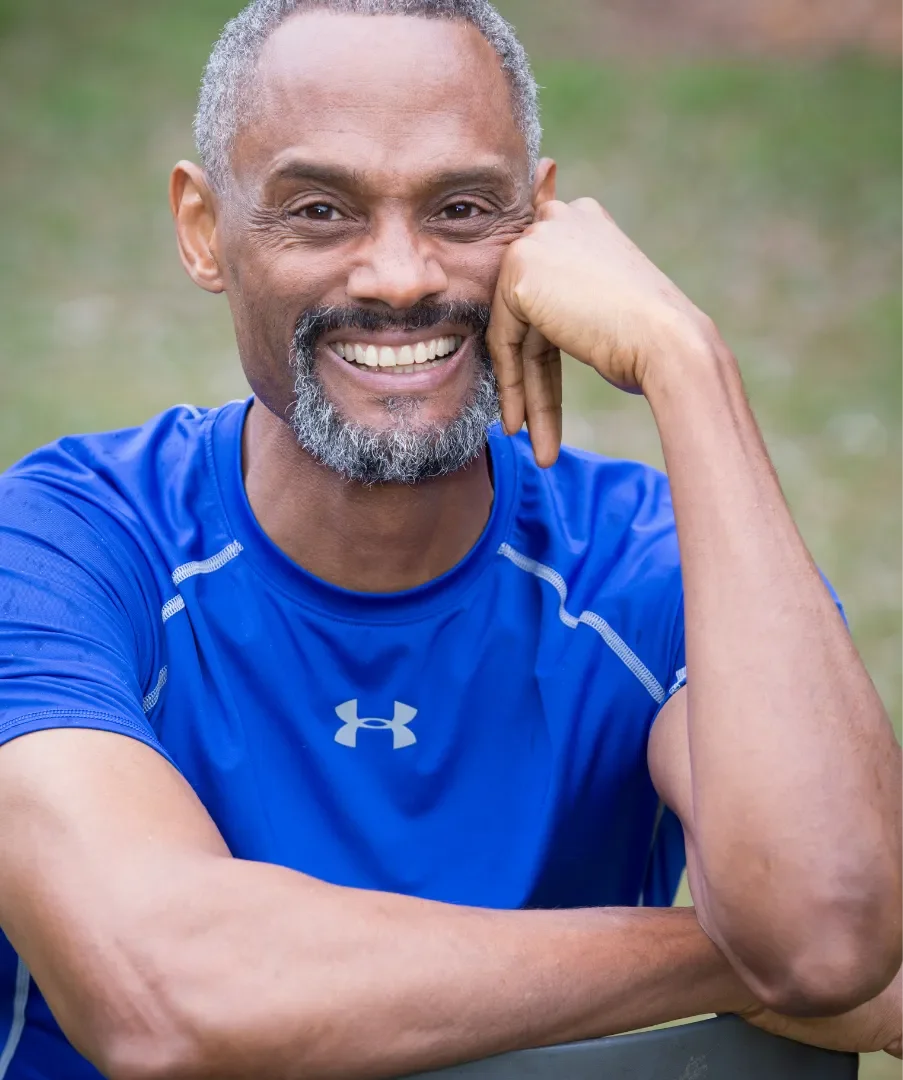
Vince Rountree is passionate about helping people reverse their health
In 2011, a routine physical revealed a total cholesterol of 240 and LDL of 170 for Vince Rountree. Told there wasn’t much he could do beyond medication, Vince (a chemical engineer) wasn't buying it and kept searching and eventually found the work of Dr. Caldwell B. Esselstyn, Jr.
So he went all-in.
For six weeks, Vince ate a 100% whole-food, plant-based diet with no exceptions. When he retested, his total cholesterol had dropped to 132 and his LDL to 78.
That experiment changed the course of his life.
Today, Vince is a health coach and founder of The Food Fixer Path, helping others explore what whole-food, plant-based nutrition can do for their health. He and Rip dig into type 2 diabetes, heart disease, ApoB, behavior change, social pressure, and why community and a strong WHY can make all the difference.
They also talk about Vince’s latest experiment: getting stronger after 60.
Since beginning serious strength training, Vince says he has added roughly 20 pounds of body weight and increased his bench press from around 175–185 pounds to 315-all without protein powders, shakes, peptides, or tracking macros.
His approach is refreshingly simple: eat whole plant foods, train consistently, and keep showing up.
You'll hear:
Vince’s six-week cholesterol experiment
Discovering Dr. B. Caldwell Esselstyn, Jr.
Type 2 diabetes, insulin resistance, and the carb debate
Heart health, cholesterol, and ApoB
Why Vince created his five-day health challenge
The importance of community and behavior change
Finding a WHY strong enough to keep you going
Building muscle after 60
Getting stronger without protein powder or macro counting
Why consistency matters more than complexity
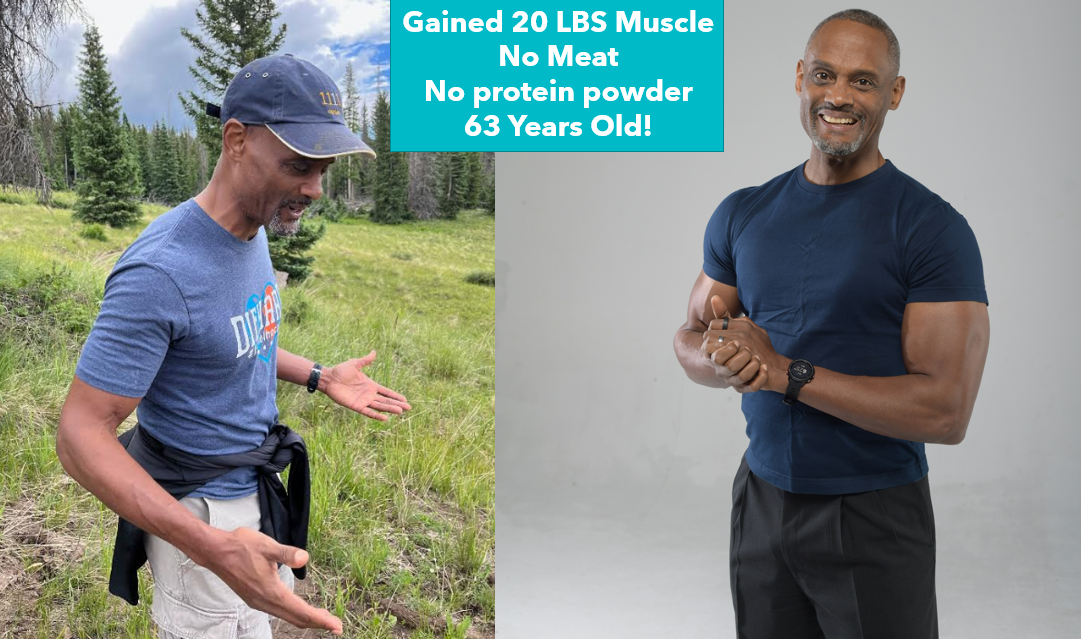
Yes! You can build muscle on a plant-based diet (no powders, required!)
Episode Resources
Watch the Episode on You Tube: https://youtu.be/3HlnSeufq9o
Connect with Vince:
https://www.instagram.com/thefoodfixers/
https://www.facebook.com/thefoodfixers
https://www.linkedin.com/in/vincerountree/
https://www.theredlinechallenge.com/go
We hope to see YOU at one of our Live Events! https://plantstrongevents.com/
To stock up on the best-tasting, most convenient, 100% PLANTSTRONG foods, check out all of our PLANTSTRONG products: https://plantstrong.com/ Use code: podcast to receive 10% off your first order.
Give us a like on the PLANTSTRONG Facebook Page and check out what being PLANTSTRONG is all about. We always keep it stocked full of new content and updates, tips for healthy living, and delicious recipes, and you can even catch me LIVE on there!
We’ve also got an Instagram! Check us out and share your favorite PLANTSTRONG products and why you love it! Don’t forget to tag us using #goplantstrong 🌱💪
Episode Transcript via AI Transcription Service
speaker-0 (00:00.17)
I'm Rip Esselstyn and you're listening to the Plant Strong podcast.
speaker-0 (00:07.22)
My guest today is Vince Rountree. He's a health coach, educator, and one seriously energized 63-year-old. His journey started in 2011 when a routine physical revealed a total cholesterol of 240 milligrams per deciliter and an LDL of 170. His doctor told him that medication would likely be for life.
And that because high cholesterol just ran in his family, there really wasn't much that Vince could do about it. But Vince wasn't buying it. He discovered my dad's work, went 100% all in on whole plants, and six weeks later, his total cholesterol was 132 milligrams per deciliter, and his LDL was 78. Again, this is without
Any medications or statins. This experiment completely changed his life, and since then Vince has dedicated himself to helping others discover what food can do for their health. And these days, he's running another experiment. How strong and muscular can you get after 60 eating whole food plant-based without protein powders, shakes, or obsessing over macronutrients?
Little spoiler alert, pretty darn strong. Today we're going to talk about heart disease, diabetes, behavior change, building muscle after 60, and why Vince believes that your best years don't have to be behind you. Let's light it up with Vince Rountree right after these messages from Plant Strong.
speaker-0 (02:03.392)
One of my favorite myths to crush is the notion that eating plant strong is more labor intensive and it takes a ton of time. Because this is simply not true. You don't need to cook every meal from scratch. You don't need the perfect pantry. You just need more good choices that are easy to make over and over. And this is why we created plant strong foods, our chilies, our stews.
Cereals, granolas, pizza crust kits, and a lot more. They're all built from whole plants made without any added oils, no refined sugars, and no excessive sodium. They're there for the busy days, the tired days, and the days when you just need something simple that helps you stay on track. You can see our brand new product assortment at PlantStrong.com, including our insane.
world-class oil-free date-sweetened granolas that are crunchier and more cravable than ever. If you're a healthcare professional or you simply want to learn more from some of the leading voices in lifestyle medicine, virtual access will be available for our upcoming Vital Science Conference. You can watch the full program from wherever you are and hear practical, actionable conversations about nutrition,
Cardiometabolic health, behavior change, and bringing food as medicine into real life. Visit plantstronevents.com today to learn more and to sign up. We are also super jazzed to announce that Plant Strong Sedona is returning September 20th to the 25th, 2027. If you've ever wanted to step away from your normal routine,
and immerse yourself in six days of amazing food, movement, education, expert guidance, and a spectacular community. Sedona is a pretty special place to do all of that. We're gonna cap it at a hundred people this year. Early bird registration is now available at plantstronevents.com. And one more thing, a completely new
speaker-0 (04:29.998)
Plant Strong Meal Planner is coming soon and it's built to make planning, shopping, and putting Plant Strong Meals on the table easier than ever. So whether you start with your next meal, a pantry reset, a conference session, or a week with us in Sedona, the goal is the same. Make the next good choice a lot easier.
speaker-0 (04:59.402)
All right, my cruciferous cousins. Welcome back to the Plant Strong Podcast. Today I have got Vince Rountree joining me on the podcast. And Vince, you're not going to believe this, but believe it or not, Vince and I are the exact same age. We are both 63 years old. He looks like a billion bucks, not a million bucks, a billion bucks. And I can't wait to talk about your daily routine, how you're you're you're lifting up.
speaker-1 (05:18.53)
Sixty three.
speaker-0 (05:29.598)
weights, you know, greater than you ever have in your whole life. I want to talk, you know, you're an a a a wellness expert and you've got lots of clients that you've helped with heart disease, with diabetes, with with cancer, with weight loss. And I really want to dive into all that. But for starters here, Vince, my plant strong brother, tell me this. The name, the last name Rountree. I don't think I've ever heard that before. What, like, where does that come from?
speaker-1 (05:52.098)
Yeah.
speaker-1 (05:58.892)
Well, actually, since we are the same age, you may have heard back in the seventies, or you may not remember, I'm not sure, but there was an actor named Richard Rountree who played Shaft, John Shaft in the in the Shaft movies in the seventies. Sure. And his name was Richard Rountree. And believe it or not, my dad's name was Richard Rountree.
And when he and my mom would go on vacation and the reservations were in the name of Mr. and Mrs. Richard Rountree, people just knew that John Shaff was gonna be showing up. But yeah, no, but my dad's name was Richard Rountree, but not the actor. He was an educator, was a principal of of an elementary school and vice principal before that. So I come from an education family and I'm kind of doing education work now.
speaker-0 (06:51.074)
You sure are. So what kind of a diet did you grow up eating and were you an only child or did you have brothers and sisters?
speaker-1 (07:01.464)
Yeah, I got an older brother and a younger sister. And we grew up on this standard American diet. I will say that my mom was really ahead of the curve on this health thing. born in night I was born in 1962, I guess the same year as you. And Jack Lane was on TV in the 70s, and I remember my mom in the 60s and 70s doing the Jack Lane TV exercises, you know. So
Yeah. She she raised us with eating fresh and she always said, because Jack LaLanne said, right, that fruits and vegetables. And so I certainly had that growing up. Now, yes, we did have meat, and fish and all animal, you know, all of the regular animal based products. but I would say it was kind of on the healthier side of the standard American diet, which was not good enough to keep me away from getting high cholesterol, but that comes later in the story.
speaker-0 (07:57.058)
Okay, good, good, good, good. so why and when did you decide to make the switch from the standard American diet, you know, with because of Jack Lelane and your your educated mother, a little more fruits and vegetables than probably the normal household, but why the switch and when?
speaker-1 (08:15.928)
So in 2011, I went in for a regular physical, and the doctor said you got high cholesterol, high blood pressure. The blood pressure was not high enough to need medication. but the cholesterol was, my total cholesterol was 240, and LDL was 170. And I asked my doctor two questions. I said, first, how long do I gotta take these statins? And he said, the rest of your life. I'm like, okay, that's not the answer I was looking for.
speaker-0 (08:45.399)
No.
speaker-1 (08:47.052)
And my next question was, okay, well, what else can I do other than take the pills? And his answer was, it runs in your family, so there's not a lot you can do about it. Well, I can't tell you why, but instantly my thought was, because he doesn't know, that doesn't mean it doesn't exist. And in July of 2011, I started looking for the healthiest ways to eat.
speaker-0 (08:57.901)
No
speaker-1 (09:16.322)
The way to eat to bring down cholesterol, the ways to eat to bring, and you know, when you put a search in Google, you get everything. You know, eating more meat is better, eating the South Beach, you know, everything. But my undergraduate degree is in chemical engineering. So I like data, I like statistics, I like facts. And I knew that the reason why high cholesterol was an issue was because it caused heart disease. So in in my
infinite number of Google searches I put in how do you prevent heart disease? And guess who came up?
speaker-0 (09:56.046)
god, I I you got me. You got me.
speaker-1 (10:00.942)
So I f so I so I found one of your dad's YouTube lectures and I will never forget it. I mean, it I mean, really, it was kind of a life changing moment. Coronary artery disease is nothing but a toothless paper tiger that need never exist. If it does exist, it need never progress, for it is a foodborne illness. I literally moved them, tagged back to the beginning and listened again. I said, This guy didn't just say heart disease was a foodborne illness.
So I was like on the edge of my chair. I'm just listening. And and and he goes on talking about this initial 24 patients and that and and his brother called them the walking dead. And the first published was after five years, and 18 out of 18 all got better. The six that didn't got kind of worse and worse. Then his next report was after 12 years, he published that. One person got off the diet.
The 17 that remained on, they all got better. And I was like, this has got to bring down my cholesterol. I'm going all in just the way Dr. Esserston says. I'm not going to make any exceptions. I want to know how my body is going to respond if I go a hundred percent. I didn't want to contaminate my own experiment. I want I a hundred not one barbecue wing, not a hundred percent.
speaker-0 (11:21.304)
What?
speaker-1 (11:24.04)
And in six and and in six weeks, it took me six weeks to get my next blood test. And in six weeks, my total cholesterol went from two forty to one thirty-two. and the bad cholesterol, the LDL, went from 170 down to 78. and that and that and that was in twenty eleven and literally my life changed forever. so that yeah, that's that's my story. That's how I got into this thing.
speaker-0 (11:41.321)
huh.
speaker-0 (11:52.238)
That's that is really remarkable. I mean, those are gorgeous, gorgeous cholesterol numbers. Really nice drops. And the crazy thing is, you you know, you waited six weeks. Yeah. But my bet is if you'd only waited two weeks, those numbers they wouldn't have been quite as beautiful, but they still would have been like jaw dropping.
speaker-1 (12:12.312)
Yeah, I I I I bet you're right. I bet you're right. and so no, I was I was blown away. And then just kind of the way that I am, I'm I'm so curious about how things work and I love science. And so that was twenty eleven. So starting twenty twelve, I went to my first nutrition conference and it was a veg source conference that Jeff Nelson holds in California. You probably remember him. Yeah. And and and your dad was speaking.
At that conference, I got a picture of him. I sent you a picture of, or at least carried a picture of me and your dad together in 2012. And I was like, man, this is it, this is it, and just understanding the science. And literally, I I have since 2012 till now, I have gone to some type of nutritional, plant-based nutrition conference every year since that day, because I just love learning more, learning more, learning more, and then sharing it with.
Anybody who will listen to me.
speaker-0 (13:08.11)
That's so admirable. And you know, your your your passion and your enthusiasm are coming coming through my computer screen and you know, kind of hitting me. It's it's it's awesome. well, so tell me this. So you you were in corporate America. what were you doing in corporate America?
speaker-1 (13:31.448)
So my my undergraduate degrees in chemical engineering, I got an MBA, you know, master in business from Emery. And at the time I was in sales and marketing. I was responsible for the PL or the profit and loss statement of the tissue business of Georgia Pacific. And my job was to maximize profitability of a category of products.
speaker-0 (13:54.542)
Wow. Okay. did you have a passion for the job or was it just a job?
speaker-1 (13:59.808)
You know, what you see right now is kind of what you get. And at the time I was selling toilet paper and and and the same level of passion you see right now, I kinda had for what I did because I believed in the products that I was selling and it was really helping a lot of companies save a lot of money in the systems that we sold. and and in fact, the the company used you know, a lot of vide I did a lot of videos, I did voiceover work.
because I I carried the same level of enthusiasm and that worked and that really helped to motivate our sales base and and our distribution base to grow the business. so so yeah that's that's what I was doing in corporate.
speaker-0 (14:43.884)
What what made your toilet paper so outstanding?
speaker-1 (14:47.096)
Yeah.
I was not expecting that question. so so d Georgia Pacific, the who I was working for, has an at home and away from home. So the at home is what you get, you know, in the grocery store or or whatever is at home. But I was in the away from home tissue business. So our systems were sold in like airports and hotels and restaurants, stuff like that, right? And if you can prevent waste, you can save a lot of money because imagine the airport.
If there's like this much toilet paper left on the roll in the stall the next day, they gotta throw that away and put new paper on because you can't afford to rent out a toilet paper. But we sold a system that used all of one roll before the next one came down. So it saved a lot of money for and and eliminated waste and or reduced waste and saved money and made a lot of money for the company at the same time. I can't spend over twelve years and I'm going back there. Nice nice word, Rick.
speaker-0 (15:48.866)
But it's it's interesting because I find having the right toilet paper is it's very important for me. I mean, you know, like people like you and me, right? I mean, we're we're we're playing strong, we're getting seventy to ninety grams of fiber a day, you know. We're here we are going to the bathroom very easily, probably two to four times a day. A lot. And so and so the to me, the how you take care of your your butt.
is i is important. And you know, I get some of these, you know, they're very environmentally friendly, you know, they they're they they come from re reused paper. It's not it's not the best experience.
speaker-1 (16:28.824)
Yeah, recycle.
Yeah, recycle fiber. It it well, you're right. There's a there's a broad spectrum. I mean, you can get everything from the low cost, you know, scratchy stuff to super soft stuff. But they can make recycle fiber stuff soft as well. That and that that can be done. It's just you gotta pay a little more for it.
speaker-0 (16:48.942)
All right, Vince. Hey, give me a little fist bump, man. Boom! Boom! We're just getting started. I love this. Yeah, we are. Tell me this. When did you decide that you were gonna hang up the toilet paper, right? And become a wellness expert. And wow, do you ever like bring the energy and the motivation?
speaker-1 (17:14.078)
so when my change happened in twenty eleven, so by twenty twelve, my passion for I mean, just the idea of so many people with high blood pressure, high cholesterol, and the fact that the food can change it, that emanated from me. And so I was kind of helping people in the office and people, hey, do you think it'll work for me? Yeah, it'll work for you. This is what you need to do. You so and so. And so I was helping people while I was still working. As a matter of fact,
I I I met our CEO. I worked with our CEO to try to get your dad to come to Georgia Pacific to talk. I you know, and and I and I sat down with him. but that didn't happen. I was too young and I couldn't answer all of the questions. But anyway, to answer your question on how my journey changed was the the end of twenty fourteen, I left I left Georgia Pacific and in January of twenty fifteen I was
On an interview with a company, and I live in Atlanta. This interview was in Philadelphia, and I was sitting literally at the interview table. Four people were in front of me. And all I can describe it is I had a calling. I I'm I'm sitting in an interview, and just as sure as I hear your voice, I heard a voice that said, Don't do this.
You need to share your message with the world.
speaker-0 (18:47.255)
Mm.
speaker-1 (18:49.626)
And I can't tell you how powerful that was, but I knew when I got on that plane, I took a selfie on the plane and I said, This is it. And from a from a from a planning standpoint, it was the stupidest thing I ever did. I didn't have a plan. I didn't, you know, you know, I I didn't I didn't have a strategy. I didn't have a plan. I didn't know what I was gonna do. But I've I just felt like I have to try something. And and so I did and and and it was it was
been a journey, ups and downs. yeah. Yeah. So that's that's that's that's what happened. Yeah.
speaker-0 (19:20.197)
yeah.
speaker-0 (19:23.682)
Yeah. All right, let's let's talk about the three kind of the three big kind of killers right now in America. Diabetes, heart disease, and cancer. you know, I think that you are a believer that they are not only preventable, but in many cases they're reversible. So let's start with diabetes. I'd love for you to walk us through what is actually happening in the
speaker-1 (19:44.611)
Yeah.
speaker-0 (19:52.482)
body in the pre-diabetes stage. And why is this such an important window when we can kind of like get on top of it?
speaker-1 (19:59.448)
Yeah, diabetes is a good one because the the the evidence today is we know what causes diabetes. And this is part of what drives me because we I I know that when doctors are in medical school, they're taught you'll have this forever. But that's not true. We know what c we know what causes diabetes. Diabetes is caused by an excess consumption of saturated fat and junk food. And so what happens is when we eat and above.
Abundance of animal-based foods. We think we're eating it and getting protein, but what we're really getting is a bunch of saturated fat. That saturated fat gets in the bloodstream and that happens pretty quickly. On my talks, I have a I show an image from the game changers of what lipemia looks like, what that fat in the bloodstream looks like. You can see it. Yeah so it's so in my talk when I'm describing diabetes, I actually show this is after you eat a cheeseburger, after you eat bacon and eggs, after you eat turkey, after you eat fish.
The saturated fat gets in your bloodstream very quickly from the bloodstream to the to your muscle cells. And here's the thing fat does not require any hormone to get into your muscle cells. Now we have to have insulin to start the process that allows glucose to get from the bloodstream into the muscle cell. That requires a hormone called insulin. But to get fat in the muscle cell,
No insulin is needed. So we eat this, you know, this big rich steak and you know for protein, and you're flooding your body with these fatty acids that can then get into the muscle cell. And once that fat gets in the muscle cell, it impairs the signaling between insulin and the muscle cell that allows that what's called glute for transport that opened up and allows glucose to get from the bloodstream into the muscle cell.
You see, glucose is one of the body's primary sources of fuel. But in order for the body to use that fuel, the glucose has to transport from the bloodstream into the muscle cell. But if you've already got fat in that muscle cell, then all of the biochemical reactions that take place from when insulin attaches to the receptor, then there's a bunch of reactions. And the last step, GLUT 4 transport opens the door and say glucose come in.
speaker-1 (22:26.254)
Well, all of those intermediate steps get fouled up. And so you don't get as many GLUT4 transports. So some glucose gets in, some glucose stays out, and elevated glucose in the bloodstream is the very definition of diabetes. So all we have to do is simply don't eat the thing that caused it in the first place. I mean, and literally and so I run this five-day challenge that I'll talk to you about in a minute.
And literally during my five day challenge, where I ask people to eat a whole food plant based diet of meats, j j just fruits, vegetables, whole grains, beans, legumes, potatoes, just eat that for five days and let's see how your body responds. That's all I want you to do. I'm not asking you to make a lifelong commitment. Try it for five days. And what happens is by day three, glucose levels start.
Dropping. And you said specifically pre-diabetes because during pre-diabetes, at that point, you only have insulin resistance in the muscle and insulin resistance in the liver. It has it hasn't attacked the pancreas yet. When it attacks the pancreas, glucose goes through the roof. And so when you're in prediabetes, it is the best place to eat a whole food plant-based diet. And I have never seen somebody's glucose not come down. I've never seen it.
speaker-0 (23:47.778)
Yeah, yeah. I that was a great explanation. I really appreciate it. I have a question though. You said that
So glucose, it needs that hormone insulin in order to basically get escorted into the muscle cells. Why do you think evolutionary speaking, fat doesn't need some sort of an escort? Why can it with reckless abandon go into our, you know, our muscle cells? I mean, it just seems so
speaker-1 (24:22.92)
Yeah, that's a good question. You know, I really think, you know, we were designed with fat cells for evolution. See, our bodies, our bodies were were were were designed to survive in an environment where food is scarce. I mean, it's only been the last couple hundred years that we got grocery stores on everything. If you go back, you know, 150, 200 years, food was not plentiful like it is today. And so we went long periods of time without eating.
How do we survive? Because we're able to store fat when we do eat, and and and and then we could go long periods of time without eating, and those and those fat cells would would would then become esterified, and that will allow it to be converted into ketone bodies, and then our bodies, then our muscles can run ketones. So if we didn't have the ability to store fat the way we do, we would be extinct as a species. The problem is.
We're living with a body that is designed to live where food is scarce, and today food is plentiful. That's the problem.
speaker-0 (25:30.35)
Yeah, great explanation. Tell me this. When you have a client that has prediabetes or type two diabetes and they come to you, what do you find is the biggest myth that you have to debunk with them?
speaker-1 (25:46.594)
that's easy. That's easy. Because the doctor tells them to do it. All you gotta do is cut back your carbs and you're good. That's the biggest all you gotta do is cut and and it's a logical thing. It's it's so logical because carbs convert to glucose. Elevated glucose in the blood is the definition of diabetes. So it makes sense logically that if you eat less carbs, that you have lower glucose. But what I tell people that ignores one thing.
Why is it this person can eat a potato and their glucose goes up to 400 and stays there? And this person can eat the exact same potato and glucose goes to 140 and comes right back down. Same potato, but different response. So while the logical thing to think of is, well, I got to cut back on my carbs, it ignores the cause, which is the fat and the muscle cell long before you eat the carb.
So the biggest myth that I have to overcome with people is to understand that what I'm helping you to do is helping your body to learn how to metabolize carbohydrates properly. Because remission is normal glucose levels with no medication while eating rice, beans, potatoes, and fruit. Those very foods that people are told to avoid, I want you to eat them, but not in the environment of eating animal-based foods.
speaker-0 (27:14.818)
So you just you just used the word remission. My so my follow up question is in your opinion, can type two diabetes be fully blown reversed, or do you does the body just go into remission?
speaker-1 (27:32.406)
I call I call it remission because the the the reason why we don't want to use you know something permanent like cured or reversed forever is because if you go back to eating the foods, you're gonna go back to having the same diabetes. So, so as long as you eat a whole food plant-based diet and we can get your glucose under control, then you will have normal glucose levels as long as you keep eating this way.
The reason why I don't like to say you're reversed or cured forever is because if your eating goes back, the diabetes will come back. And oil is unbelievable. It only takes when I s because I've been coaching people now for 11 years. And
speaker-0 (28:14.68)
So you mean to tell me you're oil free, Vin
speaker-1 (28:19.368)
Boom, my plant-based brother. Boom. You know, I I've I've I've seen people have normal glucose levels while eating a whole food plant-based diet. And and and and and and part of how I do this is I have a weekly coaching program where I have a community of people that we are checking in. And that's so very important because a lot of people want to get off the program. But
When you're checking in on a regular basis, then that helps to make these new habits something that will you can you can do for a lifetime. And and and when you do that, then you can stay eating this way for a lifetime and then your diabetes will be gone for a lifetime.
speaker-0 (29:07.052)
Yeah. let's move on. Okay. That was fantastic, fantastic job explaining everything related to diabetes. Bravo. Let's talk about let's talk about heart disease. Okay. And and and and you know, obviously I think my audience is pretty is pretty well versed in heart disease, but you have such a a fantastic way of explaining it and obviously your enthusiasm.
Then I'm gonna, you know, throw you a a softball and let's just see see what what you say. But so with heart disease, what does the research show as far as diet's role in reversing the arterial plaques? not just slowing it down?
speaker-1 (29:51.726)
So this is one where I am so excited because Dr. Kim Williams, I mean, that man, your dad, I mean, these guys who are pioneers, for the last 23 years, back since when he was the the president of the American College of Cardiology, has been working on changing the dietary guidelines on treating dyslipidemia. And as of March thirteenth of this year.
The new dietary guidelines are out on the treatment of dyslipidemia. Well, there's a new guide on the treatment of dyslipidemia, and there's a lot of that report is like 200 pages long. But the section on eating is section 4.1.2.1. And in there, they specifically say fruits, vegetables, whole grains, legumes. And then they say replace saturated fat with unsaturated fat.
It is and and even the the the the last guidelines before that included fish. Now they've eliminated fish. So the so so the answer to your question on the best diet for reversing heart disease is now the dietary guidelines that are agreed upon by all of the major organizations, the American Heart Association and about a dozen other associations. Now that scientific community all agrees.
That a whole food plant-based diet is the best way to eat. And and and and I feel so good at that because one of the things that I always say in my presentations is I show your dad's angiograph on on on Dr. Joe Crow of of of that clogged artery, and then the only intervention was plant-based nutrition and it's wide open. And then after I show the before and after, I say, Dr. Esleston published this in two thousand one.
And here twenty-five years later it's not being taught in cardiology school. Only because it it's it's it's contrary to profit. And that's horrific. That's horrific.
speaker-0 (31:59.97)
Yeah. So you talked about how these new dietary guidelines came out and you you cited Kim Williams in in March of this year. What about the the new United States dietary guidelines?
speaker-0 (32:18.936)
So yeah.
speaker-1 (32:22.306)
It it it really is, because I'm also a fan of Dr. Christopher Gardiner, who's a nutritionist from Stanford, and he was on the committee and literally dedicated ten hours a week for two years on a committee of I think it was like thirty or forty specialists to produce this scientific document showing what are the healthiest ways to eat.
And it was basically balled up and thrown away. Gardiner tell that story many, many times, and he he i i he almost tears up. You know, because because the work was done and the results were basically thrown away. And there there's a there's there's a couple of things in there. They say get your essential fats from from olive oil, except
speaker-0 (32:53.025)
I know, I know.
speaker-0 (33:04.066)
Yeah.
speaker-1 (33:19.05)
Olive oil doesn't have many of the essential fats. I mean it's it's so you know, it's the omega threes and the omega sixes are the essential fatty acids and you you you don't find those there. So Yeah, yeah, so th there's a lot of yeah, that's that's that's
speaker-0 (33:32.055)
Yeah, yeah.
Yeah no we we don't we don't need to dive into that too much here. What what's one heart health number that you think people should be tracking that most doctors aren't emphasizing enough today?
speaker-1 (33:51.48)
Well, I I would say that are not tracking it. Probably probably APO B. But probably APOB, because, you know, we know that LDL is you know what we call the bad cholesterol, even though they're both the same, but it's the carrier, it's the number of particles. And APO B measures the number of particles. and there are people that can be discordant, which which which means you can have a high LDL, very low amount of particles, and your risk for heart disease is low.
But discordant can go the other way. You could have a low amount of particle, a low amount of LDL cholesterol, a lot of particles, and you're feeling good about that, you're discordant and your risk for heart disease can be high. So while LDL is a good proxy, Apo B is more accurate.
speaker-0 (34:42.36)
So is Apo B does that also include then kind of like triglycerides along with it? and you mentioned, you know, how you can have a low, but you've got you are you referring to like the s the small the small dense LDL as opposed to the the fluffy?
speaker-1 (35:01.23)
Well the LDL is is i th think think think of this. your your your your what we're talking about now are lipids which are fats. Okay? Your blood is aqueous. So oil and water don't mix, right? If you put oil and water together, it's gonna separate. Yeah. So so the only way that fats can be transmitted in an aqueous environment, which is the bloodstream, is you have to have an emulsifier.
speaker-0 (35:09.762)
Yeah.
speaker-1 (35:28.918)
And in the body, that emulsifier is a protein. and and that's what the apolipo B. So apolipo B is like a protein. Think of it as a beach ball with little pebbles inside of it. And so the beach ball is the apolipo B. That's and and the number of those is what contributes to atherosclerotic plaque more than anything. and it's just that usually that there's a higher amount of LDL in there, but.
Inside that APOB is LDL, V LDL, I LDL, triglycerides, all of them are inside those APOB particles. But as it flows through the bloodstream, it it it some some of those particles come out come out of the blood and some come in.
speaker-0 (36:13.496)
Give me an idea here, because I I am not as versed in, you know, this as you are. What should a like what's a what's a a normal number and what's an elevated number when it comes to the lipoprotein be?
speaker-1 (36:32.268)
Now that's another one where those new guidelines really help. so i i i in general you would you'd want that APOL lipo bee to be like below sixty, seventy, sixty. The lower the better. and so but yeah, I I think the guideline is is is right around sixty.
speaker-0 (36:52.396)
Yeah. Because you know, that seems to be these are like new numbers that I didn't even hear anybody talking about three, four years ago. L P little A, lipoprotein B. Yeah. Right. I mean
speaker-1 (37:05.464)
Wow. And a and the L P little A is something that that they say is hereditary and can't be and can't be changed. But Jeff Nelson on one of his videos, he went to True North and I think he did a fasting for two weeks, I wanna say, and his L P little A came down quite a bit. So I think we may find out that there is some you know, that you do have some control over it.
speaker-0 (37:29.774)
If you look at if you follow Joel Kahn, cardio cardiologist, on Instagram, you'll see that he is getting phen phenomenal results bringing down people's L P little A like from two hundred and fifty down to like sixty. I mean
speaker-1 (37:47.128)
Phenomenal. I no I d I didn't know that. I didn't know that. That's pretty that's phenomenal.
speaker-0 (37:52.044)
Yeah, and I don't know all the tricks that he has up his sleeve, but he's he's getting he's getting some good results. Let's move on to cancer. Okay. So cancer to me, cancer prevention and reversal seem it's a little bit murkier than it is. Than than than heart disease or diabetes. I go, you know, how do you talk to your clients if they have cancer without kind of over promising?
speaker-1 (38:07.319)
It is.
speaker-1 (38:14.54)
Here is what I think is so important to understand cancer is that it's it's so important to understand that the foods that you eat can contribute to how rapidly those cancer cells divide and multiply, or how much it retards that growth. Right? And and so you're right that it is not nearly as clean-cut as diabetes.
And heart disease. But here is what we what what what we've seen, and I have had cli I've had clients who has reversed cancer on a whole food plant-based diet. and the reason why it and treatment, and again, I want to be clear, I'm not saying don't get the treatment. Okay, I'm not saying that. What I'm saying is the food that you eat when you're eating and when you're eating animal-based foods, that that saturated fat.
Triggers your liver to make an abundance of IgF1. And we know IgF1 speeds up the growth of cancer cells. And and and so if you've got cancer, you want your IgF1 levels to be as low as possible. The way to do that is a whole food plant-based diet. And when you do that, you can literally slow down the growth of cancer. Because the the important thing to understand with cancer is that when we say it's a chronic disease,
speaker-0 (39:23.767)
Yeah.
speaker-1 (39:43.552)
It can take 20 years. It can take over 20 years for that first malignant cell to multiply enough where it can even be detected. In other words, you're getting tests and they're saying, we don't see it. Get a test again. We don't see it. For 20 years, we don't see it. It's there. It's just not enough to be detected. Well, the foods that you're eating during that phase will determine.
If you die from that cancer or you die of something else and you even know you had that cancer, because that's what's what's more important is if you have the cancer and you die at a hundred years old from natural causes, nobody ever knew. And and and and and we know that a whole food plant-based diet slows down that growth. And that is the single most important thing that you can control, and that is how fast is that cancer growing.
Because it's the multiplication of those cancer cells that's what makes it deadlier. And then if that metastasizes and goes from one body part to another body part, that's the problem. But if we can slow that down, which we can with food and sleep and exercise and stress management, then you have you give your body the best possible chance of fighting it off.
speaker-0 (41:01.298)
Mm-hmm. Mm-hmm. Well said. so when we look at these three big diseases, heart disease, diabetes, cancer, do you see them as mechanistically very different? Or do you think they're all a constellation of kind of the same root causation, which is us not eating the right way and it causes this kind of, you know.
inflammation that presents itself in different people different ways. What do you think?
speaker-1 (41:33.966)
I think for most people, the food, I'd say for everybody, the food has an impact on it. The food always has an impact on it. Now, does that mean that there, you know, are not people that have a genetic predisposition that means that they'll definitely get it? That's a small number. It's just like FH for heart disease, familial hypercholesterolemia, right? Or or familial hyper hypolipidemia. One out of 250 people have that gene.
And if you've got that gene, I mean, there are studies of children 10, 15 years old dying of a heart attack with super high. But that's rare. A one out of 250 have that, which means 249 out of 50, your food controls it. So I think the answer to your question on heart disease, on diabetes, on cancer, on many chronic diseases, the food plays a vital, vital, vital role.
on whether those things proliferate or not. And that and that there are a very few amount of people that regardless of what they do, they will have an illness.
speaker-0 (42:45.004)
Yeah. You know what what's what's so fascinating is, you know, I love talking to my dad about this, as you can imagine. Yeah. And, you know, he takes and he's still counseling people. He's ninety, he'll be ninety-three this year, and he's still counseling people four to five hours a day. All for f wow. All for free, just because, you know, it's it's what he loves doing now. But he you know, and he always talks about how usually these people will come back to him two to three months later and
Their BMI has come down dramatically. They no longer have the pre diabetes. You know, all their their lipid numbers are looking beautiful. and so, you know, i i it's it's crazy how when you start eating this way, whether you're diabetic, you got heart disease, cancer, almost everything falls in line. You know what I mean? Beautiful thing.
speaker-1 (43:37.26)
Yep. Yep. It it's it's unbelievable. And and and you know, that's that's what I have had the pleasure of seeing in my five day red line challenge. We we now have run over nineteen thousand people through my five day red line challenge. I've been doing this thing for five years and and and and I ask people at the end of every challenge to send me your results, how much weight have you lost? Over six thousand people have sent me their data and the average weight loss average.
speaker-0 (44:06.579)
Average.
speaker-1 (44:07.712)
Over five days is four pounds.
speaker-0 (44:10.282)
Yeah, yeah. I I I love that. But this is what this is what I I don't want to focus on weight loss today because I want I want to bring you on again. And so so the next time that you come on the Plant Strong podcast, it'll be soon. It'll be this will be part two with Vince Rountree. We'll talk we'll we'll talk about weight loss and some other things. But okay let's let's move on. So I want to talk about now, I want to talk about like behavior change. Okay. So you've had you said how many? Nineteen thousand people go through.
Your five your five day challenge?
speaker-1 (44:40.716)
Over nineteen thousand people have been through my five day.
speaker-0 (44:42.67)
Congratulations. That's phenomenal. what would you say when someone comes to you and they want to start, you know, working with you Vince and you put them on the five day challenge, they probably feel a little bit overwhelmed. especially, you know, if you're gonna tell them to change everything overnight. what do you tell them to do first? Like how how how do you handle that?
speaker-1 (45:07.192)
So here's the thing. the purpose of my five day challenge is to get them a result. What's really important to me and to them is that I don't position it initially as I want you to do this the rest of your life. No, no, I'm not gonna do that. Okay, I'm not asking you to do it. Here is what I'm asking you to do for just five days. I want you to see.
How your body is going to respond when you eat these foods. Now, if you, if at the end of the five days you say, Hey, listen, Vince, this is malarkey. I'm not doing this. I say, Great. I still love you. We can still be friends. Awesome. But during that five days, not only am I asking you to eat a whole food plant-based diet, but
speaker-0 (45:38.605)
Yeah.
speaker-1 (46:05.312)
I give talks every day. The first talk is on calorie density, how you can eat as much as you want and still lose weight. Then I also talk a little bit about cancer on the first day. Then the second day, I talk about how to reverse type two diabetes. I got an hour presentation on how to reverse diabetes. The third day, it's Dr. Esselston, how to reverse heart disease. the fourth day, we then start talking about how to make longer term
Behavioral changes. And the last day we talked about the new weight loss drugs and the medical industry and the food industry. So during those five days, you get an experience where you are seeing for yourself how your body responds, and you're getting this education on how this can reverse chronic disease for the rest of your life, should you decide to do it. So, in my experience, I think it's important to emphasize.
That I'm not asking you to make a lifetime change. Let's just see how your body responds during these five days.
speaker-0 (47:10.914)
Vince, why did you pick five days instead of six or seven or eight or nine or ten?
speaker-1 (47:16.386)
We actually started the first one I did was ten days. And frankly, it's a lot of work for me. So ten days is a lot. and and and and and then it was seven days, and then it was five days, and I might even make it three days because here's the most important thing for me is to get them a result. And and and then the social proof. Because for the last five years I've been doing these live. Now we got them automated, and so people are watching videos.
speaker-0 (47:35.48)
Yeah.
speaker-1 (47:46.146)
But when they were live, I'm I asked people to put in the in the in the chat what they're experiencing differently. And when people are seeing my glucose went down and my blood pressure went down and my knees don't hurt anymore and the brain fog is down, that social proof becomes very inspirational to people who are watching. Cause some people they say, Well, I'm not gonna start eating that way. I just go to all of the Zoom calls and see what this is all about first.
But that social proof is very, very helpful.
speaker-0 (48:17.282)
Tell me a little bit about the what would you say is predominantly the demographic that you're working with, dealing with?
speaker-1 (48:25.908)
I would say mostly women and I would say 50, 60, 70s is kind of the average. I would say probably 90% of the people that join my program are women. I'm working on that to try to get more men involved. and it tends to be 50 and above. Occasionally I'll get some people in their 40s. I've had people in their 30s on, and I think that's so admirable because I call if you're in your 30s, you're still kind of bulletproof.
speaker-0 (48:55.192)
So yeah.
speaker-1 (48:56.696)
To get them involved is pretty cool.
speaker-0 (48:59.662)
How do you personally handle social pressure from like, you know, family dil dinners, holidays, you know, coworkers, but you probably don't have coworkers anymore since you're on your own. And and and then like what are your what are your suggestions for the people that are that you work with with social challenges, going out, all that stuff?
speaker-1 (49:23.938)
It's the toughest one because we celebrate around food. We go to parties around food. We go to football games around food. You know, everything we do is around food. So what I ask my clients to do, so after we get past the five day challenge, if you want to make this a lifestyle change, you need to join my coaching program. Now I can meet with people every week. And when people get started, I ask them to really do an introspective study of their why. Well, I want to be healthier.
Why? Well, I want to be around for my kids. Why? Well, I my my my my daughter needs me. So what happens if your daughter's not there? if if you're not there for your daughter? And eventually you get to something that's really emotional. And that's what I ask people to hold on to. The thing that is going to help carry people through these social pressures is the things that's so important to them.
For many people, it's their children or grandchildren or nieces or nephews or spouse or somebody other than themselves. But I think the strong why is I think the most important part of keeping them motivated and and staying checked into a community every week is so vitally important because you and I have seen people go to the McDougal program for seven days or something, and
Great, they it, they go back to their environment and eventually they they they they go back. So having a community they can stay plugged into, like what you're providing for your followers is critical.
speaker-0 (51:03.606)
Yeah. Vince, what's your why?
speaker-1 (51:10.434)
This is what got me through. Now look, I like showing this picture of of my daughter on my shoulders here. and so that that picture is probably 25 years old. My daughter's 33 years old. But she was my why when I first went through this, my my myself, because of my scientific background, not making
speaker-0 (51:16.323)
Yes.
speaker-0 (51:25.102)
Nice.
speaker-1 (51:39.946)
Any exceptions to this whole food plant base for the first six weeks was very easy for me because I didn't want to mess up my own experiment. I wanted to know how my body would respond if I went all in with no exceptions. After my results came back so great, for me, that's when it got hard. Because I was thinking the whole time, if this doesn't work, I'm going back to bacon and eggs. I mean, I love bacon and eggs. I mean, I love cheeseburgers, you know, I I love pepperoni cheese pizzas.
And and the whole time I was thinking, if this doesn't work, I'm going back to my old food. The results were so overwhelming to me. That's when it got, now how am I gonna do this thing? I was in corporate America, so I'm traveling. And and and I'd stay in the same Marriott. And when you stay at Marriott, they got a guy on the grill when you go to breakfast that says, How do you want your omelet? I got the cheddar cheese, I got the bacon, I got the sauce. What do you want on your omelet? And that's where was my reality call. I'm like, okay.
What's more important? The taste of this omelette or me putting this little girl through burying her father? What's more important? Now, when you put it that way, it becomes a piece of cake. And so that's what I that's what I ask my clients to do. Find what moves you and tie your actions to that.
speaker-0 (52:42.967)
Yeah.
speaker-0 (52:59.788)
Yeah.
Becomes a piece of kale. Hey, so Vince, do you consider yourself a a chef? Do you like to cook or not?
speaker-1 (53:14.57)
I I I don't call myself a chef. I eat kind of the same things over and over and over again. I do my big pot of oatmeal almost every day. I do black beans and corn and salsa with arugula on it every day. I do baked sweet potatoes. I love sweet potatoes. and so that that I kinda eat the same things over and over. I I really do. Well
speaker-0 (53:41.294)
Well, I mean, that to me is it's the reason why I've been doing this now for forty years, right? Yeah. Is I've been keeping it simple and very much in a routine. And then, you know, on the weekends you can kinda, you know, do the pancakes or the lasagnas or the casseroles. Exactly. During the week it's pretty much like standard. Rice and beans, big bowl cereal, oatmeal, and and then sweet potato. Yeah. Love it.
speaker-1 (54:10.862)
Blood beans.
speaker-0 (54:12.43)
cool. Now are you are you single? Are you married? What
speaker-1 (54:17.578)
I'm I I I'm married. I got an incredible wife who's on this journey with me. Wow. And I'm I'm I'm blessed that that that she and I are on the same page of of of of eating right and exercise. And so yeah, that's that is a huge a huge help.
speaker-0 (54:33.198)
Hm. If you could get one message from Vince Rountree in front of every doctor in this country, what would it be?
speaker-1 (54:44.268)
My message to doctors.
speaker-0 (54:45.622)
Yes, to doctors.
speaker-1 (54:54.712)
Give the nutrition
The power that it deserves. Food is the cause of the majority of chronic diseases. So only food can reverse these chronic diseases. People may need medication while they're in that transition. I get it. Will there be people that don't do it? Of course. But tell them, give them the opportunity to decide not to do it.
Most people that smoke today know that it causes lung cancer, but they decide to do it anyway. Okay, I I you should people should have that right. If if you choose to smoke knowing it causes cancer, then you should have that right. But what people should also have the right to know is that food causes diabetes, is that food causes heart disease, is that food can slow down and reverse the progression of cancer.
And give it the weight that it deserves because if if if if you don't treat the cause of the illness, you will always have the illness. And if people decide, hey, listen, man, I'm not gonna go on that diet, let that be their decision. But give them that chance.
speaker-0 (56:15.888)
And I think well said, but I I think that the thing that to me is so
unfortunate is that people don't know what food, right, is the which food deserves the messaging that this will reverse and prevent these chronic diseases, and this food is what causes it. And people, it's so distorted, it's so discombobulated. That's right. There's so much confusion right now. And there's not enough consensus, although I think you and I both know,
That when you look at the science, it is very clear, but people distort it to the moon and back.
speaker-1 (56:59.032)
That's exactly right. And and and that's what gets me up every morning. That's what lights me on fire. That's why I will share this message with the world for as long as I'm breathing.
speaker-0 (57:14.734)
Yeah. Yeah. I I you and me both. Yeah.
speaker-1 (57:20.13)
Yeah. And I I love what you're doing, Rip. I mean really, you are you and your dad, your whole family, your mom with her two minute and fifty two second vertical hang that was recently increased to three minutes and f forty something seconds was there the new one?
speaker-0 (57:36.268)
Well, she did three thir three thirty three just the other day. Three thirty three. In just in training. But we're actually we're actually gonna have her do it legitimately. I'm putting in all the paperwork, getting all the witnesses, videographers, camera people, and we're gonna d have her break her old record of two fifty two September seventh at ten AM Eastern time, and the goal is to obliterate
the the the record and just set it set a standard that will never be beaten again. Yeah.
speaker-1 (58:09.806)
I love it. I love it. The Esselston family delivers time after time after time again.
speaker-0 (58:17.09)
Well, so speaking of delivering, let's talk about like a sixty-three year old that is as studly as he's ever been. So, I mean, you are deadlifting what, four hundred and thirty-five pounds, you're bench pressing three fifteen, and you're not doing protein powders or shakes or peptides. Is this all just whole food plant based nutrition? And you've and you've also gained twenty pounds of muscle over the last, I don't know what period of time, but like
Like talk to me about how how often are you lifting? Do you feel like a million bucks? you got many injuries? Like, what's going on in the weight room?
speaker-1 (58:57.782)
You know, in thank you for that. You've done your research and those are the right numbers. So kudos to Rip Esslon. when I when I turn 60, when I turn 60, I there's a picture of me just skinny arms. I'll s I'll send it to you. Maybe Carrie can post the before and after. but I I I I I looked at a lot of the
Luminaries in the space, your dad and and and and and Dr. Barnard and Dr. McDougal. And I look at the people who lead the carnivore movement. And there's some big, you know, beefy guys there. And I said, well, darn it, let me see how much muscle I can build. So I started in December of 22. I hired a trainer. And when I started, my bench press was like 175, 185, something like that.
Now it's three fifteen. Wow. yeah.
speaker-0 (59:56.206)
That's that's not nothing.
speaker-1 (59:58.946)
Yeah, and and now the the the yeah and and so it was consistent hard training. The most important thing as we get older is if you do nothing, you get weak very fast. I I I describe it it's like being on the down escalator. You can stand on the escalator and you but you're going down, but if you put a little bit of effort in, you can you can stay still on the down escalator. You put more effort in, you can go up.
So you can still get stronger even though your biology is working against you, but you can go against that if you work hard enough. So what I wanted to see, and as a kind of a another experiment, I wanted to see could I put on muscle on a whole food plant based diet after the age of 60 without a single scoop of protein powder?
And so I started training bench press, deadlifts, squats, and don't miss a week. And the first year and a half, my weights just kept going up really, really fast. The last year, my God, now it's so hard. I mean, because I got 315 in August of last year, and I haven't actually tried to max, but I'm sure now maybe it might be 325, maybe. so it it slowed down a lot now, and that's fine. But but but but what I wanted to
Prove to myself and everybody looking that hey listen, you can be whole food plant-based and still have muscles. And if I did it at 60, imagine the the kids out there that's 30s and 40s. You can be whole food plant-based and put on a whole lot of muscle. You just gotta be consistent and eat clean.
speaker-0 (01:01:46.136)
So gimme let me see those guns for let me see those guns. All right. That's that that is that is really spectacular for people that are just listening on the audio, it's basically Arnold Schwarzenegger there.
speaker-1 (01:01:58.766)
Not not not Schwarzenegger, but probably better than most.
speaker-0 (01:02:03.192)
So Vince, so I just I just want to come back to this. So you did this, and I love it because this is really the same way that I that I eat without any protein powders, without any shakes, you did it with through oatmeal, your beans, your sweet potatoes, your simple Vince Rountree dietary regime. But were you did you find yourself having to eat more of each of those things?
Probably your appetite went up and maybe you needed a little may did you need did you find you needed a little more protein since you were hitting it so hard?
speaker-1 (01:02:40.64)
You know, I ne I first of all, I never measured any macros. I wha what are my macros? I I mean well maybe I'll put it in chronometer one day and find out. I don't know.
speaker-0 (01:02:44.034)
Good. Yep.
speaker-0 (01:02:51.374)
I I can't even tell you how much I love the fact that you don't even know what your macros are. You're just eating whole food plant based.
speaker-1 (01:02:58.926)
I just eat until I get full. If I'm hungry, I eat more, but I eat clean. If if it's late at night, I want some food, I'm gonna get some melons or some bananas or some berries. Like my snacks are usually some type of fruit, or I normally keep baked sweet potatoes in the refrigerator. So if I want a snack, I'll just put it in the microwave. It's nice and fast, a healthy snack. And so yeah, no, I don't know what my macros are. I don't know, I don't know how much protein I'm consuming. When I'm hungry, I I eat, and when I'm not, I don't.
speaker-0 (01:03:26.808)
Well, what's impressive to me is so since what month was it in two thousand and twenty two that so okay, so let's just call that twenty three, twenty four. Yeah, twenty almost four years. Almost okay. So you gained twenty pounds of muscle. So you went from what one eighty to two hundred?
speaker-1 (01:03:33.39)
December.
speaker-1 (01:03:47.806)
about one seventy five to one ninety five. right at six feet.
speaker-0 (01:03:50.166)
One seven and how tall are you? Six feet. Yeah. I just got one word for you. Stud. So Vince, tell me, where can people go if they want to know more about you, if they want to work with you, and they want like some of this Vince Rountree energy in their life?
speaker-1 (01:04:14.866)
first of all, you can find me on Instagram and on Facebook at the FoodFixers, or you can go to the foodfixerpath dot com to see all of the things that we have available.
speaker-0 (01:04:30.968)
Wow. The food fixer.
speaker-1 (01:04:34.156)
Well the yeah, the foodfixerpath dot com.
speaker-0 (01:04:36.492)
Yeah. Well, I want you to know right now, this is the first of many times having you on the podcast. Vince, you have you have delivered in spades and kale and green leafies galore. Thank you, thank you, thank you. My plant strong brother, my sixty three year old plant strong brother. loved our conversation today. Thank you so much.
speaker-1 (01:04:59.608)
Thank you so much, Rip. This has been an honor and a pleasure. I just have so much esteem for for you and your family that's really changing the world.
speaker-0 (01:05:11.298)
All right, hit me up with a plant strong fist bump. Boom boom Vince.
speaker-1 (01:05:17.154)
Rip Esslon.
speaker-0 (01:05:20.884)
If you felt what I felt, I think you'll agree that Vince's energy can light up a city. You can learn more about Vince at thefoodfixerpath.com. And as always, I'll be sure to put a link to all of his channels in today's show notes. I think that my favorite takeaway from Vince today is his reminder to find your why.
Because changing what you eat isn't always the hardest part. The hard part can be birthdays, holidays, restaurants, family traditions, travel, and all those little moments when the old habits come calling. That's when your why really, really matters. So find yours. Keep the food simple, keep showing up, lift something heavy once in a while, and remember.
You don't have to change your entire life today. Sometimes you just have to give yourself five days to see what's possible. Until next week, as always, always keep it plant strong.