#364: Micah Yu, MD - The Joint Pain Wake-Up Call That Changed His Life
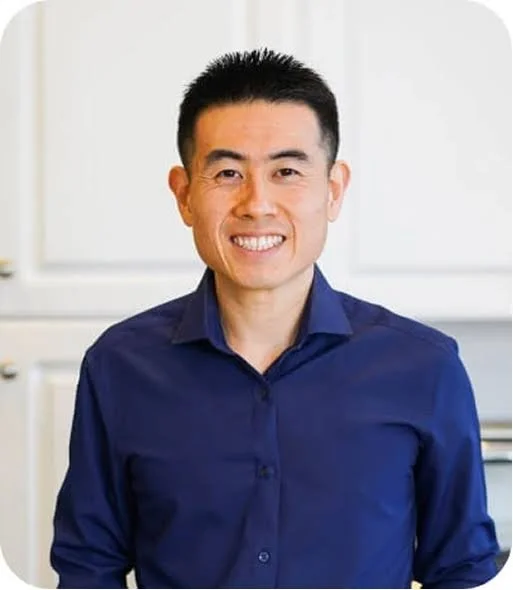
Learn more about Dr. Micah Yu
At 17, after adopting a high-protein diet filled with meat, milk, protein powder, and processed meats, Dr. Yu experienced his first gout attack. The pain was so intense that he still remembers waking up at 4:00 a.m. feeling as if someone had slammed a wooden board into his toe.
But gout was only the beginning.
Over the years, Dr. Yu developed recurring, mysterious inflammation throughout his body — jaw, shoulders, wrists, fingers, knees, toes, hips, ankles — along with fatigue and irritability. Even while in medical school, he struggled to find answers. Eventually, he was diagnosed with gout, pseudogout, and spondyloarthritis, an autoimmune arthritis often treated with immunosuppressive medications.
But Dr. Yu had a feeling that diet was part of the story.
Inspired by his wife, Dr. Melissa Mondala, as well as Forks Over Knives and Dr. Michael Greger’s How Not to Die, he decided to try a whole food, plant-based diet. Within two to three months, he noticed his joint pain beginning to disappear. At his follow-up appointment, his C-reactive protein — a key inflammation marker that had been elevated for years — had normalized.
Today, Dr. Yu is a board-certified rheumatologist and integrative medicine physician who helps patients address autoimmune disease through a whole-person lens. In his practice, he looks at food, lifestyle, stress, trauma, infections, environmental exposures, supplements, and patient partnership.
In this conversation, Rip and Dr. Yu discuss:
Why a high-protein diet triggered gout at age 17
The difference between gout, pseudogout, and autoimmune arthritis
What CRP and ESR can reveal about inflammation
Why some autoimmune patients are told “everything looks normal” even when they feel terrible
How a whole food, plant-based diet changed Dr. Yu’s own health
Why rheumatology patients may benefit from looking beyond medications alone
The role of stress, trauma, infections, mold, pesticides, plastics, and environmental triggers
Why Lyme disease can be controversial and often misunderstood
Dr. Yu’s top supplements for inflammation, including turmeric, algae oil, vitamin D, Boswellia, and glutathione
Why vitamin D levels matter in autoimmune disease
How Dr. Yu practices medicine through patient partnership
This episode is a hopeful reminder that inflammation is not always a life sentence — and that the body can respond powerfully when we give it the right conditions to heal.
Episode Resources
Watch the episode on YouTube: https://youtu.be/3P1LIKD_TcE
Dr. Yu’s Website: https://drlifestyle.org/
Instagram: https://www.instagram.com/myautoimmunemd
We hope to see YOU at one of our 2026 Live Events! https://plantstrong.com/pages/events
To stock up on the best-tasting, most convenient, 100% PLANTSTRONG foods, check out all of our PLANTSTRONG products: https://plantstrong.com/ Use code: podcast to receive 10% off your first order.
Plant Strong Meal Planner: https://mealplanner.plantstrong.com/
Give us a like on the PLANTSTRONG Facebook Page and check out what being PLANTSTRONG is all about. We always keep it stocked full of new content and updates, tips for healthy living, and delicious recipes, and you can even catch me LIVE on there!
We’ve also got an Instagram! Check us out and share your favorite PLANTSTRONG products and why you love it! Don’t forget to tag us using #goplantstrong 🌱💪
Episode Transcript via AI Transcription Service
I'm Rip Esselstyn, and you're listening to the Plant Strong Podcast.
Doctor’s Own Healing Journey
[0:04] Dr. Micah Yu knows autoimmune disease and joint pain from both sides of the exam room. As a rheumatologist, he treats patients every day with inflammatory and autoimmune conditions. But his own journey began at just 17 years old when a high-protein diet triggered a painful case of gout and years of mysterious head-to-toe inflammation. But instead of simply accepting a lifetime of medications, Micah got curious. With inspiration from his wife, Dr. Melissa Mandala, who, by the way, was on the podcast just last week, and the whole food plant-based movement, he was able to change the way he ate, and within months, his joint pain began to disappear, and his inflammation markers normalized. Today, he helps patients understand the root causes of autoimmune disease and inflammation through food, lifestyle, and a truly whole person approach. We're going to meet this uplifting physician right after these words from Plant Strong.
[1:21] Before we hop in with Micah, let's talk about one of my favorite fast meals, Plant Strong Pizza Night. You start with a Plant Strong Pizza Crust Kit. It includes the whole grain crust and sauce packs. Then you load it up, use some of the generous layer of sauce that we provide. Then you pile on chopped vegetables. For example, mushrooms, onions, peppers, spinach, roasted garlic. I also love pineapple, maybe some sliced tofu or corn, and a big handful of greens immediately after it comes out of the oven. This is fast, it's hearty, it's family-friendly, it's customizable, and it gives you that Friday night pizza feeling without the oil, the dairy, or the junk. Keep a Plant Strong Pizza Kit in your pantry, and you're always just minutes away from a real food meal that feels fun, satisfying, and totally doable. Find the Plant Strong Pizza Kits at plantstrong.com, use the code podcast, and save 10% off your order.
Meeting Dr. Yu
[2:36] Dr. Micah, you, it is good to see you today. Oh, thank you so much. I'm glad to be on the show today. Thank you. Yeah. So last week we had your incredible wife on the show. She, she is something else. I can see why you married her.
[2:58] It's just a bundle of energy. So knowledgeable, so smart. Um, when did you know you wanted to marry her? Uh, Oh, that's a great question. I got to think back like 15 years, I think a couple years into dating in medical school. That's when I knew I wanted to marry her. Now she said that you guys actually met in college. Is that right? Briefly. We're more acquaintances. We're in the same like club, like health club at school. And then, uh, we didn't, we barely interacted. And then we met again a couple years later at medical school across this country. So you met at a health club, but help me out here. If my understanding is correct, She didn't start doing like, you know, whole food, plant-based nutrition until like 2016 or 17. Yeah. It was till later when we got into residency. Yeah. Yeah. Yeah. And so did you have an influence impact on her eating better? No, she had an impact on me eating better. Yeah. When she first cooked the plant-based diet for Thanksgiving, I was like, what is this food? It's so foreign to me.
[4:10] But I'm so glad she introduced it to me. But back when you were part of the health club at college, you guys didn't talk about plant-forward nutrition back then? No, it was more like stop smoking and stop doing drugs. That's what we promoted. It was like we were trying to promote that on a college campus. And probably alcohol too, right? Yeah, and alcohol too. Were you drinking back then or no? I was drinking back then, yeah. Like every other college student out there, I had alcohol. And it didn't do me any good, but yeah, because alcohol is always at parties. Oh, it is everywhere. It's ubiquitous. At least it used to be. I have a feeling that this generation is starting to basically, you know, eschew alcohol a little bit more and more. Yeah. It's very interesting. Yeah. This new Gen Z, they're staying away from alcohol. I think alcohol industry is going downhill. It's a good thing. Yeah, it's a very good thing. And inflation just raises the prices on alcohol. No one has money for alcohol. And everyone needs money to pay for the groceries. Yeah, yeah. Well, listen. Listen.
[5:20] It was wonderful getting your wife's kind of background and story. I think that, you know, in order to do you justice, we should do the same thing. So let me ask you a very similar question I asked her. When did you know that you wanted to be a doctor?
Path to Medicine
[5:39] Oh, that's a great question. That would have been right, like maybe two years before I applied for medical school. Because I initially wanted to become a physical therapist when I entered college.
[5:53] And then I got into biology major. I didn't do so well when I first entered. I partied too much in college. And I switched to a business major. And I thought, oh, I love personal finance. I want to do finance. And then my heart really went back to helping people in medicine or at least in science. So i figured after college i started taking science classes again i did a post-bac, and then that's when you know what i really want the ultimate, experience and the most challenging field which to me was becoming a doctor because i wanted never-ending learning i always want to be challenged so that's when i decided i wanted to go into medical school yeah so that was like right two years before i applied all right so let's, Very, very cool. Let's, let's get back to kind of the, um, the impetus for, for you to become a rheumatoidologist, uh, which I, you know, you, you had this lived experience, right? Where you yourself had it and it was obnoxious and it kicked your ass, right? Oh yeah. It kicked my ass for a decade.
Teen Gout Begins
[7:05] So let everybody know what exactly happened when you were 17. Oh yeah. When I was 17 years old, I got, I wanted a high protein diet. I was playing football around 16 years old. I was a bench warmer.
[7:19] I wasn't exactly a starter. I played a couple of reps in and then that's when I got into fitness and I was on the heavier side at that time. And I discovered something similar to the Atkins diet. So I went on a protein craze. I ate, I was weighing about 160 pounds at the time. I was on the heavier side. I ate about up to 200 grams of protein a day for over six, for around six months. And then, I mean, I felt great. I got stronger. I actually lost like 25 pounds. So it's, At the same time, I woke up overnight and got this massive joint pain attack on my big toe. My father was a family medicine doctor at the time. And he's like, I think you have gout. He said, I told you to stop eating that protein. This is what you get. So I didn't believe it at the time. I felt like someone took a wooden board and just slammed my toe overnight. I woke up at 4 a.m. I still remember it distinctly now that we're talking on this podcast about that experience again. It gives me PTSD. So I was limping to school the next day. who gets gout at 17 years old? No one really does get gout at 17 years old unless you do something that I did. I'm not very smart. So I didn't go on medications at that time.
[8:38] I ate less protein. I stopped eating ham. I would bring 10 slices of ham to school for lunch. I would just eat that thing to get the protein in at that time. I stopped doing that. The flares lessened, but they still persisted over time. And of course, the alcohol in college didn't help either. And then over time, in my early 20s, I still remember this distinctly, my arthritis started transforming. I started getting arthritis in different joints that gout didn't attack normally. And then I still started taking medications for gout, finally. And in medical school, it still persisted. I had no idea what was going on in medical school still. Even though I was learning about these diseases, I saw a rheumatologist. They had no idea what else I was having because my pattern, yes, I had gout, but I had something else going on. I would have head-to-toe pain. I wouldn't be able to eat for two weeks in a row because my jaws would be so swollen. I was only able to drink fluid and eat yogurt because it was so soft. I didn't have to open my jaw that much. It would be swollen and stiff. So you had systemic inflammation going on in just about –.
[9:51] Give me an idea, like where, what parts of your body besides your jaw and your big toe? Oh, yeah. So jaw, shoulders, wrists, fingers, knees, toes, hips.
[10:05] Ankles, like all the – from head to toe except for the back, okay? So – but literally head to toe. Fatigue. I was irritable when I had joint pain. It was like – I would get this every month pretty much. Um incredible yeah and, uh i was a i was a med student i had no idea what was going on i saw a rheumatologist i was i went to medical school in chicago i saw two rheumatologists out there they had no idea what was going on they ran all the rheumatology labs all their antibodies were negative but my inflammation markers were very high um but they said that so so help me out here because and, and this is a a direction that i want to go in our my conversation with you, When you say your inflammation markers were high, give me an idea, like what are the inflammation markers that people should get tested? Is it like your CRP? Is it your interleukin-6? What are they? Yeah, the standard ones are C-reactive protein or CRP you just mentioned and segmentation rate, which is ESR. Those are the standard ones. If you want any other advanced inflammation markers, you got to go through other companies. Standard lab companies don't really have these. They used to, but it's very hard for me to order these through standard lab companies now. Yeah. And so none of these rheumatologists, when you were at medical school in Chicago, could figure out what was going on. And did they want to put you on drugs? And did you take the drugs?
[11:31] Well, I was on gout medications at the time, but they didn't put me on any rheumatology medications per se. No autoimmune rheumatology medications. So no immunosuppressives because they didn't know what exactly was going on. I did see them. I saw one rheumatologist two or three times, the other one twice. But yeah, it was really unfortunate that they couldn't figure me out. And also, this is a standard journey that other rheumatology patients go through, unfortunately. I'm not unique in my situation. It's really sad. Some patients go on five, six years without any answers.
Rethinking the Diet
[12:07] Okay. So looking back and knowing what you know now.
[12:12] What was it about the way you were eating? You mentioned you would take 10 pieces of ham to lunch, but was it the protein in there? Was it the gobs of saturated fat and maybe a little bit? I mean, what do you think was the cocktail that was poisoning your body? I think it was everything, the over-saturing protein, too much saturated fat, and also I was ultra-processed food. Like ham is ultra-processed meat. So that didn't help. So in order to get that protein at 17 years old, I was drinking cups of milk, protein powder, steak, ham, all that stuff, whatever had protein in it. I would just eat it because that's what the diet asked for. So yeah, I was happy with my results, but not with the gout. So yeah, it was, luckily that face is like 20 years ago, over 20 years ago. So I'm happy it's over. Okay, so back then you were trying to get 150 to 200 grams of protein a day. You were drinking it. You were falling on your face in it. What about today? Like today, do you even worry about protein or what, what's, what is your, what is your current, um.
[13:33] Personal, like, you know, uh, recommendation when it comes to that? Oh yeah. So I always push patients to more of a plant-based diet. Um, the, uh, American College of Rheumatology for the rheumatoid arthritis guidelines. Um, they do recommend, um, they say the most evidence is for a Mediterranean diet, but I tell patients you should probably aim for more plants. It's just a Mediterranean diet, more, more plants, the better. So, um, because I had, went through a plant-based diet and I did really well. So I pushed patients toward that journey as well.
Plant-Based Turning Point
[14:03] Who, who, uh, who pushed you to plant-based? My wife did. It was your wife. Yeah, it was, it was my wife. She inspired me to be on that journey. Um, and then we went to Guam, um, towards the end of our residency and it was, it was at an Adventist institution where we did rotations through, cause we went to Loma Linda for residency. Uh, so we went to affiliate program over there and they were all plant-based at that institution. So I got even more inspired to eat that way. And then I watched Forks Over Knives, and then also read Dr. Greger's book while I was in Guam as well, How Not to Die. So I was like, you know what, let's just give this a shot. Let's try to eat this way and see if I get better. And then within two to three months, I noticed all my joint pains like melted away. So just to backtrack a little bit before that, I actually got a second diagnosis during residency, I finally got diagnosed with an autoimmune arthritis called spondyloarthritis.
[15:02] They actually have three diagnoses, by the way. I have gout. And then during residency, they took a needle and sucked out fluid from my ankle, from the inflammation and they found pseudogout. And then they also diagnosed me with spondyloarthritis, which is an autoimmune arthritis that requires heavy immunosuppressive medications. So are you still on those? I never took them. I refuse them. I'm a bad patient. So doctors are the worst patients. So I told my bosses or my rheumatologist at that time, they were like, you should go on these medications. I was like, no, I feel like diet has something to do with this. I just don't know what it is yet because I learned that once you go on these medications, you're on it for like – no doctor ever takes you off of medications once you go on them. So I was like, I don't want to be down that road. Give me some time. And luckily plant-based diet really fixed things. And the first follow I had with my rheumatologist after I went on a plant-based diet was three months out and my C-reactive protein went negative after being positive for many, many years. I mean, that...
[16:10] That's impressive. Oh, yeah. Yeah. I mean, that must have made you just smile ear to ear. Yeah, it made me realize it wasn't in my head because having this disease with repeated attacks every month, I was thinking I would never get better. And you never learn about nutrition, anti-inflammatory diets, anti-inflammatory diets in medical school or even residency. So I was very skeptical that this might actually work.
[16:36] And you didn't even learn about it in residency at Loma Linda, which is one of the blue zones? No, no. So the unfortunate thing, at least when I was in training, which wasn't too long ago, I started residency 10 years ago or 11 years ago. And everything at Loma Linda is very siloed. So the lifestyle medicine department is very siloed within the lifestyle medicine department. They talked to the family medicine department, but I was internal medicine. I didn't get any of that training. My wife is family medicine. She got that training, and she did more rotations in lifestyle medicine. I just got taught how to learn how to prescribe drugs and diagnose. And we spent a lot of time in the ICU, by the way. That was heavy. Yeah. Did you guys intentionally go to Loma Linda together for residency? We it was high on our priority list uh so we the hard thing about, being two doctors that are trying to train together is that you have to couples match so me and her we had to prioritize our, residencies accordingly you had to go one two three four five our priority was to come back to california because that's where we live um so we were in chicago at the time trying to come back to california so, no melinda was high on the list on there yeah yeah but we didn't know anything about lifestyle medicine or Blue Zones when we applied to Loma Linda. Were you guys married when you were in residency? We, we, yeah. So we were engaged at the end of medical school and then we got married, um, the second year of residency.
[18:06] How, how was that going through, you know, medical school and then residency together? Um, it was actually really nice. You know, the conversations revolve a lot around, uh, medicine, which can be bland at times, but it's, uh, it's, it was nice because you have someone that could understand the struggles of medical school. Cause you often hear that, you know, when people go through residency, their spouses get really upset because they don't spend any time with their spouse as a doctor. For us, we understood each other. If we weren't around, we understood that it was because it was study time or we were working and we needed to do that in order to become good doctors. So it's, and we still do that to this day. We, we're still learning on our own, even many years out of training. And we understand that we, sometimes we have to work to the middle of the night to take care of our job. Now, and you guys have a practice in the same office, um, Is that amazing, just being able to spend that much time with your wife?
[19:14] There's pros and cons, okay? There's pros and cons. But the cons are we're always looking at each other. But that's also a pro as well. We commute to work together. But we're in our clinic. We don't even see each other because we're stuck in our room. And we're seeing patients nine to five straight. But it's nice because we have dinner together right after. If we come home late at 7 or 8 at night, we're coming home together. So we understand that because we have a very unique clinic in that we do not only lifestyle medicine, but we have trained in integrative medicine and functional medicine as well. And we're continuing learning about all these different aspects of holistic medicine. So we are constantly learning and we understand that we have to learn. So it's nice that, you know, we're in the same field. Yeah. And are you pushing each other when it comes to learning stuff and talking about it and questioning each other? Yeah, we quiz each other. We challenge each other all the time. We try to outsmart each other at times, which we're like, oh, I know this answer and you don't know it. But it's nice. It's all fun and games. And we're pushing each other. She's trying to push me to write a book, which I'm trying to write a book on my experience. So.
[20:30] I wouldn't have it any other way. I love that fact that she's a doctor and we understand each other. Yeah, yeah. Let's talk about...
Rheumatology in Practice
[20:39] I'd love to know a little bit more about, you know, your profession as a rheumatologist. Like what percent of the patients that you see on a daily basis come in with some sort of, you know, inflammation in their joints? 100%. Okay. No, not 100%. Maybe because my clinic's pretty diversified. So I would say 80%. Okay. And so what percent of those 80% that you are seeing for, you know, joints, joint pain and whatnot, would you say is because of lifestyle?
[21:21] Ooh, a great question. I would say at least 50%. Okay. And what about the other 50%? Yeah. So some things are out of our control. So sometimes it's an infection or a virus that has actually triggered their autoimmune disease and inflammation. So there's something in medicine we call molecular mimicry, where a virus or bacteria actually looks like our own cells, and your immune system gets confused and starts attacking your own cells, thus triggering inflammation and antibodies.
[21:53] If you have heard of rheumatic fever, there's also something called rheumatic heart disease because that strep bacteria can look like our own cells in our heart and that strep starts attacking your own heart. That's causing rheumatic heart disease. That's one of the first things we learn in medical school. So this concept applies to rheumatology and autoimmune diseases as well. So that's one aspect that can trigger inflammation and autoimmune disease. The other aspects are environmental medicine. So plastic use, I think about. I think of pollution, pesticides, I also think of mold and tick infections. These things can also contribute to autoimmune diseases as well. Now, your wife also kind of works with people that have autoimmune diseases, correct? Yes. Yeah. And she's got a podcast that is directly, I mean, it's like, what's the name of it again? Oh, yeah. We were co-hosts on there. It's called Autoimmune Alchemy. Yeah, yeah, yeah, yeah. Okay, okay, okay. I didn't know if that was both of you or just her. So, got it, got it.
[23:01] So, would you say that you are more of the expert on autoimmune diseases than she is? So I'm a trained rheumatologist. So all we focus on during our training is autoimmune diseases. So in a way, I have extra training on that. But she's more of an expert on the psychological aspect of autoimmune diseases. She connects a gut-brain connection. There's trauma that I didn't mention. Besides lifestyle, there's also trauma and stress that affects patients' autoimmune disease. They've been abused in the past, they've moved a lot, or the parents got divorced, for example, this can increase the risk of autoimmunity. And sometimes you need to work on that to actually heal the body. Yeah. Yeah. No, I could tell she seems like she's really good at that. All right, sit down and let's have a conversation. Oh, she's much better at counseling and talking about that than I am. I'm very technical in how I work with patients. Right, right. Well, so let's say I'm one of the 50% that comes to you, and I would imagine –.
[24:03] When somebody comes to you with, um, rheumatoid, wait, help me out. Rheumatoid, uh, rheumatology disease, a rheumatology disease. Thank you. Thank you. A rheumatology disease. Do they know that kind of the first thing, if it's, if it's kind of a lifestyle created disease in your opinion that, that you're going to talk to them about is kind of, what are you putting in your mouth? You know, plant forward. Do they, are they aware of that or usually not? Um, some patients are, some places aren't, um, some patients have done every diet in the world, including a plant-based diet, and they're still flaring. And that's when I work on other aspects. I just mentioned the other 50%. Yeah. Yeah. Yeah. And I would imagine, as I told your wife, you know, when you are such a, uh.
[24:57] A beacon of light, uh, and passion around this holistic lifestyle, um, kind of, you know, uh, food is medicine. How could your patient not be curious about giving it a whirl, right? Oh yeah. Yeah. And you must, yeah. And then, I mean, and then typically are you getting good success when, when they're compliant and they follow the protocol? Yeah. Some patients I've seen, they go to remission within a couple of weeks at times. Some people, a couple months. Some people just get better, not 100%. But there are patients in my clinic who don't get better with diet alone, and that's when I work on everything else also. Yeah.
Top Supplements for Joints
[25:42] So I watched some of your videos on your channel. You have one about basically the top three supplements that you recommend, right? You have a rheumatology disease, and- And then you have two bonus ones. So I'd love for you to share with the Plant Strong audience, what are some supplements that you recommend if they're having.
[26:10] Joint issues that can potentially help with it? Yeah, great, great question. So turmeric was one of the first supplements I learned about in this journey. So I love turmeric. I actually was doing a clinical trial on turmeric and lupus back during my training program because there were only two other studies one from I think Iran the other one was from Indonesia at that time there were over 6,000 studies on turmeric and, overall and that was in 2019 so I'm sure there's more than 6,000 studies now and the studies have shown that it helps all different diseases across the board not only rheumatology disease but it can help with potentially cancer metabolic issues. So there's many things that turmeric can help with. Unfortunately, COVID cut that short. I don't know if you've heard about COVID before, but COVID cut my clinical trials short. We were supposed to interview more patients, but unfortunately that study got closed down. But turmeric was one of the first supplements that I'd like to put patients on. Another supplement I'd like to- Wait, wait, hold on. Hold on before you go on. How many patients were you going to have in this study that you were going to do? Oh, we're about to have, oh my gosh, I think...
[27:27] It was around anywhere from 30 to 50 patients. Yeah, that's a good number. And then what is your recommendation for how much turmeric to take on a daily basis? Great question. So studies have been done up to 12 grams. Okay, 12 grams. Give me an idea like how much that is. I mean, is four grams a teaspoon? So would that be three teaspoons? So I don't remember how many grams per teaspoon, but if we're talking about pills, so your standard turmeric supplement pill has either 500 to 750 milligrams per pill. In this study, there were about only 12 healthy patients, and they took 12 grams for—I forgot how long. But the side effects weren't that severe. They had orange stool. Some had diarrhea. Only one or two patients had liver issues. the rest were fine. So I don't tell my patients to do 12 grams. That's way too many. If you're at 500 milligrams of pill, you're taking about, I don't know how many, you're taking 20, about 20 pills. That's, yeah, I don't do that. That's, I think that's a little bit dangerous or overwhelming. 24. Yeah, 24. That's like a full-time job. So.
[28:45] I tell patients, take at least two grams a day. yeah yeah well and the um and when you're taking two grams do you still get the orange stools that could be very interesting no i take two grams myself sometimes i, i've taken up to four grams myself nothing happened.
[29:02] But i tell patients all the time i have to monitor labs even if you're just taking turmeric because turmeric there are case studies that the liver got injured from turmeric um just like drugs can do drug-induced liver injuries you can have supplement uh induced drug injury as well. So you still have to monitor patients, even though drugs are less risky. Okay. Right, right. Isn't that interesting, right? The dose makes the poison, doesn't it? Yeah, the dose makes the poison or the supplement makes the poison too sometimes. Right, right, right. Okay, so that's turmeric. What's next on your list? I love algae oil. For algae oil, you get omega-3s. So as DHA, EPA, it's very anti-inflammatory. But I also love something called pro-resolving mediators as well. They're tied, they're linked together. So pro-resolving mediators is something your body actually naturally makes. Pro-resolving mediators go up. That's resolving and protectants. When you have inflammation, your body obviously is trying to lower that inflammation, especially chronic inflammation. Resolvants and protectants are working to bring down that inflammation. So omega-3s from algae oil turn into pro-resolving mediators. So I like to give both to patients because algae oil not only is anti-inflammatory, but it works on the cells as well.
[30:30] There's a phospholipid bilayer that's part of the cell that needs omega-3s. But the pro-resolving mediators are needed also because omega-3s don't always turn anti-inflammatory efficiently because everyone has different genetic makeup and your enzymes, involved with that biochemical process might not be efficient in a certain individual. So sometimes I give them pro-resolving mediators as an extra kick to helping their inflammation. So what are your thoughts on, let's say I don't want to do algae oil, can I do chia and flax? You can do chia and flax, but they're not as bioavailable. So that's why algae oil comes in the picture. Uh-huh. And, uh, What's the importance with bioavailability?
[31:19] Is it because, for example, I hear people say, oh, you want to take this kind of protein because it's more bioavailable. But I'm like, no, I don't. I want something that that isn't that bioavailable, especially when it comes to protein and IGF ones and stuff like that, because that's just going to accelerate tumor and cancer growth. So I want something that's slower, not faster. Yeah. So bioavailability has to do with absorption. And the conversion of the product to the use case because omega-3s, there's a whole cascade of enzymes and you want to reach the EPA and DHA, the very end product. Yeah, yeah. You know your stuff, Mike Cook.
[32:00] So what about, what's number three? Vitamin D. Vitamin D is really important. Vitamin D is in your gut receptors. Studies have shown that when your vitamin D levels are low, you can have leaky gut, which will worsen autoimmune diseases. and potentially more inflammation. Also, vitamin D receptors are on your immune cells as well. So you need your vitamin D to make sure that your immune cells are working efficiently. If you have a virus or bacteria and you're trying to fight that, you're trying to fight the flu, your vitamin Ds are lower, you're more susceptible to infections, flu symptoms. So you want your vitamin D to be strong. But also, vitamin D is highly recommended in my field because studies have shown that autoimmune diseases flare more when you have low vitamin D levels. Isn't that interesting? And.
[32:51] It just seems like, I was having this conversation with your wife, it just seems like autoimmune disorders have skyrocketed over the last 15, 20 years. What percent of Americans have you heard are low or deficient in vitamin D? Oh, I have not looked at statistics. I don't know how many Americans. I think it's 60%. I wouldn't be surprised if it's that high because even doctors aren't even checking their patients for vitamin D levels. It's really unfortunate. I feel like vitamin D should be checked on everyone, at least on a yearly basis. Even if you're on the sun 24 hours a day, it doesn't mean that you as a person can officially convert that into higher vitamin D levels in the body. And you don't want to be in the sun all day. You're going to get skin cancer.
Vitamin D Strategy
[33:39] So I highly recommend my patients to take vitamin D. Is there a certain vitamin D you like? D3, D2? D3. Yeah, D3. There's some papers out there that say that vitamin D3 is better absorbed, better used than D2. I mean, it's not widely accepted. It's more in the integrative space. And also, I like to give 5,000 units a day to my patients. Yeah. Some patients, they don't need that high. You have to check your numbers first before you get that high of a number. But I just don't aim for a low normal. I aim for a higher normal.
[34:20] Give me an idea of when you would put somebody on 5,000 units a day. Is that if they test and they're like at 20? If they're at 20, I'm aiming for 10,000.
[34:34] If they're if they're at 30 so let's say a normal reference range is 30 to 100 if they're at 20 then i'm starting at 10 000 at least for two weeks two to four weeks and then i bring it down to 5 000 every test again after like two months, if they're at 30 then i start at 5 000 if they're at 80 and i say let's say at 2 000, really so you like your vitamin d levels to be at 100, around 80 Wow. Yeah. Wow. That's wild. That's wild. Just to give you some examples here, or some backup to this, there was actually a study, well, there's a clinic out in Brazil or South America. They're actually giving mega doses of vitamin D, like 40,000 units a day, but they're measuring these patients frequently. And I think they have reversed lupus or even multiple sclerosis doing that route because vitamin D is such a potent and powerful immune modulator. They have, reversing multiple sclerosis did you say yeah that's what I think I don't remember if there's a study I looked at stuff like a couple years ago I haven't looked at it recently but yeah there's a clinic out there that does this that is wild to me.
[35:50] So just like you mentioned with the turmeric if you're doing 10 or, 15,000, is it international units, right? Vitamin D? Yeah, yeah, yeah. Okay, international units a day. Is there a chance that you can then, it can affect the liver and you need to be testing those liver enzymes? I test it regardless, but I don't expect vitamin D to affect the liver. If you go too high of a vitamin D level, I mean, we've had patients who took vitamin D on their own at mega doses, especially the COVID times when they're trying to fight off COVID and they started getting brain issues And we're like, you're taking too much vitamin D. You need to slow down that vitamin D level because there are side effects of having too high of a vitamin D. But we haven't seen that in a click when we've advised them to take that. Wow. So as far as you know, taking 5,000 or 10,000 IUs a day, no pronounced side effects? 5,000, no. I take 5,000 a day myself. So no side effects. 10,000. If I do 10,000 a day, it's more like a couple of weeks. And then I measure it again and then see whether we need to continue that amount. Wow. Is there a brand that you recommend? There's no brand that I'm partial to.
[37:11] So when I look at the brands, I always look at the ingredients to make sure there's no coloring, no added fillers that aren't necessary on there. So it's more about the ingredients on the back label.
Bonus Anti-Inflammatories
[37:21] Okay. All right. That's three. Now you got two bonus ones for me? Yeah. I love, for arthritis, I love Boswellia. Boswellia is also known as frankincense. In, if you're into essential oils, frankincense is a very popular smell. So Boswellia comes from India. It's from an Indian tree or plant and it's anti-inflammatory. They've done studies with that on osteoarthritis and rheumatoid arthritis and studies have shown that it is beneficial. Uh-huh, uh-huh. All right, very, very cool. So that's number four. And number five, I love glutathione. Glutathione, you can get glutathione So glutathione is an antioxidant. It's very powerful. People get IV versions of this. If you've gone to wellness centers, they have IV glutathione on their menu. I give it orally. You can get this in many different ways.
[38:16] Glutathione is anti-inflammatory. It helps with detoxification. It helps with the liver. And also, your audience might not know this, you can find this in broccoli as well. So your crucifix vegetables have glutathione in it, which is why I love broccoli, kale, cauliflower. These crucifix vegetables have a lot of not only sulforaphane, but also glutathione as well, which is anti-inflammatory.
[38:41] I love it. Like those are some really – that's a really good –, value add for all the listeners I hear that, especially dealing with, I think, any kind of joint issues.
Integrative Training
[38:53] Let me ask you, I saw on your website that you spent some time at the Andrew Weil Center for Integrative Medicine. Yeah. Yeah. How much time did you spend there and what was it like? So it was a two-year program. Most of the time is virtual. You spent three weeks in Arizona learning with Andrew Weil and the whole team there. I loved it. I felt like that was a lot of value added to my career and my education. And I mean, he's one of the pioneers in integrative medicine. He's been doing this since the early 70s, I believe, when integrative medicine was really attacked by doctors and it was considered voodoo medicine. But, it was amazing. It's a key foundational piece to where I am today. Right.
[39:48] Right. Is he still alive and kicking? He's alive. Of course, he has all white hair now, but he's still teaching. Yeah. Wow. Yeah. Good for him. I also noticed that you...
Lyme and Autoimmunity
[40:06] What is your affiliation or expertise with Lyme disease? Yeah, so Lyme disease is a very, very controversial world. It's a very mixed world right now.
[40:21] I had no idea. Why is that? It's so controversial because there's a lot of information from the CDC that might not be all the way accurate on Lyme disease. There are a lot of patients that have Lyme disease that don't know it because doctors aren't treating it and we don't learn Lyme disease properly in medicine. Okay. As a rheumatologist, I deal with arthritis. A lot of Lyme disease patients have arthritis, but I was never really taught about Lyme disease. So Lyme disease is in a way it's...
[40:55] It's, there's a lot of misinterpretation of Lyme disease at this time. There's a lot of patients who have Lyme disease that are being gaslit, who are going to doctor to doctor with all these symptoms, brain fog, fatigue, joint pain with no answers. And there's a whole field, there's a whole society called, that focuses on Lyme and especially something called persistent Lyme or chronic Lyme, which regular conventional doctors do not believe in. I believe in it because I have been trained with the society with Lyme disease. So I've learned through them as well. There are conferences on this stuff. We bring cases together. Naturopaths and medical doctors are teaming up to learn about and talk about these cases. And I've personally seen patients in my own clinic, when I test them, they have Lyme and they have rheumatoid arthritis or another autoimmune disease like lupus superimposed on top of that. And there are case reports of Lyme disease causing autoimmune diseases. And if a doctor never checks for it or asks a good history, then they'll never find out that the patient has Lyme disease. Wow. Wow. Yeah.
[42:08] My brother's wife's family grew up in... Old Lyme in Connecticut, which is the epicenter of it. And we have a family farm in New York, kind of in the Hudson Valley. And it's like the second or third most populated area in the country when it comes to, you know, the tick that causes the Lyme disease. Yeah. And so everybody in my family has had Lyme disease at one point or another and do it. They do a treatment usually of a, what's it called? Doxycycline. Yeah. Yeah. Oh, but there are other ways to help with it. There's herbs as well to treat Lyme disease. Um, yeah, there are protocols out there and Lyme disease all over the U S now. It's not, it's not just on the East coast now. Um, you'd be interested, um, with Lyme disease, there's a book called lab two 57. You want to check it out. Uh, it's about how Lyme disease, actually is a biowarfare infection. So it was not intended.
[43:12] It was experimented on with animals on an island called Plum Island near Lyme, Connecticut. That's why New York and Lyme, you have a lot of Lyme disease out there. So it's a book talking about the potential history of Lyme as a biowarfare weapon. Wow. Incredible. Have you ever heard of alpha-gal syndrome? Yes, I have. The red meat disease. The red meat disease is caused by the Lone Star Tick. Yes. Yes. And it is, you know, on Martha's Vineyard, like 50% of the people have it. It's just so, you know, pronounced there. Yeah, the red meat disease. Exactly. Yeah, yeah, yeah. That's all I remember. People can't eat red meat after that. Yeah. Or really, or really any animal products. Oh yeah. Better for your cholesterol. I know. I do feel bad for those that have it, but on the flip side, you know, I'm sure that it, if you follow the right eating pattern, it makes you a lot healthier. Oh yeah, for sure. So it's a pro and con with a alpha-gal syndrome for these patients. Yeah. Yeah. Yeah. Um.
Marriage and Medical Life
[44:26] Who would you say, it's funny, you know, having spent about, you know, 40 minutes with you and 40 minutes with your wife.
[44:37] Is one of you an introvert and one of you an extrovert? Are you both extroverts? I am a complete introvert. She is a complete extrovert. She can go in a room and meet everyone where I'm huddled in the corner. Is that right? Oh my gosh. Well, so who, when you, when you guys, I know you said you met at college at the health club and then you met at medical school. Who asked who out for the first date? Oh, I asked her out on the first date. Yeah. But we were good friends to begin with already. That's nice. Yeah, because we would study together and stuff like that. Yeah, yeah.
[45:17] You mentioned that your father was in family practice. Is he still alive? No, he passed away three years ago, unfortunately. So, yeah, he had a small prior practice in Pomona, California. Yeah and then he had heart disease so he was not plant-based he was eating he, he's the opposite of lifestyle medicine so he really he was he died at how old was he he was 85 at that time he he didn't smoke but he he didn't watch his diet a lot of, you know a lot of oily chinese food a lot of seed oils a lot of seafood, and he would gamble quite often so go to vegas so we were in california He would drive to Vegas on his own to gamble. So he would drive all-nighters, sometimes driving all night back because he's so tired. One time he got pulled over two times on the freeway because he was driving too slow.
[46:15] But all that all-nighters gambling and smoking, second-hand smoking at least at the casinos didn't help his heart disease. Yeah, yeah. Wow. But it sounds like, so he died three years ago, but he was aware of the path that you were forging with lifestyle medicine. Did he want no part of it? He didn't really care. He's like, oh, you got better. Great.
It’s Never Too Late
[46:43] But he trained at a time when they didn't talk about nutrition at all. Back in the 70s and 80s, that's when he trained in medicine. No, he trained in the 70s in medicine. So this was completely foreign to him. He was in his 80s. He didn't really care to change his lifestyle. And I don't blame him. At that age, it's hard to change your habits at that time. He was so fixed in his ways. And he didn't really have disease at his age, despite all that he did. He had diabetes. He had high cholesterol and statin. But his heart tests were always normal until the very last one. So, yeah, that's a question. Yeah, yeah. Well, I want to say for all the Plant Strong listeners out there, I'm going to play the devil's advocate and say it's never too late. It's absolutely never too late. And I look at my father and he counseled a patient at 87 who had heart disease. They wanted to do an open, open heart, um.
[47:53] Open heart surgery on him. He declined. He has been doing, you know, whole food, plant-based and maybe three months ago, he turned 103. Holy cow. That's amazing. Yeah. Yeah. So again, to me, it's amazing. You've seen it. I've seen it. It's amazing how the body performs when you give it everything that it wants and everything that it doesn't want. It's crazy.
[48:21] Yeah. Yeah. Your body has ability to heal itself. Yeah, truly, truly. So, you know, one of the things in looking at your website and scouring everything, I love that you say like the foundation of your practice is partnership.
Partnership in Care
[48:41] That is to me that is so incredible that you walk into these relationships with your patients like a partnership, because that to me shows that you care you're curious you know you've got empathy that to me that's everything that, that's everything that somebody could want in a physician these days yeah i think it's um due to our experience as patients ourselves, because we didn't want to be told what to do as patients. We want to learn all the aspects of healing as patients. What can potentially get me better? What are the options? So in our clinic, I give patients options. Do you want medications? Do you want supplements? Do you want herbs? Should we look down for root causes, what potential infections that you could still harbor in you? What do you want to do? I can give you all these things, but what is your priority as a patient? And I will work around that. And I will let you know if things get kind of dangerous on what you want to do and give you and turn you in the right direction. Yeah. Yeah.
[49:46] That's a beautiful thing. I saw it might have been on your website or it might have been on your wife's Instagram. This quote, it went, You don't have 10 different health problems. You have one root cause. That's powerful. Yeah, exactly. All the other, I mean, you go 10 different specialists, everyone's touching a different part of the elephant. No one can see the whole elephant. Yeah. So yeah, we see that quite often in our clinic. Yeah.
Finding Dr. Lifestyle
[50:18] Michael, if people want to know more about you, if they want to see you, So.
[50:26] Where would you like to send them? Yeah, so you can find me on social media. I'm on YouTube, TikTok, Instagram. That's myautomuneMD. That's the handle, MYautomuneMD. If you want to find us in our clinic, we're at drlifestyle.org. That's drlifestyle.org.
[50:44] And we do telemedicine all over the U.S. I'm licensed in 16 states. We're located in Southern California and Newport Beach. You can come in person if you want to. And then we have our podcast, Autoimmune Alchemy, as well. Wow. And what is the name of your – what's the shingle on your practice? Does it say Dr. Lifestyle? Dr. Lifestyle, exactly. Really? Yeah. And I'll tell you how that started.
[51:08] We started our Instagram back in 2018 because we got inspired to with lifestyle medicine and plant-based diets. So we started our Instagram handle called Dr. Lifestyle 101. And the goal of that was to educate the audience on plant-based eating and lifestyle medicine. And then so we eventually separated our accounts. So we had our target audience. So we named our clinic Dr. Lifestyle after our Instagram handle. Yeah. Yeah. That's wonderful. Well, I can't even tell you how much you and your wife have made my day today. Thank you. As I said it, I'm going to say it again. you guys are both beacons of light. Thank you for all the fantastic work that you're doing. I hope, That we get to meet in person someday soon. I hope so as well. One of the conferences. Yeah. Yeah, for sure. All right. On the way out, can you give me a Plant strong fist bump? Let's do it. And then, and then hold on, hold on. And then we got to explode at the end. We got to explode like, like I did with your wife. Ready? Boom. Boom. Boom. Boom.
[52:19] Excellent. That's exciting way. Yeah. What I appreciate about Dr. Yu is that he brings both medical expertise and lived experience. He knows what it feels like to be the patient in pain searching for answers. Conversely, he knows what it means to finally discover that food, lifestyle, and root cause medicine can change the trajectory. His message is hopeful. Your body has the ability to heal when you give it the right conditions. More plants, better sleep, less stress, the right support, the right labs, and the right partnership. So if you're struggling with joint pain, autoimmune disease, or chronic inflammation, let this episode be a nudge to get curious and take the next step. For more information on Dr. Yu's practice that he shares with his wife, you can visit drlifestyle.org that's, drlifestyle.org and until next week let's keep the inflammation at bay and always, always keep it Plant Strong.