#352: Beyond Carrots - Here are the Best Foods For Eye Health with Rani Banik, MD
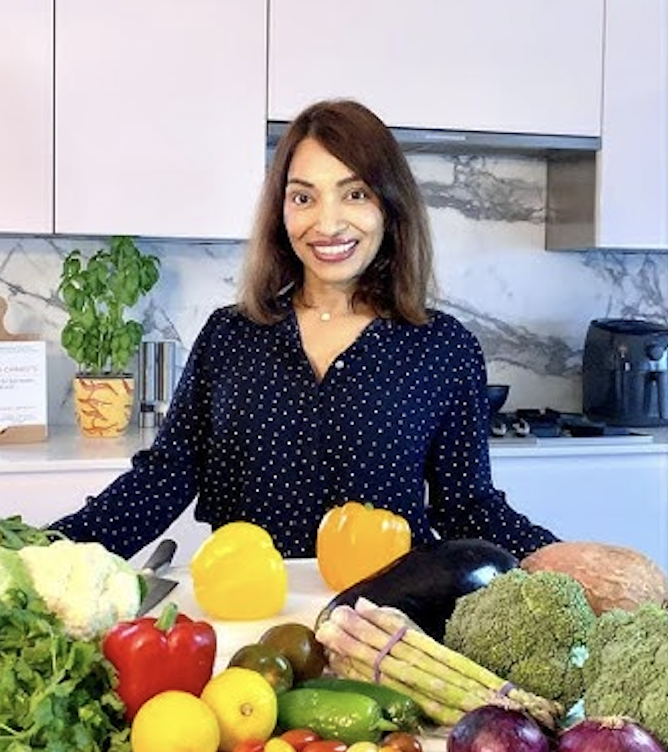
Rip sits down with integrative neuro-ophthalmologist Dr. Rani Banik to explore how nutrition, lifestyle, and daily habits shape your long-term eye health.
From macular degeneration and glaucoma to digital eye strain and screen overload, Dr. Banik breaks down what’s really happening inside your eyes—and what you can do today to protect your vision for life.
We’re talking about the foods that protect your vision, what screen time is really doing to your eyes, whether sunglasses are helping or hurting, and how stress and sleep might be silently impacting your eyesight.
Key Takeaways
The top 3 nutrient categories for eye health:
Macular carotenoids (lutein, zeaxanthin)
Bioflavonoids (especially from berries)
Omega fatty acids (seeds like chia, flax, hemp)
Why kale may be the #1 food for protecting your vision
The shocking truth about screen time (11–12 hours/day) and digital eye strain
The 20-20-20 rule to instantly reduce eye fatigue
Why blinking less on screens (75% reduction) leads to dry, strained eyes
The real risks of sun exposure—and when to wear sunglasses
What macular degeneration, glaucoma, and cataracts actually are (explained simply)
How diet alone may reduce macular degeneration risk by up to 43%
The surprising connection between stress, sleep, and vision loss
Why annual eye exams after age 40 are critical for overall health
Top Foods for Eye Health
Leafy greens (especially kale, spinach)
Berries (blueberries, blackberries)
Seeds (chia, flax, hemp)
Orange & yellow bell peppers
Mangoes, peaches, nectarines
Spices like paprika & cayenne
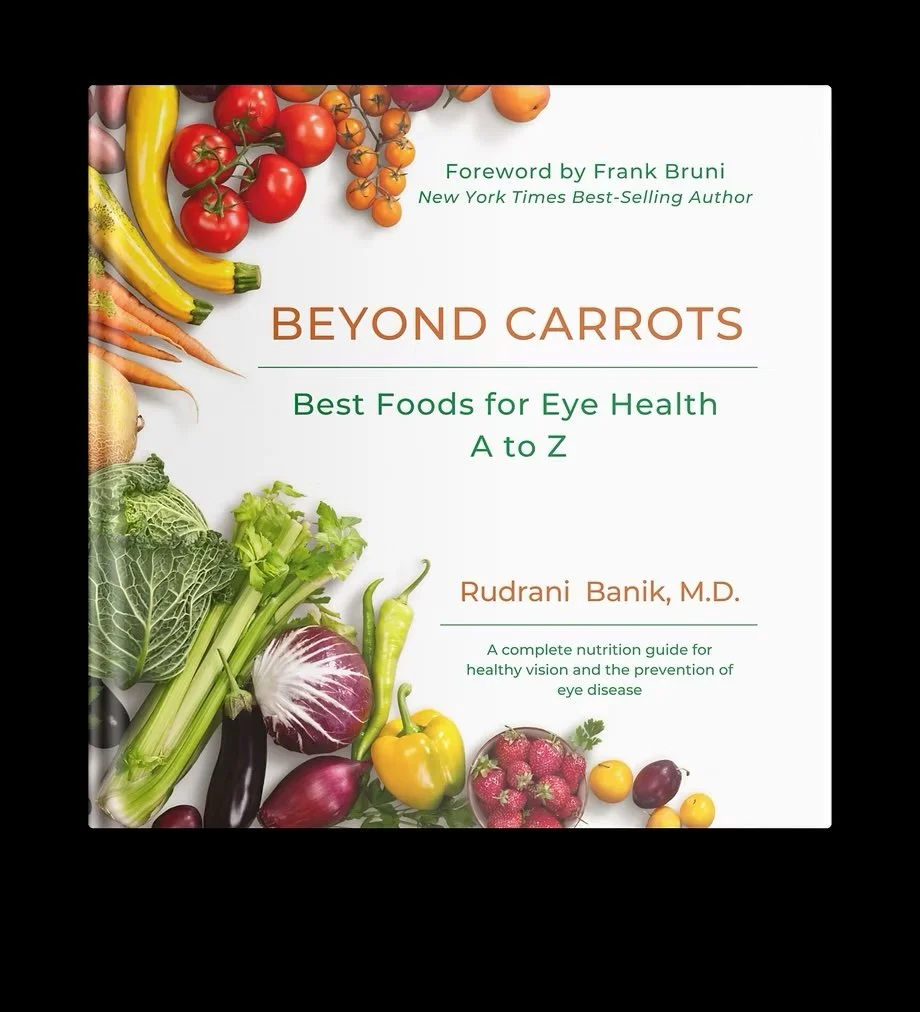
Order Dr. Banik’s books HERE
Episode Resources
Watch the episode on YouTube: https://youtu.be/uoIXX1DD6QE
Visit Dr. Rani Banik’s Website for additional resources and information on her Eye Summit: https://www.drranibanik.com/
We hope to see YOU at one of our 2026 Live Events! https://plantstrong.com/pages/events Use code: podcast to receive early bird pricing
Plant Strong Meal Planner: https://mealplanner.plantstrong.com/ - take $20 off with the code SPRING20.
To stock up on the best-tasting, most convenient, 100% PLANTSTRONG foods, check out all of our PLANTSTRONG products: https://plantstrong.com/ Use code: podcast to receive 10% off your first order.
Give us a like on the PLANTSTRONG Facebook Page and check out what being PLANTSTRONG is all about. We always keep it stocked full of new content and updates, tips for healthy living, and delicious recipes, and you can even catch me LIVE on there!
We’ve also got an Instagram! Check us out and share your favorite PLANTSTRONG products and why you love it! Don’t forget to tag us using #goplantstrong 🌱💪
Episode Transcript via AI Transcription Service
I'm Rip Esselstyn, and you're listening to the Plant Strong Podcast.
[0:05] Today, we are diving into a topic that doesn't get nearly enough attention, eye health. And I'm joined by somebody who is truly one of a kind. Her name is Dr. Rani Banik. She is an integrative neuro-optimologist. That means she's not just looking at your eyes, She's looking at your brain, your lifestyle, your nutrition, and how it all connects. You're going to learn the top three nutrient categories for eye health, her number one pick for food to protect your eye health, and the shocking truth about digital screen time. From macular degeneration and glaucoma to cataracts and the importance of regular eye exams, Dr. Banik breaks down what's really going on inside your eyes and what you can do today to protect your vision for life.
[1:03] This episode will change the way you see your health quite literally. And we'll have Dr. Banik right after these messages from Plant Strong.
[1:19] Every day I hear from people who say, I know what I should be eating. I just need help making it work in real life. And that is exactly why we create all of our experiences. Vital Signs, for example, is going to be October 18th through the 20th. And it is for healthcare providers who want practical, evidence-based ways to bring food his medicine into the exam room and into their own lives. We also have our Sedona retreat. It is September 28th through October 3rd, and this is for people who want to step away from all of the noise, immerse themselves in this lifestyle, and come home changed. For both these events, you want to go to planstrongevents.com to learn more. And if you want to experience our PlantStrong food line. This is for the everyday moments in between. When life is busy, when motivation dips, when you need wholesome options that you can trust. Visit plantstrong.com and use podcast 10 for 10% off your order.
[2:41] Dr. Rani Banik, I want to welcome you to the PlantStrong Podcast. Hey, where am I talking to you from today? Are you in New York City? I am. First of all, thank you for having me. And yes, I am based in Manhattan. So always an exciting place to be. The Big Apple. Do you like it there? I love it. I've been here most of my career. I've been here. I grew up just north of New York City. And I always thought of, oh, wow, you know, it would be so cool to live in New York. And here I am. What's the latest great Broadway play you've seen? Ooh, I haven't seen anything recently. I did see The Picture of Dorian Gray, which is not a musical, but that ended. But I've seen a lot of great shows. MJ is one of my favorites. Book of Mormon. There's just so many. But there's one I do want to see, which is the Buena Vista Social Club. So that's next on my list.
[3:46] My son is going to be there next week, and he's going to be seeing there's a... There's a play that's based off Stranger Things, the phenomenal, successful Netflix series.
[4:02] I really wish I was going with him to see that. Yeah, definitely. That's on my list too. I just haven't made it there yet, but I think he can't go wrong with that. Absolutely. All right. Well, speaking about not going wrong, we are going to get things right today when it comes to eye health. You are a integrative neuro-ophthalmologist and just like right off the bat what exactly does that mean uh for for people that have never heard that term before okay so we can break it down in parts we'll start with ophthalmologist so i'm an eye doctor with an md which means um i take care of all the medical and surgical treatments of eye diseases. So that's how I started off.
[4:51] And on top of that, I did training in neuroophthalmology, which is the intersection between neurology and the eye, all the pathways in the brain that are responsible for vision. So I did a fellowship in that. And I was doing neuroophthalmology for most of my career, taking care of patients with conditions like multiple sclerosis, brain tumors, strokes with vision loss, concussions with vision loss. That's my specialty. But along the way, I discovered the power of nutrition and lifestyle. And then my world was opened up to functional medicine and integrative medicine. And I ended up getting certified in that as well. So that's why I'm an integrative neuro-ophthalmologist. Well, you must feel that...
[5:43] You know, a conventional eye doctor is missing out on vital, vital instruments in their tool bag. Oh, so that's an understatement, Rip, really. I mean, that's the big missing piece in eye care. And I've really thought about this a lot because I try to get my colleagues interested in, you know, this aspect of care. And a lot of them just kind of shrug it off. And I think the main driver is because my field, ophthalmology, is typically a surgical specialty. And so people love doing surgery. And don't get me wrong, I love surgery too, but when it's appropriate. But really, my thinking is that we can prevent a lot of eye disease if we counsel our patients on how to choose the right foods and nutrients. And so I hope to change that thinking that all eye disease is going to be treated with either prescription medications or surgeries or lasers, because I think that there's a huge role that nutrition can play. And also it's within people's power. You know, they don't necessarily need to go get something done to protect their eye health. They can change things themselves. They can make those choices. Well, we're going to talk all about that. What...
[7:05] Are there many of you out there, like many of you integrative neuro-ophthalmologists out there, or are you a bit of a unicorn? So I am a bit of a unicorn, but I have to say the person who introduced me to integrative health and functional medicine happens to also be a neuro-ophthalmologist. So there's probably two of us in the whole world, just two of us who are integrative neuro-ophthalmologists. But in terms of integrative eye doctors, there is a subset of optometrists. So they're ODs, not MDs. ODs also care for eyes, kind of like a primary care doctors of eye health. A lot of ODs are now getting certified, getting trained, and now implementing this, instituting these strategies in their practices as well. So I do collaborate with a lot of them. And again, my mission is to spread the word and get my colleagues to pay attention to this because it's just so important. Why in the world did you decide, of all the different kinds of doctors to be, did you decide to be an eye doctor? What was your fascination with eyes? Yeah, that goes back to actually before medical school.
[8:22] I knew that I was going into medical school because I was in an eight-year program, undergrad and med school combined. And when I was an undergrad, I started just shadowing doctors. So I would just see what a day in the life was like. And one of my family friends was doing his ophthalmology training back then. And he said, hey, why don't you come spend the day with me? And first I was like, oh, I don't know, eyes, you know, it's kind of icky. And, you know, wasn't really on my radar, but he said, just, just come spend the day with me. So I woke up at 5am. I went with him to the operating room. I watched him do surgery on cataracts and kids and, you know, all kinds of eye issues. And then I, then I spent the afternoon with him in clinic and I saw the amazing things he was able to do to help people see again, to restore people's eyesight and how grateful people were. Patients were just like, they were just, they couldn't even fathom like, you know, being able to see again. And he was enabling that, that journey of, you know, recovering one's vision. And so I, that day changed my life. That single day made me realize this is what I want to do with my life and have an impact on people because, you know, there are lots of people out there who take care of conditions like high blood pressure, diabetes.
[9:36] High cholesterol, heart disease, and they're so important. But many times patients don't have symptoms. So they don't necessarily know that there's something wrong versus if you have an eye issue, you know, there's something wrong. It affects your vision in very profound ways. It affects your life in so many ways. And to be able to get people functional again by giving them their vision back is truly, it's something I cherish. And it's a gift that I, you know, I just, I love to be able to have that, those skills, that, that skillset. Yeah. Now, the eyes are a very important part of our bodies, right?
[10:14] So this is what I want to do with you over the next... 35, 40 minutes. I want to talk about basically six different buckets for eye health. I want to start with something you've written a book on it, right? Beyond Carrots, best foods for eye health, A to Z. I want to talk about nutrition and how best to basically feed our eyes. I want to talk about screen time. And it seems like today we literally are glued to screens and I'd love to get your perspective on what we can do for our eye health there, because I have to imagine that it's not beneficial. I want to talk about sunlight and sunglasses. I personally live in Austin, Texas. I spend a lot of time outdoors, and I just don't know.
[11:03] Am I spending too much time outdoors? Should I have sunglasses on? So I know that you know all kinds of answers when it comes to that. You know, I am on the internet and Instagram, and I'm seeing all these things about eye exercises, like, you know, follow the finger and these different things that you follow. And I'll do it for, you know, three minutes. I'm like, wow, my eye's got a pretty good workout. And I just want to know if there's any legitimacy to these eye exercises and other daily habits. I want to understand aging and disease prevention around some of the major your maybe natural diseases that go along with aging. Maybe they're not natural. And then last thing is stress and sleep. Now you tell me, can we tackle all that or is that too ambitious? I think we can do it. Yeah, let's go. Let's do it. So why don't we start with nutrition and maybe just so I can kind of tee it up to you. What are the major nutrients that.
[12:05] Besides vitamin A, which we all know is in carrots, besides vitamin A that you recommend we get for eye health? So I'll start with, there's a class of nutrients called the macular carotenoids. Have you ever heard of them, Rip? The macular carotenoids? I've heard of carotenoids. I haven't heard of the macro carotenoids, but I like the term. Yes. So macular carotenoids are these carotenoids. They're cousins to vitamin A, cousins to beta carotene, they are essential for our eyes because what they do is our bodies can't make them. We need to get them from diet or take a supplement, which is not ideal, but if you need to, you take a supplement. These pigments get deposited in the back of the eye and they act like our natural sunglasses and our internal blue blockers. And they're basically antioxidants. They protect the retina against oxidative stress, against various forms of light that can be potentially damaging. And so the macular carotenoids, there are three of them, lutein, zeaxanthin, mesozeaxanthin. And why do I put them on the top of the list above vitamin A, as you mentioned, which is also important? It's because there's a lot of research that's been done on them. And we know that if you get enough lutein and zeaxanthin in your diet.
[13:21] You can prevent macular degeneration, which is a leading cause of blindness. You can help with digital eyestrain, which is, you know, you mentioned some of these topics earlier. Being glued to screens. So these nutrients are very powerful. They protect your eyes. So I would say that's one class of nutrients. And where can you get them? Leafy greens, by far, that's the best source of these nutrients, whether it's spinach, kale, arugula, Swiss chard, collard greens. I love them all. But if you had to pick one, I would say kale is king when it comes to specifically lutein and zeaxanthin content. Any particular type of kale? Because there's lots of types. Dinosaur, curly, Russian. So the one that has been actually studied is curly. That's the one.
[14:13] Yeah. But I'm sure all the, you know, what I'll say this is this, the darker the color, the better it is for your eyes. So choose the deepest color green you can find. Got it. Love it. Yeah. And so that's one class of nutrients. I'll say another class of nutrients are bioflavonoids. And they're huge. I mean, there's over 4,000 bioflavonoids identified in nature, but what they do is they protect plants from oxidative stress, from infection, from disease. And so when we ingest these bioflavonoids, they protect our bodies and they protect our eyes too. And so I'll give you an example of bioflavonoids because there's so many of them.
[14:57] This is a long term, so I don't want to scare anybody with these long terms, but anthocyanins are bioflavonoids. And they're pigmented compounds, and they're found in berries. And the compound gives berries their dark color. So, for example, blackberries, blueberries, bilberries, they're great for your eyes because they have these anthocyanin pigments. And anthocyanins have been shown in so many ways to support eye health. They have been shown to, berries have been shown to help with dry eye. They have been shown to lower eye pressure in patients who are at risk for glaucoma. They may even relax the muscles of the eyes. You were asking earlier about exercises. We'll get to that. But maybe if you're having enough anthocyanins, you won't have to do all those exercises.
[15:46] So that's the second class. And then the third class I'll just mention very briefly are the omegas. And we always hear about omega-3s, DHA, EPA, but also omega-6s are important. There's a particular omega-6 called GLA. And there are rare forms of omegas like omega-7 and omega-9, which is oleic acid, which is found in olive oil if you do eat oils. So there is a range of omegas that are important for eye health. But those are the three main nutrient categories, I would say, that are important. Now, if you read my book, I have over 30 nutrients I highlight in there. But if you wanted to just simplify things, just think about these three main categories. Again, macular carotenoids, bioflavonoids, particularly anthocyanins from berries, and omegas. Okay. That was very thorough. I appreciate that um.
[16:45] So, you know, this is the Plant Strong Podcast. Yes. Right. And so most of the listeners here are pretty savvy when it comes to a whole food plant-based diet. But I would imagine that there, well, this is my question. Would you, do you see any nutritional gaps if you're eating a well-rounded whole food plant-based diet that we should be looking for in getting from a particular type of food in the plant-based kingdom? Them, or if we can't get it there, that we should be supplementing with? I would say that the main one is, and perhaps the only one I could think of off the top of my head, is B12. Right. Because we know that if one has a B12 deficiency, it can actually cause a type of optic nerve damage, a condition called nutritional optic neuropathy, where people can lose some of their central vision. So that's the only one I would say that perhaps if you're having a whole foods plant-based diet that you should focus on taking a supplement for. But the rest, I think everything else you can get from plants. Yeah. Isn't that just wonderful? It is. Yeah. I mean, it's powerful. Yeah. Way needed intended, right?
Transition to Screen Time
[18:03] Yeah. Yeah. Let me ask you this before we move on to screen time, and that is...
[18:09] When did you become a whole food plant predominant eater and why? So it goes back to when I met my husband, he was vegetarian. And I didn't have many animal products at that time anyway in my diet. So I converted over to vegetarianism. But then slowly both of us started on this plant-based journey. And uh by the way my husband is not in the medical field but he knows a lot about food and agriculture and he's actually this been the ceo and is currently the ceo of some uh plant-based food companies oh and so it's part of our family you know just just how our family has been. This is something we've evolved into over time. And yeah, it's wonderful because even our daughter, she's the same way. And she's like, I can never imagine not being this way. So we're eating this way. So it's who we are. Yeah. Well, in doing my research and reading up on you, I discovered that were you afflicted by a lot of migraine headaches? Yes. And those have been mitigated for the most part? And so let's talk a little bit about...
[19:36] Being plant-based and being whole foods plant-based. So back then, even though I did not have any, very rarely did I have any animal products, I was eating a mainly processed food diet because I was always on the run and, you know, working, being a mom, it was just a lot to juggle. And so I was always just having basically junk food. And yes, it was plant-based, but it was junk food nonetheless.
[20:05] And so that really did not do my brain much good. And I had very severe migraines in my early 40s. And to the point where if you've ever had a migraine, you know how debilitating it could be. I could not function because I was getting daily migraines. And somehow, even though it was so severe, I got myself up. I saw patients. I came home, was a mom, you know, it was just too much. And so I knew something had to be done and medications were not the answer because I tried pretty much every pharmaceutical on the market back then. Nothing was helping my headache. And then finally, I'll go back to the doctor I said who introduced me to integrative and functional medicine. I was having a conversation with my colleague, a neuro-ophthalmologist. And I said, look, I have these migraines and they're just not going away. Like, what do you think? What should I do? And he said, well, have you ever tried an elimination diet. And back then I didn't even know what that was. And so I discovered what that was. And I...
[21:09] I just looked back at myself and said, oh my goodness, maybe my own food choices are triggering my migraines and perpetuating this disease. So that's when I revamped everything. I threw out, I basically cleaned out the pantry, like the fridge, like of all those processed foods. I bought fresh food. I bought fresh spinach and kale and dandelion greens. And I was making smoothies and I bought beets and foods that I would never think to make because I didn't have time to make it, but now I needed to make the time to make these things. That's, I would say, there was, again, the evolution happened with me and my husband, but then the migraine story was really what really, pun intended, opened my eyes to the benefits of a predominantly whole foods plant-based diet. Yeah. How long had you been suffering from those migraines before you took action? Four years.
[22:10] Four years. I can't even imagine. And Rip, you know, the shocking thing is, so I live in New York, as we were talking about. I had been to basically all the top headache specialists here, you know, all the major academic institutions. And not one of them, not one of them asked me, what are you eating? What are you drinking? And meanwhile, I was drinking like 12 caffeinated beverages a day, a lot of which were sugary drinks and, you know, horrible stuff. Not one of them asked me how much I was sleeping, how much stress I had in my life. Not one of them asked me. It's very sad, actually, when I think back to that time that if only one of them had even explored this, maybe my symptoms wouldn't have gone on for those four years. It sounds very similar to somebody with heart disease and the cardiologist not asking, what are you eating? Right? I mean, just not connecting the dots. I'm sorry that you had to go through four years of that, truly. Well, thank you, Rip. But honestly, I feel like it was meant to be. I had to go through that journey to recognize that the power was in within me
Understanding Digital Eye Strain
[23:18] to make those choices and heal myself. Yeah. All right. Thank you for all that. Let's move on to screen time. So let me ask you this, in your research, on average, how much time would you say.
[23:33] The average adult is spending on screens these days? At least 11 to 12 hours a day, at least. You count work, you count personal use, whether you're binging a show on Netflix or gaming, you count even social media, like we're all scrolling on our social media accounts. And then now people are connecting, which is a good thing we're connecting, but a lot of us are connecting through FaceTime. And so you add that all up, it's probably 11 to 12 hours for adults. And for kids, I think the latest study showed that most children, this is actually kids, not teens, but preteen and below are spending probably about seven hours a day on screens, which is really very shocking, but very sad. All right. And what do you see as a integrative neuro-ophthalmologist as the greatest consequence to our eye health because of this.
[24:36] Really what has to be called an unnatural behavior that we're only now have been exhibiting for the last probably 10 years or so. Yeah. So screen time is, it's associated with a, um, a symptom complex that we call digital eye strain. Um, some people call it computer vision syndrome, digital eye strain. They're all the same thing, but basically when we're staring at screens all day long, there's a couple of things that happen. We're just intently focused on one distance, right? We're not looking around. We're not looking in the distance, like far out, you know, into infinity, out the window. We're just focusing on this, however far your screen is, whether it's 14 inches, 18 inches, et cetera. And that causes a tremendous strain on our eyes because the muscles inside the eyes are constantly working to keep our vision focused at that distance. So it can lead to blurry vision, headaches. Sometimes even the light from the screen, especially the blue light can cause light sensitivity. So this is all part of digital eye strain, as is dry eye. And now this isn't, I'm going to ask you, Rip, just for fun. How many times do you think people blink on per minute on average? Take a guess.
[25:50] I'm going to say 30. Okay. Some people do, but the average is about 15 to 20 times per minute in a normal setting. When we're on screens, we're only blinking three to five times a minute. So that's 75% less than what we should be doing. And it's subconscious. We're not intentionally not blinking. It's just that we're focused so much on looking at what we're looking at. Screen, that rectangle in front of us that we don't blink. And when we don't blink, our eyes dry out, our tears evaporate, and it leads to dry eye and it exacerbates this digital eye strain. So again, there's lots of components of the syndrome. Some people develop migraines from being on screens all day. Some people have neck aches and shoulder pain because of being on screens because they're hunched over their screen. So it's all part of the symptom complex. That's what I see. The good news is that these symptoms are all short-term. They're not going to cause you permanent damage. So, you know, if that really were going to happen where people would be risking their vision by looking at screens all day, we'd have an epidemic right now of vision loss and we don't, which is a good thing. But it's short-term issues we need to be aware of so we can prevent them from happening. Yeah.
[27:12] So given the fact that most of us are on screens 10 to 12 hours a day, you mentioned we're fixated on this one little spot on the screen.
[27:23] You have this 20-20-20 concept. Will you share that with us? Because I think that will be helpful for, very valuable for our listeners. Absolutely. And I have to say, I can't take credit for it. I did not create that. It was actually first coined by the American Academy of Ophthalmology to manage screen time. And basically what it means is 20-20-20. So we think of 20-20 as perfect vision. This is a little bit different. 20-20 means every 20 minutes when you're on your screen, you take a 20-second break and you look at something. Instead of looking at your screen, look at something 20 feet in the distance. Right. So 20 minutes, 20 seconds, 20 feet in the distance. And it gives your eyes a chance to reboot. So you're not focused. That focusing is relaxed for a little bit. Hopefully you're blinking as you're looking off into the distance. And it just gives you a little rest. Imagine if you were lifting weights, right? And you're lifting weights for hours a day, right? That's what your eyes are doing. They're just like overworked for hours a day. And you would definitely, if you're doing sets, you would take breaks in between your sets, right? Most people would do that. Give your muscles a chance to recharge. And we're not doing that when we're on screens for our eyes. So follow the 20-20-20 rule.
[28:47] Another thing is just to blink a little bit more intentionally. So I mentioned earlier we're not blinking enough. So just, you know, do a couple of like when your eyes feel a little tired, do some blinks. Do some forceful blinks. Get the tears flowing. Get that lubrication going for your eyes. And then get your omegas and have your macular carotenoids. So both the macular carotenoids, again, lutein, zeaxanthin, have been shown to help with blue light and screen time and eye strain, as well as the omegas. So make sure you're getting those nutrients in your diet. I like that. So just to recap really quickly, 2020, right? Yeah.
[29:25] Blink more often and like what I'm doing right now. Exactly, yeah. And then eat those wonderful whole food plant-based foods. So you're getting the macular carotenoids, you're getting the bioflavonoids and the omega-6s. Yes. And that'll help the blue light. I love that all. Yeah. And I'll just say in terms of the omegas, some of the biggest turnarounds I've seen in my patients who have dry eye and eye strain are I tell them to have... More seeds in their diet. So I tell them to have at least two tablespoons of chia seeds, hemp seeds, flax seeds every day. And I've seen people turn around in ways that they haven't been when they follow like their regular eye doctors telling them, oh, use these eye drops, put in these eye drops, they're artificial tears, they're going to lubricate your eyes. That's a bandaid. That's not solving the problem. Versus if you want to solve the problem, if you want to help your dry eye, create better tears, healthier tears, omegas are the way to go. Yeah.
[30:27] Let's talk about sunlight and being outdoors and sunglasses. I, I sure I am positive that I am just like every, most of the people that are out there. I don't know, is sun good for my eyes? Is it bad for my eyes? Should I be wearing sunglasses? Or is there a happy kind of combination of all of that? I have no idea. Yeah, it's a great question. And it's also a very controversial topic. Because you see on social media, there are people who are on one hand, they're saying they're advocating for sun gazing, where you go out super early and you stare at the sun for like 20 minutes or two hours even, and that's supposed to set your circadian rhythm.
[31:10] That's one side of the argument. But the truth is our eyes, yes, we need sunlight to set our circadian rhythm to help better sleep, hygiene, et cetera. But we're getting lots of sun. Even if we're not staring at the sun. You're getting sunlight. Your eyes know what time of day it is. So don't stare at the sun. Definitely you can go outside, but don't stare directly at the sun. So that's a no-no. And the other thing I'll just warn people about is when you do stare directly at the sun, as an eye doctor, I've seen this, unfortunately, people can get complications from staring at the sun with their eyes. They can get burns in their retina called solar retinopathy, which is permanent. If you get a burn in your retina, that's it. You can't fix that. You've lost your vision to some extent. You can get growths on the surface of the eye that look like these thick growths that develop. They're very red and vascular looking from sun damage. You can even develop eye cancers or even skin or eyelid cancer. So I don't want to scare anyone, but the risks of too much UV exposure are real. So I'm not saying don't go outside.
[32:22] And I'm not saying you have to wear your sunglasses all the time. But what I would say is when the sun is highest in the sky, let's say 10 a.m. to 2 p.m. Okay. During that time, wear your sunglasses. Because that's when it's most likely to be strongest and come down and cause potential eye issues. Otherwise, you can be outside. You may not have to wear them. That's fine. But during those four hours of the day, I would say wear your sunglasses. Even if it's cloudy out, I wear my sunglasses during those times of the day. I have no idea why.
[32:57] What is the best type of sunglasses to be wearing, whether I want something that's, you know, UV, the UV rating, polarization, wraparound, is there a best lens color? Do you have any recommendations on that? Absolutely. Yeah. And I actually have a downloadable guide on this, you know, how to choose the best sunglasses. But so UV protection is a must and most sunglasses is out there will have a little sticker that says 100% UVA, UVB blocking because those are the rays that can cause the damage to our eyes. So you want to block out those rays. Just look for that sticker or the sticker may say UV 400, which means that it's blocking any rays that are shorter than 400 nanometers, the wavelength. That's good. In terms of polarization, polarization is, you know, not a must, but if you're someone who has a lot of glare, like if you're really bothered by sun glare, or if you're out, you know, let's say you're out on the water and you just, you can't see because of the glare, or if you're in the snow, let's say you ski or snowboard and you can't see, get the polarized lenses. Now wraparound is kind of similar. Like if you're very light sensitive, you may want to get the big wraparound type of glasses, but if you're not, you don't necessarily need to do that.
[34:15] So those are my typical recommendations. And oh, in terms of color. Now, Rip, it doesn't matter what color your sunglasses are. It's a personal choice. Whether you want to wear blue or pink or brown or black or gray, it doesn't matter. It just matters as long as there's a sticker that says UV color. 400 or 100% UV blocking. Great suggestions there. And tell me, just like by eating, you know, in a way for macular carotenoids and the bioflavonoids and the omegas to help the blue light from the screens, can we do that to help from basically the like nature sunglasses in a way? I, yes, I tell my patients your body has built in protection if you're getting these nutrients. So definitely make sure you're getting the nutrients. But again, during those hours, just be safe and wear your sunglasses. Yeah.
[35:18] How much can overexposure to sun without, you know, without sunglasses, just being in the sun, let's say you're a farm worker or you're just out in the sun a lot. Does that prematurely age your eyes? I would say yes, because the eye is such a delicate organ. It's got over 40 parts that work together to allow us to see. It's got very delicate cell types that are susceptible to UV damage. And so yes, the more sun exposure we get, especially as we get older, the higher the risk is of developing age-related eye conditions like cataracts or macular degeneration or certain types of glaucoma. So yes, aging eye diseases are accelerated by your lifestyle choices, which include not just UV exposure, but exposure to toxins. If you happen to live in a polluted environment, your risk of macular degeneration goes up. And it also are lifestyle choices. So if you're more sedentary, your risk of macular degeneration goes up. Your risk of having diabetes and diabetic retinopathy goes up. So there's just so many...
[36:41] Eye diseases that are linked to our lifestyle choices and that kind of compounds as we get older. So we have to be even more proactive about some of these things as we get older
[36:53] when our eyes may go through some of these age-related changes. Well, that's a perfect transition then. Let's talk about aging and disease prevention and potential red flags that might pop up. So the three biggies that I hear all the time and you just said macular degeneration.
[37:14] Glaucoma, and then cataracts. Can you tell me what is each one of them? Because I don't really know what macular degeneration means. I don't know what glaucoma is, and I have no idea what cataracts is. Sure. Can I show you a visual? Can I bring a prop? Please, please. Okay. So I have my trusty eyeball model here. Okay. Yeah. So let's break it down. So when you look at someone's eye, you just see the very front of the eye, right? You see the white part, you see the colored part, maybe you see the pupil, but if you open it up, there's a lot going on inside the eye. And I said, remember, there's over 40 different parts and 200 cell types in the eye. So let me show you, when we talk about, let's start with cataract. When we talk about a cataract, what is a cataract? So light rays come in from the front of the eye. They go through the cornea, which is this clear part. It's a dome. They go through the pupil, which is, you know, the colored part here, that entryway through the pupil. And then they get focused by this structure here, which is the lens. This is the lens in our eye, kind of like glasses, but it's inside our eye. So nature is amazing how we develop this natural lens inside the eye. So this is what helps us to focus. And what happens is as we, and so you see it's transparent. I mean, this is plastic, obviously, but in reality, this lens is made out of proteins and water mainly. So this is clear, transparent. When we get older, this lens starts to yellow and it starts to oxidize, just like rust develops on metal if you leave it out long enough.
[38:44] If someone is fortunate to live long enough, their lens is going to oxidize and start to look a little yellow. So imagine light's trying to get through, and it's hitting this kind of opaque lens, so everything kind of gets scattered and it's blurry. So the light rays when they get to the back of the eye are not perfectly focused. That's what a cataract is. Okay. And that...
[39:08] Can be prevented with proper nutrition? I believe yes, based off of what I've read. Some of my colleagues are very skeptical still, but what I'll tell you is if everyone lives long enough, they'll have a cataract. So if you take any 80, 90-year-old person, probably they have some degree of cataract. But if you have the right nutrients in your diet, you can delay when the cataract is going to be severe enough that you need to have something done about it, meaning had to have it surgically removed. So I'm a strong believer that if you're eating right, you're eating a lot of these bioflavonoids and macular carotenoids and getting your omegas and making sure you're hydrating and protecting your eyes from sunlight, that the risk of cataract progression is much, much slower. And then if you do have to have a procedure done, is it a pretty standard procedure that just kind of... And then are you good to go after the procedure? Yeah. So luckily, if you need to have cataract surgery, it's pretty straightforward. It's the most commonly common elective procedure performed across the world. It's so common. We take out the cloudy lens.
[40:20] And we replace it with an implant that helps you to focus. And that implant is usually an acrylic implant. It stays with you inside your eye. People don't even know that you have this implant in there because you can't see it. It's behind all the other structures. So it helps you to focus. And usually these cataract surgeries are extremely successful. And remember I said my mentor, the way he convinced me to go into ophthalmology was he took me to the operating room and I watched him do this cataract surgery. And it was so amazingly precise and delicate and beautiful that I was like, this is what I want to do. So it can be done. It's not a big deal. Both of my parents have had cataract surgery. Both of them are in their late seventies. My dad's actually 80 now and they're both doing fine. And basically it's a way to restore your vision when the time is right. So I would say, don't rush into it. Take your time. If you feel like you can't do the things you like to do in your daily life, if you can't do the top five activities you need to do in your daily life, like reading, driving, cooking, whatever it is you need to do, if you can't do those things, maybe it's time to have that cataract removed.
[41:28] Okay, so that's cataracts. What do you want to tackle next, glaucoma or macular degeneration? Let's talk about macular degeneration because that's very important. So light comes through the eye, it goes through this middle part of the eye, and it hits the back of the eye. This is the retina over here.
Impact of Stress and Sleep
[41:43] This orange kind of layers the retina. In reality, it's clear, but it looks orange because there's a lot of blood flow behind it. This over here, you see this yellow spot? This is what we call the macula. And macula literally means yellow spot. And this is where those carotenoids go. The lutein, the zeaxanthin get deposited right here. And it gives it that yellow color. Now, this is obviously not to scale, but when I look in the back of someone's eye, I can see their lutein and zeaxanthin because I see it as a yellow spot. But basically, this area right here in the back of the eye is responsible for our 20-20 vision. And what happens in macular degeneration is that there are waste deposits that get kind of left behind over here that causes those waste deposits. They're called drusen.
[42:33] It's the German word for pebble or stone. And because they look like little yellowish pebbles or stones in the back of the eye and they cause inflammation and they can ultimately lead to vision loss. So macular degeneration is degeneration of that central part of your vision, of your 20-20 vision. So if you have macular degeneration, you may have missing areas or patchy vision. So imagine you're looking at someone's face and you can't make out their facial anatomy very well, you know, the details, because you have this like patchiness and blurriness in your vision. You can still see on the sides okay, but centrally is what macular degeneration steals away from people's vision. And is there a typical age when people start experiencing...
[43:22] Macular degeneration? It rises with increasing age, typically 70s and above, I would say, is when it tends to happen. And the numbers are rising astronomically. So just a few years ago, it was estimated that about 11 million people in the U.S. had macular degeneration. Just this year, in 2026, they're estimating the number jumped up to 20 million adults in the US have macular degeneration. It's actually because the eye, I'll share this fun fact with you. The eye is an extension of the brain. It's a direct extension of the brain. It's part of the nervous system. So when you think about neurodegenerative disease, most people think of Alzheimer's, Parkinson's, et cetera, but macular degeneration is a neurodegenerative disease, and it is the number one neurodegenerative disease in the world. Far outnumbering people with Parkinson's and Alzheimer's combined. How do you explain the rise in that?
[44:23] That's a tough question. I think it has a lot to do with people's diets, that they're not getting these macular carotenoids. So there's a really important study that people should be aware of that has to do with diet and macular degeneration. So this study was done, this is actually back in like the early 1990s, 1994. And it looked at people's food intake. And they found that if you have enough lutein and zeaxanthin in your diet, you can reduce the risk of macular degeneration progression by 43%.
[44:59] Huge. More than any drug or surgery, you know, that number is just, wow. Diet alone, 43% reduction in your risk of losing vision from macular degeneration. But give me, give our listeners an idea, like, so the luten and the...
[45:17] Zeaxanthin. Yes. Give me an idea of like, how much should we be consuming of that a day, ideally? And what does that look like in food? Sure. So we estimate we need about 6.5 to 10 milligrams of lutein a day and about one to two milligrams of zeaxanthin a day. Most people, especially people on a Western style diet, not a whole foods plant-based diet, but a Western style diet will get less than one to two milligrams of lutein and hardly any zeaxanthin. So there's a huge gap between what our eyes need and what we're getting from our diets. Okay, so how do you fill up that gap? How do you close that gap? Going back to leafy greens. So if you have kale, let's say, let's take kale again. If you have, depending on how much kale and how you're eating it, you know, whether you're having it raw or if you're having it steamed or cooked, three to five cups of kale will get you that. So my guess is that if you're on a whole foods, plant-based diet, you're probably getting, and hopefully you're eating leafy greens on a regular basis for their many benefits, not just their eye benefits, but their whole health benefits, that you're probably getting what you need if you're on a whole foods, plant-based diet. Now, if I was just doing green leafies, would I be getting both the Luton and the Zeo?
[46:47] So most of them are very rich in lutein, most of the leafy greens, and they have a smaller amount. Zeaxanthin is not so common in nature, but they will have some zeaxanthin. If you really want to boost the zeaxanthin part, because zeaxanthin is right at the center of where our 2020 vision comes from, Another food you could include, other than the leafy green vegetables, are yellow and orange bell peppers. So those are wonderful sources of lutein and zeaxanthin. And that's what gives these peppers their color. The yellow and the orange color comes from lutein and zeaxanthin. There are other foods as well, like fruits, like peaches, depending on the season, peaches, nectarines. Sorry. Yeah, peaches, nectarines, mangoes, if they're available. Some spices have lutein and zeaxanthin also, like, for example, paprika and cayenne pepper, because they come from peppers. And so they're getting those colors from peppers. And so they're rich in these nutrients.
[47:51] Yeah. There are many foods that have lutein and zeaxanthin. But again, if you wanted to get the biggest bang for your buck, go with those leafy greens. Yeah. Zeaxanthin. I'm going to get that before the day's done. You got it. You got it. So what about glaucoma? Okay. Let's talk about glaucoma. So this yellow structure right here, this represents the optic nerve. And this is what connects the eyeball to the brain. Okay. So this, imagine this is connecting behind your eye all the way to your brain. Glaucoma affects the optic nerve right here, and it damages the optic nerve.
[48:26] And usually not, there are many types of glaucoma, so I don't want to get into the nitty gritty of the different types, but usually the nerve gets damaged from high pressure of the eye that causes damage to the nerve. And so this happens very slowly. Actually, all of these processes happen slowly. They don't happen overnight, whether it's cataract or macular degeneration or glaucoma. It takes years to decades for these processes to happen. But if the nerve gets damaged in glaucoma, it's people's peripheral vision that gets affected first. So it's the opposite of what macular degeneration causes. Macular degeneration causes like a central blob or dark spot and glaucoma causes people to lose their side vision. And so they may start bumping into things. They may have trouble driving. They may have trouble with curbs, like stepping off stairs or curbs because they can't gauge depth very well. So those are, unfortunately, some of the symptoms of glaucoma that can happen.
[49:29] Well, I think you've done a fabulous job with that disease prevention and the macular degeneration, glaucoma, and the cataracts. Thank you for explaining that and for bringing out the eyeball. Um can we let's let's move to um stress and sleep um.
[49:51] How would you say stress and sleep show up and affect people's eyes? So this is a topic that, again, most of my colleagues in eye care just don't really make this connection, but I've seen it. And I've seen how when people are stressed, when their bodies are in this high cortisol state, it fuels inflammation. And it usually triggers a flare up of something in the eye. Now it could be anything. It could be something mild like dry eye. People's dry eye gets worse when they're stressed or it could be something more serious. Like for example, I've seen certain types of autoimmune diseases flare up when people are stressed in the eyes. Optic neuritis is one of them. It's something that tends to happen to younger people or other types of autoimmune conditions where people can develop double vision or even eye strokes when people are stressed. So I've been doing this neuro-ophthalmology for, I don't know, 24, 25 years now. And almost always I will ask my patients, you know, when something happens, when they're getting a flare-up of something, when something new gets diagnosed, tell me what's going on in your life. And almost always they will say, doctor, I am so stressed. Yeah.
[51:13] Almost always. And it's just so simple. I know that a lot of, again, I don't know why other doctors don't make this connection, but I always have a conversation with them about where their stresses are coming from and how they may be able to alleviate that stress. How can they modulate that stress? We all have stress, right? And there's good stress, there's bad stress, but we want to balance it out so that our stress is not wreaking havoc on our bodies and causing chronic inflammation. And that's really what's happening in the eye. When people develop advanced stages of macular degeneration, it's almost always when they're under tremendous amounts of stress. Something happens in their life and boom, they wake up, they've lost vision because, you know, something's changed in the back of the eye. So it's just so prevalent. Now let's talk a little about sleep. Now, sleep is wonderful for so many reasons. It lets your brain reset and it lets your vision reset. So think about it. I mean, when else can you get uninterrupted seven to hopefully nine hours when you're not staring at a screen, right?
[52:23] Where your eyes are closed, they're nicely lubricated. So it's really essential for our overall health. And I would argue for our eye health as well. I honestly, I don't know if there's any studies out there on it, but from what I see in my practice, I oftentimes see people have disrupted sleep. They're more likely to have eye issues like dryness or digital eye strain.
[52:50] And I'll just say one more thing about sleep that I think is really, really important. One of the most common sleep disorders is, and I see this every single day in my practice is sleep apnea. Where people, when they're sleeping, their airway kind of shuts down and they stop breathing. Even for like a few seconds, if they stop breathing, their bodies are not getting enough oxygen.
[53:17] And it's not just a condition that's seen in people who are overweight or obese. There are thin people who have sleep apnea as well. So it doesn't just have to do with neck width or you know, soft tissue around the neck. It can happen to thin people as well. So the reason I bring this up is because sleep apnea is so closely associated with potentially serious eye conditions, including glaucoma. We know that people who have glaucoma, sometimes I screen them for sleep apnea because they're just not oxygenating their nerve properly at nighttime when they're sleeping because they're not breathing. I've seen eye strokes associated with sleep apnea. Migraine is so commonly associated with sleep apnea in some patients. And there are some more serious neurologic issues I've seen associated with sleep apnea. So my message would be, if you know that you snore or if your sleep partner says you snore, please get it checked out. Please get a sleep test and get it treated because that's something that could really change your ultimate eye health trajectory. And it could save you from losing your vision. If you have sleep apnea and you get treated for it. Yeah. Great suggestions there. One of the things that I started using about a year ago, and I find it hard to sleep without it now, is an eye mask.
[54:40] And I just find it immediately puts my eyes at ease and lets me know at time to go to sleep and feels very restful on my eyes. Yeah, I love that idea.
[54:52] Just make sure it's not too tight. And, you know, some of the eye masks have like cutouts. So they're, you know, they rest on your eye bones like here and there they have cutouts for the eyes. And I have to tell you, Rip, like there's just so much just, I guess, light in our lives, you know, just from like all the devices we have in our homes. And, you know, there's just so much stray light and it can really interfere with sleep. So I love the idea of using a sleep mask at night. Yeah. Let's go back. We brushed upon it, but I want to kind of...
[55:28] Get your take. What about eye exercises, whether it's to strengthen the eye muscles? Can you actually improve your vision doing eye exercises? Is it good for eye health? Is it all bunk? I have no idea. Yeah. When I started investigating integrative eye care, and I was very open to all types of things, including these exercises. There was a book written by Dr. William Bates called The Bates Method. I don't know if you've ever heard of it, but so he was one of the pioneers to talk about eye exercises for vision. And this book was published, I think it was like the 1930s. And interestingly, Dr. Bates used to work at the hospital where I teach now. So he was, you know, a researcher there. And so he talked about doing all these eye exercises. He did them in kids. He did them in adults to try to reduce the power of one's eyes, like their refractive error, to help kids with their vision so they wouldn't need glasses anymore. He did a lot of experiments.
[56:37] They were, you know, when he did them, they were helpful. But when other people tried to replicate the experiments, they were not helpful. But I went into this with an open mind. I read his book and I said, okay, let me think about the mechanics of all this. Like, could this work? Is this something that's feasible in the eye? And I tried it most. I tried them myself because I also, I'm nearsighted. So I wear contact lenses and I said, let me see if this is going to work for me. So I did these exercises for about six months or so. And honestly, I didn't see a difference. That was my personal experience. And the other thing I would say is if Dr. Bates' exercises had really worked, we would all be recommending them. Even as eye doctors, I would recommend them. Why not? Like if it's going to help my patient and keep their number down or get them out of glasses, I would recommend them, but I have not found them to be useful. But that being said, there are other types of exercises that may help to relieve eye strain. So not to improve your vision per se, or to reduce your dependence on glasses, which was Dr. Bates's purpose in doing these exercises.
[57:45] I would say if you want to relax your eyes, there are eye exercises you can do. And they do involve, and I have a guide on this as well. If anyone wanted to download it, I could share that with you. But for example, like looking in different positions, kind of what I like to call eye yoga, where you're thinking of like a clock face in front of you and you're looking at 12 o'clock, one o'clock, and then all the way around. And then you're doing it counterclockwise, getting those eye muscles working in other positions because otherwise we're just staring at our screens all day. We're not really looking in the periphery as we should be. That's one exercise you can try. Another exercise, which I love, is called a pencil pushup. So you take a pen or pencil you hold it at arm's distance there you go I don't have one but I'll use my finger you look at the tip of your pen or pencil and you slowly bring it close to your nose and eventually that tip is going to get a little blurry and then it's going to split into two and you'll see double do you see that.
[58:46] Yeah. Yeah. So that's kind of your breaking point. And the goal is to keep that focus so it doesn't go double. And every day try to do a little bit better, a little bit better, a little bit better. So you can get that focal point as close to your nose as possible without it going double. And kids if kids do this they're like all the way here like they'll see single all the way to their nose but as we get older you know that kind of gets pushed out over here and so do that pencil or pen push-up exercise to help your focusing ability up close and then the last exercise is you can just do like near far exercises so look at something up close look at something in the distance maybe look at something like halfway between and that also helps with eye strain and It helps to just relax your eyes so we're not only focused on one distance all the time. You know, everybody that's listening knows that I become a huge fan of pickleball. I would imagine there's certain sports.
[59:42] That allow you to incorporate all these exercises you just talked about for the most part, uh, when you're playing the sport, right. Cause you have to follow the ball. Yeah. Yeah. And that's also like the, the, we didn't talk about this, but tracking, like, you know, tracking an object, a moving object, that's very, very helpful. Um, as in, so, I mean, there are exercises you can find online to help with
[1:00:05] your tracking, et cetera, but that's a great sport pickleball. Absolutely. I would imagine, I mean, tell me how important is exercise in general and getting the blood flowing through our vessels for eye health?
[1:00:21] I think you've already answered the question there. When we exercise, we improve our oxygenation. We improve red blood cells carrying oxygen to our organs, including our eyes and our brains. And so exercise is so essential. And I always, you know, extrapolate the data from the American College of Cardiology. And the ACC says that we should be striving to get 30 minutes of some kind of aerobic activity five times a week. Yeah. And that's 150 minutes a week, which is, for a lot of people, that's too much. But start slow, do a little bit at a time, and try to build up to that 150 minutes a week. So it's about two and a half hours a week of some kind of aerobic activity. And we know that that reduces your risk of macular degeneration as well. When people are sedentary, they're not getting any kind of exercise, especially aerobic exercise, their risk of macular degeneration goes up. Same with glaucoma. Your risk goes up if you're not exercising. So, you know, get into those habits and start building on those daily habits of incorporating more movement, if not exercise into your routine. Yeah.
[1:01:36] I have a couple more questions for you, if you don't mind. Yeah, absolutely. So.
[1:01:42] Let's say that I was a carnivore, right? What's the one food that you would say, Rip, this is the one food that you should eat because it is so good for eye health? Would that be the curly kale? Would it be the bell peppers? Would it be the turmeric? What would it be?
[1:02:06] I would say the kale, the curly kale. Yeah. Yeah. I mean, I think for its nutrient density, because you're getting not just the, you're getting lutein, zeaxanthin, you're getting vitamin A, you're getting vitamin K, you're getting vitamin C, and you're getting fiber and hydration. You get all that through kale. So I would say because of all those reasons, and some minerals too, I didn't even mention the minerals, but I would say kale. Okay. What is the one eye myth that you wish would disappear forever?
[1:02:37] Ooh, this is a good one. I myth. Okay. It goes back to nutrition. Some people think that if you just eat enough carrots, you're going to have perfect vision. That's not true. You can eat a pound, two pounds, three pounds of carrots a day. It's not going to guarantee you perfect vision. So eat that variety that I was talking about, not just carrots. That's why I call my book Beyond Carrots because of that myth. And you know where that myth, I think part of that myth goes back to, You may be too young. I'm 63, but I adored the $6 million man with Lee Majors. And he had this eyesight where he could literally see like a mile away. And people would say, how can you see that? Well, I said, eat a lot of carrots, right? I mean, this is back in the 70s. Really? That's what you would say. So that might be the reason that myth is so ingrained. It's because of Lee Majors, who was the star in The Six Million Dollar Man. I've heard of him, but actually, so we'll talk a little bit about history here. That myth, I think, actually dates back even further than Lee Majors. It goes back to World War II.
[1:03:47] And so I'll tell the story real quick. So what was happening is that this is Britain during World War II. So the German Nazi planes were coming in. They were bombing Britain during the night, during the dead of night. And somehow the British pilots were able to detect the German planes in the sky and shoot them down. And so the Germans couldn't figure out, like, how are they seeing our planes at night? You know, everything's so dark. And so the British armies or their air force started spreading this myth that, oh, their pilots eat carrots. And that's why their vision is so good. So then the German pilots started eating carrots. All these other military forces started eating carrots. The whole world started eating carrots because they wanted good eyesight. The truth is that the British had developed a new technology, which back then was brand new. It was called radar. So the British had developed radar and they didn't want the Germans knowing that they had radar. So they said, we're eating carrots that are giving us our excellent eyesight. There you go. That must be where Lee Majors got it from. I think so. From the Germans. All right. I am very well connected. So well-connected, in fact, that I have the ability to get you on the big screen at Times Square... And if that was the case, what's the one healthy eye message you would like the world to know about?
[1:05:12] I would say to everyone, eat at least five cups of colorful fruits and veggies a day. At least. Gotcha. Period. End stop. That's it. I like that. But is the eye, in fact, the fastest regenerating organ? Like if I was to cut something, would it heal faster than any other part of the body? No. And actually, the eye doesn't regenerate. Really? It doesn't. So if you damage the retina, you damage the optic nerve, it does not have the capacity to regenerate. Um what what does regenerate though is within the retina the cells of the that capture light their cell membranes are constantly regenerating and so that requires a lot of energy and so the eye is very metabolically active because of that but the actual structures of the eye can't like it's not like the liver or your skin where you get a cut on your skin and it's not like that unfortunately. Got it. Got it. This is my last question for you. I was at a eye appointment with my, well, actually, no, I have to have, I have two just hit me. So I can't remember the last time that I went to an eye doctor, just like for a casual appointment.
[1:06:33] Is that a mistake? And how often should I be seeing a ophthalmologist about my eye health? I'm so glad you asked this question. so um, An eye appointment should be annual for anyone over the age of 40. Wow. Yeah. Most people don't know that. I'm 23 years behind. You know why? It's because not only can we detect eye diseases early and treat them before they get to be a problem like glaucoma and macular degeneration and cataracts, we can also pick up over 200 medical conditions from an eye exam. And so when you go to your eye doctor, you're not just going for your eye health. You're going for your overall health. I can't tell you how many patients over the years I've diagnosed with diabetes just from their eye exam. They had no idea they had diabetes. But we look in the back of the eye and we can see changes in the retina that are diabetic retinopathy. And so the eye is a window to our health. So get that eye exam. I always tell my patients, you know, think about it. You go see your primary care doctor once a year, you get your labs done, you get your mammograms, your colonoscopies like you're supposed to, you see your dentist twice a year. So why are you not seeing your eye doctor once a year?
[1:07:45] I just don't think because we don't know any better. I think, yeah. I mean, this is nothing personal. I'm just saying I think that awareness isn't there of why people should see an eye doctor. I think people just assume, oh, it's just for glasses. I don't need glasses. I don't need to go. But that's the furthest from the truth. Well, so I think you just said this, but you can hold up something to people's eyes. And as you said, it's like a window into their health. and i once had a doctor look into my eyes just because my son was having an appointment and i said can you look in my eyes and tell me what you think of my the health of my vessels because he was saying how he can actually tell if somebody's got you know blocked arteries clogged right you can see the vessels right here i don't know if you can see it but those are retinal vessels yeah we're looking at them we're looking at like how healthy they are and you know if they're damaged et cetera. Yeah. Yeah. And so he was, he was like, wow, you have the vessels of like an 18 year old. And I was like, Oh, thank you. I'm I love hearing that obviously. Uh.
[1:08:49] And then I've also, I had somebody that I was working with and they sent me before and after, basically it almost was like photos of the back of his, I guess you'd call it his, his eye, the health of his vessels. And one was, you know, one year and the next one was two years later. And it was like night and day. It just looked like a completely new eye. And he said he had done it differently. Whole food, plant-based nutrition. Yes. Yeah. Yeah. Yeah. It's, it's, It's incredible, like the changes I've seen by having somebody change their diet. It's the biggest modifiable lifestyle change a person can make to support their eye health. The biggest impact. Yeah. I love it. I love it. Listen, Rani, I have adored this conversation. I feel like I put you to the test and you just absolutely delivered like nobody's business.
[1:09:48] And where can people find you if they want to know more about you? Do you do tele-calls, telemedicine calls? Tell us all about that. Yeah. So my website's the easiest way to find me, drranibanik.com. And there you can find a lot of what I put out there. I have a lot of blogs. I have a podcast as well, the IQ podcast. You can find my books there. In terms of making appointments, I'm based in New York. So I see patients in person. But I'm also licensed in Florida and Nevada. So if you happen to be in those states, you can call me up and I can do, you know, do a consult with you. Yeah. Wonderful. And I will add one more thing, Rip, if I could. So I'm really big on education, not just for patients, but my colleagues. And I run a free online event every year called the iSummit. And so that's happening soon. And it's completely free. You can register. You can learn from over 20 eye care experts about all of these topics more in detail. So I encourage people to join and you can find it on my website. How great.
[1:10:58] Well, Dr. Banik, I appreciate the time. Here's looking at you. Let's keep it playing strong, all right? Yes. Thank you so much, Rip. It was a pleasure. Thank you. It was. Thank you. If there's one thing that I hope you take away from today, it's this. Your vision is not just about genetics, it's about your daily choices. The food that you eat, how often you step away from your screens, how you manage stress, it all matters. And the best part, so much of this is 100% within your control. So let's do it. Load up on those leafy greens, get those colorful fruits on your plate, give your eyes a break every now and then, and keep showing up for your health. If you enjoyed this episode, please share it with somebody that you love, because helping people see clearly for life, that is a gift. As always, until next week, keep it plant strong.