#380: Reversing Diabetes: Real People and Remarkable Recoveries with Dr. Neal Barnard
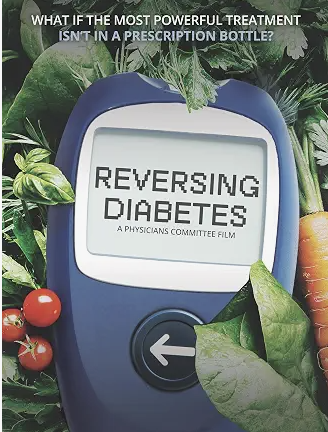
Can type 2 diabetes actually be reversed? And what happens when people who have been told their condition will only get worse discover that changing their diet can dramatically change their health?
Rip proudly welcomes back Dr. Neal Barnard, physician, diabetes researcher, and president of the Physicians Committee for Responsible Medicine, to discuss the groundbreaking new documentary Reversing Diabetes.
This powerful film tells the stories of real people who have transformed their health through a low-fat, whole-food, plant-based diet.
You'll hear about:
Marc Ramirez, a former University of Michigan football player who feared his family's history of diabetes would become his own fate.
A California firefighter who committed to a short plant-based experiment and experienced life-changing results.
Donna Jackson, whose dramatic improvement in blood sugar surprised her own physician and inspired a new partnership in patient education.
David Marsh, who lives with type 1 diabetes and discovered how plant-based nutrition could help him improve his health and insulin management.
Stephanie Goettge, who went from struggling to walk across a parking lot to preparing for a 10K.
Dr. Barnard also explains the science of insulin resistance, the role of fat inside muscle and liver cells, the differences between type 1 and type 2 diabetes, and why carbohydrates aren't necessarily the enemy.
Above all, this is a conversation about hope, second chances, and the possibility of changing your health trajectory — no matter what your family history may look like.
Episode Resources
Watch the Episode on You Tube: https://youtu.be/wopeutDna28
Learn More About Reversing Diabetes: https://www.pcrm.org/reversing-diabetes
Available to rent or buy on Amazon Prime Video, Apple TV, Fandango, and Google Play beginning November 10, 2026.
Learn more about Dr. Neal Barnard and PCRM: https://www.pcrm.org
We hope to see YOU at one of our Live Events! https://plantstrongevents.com/
Our new Meal Planner is LIVE: visit https://goplantstrong.com/ and use code podcast to receive an additional $10 off an annual subscription (It’s just $69/year!)
To stock up on the best-tasting, most convenient, 100% PLANTSTRONG foods, check out all of our PLANTSTRONG products: https://plantstrong.com/
Give us a like on the PLANTSTRONG Facebook Page and check out what being PLANTSTRONG is all about. We always keep it stocked full of new content and updates, tips for healthy living, and delicious recipes, and you can even catch me LIVE on there!
We’ve also got an Instagram! Check us out and share your favorite PLANTSTRONG products and why you love it! Don’t forget to tag us using #goplantstrong 🌱💪
Episode Transcript via AI Transcription Service
Dr. Neal Barnard, welcome back to the Plant Strong Podcast. We just had you on episode 370 talking about, you know, the litigation that you were embarking on against the federal government over the new dietary guidelines. Um, so it feels like yesterday you were here, but but it makes a lot of sense to have you back on the pod podcast because you guys are launching an incredible documentary about reversing diabetes.
That I wanna jump into with you. I watched it, I loved it. I recommend that everybody watch it. It's gonna be available what, November tenth, right, Neal?
Neal Barnard, MD (00:39)
That's right. Yeah, November tenth, exactly.
Rip (00:41)
Yeah.
Yeah. Um, but before we jump into that, I'd just love to get a a little report. Any any news around the litigation that's going on right now, or is that still like early innings?
Neal Barnard, MD (00:54)
Yeah. okay, so for people who who um who've forgotten a little bit, we're the the dietary guidelines came out in January 2026 and they're meat heavy. Um and we are litigating. we filed suit to have them withdrawn. Um and that litigation will take some time. Courts are slow. Um, but what's pro what may happen much faster is if they try to put it into school lunches. Um
Earlier, we will go for a temporary restraining order immediately.
Rip (01:27)
Mm.
Neal Barnard, MD (01:27)
Um Rip, I gotta tell you, uh, one kind of surprise came up. There was an attorney um who was the attorney who, if I understand correctly, uh wanted to defend the or did defend the January 6th rioters who wanted to break into the Capitol and that the
administration brings in for whenever they have something really rough that they have to deal with. um And they have assigned him our case. They have decided that this is a case they do not want to lose. And it is a case that we believe the administration will lose. Or to put it the other way,
Rip (02:08)
Wow.
Neal Barnard, MD (02:09)
we think we're going win.
and the reason that we think that is number number one, the the law is very clear. They broke it they broke the law. Secondly, we won this before. Um we've litigated exactly this kind of case and we won before. So anyway, there there we are. And and maybe maybe one last thing. You this is more than you asked. The the the architect behind the whole
Inverted pyramid, if you will, and the Baja movement was a person named Callie Means. people know his sister, Casey Means, who was up for being surgeon general. She didn't get that post, but Callie Means was very much in on promoting Mead and so forth. and I met with him and we tried very hard to uh push him to have a more reasoned view of what the guidelines were. We really weren't getting anywhere that which is part of why we litigated. But anyway, uh about last last week he quit.
He left the administration. He said, I've had it, and he's out of here too. So so it's a tumultuous um roller coaster ride with regard to these federal guidelines. And um what our hope is, it's not to really arm wrestle with an administration. Our go go our goal is to just get good, healthy nutrition guidelines out to people. And I I think we're gonna succeed at doing that.
Rip (03:24)
Yeah. Well, thanks, Neal. And thanks for that update. And um, I guess that's a a testament to you guys are doing the right thing if they're bringing out the big guns to try and defend, you know, something that I think we all, at least everybody listening to this podcast, believes is um is not the right way to go. Yeah.
Neal Barnard, MD (03:46)
We'll we'll have to we just have to bring science and good
Rip (03:49)
Yeah.
Neal Barnard, MD (03:49)
sense into it and and this cannot be an industry promotional exercise. If if you're talking about what kids should eat at school, it's not for the meat industry or the dairy industry or somebody to weigh in uh on what their nutrition campaigns are. It's really important that it be based on science.
Rip (04:07)
Yeah. Before we dive into some of the um the specifics of the documentary, I'd I'd love to so in watching the documentary, I found out a couple things about yourself that that I I think I knew, but I didn't quite know to this extent. And so I'd love to start there. And so for starters, I obviously I knew that you grew up in um in Fargo, North Ka North Dakota. I think it was a cattle ranch, right? Yeah.
Neal Barnard, MD (04:35)
Well,
my dad was in the cattle business when he was young. Um,
Rip (04:38)
Yeah. Yeah.
Neal Barnard, MD (04:39)
he hated it. He didn't like it at all. Um and and he left. Um and he went to medical school. Um
Rip (04:47)
Well that's what
I and that's what I didn't that's what I didn't know was that your father was also a doctor, right? And and
Neal Barnard, MD (04:53)
Right. Right.
Rip (04:54)
you and you said he was actually he dealt with all the diabetes in in North Dakota. So I was not aware of that, which is fascinating. And so did you go into medical school and become a doctor in large part because of your father? Really?
Neal Barnard, MD (05:09)
In spite of him. Um, he
and I'm not I'm really not kidding. Um, he came home from work, he worked hard. And everybody who had diabetes in North Dakota, pretty much in the eastern side of the state or western Minnesota, would come and they'd see him. And he'd get home, he'd s slump down in the chair, six
Rip (05:27)
Yeah.
Neal Barnard, MD (05:28)
o'clock, six thirty every night. Never, ever did he ever say to me, I cured somebody today. Not once.
or or even that anyone got better. The whole idea of diabetes management at that to at that point was to slow down the damage to the heart, to slow down the damage to the kidneys, to try to keep your patients off dialysis, to try to keep their feet attached, to try to keep them from going blind. Um, and he did not encourage me to to go to medical school, not once. Um and he found it difficult.
Rip (06:03)
Mm.
Neal Barnard, MD (06:03)
Um I mean he was as good a doctor as they'd come.
But um that was what diabetes was at that time.
Rip (06:10)
Yeah.
Neal Barnard, MD (06:10)
And I have to say, I very often thought after we made the discoveries that we made, and and and others too, our our colleagues at Yale and others who found what the cause is of type 2 diabetes and how you can reverse that cause and how you can empower people and you could sometimes make this disease disappear. I just wanted to somehow, I mean he's past now.
But I I wished that I could somehow go back and tell him that.
Rip (06:38)
Yeah. W
was did he live long enough to see what you were able to do with your studies with diabetes?
Neal Barnard, MD (06:43)
Um
he passed about fifteen years ago. Um, so it was uh a a bit premature, unfortunately.
Rip (06:52)
Yeah. Um so let's let's talk f I mean so what is the name of the documentary?
Neal Barnard, MD (07:01)
It's simple name
reversing diabetes.
Rip (07:05)
Yeah. Um, and so let's start by just like let's let everybody in the uh you know that's listening to the podcast know understand like what is the state of the union right now in the United States of America and maybe even beyond when it comes to diabetes?
Neal Barnard, MD (07:23)
This is a battle we're losing about as fast as we can. I mean it's amazing. Um diabetes
is just taking a horrible toll. I mean it it it it short it shortens life span by a good decade for many people, but along the way it leads to heart attacks and it leads to vision loss and it leads to to kidney failure and it leads to neuropathy and all kinds of problems. Extremely expensive. People are on endless medications and they need a huge huge amount of medical care. um And that all needs to be addressed.
it it is true that certain groups pay a larger price for this. You see it in um in some demographic groups more than others, but but I have to say, Rip, I really think that that when it comes to diabetes, everybody is underserved.
Because you can go to the best clinic in the world and they are not going to tell you the cause of it and they're not going to tell you how to reverse it. For some, well, I mean, it's getting better now. I mean, our work is is getting better known. But for the most part, people have been using this old-fashioned approach of saying, well, you got too high blood sugar, so don't eat sugar. don't eat carbohydrate, because that releases sugar in your blood, and you're you're overweight, so eat fewer calories. And people get very discouraged, it doesn't work very well. That isn't the cause of diabetes anyway. Um, but it is amazing.
Amazing how mythology can persist despite very solid clinical evidence about where this disease is coming from and how to turn it around.
Rip (08:53)
Yeah. Yeah. Um it it seems that I mean from my understanding that medical students aren't being taught the the really the underlying causation of what's going on with with diabetes, which to me seems to be an absolute crying shame in two thousand and twenty six and all the research and the science that supports everything that you're doing.
Neal Barnard, MD (09:16)
Yes, although luckily, I mean it is when you when one starts to read the pathological literature about the the onset of this disease, uh the research is coming out now more and more. It hasn't yet filtered very well into what people with diabetes are are recommended to do. But the the bottom line is this: you you can understand why people would think that sugar caused diabetes, because um sugar
Rip (09:38)
Mm-hmm.
Neal Barnard, MD (09:39)
is kind of how we define it. people have an elevated blood sugar.
And it's persistently high. It's and if they eat sugar, it goes even higher. And so the doctors say you know you've got type 2 diabetes. Um the issue though is, and and what we discovered is it is that sugar doesn't cause it. Um the cause of it is the buildup of fat inside liver cells and muscle cells. And muscle cells, they love sugar. I mean, they want to run on sugar. With you know, when you are
Can I do an athletic event?
If there's sugar in your muscle cells, that's the fuel that you're gonna burn. So before the marathon, people are all they're eating carbs because they want to build up their gul their glycogen, which is stored sugar in their muscles and their in their liver. It's it's not your enemy, that's your best friend. The problem with diabetes is that fat builds up in the mother in the muscle and liver cells, and that fat buildup keeps sugar out. So now the more sugar you eat, the higher your blood sugar, because it can't get in where it belongs. And um the the cause.
Is lipid buildup inside the cells that causes insulin resistance? The treatment is to get the fat out of there. And our team showed that we can in about 16 weeks with a diet that has no animal fat in it, no animal products at all, vegan diet.
And a diet that keeps oils low, we can pull out a third of your liver fat in 16 weeks. It's gone.
Rip (11:07)
Hmm.
Neal Barnard, MD (11:07)
And about a tenth of your muscle fat in that same time period. And when you do that, your blood sugar goes bang down because the cells are are working again. Um, which is really now it's different for you know different people. Um everybody gets their own result, but you put it to work and you don't fool around with it. You say, let's cure you now, if we can. Um
Rip (11:29)
Yeah. What do you say to people that say that a you know, a low carb keto diet does as well, if not better?
Neal Barnard, MD (11:37)
Well it's not gonna be better because it doesn't get to the cause, but but it it can be you can understand why people will do it, because if you're not eating any sugar, then the fact that you can't store sugar is irrelevant because you're not eating it. And so your blood sugars will s will be low. now there are a lot of people who do a keto diet and they get nowhere.
But some people, when they just stop eating sugar and stop carb uh eating carbohydrate, their blood sugars are lower and they're impressed by those results. And to be as charitable as I can to that viewpoint, if a person really does that and they're kind of starving themselves for calories, they may end up losing so much weight that some fat will actually come out of their muscle and liver cells as a result of that. So they may ultimately get some some benefit. But we don't do we don't do that approach for a couple reasons. Um the first thing
Is that what's left behind when you take out carbs is a glob, you know, high protein and high-fat diets. And my goodness sakes, about a third of the people are doing that kind of diet, their lipids go crazy, their cholesterol levels go up. And the thing that kills people with diabetes is cardiovascular disease. So you do not want a drop of cholesterol in animal fat.
In your diets. And secondly, is that a ketogenic diet, if people think a vegan diet is challenging, ugh, ketogenic diet says, don't eat any fruit, don't eat any beans, don't have any pasta, don't have any rice, don't have any of this stuff, and blame yourself if you're having trouble adhering to it. It's just this 1950s way of of of doing this approach.
Rip (13:16)
Yeah, yeah. Um so the documentary, it's coming out uh November tenth. What inspired the documentary reversing diabetes?
Neal Barnard, MD (13:28)
Rip it was it was actually what you mentioned earlier is that d that medical students don't know about this.
And I was thinking, all right, let's just do a short video for medical students and let's talk to them about what the cause is. And let's interview. We work with our with our good colleagues, Jerry Shulman and Kit Peterson at Yale. and so I said, let's bring them in because people don't they may not know who they are. And let's talk about MR spectroscopy, where you can look into the liver and look into the muscle and actually see the cause. So the medical students get smart about this. But then along the way, we thought.
let's let people, patients, tell their story so that
Rip (14:03)
Mm.
Neal Barnard, MD (14:03)
you can envision it. And as time went on, it became so gripping that I thought I didn't want only medical students to see it. I thought people who have diabetes and their loved ones and people who make policy need to see this too. And it ended up being uh an hour-long documentary that features five different cases of individuals who came into this.
in pretty tough uh pretty tough shape. Um Mark Ramirez, for example, whom you know, um had diabetes for 10 years and a horrible family history. but they you know they they jump into this approach and you you're you you ride with them as they improve improve. And their doctors in some cases uh I I want to praise them for coming in and saying I didn't believe this going to work. um
So anyway, th th that was the whole thing. It started out to inspire medical students, but it ended being an inspiring tool for everybody.
Rip (14:57)
Well yeah,
yeah. Well, and the stories to your point, I mean five stories, every one of them I I was like practically in tears because it was so emotional, especially i in many of the like Mark and then the firefighter and then um and then the um Donna, the last one at the end.
when they bring in their their spouses and their spouses get so emotional because they thought that they were gonna have shortened shortened lives with their loved ones and now this has just been like such a blessing. Um but Mark uh Neal just to kind of expand on that he shows this photo of everybody in his family and there's like ten people and he mentions how everybody in that photo is either dead, they've lost their, you know, lost one of their limbs, um
They are living with diabetes. There were just two people that that didn't have diabetes, basically himself, uh and his wife. And then I think one of his sisters. It was just it's tragic. Tragic.
Neal Barnard, MD (16:11)
And he himself had had a terrible, terrible history with diabetes. He ha he suffered for 10 years with this disease. And I mean he could see it coming because he had just as you said, a terrible family history. And what kind of worked against Mark was his own athletic skill. He was a football player and a really talented football player. So he gets recruited by the University of Michigan and he's on the line at, you know, um
he plays guard and he's 300 pounds and you know so he continues to eat like a football player and he ends up with diabetes. I mean the the typical situation that we see so often. And
Rip (16:51)
Yeah.
Neal Barnard, MD (16:51)
this disease was killing him. Um but but anyway, what you said is is exactly right. He brings it alive and he had tried every kind of diet and for him to be able to
Get rid of this disease. And then he's he's become such um an eloquent advocate
Rip (17:10)
Yeah.
Neal Barnard, MD (17:10)
for others, particularly those who think, well, I'm stuck. This is my family history, this is in my genes, there's nothing I can do. He says, basically, come on, you know, let's let's conquer this. And he does. But but Rip, I gotta tell you, you know, the one where I cry every I've seen this film a million times, but David Marsh, who's got um type one.
Um type 1 we've been talking about type 2. Type 1 diabetes is a condition you cannot reverse. Um type 1 diabetes means your pancreas is not making insulin anymore at all. Um, and that was his situation, and he was very far along, and he was about to need di dialysis because his kidneys were were shot, and at that point his life expectancy would be measured in a in a matter of a few years. Um
And his wife, out of desperation, was looking online and happened to find a study that we were beginning to apply this with type one diabetes. Diabetes, not with the not with the expectation of having it go away. That was not the expectation, that's not what will happen with type one, but to see how much benefit it could bring.
Um, because even if you have type one, you got fat in your muscle cells, in your liver cells. If we get that out, the insulin that you inject now is going to work efficiently, and we're getting that fat out of your arteries. So your kidneys are getting spared. And to see his fate turn around and
Rip (18:41)
Mm, mm.
Neal Barnard, MD (18:42)
the relationship with his wife have a future, um, to me
Rip (18:46)
Yeah. Yeah.
Neal Barnard, MD (18:48)
was just uh it just slays me every time.
Rip (18:51)
No, that one got me too. And and when he talks about how, you know, he he agreed to enroll in this study that you guys were doing, and there were fifty-eight people, and there was like a control study that was going on the standard American diet, and then the low-fat vegan, and he had his fingers crossed that and prayed to God that he would get the standard American diet. And his wife was praying to God that that he got the low-fat
Neal Barnard, MD (19:15)
Hey
Rip (19:17)
vegan, and he said, Well, my wife's
prayers were answered and he said ultimately so were his but uh yeah he got the low fat vegan and it made all the difference. Um like like
Neal Barnard, MD (19:28)
Yeah.
Rip (19:29)
you know and he what he said he also like lost forty five pounds and just it's amazing how when you really toss yourself into this lifestyle, everything happens and we see this with all these people, whether it's the weight loss, whether it's the drop in cholesterol, getting off the meds, um insulin resistance. Um get like
Give us an example of what some of these people's A one Cs do in a matter of typically three months.
Neal Barnard, MD (19:59)
Yeah. Um everybody gets their own result. Um if I t and and we it's it's a bit counterintuitive because when people come into our studies, the first studies that we did back in the 1990s and and NIH uh gave us a grant in 2003.
We were trying not to take people off their medication. We're trying to leave them on their medication. And so they're because we you don't want too many variables. You you just want change the diet, don't change the medicine, don't change anything else, see what happens with their A1C. But with diabetes, you have to take them off their medication because their blood sugar is dropping like a stone. And if if you're leaving them on the full dose of insulin that they came in on, you're gonna make them hypoglycemic. And that can that I mean, that can be fatal. So you have to take them off their drugs. And so in some cases their A1C drop
is huge, but then you take them off their medicate medications so their A one C will kind of rebound a little bit. So th so
Rip (20:54)
Mm.
Neal Barnard, MD (20:55)
they they may have a drop of a half a point or something like that, but they're on or maybe they're off all their medications. But but
I'll give you I'll give you an example. Um in our NIH trial at twenty-two weeks, the average drop in A1C, trying not to change people's medicines, was 1.2 absolute percentage points. and that was with a lot of people coming off their medication too. So the the true drop would be much greater if you were not on meds. But there was one person in the study who came in at nine and a half. You know, with with with diabetes, our benchmark is you we want to keep you below about
Seven, typically for in managing diabetes. He he was nine and a half and he'd had diabetes for four years, and his family history was terrible. I remember him coming in saying, I need help because if I he was telling me about his family history, he was saying, if I don't control this, I'm gonna lose a leg or I'm gonna go blind.
And anyway, he went vegan and he stuck with it. He um after a year, he had lost 60 pounds. But his A1C, his outside doctor stopped all his medication, which he thought was miraculous, no medication. Um, but he came in and his A1C, nine and a half to start, seven being our benchmark, at one year his A1C was 5.3. And
Rip, I gotta tell you, I got his lab slip. This was 20 years ago.
I shut my office door and I paced around thinking, could I tell him he was cured? Because
Rip (22:31)
Mm-hmm.
Neal Barnard, MD (22:31)
He he was on no medicines. This is a normal blood sugar. And I said I knew he had had diabetes for four years. Um, but he didn't have it now. And at that time, if you would tell your colleagues that somebody had been cured of diabetes, that was fighting words. You can't say that because you because nobody cures diabetes. It's not curable. But we now see it all the time, uh, where people come in and they don't have diabetes anymore. Now, Velveeta is waiting around the corner. You know, you can get this disease back if you go back on the diet they gave it to but it's a
dynamic situation where you get it, you can get out of it. Now not everyone's going to have the same result. Some people will will do very well, some people will come only so far. But we want to be as aggressive as we possibly can with everybody to see what we can do.
Rip (23:16)
Hmm. Um, you know, you also uh you also have a firefighter that's in there. Um let me just r reference my notes. Yeah, Jamie. Jamie Stark, if I'm not mistaken, was his
Neal Barnard, MD (23:29)
Right.
Rip (23:29)
name. Um yeah, from Sonoma, California. And um he it sounds like he he went to True North and was visiting with Anthony, Anthony Lynn, and basically
agreed to a 45 day trial period uh to see what would happen. And I guess the results in 45 days were so dramatic that the that he and his wife were very inspired to keep with it. Um before their, I think they were going on a cruise to Italy or something like that. But, you know, another, another incredible, touching, riveting story of someone that was able to reverse their diabetes.
Neal Barnard, MD (24:11)
You you may have played a role in in inspiring him because of your work and what you have talked about. Um I mean the occupational hazards of being a fi firefighter um go beyond smoke inhalation and cra and f crashing through a fiery building. It has to do with what you're eating back at the firehouse. And the the
Rip (24:26)
Yeah, that's right. Yeah.
Neal Barnard, MD (24:28)
the the the the the the dangers of kind of the standard American diet and how people put it to work and and you're right, that's what he had had.
Rip (24:39)
Yeah. You, you know, I I'm constantly impressed, Neal, with, you know, just how you were able to sniff the right direction to go in with this kind of lifestyle a long, long time ago. And I'm just wondering, like you sought out Dean Ornish after he had his results with his reversing heart disease program back in the late 70s, early eighties.
And you called him up basically to ask him some questions, like really, can people really eat this way? And he invited you to come out and basically interview a lot of the participants that he had. And so you got on an airplane and you went out and you interviewed these people. I'm just wondering what what was it inside your your makeup that allowed you to be that curious and that kind of, you know, driven back in the day and today?
Neal Barnard, MD (25:40)
With that, I should say when I contacted Dean for the first time, I had already adopted a vegan diet myself. Um, but and I and I knew it was was good and I found it easy and I knew it was really helpful, and I knew that the evidence had to be there. But what impressed me with what Dean Ornish had done, and he's done um amazing things, um, was that he brought people in um who were
In a study that that that I got involved with him with, and and the the part of the part that I was involved with was just looking at the acceptability of the diet, he was t talking with people who were really sick with cardiovascular disease. Um and he recruited them and had them make big, big changes. And I was really wondering to what degree um you could actually
Get adherence with this and and
Rip (26:35)
Mm.
Neal Barnard, MD (26:35)
really push people to do it. And it was so eye-opening because as you mentioned, I'm Dean K a asked me to come out to California and I interviewed all the participants in the whole study, and they didn't have to be asked twice to participate in this.
Rip (26:54)
Yeah.
Neal Barnard, MD (26:55)
And their chest pain went away, and and one of them was angry, saying to me.
Other doctors were ready to do surgery on me. And nobody would tell me that I could do this myself with changing my diet. And and the reason he was angry is he felt the doctors almost try to talk people out of it.
They'll say, you can't
Rip (27:16)
Mm-hmm.
Neal Barnard, MD (27:17)
do this, it's too difficult. Do a Mediterranean instead. Just make baby steps. You know, we we we talk doctors somehow imagine that it's impossible to eat a bean, or impossible to put tomato sauce on your spaghetti. You know, and so they say, just introduce one healthy meal every week. Give me a break. The person's in the emergency room. They will they will change their diet. And that's what Dean really demonstrated: is that people would get together, they'd get together a couple times a week and they would meditate.
And have a group plant-based meal together. And they loved it. And they and and the more they dedicated themselves to it, the better they did. And Dean's new work on Alzheimer's disease has shown exactly the same thing, that people get better. And the more they do, the better they the more they do diet and lifestyle-wise, the more improvement they see.
Rip (28:10)
Yeah. He has a nice quote in the uh in the documentary. He basically says, you know, when he thinks about bypass surgery, it's like a metaphor for bypassing the problem. as opposed to obviously getting to the root causation.
Neal Barnard, MD (28:25)
That was yeah. That was another reason. I mean I I wanted I kinda wanted medical students to meet him as well, you know, to hear what
Rip (28:32)
Yeah.
Neal Barnard, MD (28:32)
he had to say. And so we wanted to make sure that people knew uh about this. Uh sometimes students in school nowadays don't hear
Rip (28:36)
Yeah. Well well
Neal Barnard, MD (28:39)
about this time.
Rip (28:40)
yeah. Well speaking of physicians, one of the one of the things that really I thought was inspiring many, but w inspiring as far as a physician that took notice to what was going on here was the physician, I think believe her name was Xandria Kirtley, uh, who was the doctor for Donna Jackson. And Donna had an A one C that was, you know, twelve percent.
And was in pretty bad shape. Um, and had, you know, had a blood sugar level in the 300s. And the doctor basically said, when when Donna said, I want to try this, I've got a friend that's that's doing it and getting success. You know, basically Xandra didn't give her credit, but said, Okay, try it for three months, then come back. And thinking, yeah, we'll put you on the metaphor and she came back and her A1C had dropped, I believe it was to like 5.5 or something ridiculous.
And the doctor not only apologized to her, but said, I want you to start teaching classes with me on how to do this. I mean, that to me is what it's all about.
Neal Barnard, MD (29:48)
I want to say a word of thanks to her because it took a special kind of person to to to say that to the patient, but to say
Rip (29:57)
Yeah.
Neal Barnard, MD (29:58)
to me, I will be in your documentary. And I'm gonna
Rip (30:01)
Yeah.
Neal Barnard, MD (30:02)
tell people what I thought and what I saw. Um I mean that takes a certain kind of a doctor to say that. Um so I was I I thought that was really very wonderful that she did.
Rip (30:13)
It was. And then her husband in one of the scenes is making potato and mushroom tacos for the family. They have two beautiful sons that are in there dicing bell peppers for dinner as well. You could just really tell the authenticity that this was a family affair that the whole family had now embraced. And this was going to be a legacy of health going forward for this family. Um, so beautiful
Neal Barnard, MD (30:40)
Yeah.
Rip (30:41)
stuff.
Neal Barnard, MD (30:41)
Not included in in the in the version that you saw was her children. One had asthma and another had skin problems like eczema. Um, both c all cleared up. And they said, We don't need this inhaler anymore. So that so the diet helped everybody in the family, which was a wonderful
Rip (30:58)
Yeah, yeah, yeah.
Neal Barnard, MD (31:00)
thing to see. And and that's really an important thing, is you know, you're not gonna share your metformin with your family members or you share your insulin syringes,
Rip (31:06)
No.
Neal Barnard, MD (31:07)
but you can sure share share your vegan lasagna.
Or whatever it is, and everybody can benefit from that.
Rip (31:13)
Yeah. Um, so let's say, Neal, that I watched the film. This is kind of a new concept for me. I'm inspired. I wanna start. What's a great place to go after watching this movie?
Neal Barnard, MD (31:33)
Yeah, um great question. Um luckily there are so many resources out there for people to begin. Um and and I should say that don't fire your doctor. a lot of people are
Rip (31:44)
yeah.
Neal Barnard, MD (31:44)
frustrated because their doctor didn't tell them about this. And you can forgive your doctor because you know some of our research is new.
But stick with your doctor. Your doctor can monitor you. Your doctor can adjust your medicines. And and any doctor can take you off your medicines when the time is right. So stick with the doctor that you have. Do change your diet and change it in a big way. Um, we ourselves um work with a lot of people where doc w I always hope that every doctor has a support group and has a good dietitian, but if they don't, um there is um
uh a preferred dietitian referral program that's its name preferred dietitian referral you just go online put preferred dietitian referral and you'll find a dietitian in your state who does
Rip (32:27)
Mm.
Neal Barnard, MD (32:27)
a vegan diet herself or himself and you can see them a couple times and whether they're in your insurance or not um have a couple visits and they'll get you started. Um if you need a support group we have one every Tuesday at noon Eastern time the National Diabetes Program meets together for free. We have any given week uh
maybe a hundred so people on with us for the support group that doctors should have elsewhere. I have a book on diabetes that I hope people will pick up and and read and there are other really good ones too. People should should watch every episode of every everything you have ever done, Rip, because you talk about the health overall and and how to put it to work. Um the products and and recipes that you have brought forward allow people to make this work in their life and to share it with other people. And it becomes
A joy to start exploring the foods that are out there for you, the other documentaries that you've been in, that people can learn about and then to explore the possibilities that you thought weren't open to you, but are open
Rip (33:32)
Yeah.
Neal Barnard, MD (33:32)
to you. And you can then bring them to your family.
Rip (33:35)
Yeah. Um when did when was the the the the seed hatched for this documentary? How long ago?
Neal Barnard, MD (33:47)
A very long time ago.
I guess I can tell you this. Um, the film now opens with Stephanie Getchus, who is lacing up her sneakers and going for a run. The film originally began with Eric Adams, mayor of New York, because he
Rip (34:05)
Wow. Yeah. Yeah. Yeah.
Neal Barnard, MD (34:07)
told us his story, which was gripping. And and it's gripping. he had bad type 2 diabetes, and he went online and he found the work that we're doing and that you're doing and that your dad does. Um
And um he told that story to us on camera.
Um and and his mother had diabetes. And it's oh we had such wonderful footage of his mother saying, Eric, I don't want to eat weeds. Why are you
Rip (34:34)
Ha ha.
Neal Barnard, MD (34:35)
making me eat weed? It was so wonderful. But then Eric, as you know, got into all kinds of legal issues um in
Rip (34:41)
Yeah.
Neal Barnard, MD (34:42)
in New York and so he had to come out he had to drop out of the film. And so we anyway, so it was it was like the film cursed um in every possible way. But it finally came together and all the stories and and everybody jumped in.
And it became this most beautiful thing. But it was it did not turn out to be this short 20-minute film that was going to show in the lecture hall for 30 medical students. That was my original
Rip (35:07)
Yeah.
Neal Barnard, MD (35:09)
vision, and it grew into be much more than that. My hope, though, is just that people will air pop some popcorn, drag
their reluctant spouse into a room and say, let's watch a movie. And they watch it together.
And their lives will change.
Rip (35:26)
Yeah. You know, uh you mentioned how now the movie starts with Stephanie lacing up her sneakers. Um, and it also kind of ends, not with Stephanie, but she's pretty close to the end. And I, you know, I had no idea that she was, I mean, she was 225 pounds. She was a junk food queen, self-described junk food queen, the couch potato, couldn't even hardly walk across a parking lot, and now
She's running a 10K in March of 2027. And she's looking forward to maybe even doing a half marathon. So it's really remarkable. And her before and after photos, Neal, you know, you can just, wow, just incredible what she's done with her health. It's it's spectacular. Um, and I love the way you you kind of, you know, not to steal any thunder here, but you know, you're, I think one of your goals is to have.
doctors working together in collaboration with their patients. And that that to me was epitomized with uh with Donna and Xandra, uh the doctor of Donna Donna Jackson, I think. Yeah, Donna Jackson. So so kudos to you and PCRM and everybody that laced up their sneakers to make this documentary. Uh
Neal Barnard, MD (36:45)
Yeah.
Rip (36:47)
it it's it's spectacular and it it'll it'll have some major ripples ripple effects. So um
Fantastic. Um and we'll do everything we can to get the word out on it.
Neal Barnard, MD (36:59)
Well, thank you, Rip. It's reversing diabetes. It's on Amazon right now. And I hope people will will have a look and that they'll share it and and see what's possible.
Rip (37:09)
Yeah, yeah. All right, Neal, give me a plant strong fist bump on the way out. Plant strong, Neal. Boom. Reverse that diabetes.
Neal Barnard, MD (37:14)
Thank you, Rip.