#379: Dr. Robyn Tiger: Stress Is Inevitable. Feeling Stressed Doesn't Have to Be.
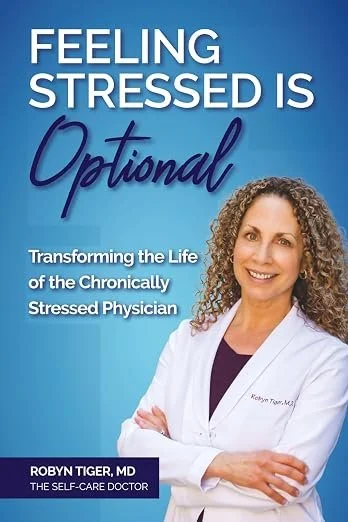
Order Dr. Tiger’s Book, Feeling Stressed is Optional
Can chronic stress make you sick? And is it possible to feel calmer in just 30 seconds?
Rip sits down with Dr. Robyn Tiger, a physician, lifestyle medicine expert, and founder of StressFreeMD, to explore the powerful connection between chronic stress, burnout, sleep, nutrition, and overall health.
Dr. Tiger spent years experiencing migraines, anxiety, digestive problems, and poor sleep while working as a radiologist. Despite seeking help from multiple specialists, she struggled to find answers. Her turning point came when she recognized the role chronic stress was playing in her symptoms.
Today, she helps others develop practical strategies for stress management using meditation, breathing exercises, yoga therapy, and lifestyle medicine.
In this conversation, Rip and Dr. Tiger discuss:
How chronic stress can affect your physical and emotional health
Why stress can make healthy eating, exercise, and sleep more difficult
Physician burnout and the pressure of caring for everyone but yourself
The connection between stress, food cravings, and mood
How menopause and chronic stress can interact
Why better sleep starts with working backward from your wake-up time
Healthier alternatives to reaching for alcohol after a stressful day
How meditation, yoga, breathwork, and time in nature can help
The power of small, sustainable lifestyle changes
A simple "straw breath" breathing exercise you can practice anywhere
Dr. Tiger also shares one of her favorite reminders: "Your age is not a cage."
Whether you're juggling work and family, caring for aging parents, navigating menopause, or simply feeling overwhelmed, this conversation offers practical tools to help you feel calmer, more connected, and more in control of your health.
Episode Resources
Watch the Episode on You Tube: https://youtu.be/wBOPe9NGKTk
Connect with Dr. Tobyn Tiger: https://stressfreemd.net
We hope to see YOU at one of our Live Events! https://plantstrongevents.com/
Our new Meal Planner is LIVE: visit https://goplantstrong.com/ and use code podcast to receive an additional $10 off an annual subscription (It’s just $69/year!)
To stock up on the best-tasting, most convenient, 100% PLANTSTRONG foods, check out all of our PLANTSTRONG products: https://plantstrong.com/
Give us a like on the PLANTSTRONG Facebook Page and check out what being PLANTSTRONG is all about. We always keep it stocked full of new content and updates, tips for healthy living, and delicious recipes, and you can even catch me LIVE on there!
We’ve also got an Instagram! Check us out and share your favorite PLANTSTRONG products and why you love it! Don’t forget to tag us using #goplantstrong 🌱💪
Episode Transcript via AI Transcription Service
Rip (00:00)
Robyn Tiger, it is an honor to have you on the Plant Strong podcast with me today. how are you doing?
Robyn Tiger, MD (00:09)
I'm doing great. Super honored to be here as well.
Rip (00:13)
Well, wonderful. so I want to talk about a couple subjects with you. I want to talk about physician burnout. I wanna talk about stress, I wanna talk about plant-based living. but before I jump into those kind of main topics today, I'd love to just to know a little bit more about you. so first, where where am I talking to you from?
Robyn Tiger, MD (00:41)
Beautiful Asheville, North Carolina.
Rip (00:45)
Asheville, North Carolina. Wow. I adore Asheville. We just came from Asheville, or outside Asheville, where we hold our we do a week long retreat there. What am I saying? We were just got back from Sedona, but we were in Black Mountain about maybe five, six months ago, and love it. Love it, adore it. how long have you been in Asheville?
Robyn Tiger, MD (01:09)
Been here over seven years. I need to find you next time you're here.
Rip (01:13)
Well,
true. We need to find you. and Astral does seem like a bit of a a sister city to Austin, Texas.
Robyn Tiger, MD (01:22)
Yeah, love Austin. Yeah, it's that same kind of feel, same kind of vibe.
Rip (01:26)
Yeah, yeah, exactly. when did you decide that you wanted to go into medicine?
Robyn Tiger, MD (01:35)
Hmm. Well, that was really two part. both during childhood. The first part was I lost my dad early on, and I was very curious about health beginning at age seven. And then at age eight, I was in third grade, and my teacher rolled out this skeleton, and
I learned that skeletons were not just Halloween costumes
Rip (02:04)
Yeah.
Robyn Tiger, MD (02:05)
and decorations, but they were actually inside our bodies. And my brain was just blown and I was so curious about the human body. So really at seven and eight, when I was a child, began my interest in in going into medicine and becoming a physician.
Rip (02:19)
Hmm. Yeah. So it's it's something that's been inside of you for a long, long time.
Robyn Tiger, MD (02:26)
Yeah.
Rip (02:27)
and so did you like go to college, then go into medical school and do your residency and internship and and all that? Straight straight.
Robyn Tiger, MD (02:35)
Straight path. Yep. College, med
school, internship, residency, fellowship, job, da da da da da. Yeah.
Rip (02:41)
Yeah. Yeah. Yeah. And so back so back in the day,
you decided you decided to focus on radiology, if I'm not mistaken. Is that right? Yeah, yeah.
Robyn Tiger, MD (02:54)
Mm, mm-hmm, mm-hmm.
Rip (02:56)
Why radiology?
Robyn Tiger, MD (02:58)
So you learn a lot about yourself in training. And I even had this Norman Rockwell book, you know Norman Rockwell. So
Rip (03:07)
Sure, sure.
Robyn Tiger, MD (03:08)
there's this famous painting where the little girl's holding up her little doll teddy bear, and he's he the doctor has got the stethoscope on this this doll, this teddy bear. And I wish it had this vision that that was the kind of doctor I was gonna be. probably something in primary care. But
When I went through my training in medical school, I realized that I am a huge empath to an extreme. And I
Rip (03:36)
Hmm.
Robyn Tiger, MD (03:37)
was just bringing a lot of it home. I really couldn't leave it at work. And I was still worrying about my patients at night. And I I I just never really was able to separate. And I got very emotionally involved with a lot of their families. And I just decided that that wasn't the kind of doctor that was best for me. And I fell in love.
with radiology because it didn't limit me to a specific gender or a specific type of the bod part of the body, that it was everybody. That I got to learn about everybody and I got to help everyone. and it was so interesting be ab being able to peer inside people's bodies and actually really kind of be the doctor's doctor, which was different, a different way to look at medicine. How can I help a physician help their patient? And that actually
kind of what I'm still doing, kind of the doctor's doctor in a different way, educating and wellness now.
Rip (04:30)
Yeah. So are you still doing radiology or are you doing more of the stress free MD and lifestyle medicine and meditation and all that stuff?
Robyn Tiger, MD (04:43)
Yeah, no, I it's so interesting, Rip, because when I think about it, I've actually practiced just as long in radiology as I have now in this wellness space. So I haven't practiced radiology for many years, really wanting to focus on
Rip (04:56)
Wow.
Robyn Tiger, MD (04:57)
educating my colleagues in healthcare.
Rip (05:00)
So how long has it been now that you've been you've made the transition?
Robyn Tiger, MD (05:04)
It's been over fifteen years.
Rip (05:06)
Wow. Was that pretty
Was that pretty scary at first?
Robyn Tiger, MD (05:13)
Well, you mentioned burnout when we first started talking and I like to say the saying, make your mess your message and so I over time through my training and practice developed a lot of symptoms that really were seemed disconnected. A lot of different things in my body were happening. I was having migraines and vertigo and tinnitus and bleeding gums and reflux and my body hurt and
couldn't digest my food and my bow habits were all over the place and I wasn't sleeping and I was anxious and stressed and all these things, even paresthesia. I had numbness in my hands and feet. And so I sought out care through all of these specialists in all these different areas. And everyone gave me a pill, medication, as we say, a pill for an ill. And I would have a pile of pills that I was taking every single day and I wasn't getting better.
And it wasn't until I looked outside the box of traditional medicine. I was already eating what I thought was a pretty healthy vegan diet, and we can get into that. And running races and taking care of myself in the ways that I thought was appropriate, but there was still something missing. And to be honest, I had lost three physician friends to suicide. And I really saw
Rip (06:34)
Mm-hmm.
Robyn Tiger, MD (06:34)
this path and I said, You can either head down this path that's not so
Healthy, or you can try and figure out what you can do for yourself. And so it was then that I started looking into things outside of what I was doing, and I learned about meditation and yoga and so on. And I started to feel better. And all these symptoms that I was experiencing actually went away. And I came to realize that I was experiencing a diagnosis that everyone missed, and it was chronic stress.
Rip (07:08)
Wow. Yeah.
Robyn Tiger, MD (07:09)
And
that was it. I didn't need pills. I didn't need therapy. I didn't need anything except to learn how to take care of myself. And then over time I learned all the different things that we can do in the behaviors that are related in lifestyle medicine that that create our stress or relieve our stress, depending on what we do. And so that's why that transition occurred. I thought I feel selfish holding all this knowledge in and I need to share it with other people.
particularly my colleagues. And so I made that
Rip (07:39)
Hmm. Yeah. What
Robyn Tiger, MD (07:41)
switch.
Rip (07:41)
wow. Well so what was the time frame when it sounds like, you know, burnout almost cost you your health?
Robyn Tiger, MD (07:49)
Mm-hmm.
Rip (07:50)
And between, you know, when you kind of put the pieces of the puzzle together and then decided to transition, you know, your whole practice to this kind of wellness model.
Robyn Tiger, MD (08:04)
So if I'm honest and I start thinking about when was I first starting to feel symptoms, I would say probably back in residency, I noticed I
Rip (08:11)
Mm.
Robyn Tiger, MD (08:12)
got these migraine headaches. I'd never had them in my life. And even though in radiology we're in the dark, even the dark was too much light for me reading cases. I had to remove myself and go into a dark room for a certain amount of time just to try and relieve what was going on. And and so
I believe the first symptoms I started to recognize were back in my in my training. And then they continued into practice and several years into practice, these symptoms developed over time. It wasn't just that I woke up one day and they were all there. It was just
Rip (08:44)
Yeah.
Robyn Tiger, MD (08:45)
a so maybe over a decade or so, ten, fifteen years. yeah.
Rip (08:49)
Mm, mm-hmm.
Yeah. so
Do you find by and large that women are more stressed than men in you know, y in your practice and who you're seeing?
Robyn Tiger, MD (09:09)
That's really interesting question. I feel that more female physicians and healthcare professionals see me as their avatar. So I seem to work more with people that are female. But I can't po I can't say for sure that it's affecting men and women differently. because the statistics are that, you know, over half of physicians are burned out.
And there are more women than men, but the numbers are pretty close.
Rip (09:42)
Mm. Yeah, you know, it's interesting. I I I had to go in to go see a primary care physician a couple of weeks ago. Believe it or not, you know, since I left the fire department, I really haven't had a primary care physician. it's been a it's been a while. You
Robyn Tiger, MD (10:00)
Why?
Rip (10:02)
know what? j w why? Why? Is it's a good well, I g I guess I feel like I just like I've had no reason to see a a physician.
Frankly. but you know, I'm 63 now and I I I was like, you know, it's time for me to kind of cause whenever I so I do see some like like a urologist, right? And stuff like that. And they're always asking me, Who is your primary care physician?
Robyn Tiger, MD (10:28)
Ha ha
Rip (10:29)
So I was like, okay, it's time for me to get one. And I couldn't believe this guy was like three years, I think, out of residency, but he had such a fantastic attitude, and I was expecting
To your point, somebody that was burned out, just had no interest in hearing about little old me and my story and and everything. And it was really very refreshing for me. But to to to actually meet a physician that was pretty jazzed about their, you know, what they were doing.
Robyn Tiger, MD (10:59)
That's awesome.
Rip (11:00)
Yeah, it w it was. But so I'm sorry, I I deviate. well let's let's talk for a sec about I want to focus on women right now. I'd say that
You know, 80% of the listeners of the Plant Strong Podcast are are women. And it seems like, and I and I know in our household, you know, my wife Jill, she's the primary caretaker for, you know, for everyone. And it seems like, you know, women are incredible at caring for everyone, but pretty bad at caring for themselves.
Robyn Tiger, MD (11:34)
That's true. That is
very true. We we are innately givers and fixers. And we innately put other people first. And then if you add the healthcare professional hat on top of that, we are givers and caregivers and servers and one of and fixers. And so we kind of have a double, a double piece of that.
Rip (11:57)
Yeah. Yeah. And so what would you, I mean, so if if you're a woman out there and you're
Robyn Tiger, MD (12:05)
Mm-hmm.
Rip (12:05)
listening to the Plant Strong podcast right now and you're taking care of aging parents, you're taking care of kids, or maybe even both, you know, what would you tell a woman who says that you know, Robyn, I just I have I don't have time for myself.
Robyn Tiger, MD (12:25)
Yeah, so anyone listening, I'm in that sandwich generation right now, right? I've got aging parents, got children, I hear you. And I frequently hear, I don't have time. That's probably the most common statement that I hear. And so Rip, what I say is, you don't have time. And then that usually gets people's attention.
Rip (12:51)
Yeah, yeah, yeah.
Robyn Tiger, MD (12:53)
And I s and they look at me.
And I say, do you know that the chronic stress that you're experiencing is the number one cause of your chronic disease, your potentially hypertension, diabetes, heart disease, dementia, stroke, cancer progression, and growth? And if that's not enough,
It shaves years off of your life. It prematurely shortens your telomeres, which determine how long you're going to live, the little protective end of your chromosomes. So when someone says, I'm too stressed, I have so much going on, I don't have time, and I say, You're right. You don't have time because you're losing time. And so we
Rip (13:37)
Yeah. Yeah.
Robyn Tiger, MD (13:39)
if you have 30 seconds, if you have five seconds, if you have one minute, there's something that I can share with you.
to help yourself feel better because anything you do is more than you were doing before. So nothing is too small. And that usually
Rip (13:53)
Mm-hmm. Mm-hmm.
Robyn Tiger, MD (13:55)
helps people get attention and it also helps them put in perspective that they can take care of themselves and it doesn't need to take a lot of time.
Rip (14:05)
Yeah. That's such a that's such a powerful way of replying to them. You're right. You don't have time. And then they're like, wait, wait, wait, wait, wait. What do you mean I don't have time? That's not that's not what they want to hear, right?
Robyn Tiger, MD (14:19)
No, no, they want me to be like, you're right. I know you're busy, don't worry about it. No, I'm like,
you're right, and this is why you're right. So
Rip (14:27)
Yeah, yeah. Well you even
you even wrote a whole book, right? On
Robyn Tiger, MD (14:33)
Yeah.
Rip (14:33)
you y you say that feeling stressed is optional.
Robyn Tiger, MD (14:38)
Mm-hmm.
Rip (14:40)
that's that's pretty cool, right? I mean, like I can't tell you how many people in my life are running around with their heads cut off, feeling absolutely stressed, and
Like how do you where do you begin with somebody that doesn't know how to handle stress and they show it outwardly and it doesn't help them, it doesn't help the people they're dealing with? Like where do you start if you're saying it is in fact optional, which I agree a hundred percent.
Robyn Tiger, MD (15:18)
Yeah,
so you know, I I wrote I created that title. It is very catchy because people say, no, it isn't, and I say stress isn't optional, but feeling stressed is optional.
So we can't prevent stress from happening in our life. We're gonna have stuff that happens outside of us, we're gonna have stuff that happens within our own minds, but how you feel about it, that's where you can take control. And so to answer your question, when I work with someone or a group, I really break it down into two key steps. And the first step is we get back to our lifestyle medicine roots.
And I like to do an assessment. And we do a bird's eye view basically of their life.
And there's some coloring involved and you know creating a pie chart and so on of all the different components. And and I like to add the blue zones piece in as well because as you may know, American College of Lifestyle Medicine has recently partnered with the Blue Zones. And for those listening, the Blue Zones are the areas in the world where we have the highest number of centenarians, people that live the longest, over 100. And they've partnered because there's a lot of overlap between
Lifestyle medicine and blue zones. And so we've started to bring in some of those blue zones principles and add to our pillars in lifestyle medicine, which are stress, nutrition, exercise, sleep, connection. I call them escapes, more than just, you know, harmful substances, but things that people do to not feel the feelings and emotions they don't want to feel. Because there's more things than just alcohol and drugs that people are doing that I like to focus on as well. And the things that we also bring in are meaning and purpose.
in in particular, which is a blue zones principle. And we've learned that when you have meaning and purpose in your life, you are more fulfilled and you actually add like five to seven years onto your life. So I like to take that bird's eye view without
Rip (17:19)
Mm-hmm.
Robyn Tiger, MD (17:19)
judgment, just curious brain, and look at all of these different components in someone's life and they can decide where they feel strong if anywhere, where are they feeling weak if anywhere, and
What matters most to them? Really understanding that person in front of me and then starting there. We want to hit all those pieces, but as you know, if we give anyone too much to do, and if we ourselves have too much to do, we're not gonna do anything. It's gonna be overwhelming, right? So we need to start by starting, and we want to just create these small steps in the ladder to create change.
The second piece related to change, the second step is actually teaching how to create effective, long-lasting behavior change. It's one thing to provide the education on a particular topic. It's another thing to teach somebody how to create that change. And that's a really big piece of education that's missing in everyone, not just healthcare, but
In the general population, you should sleep more, you should eat better, you should move your body more, and all what but how do they do that? Where do we even begin? And so the two steps with each individual is one taking that bird's eye view, doing a self-assessment, identifying what areas you feel strong or weak in and what's important to you, what matters to you, where would you like to begin? And
Rip (18:50)
Mm-hmm.
Robyn Tiger, MD (18:51)
the second piece is teaching effective behavior change.
And I also like to share that although stress is considered a pillar in lifestyle medicine, stress management, I really see it as the umbrella under which all of our other behavior choices are made.
Rip (19:10)
Hmm.
Robyn Tiger, MD (19:10)
Stress determines the food we eat, it determines if and how we move our body, it determines if and how we sleep, it determines if we're connecting with others, it determines if we're getting outside, it determines if we're escaping, it determines
If we feel that there's meaning and purpose in our life, there's so many things that fall under that umbrella. So no matter how much we educate on being plant strong and all the other things, if stress is on board, it's really hard for somebody to even begin to make those changes until we've taught them how to relieve their stress and come back into balance.
Rip (19:48)
Wow. so would you say that you get stressed these days?
Robyn Tiger, MD (19:54)
Absolutely, I can't prevent stress. You know, I cannot prevent it, but
Rip (19:57)
Yeah, I know, but I know. Yeah.
Robyn Tiger, MD (20:00)
I but I have tools, right? So stress comes up. Stress came up yesterday. I had a couple issues going on, personal and professional. Pull out my tools. What can I do right now to help myself feel calm, clear, and connected so that I can handle this stress that has come into my life? And
Pulling out those tools, pulling out those tools, pulling out those tools. I start my day off every day with self-care. I meditate, I do my yoga therapy, I move my body and exercise. But that just sets me up for the day. But things are gonna happen throughout the day. So it's important to have that toolbox so that you can help yourself whenever you need it.
Rip (20:45)
So can you e can you expound just a little bit up upon what you just said there? So you said you start off every day with self care.
Robyn Tiger, MD (20:53)
Mm-hmm.
Rip (20:55)
I'd like to know
What i i exp expound on what self-care looks like for you in the morning first thing a
Robyn Tiger, MD (21:05)
Mm-hmm.
Rip (21:05)
little bit a little bit more and and how all of our listeners could maybe start off their day with a little bit of self-care. Cause I'm sure that that if you give yourself, again, a little bit of time for self-care, it doesn't have to be a lot. I'm sure that that can help really navigate you through the day, if I'm not mistaken.
Robyn Tiger, MD (21:28)
It really does. and I I wanna start by saying that this is the recipe that works for me.
Rip (21:35)
Mm.
Robyn Tiger, MD (21:36)
And everybody's different and everybody's schedules are different. So what I'm doing is what I found that works for me. And then when I have a day that's different, I'm flying out to present at a conference, you know, I'm not having as much time in the morning. There might be pieces of what I
Rip (21:50)
Yeah.
Robyn Tiger, MD (21:51)
do. I may not be able to get it all in, but again, 30 seconds, one minute, five minutes, what do you have?
But on a perfect day. And which most days I really do focus on this is that I wake up and to be honest, I might feel a little anxious. And feeling anxious when you wake up in the morning is normal for many people. So if you're listening and your mind is racing when you wake up, just know that you're not alone. So I don't want to show up in my day feeling that way. What I have found is
I do my meditation, I sit, and I do different things, different types of meditation. It depends on, you know, what works best for you. Know that you don't have to sit quietly and listen to your thoughts and and be very distracted. There are lots of different types of meditation, including guided meditation, which I have lots of recordings for that that I've created. And then I do my yoga therapy. And we can get into yoga versus yoga therapy if you'd like, but I like to relieve any tension in my body and increase the resting length of any.
Tense muscles so that my body feels its best and I'm calm and grounded. And sometimes I have the most creative thoughts during that time.
Rip (23:03)
Yeah.
Robyn Tiger, MD (23:03)
And then I hit my workout, my strength training, my cardio, whatever it is I'm doing for the day with long, comfortable, ready-to-get strong muscles. and then I am I'm set. I I feel my clearest, I feel that I can be present for.
family, for friends, for clients, for patients, for whoever, and show up as my best self.
Rip (23:28)
What what is how much time do you usually devote to that time period between meditation, yoga, and a little bit of cardio? Is that an hour? Hour and a half?
Robyn Tiger, MD (23:39)
Wa one to two hours, I would say, depending. If I
Rip (23:42)
Mm-hmm.
Robyn Tiger, MD (23:42)
only have thirty minutes, then it's thirty minutes. You know, maybe that turns into a shorter meditation, a little bit of yoga, and a quick walk outside. You know, whatever it is. So again, I don't want anyone to think I don't have time. because it can be much shorter. It also might be that I do it later today. Maybe I don't get it all in the morning, maybe I do something later in the afternoon.
It's just finding the recipe, and only you know what that is, where you feel your best self. You know, I was listening to Mel Robbins the other day on her podcast, and she was talking, answering questions, and someone asked her the same question. What's your routine? What do you do? And she talked about it, and then she said, Cause you don't want to be around me if I don't do these things. I'm a really nasty mean person. So she knows.
that if she doesn't do these things in the morning, if she doesn't get her movement in and so on, that she's
Rip (24:36)
Yeah.
Robyn Tiger, MD (24:37)
not a nice person to be around. For me, I'm not nasty, but I get more emotional. Like I'm I'm more I'm I I feel like I wear my heart on my sleeve too much if I don't get my my time in. So it's important to learn who you are, learn how you feel and learn what you need.
Rip (24:55)
Yeah. Are you a breakfast person? Mm-hmm.
Robyn Tiger, MD (24:58)
Yes.
Rip (24:59)
And so this morning, because right now it's for the most part,
Robyn Tiger, MD (25:05)
Mm.
Rip (25:06)
it's the, you know, right around noon ish,
Robyn Tiger, MD (25:08)
Yeah.
Rip (25:08)
did you did you do your hour and a half to two hours of self care?
Robyn Tiger, MD (25:11)
Mm-hmm. Yeah.
Rip (25:15)
Good. And so what what did you have for breakfast?
Robyn Tiger, MD (25:20)
So I usually have a smoothie for breakfast. and I've learned that it's best to actually not work out on an empty stomach, which I used to do, because that increases cortisol and cortisol is a stress hormone. And I used to do that. I used to do all my workouts and I used to eat. So actually I have a few sips of that smoothie before I work out and to have some nutrition and protein and and and carbs and so on.
And then I have the smoothie afterwards and it's got frozen berries, greens, it's got some creatine, I put in a mixture of flax chia hemp. there's today I had some cacao powder, a little bit of cinnamon, soy milk, because it has a lot of protein.
Rip (26:06)
Yeah.
Robyn Tiger, MD (26:07)
And I'm trying to think if I missed anything. I think that's about it. Yeah. That's my breakfast. Yeah.
Rip (26:11)
Yeah. Yeah. Yeah. So that's that's usually your breakfast is a is a big old smoothie.
Gotcha. Gotcha. And
Robyn Tiger, MD (26:17)
Mm-hmm.
Rip (26:17)
does that like tides you over until noonish and then you probably have lunch, yes?
Robyn Tiger, MD (26:23)
Yeah, and today actually I have I have your sister mom's cookbook, it's one of my favorite. So I have tune in salad for lunch today, which is that chickpea
Rip (26:31)
good.
Robyn Tiger, MD (26:33)
that chickpea salad's so good. Yeah.
Rip (26:35)
Yeah.
Robyn Tiger, MD (26:35)
Mm-hmm.
Rip (26:36)
Very very cool. Robyn, is Tiger is that your maiden name or is that the name you took on when you got married?
Robyn Tiger, MD (26:46)
Yeah, that's my married name. I married a tiger. He's very cool. And we have and we have tiger cubs. We have two tiger cubs. Yeah. Yeah.
Rip (26:51)
Well Yes. Lovely. Well,
it's such a it's such a great name, Robyn Tiger. It really is. You must yeah, go ahead.
Robyn Tiger, MD (27:01)
So I have to I I have to tell you though,
I have to tell you my middle name is Fern, like the plant. And so when I was in the hospital, you know, the the nurses would be like paging Doctor Rainforest, you know, because it's like a bird, a plant, and a cat. I know it was hilarious. Yeah.
Rip (27:14)
my gosh. That really is. Wow, I never thought of it like that.
Very cool. so how much of what women call menopause symptoms would you say is really just it's stress, it's poor sleep, it's it's kind of the not the the the proper lifestyle.
Robyn Tiger, MD (27:41)
Mm, I think menopause is menopause. Like we lose our estrogen, and estrogen does so many things in our body. So I don't want to
Rip (27:49)
Yeah.
Robyn Tiger, MD (27:50)
say that our menopause symptoms are because of stress. I think that stress can worsen symptoms that are happening, but we know how important estrogen is for our brains, for our joints, for our heart, for our muscles, for our bones, for everything. It's
Rip (28:03)
Yeah.
Robyn Tiger, MD (28:03)
our gut. I mean, we're learning more and more about the importance of this hormone. And so as it's depleted.
we don't feel well. And I'm grateful for all the healthcare professionals out there. They're doing all this advocation and all the research to show that when we actually give it back, how much healthier we are and how much better we feel.
Rip (28:24)
Yeah. Right on. What would you say is the most underrated health habit for women under the age of fifty?
Robyn Tiger, MD (28:35)
I think sleep. I
Rip (28:36)
Yeah. You know
Robyn Tiger, MD (28:38)
think sleep. I think people don't realize that sleep is medicine. I think yeah.
Rip (28:42)
Yeah, yeah,
yeah. I think you're right. I think you're right on. And what like what would you suggest is like the number one thing that they could change with their sleep? Is it just kind of the whole sleep you know, protocol, dark room, you know, t right temperature, not being on screens two hours beforehand, all that?
Robyn Tiger, MD (29:08)
I think that's so we call the lifestyle medicine prescription for sleep and we definitely all those things and there's a lot more that we can get into in terms of when you eat and what you eat and how far away from your sleep and when you get natural light and all those things. But yeah, I I think that we don't realize that sleep is truly medicine and we don't
realize all of the incredible things that happen when we sleep, including memory encoding and DNA repair and all of our hormone regulation and there's so many really important things that happen. It's no wonder that when you wake up and you haven't slept, you feel awful and it increases anxiety. And then you're counting the hours to you can go back to sleep. And I think that there's a sort of a a a mis misnomer in that people tend to
know when they're getting up in the morning and that is pretty much a a regular time, but in the evening it's all over the place.
Rip (30:07)
Yeah.
Robyn Tiger, MD (30:08)
And so what I tend to work with people is we work backwards. And I just did this yesterday with a a client. because we want to find out what is that number of sleep, that that magic number for you and usually between seven and nine hours where you wake up and you're like, yeah.
Like, I'm good. I'm ready for today. Like you're not
Rip (30:27)
Mm-hmm.
Robyn Tiger, MD (30:28)
yawning. And when we find that number, we need to work backwards to feel to find out when do you need to be asleep? Like if you have to wake up at six AM, what time d is it that you need to actually be asleep? Not get into bed, not start your brushing your teeth, but when do you need to be asleep? And then we work backwards from there to create the routine to allow you to be asleep at that time so you can wake up at the time in the morning that you need. We're not
Rip (30:54)
Yeah.
Robyn Tiger, MD (30:54)
We're not doing a million things at night. We're not continuing to run around and empty the dishwasher and, you know, pick up the laundry and all this is the stuff that we tend to do and get on your phone and check email and you know, and then it's it's like two hours past the time that you thought you were gonna go to sleep. Yeah.
Rip (31:09)
No, it's so true. And it's and it's wild
because my wife and I will go to bed at the same time. When I say go to bed, I mean like get in bed after we brushed our teeth and done everything. I will be asleep within forty five seconds of closing my eyes. She needs to read for forty five minutes to an hour, basically to calm her mind. So we could both get in at ten, but she doesn't fall asleep till eleven fifteen or so.
Right. So there's a big to
Robyn Tiger, MD (31:40)
Mm.
Rip (31:41)
your point, there's a big difference there.
Robyn Tiger, MD (31:43)
There's
a big difference. And and then learning what you need to help you fall asleep. And so reading for your wife's really helpful. That's her I call it the dimmer switch. Like, what
Rip (31:53)
Mm-hmm.
Robyn Tiger, MD (31:54)
do we need to do to to create that dimmer switch? Cause we you are an exception to the rule. My husband's actually very much like you, but most people are not, and they can't just fall asleep like that. And so
Rip (32:05)
Yeah.
Robyn Tiger, MD (32:05)
there are things that we need to do to help ourselves transition into sleep.
But it is important to recognize and working backwards, not forwards, but backwards from that wake up time. How many hours of sleep do you need to feel your best? And that's the time you need to be asleep. So your wife is falling asleep eleven fifteen, you know, her wake up time would be best however many hours after that where she feels really good, which might be different than yours. You might be up earlier than her because you went to bed earlier. So, you know, yeah.
Rip (32:34)
Exactly. Yeah.
Yeah. let's talk about I I don't know what your views are on alcohol. I know that I'm not a fan of alcohol these days, but I know I think a fair amount of women and men, they get home at five o'clock, and a great way to kind of deal with the day is to have that wine at five kind of, you know, mentality in order to cope. And I'm wondering.
A, your opinion on that, and B, if you're not a fan of that, what do you suggest that women, men do instead?
Robyn Tiger, MD (33:11)
So a couple things here, Rip. I mean, one is you're right, the medical literature continues to show that alcohol has a pretty strong relationship with illness. And cancer's been a big one, you know, in the in the literature these days. I don't want anyone listening to feel shame or guilt as we talk about this. So I just want to put that out there. And I'm definitely not here to judge anyone. When we talk about wine at five, and that's actually a blue zone's power nine.
The reason behind them having their wine with their meals, and I was spent time in Sardinia with a lovely Blue Zones family and saw firsthand their interactions, including the wine and and what that entail, they're drinking it with their meals socially, but they're not feeling stressed and anxious.
Rip (34:02)
Mm, mm.
Robyn Tiger, MD (34:03)
They're not reaching for it as a medication, as an escape.
Rip (34:07)
Work.
Robyn Tiger, MD (34:08)
It's a drug.
Rip (34:08)
Yeah.
Yeah.
Robyn Tiger, MD (34:10)
So wine at five for them isn't, you had a stressful day, let's come home at five and have a glass of wine. It's part of their culture and they're so healthy in every other area that it's not gonna affect them the same way that's affecting somebody who had a rough day at work and is coming home and doesn't wanna feel the feelings and emotions that they're experiencing. And it's not usually just one glass. In my experience and working with a lot of individuals, it's it's many glasses, sometimes a half a bottle, sometimes it's a whole bottle, right?
So I think it's very important to ask yourself the question: why am I drinking this wine or this alcohol? What is the reason behind it? Am I having it with my family during my meal? And all of my other pillars are aligned, or am I ja am I trying to help myself numb right now because I don't want to feel the feelings and emotions that I'm experiencing? So that's a very important question.
And then we do know about all of the health effects associated. Used to be you can have this many drinks and you were okay, this many drinks. And now I mean the World Health Organization is saying no alcohol is safe. And I don't drink it at all. I stopped drinking it a while ago. I found that actually it just didn't feel good. I may be one of those people that can't digest it. I don't know. but we need to take a step back and ask that really important question.
if you are feeling stressed and anxious and you're reaching for alcohol, are you interested in learning other things to help you feel better instead of drinking that, creating that option, that invitation?
Rip (35:51)
let's say that the answer was yes. I'm interested, right? What would you say? Well like what what
Robyn Tiger, MD (35:54)
Hooray!
Rip (35:56)
gimme give me give me give me two things to do instead.
Robyn Tiger, MD (36:00)
Okay, you came home from a really busy day and you're really stressed and anxious. Number one is maybe even just get outside. So we're learning more and more about the benefits of being outside in nature. You know, I know my dear friend and colleague, Dr. Melissa Sunderman, Doctor Outdoors, I know she's been around. So
Rip (36:19)
Yeah.
Robyn Tiger, MD (36:20)
on the pod. And so we're learning that being outside actually helps to decrease our stress and anxiety.
Because it decreases our stress hormones, our cortisol by those fight insides, the actually the smells that we smell that come off the trees. and so I know that even after I'm working on a project for a while and I I I'm not really able to concentrate, getting outside. If you came from inside your office, into your car, into your house, and you're not feeling okay, I really think getting outside for even a minute, five minutes, ten minutes, whatever you have can really be helpful.
And then of course we can talk about the tools themselves, other tools that regulate your nervous system that you are actively using. That could be breathing, that could be movement, that could be mindset tools. We can talk about lots of different things. So what's in your toolbox? I always like people to have it like their top three that they can go to to bring them to regulation and homeostasis.
Rip (37:20)
Yeah. Let me ask you this. So you just you just brought up like yoga meditation, breath work. At our Sedona retreat, we offered all three to participants during the day. Is there one of those that has the strongest the strongest the strongest evidence as opposed to maybe s something that's just more hype than anything else?
Robyn Tiger, MD (37:44)
I don't know of any research specifically that said that there's one of those categories or types that you mentioned. I do believe that even though we're all human, we're wired differently. And so in working with thousands of individuals at this point, I can tell you that different things work differently in different bodies. And so that's why I like to create a buffet, is it sounds like you do, and let people try things on for size and see how they feel, because only they will know what will be feeling
you know, regulating for them. So I I like to give lots of options and let people see how they feel and know that it takes time to build neuroplasticity, to create new neural pathways that will be utilized when you pull those tools out. So once you find something that feels good for you, practicing it over and over again when you're doing things that you're not stressed at doing, like maybe while you're folding laundry, taking a walk, driving in your car.
you know, emptying the dishwasher. When you're doing other things, practicing those tools will make them work more effectively and efficiently when you pull them out when you need them.
Rip (38:52)
Yeah, I like that. so so earlier you referred to yourself as an empath. it's funny, I I had never heard that term empath until about five, six days ago, and it's been used now, I've heard it three times. It it's crazy. Yeah. And I'm wonder
Robyn Tiger, MD (39:10)
Doesn't it always happens when you hear a word and then it just like it happens all the time. Yeah.
Rip (39:17)
and and I'm wondering on your own personal kind of plant-based journey.
Was it something that goes back to when you were very, very young and because of that that, you know, that empathetic nature within you, did you decide that you didn't want to eat animals or is it something else?
Robyn Tiger, MD (39:36)
Yeah, it's really interesting. So people ask me all the time, you know, why are you plant-based? And I call it the trifecta. One is in no particular order, but it came in a certain order in my life. But health, your own health, the health of the animal, and the health of the planet. Right. So I talk about these things. And when I hold events in my neighborhood and in my home, people know it's always a plant powered event. And I always start by saying, Here's the trifecta. These are the reasons why I asked you to bring a plant-powered
you know, meal for our event
Rip (40:08)
Nice.
Robyn Tiger, MD (40:08)
today. And people are always pleasantly surprised, right? How amazing this stuff tastes. And so, but to answer your question, where did it start? So I think that a lot of people might love animals and eat animals and their brain doesn't connect that it's the same thing. And so an example that would be like for chicken, for example, right? Like, look at the chickens, but like they're eating chicken. So
When I was in high school, I was in advanced biology, 12th grade, and we were doing cat dissection. And I remember slicing the skin, opening up the cat. Sorry for anyone that looks cat lover, but it was cat dissection. And I looked inside and rip eye said, That looks like chicken.
Rip (40:58)
Mm-hmm.
Robyn Tiger, MD (40:59)
And it was the first time my brain connected.
That we're eating the flesh of an animal when we're eating meat. Like it wasn't like meat animal. It was like all of a sudden it was the same thing, and I realized that. I I just it just connected in my brain. And I was horrified. I was just really horrified. So my first inkling into wow, I I really don't want to eat animals. Like this is very upsetting to me, was twelfth grade.
So that's one of the trifecta was not wanting to hurt the animals. Now, fast forward, I'm in gross anatomy lab, first year of medical school, first month of medical school, and we're dissecting the cadavers. I'm gonna tell you a gross story about gross anatomy. We're dissecting
Rip (41:50)
Mm-hmm.
Robyn Tiger, MD (41:50)
the cadavers, and we're down in the abdomen, and we're opening up the aorta, which is the large artery that runs inside our bodies, carries our blood.
And I felt a sharp slice on my glove, on my hand, my finger. And I pulled my hand out. Something hurt. And I looked at my hand and the glove was cut open and it had a scratch on my skin. So luckily whatever it was didn't break my skin. So I peered inside. I'm like,
Rip (42:24)
Yeah.
Robyn Tiger, MD (42:25)
what is that? And it was the plaque on the inside of the aorta.
my cadaver that cut my glove open and scratched my skin. And I
Rip (42:36)
wow.
Robyn Tiger, MD (42:37)
was looking around and my my friends in my lab group and like, what is that? You know what what is that? I mean I must have said it over and over again. And I came to learn that that was plaque that had built up on the inside the aorta and that comes from what we what we were putting inside our bodies. And most of
What we put inside our bodies that causes that, it's coming from eating animals. So
Rip (43:03)
And and and that and that particular plaque
was it sounds like it wasn't very sharp.
Robyn Tiger, MD (43:10)
Yeah, it was sharp. It was calcified plaque at that point. So
Rip (43:12)
Hmm. Yeah.
Robyn Tiger, MD (43:16)
so that was my inkling into, what we eat matters. And that plaque's coming from animal products that we eat. So let's see, that was the first two of the trifecta. I realized I didn't want to hurt animals and
Rip (43:32)
Yeah.
Robyn Tiger, MD (43:33)
and then the animals that we eat are causing this plaque, which is narrowing our arteries, which is making us sick.
And then I came to learn more about the effects on the planet. So that was really kind of my trajectory.
Rip (43:47)
Yeah. And so how how long has it been now that you would call yourself, you know, plant based, whole food plant based, vegan? What I don't know what terminology you use.
Robyn Tiger, MD (43:57)
Yeah, over twenty years I would say. It was a it was a a sort of a a process. So first I, you know, gave up animal, like actual animal flesh, and then I gave up dairy and then, you know, it just continued from there. And then as I mentioned earlier, I was eating a vegan diet during, you know, when I was practicing medicine many years ago, but it was kind of a lateral move because I hadn't understood
the effects of processed foods and chemicals and all those things that you can't spell or pronounce. So I was eating
Rip (44:32)
Yeah. Yeah.
Robyn Tiger, MD (44:33)
things, yes, I was vegan, but it wasn't healthy. So that's why I like to focus more on plant-powered food foods and eating and eating as whole foods as we can, because food creates mood is what I came to understand. And added sugars and saturated fats and all those chemicals make us feel more anxious, stressed and depressed. and, you know, so
Yeah, and cause us to get sick.
Rip (44:58)
So so then so you
are so you are a big believer that food can change your mood and your anxiety. Yeah.
Robyn Tiger, MD (45:07)
Absolutely. And so we're so it's so interesting that when we're stressed, we crave immediate energy, we create those sugars, where we have like this stress sugar cycle where we have a stressor, something's stressing us out, whether it's real or imaginary, whether it's conscious or subconscious, and that causes us to have a craving for that sugar for that quick immediate energy, which causes that dopamine hit where it's like good feeling hormone is released temporarily, but then we crash.
we crash after that rapid glucose surge. And then we feel more stressed and more cortisol is released and we just have this this cycle, this stress sugar cycle is as it's called. yeah.
Rip (45:52)
related to this, I'm just wondering so your practice is called stress f stress free D.
Robyn Tiger, MD (46:02)
Mm-hmm.
Rip (46:04)
would you say most of your patients are women?
Robyn Tiger, MD (46:09)
yes. So going back to when we were talking earlier, I I believe that they see themselves in me.
Rip (46:14)
Yeah.
Robyn Tiger, MD (46:15)
being a physician, being a mom, being a wife, you know, having gone through all the things that I described to you. I don't turn any men away. But I also
Rip (46:23)
Yeah.
Robyn Tiger, MD (46:24)
think that women tend to acknowledge that they are in a place that they don't want to be more so than men. I think men tend to like you said
I don't go to the doctor, I don't need one. Like I think I think men tend to kind of brush it off more than a woman would and women more are in general more apt to ask for help.
Rip (46:47)
Yeah. And I'm w I'm wondering, like the most of the the women that come knocking on your door,
Robyn Tiger, MD (46:53)
Mm.
Rip (46:55)
how do they find you? Is it word of mouth? is it, you know, through your book, podcasts? And and and then when they come to you, are they open minded to embracing a more of a, you know, a plant forward lifestyle and the pillars around lifestyle medicine?
or is this something that you have to you know, kinda with many of them arm wrestle them into doing it?
Robyn Tiger, MD (47:26)
So to answer your first question, people find me all those ways. I always love to learn, you know, how did you how did you hear about me? Maybe they hear me speak at a conference, maybe they attended one of my retreats, maybe they listened to me on my podcast, or maybe they're listening on this podcast, you know, maybe it's a a word of mouth. maybe they're recommended through their their medical organization or their hospital that that know about me. There's a lot of different ways that people come. I don't like
the term voluntold, which is, you know, kind of when people are sort of forced to do something they don't really want to do. and
Rip (48:03)
Yeah.
Robyn Tiger, MD (48:04)
so that's where we come back to what matters to you. and we come back to that that pie chart and you know, we get really clear on where they are and is nutrition important to them in that moment? Do they want to start there? That's where I start. If it's not, then we start elsewhere.
But we eventually come back to it. Okay.
Rip (48:25)
Yeah.
Robyn Tiger, MD (48:26)
Because I think that people will be very open to it once they have the education, but not the not force. So I invite I create invitation and choice. and I work with people where they are. Some people are 150%, they dive right in, and other people need really small baby steps. Like maybe we just look at the labels of your peanut butter and
Rip (48:46)
Mm.
Robyn Tiger, MD (48:46)
we see that, you know, we can get peanut butter without palm oil in it. You know, maybe we add
one vegetable to two meals a day, you know, whatever it is. I really like to meet people where they are because I want them to have this sustainable behavior change and I want them to feel good about it and to be in that driver's seat of their life. So it's very, very individualized, as you may have
Rip (49:09)
Yeah.
Robyn Tiger, MD (49:10)
found out in through your education.
Rip (49:12)
No, I like all that. And I and you something you said earlier that I think is very applicable to what you just said is start by starting, right? You just like you said, let's read the peanut butter labels and get rid of the stuff that has added sugar and hydrogenated oils. No reason for the the palm oil. My God, right? Or yeah. Yeah. Yeah.
Robyn Tiger, MD (49:29)
Mm mm, mm mm, mm mm. Let's read the li the people don't know that they need to read the labels. They have no idea.
Rip (49:37)
Yeah. Yeah. And and and I love the fact that, you know, because you've got this
This wheel, this lifestyle medicine wheel, you can ask them questions and then decide, I think based based upon a conversation, where's the best place for them to start? And then you develop the relationship and then you can work around the wheel in whatever feels appropriate. That's smart. It's really smart. Yeah. Nicely. Yeah,
Robyn Tiger, MD (50:02)
Yeah. Yeah, and that's where that thank you.
Rip (50:05)
yeah. would you say that?
We know we know the answer here, but I wanna hear your how you I wanna hear how you address it. What would you say to a woman that comes into you and just says, You know what, I'm too old to change my habits, Robyn. I just don't see it happening at seventy eight years old.
Robyn Tiger, MD (50:26)
I say your age is not a cage. That is what I
Rip (50:30)
that is so good.
Robyn Tiger, MD (50:33)
love that. Your age is not a cage. I mean, y I'm almost I'm almost we're almost the same age. I'll be 61 in about a week, right? And so
Rip (50:39)
Wow.
Robyn Tiger, MD (50:40)
we can we can make these amazing changes always. And I always say that I don't want to go to sleep a night unless I've learned one new thing each day.
And so
Rip (50:48)
No.
Robyn Tiger, MD (50:48)
I've worked with individuals that are in their 90s. You know, I had like a 90-something military veteran that wanted to create some changes. And I like to tell the story that my 80-something year old mother-in-law listened to one of my podcasts where I was teaching this breathing tool that I use on an airplane to calm the person down next to me was having a panic attack and the plane did not have to land prematurely. It was amazing. And
Rip (51:13)
Wow.
Robyn Tiger, MD (51:13)
so she was listening to this in her cardiologist's waiting room.
And so she's practicing this breathing tool in the cardiologist waiting room. And she goes in for her appointment. And the first thing that, you know, the medical assistant or the PA does is take the blood pressure and and the her blood pressure was normal. She's normal, usually very hypertensive and has white coat syndrome, and it's usually very high. and they said to her, Well, your blood pressure's normal. And she said,
I was just doing this breathing tool that my daughter-in-law taught on her broadcast in your waiting room. And so I like to say, like if my 80 almost 90-year-old mother-in-law can learn this, and look at your mom hanging from the from the bar. I mean, age is not
Rip (51:58)
Yeah.
Robyn Tiger, MD (51:59)
a cage. If it she, you know, if anyone can teach us that, it it's her, right? So that's what I like
Rip (52:03)
Yeah, yeah. Yeah.
Robyn Tiger, MD (52:04)
to say.
Rip (52:05)
Very true. What can you share with us the breathing technique that you that you shared with the person in the plane and your your mother in law?
Robyn Tiger, MD (52:14)
Sure, sure. I like to call it straw breath. And just for any anybody that likes to understand the why behind things, when we breathe in, our heart rate goes up, our blood pressure goes up, that's our sympathetic nervous system. When we breathe out, our heart rate goes down, our blood pressure goes down, that's our parasympathetic nervous system, that's our stress response, and our relaxation response. And that happens each and every time we breathe. So
When we are feeling stressed and anxious, our stress response is taking over. And we want to bring those two components of our nervous system back into balance. And we do that by lengthening our exhale, which is the key to our relaxation response. But when you're feeling really stressed out, it could be hard to just think, I need to lengthen my exhale right now. How do I do that? It's difficult. So just basic physics is if we breathe in through two larger holes, which is our nostrils.
Then we breathe out through a smaller hole that we create with our mouth, as if we have an imaginary straw in our mouth, it will naturally take longer for the breath to come out than it went in. And so that's why I like to call it straw breath. You're breathing out through an imaginary straw. And when we practice this together, which we can do in a in in a in a minute if you'd like, we want to breathe out at the rate that a candle is flickering on your birthday cake, but you don't blow it out.
Because one of the biggest mistakes is that there's a very big that people blow out. So we wanna have a nice long slow exhale through this imaginary straw. And at the end of the exhale, you just repeat and you just do that a few times. So do you wanna practice that together? Should we try that on? Okay.
Rip (53:59)
my gosh. Yeah, I
I've I actually I was doing it the whole time that you were explaining that and now I think my my heart rate's down
Robyn Tiger, MD (54:03)
Ha ha ha ha
Rip (54:07)
to thirty eight and my blood pressure's a hundred over sixty.
Robyn Tiger, MD (54:11)
Amazing. Uh-oh. We gotta bring Rip back to life. All right.
So wherever you are, if you are, wherever you are, if you're able to do this with us, if you're, you know, in a place where this makes sense for you right now. Otherwise, come back to this when you have when you're in a place where you can do it. If you just sit comfortably or stand comfortably or walk comfortably, wherever you are, eyes can be soft or closed. And take a comfortable breath in through your nose. Comfortable, not too much.
And then very slowly through that imaginary straw, grow blow your breath back out as if you're letting that candle flicker on that birthday cake, but you don't blow that candle out.
And whenever you run out of exhale breath, 'cause we're all at different paces, repeat that, breathing in slowly and comfortably through your nose.
And then breathing out very slowly at a rate that feels good for you through that imaginary straw.
And feel the shape of your mouth as well as you change the shape breathing through that straw.
And again at your own pace, just taking a few rounds here. And maybe the next time you breathe in, you count how long it takes for you to breathe in. And the next time you breathe out, you count how long it takes for you to breathe out, allowing that out-breath number, that exhale number, to be larger than the inhale number.
And playing with that and seeing how long you can allow your exhale breath to be within your comfort. Maybe you have room to lengthen it, maybe you're exactly where you want to be right now.
Breathing in comfortably through your nose and pursing your lips and very slowly breathing out. And then at the end of this exhale breath, wherever you are, just check in. I always like you to check in with your tools to see how they feel, as we talked earlier. Different tools feel differently in different people. That's one that feels pretty good for most people. And that's the one that I used on the airplane. Actually, I say
Planes, trains, and automobiles. I used it on an airplane to prevent a plane from landing prematurely. I used it at the scene of a car accident to help actually the police officer as well as the individuals in the car accident, to remain calm before the ambulance came. And I used it on a train when a when a person was having a seizure next to me and was actually sandwiched between the seats the the seat he was sitting in and the seat in front. And everyone on the train was feeling
know anxious and stressed and I taught everyone on the train in my car how to breathe
Rip (57:09)
my god.
Robyn Tiger, MD (57:10)
and remain calm because the I could see that the individual was safe where he was and
Rip (57:15)
Yeah.
Robyn Tiger, MD (57:15)
the train did not have to stop prematurely. And then when we got to our destination, the EMTs came on and were able to help that individual. So
Rip (57:23)
Wow,
I have you gotten any kind of awards for all of your heroic deeds with breathing?
Robyn Tiger, MD (57:32)
The only
rewards is that I I love helping people help themselves. That just brings me joy. Yeah. Yeah.
Rip (57:36)
That's that's reward enough. That's great.
Listen, thank you for that breathing kind of I don't know if you call it exercise or meditation, but that was relaxation. That was really great. I'm gonna use that for it.
Robyn Tiger, MD (57:49)
Mm-hmm. Good, I'm glad.
Rip (57:53)
Well, and what I love about it is it's very simple.
Robyn Tiger, MD (57:56)
Mm-hmm.
Rip (57:57)
two and then straw, right in through your nose, out through your mouth. That's really cool. I'll be using that several times a day.
Robyn Tiger, MD (58:05)
Amazing. And share it. Pass it on. If you found this helpful, pass it on to someone
Rip (58:09)
Yeah.
Robyn Tiger, MD (58:10)
who could use it.
Rip (58:11)
So you you just mentioned that I think you said every day you like trying something like new for the first time. any thoughts on what that's gonna be like today or what it was yesterday?
Robyn Tiger, MD (58:23)
Well, every day I like to learn something new for the first time. I like
Rip (58:25)
Okay. Got it.
Robyn Tiger, MD (58:27)
and I always like to try something new for the first time. So I always say, when's the last time you did something for the first time? And
Rip (58:34)
Yeah.
Robyn Tiger, MD (58:34)
that's always really fun to try. but every day I like to learn something new. I'm gonna see what that looks like today, but I always like to learn at least one new thing every day.
Rip (58:44)
Mm. Mm. That's such a great attitude, Robyn. is your do you have do you have children or not? Yes? Okay. Yeah. Two? And and and
Robyn Tiger, MD (58:51)
Mm-hmm. Yeah, too. And a big fluffy dog.
Rip (58:58)
is your family on board with the with the lifestyle?
Robyn Tiger, MD (59:03)
They've been really receptive over the years as I've integrated what I've learned into our family life. My my children are grown and they're out of the house and they're they're young adults now, but they have a lot of the tools and a lot of the the teachings that I've shared with them over the years. And I can say that when they were in college, it was so interesting. I had given them meditations that I had recorded for them for their stress and they had airdropped them all over multiple
college campuses and I would go to go to visit them and they would, you know, so many of the students would say, I sleep with you every night. No, I don't mean I don't mean that. I mean, you know, it's really funny. But
Rip (59:42)
I'm mine. Yeah.
Robyn Tiger, MD (59:46)
yeah, yeah, they're very receptive.
Rip (59:49)
Well, you have yeah, I mean, when you were just leading us through that that breathing exercise, I was like, wow, you really do have a a very soothing, relaxing voice that would be easy to go to sleep to.
Robyn Tiger, MD (1:00:04)
Mm. Well
thank you. And I I try to, you know, to share as much as I can. And it's interesting. I have one ophthalmologist who said she just keeps my podcast on during
her in her office just playing because she just wants to hear me talk. So yeah.
Rip (1:00:20)
Nice. Yeah, yeah.
Well, for good reason. you just attended a couple couple weeks ago, if I'm not mistaken, a women in medicine conference in Chicago.
Robyn Tiger, MD (1:00:35)
Mm-hmm.
Rip (1:00:36)
how was that?
Robyn Tiger, MD (1:00:37)
It was amazing. I service chief wellness officer for women in medicine, and it's a wonderful organization. supporting women in medicine. Yeah.
Rip (1:00:47)
Yeah, yeah,
yeah. Beautiful. what are you looking forward to most? maybe let's say the remainder of this year, next year with your medical practice and beyond that, maybe your life.
Robyn Tiger, MD (1:01:06)
It's so interesting you talk about that rip because I don't know if you've ever heard Jane Fonda talk about the three acts. you know, she's an actress and so she talks about the three acts in life. And she has a TED talk for anyone listening. It's really, really good. the first act is, you know, you're born and you go to school, and the second act is you get a job and maybe you have a family. And the third act kind of begins around 60 and it's the rest of your life.
Rip (1:01:32)
Yeah.
Robyn Tiger, MD (1:01:32)
And
and she thinks talks about how some many people think of life sort of as, you know, you get to this peak and then after that you're just sort of on this decline. But she says, what if life is actually a staircase and we're just evolving and growing and moving upwards? Which I really love that. And invites you to think about your third act. Like, what do you want that to look like? What's important to you? So I've really been giving that a lot of thought when I turned 60 last year, as to
You know, I've been reflecting like what's important to me. And what's really important to me is being able to educate in as many ways as I can and to also at the same time create more space for myself to learn and grow and to do things that I haven't done yet that I want to learn. So beginning more and more into like qigong and tai chi, for example. You know,
Rip (1:02:19)
Yeah.
Robyn Tiger, MD (1:02:19)
I've been incorporating some of that. I've took some some trainings into my teachings, into my classes, but there are certain things that I haven't been doing.
That I've had sticky notes that are curling up on my desk that I want to do. So bring and then of course that just weaves into whatever I'm doing in terms of education, but I've been moving more into more group work. Like I feel like I'm more effective when I have more people that I'm helping at one time. And so I've been really focused more and more in groups, whether that's at workshops or conferences or retreats, coaching and so on. And
Rip (1:02:55)
Hmm.
Robyn Tiger, MD (1:02:55)
I just want to see where that goes.
Rip (1:02:57)
Yeah. Nice. I it's interesting you you say that. I find that as I've gotten into my sixties now, I'm sixty-three, that it it's funny. I I was like, God, I you know, I can remember my first thirty years of my life like it was yesterday. You know, the middle thirty years, you know, like it was five minutes ago.
And and now and now I hear here I am approaching what I think at this point, you know, potentially could be the last 30 years of my life, but you know, with advances in medicine and I'll all who knows, maybe it'll be 110, 120. But it's a little premature to I think think that. But it just makes me realize, you know, before you know it, you're you're an you're you're an old man, you're an old woman, your life is, you know, kind of behind you. But I like the Jane Fonda analogy.
You know, it's a what if it's a stair step and you know, we're going up to well, wherever it is, but it doesn't have to be a a downfall our life. but it li life just passes so fast and you know, what
Robyn Tiger, MD (1:04:09)
Mm-hmm.
Rip (1:04:09)
do you what do you want to be remembered for? You know, d you wanna feel like you made some contributions, right? And left the world a better place. And
Robyn Tiger, MD (1:04:19)
Mm-hmm. Yeah.
I'm all about legacy. I've been really focused on legacy recently
Rip (1:04:27)
Yeah.
Robyn Tiger, MD (1:04:28)
and how can I leave these teachings and how can I help people when I'm no longer here?
Rip (1:04:35)
Mm.
Robyn Tiger, MD (1:04:35)
And that's one of the reasons I wrote the book, the podcast, like and created online programs. Like, if I, for some reason, hopefully not, but if I wasn't here tomorrow, like
Rip (1:04:46)
Yeah.
Robyn Tiger, MD (1:04:47)
how can I still be of service? How can I still help? How can I still make a difference? And I've thought a lot about legacy. And I continue to think about that. And, you know, teaching people
How to be here right now in this moment is something that I really like to focus on. Because the past is already past and the future hasn't happened. And those are the two places that people spend the most time in their minds. What's already happened, wallowing in the past and worried about the future, and they're missing what's happening right now in this moment. So teaching people to be here right now in this moment is something that I really focus on.
Rip (1:05:26)
Man. I think that is a great way for us to end this conversation and this podcast today. Robyn, love that. Let's focus on the present, right? The this moment in time. where can people find out more about you, your podcast, your book, your medical practice, all those things?
Robyn Tiger, MD (1:05:53)
Yeah, everything was on my website, stressfreemd.net. And that's the home for all the things that you mentioned and more.
Rip (1:06:02)
Great. Not dot com.net.
Robyn Tiger, MD (1:06:06)
Dot net. The dot com was taken
by somebody a while ago and I don't know who it was, but so we did the dot net because stress-free MD came to me, believe it or not, in a meditation one morning. And I really
Rip (1:06:18)
Yeah.
Robyn Tiger, MD (1:06:18)
it really just it felt like exactly what I wanted to share and and yeah, our next retreat's coming up in Africa in January for anyone interested.
Rip (1:06:28)
Africa.
Robyn Tiger, MD (1:06:29)
Yeah,
back with Melissa Sunderman. We'll we're leading our next lifestyle medicine retreat in Africa. gorilla trikking, all the amazing animals, lifestyle medicine lectures, meeting the the the amazing people and culture and so on. Mm-hmm.
Rip (1:06:40)
Wow. Wow.
What's the what do you cap that at usually?
Robyn Tiger, MD (1:06:47)
It really depends on the room. I mean, number wise, how many people? I actually just
Rip (1:06:50)
Yeah. Yeah.
Robyn Tiger, MD (1:06:51)
talked to the owner of the retreat company today and he said we're still we're still good. He said if anybody else wants to come, he just checks availability. So still open. He didn't give me a number. Yeah.
Rip (1:07:02)
Right, right.
and how long how long is that trip to Africa?
Robyn Tiger, MD (1:07:08)
It's about a week and a half. Probably with travel, maybe two weeks, close to two weeks, giving yourself time to get there and come back.
Rip (1:07:16)
Yeah.
Robyn Tiger, MD (1:07:16)
Mm-hmm.
Rip (1:07:18)
Man. That's that's on my bucket list. Definitely going going to Africa. Hmm.
Robyn Tiger, MD (1:07:19)
It's awesome. Yeah. Yeah.
It's so magical, Rip. I hope that you get there.
Rip (1:07:27)
Yeah. Thank you so much. Well, Robyn, it was really terrific to spend spend an hour with you today, learning a lot more about you. And I look forward to seeing you the next time that I'm in Asheville, North Carolina. Yeah.
Robyn Tiger, MD (1:07:43)
Ma I can't wait. I cannot wait.
You gotta give me those dates and thank you so much. It's
Rip (1:07:47)
Shut.
Robyn Tiger, MD (1:07:47)
been an honor.
Rip (1:07:48)
I will. Hey, give me a plant strong fist bump on the way out, all right? Hey, Robyn. Keep it plant strong. Robyn, fern, Tiger. Woohoo!
Robyn Tiger, MD (1:07:53)
Keep it plant strong.