#381: Thanksgiving with Ann & Essy: Love, Longevity, and a Beautiful Life in Their 90s
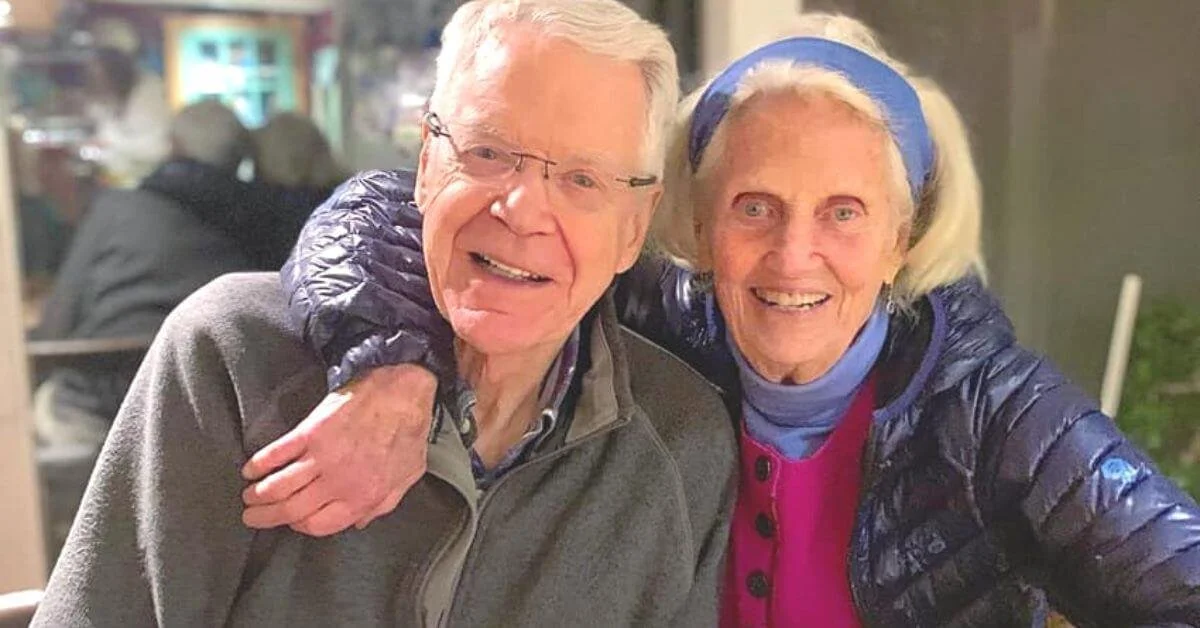
Ann and Essy share their love and thanks
It's a family affair on the podcast this Thanksgiving!
Rip is joined by two of his favorite people on the planet — his parents, Ann and Essy — for a fun, heartfelt conversation about family, gratitude, growing older, and staying strong at every age.
And if you think life slows down in your 90s, think again!
At 91, Ann has broken not one, but TWO Guinness World Records for the oldest female to perform a dead hang — including smashing her own record just six months after the first! Meanwhile, Essy is still doing what he loves most: helping people take control of their heart health through the power of plants.
Together, they dish on:
Life in their 90s: The good, the not-so-good, and why they refuse to stop moving.
Ann's record-breaking year: What keeps her motivated to get stronger, even at 91.
65 years of marriage: What's kept these two lovebirds going strong all these years?
The power of plants: Why Essy is still fired up about helping people fight heart disease.
An attitude of gratitude: Why Ann believes saying "thank you" is one of the most important things we can do.
Plus, what's cooking for Thanksgiving, Ann's latest plant-powered creations, and some classic Esselstyn family banter.
It's a little laughter, a little wisdom, and a whole lot of love.
So pull up a chair and spend some Thanksgiving time with the Esselstyn family. And remember, you're never too old — and it's never too late — to keep growing, getting stronger, and living plant strong.
Happy Thanksgiving from the Esselstyn family to yours!
Episode Resources
Watch the Episode on You Tube: https://youtu.be/JFhboF-U7Ys
Learn More About The Esselstyn Family Foundation: https://esselstynfamilyfoundation.org/
We hope to see YOU at one of our Live Events! https://plantstrongevents.com/
Our new Meal Planner is LIVE: visit https://goplantstrong.com/ and use code podcast to receive an additional $10 off an annual subscription (It’s just $69/year!)
To stock up on the best-tasting, most convenient, 100% PLANTSTRONG foods, check out all of our PLANTSTRONG products: https://plantstrong.com/ and use code podcast to receive an additional 10% off.
Give us a like on the PLANTSTRONG Facebook Page and check out what being PLANTSTRONG is all about. We always keep it stocked full of new content and updates, tips for healthy living, and delicious recipes, and you can even catch me LIVE on there!
We’ve also got an Instagram! Check us out and share your favorite PLANTSTRONG products and why you love it! Don’t forget to tag us using #goplantstrong 🌱💪
Episode Transcript via AI Transcription Service
Rip (00:04)
All right, Plant Strong audience. We have a special edition of the Plant Strong podcast today for Thanksgiving. We're having Ann and Essy, and we're just gonna do a nice little catch up and see what they've been up to. Um for starters, hello Ann. Hello, Essy.
Ann and Essy (00:25)
Hi rep.
Rip (00:26)
Hi. How's how's the weather today in Cleveland, Ohio?
Ann and Essy (00:30)
my
god, Rip, it is spectacular. I mean we are so much you really should be in Cleveland. Jane was
Rip (00:41)
Yeah.
Ann and Essy (00:41)
wearing shorts yesterday.
Rip (00:43)
Wow. Well, I wish I was in Cleveland. Um, and we were doing this right across from each other. But this is the next best thing. Um,
Ann and Essy (00:52)
Okay.
Rip (00:53)
so for starters, so it's Thanksgiving. Can you believe that we are just one month away from 2027?
Ann and Essy (01:04)
Unbelievable. And the exciting thing about close to 2027 is that at Christmas time, everybody in our whole family will be in Cleveland. But for Thanksgiving, we don't have all our gang. But just Jang, which is wonderful, and then all of the fosters, my sister's family. So we're
Rip (01:30)
Mm.
Ann and Essy (01:30)
gonna have 27.
For Thanksgiving. uh
Rip (01:37)
as opposed to so if everybody was there for Thanksgiving, how many would there be? Forty? Five? Something like that?
Ann and Essy (01:43)
Could be. Could be.
Rip (01:45)
Yeah. Well let's let's let's let's look in the rear view mirror a little bit on two thousand and twenty six. So are there any moments or memories that stand out for you guys in two thousand and twenty six?
Ann and Essy (02:03)
Essy's wonderful secretary retired. And she had been the sort of orchestrator of his seminars that he had every month for people all over the world. So he tried it a little bit without her. And we didn't like it. So
Rip (02:19)
Right.
Ann and Essy (02:20)
we stopped the seminars.
But we still Essy still has patients calling him, so he talks. Yeah, it's
Rip (02:27)
Okay.
Ann and Essy (02:29)
it's very exciting to still be in touch with the patients throughout the United States, some some in Canada, some overseas. And it's uh really an opportunity to to sort of to stay focused and at the same time have a feeling of uh of accomplishment with what you're able to do to help these people.
Rip (02:51)
Yeah. That's good. So you're so you're still consistently counseling patients?
Ann and Essy (02:58)
Yeah, they can simply call into my uh website and find and find out how to call me.
Rip (03:04)
Right. And what i what is your website?
Doctor E Doctor Eselston.
Ann and Essy (03:09)
Uh Dr. Apples
that that's gone. Yeah.
Rip (03:13)
Right, right. All right. and I'm sure that people wouldn't mind knowing that typically when they reach out to you and request a phone call, um, you do it for free.
Ann and Essy (03:33)
That's it. Well
Rip (03:35)
Yes. Well.
Ann and Essy (03:37)
the other thing is that he often s reck suggests that people choose to um make a donation to the Esselston Foundation, which you wanna Yeah, I mean the the foundation was started by my son in law about seven or eight years ago and it's really been very exciting uh uh as that has gained some
opportunities to really help the underserved. And the other the other thing that I think is is important is that the patients know that they have an opportunity to to participate if if they're able uh to any kind of modest
addition to the the foundation which uh allows it to do its work, its activity. Right now Jane is in the west side of Cleveland working with h Lakewood High School teaching kids how to cook and they're doing it one on one.
Rip (04:35)
Hmm. Yeah.
Ann and Essy (04:37)
Yesterday Jane and I went and g did a a wonderful presentation t of to people who are probably a little older
But it was it was absolutely fun. And
Rip (04:51)
Yeah, yeah.
Ann and Essy (04:52)
and they were so responsive. It was amazing. But those were all uh Esleston Foundation. That's right.
Rip (04:59)
Yeah.
Well, and I know earlier this year in February, I had the opportunity through with the Esselston Foundation to go and present with Jane to the Colorado Springs Fire Department, who reached out to us because um they had a battery of biometric testing done to the whole department. And lo and behold, I believe it was close to ninety percent of the department had
elevated um blood pressure, a certain amount, I'm gonna say like forty percent had an elevated risk for heart disease. And so they were trying to figure out what they could do and they found the Esselston Foundation.
Um, all right. Well, so what I think what what I love about everything that I'm I'm hearing, you know, Essy, the fact that you are still consulting with with patients in your early nineties and you're still obviously supporting Essy and everything that he does, and you and Jane have the YouTube channel.
You're going with Jane and doing Estelston foundation presentations. So I mean you guys really aren't sitting sitting in your rocking chairs, um, you know, and you don't have your feet up.
Ann and Essy (06:16)
I wanted
I just wanted to follow through on one thing w that we just touched on briefly, and that is uh when you you mentioned what is g the rate of re recidivism. And what that really comes down to is even no matter how uh much you're re d you you do any counseling, how do you make sure
that the there's a strong likelihood that what you're saying to this patient is really gonna be adopted and protect and protected. And uh are they gonna really f continue to follow through. We found out with our a paper that we wrote back in 2014 in the Journal of Family Practice, we had 198 patients that I counseled over a close to a four-year period.
And uh when we c called and looked them up, uh eighty-nine point three percent were actually still following the program, which we were delighted about. And as we reflect on that and we wonder why we had uh uh what is considered to be a very envious uh amount of adh
Rip (07:27)
Yeah. Yeah.
Ann and Essy (07:29)
ad adherence.
It's him. If you're going to if you're going to have somebody make a lifestyle change, you've got to show the patient respect. And the only way that I know to show a patient respect is to give them my time. And so usually our our session individual sessions with these patients was anywhere from twenty to thirty five, forty minutes. So it's not a ten minute
office visit where we give somebody a prescription, you take the time to explain to them what is the causation of the illness and how it is that we are going to be able to empower them as the locus of control to adapt this. And when they do, they absolutely vanquish chronic illness. Right now ACLM is doing another study on
I'll your most recent patients again. So
Rip (08:28)
Hmm, hmm. Wow, that's great.
Well, Essy, that's very, that's very impressive. And I think it says a lot about you and the relationship that you have with your with your patients, that you get that kind of adherence. But I think it also shows that, you know, when you really kind of embrace this lifestyle, you realize it is about um, it's not about deprivation. It really is about
blossoming and you know, eating all these wonderful foods. Um and um I mean, how many years? Four years. Four years. Yeah.
Ann and Essy (09:09)
Well, that that
group the the the present group, some of them are were following up to over over fourteen years. It'd be interesting how that uh all pans out. But the other
Rip (09:19)
Yeah. So
Ann and Essy (09:21)
thing that that I d I don't want to be sure to overlook is that one of the things that we are so proud of is that what we're sharing with the patient is the c actual causation of the illness. You see the the real
problem with uh the present-day cardiology, with all due respect to my colleagues, as sophisticated as it is, it there is never really a discussion with the patient about what is the causation of the illness. Because once a patient can grasp the following concept
that where this has its uh disease has its inception is when we progressively injure the delicate innermost lining of the artery, the endothelium. And it's the endothelium that makes the magic molecule of gas nitric oxide, which is responsible
For the salvation, preservation, and protection of all of our vasculature because of the remarkable functions that it has. Because if the patient can grasp that, they understand.
The only reason they have this disease is that through the previous decades, they have progressively injured their endothelial capacity to make nitric oxide. And as their nitric oxide levels fall, they lose their protection.
So it's really anybody with a brain in their head, when you just take your time and explain that concept, then they suddenly realize why should I go out and eat at this restaurant and and further destroy additional endothelial cells and my ability to protect myself from heart disease.
Rip (11:05)
Yeah.
Yeah. So they're not only I think they're not only motivated by the the knowledge that you instill in them about the endothelial endothelium and nitric oxide and the foods that trash the endothelium and the foods that support it, but I think you also they become very disciplined around this this lifestyle that will elevate them and pick them up and allow them to, as you showed in the paper.
not have another uh cardiovascular event, which is pretty incredibly powerful.
Ann and Essy (11:41)
Something that something that you you have a twenty seven or tw what is it, your day you get people to follow for how many days your
Rip (11:52)
Well, we've I mean, my first book was
twenty eight days, but the the third one was seven days.
Ann and Essy (11:57)
But if somebody does something for a period of time, just decides to do it, it is surprising how it suddenly is yours.
Rip (12:07)
Yeah,
yeah, yeah. Yeah, that's that's true. Let's let's let's move let's move on. Um, because I wanna like ask you again, any other moments, you know, aside from Estee's health that stand out as memorable for two thousand and twenty six?
Do we do we have a Yes.
Ann and Essy (12:30)
Yes, no question
no question. And you were part of this. This one no
Rip (12:35)
the wedding. The wedding at the farm.
Ann and Essy (12:37)
this y this young lady here set a world record.
Rip (12:42)
And
you did. You did. I mean, so you did your first one when you were 90 in March um of 2000. I know.
Ann and Essy (12:52)
All because of you, Rip. Give the background.
Rip (12:55)
Well, well, people know the background. So I I they yeah, I think they know I think most people know the background. How this was a it was it was basically an activity that I challenge people to do.
Every day for the month of February Yes.
Ann and Essy (13:13)
And so you told me and I said,
Oh, Rip, I I've every now and then I hang and so tried it and you thought, Well then
Rip (13:20)
Yeah. Well, you
you you tried it and you went you went longer than anybody that I knew on their first try. I think you went for like almost a minute on your first try. No, you didn't go two.
Ann and Essy (13:32)
First.
Rip (13:33)
It was more like a minute. But anyway, so we we gathered the troops, we, you know, made it official uh for a Guinness world record attempt, and you got it. And and that was at the age of 90. And then a couple months later.
Ann and Essy (13:48)
Uh
Rip (13:48)
We
decided to have you try to beat your record of two minutes and fifty-two seconds when you were 91, just showing that as you age, you can you get better, right?
Ann and Essy (13:56)
You get better.
Rip (13:59)
Like fine kale. And and so sure enough, you know, you didn't you not only beat it, you crushed it. And you went three minutes and fifty-three seconds. And that was over Labor Day weekend in September. Um, but what what motivates you to keep pushing yourself, Ann?
Physically at this point.
Ann and Essy (14:22)
Well, if I don't, I would just dry up and not move.
Rip (14:28)
Ha ha.
Ann and Essy (14:28)
I mean, I it's it's absolutely key. You know, my story of what I do is that Jane had a conference, a woman's conference, just before COVID. And at the last speaker was Polly LaBarr, our daughter in law, who is a brilliant speaker. And Polly made the comment that.
You if you did something for 40 days, it was yours. So it turned out that our son Ted had said we had to get a Peloton because Essy would love it. And I thought, no way. But then there was this great deal at Christmas. So I um bought the Peloton. He wouldn't even get on it. He didn't want to even try it. So I thought
Rip (15:20)
Essy, what did you not like
about the Peloton?
Ann and Essy (15:22)
Don't know.
He liked his own bike.
Rip (15:26)
Okay.
Ann and Essy (15:26)
I think that's what it was. So then what happened is I just I had just heard Polly's 40-day thing. So I called Polly. I said, Polly, I'm gonna ride the bike for 20 minutes every day before breakfast.
Rip (15:43)
Mm.
Ann and Essy (15:44)
And I did it. I start whoa, but Polly said, text me every time after you've done it.
At 40 days, I said, Polly, why 40 days? Why twenty days? And she said, It's the power of the universe. It's the mystical world of the universe, and it's yours. So
Rip (16:04)
Yeah.
Ann and Essy (16:05)
on 40th day I got off, thought, Whew, that's it. And then on the 44th day I got back on.
Rip (16:12)
Yeah.
Ann and Essy (16:12)
And I have since then
Done some kind of exercise, whether it's running up and down a road, whether it's lifting, whatever it is. Or pulling a tire. Well whatever before breakfast. Because I used to sit in my w
Rip (16:26)
Well I'm gonna Yeah. Yeah.
Ann and Essy (16:28)
workout clothes and then it'd be five o'clock and I hadn't done anything.
Rip (16:31)
Well, you
what's you know, you know what's surprising to me is that, you know, our family has always loved exercising and movement and working out. And I think we've always known how beneficial it is for our health. But there's some really powerful research coming out showing how exercise and movement is so integral. And I know that Essy, with your heart disease patients,
they didn't do much because they were so so bad off initially. But, you know, we we're we're we're entering an era where
Where sitting has become the new smoking. Most Americans are not moving and exercising. So I think, and the fact that, you know, 91 and you're still going as strong as ever, and you're making exercise and movement just part of your your day. Like what are some of the things you do besides hang and yoga and pull tires? What are like what are some of the things you typically do?
Ann and Essy (17:32)
lift I lift weights. I one of the interesting things I did I do is I do the Drina Burton Fasha Flow, which you inter interviewed her. And
Rip (17:42)
Yeah, yeah. Yeah.
Ann and Essy (17:43)
I think that's that's interesting. So I
Rip (17:47)
Uh yeah.
Ann and Essy (17:47)
do do a whole variety of things. Twice a week I have sort of a yoga type physical therapy type thing with a with my c cousin, my sister in law and
sister and
Rip (18:02)
Yeah.
Ann and Essy (18:03)
and it's fun. And in between I do my twenty, thirty, forty, fifty, sometimes an hour before breakfast.
Rip (18:14)
w now are you are you walking? Are you jogging? Are you cross country skiing?
Ann and Essy (18:18)
Oh well,
no snow. Yeah, something.
Rip (18:23)
Right. Now
yeah. Essy, what about you? What are you doing for movement these days?
Ann and Essy (18:28)
Look at it. He started out. He's the re he is our master at Mover.
Rip (18:33)
Mm-hmm.
Ann and Essy (18:34)
Well, when I was uh at the present time I usually uh I have a whole series of exercises that I go through uh actually in in the house, down in the uh our sort of our exercise room. And uh after I get through with that, I usually find out that
I have another series separate from that uh for my balance. But as it becomes more senior sometimes your balance balance begins to fade. And the balance exercises are are ch very challenging because you almost always fail.
Rip (19:15)
Right.
Ann and Essy (19:16)
I mean you if you if you if you were perfect you wouldn't have to do the exercise. But so it's that's always pretty challenging. But I I really
gotta get some s co co conce concept of aerobic activity and I have a little gadget that uh I walk with it and it just keeps me my keeps my balance and I can get a nice walkout uh every day. It's got four little wheels on it and it's the cutest damn little thing, but it it makes
Rip (19:48)
Got it.
Ann and Essy (19:51)
it
It's so i enticing that it makes me wanna do it every day.
Rip (19:57)
That's great. Um, before we move on to another topic, Essy, what do you make of of Ann getting the world record? Are you were you surprised at all that she was able to do that?
Ann and Essy (20:09)
Oh not at all. There was never a doubt in my mind.
Rip (20:14)
my gosh. Well, how does it feel a and
Ann and Essy (20:17)
He's the world record.
Rip (20:19)
to be married to an Olympic gold medalist and Essy to be married to a world record holder?
Ann and Essy (20:24)
There you go. Imagine what it's I'm finally catching up with him. It took me sixty-five years.
Rip (20:27)
Yeah. Yes, you are. All right. So
so you guys, you're you're in your early nineties. Um first of all, did you ever imagine that you would live to be in your nineties?
Ann and Essy (20:44)
You know, I don't I never thought about it. I mean suddenly, you know, you wake up and you realize Yeah, you just put your t put your foot on the floor and go about the next day and the next day and the next day and the next day and you know I never never really and then suddenly as you go through these days and you look at the calendar, my God, suddenly you're in your late sixties.
Rip (21:07)
my god.
Ann and Essy (21:08)
And then suddenly you're looking at the calendar and you're in your eighties.
Rip (21:11)
no,
Ann and Essy (21:12)
Suddenly you said, My God
You're looking you're you're ninety. One
Rip (21:17)
Yeah. Well
Ann and Essy (21:18)
of the things that's nice that's happened,
Rip (21:20)
Yes.
Ann and Essy (21:21)
and I wouldn't have believed this, you know, during at COVID, uh Essy before COVID was traveling all over the world. He was at least a couple times a week he was off. At least once a week his flights would be delayed. He would be it would be miserable.
Rip (21:39)
Yeah.
Ann and Essy (21:40)
And he sto and we stopped traveling then.
And um now I there's this this the the Quran has a little thing saying that it my father and mother have it in a book that they wrote called More Than Booty. And it's called We had traveled far and wide in the lands under the sun until coming home satisfied us more than booty.
Rip (22:08)
Yeah.
Ann and Essy (22:09)
That's how I feel now about just being home.
Asie and I have lunch
Rip (22:15)
Yeah.
Ann and Essy (22:16)
on beautiful days outside and just watch the leaves falling and it is very uh I mean, it it's beautiful here. I think the time that it really hit us that we were getting more senior was when February of last year when we had our first great grandchild,
Rip (22:36)
Yeah.
Ann and Essy (22:37)
Lance.
Rip (22:39)
Yeah. Well i I mean, and so how does it feel to have how many how many grandchildren and now great grandchildren do you have?
Ann and Essy (22:49)
You t ten great ten grandchildren, one great, four
Rip (22:53)
What
Ann and Essy (22:55)
children, and everybody is plant based.
Rip (22:58)
And you have you have
a second great grandchild on the way. Right? Yeah. Yeah. I mean, yeah.
Ann and Essy (23:02)
That's right. Another one away. And we and
and we had an amazing wedding at the farm where all our family which was so wonderful to have you asked about something this year.
Rip (23:16)
Yeah. Yeah.
Ann and Essy (23:17)
That was a spectacular time.
Rip (23:20)
Well, how does it f how does it feel to be at the top of the food chain of this incredible family?
Ann and Essy (23:30)
Well, cracking the whip. No, it's
Rip (23:33)
Cr cur ah
Ann and Essy (23:35)
it's it's really very reassuring because when we look at uh we haven't talked about this very much, but part of the motive motivation for switching plant base was well that's d almost too long a story to get into how how it affected me, but what I'm I guess I'm trying to say is it it was
both Ann's family and my family had the typical Western diseases of heart disease, cancer, strokes. I mean, it was we were no uh we were no more immune than any other family. And so it was really very powerful and very exciting to know that there was a way that we could perhaps push back the uh the unrelitting t unrelenting tide.
uh was just simply uh i changing the way we were eating.
Rip (24:32)
Yeah.
Ann and Essy (24:33)
And I just was a little bit disappointed with by the fact that we hadn't made this transition when our parents uh were still living.
Rip (24:43)
Mm. Yeah.
Ann and Essy (24:44)
My mother died at fifty two of breast cancer. My father had his first heart attack at forty three. My another brother died at sixty
Two of pancreatic cancer, and a sister died at around 64 of a glioblastoma. My sister died of ca uh ovarian cancer. I mean, how could you have worse family history? My brother died of prostate cancer. So it's uh we were not immune, and it it was so exciting that we we had with within ourselves the power.
to change this and then begin to share it with others.
Rip (25:28)
Yeah. Boy, boy have you ever shared it with with a lot of people. A lot of people are walking around doing a lot better and alive because of what you guys started back in nineteen eighty four at the Cleveland Clinic. Um let me ask you this. So in your nineties, is there what would you say is there anything that you really like and enjoy about, you know?
Growing older and what what really stinks about growing older?
Ann and Essy (26:02)
well balanced is probably the the stinkiest. I would th say the thing that I d dislike the most is uh b balanced challenges. Yeah.
Rip (26:13)
Hmm. Hmm.
Ann and Essy (26:15)
No question.
Rip (26:16)
Yeah. Ann, what about what about you and your love of the internet and
Ann and Essy (26:26)
Rep.
Rip (26:26)
Yes. What do you think what do you think of technology? Are you a fan of technology?
Ann and Essy (26:32)
No.
Rip (26:33)
Okay.
Ann and Essy (26:34)
No, I have I have very simple ways to to get on to see your Instagram and Jane's Instagram that Cryle, our granddaughter, set up.
Rip (26:42)
Mm. Mm-hmm.
Ann and Essy (26:44)
Otherwise, I if I go on to the on the little app, I find it. One day I I realize why it's such a terrible thing. I found it and then I moved down. And
Rip (26:58)
Yeah.
Ann and Essy (26:59)
I went down and down and down.
And I spent half an hour just looking at junk. But
Rip (27:04)
Yeah, yeah.
Ann and Essy (27:05)
the one thing that struck me, Rip, that we have to do next is when I was doing that one day, there was a baby, I mean a little baby, and that father had the baby hanging. And then that father asked the baby, the hanging baby, to put his feet up on the bar.
Rip (27:25)
Oh.
Ann and Essy (27:26)
So I think that's the next thing that you need to get your
followers to do. Put their feet up in the bar.
Rip (27:34)
not only hang, but also put your feet on the bar. Okay, all right, all right. Well, okay, but um
Ann and Essy (27:36)
Hey, feet on the bar.
Rip (27:42)
th that sounds like that could be dangerous too. We don't want people to fall from the bar and land on their tailbone.
Ann and Essy (27:50)
Sounds like an inverted plow.
Rip (27:53)
It it it it does, it does. You two have been such an amazing team for a long, long time. What do you think has been the the magic to your teamwork?
Ann and Essy (28:07)
without without a question. The love and respect that I have for Ann.
Right back at you.
Rip (28:16)
Oh I love that. Um ah
Ann and Essy (28:19)
We,
you know, we we're really well we're we're different, but we're really alike. I mean, n neither of us drinks coffee, neither of us drinks, we kind of like the same things. We
Rip (28:36)
No, that's
not true. You don't you don't like really violent movies that much, do you?
Ann and Essy (28:43)
I'm getting better.
Rip (28:47)
Practice makes perfect. aah
Ann and Essy (28:50)
Well they're not violent, they just may have a little bit of action.
Rip (28:56)
Yes. Yes. Action which usually also involves a little bit of violence, but Okay. Hey.
Ann and Essy (28:59)
But no no no bullets. Prefer no bullets.
Rip (29:04)
Um Ann, what what are you guys planning on having for for um for your meal for Thanksgiving?
Ann and Essy (29:13)
Um, Brian's making his stuffing. Jane is making mushroom gravy and cranberry. I am making mashed potatoes. And all the other twenty five people coming will bring something.
Rip (29:26)
Oh. And so there is there gonna be a turkey this year?
Ann and Essy (29:31)
a f toeferkey. No. Sometimes
Rip (29:33)
A toefer key. Okay.
Ann and Essy (29:35)
Kryle has done that. No, not that I know of, but who knows? I mean everybody will bring some little contribution. What are you doing, Rip?
Rip (29:38)
Yeah. Yeah. Yeah. Yeah. Um what's that?
Ann and Essy (29:45)
What are you doing? We don't have you in Cleveland.
Rip (29:47)
w no,
I'm not coming there. We're gonna do something very similar to what you're to what you're doing. Yeah. Obviously the potatoes and the salads and the uh we'll do some some, you know, vegan pies. We'll d yeah.
Ann and Essy (30:06)
Well,
that's up to people. But I mean, I think all you need for Thanksgiving is stuffing gravy and mashed potatoes and cranberry. oh
Rip (30:19)
Yeah, yeah. so
Since it's Thanksgiving, is there anything in particular that you you each or you both are thankful for as we approach Thanksgiving?
Ann and Essy (30:36)
Well, no uh no question that th and that Thanksgiving is the strongest uh reminder that we're so thankful for the wonderful family, extended family that we've got, because we had four children, they had a d an additional group that took a we have now ten grandchildren with and then one great grandchild. I mean
It's so exciting because we've been so e proud uh the path that our children has taken have taken. Uh what greater
greater reward is it than to think that your children are w not only are showing respect for themselves, but respect for us.
But I think it's one of the things that we just feel so thankful that at at this point we have we just feel everybody has found niches that they they're happy in their lives. And I think that's so wonderful. They're doing things that they enjoy doing, it's great. And one other thing I am so thankful for, and that is to wake up every morning.
And to find Essy beside me breathing. And one other thing I think I want
Rip (32:09)
Yeah. uh
Ann and Essy (32:13)
to pass on to anybody listening, and that is Thanksgiving is a time of thanks, but I think you need to remember to express your thanks when people do things for you, give you things, help you out.
to express that thanks, whether it's a letter, an email, a telephone call, but to thank them, to be grateful for what people do for you. And so many of our grandchildren are still not doing that. And I am on them all, all the time. Thank you, thank you, thank you.
Rip (32:53)
So you and so
the bet you what's the best thank you that you could get? Is it a written letter or postcard in the mail?
Ann and Essy (33:03)
Well, it's a written letter because that's what I grew up doing, you know. We we we we wrote thank yous, but it's any kind of acknowledgement of the the
Rip (33:15)
Well
Ann and Essy (33:16)
of what's what people are doing to help you, to give you, to th just thanks to the world.
Rip (33:23)
Yeah. Well I I I think that it's old school and I think it's something that really goes a long way if people take the time to pull out a piece of paper, write, put it into an envelope, put a stamp on it and put it in the mail. It goes a long way, for sure.
Ann and Essy (33:39)
Yeah.
Where when was the last time you did that?
Rip (33:43)
God, just just yesterday. Yeah.
Ann and Essy (33:45)
That's great.
Well when you do that also what you're doing is you're showing that individual respect.
Rip (33:54)
Yeah. Yeah.
So you guys, over the you know, last several decades, you have helped so many people. And is there anything that you'd like to say to uh everybody that follows your work, has embraced the plant perfect or the plant strong lifestyle, and has shared so much love with with our family?
Ann and Essy (34:24)
Thank you.
Rip (34:26)
Yeah.
Ann and Essy (34:27)
Well, well no, what a thrill and a reward it it still is. When you have a patient who m let's say for example, you see two two there's two varieties here. One patient who maybe started the transition and finds that his angina or chest pain is going away within four, six, eight or ten days. And on the other one, a little
farther out will be somebody who you bump into a some meeting or an occasion whose spouse or the patients themselves will say, Thank you for saving my life. And and people, I mean it is the most surprising things that I mean we have people so many beautiful thank yous for what and people we
who've just read the book read the book. That's it. They haven't had any more I mean, it is amazing. But the most one of the stunning things is Stanley. And Stanley called Essy from California when he was eighty seven because he didn't think he could survive triple bypass. And so he adopted plant based eating. And then once a year.
Once a year we'd hear from him. One year he called and asked for me because he wanted recipes. And when I talked to him, I said, Why? And he said, Well, he was he was celebrating his hundredth birthday. So then we gave him recipes and uh we kept hearing from him. And the last time we've heard from Stanley, he was a hundred and three.
Rip (36:12)
And so was that just this year?
Ann and Essy (36:15)
That was last year, so we haven't heard whether he's a hundred and four yet. Have our spirits crossed. Right. Yep.
Rip (36:20)
So, so so so fingers crossed he's still alive. Wow. So let's
say, let's say you have somebody that is struggling um with their health, trying to stay motivated to to eat this way, you know, the ups and downs of life. What what words of encouragement would you give them, Ann or or Essy?
Ann and Essy (36:46)
Well, I I like that. They're they're usually a challenge because they simply have uh either they've listened to relatives who said, my god, I never could eat that way or they've uh somehow they've just gotten off track and most of the time they if they uh are thinking about it, this is something I mentioned earlier in in our discussion. That as they suddenly recognize and can g get it into their head
The importance of the endothelial cell and nitric oxide. Because
Rip (37:20)
Mm-hmm.
Ann and Essy (37:21)
once once they can uh anybody with a brain in their head, once they understand that connection.
then they can understand this they can say to themselves, Listen, I now I absolutely one hundred percent know that I was the one that caused this disease because I destroyed I my endothelium and its ability to make nitric oxide. And it's it is so powerful. Imagine this, somebody who once uh finally gets that combination straight, why would they ever, ever
decide well I didn't I just kind of enjoyed that first heart attack. I think I'll d destroy my endothelial cells and get rid of nitric oxide. Maybe I'll have another heart attack. What? No, you can do the reverse and you can get rid of it entirely.
Rip (38:12)
Ann, anything you wanna add to that?
Ann and Essy (38:15)
Yes, I would add, you know, some people when they think they're gonna start, they're gonna do maybe no meet on Monday and and I'm my thing is just do it. Don't do it a little bit, go in a hundred percent and do it for a period of time so that it you you realize you can you know the results because this dabbling doesn't doesn't get you where you want to go.
And the other thing that I I think you essay you've discovered that very sick patients who have had terrible heart disease and they just they they're they're blooming, but they can't go back to the old ways because it comes back. So
Rip (39:02)
Mm.
Ann and Essy (39:03)
you have to stick on it.
Rip (39:05)
Right. Stay the course.
Ann and Essy (39:07)
Stay the course. You know, rep, we have a patient that wrote this. I want to read it to you.
Plant-based eating is a secret passage to life and health, like falling down the rabbit hole in Alice in Wonderland and emerging on the other side, where so many of the most common health issues are gone, and the food is just all good, especially Rip's plant-strong products.
Rip (39:35)
Ha ha ha.
Oh, Ann. Thank you for the plug. Um so yeah.
Ann and Essy (39:39)
By the way, my
my my latest, I just can't believe it. I take spoons and I put a spoon into the bag of rips, um oat oat rips, banana, walnut,
Rip (39:53)
But y you mean the banana walnut. Banana walnut.
Ann and Essy (39:57)
rips big bowl, and that is just the most delicious thing between when I just want something.
Rip (40:04)
Yeah. And speaking of delicious, is there anything right now that you're super excited about when it comes to your cooking and a a dish that you're making now or a particular food? So like for example, when I was there for Vital Science event just about two weeks ago, you were
Ann and Essy (40:24)
Apple.
Rip (40:25)
making you were making these open faced radish apple arugula hummus sandwiches.
Ann and Essy (40:33)
Right, but that but that that's cool. I love I mean that try an apple. It's the apple lidd sandwich, and you can have radish, cucumber,
Rip (40:45)
Mm.
Ann and Essy (40:45)
and then the the apple lidded. But I have another one that I'm loving, and that is I put just 3.5 ounces of mushrooms, cook them. When one side is done, put balsamic vinegar, flip them.
And then quickly add about half a package of th firm tofu that you can maybe marinate it a little in balsamic or something. And then stir that. And then into that, I take, I get three small um bok choys, chop them up, put that. I mean, this is this all takes five four minutes because it's done. But the thing that makes it so good.
is the plant strong curry peanut sauce.
Rip (41:35)
Mm.
Ann and Essy (41:36)
One cup of it on top. And I could eat that every day. The other
Rip (41:41)
Do you Yeah.
Ann and Essy (41:42)
favorite is uh the put your portobello mushrooms. Yeah. We we
Rip (41:48)
Oh, you mean the the burger mix? Yeah.
Yeah. Um, Ann and Essy, I've got one final question for you. So, 91, SC almost 93. What are you looking forward for looking forward to in 2027? And is there anything that your new experiences that you're embarking on or learning to
Do something new like, you know, play the piano or something like that.
Ann and Essy (42:32)
I'm trying to learn how to get on Chrome.
Rip (42:36)
my gosh. Yes, you are.
Ann and Essy (42:39)
Got on your podcast rep.
Rip (42:41)
Yes, everybody we we had a a a few trials and tribulations trying to get Ann and Essy
Ann and Essy (42:49)
I think I
think I'm gonna go to to the Apple store to
Rip (42:53)
Okay.
Ann and Essy (42:54)
see if I can get a little bit ahead on my computer skills, but um I'm kinda happy where I am, but then
Rip (43:00)
Yeah, yeah. Okay.
Ann and Essy (43:03)
I might then it's a crisis when I'm not. I don't know what I'm doing. My hope would be to really see if we can't get more and more and more. The entire profession of cardio cardiology.
To recognize that that disease, coronary artery disease, is nothing more than a toothless paper tiger that need never ever exist. And if it does exist, it need never ever progress. But they just simply have to recognize that and have the w the will and the grit and the determination to share with their patients that knowledge so that the patients themselves are gonna be empowered to end this disease.
Rip (43:49)
Right on. Um Ann, I love your p uh
Ann and Essy (43:53)
That's a good end.
Rip (43:54)
it Ann, I love your pink shirt. Essy, love the plaid. Um Ann, don't don't you love my green Thanksgiving shirt?
Ann and Essy (43:59)
Rip. No it's the only color I don't like on you, Rip. Yeah,
it's sort of it rema reminds me sort of bio.
Rip (44:08)
Of bile. I I I I'm taking that as a compliment.
Ann and Essy (44:14)
Mm-hmm.
Rip (44:15)
All right. You guys, thank you. Thank you for the time today. Thank you for uh being part of this Thanksgiving Plan Strong um podcast episode. Uh love you guys.
Ann and Essy (44:27)
We love you, Rip.