#357: What Your Doctor ISN'T Telling You About Food with Dr. Alan Desmond
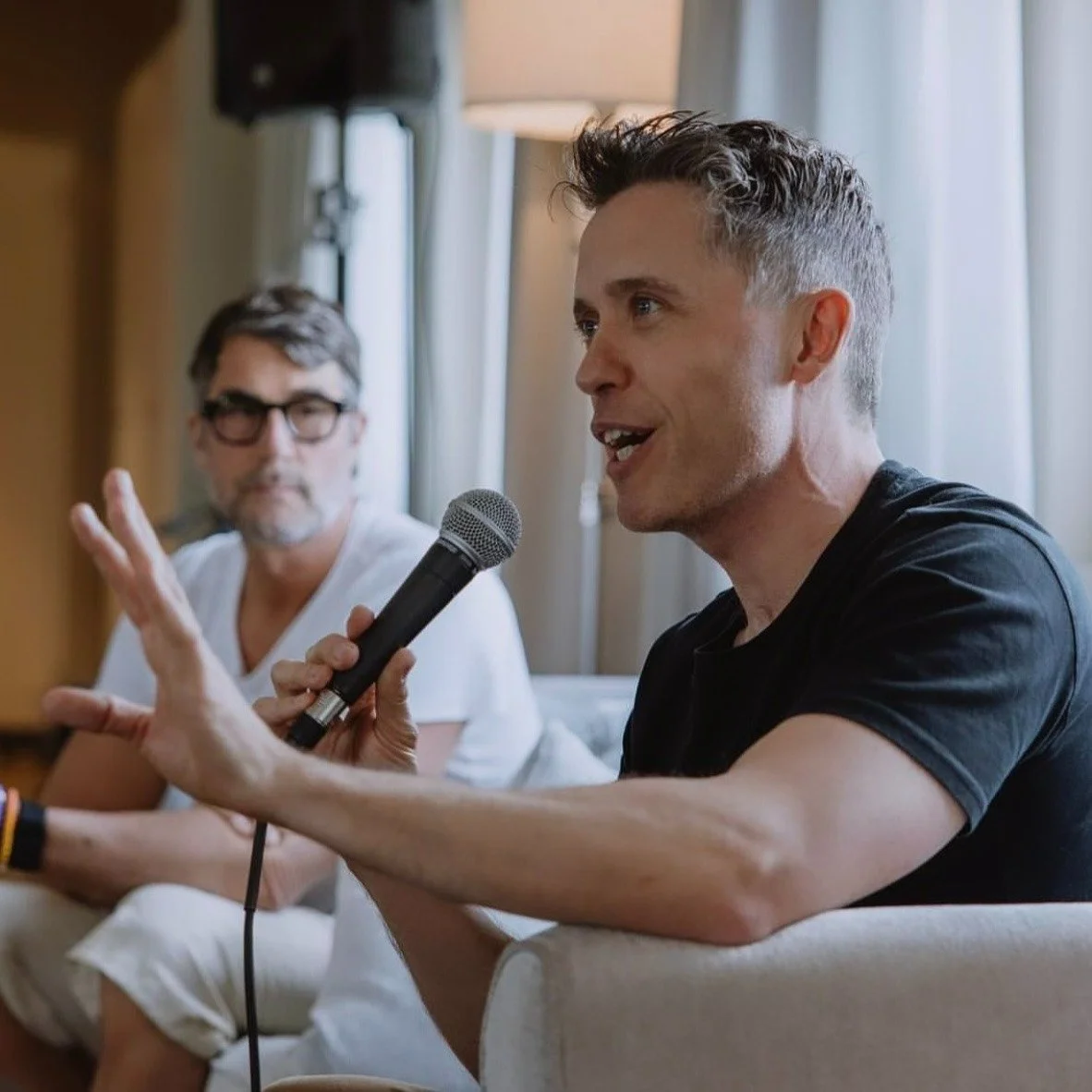
Rip welcomes back Dr. Alan Desmond, consultant gastroenterologist, lifestyle medicine advocate, and author of the new book, What Your Doctor Isn’t Telling You About Food.
Dr. Desmond explains why food is one of the most important — and most neglected — conversations in modern medicine. It’s not that doctors don’t care. As Alan shares, many doctors simply receive very little practical nutrition training, leaving them without the confidence or tools to guide patients through meaningful dietary change.
Alan talks about the urgent gap between lifespan and healthspan, and why so many people are living longer but spending more years with chronic illness. Alan introduces the concept of “micro-lives” — 30-minute chunks of life expectancy that can be gained or lost through daily choices — and explains how whole plant-based foods can help stack the odds in favor of longevity, vitality, and disease prevention.
This conversation also tackles some of the biggest nutrition myths and blind spots, including the persistent idea that plant protein is incomplete or inferior. Alan breaks down why plant protein delivers amino acids in a far healthier package — with fiber, phytonutrients, antioxidants, and heart-supportive fats — while animal protein often comes bundled with saturated fat, dietary cholesterol, heme iron, and zero fiber.
Rip and Alan also discuss why fiber deserves far more attention than protein, how processed meats like bacon are linked to colorectal cancer risk, what dietary change can mean for type 2 diabetes and inflammatory bowel disease, and why a healthy plate should be built around fruits, vegetables, whole grains, legumes, nuts, and seeds.
This episode is not about shame. It’s about possibility. It’s about changing your personal food system so that the healthier choice becomes the easier choice — and letting those changes ripple outward to your family, your community, and the world.
In This Episode, You’ll Learn:
How little nutrition training many doctors receive — and why that matters
Why healthspan is just as important as lifespan
What “micro-lives” are and how daily food choices can add up over time
Why plant protein is high-quality protein
How a small 3% shift from animal protein to plant protein may significantly improve long-term health outcomes
Why most people overestimate their fiber intake
How to think about building a healthy plate
Why processed meats like bacon deserve serious concern
How whole food, plant-based eating can support metabolic health
What Dr. Desmond has seen in patients with type 2 diabetes, inflammatory bowel disease, and gestational diabetes
Why changing your home food environment can help shift the larger food system
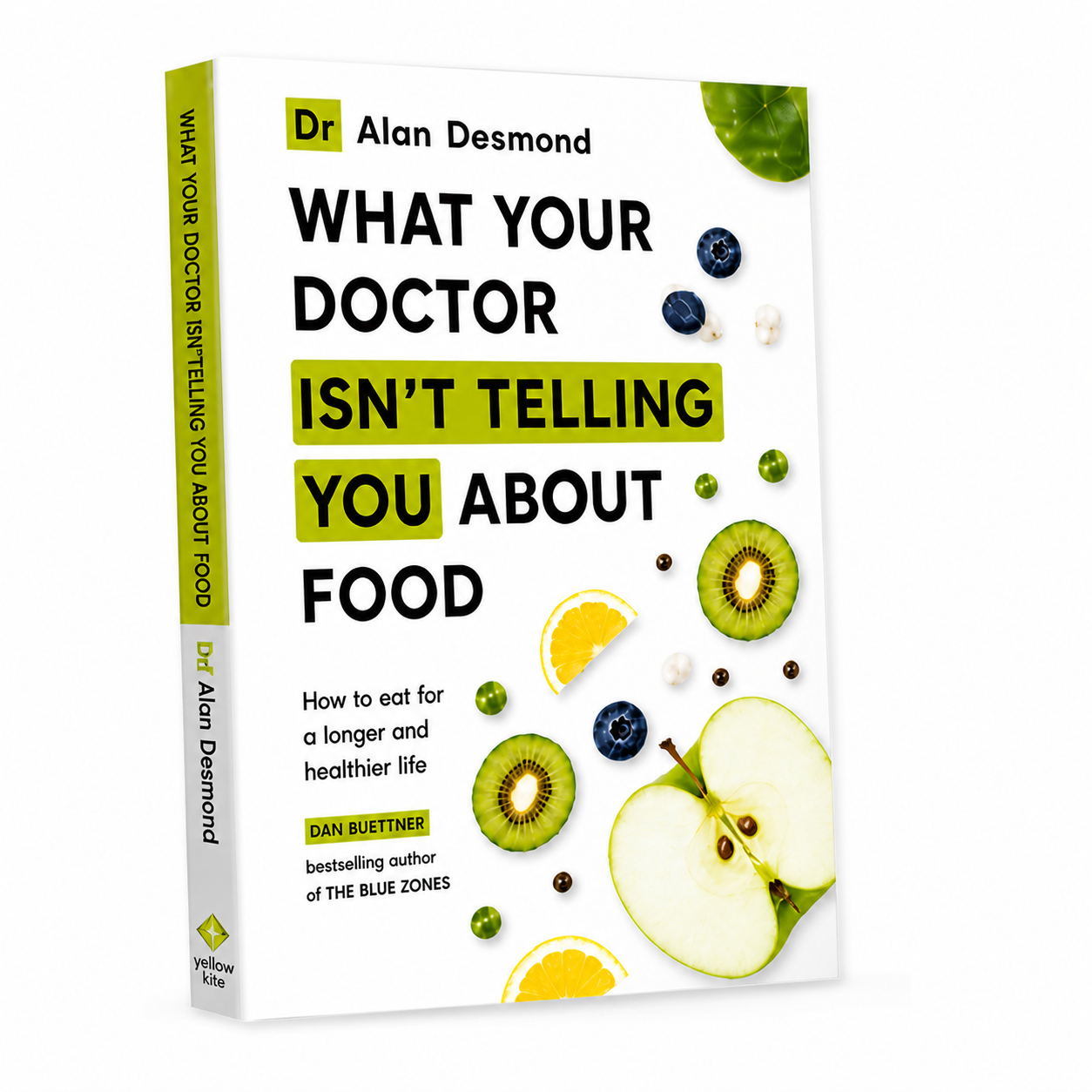
Order Dr. Desmond’s latest book here
Episode Resources
Watch the episode on YouTube: https://youtu.be/j-7iT1SRjJc
We hope to see YOU at one of our 2026 Live Events! https://plantstrong.com/pages/events Use code: podcast to receive early bird pricing
To stock up on the best-tasting, most convenient, 100% PLANTSTRONG foods, check out all of our PLANTSTRONG products: https://plantstrong.com/ Use code: plantstrong10 to receive 10% off your first order.
Plant Strong Meal Planner: https://mealplanner.plantstrong.com/
Give us a like on the PLANTSTRONG Facebook Page and check out what being PLANTSTRONG is all about. We always keep it stocked full of new content and updates, tips for healthy living, and delicious recipes, and you can even catch me LIVE on there!
We’ve also got an Instagram! Check us out and share your favorite PLANTSTRONG products and why you love it! Don’t forget to tag us using #goplantstrong 🌱💪
Episode Transcript via AI Transcription Service
I'm Rip Esselstyn, and you're listening to the PlantStrong Podcast.
[0:04] Today, I am welcoming back to the show one of my favorite truth-tellers in the world of food and medicine, and that is Dr. Alan Desmond. Alan's a full-time physician and gastroenterologist in the UK's National Health Service, and he's the author of the new book, what your doctor isn't telling you about food. And I got to say, that title, it may sound bold, but after this conversation, you're going to understand exactly why he chose it.
[0:38] Food is the number one driver of health and disease for so many of us. And yet, most doctors receive shockingly little or no training in how to talk to patients about it. Today, Alan's going to walk us through the conversations that he wishes every doctor had time to have about fiber, protein, cancer prevention, heart disease, metabolic health, type 2 diabetes, inflammatory bowel disease, longevity, and why the healthiest plate on the planet is built from whole plant-powered foods. We talk about why plant protein is not inferior, why 96% of people are fiber deficient and why processed meats like bacon are driving cancer rates and why changing your own personal food system can begin to shift the global food system around you. Let's hear what your doctor isn't telling you right after this message from PlantStrong.
[1:46] I want to tell you about a woman named Diana who came to our week-long Sedona retreat a few years back. She was a stroke survivor. Her blood pressure was creeping up and her doctor was ready to write her a prescription. But when we talked about why she wanted to come back, she said something that I've heard many, many times. Nobody in my life eats this way. She had the knowledge. She had done the work. She knew what could happen when she committed to a plant-strong lifestyle, but doing it alone in the real world, that can get hard. And at our last Black Mountain Retreat, I heard the same thing again and again. Things like, my friends think that I'm in a cult. I don't have one person in my life that's doing this with me. Or my kids keep asking, where do you get your protein, mom? and that is what Sedona is really about. Yes, you're going to get the science, you're going to get incredible food and all the clinical data showing what can happen in just six days, but the real magic is...
[2:56] It's in the room. Six days surrounded by people who get it. People who understand what you're trying to do. People who are not questioning your plate or making you feel like the difficult one at the table. So for a few powerful days, the healthy choice is the easy choice. You're supported. You are understood. You remember you are not alone. And that's why people come back. and that's why Diana came back. So our Sedona retreat, it's happening this September 28th to October 3rd. If you've been trying to do this mostly alone, or if you've slipped up and you need the environment that helps it click again, come and join us. Hang with me and the crew for six days. Just go to plantstrongevents.com and sign up for Sedona today.
Retreat Community Support
[3:57] All right, everybody. I want to welcome back Dr. Alan Desmond to the PlantStrong Podcast. If you don't recall... He joined us, God, it probably was three and a half years ago now. You were episodes 95 and 96. We had such a riveting like two hour and 10 minute conversation that we had to break it up into two episodes. And episode 95 was basically about the top 10 prescriptions for better health. And then the second half was about how 97% of America is deficient in this RU. And of course, that is fiber, ding, ding, ding, ding.
[4:41] And the first book that you wrote was called The Plant-Based Revolution. You just wrote a new book. I'm not going to say the title quite yet because I think it's very, very, very bold.
[4:56] But before we jump into you and your new book and all the great information, where are you right now? And should we all be jealous? You should all be really jealous, Rip. Thank you for having me on, man. It's so good to spend time with you. Right now, I'm beaming into your podcast live from the Happy Pair Coffee Shop, Restaurant, Cultural Center in Greystones County, Wicklow in Ireland, home of Stephen and David Flynn. I'm staying with the boys this week. I've got my daughter with me who's doing a work placement at the Happy Pair. So this is my spiritual home. I live in the southwest of England, which is my actual home. I'm from Blarney in County Cork in Ireland, which is my ancestral home. So I'm beaming in from my spiritual home here at the Happy Pair. So we've been swimming in the sea, getting some sauna, getting some work done, and just having the best week? Well, again, I am insanely jealous. And... What time is it there? It's just past 5 p.m. Oh, so you haven't had dinner yet. No, but I'm heading to David Flynn's house to have dinner with him and his wonderful wife, Sab, and my daughter, Becca. So I cannot wait.
[6:14] Dave's over there now cooking up a storm. Do you know what's on the menu? No, but Dave has promised us, quote, a feast. So it's going to be good. I'm sure it'll be a feast for us and our gut microbiomes. So I cannot wait. Yes, yes, indeed. Now, do you have a copy of the book that you can hold up? Because mine has not arrived yet.
Food Medicine Truths
[6:35] There it is. What Your Doctor Isn't Telling You About Food. Now that, Alan, that's a pretty bold title. And so my first question to you is, what's the one thing that most doctors are still missing when they talk to their patients about food and what to eat? You know, Rip, the idea for this book came from a conversation I had with Professor Christopher Gardner, Professor of Medicine and Director of Nutrition Studies at the Stanford Prevention Research Center, a gentleman that you and your listeners will know well. One of the world's leading researchers on food and health. And you know, Rip, I asked Professor Gardner exactly the same question. I said, Professor Gardner, what are doctors not telling their patients about food? And his answer, Rip.
[7:31] Everything. Okay. Everything. You know, Rip, you and I and everybody listening to this podcast right now, we should be, we could be the luckiest humans who have ever lived. In the last 150 years, average life expectancy has increased from about 30 years to about 73, 74, 75 years. We have increased life expectancy by 40 to 50 years, more than doubled the amount of time we each get to spend on this earth on average. And that's been due to incredible advances. Antibiotics, antiviral, sanitation, vaccination, safer surgery, modern medicine, food security. Those are hard-fought wins. But right now, in 2026, we have seen a worrying trend. Our lifespan has increased, Rip, but our health span, the number of years that we get to live in vibrant health is diminishing. In the UK right now, a woman can reasonably expect to live to 84 years of age. Can you imagine? 150 years ago, that was unthinkable.
[8:54] Unthinkable. Okay? So they can live to an average of 84 years. But we know that the last 20 of those years, on average, will be spent living with chronic illness, heart disease, dementia, cancer, frailty. In fact, in the last decade...
[9:13] The health span of an adult living in the UK has diminished by two years. We are spending more and more years living with chronic illness and metabolic dysfunction. Your family, your father, you have been talking to people about eating in a way that makes them plant strong, makes them the healthiest version of themselves for three decades more. OK, I've been advocating for maybe 15 years. There are tons of us out there getting this message out there to people, but it's more urgent than ever. 40% of adults in the UK are now living in a state of metabolic dysfunction, high blood pressure, obesity, type 2 diabetes. And the main driver of this, the main driver of all of this illness and hospitalization.
[10:14] Isn't our genetics. It's the food that we're eating, the food that we're consuming. We knew this in the UK back in 2010. Back in 2010, it was estimated that the food we eat here in the UK where I live or in Ireland where I'm from is responsible for about 1.6 million years of health lost every single year, more than lack of exercise.
[10:43] More than drug or alcohol use combined. And globally, the food we eat is costing us 190 million years of healthy life. That's 190 million years lived in illness and disability, our number one cause of poor health. But why are doctors not talking about this why are dot some of us are there are many of us around the globe who are those of us who've read the data and familiarized ourselves with this okay but i mean this the the sad truth is is that doctors often avoid conversations about food too little too little nutrition training as professor gardner explained to me even at stanford where they have conducted some of the most impressive research on diet and health. He still gets just four sessions, 80 minutes in total of nutrition teaching with future doctors. In the UK, future doctors get fewer than 10 hours of nutrition training across their entire degree. And most of that focuses on biochemistry and physiology, not on implementing healthy dietary change with patients. So it's not indifference.
[11:58] It's not a global conspiracy to keep people unhealthy because that's more profitable for hospitals and the pharmaceutical companies, which is sometimes a conspiracy theory that I see thrown about on the Internet. It's not indifference. Doctors care. Doctors want people to be healthier. It's a confidence gap. It's a lack of education. So in the book, What Your Doctor Isn't Telling You About Food, I've basically formatted the book as 14 or 15 conversations that I wish – if we had infinite time in the clinic, these are the 15 conversations that I wish everybody could have with a doctor. Hence the title, What Your Doctor Isn't Telling You About Food. And I really hope that many of my medical colleagues, because I get how busy they are, I get how stressed they are. I'm still a full-time NHS physician. I work in a public hospital. I know what it's like, Rip. I know how busy we are. You know, the standard Western diet, the same diet that has put us in a position where 40% of adults are living with metabolic dysfunction and are at risk of multiple chronic diseases, that same food system has made our health system incredibly overwhelmed.
[13:17] So trying to find time for those conversations can be difficult. But I hope what this book explains to both patients, the public, and my fellow health professionals, that these are possibly the most important conversations you can have. Yeah, well, you just said a lot there. And so I want to rewind a little bit to something you said about.
[13:40] I think you said the average life expectancy of a woman in the UK was 83 or 84, but they spend the last two decades in a basically period of health decline.
[13:53] And so really, like, what good is longevity if you don't have health along with it? But conversely, and I can't remember what chapter it was in the book, Alan, but you talk about how with people who even at a ripe old age embrace the tenets that you're talking about in the book, the lifestyle medicine tenets. I think it was women could add 14 years to their life and live to 93 and women, I mean, men, 12 years. Does that sound right? Absolutely. If we can all wait for the system to change, and that is a huge theme of the book, okay? I get it, man. I get it. The habits that make us into healthier, more long-lived people, the diet we need to eat to maximize our health span and add years to our life. It sounds simple, but boy, it is not easy in the current system. But if we can get these healthy habits dialed in by the age of 50 –.
[14:56] It can immeasurably improve our health span and our lifespan alongside it. Now, longevity is having a moment in the zeitgeist, okay? So people have become incredibly interested in extending their lifespan. I want people to expand their health spans. Now, most people, Rip, assume that the number of years they live is almost entirely genetic. They look at their grandparents' life expectancy. They look at their life, their parents' life expectancy, and they figure, okay, you know, my dad had a heart attack at 65 and sadly passed away. My grandfather had another health problem, sadly passed away. So I'll be lucky if I get those 65, 70 years before I pass away. But that assumption is incorrect. One of the largest studies looking at the family trees of 86 million people using a global genealogy database estimated that about 16%, 16, 1,6 of the variation in our lifespan is determined by genetic inheritance.
[16:10] But it may be even less than that, because there is this phenomenon called assortative mating, which means that people who have the same habits and the same diet and lifestyle habits tend to get together and have families. OK, so if you correct for the fact, for that fact, the assortative mating, it turns out that roughly 90 percent of the variation in her longevity is. Is determined by factors outside of our genetic code.
[16:42] What we eat, how we move, how we sleep, and how we connect with others, those are all far more powerful than DNA when it comes to determining how long we live. Now, as a young person, if you're listening to this, you may find this difficult to bring into your daily life, okay? But I want to familiarize you guys with the concept that I detail in the book called a micro life, micro lives. So this is a concept that was invented by an English statistician called Sir David Spiegelhalter. I love that name, Sir David Spiegelhalter. So rip on average, each one of us, you know, we can break our entire life expectancy into 30 minute chunks, 30 minutes, 30 minutes, 30 minutes. Each one of those 30 minutes is a micro life. Think of it as your longevity bank account. If you live to 80, you've got 1.4 million micro lives in the bank. But that number is not fixed because every day the choices we make can either top up that balance or chip away. Now, we know that eating a plant-strong diet.
[18:00] A diet that is filled with fruits and vegetables and legumes and nuts and seeds and all of those plant-strong foods, gives us approximately 8 to 10 additional microlives per day. So you are earning time on this planet just by eating a healthy diet every single day. If you exercise for about 20 minutes, you earn yourself two extra microlives, an hour of life expectancy for 20 minutes of effort. That's a great return, right? Yeah.
[18:31] But on the flip side, there are the things that you can have in your life that reduce your micro life balance. So sadly, being overweight, which is a condition the two thirds of adults live with right now, being, you know, carrying an extra five kilos or 11 pounds of weight above your ideal body weight can cost you one micro life per day. The you go and smoke a couple of cigarettes you've lost a micro life a beer you've lost a micro life a beef burger knocks off another micro life so once you once you understand this concept of micro lives it's hard not to think about your micro lives as you move through your day so you know a walk here some exercise some extra veggies here do the same thing tomorrow build this in as a consistent practice and your micro life balance increases day and day and the research supports it you know we've seen you know we all want to age healthily it's not just about lifespan.
[19:37] It's about health span. You know, you and your family are living examples of this. Healthy aging means good cognitive function, good physical function, good mental well-being, no major chronic diseases. So a study published in Nature Medicine about two years ago looked at over 100,000 health professionals, followed them for three decades. And they asked what habits and specifically what foods are associated with achieving that goal of a maximized health span? What are the foods? What are the foods? So they looked at huge data. The foods that were associated with an improved health span, fruits, vegetables, whole grains, nuts, healthy sources of unsaturated plant-derived fats, the foods that drove us the other way, that reduced our microlives, reduced our health span, added salt, sugary drinks, red and processed meats, and yes, junk foods, the opposite of a healthy whole food plant-based diet. Among those health professionals –.
[20:55] Those health professionals who were simply eating that healthy, health-promoting, longevity-promoting food every day, or were eating the most of it among that population, were twice as likely to be aging healthily beyond the age of 75. It really, really matters. I mean, the same healthy habits that help reduce the risk of cancer, type 2 diabetes, obesity, heart disease, these genuinely can offer us decades of additional life. And a whole food plant-forward diet is really important there. You look at U.S. data and more U.S. data. If you look at the data on diet, lifestyle and longevity from the Million Veterans Study, people will find out that those habits, including a healthy whole food plant forward diet, can buy you an extra 20 years, two decades of life expectancy, Rip, two decades. That can be the difference between being there when your grandchildren graduate from grade school and being there when they graduate from university, when they write their first book, produce their first movie.
[22:13] Have their first art exhibit. You can be there. Who doesn't want that? Who doesn't want that? I want that. And the great thing, Alan, is that it's never too late. It's never too late. It is never too late. My father has a patient that came to him who was 87 with heart disease. They wanted to go in and do an open heart surgery. He declined. He's now 103.
[22:38] 103. How about that? So that is phenomenal. I've got a lot I want to move through with you. And I know we've got limited time because you've got a dinner with Stephen and David and your daughter. So let's let's move through some of this this information, because your book, you've got you covered so much ground. It was it is written so well. And it is so thoroughly researched that I want to, you know,
Protein Myth Busted
[23:04] give people the best possible little teaser here we can. What would you say is the biggest myth about plant-based eating that you wish every doctor would stop repeating? I wish that people, doctors and members of the public would acknowledge right now, Rip, that plant protein is high quality protein. This is the hugest myth. I joke about it in the book, the top 10 questions I'm asked each day about food. I'll give you like five of them. So where do you get your protein? Are you sure you're getting enough protein? What are your go-to high protein foods, doctor? How do you get your protein in after a workout? Isn't plant protein incomplete? How do I build muscle on plant-based protein?
[23:53] Which plant sources of protein do you rely on? Both doctors and members of the public are obsessed with this concept that we will not get enough protein if we are eating an exclusively plant-based diet. Despite all the studies that we go through in the book, including your dad's research, reduced rates of heart disease, obesity, type 2 diabetes, multiple cancers a healthier gut microbiome despite all the data protein is having a moment and you know getting enough protein on a plant-based diet as you well know rip isn't about going to the supermarket and picking up some cheerios with added protein or getting you know the chocolate bars with the added protein it's about eating healthy whole food plant-based fill your food fill your plate with with plants i mean we don't need protein rip we need amino acids we've got 20 amino acids that our body and our digestive system use to you know that get absorbed in our small intestine enter our bloodstream those amino acids are the building blocks for a healthy body they're important for our hair skin or nails or muscles enzymes hormones immune function you know from plate to To every cell in your human body every day, yes, protein matters, amino acids matter, but every single food on your plate, if you are eating an exclusively plant-based diet.
[25:17] Every single food contains all 20 amino acids, including the nine essential amino acids that people think you cannot get from plants. So in the book, I break it down as 250 kilocalorie servings. So for every.
[25:36] 250 kilocalories of black beans, butter beans, chickpeas, lentils, you're getting somewhere between 15 and 20 grams of dietary protein. For every 250 calories of tofu, you get about 30 grams of protein. Tempe, 25 grams of protein. Seitan, 43 grams of protein. And not only are you getting the protein and amino acids you need, as your listeners know, you are getting that protein in the most favorable package. You're getting protein wrapped up with the healthy fats that support your heart health and reduce inflammation with fiber which builds a healthy gut microbiome promotes a healthy body weight aids blood sugar control you're getting the antioxidants and phytonutrients that help protect cells from damage and reduce oxidative stress the phytonutrients that support immunity reduce inflammation and promote long-term health if you're getting your protein if you're getting a substantial amount of your protein from from red meat and processed meat and other animal products You're getting those amino acids, but you're getting them with saturated fat, which raises your LDL, the number one risk factor for our number one killer.
[26:43] Coronary vascular disease. You're getting dietary cholesterol. You're getting pro-inflammatory heme iron. You're getting zero fiber. You are getting your protein from a far less attractive package. Now, one of the biggest studies ever done on dietary protein intake and health taught us two incredibly important things about fiber. So this is the health professionals follow-up study, 32 years. Number one, dietary protein is important. If you are getting enough protein in your diet over those 30 years of follow-up, you were 15% less likely to die from any cause. Okay? So we should be protein aware, Rip. It's important.
[27:27] Second lesson, once you are getting enough protein in your diet, the source really, really matters. For every 3% of energy from animal protein that you replace with 3% energy from plant protein, over 30 years, the risk of dying due to any cause goes down by 20%, 19% to 20%. That's a big number. If I had a medication that could reduce the risk of death in a population by 20% over 30 years, I would be on to a winner. And that's just a 3% change, 3%. So look, if you're listening to these words right now and you're not ready to go plant-based entirely, make the 3% switch. The next time you're making a chili or spaghetti bolognese, swap out about 75 grams of minced beef for a cup of cooked beans or lentils. If you're having eggs for breakfast, swap out one egg. Put in 100 grams of tofu instead. You have made a 3% switch, which can reduce your risk of dying in the next 30 years by 20% if you do this consistently. But as you and I know well and as your dad knows, because as your dad told me when I was – or told the audience as I watched him present his incredible research at Palm Springs two years ago.
[28:49] Your dad is meaner than other doctors. He will not allow his patients to stop at 3%. He wants him to go 100%. And the more we can stack those 3%, the more you're stacking the odds of health in your favor. And if there was one myth that we could bust among public and health professionals, it would be this persistent myth that plant-based protein is inferior in every metric that matters to human health and longevity. It is the preferred source of dietary protein.
[29:23] Do you have a... Has your... Target amount of protein for people changed over the last two years? Because I know that forever, it seemed to be 0.8 grams of protein per kilogram of body weight. And now it seems that that's gone up some. Are you behind that or not? Yeah, I think there's good science there. I mean, as we age, you know, sarcopenia is an issue. Reduced dietary intakes can be an issue. But in terms of maintaining our vibrancy and activity, there is no reason if you are maintaining your vibrancy and activity that you need to reduce your dietary intake of anything as you age until perhaps you're in your final days or in your final illness. But in the book, I do go through that in quite some detail. I have a whole chapter dedicated to protein. And I start at 0.8 to 1 gram per day. Maybe over the age of 50, there may be some benefit naming for 1 to 1.2 grams. And look, if you're a gym bunny and you are going for maximum muscle, there is some evidence that you can get some marginal benefit from going as high as 1.6 grams per kilogram body weight each day. But that takes a lot of protein focus. And unless you're doing that in a smart way, you may end up pushing other healthy foods off your plate, including complex carbohydrates, whole grains.
[30:47] Your legumes, your fruit and vegetables. So you need to be protein aware, but I don't want people over-focusing on protein to the point where they are making their overall dietary pattern less healthy. I mean, you know, we talked a lot about protein, but of course, a healthy diet is not just about protein. It's about food and it's about plants and variety. That's for sure. You know, you give your patients food rules in your clinic and you just told us how effective it is if you could just swap out 3%.
[31:20] Of your basically calories from meat with whole plants, how that can affect your life expectancy, especially over 30 years.
Fiber First Strategy
[31:32] Do you have another little rule that sounds too simple to be true that actually performs as well? Well, in my clinic with my patients, I often need to start this quite slowly rip you know and we need to make time for these conversations so the other rule that i like my patients to think about and i detail this in the book is about being fiber aware you mentioned it at the top of the podcast okay we need to be protein aware we need to be fiber aware i think most people vastly overestimate their dietary fiber intake they think if they have a big salad on the side of their lunch that they're done. You are not done.
[32:17] 96% of people in high-income countries are not getting enough plants, not getting enough dietary fiber, and that is to our detriment. It's one of the major drivers of poor health, poor gut health, and everything else. If you want to make the minimum recommended 30 grams of dietary fiber per day, you need to be consuming nine servings of fruits, vegetables, and whole grains every day. So I try and make this simple for my patients. I ask them, how many pieces of fruit do you eat per day? How many servings of vegetables do you eat per day? And how many servings of whole grains do you eat per day?
[32:56] Because thanks to the standard Western diet, Rip, the answers that I will get to those questions are generally depressing. Yeah. How many servings of fruit do you eat every day? I love fruit. I eat an apple most days, one apple most days. I really enjoy vegetables. I have a ton of vegetables at the weekend with my roast dinner on Sunday.
[33:19] And then when I ask the patient, do they eat whole grains every day? They will often look a little bit confused and baffled and say, when you say whole grain docs, do you mean that bread with the seeds on top? Because I really do like that. I have that sometimes. Sometimes. Okay. So that would be almost funny if it wasn't so tragic. It just speaks to how messed up our food system has become, that people do not know the importance of eating these foods. I will often start with my patients and just get, I say, look, in six weeks, I would like you to build up to three pieces of fruit, three servings of vegetables, and three servings of healthy whole grains per day. Do you think you can do that? For some people, that's too much. It may just be about consuming three servings of fruit per day. So that's the remarkable secret that I don't think people realize. They underestimate their dietary fiber intake, but you can realize incredible health benefits in the long term just by embracing even that small change. If you can get from fiber deficient to more than 30 grams of dietary fiber per day, that can have a huge positive impact. I mean, we just spoke about the 3% switch.
[34:35] So each one of those actions, we just spoke about microlives. Each one of those actions, the benefits stack up in your health and longevity bank account every single day. It's about consistency. I was on a bus on the campus of Georgia Tech not too long ago, and I was sitting next to a student.
[34:55] And I just, you know, sometimes I like having conversations with people and just, um, shooting the bull. And I just asked him, I said, so how do you eat? And he said, Oh, you know, pretty well. I'm like, do you eat fruit? Cause he was drinking a little like orange juice. And he's like, no, I can't be bothered to peel an orange. He's like, that's why I just drink orange juice. So, I mean, it's funny. And then I asked him about cereal and he said, no, I can't be bothered to like, you know, clean up a dish, a bowl. Um, and it's, it's really, it's really tragic to me how people are not putting, um.
[35:31] Investing enough into some of these basic things that can absolutely transform transform their health and um you know so anyway it's so true but but in in the book i mean i acknowledge this i mean and we i've mentioned this already this isn't due to it to my mind this isn't about laziness or a personal failure this is about what happens when you are born into the food system that is built around profitability and low cost and ultra processed foods and commercial interests rather than a food system that is designed for health and deliciousness right so in the book in the final chapter.
[36:21] I encourage everybody to build their healthy plate, to make sure that half of the food they eat is fresh fruits and vegetables, that about a quarter of the food they eat is made up of healthy whole grains, brown rice, whole wheat pasta, quinoa, that the other quarter of their plate is replete with higher protein plant-based foods. Now, if you want to have small amounts of animal products on the side okay that's fine go for it you know that that that's okay i'm not going to judge you but please keep those as occasional optional small amounts a healthy plate is built from fruits vegetables whole grains legumes nuts and seeds and you can enjoy dishes like porridge with berries apple.
[37:09] Uh and nut butter for breakfast you can have whole grain avocado toast with cherry tomatoes and seeds you can have lentil and vegetable soup um you can have mediterranean bean salad roasted vegetables you know you can have chickpea curry rather than chicken curry and you can enjoy the more of these foods that you eat the better and as our friend dan butner i'm very very honored that Dan gave such a wonderful quote of support for this book, which appears on the cover, How to Eat for a Longer and Healthier Life. But as Dan explained to me when I interviewed him, and as I'm sure you've heard him say, we need a system that makes the healthier choice the easier choice. We need, and you know, if you're listening to this podcast right now, Please do not wait for somebody else to change the food environment. Begin to change your food environment today. Make sure that in your home, the healthier choice is the easier choice. And then you can just watch those ripple effects moving out to your family, your loved ones, and your community. Use the money you spend on food to vote for a healthier food system. Bravo. And I love the way you say, too. You say, change your personal food system and the global system begins to shift with you. That's fantastic.
Bacon and Cancer
[38:36] Let's talk, Alan, you have a whole chapter. You have a couple, I mean, the whole book is insane, but let's talk about.
[38:46] Bacon causes cancer. That was quite the chapter that you had there. Bacon causes cancer. You know, in the opening of that chapter, I say, look, let me give you a sentence here, okay? Smoking causes cancer. We all feel pretty comfortable with that concept, Okay. Smoking causes cancer.
[39:10] I then ask my reader or listener on the audiobook to contemplate the phrase, bacon causes cancer. And people find that troubling. People find that uncomfortable. Now, I don't say that, Rip, because I have some inherent hatred of bacon. I know it's delicious. I get it. But as a doctor, I also know that in 2015, which is 11 years ago now, the scientists from the International Agency on Research on Cancer looked at all the evidence on red and processed meats and told us that hot dogs, bacon, salami, and other processed meats are group one carcinogens, that eating them substantially increases the risk of developing colon cancer.
[40:07] So substantially increases the risk. Now, colon cancer is one of our most common cancers. In the UK, it affects about 1 in 18 people in their lifetime. In certain populations in the US, that's 1 in 15 people in their lifetime will develop colorectal cancer. It's one of our most feared cancers. Bacon in the UK, bacon and red meat may be responsible for about 8,000 of the 42,000 cases of colon cancer that we see every year in this country. That is not an insignificant number. And when we talk about healthy dietary change, we've got to be sympathetic we don't use guilt we use positivity we want to meet people where they are okay um i'm very careful in the book i do not want to get people to eat a healthier diet from a sense of shame i want them to do it from a sense of possibility.
[41:15] But I make the exception for bacon. It is such a bad food. Globally, Rip, 1.9 million people are diagnosed with colon cancer every single year. 1.9 million. As part of my job, I will sit down with patients maybe twice a week and explain to them that I have just diagnosed them with bowel cancer. Even if we find it in an early stage, as we often do in screening programs, I'm very aware that that conversation is devastating for my patient. At an early stage, if we detect the cancer early, we've got a 90% cure rate. That's why screening is so important. But even with a 90% cure rate, that individual and their loved ones are looking at surgery, maybe chemotherapy, years of uncertainty following the diagnosis of the cancer we've got 1.9 million people facing that diagnosis each year and as the plant deficient meat heavy dairy heavy ultra processed diet heavy bacon heavy standard western diet is becoming global we're seeing rising cases of bowel cancer globally, but our patients are also getting younger. So in the book, I tell the story from April of 2021.
[42:41] A mutual friend had introduced me to a young woman called Deborah James, Debs. So Debs was diagnosed with stage four colon cancer at the age of 35 years. Okay. 35. busy living her life mother, young family.
[43:02] Diagnosed with a terminal colon cancer. She used this diagnosis to become a spokesperson for awareness, for prevention, for getting people to talk about this, to talk about digestive health. As she said, to break the poo taboo. If there's a problem with your gut, go and get checked. You know, I went live with Debs in April of 2021.
[43:33] And as a doctor who advocates for a healthier food system, who advocates for a way of eating that reduces the risk of cancer, here I was, you know, going live with this young woman facing a terminal diagnosis.
[43:46] And I was, you know, I didn't know what to expect. But as soon as we started that conversation, I could see immediately why Debs had captured the hearts of so many people, why she had like close to a million followers in social media, because she was an absolute powerhouse of telling us we need to have the conversations. We need to have difficult conversations. And I think doctors and health professionals and policymakers can learn a lot from the example of Debs.
[44:14] In June of 2022, Debs died. She passed away from her cancer. A few months before she died, she was made a dame. So she became Dame Debra James, and people can still help support her legacy by supporting the Bowel Babe Fund. If you look online for the Bowel Babe Fund, that was Deb's online name, the Bowel Babe Fund. And you know, Deb's individual tragedy reflects a diagnosis that is faced by 1.9 million people every year. Is there an approach to food that could make a difference here? Yes, there is. we know from big data that a diet that focuses on plant protein avoids red and processed meat is lower in unhealthy fats is lower in junk food is higher in dietary fiber a diet that builds in more whole food plant-based ingredients and plant-based diversity can reduce the risk of colorectal cancer by between 40 and 88 percent yeah of course that is a bacon-free approach okay so yes i i think a lot of people are going to pick up that book this book.
[45:24] They're going to see bacon causes cancer, and they are going to be surprised. But I don't apologize for the directness of my language on that one. You know, what's interesting is, and it might have been in your book, and it might have been something else that I read yesterday, and that is the fact that in the United States of America, the number one cancer in people 50 and younger is colorectal cancer. Okay. And everything you just described as far as the diet that, you know, is meat heavy, lacking in fiber, you know, all the ultra processed ingredients. It's really, you know, it's insanely unfortunate, but it's not surprising. And it's not just bowel cancer. You know, in the book, I have this wonderful quote from my friend, Professor Shireen Kazam. Shireen is a consultant hematologist, a senior lecturer at King's College Hospital. And I had to put the quote in the book. She told me, whatever your personal risk, you can make a big difference in your chance of developing cancer during your lifetime. Globally, a healthy diet and lifestyle could prevent four out of 10 of all cancers. So this is powerful medicine we're talking about today.
Real-Life Change Lessons
[46:39] What is something, Alan, that your patients have taught you about making plant-based eating realistic in real life?
[46:49] Wow, that is a great question. They have taught me, Rip, that it is not easy. It is not easy. And I am now, I now warn patients, I give them this little bit of advice. I say, look, if you are going, you know, I provide them with some resources and the conversation will continue. But I tell my patients up front that eating a healthy diet is not easy. You've got to get comfortable with being that guy, with being that girl, the person who brings their own lunch to work, the person who isn't really that happy to order from the menu in many of the restaurants that their friends like going to. You need to get comfortable with being the person who arrives at the restaurant and calls the waiter aside and says hey man you know i've looked at the menu this isn't really good for me here's what i like can you just do me a favor ask the chef if you can do this you need to get a little bit comfortable with being a little bit uncomfortable because sadly in the food system we live in eating healthily and conscientiously it makes you a little bit of an outlier rip So, you know, as I said to you at the beginning of this conversation, I'm here in Greystones, County Wicklow.
[48:09] And in the book, I describe how Steve and Dave work. Stephen and David Flynn, the Happy Pear Boys, my good friends, have helped to build a community here in Greystones, but also to build a community around themselves that support their healthy diet and lifestyle. In the book, I encourage people to make this transition to a healthier way of eating, to make it fun, to share your meals, to do this with a friend, to invite people over for dinner, share these beautiful meals with people. Again, let those ripples move out into the world because it's important to get those friendships around you. You may need to curate your social media. You may need to only follow accounts that support your decision to be a healthy eater. You may need to switch off social media if it's not supporting you.
[49:02] So that's what my patients have taught me. But this reminds me why, as doctors, we have an obligation to have these conversations with our patients when appropriate, but also to make them feel not only do they have the information, but they understand the why, that they understand the reason, that they're educated, motivated, and supported. And, you know, Rip, at the beginning of this conversation, we reflected on how doctors don't get that education in medical school.
[49:40] Gladly, this is changing. This is changing. So in 2021 here in the UK, and this was important, in 2021, nutrition... How to speak to patients about food entered the medical curriculum in the UK. We are just about to have the first generation of doctors qualify here in the UK who have been educated on how to talk to their patients about food. But what kind of food? Is it whole food plant-based?
[50:16] I will imagine that it will vary a little bit between universities, but they will be, I mean, look the dietary guidelines around the world yeah are encouraging people to get their protein from plants first.
[50:31] To increase their intakes of fruits, vegetables, whole grains, legumes, nuts, and seeds. Dairy has been, milk has been replaced by water as the beverage of choice on dietary guidelines around the world. And, you know, as one of the many health professionals in the world who's familiar with the evidence, I mean, we have got a global network of doctors.
[50:53] Dieticians, and educators, whether that's here in the UK, Plant-Based Health Professionals UK. I'm very proud to be a founding member and ambassador. Of course, in Washington, D.C., you've got the Physicians Committee for Responsible Medicine. The American College of Lifestyle Medicine is also advising doctors to recommend a very plant-strong approach to eating. Across Europe, we've got the Physicians Association for Nutrition who are beating the same drum. A few months ago, Rip, I was over here in Ireland. I mean, I live in the UK, but I was invited to give a keynote at the annual meeting of the Irish Society of Lifestyle Medicine, who are uniting clinicians across Ireland to promote evidence-based lifestyle and dietary interventions for the prevention and as part of the treatment of chronic illness. So I was just one of the keynote speakers. I was very happy to be invited out for dinner with the rest of the faculty after the conference. And we went to an amazing plant-based restaurant. Of course we did, because the organizers of that committee have also read the evidence. And they know if we're taking all these health-oriented doctors out for dinner...
[52:09] Better be plant-based yeah no you listen you guys canada germany norway finland you guys are doing it right here here we're taking some steps backwards with i you know pounding the drum with you know oh meat and milk and eggs it's it's let's move on though you you have you know rip it before you move on from that i guess that is something i talk about at length in the book but i gotta tell you on this side of the pond yeah governments are putting policies and money behind the move to towards a more plant-based future we see in denmark we've got the national action plan for plant-based foods backed by 85 million euros of public funding to support plant forward diets okay yeah the nether the netherlands are aiming that 60 percent of their dietary protein will come from plants by 2030 they're putting the funding and legislation behind it The new German dietary guidelines state that at least three quarters of food should be plant-based and at most a quarter should be animal-based. And the Good Food for Germany strategy talks about making sustainable eating easier. And more affordable for everyone. So I think right now the U.S. Is a little outlier on that. There's a lot of political reasons for that. But I'm going to let you in on a little secret. Are you ready? Yeah.
[53:32] Around the globe, doctors and dietitians who are interested in dietary patterns that promote health have never really looked at the U.S. Dietary guidelines as a source of information.
[53:45] Okay. Those guidelines are way too deeply enmeshed in the U.S. Department of Agriculture to even be considered a blueprint for healthy eating. And sadly, under your current administration, that is even more true than it used to be. Yeah, yeah, yeah. Great, great point. Hey, so you've seen thousands of patients.
Patient Turnaround Stories
[54:05] Tell the PlantStrong audience, what's one of the most dramatic turnaround stories that you've ever witnessed from putting somebody on a whole food plant-based diet? Okay, I'm going to give you two, if I may. And the number one is my dad. Okay, so my dad is now in his mid to late 70s. About seven years ago, he sent me a text message. It said, I've been just been diagnosed with type 2 diabetes. What should I do?
[54:35] That stopped me in my tracks i know that even at his age a diagnosis of type 2 diabetes is bad news it's going to reduce his life expectancy i want my dad's health span to be as long as possible, So my dad, you know, you know this, okay? I mean, it's hard for a dad to take advice from his kid, okay? Even if his kid is a senior physician, a best-selling author, it's hard for a dad to take advice from his kid. It's like up here he's thinking, I changed this guy's diapers.
[55:09] He's going to give me advice now? So it's a little bit like that with my dad. But because I know him and love him, I could speak to him, you know, a little bit more directly than I might speak to other people. But my dad, who'd already made some effort to eat more plant-based, leaned way further into it. And within three months, his HbA1c was back to normal. He no longer had type 2 diabetes. A few months later, he kind of let things slip a little bit. His HbA1c crept up again. He got back on the wagon. So he likes to tell people he reversed his type 2 diabetes not once.
[55:45] Okay. But I got to tell you, Rip, dietary changes how we get the best out of modern medicine. It's not a replacement for it. So after that relapse that my dad got on top of, he was offered medication. I said, take the prescription. Take the prescription. Let's do both. Okay. Now, since he initially went on medication for type 2 diabetes, he's actually reduced his dose by 50%. So most doctors would expect that with a diagnosis of type 2 diabetes, the medication requirement steps up year on year. My dad has done exactly the opposite of that, which is what we see in the research when we look at when people change their diet. So my dad inspires me. In my clinic, I tell the story of Claire in the book. So Claire was a young woman with inflammatory bowel disease, ulcerative colitis. When I first met her at my clinic, it was at an emergency clinic. She was booked in to see a physician. I'd never met her before, but she was in a crisis. She was in her first pregnancy. She had gestational diabetes.
[56:50] So she was having to check her blood sugars three times a day. She was having to take insulin. Her ulcerative colitis condition was flaring up. She was having diarrhea and abdominal cramps. She was losing weight. And she's in her pregnancy, okay? Yeah. So she said, you know, she needs help. So she came to see me at clinic. And, you know, I said, look, we can ramp up your medication. She was already on steroids but not getting better. We can bring in immune-suppressing medication. they work. Biologic medications work. They're generally safe in pregnancy. So we have that option. So she asked me the same question that all of my patients ask me. What about food? Is there anything I can do? We began talking about food. I think she picked up, she'd probably been reading some already. She was ready for this conversation. So when I started talking about, okay you know more tofu cut out red meat cut out process meat cut out junk food she jumped in she said well what if i go like healthy whole food plant-based and i said yes that would be great that would be great but this is a serious situation a gold like i gave her some resources i said i will see you in two weeks yeah come back and see me in two weeks we do not want to mess around here if things have not improved in two weeks then we we can do the diet but we'll also use medication because we've got to use every tool in the box.
[58:16] So she comes back to see me at clinic two weeks later. She's smiling. Her husband is smiling.
[58:23] Everything is better. She is feeling so much better. She's enjoying her food. She's enjoying healthy plant-based eating. And her bowels are back to normal. Her pregnancy feels healthier.
[58:36] Transformative now not everybody will get that kind of transformative effect, but for claire it was transformative okay so claire completed her pregnancy we didn't have to keep increasing her medications we just brought them down down down down down so she finished her pregnancy on fewer medications and then i didn't see claire for a couple of years okay so she was gone for a couple of years she was doing great she was seeing the nurses she comes back to see me about two or three years later as a routine visit this time. And I said, oh, you've been seeing the nurses. How's it going? And she's like, well, I'm still eating. I'm eating mostly whole food plant-based. My inflammatory bowel disease has been so much easier. I'm on very few medications. And I've completed a second pregnancy. During her second pregnancy, Rip, she was booked in to the high-risk pregnancy clinic because if you've had gestational diabetes once, if you have that underlying insulin resistance, it's assumed you are going to have gestational diabetes in every subsequent pregnancy and that you are going to need careful monitoring, blood sugar controls, and insulin. But during her second pregnancy, she did not develop gestational diabetes because the same dietary change that had improved her digestive health had also improved her metabolic health.
[1:00:01] So we treated the whole patient, and we'd used every evidence-based tool available to us. That's really cool. That's a great story. And I wonder, like, if you had to put a figure on what percentage of people with inflammatory bowel disease, whether it's, you know, colitis or Crohn's, is diet related, what would you put that number at? Yeah. So the research tells us that if we could get everybody in Europe eating healthily and living a healthy lifestyle, we could probably prevent about 75% of all cases. Wow. So that's the best evidence-based figure I can give you on that.
Future of Food
[1:00:43] Yeah. So it's a big number. Yeah. So you mentioned Dan Buettner, the blue zones, you know, based upon everything you've read in the new science, what would you say is the.
[1:00:57] Optimal amount of your diet that should come from whole plants. I know that you and I, it's 100%, but let's just say for society and the world, to make it work. So Rip, I don't need to give you an estimate, a personal estimate on that. I can give you the science-based answer to that. Okay, even better. Even better. Okay. So in the last chapter of my book, The Future of Food and Health, I tell the story of how in October 2025, I joined virtually a thousand other individuals, doctors and dietitians and healthcare professionals at the launch of one of the most important scientific papers of the decade. The Eat Lancet 2025. Oh, yeah. Okay. So at that meeting at the Stockholm Food Forum, what did we get? Well, we got the report of the Eat Lancet Commission 2025.
[1:01:58] 70 experts from six continents analyzed hundreds of studies on human health to answer the same question that we ask ourselves every time we get out of bed in the morning. What should I eat? what should i eat to be the healthiest possible version of myself what should i eat what should you eat what should all eight billion humans aspire to eat what sort of food system should we have for these eight billion humans including the three and a half to four billion humans who are overfed and undernourished thanks to the global standard diet but also for the 800 000 humans on earth who are suffering from a lack of access to food who are undernourished because they're simply not getting enough calories now their answer was that a healthy plate should consist by volume of approximately half a plate of fruits and vegetables the other half is primarily whole grains plant protein sources and unsaturated plant derived oils with quote modest optional amounts of animal sourced foods so optional modest so if we have established the healthy plant predominant plate that i've just described how much animal products can we choose to put in there if we wish.
[1:03:27] Well, the amounts are pretty small compared to what people think. So you're talking maybe one or two ounces of chicken per day, or one or two ounces of fish per day, or three eggs per week, or 14 grams of red meat per day. 14 grams. What is that, like a thumbprint? It's like the size of a dice. It's a dice. But a dice of red meat per day. And look, when it comes to bacon and processed meat, you already know my opinion on that. I've got a chapter in the book called Bacon Causes Cancer and the Eat Lancet report agreed with me. You know, these processed meats have no place within a healthy diet. Now, that's the science-based answer to what you just asked me. But I think what I'm really hoping is that when people read this book, they will realize why so many doctors, dieticians, and health professionals around the world are making the same decision, the same decision that I made 10 years. And eating an exclusively plant-based diet. And I hope they'll understand why we've made that decision. And maybe the next time they get out of bed and ask themselves, what should I eat? They'll maybe make the same decision.
[1:04:43] Last question, and then I'm going to let you go, Alan. If you could put one message from your book on a billboard that every doctor and every one of your every patient could see what would it say i would give you a quote from professor john rockstrom co-chair of the eight lancet commission.
[1:05:09] Moving towards a more plant-based diet is scientifically supported as the best outcome for human health, and that is a gift to humanity. That's a gift. That is a gift to humanity. And as doctors and health professionals, that's the gift we want everybody to know about. That's the gift we want everybody to have, the gift of metabolic wellness, the gift of health and longevity and vibrancy. That's the gift. Well, I think another gift is the book that you have just launched into the universe, What Your Doctor Isn't Telling You About Food. Alan, thanks for coming on the Plant Strong podcast. Do me a favor, tell Stephen and David that I say hi and give them a big hug for me. I sure will. I sure will. I'll be sitting down to share food with them in five minutes. All right. Keep it playing strong, Alan. And you, buddy. Good to see you.
[1:06:12] Alan Desmond, thank you for this powerful reminder that food is not a side conversation in medicine. It is the conversation. What I love about Alan's work is that he leads with possibility, not guilt, not shame. Every serving of fruits, vegetables, whole grains, beans, lentils, nuts, and seeds is a vote for more health, more vibrancy, and more life in our years. Remember, you don't have to wait for the whole food system to change. Start with your own, your pantry, your plate, your home, your community. Because moving towards a more plant-strong diet, it's not just scientifically supported. As Alan said, it's a gift to your loved ones and humanity. Until next week, as always, always keep it plant strong.