#356: How Well Do You Want to Age? with Scott Fulton
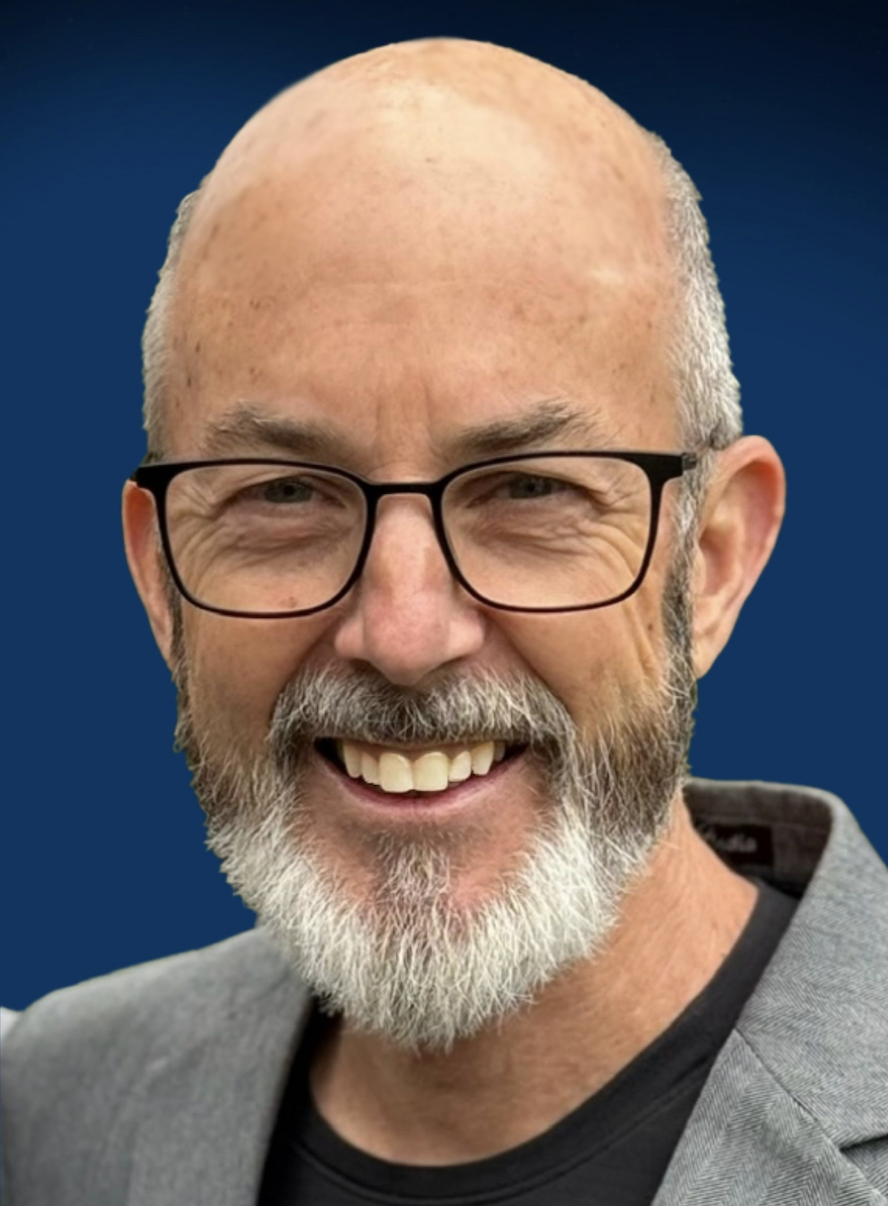
Professor and author, Scott Fulton
What if the real goal isn’t simply living longer… but staying healthy, capable, sharp, and independent for as long as possible?
In this fascinating conversation, Rip sits down with researcher, educator, and author Scott Fulton to explore the rapidly growing world of healthspan and longevity. Scott is the author of Whealthspan and his newest book, Function: Turn Your Blind Spots Into Strengths, where he challenges the way we think about aging, movement, purpose, brain health, and everyday function.
Together, Rip and Scott unpack why America continues to lag behind the rest of the world in life expectancy, how our daily habits quietly shape our future independence, and why your “blind spots” may matter more than your strengths.
They also dive into the overlooked role of hearing, vision, balance, grip strength, community, movement, and fiber in protecting long-term brain and body health.
This conversation is practical, hopeful, deeply motivating — and a reminder that healthy aging starts long before old age.
You’ll Learn:
Why healthspan matters more than lifespan
The hidden predictors of dementia and cognitive decline
How hearing and vision loss impact brain health
Why balance and grip strength matter as you age
The five pillars of “Whealthspan”
Why movement is medicine
The connection between isolation and longevity
Why fiber may be one of the most important nutrients for long-term health
The danger of “everything in moderation”
How small daily habits compound over time
The importance of purpose, curiosity, and meaningful moments
Why most people don’t recognize their biggest health blind spots
How to build a body and life that supports independence later in life
Key Takeaways:
Longevity without function isn’t the goal.
Healthspan is about maintaining the ability to do what you love for as long as possible.
Hearing, vision, and balance are critical but often overlooked aspects of brain health.
Small daily habits matter more than extreme short-term efforts.
Curiosity and purpose are strongly linked to healthy aging.
Community and social connection play a major role in longevity.
Fiber-rich, whole plant foods consistently show the strongest evidence for long-term health.
Your blind spots — not your strengths — are often what determine future decline.
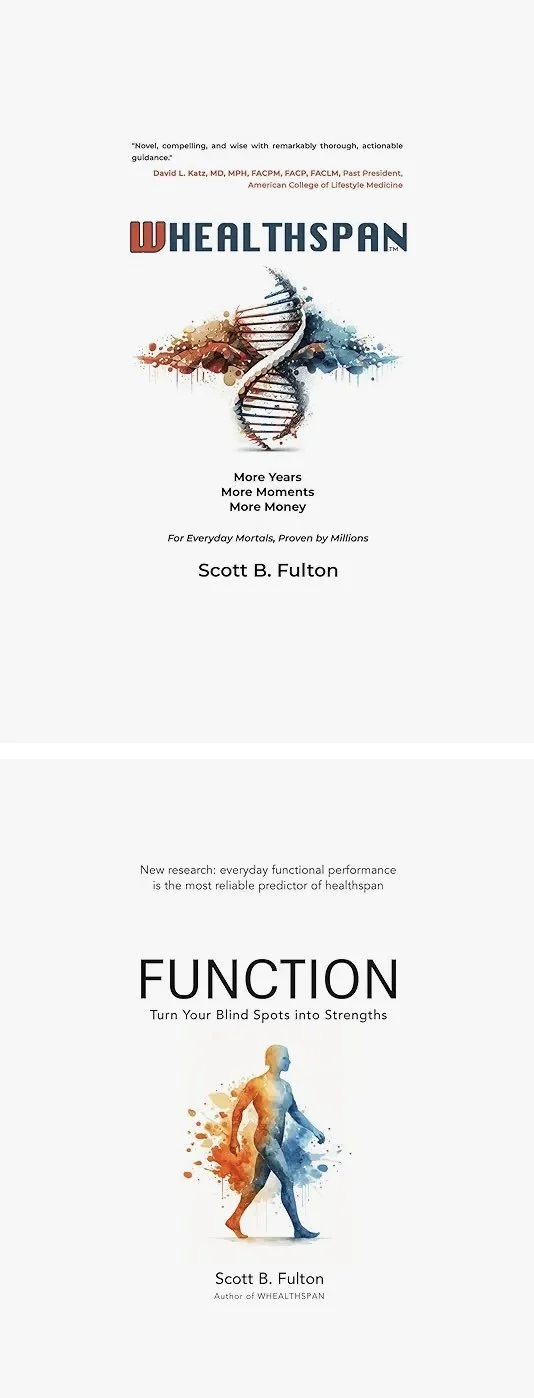
Order Scott Fulton’s books HERE
Episode Resources
Watch the episode on YouTube: https://youtu.be/C4-YePCcpc8
We hope to see YOU at one of our 2026 Live Events! https://plantstrong.com/pages/events Use code: podcast to receive early bird pricing
To stock up on the best-tasting, most convenient, 100% PLANTSTRONG foods, check out all of our PLANTSTRONG products: https://plantstrong.com/ Use code: plantstrong10 to receive 10% off your first order.
Plant Strong Meal Planner: https://mealplanner.plantstrong.com/
Give us a like on the PLANTSTRONG Facebook Page and check out what being PLANTSTRONG is all about. We always keep it stocked full of new content and updates, tips for healthy living, and delicious recipes, and you can even catch me LIVE on there!
We’ve also got an Instagram! Check us out and share your favorite PLANTSTRONG products and why you love it! Don’t forget to tag us using #goplantstrong 🌱💪
Episode Transcript via AI Transcription Service
I'm Rip Esselstyn, and you're listening to the Plantstrong Podcast.
[0:04] There is a big difference between simply living longer and actually living well longer. And as you know, my parents, Ann and Essy, are shining examples of this.
[0:20] My guest today, Professor Scott Fulton, is here to help us understand exactly how to close that gap between lifespan and healthspan. Scott is the author of two fascinating books, Whealthspan, and his brand new book, Function, Turn Your Blind Spots into Strengths. And this conversation is packed with all kinds of practical, eye-opening insights about aging, longevity, movement, brain health, purpose, balance, nutrition, and why so many people unknowingly sabotage their future health. We're going to also talk about the hidden predictors of dementia. Why function actually matters more than fitness. The importance of hearing, vision, balance, grip strength. Hello, Ann Esselstyn, community, and yes, why fiber may be one of the most powerful tools that we have for longevity. This episode is not about chasing perfection. It's about stacking the deck in your favor so you can keep showing up for the people and the moments that matter most in your life. Let's meet Professor Fulton right after these words from PlantStrong.
PlantStrong Break
[1:49] I invite you to take three minutes and flip over whatever happens to be sitting in your pantry. And if you find added oils, refined sugars, or other ingredients that read like a chemistry exam, that is the gap that our food line was built to close. Plant Strong Foods, it's real food made to a much higher standard. We care more about the shelf life of our customers, meaning you, than extending the shelf life of our products. And they are absolutely delicious. They're simple, satisfying, and they're fast, and they're easy. We are ultra real, never ultra processed. Head on over to PlanStrong.com and use the code PODCAST10 for 10% off your order. And if you have the employer benefit, you can select TrueMed at checkout to put your HSA and FSA dollars to work on your health. Real food, simple ingredients, strong standards, PlanStrong.com, code PODCAST10. We are here for you.
Meet Professor Fulton
[3:07] Professor Scott Fulton, I want to welcome you to the Plant Strong Podcast. It's a pleasure to have you. Thanks, Rip. I've been following you for a long time, and it is just a pleasure to finally get to spend some time chewing at each other a little bit. Yeah, yeah. Well, let's chew the kale, right? You got it. For sure. Tell me, before we dive in, where are you right now? I am in central Virginia, Charlottesville, lovely little university town, a couple hours from D.C. Oh, man, that sounds very lovely. Is that where the University of Virginia is located? University of Virginia, and I'll tell you a little bit more. If I look out my window here, I'm at the side of a mountain. I ride my mountain bike out the garage across my driveway, and I'm on a mountain for as many hours as I want to ride. Oh, I'm sorry to hear that. Congratulations. Well, Scott.
[4:13] I want the Plant Strong audience to know you're in for a treat today. Scott is going to help deliver to us a lot of valuable information, that I think can really help us extend our lifespan and live a better quality life. He's written two really phenomenal books. The first one is called Wealthspan, and please take note of how it's spelled. W-H, as opposed to W-E-W-H-E-A-L, Wealthspan. And then the second, and this one came out in 2024. And then the second is this, function, turn your blind spots into strengths. Who doesn't want to do that? And this came out in 2026.
[5:01] Um scott for starters explain to the plan strong audience what makes you an authority in wealth span and function um why should we listen to you that's a really good question that no one's ever asked me and i've asked it myself a lot because um you know i came from engineering and business research background. And it was only in 2016 when I was at the top floor of the DuPont headquarters saying, I can't do this anymore. I've got to find something that aligns with my mission, great work and things and paid really well, but it just didn't align with where I really knew I wanted to be. And I'd been following aging since I was a kid. I didn't realize it necessarily consciously, but I had these unanswered questions.
[5:54] And so, so my background is what I describe myself as an engineering researcher, right? So as opposed to an engineer or a scientific researcher where I'm in the lab and just kind of working on theory, I'm more the engineer where I take the research and say, well, what can I do with it? And so as I did it, I quickly got welcomed by the medical community, which kind of surprised me. I think because I'm so evidence-based, I'm more interested in what the data says than, you know, I don't have particular views on anything other than what I see large data sets say. I think that was refreshing, and it continues to be refreshing with all the dogma that is out there.
[6:38] And I've done work as an expert witness, so I know that the data you present had better have some credibility behind it. And all of that was to say I started out fairly humbly about aging in place, which quickly morphed into longevity-type work. and my wife's a PhD organic chemist. And that's what our dinner conversations have been for the last 10 years.
[7:02] And so, yeah, I've got a lot of medical colleagues around the country, really senior medical colleagues who are just, yes, can I help? What can I do? They want to get involved because I really come at it from a truly objective, holistic view around what can the everyday person do, what can they trust, and be consistent. And so I don't know that I'm an authority on anything, right? But I do see that people have developed a fair bit of trust in what I have to say. And that's evidenced by the new book for sure. Yeah. And you're a professor where? Do you teach at University of Virginia? So I teach adults. So I, as part of the American College of Medical Association, that I'm the only one probably who gets to teach 100% of the time. So I teach adults at University of Virginia. I do it through online at University of Delaware, which is where I used to live. And I teach at Northwestern and my course at Northwestern, actually, I just got an email. There are now 309 students for my course at Northwestern because it goes out nationally across the country, live to over 50 colleges.
[8:15] So that's really, you know, they're really, I think, breaking the mold on what
Brain Health Basics
[8:19] we can do with education. And I just love people who are innovative that way. What's the name of that course that has 309 people signed up? A Beautiful Brain. So it's really around what are the lifestyle things that we can easily do to protect our brain and also give people an understanding of, you know, a lot of people have a fear of dementia as they age. So to put some, you know, or demystify what dementia is, what is an aging brain doing? So they're getting some education around the biology and physiology of aging, but also what are the things that you can have a lot of influence over and reduce your risk even more? Well, you know, why don't we just start there? Because I know you talk about that in Whealthspan. You talk about dementia, the top six focus areas that people can focus on to help, I think, prevent and alleviate the dementia. Um, I'd love it if you talk about a couple of those six that you talk about in the book. If you want me to tease some up for you, I can. Yeah. I think two that everyone can easily get their arms around, and one is exercise. Exercise is just so good for the body in so many ways. And then the other is diet.
[9:43] Diet is harder in some ways. Um, the exercise piece, I focus more on what can you do in everyday life as a part of the things you already do, as opposed to a new exercise program. And then beyond that, it gets a little bit more nuanced. Um, but, but it's clear that there's lots of things. So yeah, I have to be careful not to run on too long at any particular one. So if there's any, you kind of want to dig into that is novel, that would be great. There's three, there's three, there's three that I, that I found really fascinating.
[10:18] Because I've never thought of them before. But now that you mentioned them, I see it and why you want to protect it. The first would be our hearing. Right. Right. So, right. So there's elements of what we call the sensory inputs, which would be our eyes, our nose, our ears, and we throw oral into it as well. The sensory triad, I call it.
[10:43] So everything that on those sensory inputs, and we can pick any one of those three, there's a reason why they're in the proximity of ER, immediately next to the brain, because they're so critical to brain function.
[10:59] And so any interruption in the signal, which is really, what do I call aging? Aging is a breakdown in signal. It's like in your cell phone when you start to, you know, you're between buildings, you're in the basement or getting remote and the signal starting to drop out. The brain is having to struggle to interpret the hearing. And the more it's struggling, it's doing two things. One is it's occupying more cognitive resources than it should. It's less efficient. Like when your phone, you're listening. What did they say? And then you're guessing to fill in the gaps of the words and you're going to make some mistakes if you're filling. And so the brain is doing the same thing. And so when it's preoccupied with any one of those functions, it's not doing the other things. So it's having to delay in the response with people. But ultimately it's a chronic condition, which is why it contributes to dementia because it's really making the brain work hard in a way that isn't constructive. There's stress that we want to have. That's not a constructive stress. So one of the best things to do is, boy, hearing tests, need a hearing aid, go get it. Like, do not wait on something like that. That's one of the frontline things you can do. Well, you know, and being a former firefighter, I can't tell you how many loud noises we were exposed to. And hearing protection was paramount and a big safety concern. Another one that you have that I was...
[12:25] Interested in was eye protection and then, and then also dental hygiene. Right. Yeah. Right. So, so vision works the same way. Um, and the, certainly the, the hearing and the vision do something else is they cause us to retreat. We're going to be less inclined to put ourselves in situations where we don't recognize people, perhaps where we have a hard time making out a conversation like a restaurant that's got a lot of noise going on where we start to withdraw from those things. And of course, the more we withdraw, the more isolated our lifestyle becomes. And we know that isolation also tends to contribute to dementia. So yeah, there's different things, whether it's glaucoma, or we get different things going on in our eyesight. Many of them we can, or just a, we need to update our eyeglass prescription or our contact lenses. Those are really, Fairly straightforward things that are really important to stay on top of as we age. And when I say as we age, any time after 40 is as we age. That's really when we need to start being on top of it. This isn't something when you're 75 to now start to pay attention to. Yeah.
The Wealthspan Gap
[13:43] Thank you for all that. Let's talk about wealth span for a sec. And you say more years, more moments, more money. Talk to me about more years, because I know that you, you know, in the book, you're you're very, very forthright in talking about how, you know, as as Americans, I think we're we're pretty low on the totem pole when it comes to, you know, longevity of life. What are we, 49th, something like that? It would be nice if we were that high. Now, we've been out of the top 50 for over a decade now. Holy Toledo. Yeah. Okay. Okay. So what do you want to say about more years?
[14:28] Well, so again, this kind of goes back to, like, I'm a researcher. I did a lot of work to understand it. It bothered me, right? Like, why is life expectancy in the US so much lower? And why have we been losing pace? Not in recent years, this has got nothing to do with this administration, last administration, we can trace it back to the 1930s. And we have been on a steady slide against the world rankings.
[14:54] While we made progress up until about 2000, at 2000, it really started to flatten out. And since 2009, we haven't seen anything happen positively in life expectancy in the U.S., while every other country's continued to go ahead. So there's two real elements that we can bolt onto that is one is health span, why I spend much more time talking about health span, because that's ultimately what people care about. And it's that gap between health span and lifespan, which is the true gap between how long you're healthy and able to do the things you want to do versus how long you're alive. So we call that that phase of morbidity. Everyone agrees, yeah, I want that phase to be really short. I'm not interested in having it drag out for years, and we don't want to have family members subjected to it. But nevertheless, in that situation, that becomes a really difficult time for everybody. So it's really understanding how long life is, but that gap is what's at risk. And so what's important to understand is that the earlier we end up with disease, for example, the longer we're projected to have morbidity.
[16:09] If you live to 100, the likelihood and you're healthy and active, for a 100-year-old, I don't mean for a 20-year-old, the likelihood of you having extended morbidity is pretty low because you're not likely to live that much longer anyway. But when you get some significant disease at, say, 55, the body's continuing to go. Early onset dementia would be a great example. That's really tough on not so much the individual. It's really tough on their loved ones. And those who have to be around it and support it. So, yeah, it's a really kind of think about health span as really the goal and design around that. As the engineers say, how would you reverse engineer your life to have not just a long health span, but what do you want that to look like? Have a real, real clear goal in mind. No constraints. You could have anything you want. What would that look like? Now let's start building some decisions that align with that. Yeah. Well, and before we went live here on the podcast, you mentioned that Jacqueline's, wife had just turned 100 like a week or two ago, right? Right, right. Do you have any idea what her health has been like along the way? Her health has been great. She's been super active. She got really involved with Jacqueline's exercise program for many years. And then really, you know, after Jack passed, I think he was 95, I'm not 93, 95. I'm not sure exactly.
[17:38] She really carried the torch for his message. And in the older, of course, the older you get, the more people want to lift you up because you're such a great role model. Yeah. She's been doing all sorts of really good things in that vein to be a role model for people. Yeah. Do you know how she ate?
[17:58] I do not. I think, sorry, in any detailed way, I don't know, but certainly a plant forward diet, no question. Yeah, because I thought I heard that he was a vegetarian, but yeah, so I would assume that she was as well, but yeah. Yeah, I know I've read something about it, but it's hard sometimes to get accurate information when it's anecdotal and what people like to report versus again.
The MEDAC Foundation
[18:27] And I'm driven by facts, so I don't tend to take things secondhand too easily. Yeah, yeah. So in the book, Whealthspan, you have five pillars or kind of principles that you suggest that people kind of lean on. And I think your acronym is MEDAC. Right. Yeah.
[18:48] Talk to me about that. Again, it just came out of doing the research to understand why do some people live longer lives than others? And so we can think about the examples of the blue zones, which I kind of call that longevity 101. I don't really think it has the kind of information that's assembled in a way that we can use or necessary lifestyles that fit with us in the U.S. perhaps.
[19:18] The real thought was, what can we do around building this fortress or a foundation for healthspan? And so M stands for mind. And mind is really two parts is the attitude. You have a positive attitude like you, like automatically, I would say you will do well despite everything else you're doing. Attitude makes a huge difference because it also, in fact, influences your decisions and also influences things like redox chemistry going on in your body all those years that add up. And then protecting the mind from dementia would be the other aspect. The second one is environment. So there's really, again, two areas of environment that will help you to live long. One is what's your exposure to the outside environment, things like toxins. If you live downstream from a chemical plant or downwind from a chemical plant, or you have a lot of pesticides leaking into the water sources in your area, these are not things that are conducive to long life, obviously, but also your home environment. Is your home environment set up for you to live into later years without having falls? That's a real problem that people are not typically proactive enough around. Diet is...
[20:33] Is the next one. And I really in Whealthspan tried to simplify it because they didn't need someone else coming up with yet another diet plan, um, was really to say, um, quality. Everyone I think recognizes quality, uh, food, whatever it is, we all recognize that without having much, uh, diet intel, um.
[20:55] Variety of foods in terms of lots of color. And there, there are no one best foods. There's a number of really good foods to eat, so lots of variety. And then the bolt-on to that was make sure you get enough fiber. That's probably the one thing that we have a lot of evidence around what's really helpful to us. And then activity. So that's really the activities of daily living. Keep moving. Avoid sitting for long periods of times. Lots of advice around exercise. That's more probably where functioning plays into. but just being active at anything you love is good. And then the fifth one is community. And community is both that emotional support, but also, again, into later years, you will need people around you to be able to tap who will want to help you. You need to invest in those relationships and keep investing over the years. And again, that's how you keep learning by community and not isolating yourself. So that's the MEDAC Foundation. Yeah, I like that. In the book, you talk about several populations in the United States that actually have a greater longevity. And I think you call them the gold, something. Yeah, the U.S. gold zones. Yeah, yeah, gold. Yeah, gold zones. What's what's going on there?
[22:13] You know, I wish I could answer better. And if I had the money to come up with the funding and the time to do all the research, it was really looking at all of the U.S. Zip codes across the U.S. I forget how many there are. Or sorry, not zip codes, but electoral districts. There's many more electoral districts than our zip codes. And so they represent populations of about 4,000 people nominally. And it's interesting how, and there's a few that, well, there's a senior, large senior living community that's in there that's going to buy us. So, you know, take those out. But it is interesting to look at it and discover that there are some like in New York City and Manhattan, for example, area. There's one in L.A.
[22:59] And there's some that are quite rural, which would surprise you because that generally goes against the whole community and access to support and medical support. Um, the point is, I think where I, where I went with that was to say, we have opportunities right here, right here and around us. And despite all what I say, the bad news I talked about earlier with life expectancy, not being what it should be, that's on a population basis, on an individual basis for you. If you want it, there is tremendous opportunity right here at your doorstep, pay attention and look at the evidence and the guidance that will take you there. Yeah.
Food Industry Realities
[23:42] I want to revisit for a second the D in Med-Ac, which is diet. And, you know, you highlighted something, and to me it just –.
[23:56] It bowled me over. And you talk about, you know, just how many foods are processed these days. And you talk about how, well, there's 15 major car companies in the United States, and there's over 41,000 different food and beverage companies. Yep. I mean, of course, they're doing everything they can to, you know, create that bliss point and everything else like that with with all the usual suspects that that without being without having health being first and foremost on their list of ingredients going into their products.
[24:33] Right it's a um it's a really really complex problem right that um and the motivations to solve it are relatively low there i will say that there are initiatives happening um right now how fast they move forward i'm not sure my wife's done work on this is really around taking the the food supply system from say regenerative organic kind of the ultimate of food source, the food chain to be able to support that, to build that out. So if I look at, People that have food companies like what you're doing, right? There is one aspect, tremendous opportunity because it is the fastest growing market in the food sector. But at the same time, the supply chain is built around conventional food. And so even though you may want to make the best food, you discover, well, how do I guarantee I've got access if I'm relying on one farmer to supply? And something happens, you know, he sells the farm, any number of things can happen or they have a really bad season. Like you've got to have multiple sources of supply and ways to process that in plants that will process it the way you want it. And it's not going to be exposed to other issues.
[25:53] There's also things happening in transparency and labeling. So I think we're going to see more, like I look at what Yucca, you probably know Yucca. What they've done is really make it really simple to bring transparency forward in food. It's happening, but it's such a big, complex system that it's not going to happen overnight. It's like medicine, right? Once we know the answer, it'll be 20 years until you get to actually have access to it in all likelihood. And food is bigger than even medicine. And so I think we're going to get there, but it's it's it's ultimately going to come down to what I believe consumer will drive it. Yeah. Companies respond to what the market wants, more so than regulations. Yes, there's a role for regulations, but the government is pretty much, you know, handcuffed themselves around being effective around this. Ultimately, I think the consumer will have far more impact. Hmm. Hmm.
Moments Over Years
[26:50] I want to transition to.
[26:55] Something that you, it's an important part of your, of your book. And it's obviously it's in the, um, you know, it's in the right here, more moments. And I found that to be very compelling, um, as we move through life, like what, and, and, and as you allude to in the book, it seems like, you know, I'm 63. It seems like the second half of my life has just accelerated tremendously and almost to the point to where it's borderline scary how fast it's going. And I realized that before I know it, I'm going to blink and I will be in my nineties. Right. Right. I mean, it seems like yesterday I was just entering the fire department. I was 33. Now three decades have gone by. And you thought you were pretty busy then, didn't you?
[27:48] Yes. Yes. So what do you mean by more moments and how can that help me with my wealth span? Well, so that chapter was never in the outline. I had no intentions of writing that chapter. And then once I was finished the book, that for me was the most important chapter of all because it's the why. Yeah. Why do any of this? Well, why do you want to live longer? And people, well, because that's good. I don't want anything taken away, right? That's a natural human response. But ultimately, it comes down to what are the things that you live for? And I think as I look at it, we live for moments, not years. We live for moments and moments just happen. Like you cannot design them. It could be of your plan, for example, you say, well, I want to travel and I want to go to wherever and that may be great. And maybe we'll say going to Greece or something is something really important. And when you come home and look back five years ago, what will it be about Greece as the example? For me, it's likely going to be the conversation I had with the restaurant owner.
[29:05] It was just like there was nobody else in the restaurant. Yeah. It just shut down, right? Because you made that connection. And those moments just happen, right? You've got to put yourself out there. But at the same time, that's what it's about. And you just kind of cherry pick. So at any age, we can look back and say, what are the moments I remember? Was I designing them? No, they just happened. And so I've got to be there. I've got to be out there. I've got to be present to live for those because they are so great when you're in that moment. It's like an athlete would say being in the zone doesn't happen all that often. But boy, when you do, that feels really good. So that's what I think is really the aspect about moments. and the years and things, that's nice to have a number, but ultimately the moments are what matter. Yeah. Well, you say that.
[30:02] Does our time really come down to opportunities living in moments that lead us somewhere is at the essence of human life?
[30:14] And then you talk about how it's an alternative concept of time. Right. That really like made my head spin. Yeah. Yeah. Again, it was just a, when I wrote that chapter, it was like, because the engineer in me is like very, very logical, you know, step steps, but I allowed my, my other brain to kind of just explore. I have been in the aging space for my whole life in varying ways, but I've been in really since 2016 in a lot of conversations with a lot of people and listening really hard to learn as much as I could. And what are they saying, right? Because people don't often say what they really want to say. And so you're trying to, you know, we hear what we want to hear. But the whole construct of time is really interesting because if you step away from that eight-hour day or whatever, I get up at seven, and that very rigid construct –, Time is really, really much more abstract than we think it is. And if you kind of think about it in the context of moments, like where everything stops. Yeah, yeah, yeah. That's what that gets at. Yeah.
Planning For Aging
[31:34] I like it. But let's talk about more money.
[31:39] And you say that, you know, health and housing overshadows everything else in the second half of our lives. And so you have to set intentions. And then you also talk about how, you know, we, most of us, unfortunately, typically fall into these, you know, financial cliffs. How, if you can remain in your home as long as possible, that's one of the best things for, I think, to remain financially secure. Um, if you could just speak a little bit about, about that, cause I find as I'm getting older and I see some of my friends and what they're having to deal with, with their parents, right. It's amazing to me how many people, um, are not planning appropriately. And you in this book go to great lengths to give people suggestions and ideas on how to deal with it.
[32:40] Yeah there's a um so maybe i'll kind of pick up on what you talked about where friends are having a hard time dealing with it these aren't typically the conversations people or families want to advertise because there's a level of embarrassment um both within the older adult and the children the children are really you know in an awkward position position, I'm not used to being a decision maker and having to try to influence my parents because they're the last ones who want to get advice or in terms of getting advice from your kids is the last one on the list, right? So it's a really awkward situation, but they're clearly the number one provider in terms of for support. And so we don't talk about it. There's not a lot of money to be made. The housing industry keeps going on what buying or building what people buy and people by not knowing what they're going to need. So it's this circle that just keeps going. The reality is not many people will be able to afford senior living. As you and I sit here today, the cost of senior living communities is going up faster than the rate of inflation for lots of reasons. They're ultimately serving the top 1%.
[33:56] And then there's the bottom in terms of the Medicaid that are subsidized and no one's, well, I don't want that. Right so the rest of us are left in the middle we better have some pretty good thoughts around what is it the the house is going to serve right we have this notion of we get do-overs because you know i didn't like the paint color i'll change it right those do-overs start to disappear, on us but that's not something anyone tells us and we're not used to that so i don't believe you you know scott you say that but yeah yeah what do you know you're just an academic I know real life. And so it just happens over and over where families find themselves in a corner in what they don't know is how quickly things happen. And that's what really magnifies it is because if you don't really have a plan and then things go south, now you're having to make really big decisions, one, in a really short period of time and during a period of crisis. And, That does not lend itself for great decisions. And so I talk about plan A is everybody's got a plan A. I'm going to keep doing what I'm doing for as long as I can. And then what?
[35:08] So what's next? And so there's plan B and then there's what I call plan C. That's the one I'm interested in because things didn't go the way you planned, but you've done some scenario planning and you got comfortable with the idea of aging and what those options will look like. And that's part of the objective is getting comfortable with the uncomfortable. I keep going back to athletics, which is great to be able to talk to you about, because if you want to get better at something, get good at being uncomfortable, make it, make it your comfort zone. And that will immediately give you an edge on everybody around you. And everybody around you is not doing very well. They're not a good benchmark.
[35:48] Go back to life expectancy conversation we had earlier. You've got to be doing better than your friends, better than your parents. Things are changing faster than ever. They're not going to be like what your parents' experience is or was. Yours will be different. I can guarantee it. And it's not going to be easier. It will be more challenging. Mm-hmm.
[36:11] What is the average amount that, the American retiree has in the bank for savings? The median, which is not the average because the average gets skewed by the ultra wealthy. Yeah, you're right. Medium, yeah. The median, I think, is around $52,000. It is shockingly low. You will burn through that in no time if you need medical care out of pocket. Housing, you don't have many options if that's all you have. Yeah. Yeah. Well, well, I think, I think this to me is the brilliance of this book that you've put together is if you can overlay all these things together, right? Your, your health, your, your finances, your help me out. What's the fusion? What are all the fusions we're looking for here? Your why, which would be the more moments, your why. Yes, yes, yes, yes, yes.
[37:18] Your why. It's amazing how all this will propel you forward. And I'm also surprised, Scott, you know, now that we're talking about this, how many people I know that are exceedingly wealthy, like financially, but they're not healthy, you know, when it comes to their health, poor health. And, and, and vice versa. So, um, when you can put it all together, it's almost like it gives you this superpower, right? Yeah. And that's really what I say. As a kid, I was looking at that. I saw friends of my parents and where we cottage and things, some very wealthy people, vice presidents and presidents in some significant corporations. And I was seeing quite diverse outcomes. And I said, well, what's going on? They're smart people. Clearly, they're aware, and it's not money that's stopping them. What is it going on? You could look to the smoker, and that was pretty obvious.
[38:20] So that's why I say I've been watching this for a long time, and it really intrigued me. There's other things going on here that people aren't paying attention to, and I think we're getting that data coming at us a lot quicker now.
Blind Spots And Function
[38:32] But yeah, people tend to think, because I have wealth, I'm good. I mean i'd like to i'd like to offer that as a guarantee but i'm sorry that's not really the way it works according to the data at least well maybe that maybe that's a great transition to function and in in in function you know it's turn your blind spots into strategy.
[38:58] Um so like you were just saying there in that some of these these um financial ceo types obviously they have huge blind spots what was the reason that you decided to like explore this particular area you know blind spots and turning blind spots into strengths it came from again an athletic background so you and i know a little bit about endurance sport right and um and that requires planning and careful execution but what is it you're planning around. So I'll say, we'll just say a long run.
[39:38] We won't need to complicate it yet with multi-sport. So in the training run, say you're going to do your first marathon, right? You're going to, you have two choices. You're either going to sit on the couch and wait until marathon day so that you're all rested up. I think everyone knows that's not going to work. It's not simply a matter of rest. You're going to go through a program of increasing volume or increasing load through some periodization cycle and get some recovery weeks in there. But you're going to add some stressors in there. Um, and as you go through, um, you're going to increase your capacity. And so, so the idea there is, is you're trying to essentially build this resource within you that will allow you to achieve something that you couldn't do today. And, and, And I looked at that and said, well, why don't we have that in health, health span? Because if I ask you, what's your health span or how do you define health span? It's not going to be disease. That's what medicine defines health span is disease. We define health span as being able to do the things that we want and need to do. Those are actions, an ability to make decisions.
[40:55] It's only when we can't that medicine gets involved. Well, that's the end of health span when medicine is really engaged. So I said, why don't we, why can't we do that? And so I just happened upon this data that no one had thought to use in the context of health and longevity. There was sitting there like masses of data that no one had applied to the normative or the healthy population to say, yes, we can predict with high certainty what your health span will be. How long will you be able to live independently based on a number of criteria that we've measured on people over 50 years on thousands or hundreds of thousands of people? Yeah, yeah. And would that be the five kind of domains of function you talk about? Well, that was how I broke it down. But initially it was this unanswered question of like, why are we so bad at predicting healthspan? Yeah. We're doing things, but we're largely doing them based on trust. So if we get advice around what exercise to do.
[42:02] But there's no context of, well, do more. Do as many as you can until you can't do any more, until you've kind of maxed out. But there's no connection to what that means for health span. That's what all this functional data that I found out. And then I realized there is so much data here. I've got to partition it into buckets that people can digest and ultimately figure out. So I'll use the runner who's really, really strong cardiovascular system, but they're used to running in a straight line. They're not so good when the terrain is rough they have to make turns so their flexibility tends to be poor amongst runners balance may not be very good at all that's not uncommon and it doesn't guarantee they're going to have strong cognitive abilities in later life so we get people who are focused on a mono sport because they're really good at it so they focus on that that's their community that's who they identify with but that won't be the thing that dictates their health and it will naturally be the thing that they're not good at, the things that they ignore. And it's so obvious when you hear it, but I'd never heard anyone raise that up until I started to go through the data and look at it. And it was like, everyone said, yeah, it's kind of obvious, isn't it? But why haven't we been looking at it that way? What would you say are your personal blind spots?
[43:23] I think, um, I think for me, um, you know, I have a sense of balance getting more challenging. I built a big timber frame carport last year and I'm up on the roof doing that. And I'm realizing I have been on a ladder for a lot of years, but by, you know, halfway through the project, I was a lot stronger on the ladder than I was when I started. So again, it doesn't mean it's lost. It means I'd got away from it. I needed to get back to it, and my balance got a lot better. Now, that said, that was a year ago when I got on a ladder yesterday. I'm thinking, oh, this doesn't feel as steady as it was. I want to be careful. So that, for me, is one I can identify with, and I'm not sure how to train necessarily that I want to train on a ladder, but it says balance is something that gets away from me pretty quickly, and I need to work on it constantly in multiple ways. Yeah.
[44:20] I think your, I think balance gets away from so many of us and we all hear about, you know, in your late seventies, eighties and taking that fall and breaking that hip and how it's a downward spiral from there. Right. Um, so any, I think anything that we can do to, you know, get our balance back, all kinds of, you know, different exercises, movement, strength training. I think you have a whole chapter on the butts, right? Strengthening our butts.
Assessing Your Function
[44:51] Yeah. It really builds around, essentially, I put in 44 self-assessments. So anyone can find out where their strengths are or validate it, but also discover where their weaknesses are because no doctor is ever going to ask you until it's gone. Physiotherapists know this stuff. But again, and you only go to physiotherapists when you're broken. And a lot of things they do, you can do yourself quite easily. Like how long does it take you to walk a mile?
[45:20] That's, you know, maybe you can't walk a mile. Okay, well, there's a six minute test. Let's see what that is. So lots, that's the idea of how do you meet people where they are. So ultimately finding out where you are is the first step to find out, am I on track for where I want to be or, okay, I'm not. What would I need to do to get on track? And what does that even look like? Um, we could take, you know, any number of things to say, whether, how fast you walk, what your balance is on balance and dudes does two leg squats, do a one leg squat. How many of those can you do without stopping? These are all simple things to do if you just knew what the metrics were. And that's really what I put, put in. Yeah. Tell me in your, while writing this book, what would you say would be the biggest blind spot that we have as a country when it comes to health and purpose and longevity.
[46:18] Well, I'll kind of give you a trick answer to that is that we have no clue what our blind spot is, and that's the problem. We're all going along just like robots, following what we think is good advice with no idea. We have no measurement of what our capabilities are and what our own blind spot is. And so I kind of get a little annoyed by all the advice of, well, you're over 65. You need to be doing strength training. Well maybe you know strength training is good but is that really your blind spot and so we're not giving people i think the best information that we could all this say all this data has been there we just haven't been giving them right information do you feel like some of this has been ultra dramatically with the you know advent of the smartphone and the screens and And, you know, the fact that sitting has become the new smoking, I mean, I would say one of our blind spots is our sedentary lifestyle. For sure. But again, I think people, I think people have heard it. And, and so how would you quantify? And that's what, again, I'm, I'm a measurement guy. Yeah. If you can't measure it, you can't improve it. Well, let's, okay. I'm coming from on everything. Yeah. Well, what about, what about, uh.
Plant-Forward Longevity
[47:40] All right. What about diet? I mean, I think, I mean, correct me if I'm wrong here. Would you say that you, uh, you eat a plant forward diet? Oh, absolutely. Yeah, absolutely. Yeah. Yeah. The, um, there's no question on, if you look at what we eat as, as a society on diet, um, you know, there is such improvement, but I'll also say it's paralyzed people because we have so many opinions on diet, right? We have the other extreme, like the carnivore, who can change your biomarkers in six months. But tell me, you point to one community in the world ever in our history that has demonstrated longevity on a meat-forward diet. Doesn't exist until you, you know, you can change biomarkers again. That's kind of like in the disease world, you can make momentary changes, but that doesn't necessarily mean it transfers to long-term changes. We know a plant forward diet is clearly the only way you're going to be able to have longevity unless you're an outlier. And if you're willing to roll the dice, which a lot of people are, that's all you're doing. You're rolling against the house and the house will win pretty early. on that game typically. Yeah. How long have you been? How do you describe yourself when people say, you know, Scott, how do you, how do you eat? What do you say?
[49:08] So I, I, I like plant forward whole or since she whole food is kind of the main thing. And mine actually started back when I was doing Ironman in a, so I was doing Ironmans in late 2000s and it wasn't a fitness thing. I, that was pretty good there. My gut would shut me down. And back then, we didn't know as much as we do today. At least I didn't have access to it. And so I thought, I'm doing all this and I can't manage my gut. And then as fortune would have it, my training partner was a vegan. And so I got to experience more vegan eating. And then the more I understood, it just sort of naturally moved there. I have found that, you know, I get low red blood count. So I have to be careful in terms of dipping into anemia and I haven't been able to manage it otherwise. So I'll do small quantities of white meat a couple of times a week. But, you know, it's so small. It's kind of like the, you know, if you have one drink a week, is that good or bad for you? The dose is so small, right? It's what are you doing 99% of your food? And 99% of it is clearly plant-based, wide variety. And man, I had...
[50:20] I had one of your chilies last week and it was just, it blew me away, blew me away that the quality of packaged food, which I tend to avoid, that's a really good sign. So the options are coming out, but yeah, that's really where I try to be with people. Who was your vegan training partner? Oh, she was just a gal who lived in Calgary with me down the road. She was in health care, oddly enough. So she clearly understood a lot of these things a lot earlier in life than I did. But at the time, Gordo Byrne was my coach.
[50:58] And Gordo was pretty short on words around advice and things. And I was over at the house in Boulder and we were talking a little bit. And, yeah, he was way ahead of the curve. not necessarily on the, uh, a vegetarian necessarily, but clearly, um, I'd got some pretty good guidance early on that, uh, that helped him. And, and, and you look at those, those group of people, they all eat pretty healthy. Yeah. Are you, uh, are you originally from Canada? Yes. Yeah. Where about out and about the two that give me away. I grew up near Niagara Falls. Um, yeah. So a, um, and I lived in Kingston for 25 years and then I'm out to Calgary, which a great, great triathlon community out there.
Habits, Goals, And Hang Time
[51:44] So in your book, you talk about how in one of your classes, you ask your students, you know, how long do they want to live? Uh, and you get a number of different responses. How long do you want to live?
[52:00] Again, like most answer, as long as I'm healthy, that matters more than anything. Like a lot of people, I don't want to be a burden on my family. But a part of that is being really proactive around health in terms of not just actions, but with health care in terms of if there's something that's going sideways, get on it early because you're going to have more options. Right. Everything is dictated by the number of options you have and that the earlier you are, the better your options are. Yeah. Yeah.
[52:34] You know. I know that you're going to have me on your podcast pretty soon. I hopefully with my mom. Right. Yeah. And I think I I think I told you, but, you know, my mom just got the Guinness Book of World Record for the dead hang. Right the oldest female longest dead hang um ridiculously long ridiculously long did you two minutes and 52 seconds 0.71 yeah you do you realize that i so to my audience um i basically have a i'm offering a challenge a different challenge every month and in february it was hanging with rip. So you want to go for at least two minutes. It doesn't have to be at once, but you can break it up into 15 seconds or 30 seconds. It took me 20 days, Scott, before I could break two minutes at once. 20 days. Yeah. And I was doing them before and I took it with you because you were my motivation to do it.
[53:39] And the longest I could do is I think a minute and 15, not having done it before. But, but what I thought was really interesting about the approach was like, we talk about with strength training, you know, you want to have, you know, your, your work day and then your recovery day to optimize. But, But there's another part of this is first you have to develop the habit of doing it. And so I did it every day, which wasn't the best way necessarily to build the strength, but more important was to build the habit. And I realized it takes me two minutes to, you know, it got me up from my desk, whatever I was doing, run down, jump on the bar, set the timer and go. And I was five minutes back to my desk. I'd got up and I'd done that. And I really looked forward to it. It was, I thought it was just a different way to think about getting a strength training have it going. Yeah. It's interesting. You say that my mom wrote a little story, uh, about kind of getting the Guinness world record. And she starts it by talking about how, um, she was challenged by my sister-in-law to do the Peloton for 40 days in a row. And every morning after she would do it for 30 minutes, my sister-in-law said, you need to then text me and let me know that you've done it, right? So she did it for 40 days. And then at 41 days, she found herself on the bike again, right? Doing it.
[55:02] But it's the same thing now with the hanging, right? It actually, she started at February 1st. She got the world record March 6th. So not quite 40 days, 37. And then today, I mean, even today, it's, it's, you know, well past 40 days, she's still hanging. So she's come to love it yeah well i would get off my stationary bike and go over and hang because your heart rate's up um which you kind of prime you know you've been using your arms a little bit on uh on cycling but um yeah it's anything that yeah that's fun um my grip strength has got better as a result and we know that's a positive thing yeah yeah for sure um.
Fiber And Moderation
[55:46] You know, one of the things, before I let you go, that you, on your chapter on kind of diet, you talk about how fiber is a silver bullet. You also talk about how all diseases begin in the gut. And you also have a little thing, and this really struck home with me, about everything in moderation. Because what in the world does that mean, right? And I just want to read a quote from your book because I found it to be so fantastic. You say, describing oneself as everything in moderation is like somewhere in the vast chasm between Froot Loops and organic whole foods, right? What does it really mean?
[56:42] Good stuff. Yeah, there's just a lot of say, like, we're all living longer. Yeah. There are things we hear and we get comfortable with them, but, yeah, what does it mean? Yeah. Whatever you want it to mean, but, yeah. Yeah.
[56:58] So the Whealthspan mindset, it plays the long game. Absolutely.
[57:05] And and you and the the the idea there is to play the long game until the long game feels just become second nature huh yeah it's yeah people think there's a lot to learn and i mean if you're curious that clearly helps uh people who are curious tend to live longer because they continue to learn and they continue to simulate the brain but yeah it's um and you do not have to overdo it. You know, being a type A person isn't necessarily setting you up for the long game anyway. So again, resist that. Urge maybe to model some of the behavior with some of the influencers out there who are clearly type A. Yeah.
Finding Your Why
[57:50] Let me end with this question for you, Scott. You and I know there's nothing that is exciting and makes you feel as fulfilled as getting up excited to tackle the day, right? Because you've got this sense of purpose and why? What would you say to somebody that is having a hard time getting out of bed, hasn't really discovered what their purpose is now that they've retired? You know, finding that why and everything that, you know, all the concentric circles around forming that that why. What would you say to them? Yeah.
[58:32] Yeah, so when we look at it, you know, I would say men have a bigger issue in retirement, typically, in terms of their identity is built around their career.
[58:43] Changing habits is some of the hardest things to take on, but they're also some of the most rewarding. You and I can talk about, and lots of other people who have been through a transformation and got to the other side and realized, I would never go back. You could never pay me enough money to go back. And while we understand it, if you've never been there, that's really hard to internalize. So what I try to do with people is think about two or three small things that get you out of the current routine that you have today. And when I say get out, literally get out. So one is get outside. Get outside and with people. Get outside of your eating habits and explore some things, get outside of the routine that you have become so accustomed to and challenge yourself because there's nothing more, um, insightful than, than failing. Do something little, you know, small, and it's okay if you fail. It's not the end of the world. I talked to somebody, one of my students yesterday, I had a, I had a, actually for one of my Ironmans, my coach said, you know, what will change on Monday if you qualify for Kona?
[1:00:08] Or if you have a terrible race, nothing. That's a pretty big deal. Got a lot of hours into it. Yeah. There's just, you've got to break that. You got to break the habit. That's ultimately, and just don't try to do it all at once. Just take on little pieces at a time. Like we talked about the dead hang. Yeah. Two minutes will do a lot. Really well. So break the habit. Don't be afraid to fail.
[1:00:37] And look for those moments, right? I know that a lot of times they just happen, but I think you said it, you have to put yourself in the position to allow those moments to happen. Right, they're not gonna happen sitting in front of the TV or in front of your computer or your nose buried in your device all day. Yeah. Well, I feel like, Scott, we have just scratched the surface with the abundance of incredible information that you have in both these books, Function and Healthspan. You've done a phenomenal job here. I really, I admire your brain tremendously. Thank you. I learn from people like you at every opportunity that I can and try to test everybody's message. And, and I think that's, that's what you're hearing back. Echoing back is the message you've been putting out. Yeah. Well, Scott, I appreciate you coming on the plan strong podcast. Thanks for sharing all your wisdom and all your learnings. And if you wouldn't mind, I'd love for you to give me a plan strong fist bump on the way out. You got it. Brother. Thanks so much. Boom. Boom. Boom.
[1:02:00] Scott's books, Whealthspan and the recent bestseller Function are available now. And I'll be sure to drop those links in today's show notes and make it a snap if you have any interest in those. Remember, your future health isn't determined by luck alone. It is shaped by the small things that you consistently do every single day. How are you moving? How are you eating? How connected are you staying? How willing are you to challenge yourself? And how intentional are you about protecting your function as you age? So keep stacking those small habits and always, always keep it plantstrong.