#378: Andy Glaze - The Plant Strong Firefighter Who's Run 100 Miles a Week for Nearly 7 Years
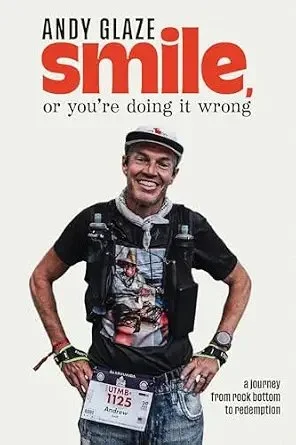
Learn more about Andy in his memoir, Smile, or you’re doing it wrong
What does it take to go from rock bottom to running 100 miles a week for more than six straight years?
For Andy Glaze, the answer goes far beyond physical endurance.
Andy is a firefighter, plant-based ultramarathon runner, father of three, and author of Smile or You're Doing It Wrong: A Journey from Rock Bottom to Redemption. But before he became an inspiration to millions, he was a teenager struggling with meth addiction, troubled schools, and a future that looked anything but promising.
Today, Andy has completed some of the world's most grueling ultramarathons and, at the time of this interview, had logged almost 350 consecutive weeks of running at least 100 miles!
He joins Rip for a remarkably honest conversation about finding his way through addiction, anxiety, divorce, grief, a willingness to embrace failure and firefighter-related PTSD — and how running, a plant-based lifestyle (and Rip!), helped him build a life he loves.
They dig into:
The journey from teenage addiction to ultramarathon running
His unbelievable streak of 100-mile running weeks
Why he believes in "failing forward" and doing hard things scared
Fueling extreme endurance with plant-based nutrition
The emotional toll of firefighting and the importance of talking about mental health
The surprising role Rip's recipes played in Andy's early firefighting career
Why smiling, gratitude, and resilience are at the heart of his philosophy
This is about so much more than running. It's about second chances, showing up for yourself, and remembering that no matter how far you've fallen, you can always begin again.
As Andy says, "Smile or you're doing it wrong!"
Episode Resources
Watch the Episode on You Tube: https://youtu.be/D6P7gkSLgEQ
Purchase Andy’s Memoir: https://a.co/d/06iKY18e
Connect with Andy Glaze: https://www.instagram.com/amglaze
We hope to see YOU at one of our Live Events! https://plantstrongevents.com/
Our new Meal Planner is LIVE: visit https://goplantstrong.com/ and use code podcast to receive an additional $10 off an annual subscription (It’s just $69/year!)
To stock up on the best-tasting, most convenient, 100% PLANTSTRONG foods, check out all of our PLANTSTRONG products: https://plantstrong.com/
Give us a like on the PLANTSTRONG Facebook Page and check out what being PLANTSTRONG is all about. We always keep it stocked full of new content and updates, tips for healthy living, and delicious recipes, and you can even catch me LIVE on there!
We’ve also got an Instagram! Check us out and share your favorite PLANTSTRONG products and why you love it! Don’t forget to tag us using #goplantstrong 🌱💪
Episode Transcript via AI Transcription Service
Rip (00:00)
Andy Glaze, I wanna welcome you to the Plant Strong Podcast. It is a pleasure.
Andy (00:05)
Thanks for having me. I'm excited to have this conversation.
Rip (00:08)
Well I am as well. so are you home right now?
Andy (00:15)
I am I am finally home. Yes. Yes, I'm I'm I'm at my house.
Rip (00:19)
Okay.
So so just like for people that wanna understand the background of that question that I just asked you, where have you been for the last month?
Andy (00:31)
so
In the beginning the month, I went to Germany and I did an ultra marathon in Germany and then flew home for one day and then flew to Colorado and did another ultra marathon in Colorado and then was home for one day and then flew to France and did an ultramarathon that took place in France, Italy, and Switzerland. And then flew home for like a couple days and then flew to the East Coast and did a book tour that included like seven states, Washington, DC, like
ten cities and then and then after that flew home. So yeah.
Rip (01:07)
Ha ha. So the
book tour, is that where you're dragging Hayden along with you and he's in bed kind of going, Dad, come on.
Andy (01:11)
Yeah. Yeah. Yeah. Yeah. Yeah.
My my son is fifteen and I took him along as a as well one, to get him out of the California bubble so he could see the rest of the country and then two, just to h to help me with the whole process. So
Rip (01:27)
Yeah. Yeah. Well, what I wanna do today I wanna I really wanna dive into your book and Plant Strong Audience. Here it is. Andy
Andy (01:37)
Ha ha.
Rip (01:38)
Andy Glaze, smile or you're are you doing it wrong? A Journey from Rock Bottom to Redemption. And I mean, who doesn't love a great redemption story? I think we all do. And this is I mean
Andy, I've read a lot of books, and this is one for the ages. I mean, you put it all out there. you you literally, you're like, all right, gang, I'm cracking myself
Andy (02:07)
Ha ha.
Rip (02:08)
open. Take a look, cause it's on display. Right?
Andy (02:14)
Yeah,
I mean a lot I'm sure a lot of people did not know most of the details about me in that book, including probably people at work and you know, friends that I know. So yeah, it was definitely a a a detailed dive into like my, you know, past failures and, you know, problems I've had and, you know, how I bounce back from them. But yeah, I definitely put it all out there and
Rip (02:39)
Yeah.
Andy (02:39)
you
know, in hopes that it will help other people that are going through rough times see that there there is a light at the end of the tunnel to to get out of those tough times if you, you know, work hard enough.
Rip (02:49)
Yeah.
When when did the book officially come out?
Andy (02:54)
It came out the last day of March. So, you know, s it's been out for maybe six months, five months, something like that. Yeah.
Rip (03:00)
Mm-hmm. Mm-hmm.
And what has been the what's been the reception so far on your end?
Andy (03:06)
I I mean it's it's been receptive like very, very well. Like I mean I've sold a ton of it and it's I just get tons and tons of messages about how people are really inspired by it. You know, everybody takes a different part out of it. Some people are in low points in their life and the book is inspiring them to, you know, not give up. And then some people, you know, like the the stories about ultrarunning and they're ultrarunners or they're runners and it helps them with that.
I mean there's it's it's not just a running book. even though I'm a runner, it's you know, really just a a life book on the human experience of falling down seven times and getting up eight or whatever, you
Rip (03:48)
Yeah.
Andy (03:48)
know, whatever the saying is, you know.
Rip (03:50)
yeah. Yeah yeah. That's exactly right. did you find so how long did it take you to write the book?
Andy (03:59)
It took me like probably about six months total to like like write it and then probably another five months to go through all the editing and proofreading and all I self published so it was a a quicker process than, you know, if you went through like a traditional publisher, it tends to be a lot slower. So yeah.
Rip (04:18)
Yeah, that was smart of you.
So I I mean
When you were writing this for six months, and we're gonna get into this gang, so just like be patient with me here. But like how cathartic was it for you to write write write down from, you know, basically almost from, you know, when you were a young kid to where you are today and everything that's happened, was it pretty like cathartic for you on having to review that?
Andy (04:49)
Yeah, I mean I you know,
definitely there's a lot of tears, you know, while I wrote it. But I I I think in general it's it's just a great reflection of how far I've come. and definitely in the beginning when I was writing like when I was thirteen, really struggling with drugs and whatnot, you know, it's it's great to see.
the arc that, you know, where my life is now and how I was able to, you know, essentially turn it all around. I mean, I fell down a million more times throughout my twenties and thirties and and, you know, things like that, but continue to keep keep getting up and learning from my mistakes and, you know, trying trying to do better every day. So,
but yeah, it was I mean, it was great. I, you know,
I think the hard part is I wrote 93,000 words and they cut it down to 72,000 words. So there's a lot in there that's missing.
Rip (05:39)
Mm.
Andy (05:40)
you know, like I wrote a whole chapter on my mom and they were like, Yeah, this doesn't really fit the story. So I had to like call my mom and be like, Hey mom, they cut your chapter out. So, you know, but I you know, I sent it to her so she could read it. But you know,
Rip (05:54)
Yeah.
Andy (05:55)
thing things like that. you know, you you write a bunch of stuff that you think's important, and then the editor's like,
I understand that you think it's important, but from someone reading it from the outside, you know, this stuff can be cut out probably. So
Rip (06:11)
Yeah. No, yeah, trust me, I understand. I've had a lot of
things cut out from my books that I'm like, God, I can't believe it, man.
Andy (06:18)
Right. Yeah.
Y you think it's really important, but it's only really important to you.
Rip (06:21)
Yeah.
Yeah. Well you mentioned, you know, you mentioned your mom, your dedication, right? And just like the
Andy (06:28)
Yeah.
Rip (06:29)
the very you you you say to my mom and dad, my dad taught me how to work hard and stay positive. My mom taught me how to care deeply and lead with empathy. And I am made from both.
Andy (06:41)
Yeah. And I I mean it's you know, and my mom is the only one still alive in like my elder family. So and she lives about a mile from me. So I I'm still very, very close to her. you know, I see her multiple times a week and talk to her almost every day. So
Rip (06:58)
Yeah.
Andy (06:58)
we have a great relationship.
Rip (07:00)
Yeah, beautiful. Well, I do want to talk a little bit more about your your mom and dad, but let's start I'd like love to start by talking about so in your prologue here you say because here's what I've learned. Rock bottom isn't quicksand, it's bedrock. It's the foundation that you can build on when you're finally ready to stop digging and start climbing.
When is there a moment in time when you can point and say that was my rock bottom?
Andy (07:37)
I honestly I think I've had a couple of rock bottoms, but you know, just because, you know, I probably had a rock bottom when I was a teenager and I was very immature. and that rock bottom would have been running away from home, being strung out on crystal meth and, you know, just being a like a a drug addict that probably was either gonna end up in jail or dead.
And then I've had other like smaller rock bottoms that I would consider, like, you know, I went through a like a divorce. and you know, that wasn't I had to, I basically restarted my life after that, went in a completely different direction. and maybe I wasn't like down and out like rock bottom, but I certainly like did a hard pivot and rebuilt something completely new from the foundation up.
Rip (08:27)
Yeah.
Andy (08:28)
and so.
And I that that I was in my like late twenties. so I I I would say I'd have two. One in my teen years and then one in my late twenties, where I really changed fundamentally who I was and and put in a lot of work to become someone different.
Rip (08:45)
Yeah. And so was that in when you were in your late teens, was that when your parents sent you off to that wilderness school? no, I think it was the Mormon wilderness school in Utah
Andy (08:53)
Yeah. Yeah.
Rip (08:57)
that that you said those I mean, you said it you you go back to that many times and how it was
Andy (09:03)
Sure.
Rip (09:04)
so so it informed it informed you in many ways.
Andy (09:09)
Yeah, I mean, you know, they I they essentially took took us out in the middle of Utah and hiked us around for 90 days. And we had to start all our own fires by rubbing sticks together. They gave us very limited food. They'd give us just flour, cornmeal, and peanuts and raisins. Boiled peanuts and raisins, not even salted. And
you know, we basically were starving but still had to like hike every day and survive. But we were in Utah, which is this, you know, it's a a beautiful area. So but obviously I sobered up out there. and
Rip (09:45)
Yeah.
Andy (09:46)
and everyone around me was, you know, a bunch of sixteen, seventeen year old kids that were also coming down off drugs and and doing all that. So got a little bit of therapy out there, did a little journaling out there.
and just sort of restarted because I was so strong out on drugs that it it it gave me a restart and it also made me do physical activity, which I think is, you know, really, really good when you're a coming off drugs or anything, but just two when you're like depressed or anxious or anything like that. the physical activity was was really good for me.
Rip (10:26)
And didn't you say, and I'm gonna be beep beeboping around here on this
Andy (10:30)
Yeah, yeah.
Rip (10:31)
on this because it's your your your story is is so it's so it's so crazy. It is so amazing.
Andy (10:38)
Yeah.
Rip (10:39)
But
Trying to think here. So the first time that you tried meth, was it over
Andy (10:48)
Yeah.
Rip (10:48)
at Joey's house?
Andy (10:51)
Pro
yeah, I I I I changed everybody's name. So it's like when I I yeah, when I read the book, I'm like I'm like, no,
Rip (10:56)
Okay. Okay.
Andy (10:59)
who who did I say was Joey? You know? but
Rip (11:01)
Yeah.
Andy (11:02)
yeah, I mean the yeah, the first time I did math I was definitely with with with with my my friends that were not really my friends.
Rip (11:10)
Well, and then and then what's amazing to me is that Joey's father was a meth dealer and his mom was like a schoolteacher, right? Yeah.
Andy (11:19)
Yeah, and nurse, yeah, school nurse,
yeah, yeah. Yeah, so she was like this really nice lady and he was dealing to the Hells Angels and all the the biker clubs. 'cause where I where I grew up is kind of Hell Central, or Hells Angels center central. Like San Bernardino, California is like, you know, they have the big Purdue club there and all the biker gangs were bringing lots and lots of meth up from Mexico, back back then.
Now I don't I hope it's not such a big deal. I
Rip (11:52)
Yeah.
Andy (11:52)
I definitely it's funny because you know, now I'm a paramedic, so you see what the the major drugs are because you're always going on nine one one calls where, you know, people obviously now the issues like fentanyl and things like that. W I don't really see meth that often anymore.
Rip (12:09)
Hmm.
Andy (12:10)
like you know, like it it used to be very prevalent, but but not as much. Probably because they
legalized it and call it Adderall now, right?
Rip (12:17)
Yeah, yeah. What
Andy (12:17)
So every everyone can j just take it legally.
Rip (12:20)
Where where do you think most of your your strife and your pain came from back in the day? Was it you I think you mentioned how your parents got divorced when you were like nine years old.
Andy (12:34)
Yeah, I mean I I that that was like very traumatic for me for sure. I I think my dad got diagnosed with cancer when I was like around that time and he was given a very short amount of time to live. And that was very stressful on me. he was also like a very like aggressive dad, you know, like I would say a typical you know.
whatever generation that that is, that is the the greatest generation or like whatever they are, you know, the Vietnam era generation where, you know, he was a strict dad. and he definitely was not afraid to get the belt out when I was bad. and
So I, you know, I had to deal with that whole like dichotomy. And then I had this very loving mom. and then they're divorced. So I'm like, I'm with my dad half the time, my mom half the time. Just navigating that as a as a young child is is is challenging. And then mix mix in all of a sudden someone's like, hey, your dad's gonna die in six months.
Rip (13:41)
Yeah.
Andy (13:42)
and you know, I you don't know how I don't know how to process that when I'm like 15, 16 years old. And, you know, I I think drugs are fun. You know, at the end of the day, I think
Kids do drugs, alcohol because they're fun and that's kinda like the gateway. You know, I think we look at it now as you're always you're taking drugs to run away from something. And I'm sure it eventually got to that point where like I realized if I smoked pot or did something, I wouldn't have to think about the fact that my dad was dying. But
Rip (14:11)
Mm.
Andy (14:12)
I think it just started with just, you know, childhood curiosity, access, and just the fact that, you know, I mean, drugs make you feel fun like good, you know.
Rip (14:22)
You
Andy (14:23)
So
Rip (14:23)
yeah, y yes. So at one point your your your parents sent you off to the castle, this boarding school. I think it's in you said it's in Great Barrington, Massachusetts. Just so you know.
Andy (14:35)
Yeah. Yeah.
Rip (14:37)
So we have a family farm that's that's in near Hudson, New York, that literally is twenty miles from Great Barrington. Near near near Catamount ski resort.
Andy (14:45)
Ver very close, yes, yeah. I know exactly where we 'cause we're Yeah,
'cause we're like right on the border there of like New York and yeah, I
Rip (14:51)
Yeah. Yeah.
Andy (14:53)
I know where it is. That's that's crazy.
Rip (14:54)
And so that was a so that was were you were you there one year or two years at the castle?
Andy (14:59)
I think it was about two years. Yeah. I mean, so I went to the wilderness program right around when I turned 16 and I was there for a couple months. And then straight from the Wilderness Academy, they flew me to Massachusetts. And then that's you know, that was where I started that. that was like high school. You know, it was I mean, essentially
Rip (15:18)
Right.
Andy (15:19)
it was high school and just it was it was depicted as a school for
very intelligent kids that are messed up. And I was surrounded by a bunch of, you know, very, very smart kids. Kids got, you know, sixteen hundred on their SATs and and things like that. highly gifted kids but that had lost their way in high school, you know, whatever that means. Like they all had different issues. but
Rip (15:48)
Yeah.
Well you talk about how you when you walked away from that experience, you had a coat of armor on you that that you didn't have going in.
Andy (15:59)
Yeah, it was it was pretty traumatic. I I I don't think anybody that went to that school would would talk about it in any other way other than like trauma
Rip (16:09)
Yeah.
Andy (16:09)
traumatic. But you know, I was talking to my mom about it the other day and it's like I you know, I'm a d I'm a I'm a parent now, you know, and it's like I don't really know what else she they could have done. You know, I don't like blame them or think like they they did something wrong, like
You know, I was a messed up kid who was addicted to a highly addictive substance, and bringing me back home would not have been a good option. And back in the nineties, you know, there weren't like a whole lot of options. You could send someone to military school,
Rip (16:41)
Yeah.
Andy (16:43)
or, you know, there's these these were like kind of a new thing, these like therapeutic boarding schools.
It had good reviews, you know. and you know, it did get me into a good college. It got a lot of kids into really good colleges. So it had like a track record that worked. It was just in hind in hindsight, you know, the the method was a little little off, but
Rip (17:07)
Yeah.
Well y it's it's a very fascinating chapter that you have on the castle and and everything that that went down there.
Andy (17:15)
And I could
write a whole book on it, you know. I mean it one chapter w you know is just it just you know, it's just the surface. But two years of, you know, emotional abuse and you know, some physical abuse and stuff like that was yeah. It was it was it was a it was an experience. But I you know, what doesn't kill you makes you stronger. And you know at least the the the the positives if you you know, I I I try to always look at the positives. The positives is I stayed sober.
Those two years while I was there. I got into a good college. I made some friends while I was there that I, you know, some of them I still talk to. So,
Rip (17:54)
Huh.
Andy (17:54)
you know, there are some, you know, positives from it. Obviously there's a lot of negatives too, but i it you are in control of how you react to situations emotionally. And, you know, if I want to dwell on all the negatives all the time, then yeah, I could live in that world, but I try to like more focus on on the positives.
Rip (18:14)
Yeah. Yeah. I gotta say, I have so many places in this book. and do you like being called Andy? Do are people calling you An Andy? Okay,
Andy (18:24)
And yeah, Andy. Yeah, Andy works. Yeah, yeah.
Rip (18:26)
okay. People ever call you Andrew? Okay. Right.
Andy (18:28)
They do. Yeah. Mm mostly when I'm in trouble. Like and it's
my dad would say, Andrew Michael, you know, you like, but yeah, I go by both. Just not
Rip (18:38)
Okay.
Andy (18:38)
just not Drew.
Rip (18:39)
Yeah. But but so Andy, there's so many amazing quotes that you have in this book. I think you should have a whole nother book that's just got like two hundred of the top
quotes in here with pictures, inspirational photos, next to each quote. It's incredible. It's really it's
Andy (18:58)
I appreciate it.
Rip (18:59)
really incredible. let's talk about that that one and a half mile run that you did in gym class.
Andy (19:05)
Okay.
Rip (19:05)
'Cause
'cause that seemed to have been pretty transformative in its in its own right. Like what made that day different than like any other day?
Andy (19:14)
Well, I so I eventually got to a point in my life in my twenties where I was very inactive. let's just say like I, you know, through through college I didn't work out. In fact I was a pretty heavy cigarette smoker. I stayed sober, but was not, you know, not in shape and you know, basically just smoked a lot of cigarettes. So I still that was still drug.
And I got to this point when I was in my twenties where I was just having like crippling, anxiety and depression, panic attacks, didn't know what was going on, you know. I mean, again, before the internet, before you could just go on a podcast and learn about mental health or, you know,
Rip (19:57)
Mm.
Andy (19:57)
things like that, like you had to go to like a doctor and then the doctor would like put you on a pill. and I wasn't really, you know, I'm I'm in my twenties. I didn't go to a doctor unless I was dying. So,
I was just like dealing with these like w panic attacks. And eventually a friend was like, You should probably start working out. And I I listened to him and went to
Rip (20:21)
Yeah.
Andy (20:21)
the g and went to the gym and started working out. And it really helped with all the anxiety and depression and panic attacks. And so then I was like, Well, I gotta do more of this. I gotta learn how to to work out. Cause here I am like twenty-two, twenty-three years old, and I haven't really worked out since high school. So
I went to a community college class to learn how to exercise basically because again, no podc
Rip (20:46)
Wow.
Andy (20:46)
no podcasts, you know, you can read books on it, but like I'm more of a like hands-on learning type of person. So yeah, I took an exercise science class, and in the exercise science class, I had to run a mile and a half, which was terrible.
Rip (21:02)
Yeah.
Andy (21:02)
I started really fast and like, I'm crushing it by the last two laps. I was almost walking and then
couldn't sit on the toilet for like two weeks afterwards. and that was my introduction into running. And so I was probably
Rip (21:16)
Mm, mm.
Andy (21:17)
like twenty-three, twenty-four, and I'm forty-eight now and I haven't stopped since. So.
Rip (21:22)
No. So did you know did
you know immediately after that run and what followed that running might be the thing? or did it take some time before you actually trusted it?
Andy (21:35)
I mean, I I really liked it. I I I had done some cycling and stuff like that, but I really, really liked it. I l I was living in Portland, Oregon at the time, which is a really run friendly city. You know, Nike is right outside of Portland. Everybody runs. great, you know, along the river there's all these pathways and all this stuff. So
I started exploring my neighborhood and just really I just didn't really enjoyed it. I'd still go to the gym every day and I would like work out and like lift weights and do things like that. But instead of like doing the elliptical trainer, I just started running. And it it you know, it made me feel strong. It made me feel like empowered, it made me feel I mean, obviously it made me feel really good. and it was like, yeah, the start of like a pretty serious life change. I mean, I was still
smoking pot and doing things like that at the same time. But eventually it, you know, it got to the point where the smoking pot got littler and littler. I quit smoking cigarettes and then, you know, the running just completely took over.
Rip (22:43)
Yeah. Let's let's talk about let's talk about smoking potter, or I think as you refer to it in the book, weed. it's it's
Andy (22:50)
Yeah.
Rip (22:51)
at some point you were like, I just I gotta stop the weed. It's like i it's killing this fire inside of me, I think you said, or shrinking the fire inside of you. What
Andy (23:00)
Yeah, yeah.
Rip (23:02)
and and you made a promise to yourself to never smoke weed again. And have you kept that promise?
Andy (23:07)
Yeah, so I was I was probably like twenty six or something like that. And this is the point where I went through a divorce. So my wife came in, told me she wanted a divorce. I had like it was like this horrible week where I I got hit by a car while I was riding a bike. and I was messed up.
My wife told me she wanted a divorce. And that was like it was bad, but like w we kind of knew that it was going that way anyway. So it wasn't like shocking, but it was still like I was at a low point because I was in bed healing from this car accident. and so I smoked pot to try to make myself feel better and immediately had one of those panic attacks like I had had back when I was, you know, in my early twenties.
And I just said, I'm never doing this again. I'm never going to feel like this again. And so yeah, it's been twenty I guess twenty one years, something like that, since since I have and yeah, kept kept the promise. and, you know, haven't ever really missed it or, you know, I I think I got what I needed out of it and you know, now I'm
Rip (24:16)
Yeah.
Andy (24:16)
a lot I'm a lot happier without it. So,
Get a lot more accomplished and like like it's I s like you said in the book, you know, it's like that fire inside grew and grew and grew. And I just became more and more motivated and more driven. and
Rip (24:33)
Yeah.
Andy (24:34)
you know, I I think that's why I am where I am today is you know, I I have an intense fire inside of me, and you know, when it's stoked and when I can keep it burning hot, then I accomplished a lot.
Rip (24:48)
Do
you yeah. Do you are you a big sleeper? Like
Andy (24:54)
I mean, you know, the fire service hasn't been kind on on the sleeping aspects of my life, but I mean, I recognize that sleep is probably the best way to recover. So, I try, but you know, when you I'm an early riser, I'm a morning person, you know, I wake up hours before my family and get all everything done. They wake up and I'm already like four hours in of everything I've accomplished. and they're just like, Dad, chill.
Like, you know, I'm just waking up, you know, and I'm like, you know, four hours in. So but I but
Rip (25:29)
Yeah.
Andy (25:29)
I I think if you know, if that would be one of my weaknesses is I probably need more sleep.
Rip (25:36)
yeah, I feel I feel your pain as a as a
Andy (25:38)
Yeah.
Rip (25:38)
firefighter in the sleep. And you you guys do what? Do you do forty eight hour shifts at Laverne?
Andy (25:43)
Yeah, we're fo
yeah, we're forty eight ninety six. So and
Rip (25:45)
Yeah.
Andy (25:46)
and you know, we're a small department, so there's a lot of overtime. So, you know, I've worked I've worked twenty one days straight. I've worked, you know, ninety-six hours is pretty common and you know, it it just gets it gets a bit much.
Rip (26:00)
my gosh. four I would do we were twenty four hours on, forty eight off. We would we would
Andy (26:07)
Yeah.
Rip (26:08)
come in at noon and get off at noon the next day. What what time do you guys come in?
Andy (26:12)
We I mean, we start at eight, but like, you know, normally everybody starts rolling in around like six forty five. So yeah. Yeah.
Rip (26:18)
Yeah. Yeah. Whew. I I start to
I would start to go a little like cuckoo after forty eight hours. I don't know how you did twenty one days in a row. That's amazing.
Andy (26:28)
I was cuckoo, I can tell you. I was I was burnt out at the end of that one. But that I that was when like the whole state of California was on fire and like
Rip (26:36)
Yeah.
Andy (26:37)
everybody we like our whole entire department was either out on wildland fires or covering and there was nobody nobody even to come in. The entire department was working for like twenty something days straight. It was it was crazy. But
Rip (26:52)
All right, let's let's talk about because it's it's one of the most amazing, you know, feats that I've heard of. You've been running over a hundred miles a week for now how many weeks? Three hundred and sixty one? Three hundred and forty two. Three hundred and forty two. Now,
Andy (27:09)
Three hundred and forty two. So yeah, yes. It's like six and a half years.
Rip (27:14)
yeah, I mean six and a half years through you know
Broken ribs, through sickness, through you know, traveling here and there. Was it also during the fires when when you were at the fire station? So you're on the treadmill.
Andy (27:30)
yeah. And the yeah. I would I just
r I run just around the station. Just like l yeah. Fire I call fire station loops. And I would just radio in hand and just run like thousands of loops around the station.
Rip (27:45)
And then how are you mi I mean, how do you know exactly your mileage? Do you have a a watch that keeps track? Yeah. Yeah. Right. Your watch. My my gosh. Andy, Andy. Wow.
Andy (27:50)
Yeah, yeah. Yeah, my watch, yeah, yeah. Yeah. So
Rip (27:59)
And so I I mean, I just it's it's remarkable. It's truly remarkable. I mean, what it what
Andy (28:07)
It's a
Rip (28:08)
are what are your what do your firefighting brothers and sisters think when they see you running around?
Andy (28:13)
Well, I mean, you know, most of have ha I mean have known about it forever. I mean, I started I was running like this when I was in the Fire Academy and then I taught at the Fire Academy and I taught running. So I have like multiple generations of firefighters that came through me and had
Rip (28:29)
Yeah.
Andy (28:29)
to had to run at the academy. And now they're all like, you know, captains and chiefs and stuff because I'm older. so I mean it's it's been kinda like
it's been who I am for a long time. I I think, you know, at first people were probably like a little bit shocked. obviously on probation I dialed it back. and didn't maybe let everybody know how crazy I was. And then as soon as I was off probation, you know, pretty much just went like full bore into like everything. But, you know, yeah, I've
Rip (28:59)
Yeah.
Andy (29:01)
had a l a lot join me. I mean I you know I obviously as a captain
made physical fitness like a huge part of the shift. A lot of training, a lot of physical training and then, you know, tactical training. So the people that would bid on my shift would obviously, you know, want to work out, you know, because they would they knew like they would have a captain that like prioritized it. So I don't think anybody was shocked, but yeah, I I I
Rip (29:28)
Yeah.
Andy (29:28)
have I have transformed quite a few people into to runners. Nobody on like, you know, I I one guy ran an ultra. I've probably had like
Four or five people run marathons and then a ton of people have run like half marathons and stuff. So
Rip (29:41)
Yeah. And then and then to add insult to injury with, you know, your people thinking you're crazy. You you also, if I'm not mistaken, you're also vegan, right?
Andy (29:51)
Yeah, yeah, that's well, so I started like I've only been vegan for like five years, but I've been vegetarian for like twenty. Twenty plus, something like that. But yeah, I I have a you know, I have a great story for like my first my first day as a firefighter. I was
So I'm there I they they put us through a tower, you know, and and which is kind of like training, you know, you know what a tower is, but like if the audience doesn't know, but basically like I get out and they're like, All right, here's your station assignment, you know, you start tonight. So I'm like, okay. So I drive up to the station, it's like 530 and they're all waiting for me and they've been cooking all day and it's like pot roast or something. It was something like that. And I was like, I had to sit down and immediately tell my crew, I'm like, well, I don't
I don't eat meat. And it was just like, you know, dead silence, you know. it yeah, it was challenging. But it, you know, the the the the the the full circle moment here of on this conversation is that like I bought your book back in the day, because I didn't know any other firefighters that like didn't
Rip (30:51)
Right.
Andy (30:51)
eat didn't eat meat, and I used your recipes a ton, especially on probation. You know, I'd add meat to the other guys' stuff, but for me.
it was it was very like beneficial to to like have recipes to like to to pull from because you know
Rip (31:09)
Yeah, yeah.
Andy (31:10)
I didn't I didn't really know what I was doing. I originally just became plant based because I wanted to try it and then I felt really, really great. And so I'm like, well, if I feel so good, why would I want to go back and feel like I felt when I ate meat? but back, you know, twenty years ago,
It was a lot harder to not eat meat than it is now. Now it's very, very easy. But back
Rip (31:32)
Yeah.
Andy (31:32)
back then we had very few options.
Rip (31:34)
Were you inspired at all to go, you know, to go all in vegan because of did you know who Harvey Lewis was back then? Five years ago?
Andy (31:42)
No, I mean s
no, I I I went vegan because I I got a dairy allergy. And so I I had to go vegan because, you know, I can't eat dairy. But Harvey and I are very good friends. So
Rip (31:54)
Yeah.
Andy (31:55)
yeah, in fact I was just with Harvey this weekend at the Running Man Festival in Georgia.
In June we ran across Ohio together. he helped me with my book tour. We did a a running book tour across Ohio where
we ran like fifty miles a day and signed books and stuff. And then I did a race with him in that race in Germany I did with him as well. So he and I we talk we talk like weekly and you know, he's he's one of the most talented runners there is. So
Rip (32:23)
Yeah.
He's also a salt of the earth man. Yes. Yeah.
Andy (32:26)
Yeah, yeah. I mean he's you know, he's a teacher, obviously
a v obviously a vegan and yeah, a lot to learn from him.
Rip (32:34)
Yeah. Well, and you know, one of the things I I love, it's one of your quotes, and it's one of the things you encourage people to do, and I'm gonna throw it out there and then I want you to expound on it, is fail forward, right?
Andy (32:52)
Yeah.
Rip (32:52)
Tell tell me about that philosophy and and how important that is to you and why other people I think should also embrace it.
Andy (33:01)
Yeah, I mean I I think like, you know, the way I was raised, you know, Gen X, we were not, it was not encouraged to fail. And I think failure was looked at as a weakness, you know, and I think specifically in the fire service too, there's a lot of people don't like to train and do things because they're scared they're gonna mess up and then people are gonna make fun of them. You know, we have that sort of weird culture, that masculine culture where, you know.
If you don't do it perfect the first time, then you know, you're gonna get made fun of and then that might hurt hurt your ego a bit. But in general, like I think it's really important to not be good at things for a little while and to, you know, really lean into that. And the only way to get better is to continually like go back and like see what went wrong and then and then fix it. And like as a as a training captain, you know, the
I was having to train a new generation, right? A generation of of young men and women that were very sensitive. We'll we'll just we'll say we'll say that. And, you know, I I had to explain to them, like, you know, look, we're gonna go over this. The it this is the best time to make mistakes. We don't wanna make mistakes on the fire ground. We wanna make mistakes right now. And then we're gonna sit down and we're gonna talk about what went wrong and we're gonna try to correct it.
And you know what? If you make another mistake, we're gonna do the same thing and and we're gonna try to learn from our mistakes. Now, obviously, occasionally you come across somebody that has the inability to learn from
Rip (34:31)
Ha.
Andy (34:32)
their their mistakes, and then that's that's a whole other issue. But in general, you know, just the concept of doing something you're not good at and going back and going, okay, what could I do better? What went wrong? What went right? And then doing it again.
And then having that same audit with yourself is is a really, really great way to live life. that, you know, that's that's where you're gonna grow the most. That's where you're gonna become a better version of yourself. because nobody's good at anything. I mean, and and also as a dad, you know, I'm I'm teaching, I have three kids and like kids don't want to fail either. You know, kids think they try, they're like, Well, I'm terrible at that. It's like, well, no kidding, you're 15 years old. This is probably the second time you've ever done it.
Did you think you were just gonna be like amazing
Rip (35:18)
Yeah.
Andy (35:19)
the the first time? And it's it's it's hard for kids to learn that lesson too. So I
Rip (35:25)
Yeah.
Andy (35:25)
I I definitely preach it. I, you know, I I do very hard ultra marathons all over the world. And one of the reasons I really like them is because there's a high chance I'm gonna fail. so I'm going into it knowing that I might get punched in the mouth, right? And I do it anyways. And sometimes I get punched in the mouth and sometimes I don't.
And if I get punched in the mouth, I get knocked down, I sit back and I I figure out what went wrong and what I can learn from it and well how I can get better and hopefully that doesn't happen again. And if it starts to happen again at another race, then I can go, okay, wait, this happened six months ago. Remember how you you feel the same, like and and I can like work through the problem.
Rip (36:09)
Yeah. when was the last time in your opinion that you failed forward?
Andy (36:21)
I mean I I tons of times. I mean the the big one was last year I got Moab two forty, which is a two hundred forty mile race, and I I f I failed it two two years in a row and then and then I finished it last year. I've had little micro ones like this year. I've done Leadville three times, which is a hundred mile race that's above ten thousand feet. And I I finished it all three years, but the the two years
I've had like some pretty severe nausea and and vomiting from the outside
Rip (36:51)
Mm.
Andy (36:52)
altitude sickness. So this year I kind of I made some pretty big changes. One, I slept in an altitude tent for like a month before and changed my like things I ate a bit and was able to finish the race like the fastest I've ever done it, not get sick. So I'm always like trying to do better. I've I've
Rip (37:12)
Yeah, so
Andy (37:13)
done the Cocodona 250, which is a 250-mile race, six times.
This year there's a section I always have a hard time at. So for five years, I've had a hard time at this one section, and I was able to have a great time this year. So it's like a little micro, a micro
Rip (37:28)
Dang. Yeah.
Andy (37:29)
win, but like in my brain, that's like, you know, every year I'm like, how can I get through this section without having a hard time? And then every year I have a hard time. So on the sixth year, when I don't have a hard time, to me, I'm like, okay, it took five times to get there, but I still got.
and and and that's you know, that's what I'm constantly doing. This year I did my first backyard ultra, which are you familiar with that format?
Rip (37:55)
my God. A absolutely. And I wanted to ask you about that because I know that I think you did your first one in Germany, right?
Andy (38:01)
Yeah, yeah. And I did terrible. Well, I mean, I did all right, but I, you know, I did a lot worse than I than I wanted to do. And, you know, I and and and it was hard. You know, I was like, you know, I wasn't even tired, you know, I just had a a bad loop, but you know, I've been sitting down and I'm gonna do another one in December and you know, it's part of the process, right? It's like evaluating what I could have done better, evaluating what went wrong.
You know, I that one I you know, I had five days to plan for it and then fly to Germany. So, you know, there was a lot of complications that made it more difficult, but
Rip (38:34)
Yeah.
Andy (38:36)
you know, I I like I'm gonna do one in December and then I think I'm gonna do another one in when is it? Like probably March or May or something like that. So that
Rip (38:44)
I d I
would I I I think one of the things that I'd love to ask you is
So you've been doing a hundred miles a week for six and a half years. You know, you're also throwing in some of these ultra, ultra marathons, you know, you're starting to do these last man standings. is there, I mean, is there a point where you're like your body somehow rebels and you're like, it's just like, hey, you need to take six months off and just let your body like recover? Or have you worked, have you?
Done it like and been patient enough with yourself to where your body expects this now and you're not like beating yourself up. Or you always beating yourself up.
Andy (39:33)
Yeah,
I I would s I would say no to both those. Like six months. I haven't taken six months off in twenty years, but I can't I I yeah, no, I know, I can't I can't imagine I
Rip (39:40)
I was exaggerating, but
Andy (39:43)
mean, I'm sure like it's gonna the streak's gotta end eventually. Like something's gonna happen. You know, I'm forty eight, though I'll probably have to have a surgery or I'll get hit by a car or you know, something will break, or you know, I mean there's just
Like we both know how life works, right? I mean, it's like we're
Rip (40:02)
Yeah. Yeah.
Andy (40:03)
we're both we're we're we're all headed towards the same direction. I'm not invincible and I'm not an alien. So I think, you know, eventually the human condition will will will get me. And and when that does, like, you know, I will back off a bit for sure.
Rip (40:19)
Yeah.
Andy (40:20)
But I I mean I I'm always always kind of at like maybe like sixty to seventy percent. That's that's what I always like. Most you know, most people are like, I you know not recovered and the you know, it's like I'm I never recover. I know, you know, because if I run a two hundred and fifty mile race, the next week I have to run a hundred miles. If I run a three
Rip (40:37)
Yeah.
Andy (40:38)
if I run a three hundred mile race, the next week I have to run a hundred miles, and the next week and the next week. so
Rip (40:45)
That's
yeah. Yeah.
Andy (40:46)
You
know, I I I ran those three ultras in two weeks. I still had to like, you know, maintain hundred mile weeks in between, you know, so it's
Rip (40:54)
Yeah. Yeah. So
yeah. So would you say I mean, I would imagine one of the things that's really important in you being able to do this streak is your getting your nutrition right.
Andy (41:06)
Yes.
Rip (41:07)
and and when you go out on these runs, even if it's just a like a five or ten mile run, d are you taking some sort of an energy drink with you or some sort of gels or dates or
Andy (41:20)
normally if I run under fifteen miles, I don't bring any food or water. but I do eat beforehand and I do eat afterwards. I I eat a lot during races, but I don't normally eat a whole lot when I'm training, unless I'm going really far or it's like really, really hot outside and then I need the water. that's just my personal like what I do. I like to kind of feel bonky while I run.
Rip (41:47)
Yup Yeah.
Andy (41:48)
I d I do because, you know, it
these are like, you know, it's the same thing people like I'll have firemen hit me up and they'll say, you know, I just got off a 48-hour shift and we didn't sleep and I'm so tired. how do you train after doing that? And I go, Well, that's my favorite time to train. Because how else do you simulate like 80 miles into an ultramarathon or 150
Rip (42:09)
Jeez.
Andy (42:10)
miles into an ultramarathon? Go to work for two days, you know, run seven calls after midnight, and then go run 10 miles.
you will feel terrible, but that's what mile 80 might feel like, you know, or mile 200. and you can't you can't simulate it any other way. Who else is gonna stay awake for two days and then go run 10 miles? Nobody, only dumb firemen. So
Rip (42:31)
Mm.
Andy (42:34)
I mean we have we have like superpowers when it comes to training for ultra marathons. But yeah,
Rip (42:38)
What yeah, yeah.
Andy (42:40)
and and like when you know you're going in these big, big races, like I might have 25 miles in between aid stations.
You know, I need to know what it feels like to not feel super great the whole twenty five miles. And I need to know what it feels like to to have low calories
Rip (42:55)
Yeah.
Andy (42:55)
so that if I start feeling that like that in a race, because I don't do in a race, I eat a lot. And if I start to feel like I'm feeling what I'm training in a race, then I know how to correct it. I know, okay, you're feeling like this because you're not eating enough. You need to eat, you need to drink. and and and then I of course correct.
Rip (43:16)
how tall are you and what do you weigh?
Andy (43:19)
I'm six foot and I weigh like a hundred and seventy five, hundred and eighty pounds.
Rip (43:23)
So you're I mean that's also kind of surprising to me is that you're that durable and you're six feet a hundred and seventy five eighty.
Andy (43:33)
Yeah. Well, I mean, when I was younger and I was like winning ultra marathons, I was one sixty five. But you know, as I've gotten older, I I want like a little bit more upper body muscle and and things like that. So I I definitely eat a lot more to maintain the muscle mass than, you know, I probably did back when I was like very, very lean. and
Rip (43:55)
Yeah.
Andy (43:56)
and was actually 'cause, you know, if you have if you're one sixty five, that's like significantly different. You can run a lot faster.
Rip (44:02)
Yeah.
Andy (44:02)
than
if you're one eighty. So but
Rip (44:04)
I got
a I got I got a kind of a intense question for you here. so what do you think this streak has cost you in terms of like relationships and you know sleep in your body can can like versus what have you gained by it?
Andy (44:25)
you know, I mean I I have a lot of relationships. I you know, I I I have a good amount of friends. it's it's probably like cost me more like going to parties and stuff like that, which I don't really enjoy anyways. So but I mean I it's only fifteen miles a day. So you can still do a lot of things. I know fifteen miles is a lot is a it's a long distance, but like time wise, it's not like a huge killer.
Rip (44:53)
Yeah, good point. Yeah.
Andy (44:53)
es especially
especially if you wake up early and get like I I I tend to break it up into two runs. So, you know, if I do ten miles in the morning and five at night, I still have twenty something hours to do whatever I want throughout the day. so it d it I I don't think it costs me much. I mean
Obviously it's it's part of my social media presence and I've built a you know social media of millions and millions of people. So it's it's I don't know I don't think that's the whole reason why people follow me, but it's it probably hasn't hurt things either. So on the positive side, it you know, it it it it's definitely people think of me when they think of like people that run a lot. So and
Rip (45:38)
Yeah. Yeah. Well you
yeah, well you are you you have become, you know, the the running man. I mean I mean and it so yeah, so you got to meet so you got to meet Jesse Itzler while you're at
Andy (45:44)
Yeah yeah I'm like the the modern four scump yeah
Rip (45:51)
running man and all that good.
Andy (45:53)
yeah we actually he and I led a panel discussion on one of the days and then he me Harvey and him were also on a panel as well one of the days so yeah it was it was pretty it was pretty cool we we had a good time the three of us
Rip (46:03)
Nice. Yeah. Yeah. Yeah.
I've had I've had I've had Jesse and obviously I've had Harvey on the podcast as well. good good people. what do you what
Andy (46:14)
Yeah. Yeah, yeah.
Rip (46:18)
do you think about when you're like let's say you're doing the Arizona Monster 300 and you're at a point where your body is telling you, Andy, stop and your mind has to answer to that.
Andy (46:33)
I mean, a lot of times I'll just take a nap. You know, if it if I'm really like my body's really telling me to stop, I'll just literally
Rip (46:38)
Yeah.
Andy (46:39)
just lie right down on the dirt wherever I am and take a ten minute nap. And normally that it'll just like when you restart your phone, that'll normally like restart the brain and the brain will like get back into line and stop, you know, stop sending those signals to to quit. So
Rip (46:54)
Yeah. Yeah.
Andy (46:55)
yeah, I
Rip (46:56)
So you've you've built a whole brand around smile or you're doing it wrong. I mean look at your hat, smile, and then you gotta lift it up or you're that's clever. That's very clever. Who came up with who came up with
Andy (47:05)
Yeah, I have. Yeah, yeah. Yeah, I
Rip (47:09)
that?
Andy (47:10)
I mean that's that's it was a saying I've been putting on social media for over a decade and I never thought it would turn into this big, you know, this big thing, but it obviously has now. It's it's quite quite it's like, you know, it's my motto and my life the way I live my life and you know, how how
s not only just spreading posity, but just like the, you know, the power of smiling and the power of being positive and smiling at somebody else makes them smile back at you and, you know, it triggers certain chemical reactions in our brain. And, you know, that can be really helpful in life and in running and in exercise and just in general. So
Rip (47:48)
Yeah.
And there was a there was a certain perfect trail that you were that
Andy (47:53)
Right.
Rip (47:53)
that you run on where I think that that was born, if I'm not mistaken.
Andy (47:56)
Yeah, the the
the trail was called You're Either Smiling or You're Crying And I
Rip (48:01)
Yes.
Andy (48:01)
And I thought to myself, Well, man, if you're literally the the thought was, Well, if you're not smiling, you're doing it wrong. And then that's how it became the same. And then, you know, I don't know if it was ten or fifteen years ago. It was a long time ago. And I used to just put it like back when Instagram and was just pictures, you know, before videos and everything.
Rip (48:20)
Yeah.
Andy (48:20)
And I that was kind of always like one of my captions that I would have with like my running pictures. So
Rip (48:25)
Hmm.
Very, very cool. So do you have t shirts, caps, all kinds of swag?
Andy (48:31)
I do.
I do. I I have a whole merch line. Yep. Yep. Yeah.
Rip (48:34)
Wow. Wow. And and and
so you said, you know, I I I was I I was obviously thumbing through your Instagram feed this morning. I noticed you had a little over, you know, half a million followers on Instagram. You've you said you've got several million maybe across all your social media file channels. is that another source of income for you?
Andy (48:59)
not not necess like not really. Like I I mean I have a million on TikTok. I mean, I think TikTok and YouTube gives you a little bit, a little something,
Rip (49:09)
Yeah.
Andy (49:10)
like if you you know, on views, but I but not really. I wouldn't say like it's it's pretty minimal. I think more money would come from like brand deals and things like that. Like, you
Rip (49:20)
Yeah.
Andy (49:20)
know, if I have like a brand deal with with something and then I make videos for them then than that that pays a little bit, but yeah.
Rip (49:27)
Yeah. Well, y
you you talk in the book about how I mean, you truly, you know, you're at a point now where you are a legitimate, you know, social media social media influencer and you're
Andy (49:40)
Yeah.
Rip (49:41)
you're and you mentioned it in the book, you know, as a firefighter, and I experienced this and it's it's why I actually moved away and and became a a full time ambassador for promoting a whole food plant based lifestyle. But as a firefighter
You're helping people, you're saving lives. It's one of the reasons you and I went into firefighting. What a
Andy (50:00)
Sure.
Rip (50:00)
what a brother and sisterhood. But you're only you only can help so many lives, right? And
Andy (50:06)
Yeah.
Rip (50:06)
so you mentioned how the one of the great things about what kind of by accident happened with this TikTok video that got 10.6 million views is it launched you into this kind of arena where you're helping all kinds of people, like thousands
Andy (50:23)
Yeah.
Rip (50:23)
and thousands.
Andy (50:24)
Yeah, I mean it's and it's been great and yeah, I'm I'm on my like route to retirement. Like I'm probably it's probably gonna be January ish is probably when I'll retire. But you know, it comes down yeah, like coming up, yeah. A couple of months. Yeah.
Rip (50:37)
Of twenty seven, of two thousand twenty seven? Wha wow.
Andy (50:41)
Yeah. So it's just a c couple things are going on, but like in general
You only have so much time in the day and when it comes to how much people I can help, I can help a lot more people if I put more energy into the bucket of social media than the bucket of the, you know, sixty thousand person town I live in or I work in, you know? So I
Rip (51:06)
Yeah.
Andy (51:06)
think I think I'm gonna pivot more in that direction. And yeah. I I that's that's that's sort of where I'm going.
Rip (51:14)
And then
and then aren't you also into bees? You're a beekeeper, right?
Andy (51:18)
Yeah. Well,
so I mean I got into bees 'cause I so I have I have PTSD from firefighting and I'm like currently being treated for it and doing all this stuff. But I I've done a lot of different things to try to help with the PTSD and the beekeeping has been probably like one of the best things. So like I I I really like I know it's like everyone's like, You're a vegan and you're a beekeeper. I'm like, look
Like my I have avocado and citrus groves at my house and and like my bees like you know, help pollinate. So I'm not like I'm not out there stealing their honey. I'm just like they're they're like
Rip (51:54)
Yeah. Yeah.
Andy (51:55)
my my my friends out there. So I I go out there and spend time with them and listen to them and you know,
Rip (52:00)
Wow.
Andy (52:01)
th the s the sound of their wings is really, really nice on the brain. So
Rip (52:05)
Yeah. Well well well and you've been you're you're very and you talk in the book about how I have PTSD. There, I you know, I said it. You know, you you can basically get it out there and let people know. And by talking about it, it's super
Andy (52:19)
Yeah.
Rip (52:20)
helpful. What what do you think is the most helpful thing for you in dealing with your PTSD? Is it the bees? Is it running? Is it talking to people? Is it all the above?
Andy (52:30)
I think for a long time it was the running was very helpful. I I think cold plunging is really helpful.
the the yeah, 'cause you reset your nervous system. But it's a you know, temporary fix. but as as the disease or whatever it is progresses, like
some of these temporary fixes become less and less effective. and so like now I'm I'm going down the route of like EMDR and and and some treatments like that with with a therapist. And I'm I haven't like it's not like six successful yet, but I'm hoping that that will help
take some of those memories and like put them more into the like past parts of my brain. so like when I have the episodes and I can't sleep or I have nightmares or whatever. or I'm hypervigilant, I can I can like, you know, push that into the past.
Rip (53:29)
w help me out. What is EMDR? I've never heard of it.
Andy (53:33)
So EMDR is an acronym that I don't exactly know what it stands for, but it's like eye movement desensitization or something like that. And they do two things like either they like flash lights in your eyes while you're discussing your past trauma, or like sometimes they'll like tap you. and it has an effect on the brain where it takes the memories you're talking about, which your brain thinks is still in the present, and it files them back into the past.
Because a lot
Rip (54:03)
Mm.
Andy (54:04)
of times with PTSD
your brain thinks that the things that happened to you are still in the present and it won't like it won't put it back as like a memory. So you still like relive the experiences like in real time. And so
Rip (54:22)
Yeah.
Andy (54:23)
I I've talked to a lot of people because I talk about this a lot online of people that have been very successful with EMDR therapy. But it's a you know, it's a process to get there,
you obviously have to have a good relationship with a therapist and, you know, be able to like talk about all these things. So that's what I'm working towards right now. It's just sorta complicated because I'm using like the workers comp system and it's the workers comp is not set up to help people. So so
Rip (54:55)
Yeah. W would
would you say that most or all of your PTSD is from firefighting, or does it go back farther than that?
Andy (55:04)
No, it's it's it's just firefighting. I don't like all the stuff I wrote about in my book, like I don't have any like issues with. I mean, you know, there's
Rip (55:14)
Gotcha.
Andy (55:14)
there's moments in life like when my dad died a couple years ago. Obviously I'm sad, but I don't have post-traumatic stress from my dad dying. I just have sadness, you know?
Rip (55:22)
Yeah, yeah, yeah.
Andy (55:26)
So, but like I basically have like three core symptoms, which is like I have hypervigilance.
And then just really bad sleep where I I won't be able to fall asleep or I'll sleep for like an hour at night. I get really horrible nightmares and I just it's like I can't turn my brain off at night. So it got to the point where I had to, you know, I I I started seeing the therapist about it to try to like deal with it because the just the running and the beekeeping and the cold plunging and things like that weren't like weren't fixing it. So
Rip (56:00)
Mm-hmm.
Andy (56:01)
so yeah.
Rip (56:02)
Well, well I I want you to know how much I appreciate you you you talking about it in the book and you know if you don't mind I just like to read a little section you have this is on page two twenty where you say that though it's called the weight we carry. Fifteen plus years in the fire service means fifteen plus years of others peop other people's worst moments. Car accidents were physics and flesh collided with
Devastating results. House fires where families lost everything, including each other and their pets, medical calls where we arrived too late or just in time to watch someone take their last breath. Suicides that left questions hanging in the air like smoke. And I, you know, I was a firefighter for 12 years, and everything you wrote about there, I experienced. So I
Andy (56:55)
Sure.
Rip (56:55)
I I know exactly what you're talking about. And we didn't have
We didn't even really have a way of talking about it other than just around, you know, lunch, dinner or or or or or lunch, dinner, or breakfast, you know, around the table. We'd, you know, kind of try and figure it out ourselves. But, you know, just in case you didn't know, I I recently visited the Colorado Springs Fire Department and they have an amazing, amazing peer support system that's comprised of firefighters, chiefs, you name it. nobody wears uniforms at these meetings.
They've created a real safe space for people to talk about it and it's it's unlike anything I've ever seen or witnessed. So it's something that maybe, you know, take note of.
Andy (57:41)
Yeah, I I I started the peer support in in my department. Obviously we're a smaller
Rip (57:45)
Nice.
Andy (57:46)
department, so it's it's a smaller program and then we we have some pretty good resources as well, but it just it got beyond that for me. And you know, it gets I I I think I get, you know, when you're talking about feedback from the book and then just my
Rip (58:01)
Yeah.
Andy (58:02)
social media in general, probably the most like frequent comment I get from people is like, thanks for talking about mental health, because it really helps.
And I think when somebody that does a really hard job and then does really hard things can come out and say, Hey, I'm struggling, you know, I'm having a hard time and like normalize it and like make it not stigmatized, I think it's
Rip (58:25)
Yeah.
Andy (58:26)
it's it's it's it's helpful. I know it's helpful for me when I see other people that talk about it. So I'm sure when I talk about it with, you know, a very large presence, you know, it's helpful for a lot of people.
Rip (58:38)
Yeah.
Andy (58:38)
Fire, police, I mean just you know, military and then just people in general that experience, you know, hard times.
Rip (58:46)
Mm-hmm. Mm-hmm. I I wanna go I want to go back to it seemed like in your life you had a way of kind of running away and not dealing with issues, big issues. And then at some point, I think it might have been, you know, the when you had this this cacophony of shit that that rained down on you, whether it was
Was it is it mouse or moose? Okay, moose. Yeah.
Andy (59:18)
Moose, moose. It's like she was a chocolate lab. So i
I named her moose, like like not like the animal, but like the chocolate moose. But so so so it's so it's moose, but it's choc chocolate moose.
Rip (59:26)
Okay, got it, got it. Nice. Nice. Yeah.
But so, you know, Moose died. I think Hayden got diagnosed with type 1 diabetes. Mike, I don't know if that's just real name or not, but I think Mike,
Andy (59:40)
Yeah, yeah.
Rip (59:41)
your stepfather, had died. And you said, and I'm just this is your quote in the book. You say that running in the mountains couldn't teach you how to love or be loved. Life had to teach you that.
And then with these guys, you know, you decided instead of running from the pain that life throws at you, you would basically kind of I think deal with it, right? Feel it all. Feel it all.
Andy (1:00:06)
Yeah, feel it all and just an ex
experience it like previous times in my life when things like that would happen, I would, you know, numb them with drugs or alcohol or, you know, other other things, running away from the problem, not dealing with it. And that was probably the first real time as an adult where I had extreme stress, my stepdad dying, my son being diagnosed with diabetes, and my best friend.
of you know, fifteen years dying, my dog, all with in a very short amount of time. And I just felt like I was falling apart, but I didn't fall apart. I just let the sadness wash over me and I experienced it and then I moved on. And it and it
Rip (1:00:51)
Yeah.
Andy (1:00:52)
was
It was it was an amazing experience and it taught me a lot. And I've had a lot of hard things happen since then. Like my my my real dad dying a few years ago, which was extremely difficult for me. But the same thing, like I just allowed myself to really mourn and feel sad and then, you know, have have really tried to make him proud. in the last couple of years, you know, you know, just really focused on like
on on that and not letting him down. And
Rip (1:01:24)
Yeah.
Andy (1:01:25)
it and it's it's it's been a great way to to deal with it.
Again, sometimes it's okay to feel sad. It's okay to like
Rip (1:01:32)
What yeah.
Andy (1:01:34)
cry. It's okay to as a man, you know, these are things that are okay to do. it's okay to break a little bit and then
Rip (1:01:41)
Huh. Yeah.
Andy (1:01:43)
and then to rebuild yourself.
Rip (1:01:45)
Yeah. How do you, what would you say is, you know, speci particularly for the men out there, what's a great first step in learning how to become vulnerable and and open yourself up to that kind of experience of feeling it?
Andy (1:02:10)
I mean at first I like it it would really depend, right? Like if you have a good friend group that you can like discuss things with, I think that's a good step is like going to a friend and just like a friend that you would normally just bullshit with or just, you know, you're you're just you're having fun with them all the time and and sit down with them and just like be real about, you know, something that's going on in your life. Like whether it's a breakup or you lost your job or you know, something whatever your your mom's sick or whatever it is.
And and see where that goes. If if your friends are not receptive to that, then you know, I would, you know, encourage talking to like a professional, like a therapist or something like that. there's a lot of what I've found is there's a lot of ex-military, ex-police, ex-firefighters that are have become therapists now.
Rip (1:03:02)
Mm.
Andy (1:03:02)
And it's a different kind of therapy than what I was used to when I was younger. And they have a lot better understanding of what it's like to be a male and and give you a like a better form of therapy. especially for like masculine men that don't necessarily like to
maybe talk about their feelings all the time and and and do those those type of things. They think that that's weak. They take a different approach. And and I think that they empathize with you a lot better if you look for like a therapist that that specializes in that sort of thing. Like my therapist is like was ex Nav Navy SEAL.
Rip (1:03:46)
Mm.
Andy (1:03:47)
And you know, so he obviously really understands PTSD
on you know on an intimate level. So when I talk to him about it, I feel like there's a mutual understanding. plus he's obviously a badass, you know. So, you know, I have a respect for him that's you know, i i is is is is good as well.
Rip (1:04:10)
Mm.
When did you get married to Lauren?
Andy (1:04:18)
I think I think we're coming up on eight years. Yeah.
Rip (1:04:21)
Yeah.
Andy (1:04:21)
And we've been together over over a decade, so yeah.
Rip (1:04:24)
Yeah.
And
How's that relationship?
Andy (1:04:31)
So amazing. I I mean, yeah, she's my best friend. So we we have a really good relationship and you know, right now we're we're struggling not struggling, but we have you know, three teenagers essentially. So as as you could it like my
Rip (1:04:46)
Enough.
Andy (1:04:47)
daughter yeah, my daughter just started high school and she's a cheerleader and you
Rip (1:04:51)
Mm-hmm.
Andy (1:04:51)
know, she's pretty and blonde and you know, it's that's a nightmare for a dad.
Rip (1:04:56)
Ha ha.
Andy (1:04:57)
so you know, deal dealing dealing with all the the teenage stuff is you know, that that's that's definitely testing us, but not not our relationship. We're we're like we're we're great. So I
Rip (1:05:09)
Yeah.
Well i i yeah. Sounds like you guys get each other and mm support and love each other deeply. That's awesome.
Andy (1:05:17)
It is. It's I I made a lot of mistakes in love, you know, in my youth and it's it's really, really nice to found somebody in the last, you know, decade that, you know, I just get along great with and, you know, we have
Rip (1:05:29)
Yeah.
Andy (1:05:30)
a great great family and she's super supportive. And then likewise I try to really support her as well and you know, trying to make each other better versions of ourselves at at all times.
Rip (1:05:41)
Can't can't ask for anything more than that. Hey,
Andy (1:05:43)
Yeah.
Rip (1:05:44)
so you you're
There's there's again, I love the quotes in the book. this is a quote that your your dad had on the wall of his of his office, I think of his was it a used car s he was a used car salesman, is that right? Okay.
Andy (1:06:03)
I mean he sold he mostly new cars, but he
used used cars. He had a h giant dealership, like over a hundred employees. So yeah. Yeah.
Rip (1:06:09)
Yeah. Yeah. Wow. Well it and
it and I love the way you talk about your dad and how much he just loved being a car salesman, right? Just just lit him up.
Andy (1:06:18)
yeah. he loved it. He and until
the day he died, man, he was still trying to sell cars and like, you know, hustle. You know, that was that was he loved that. Yeah, that was his passion.
Rip (1:06:27)
Yeah. But you also said
the the the and to me the whole the irony is is that he was a car salesman, but you said like one of his like underlying core beliefs was honesty, right? And you don't usually
Andy (1:06:45)
Yeah, yeah. Definitely not yeah, yeah. Well,
you know, he you know, he he went to you know, he went to business school and he understood the idea of relationship building. And so like if you're gonna be in the car business, you know, yes, you can sell a car and you can screw somebody over, but are they gonna come back? No. He had people that came back generation after generation and you know
years and years and years buying cars from him because he w he was into building relationships with people. And you don't you don't build relationships by screwing them over, you know.
Rip (1:07:19)
Yeah.
Yeah. and you mentioned how when he you were nine, he first got diagnosed with cancer. I think they they gave him six months to live and he lived thirty one years l longer, right?
Andy (1:07:33)
Yeah. Yeah. I think I was I think I was like fifteen. Something yeah, something like that. But yeah, yeah, he he
Rip (1:07:37)
Okay. Yeah.
Andy (1:07:39)
lived yeah, 'til seventy five. So yeah, yeah.
Rip (1:07:42)
Yeah, yeah.
And he got multiple cancers, but I wanna I I
Andy (1:07:45)
Multiple cancers, but
Rip (1:07:47)
wanna I wanna read this quote, Annie, that he had in his office. I am wounded, but I am not slain, I shall lay me down and bleed awhile, and I shall rise and fight again.
Andy (1:07:59)
Yep. I have that all I
Rip (1:08:00)
That's pretty powerful.
Andy (1:08:01)
I have that say his actual framed quote on my wall. You know. It's like yeah, so
Rip (1:08:07)
What yeah. And then another quote that you have that you said you kind of I don't know if you still live by it, but I like the way it sounds sounds, is the Oscar Wilde quote on moderation.
Andy (1:08:21)
yeah, yeah.
Yeah. i i I I think I live my life slightly by that as well. Yeah, for sure. Every
Rip (1:08:28)
And d can y do you remember w do you remember it? If not, I can say it.
Andy (1:08:32)
is it everything in life everything in life in moderation except moderation?
Rip (1:08:37)
That's right. And then and then moderation is for cowards. Yeah, yeah.
Andy (1:08:40)
So it's for cowards. Yeah. Yeah. Yeah. Exactly. Which I which I think I got
from like I think it's like a Navy SEAL creed or something like that too. I mean I Oscar Wilde might have said it, but like I I know the Navy SEALs have definitely taken that on. So
Rip (1:08:57)
Yeah.
Andy (1:08:57)
I have I have that framed on my wall as well.
Rip (1:09:00)
Yeah.
Well hey, was there was there anything that you almost left out of the book because it just felt like too much or did
Andy (1:09:10)
No, I mean I I I have a lot of stories and I'm sure I could have gone into more stories, but I I think the heart and soul of the book is is is i in the book. you know, I think I wrote like I wrote a chapter about my mom and I talked a lot about how mean I was to her when I was younger and how like bad that makes me feel now. but her and I have a great relationship. She's like one of my, you know
one of my best friends and like I said, I talk to her almost every day. So I feel like I've made up for it, but you know, I still harbor some guilt for when I was a teenager and how, you know, how I treated her. So maybe
Rip (1:09:49)
Mm, mm.
Andy (1:09:51)
there was part of that chapter was me like, you know, apologizing, I think. But, you know, the editors didn't feel like maybe that was, you know,
Rip (1:09:59)
Yeah.
Andy (1:10:00)
r relative in the in the the scope of the book. But
Rip (1:10:04)
Yeah. Let me when you look in the mirror, you like what you see?
Andy (1:10:12)
I do. I I I'm very happy with the man I've become and I'm hoping that the that my kids, you know, see me and you know hopefully when they're older will emulate, you know, what I've what I've accomplished and how hard I work. Because
Rip (1:10:30)
Yeah.
Andy (1:10:30)
you know, I do that with my dad. My dad was a very hard worker and got a lot of joy out of work and hard work. and so
Yeah. I I'm I'm very I'm very happy.
Rip (1:10:44)
Yeah. what if somebody was in the shoes that you were in, let's say twenty one years ago, any any kind of advice that you would have given yourself, your younger self or somebody that's in that same place?
Andy (1:11:02)
I would just, you know, I would re reiterate that, you know, it change requires a lot of patience and it requires a lot of time and you can't rush it and just to give yourself grace because you can't just flip a switch and and like fix everything. You know, if you're in a dark spot, there's probably a lot of factors involved in that and and fixing one of them isn't gonna like fix it all.
And so to try to like come up with a goal of what you want to become and then break it down into s very small chunks to get there, whether it's weekly goals or daily goals or yearly goals or whatever, but take it very slow. realize that you're gonna make mistakes along the way, even trying to get to that big goal and just learn from them and try to get better and you know, just keep keep moving forward.
even when you make mistakes and slide backwards a little bit, just get your feet back under you and just continue to move forward. And time is very slow, but it's also very fast. And what seems like w something that will take forever, you'll blink and it'll be five years and you'll be in a completely different spot. So
Rip (1:12:18)
Yeah.
Yeah. do you meditate at all?
Andy (1:12:23)
I do. I meditate and I've like I journal every day as well. but I I do spend a lot of time on my brain and trying to
Rip (1:12:34)
Hmm.
Andy (1:12:35)
you know, trying to trying to fix it.
Rip (1:12:39)
What it's how long you've been journaling? Because I'm telling you right now, you know, the writing chops that you have in this book and the way, you know, the way you tell stories and the way it flows, it's impressive. yeah.
Andy (1:12:57)
I don't it's been a while. I I normally I I write a page every day and then I put it on my social media like for two two reasons. One, 'cause sometimes it's me holding myself accountable for what I'm gonna get accomplished in the day. And then
Rip (1:13:11)
Yeah.
Andy (1:13:11)
two and two, sometimes it's you know, maybe inspirational to somebody else to read. so and then I have a sub stack and then I have my Instagram and I tend to post it on both of those and
Rip (1:13:23)
Wow.
Andy (1:13:25)
but yeah.
I I I like writing. I never really thought I was good at it, but a lot of people really like the book, so you know, I try
Rip (1:13:33)
Yeah.
Andy (1:13:33)
to go, well, I guess I'm I'm okay with at it, 'cause, you know, I I mean I wrote the book and you know, people edited it, but like they didn't really change anything. They I I thought the editor was gonna come in and be like
Rip (1:13:46)
Yeah.
Yeah.
Andy (1:13:47)
this is terrible. We need to like change all this stuff. But all they did was cut a bunch out and then, you know,
Rip (1:13:53)
Right.
Andy (1:13:53)
change a couple punctuation things and you know, I was like off to the races, so
Rip (1:14:00)
What what are some
What are some non negotiables that you do every day? And it sounds like, you know, you try and get in at least fifteen miles of running. This
Andy (1:14:11)
Yeah.
Rip (1:14:11)
one that you try and do that journal, that one pager for your Substack or your
Andy (1:14:16)
I mean
the jer yeah, I mean so I have like a morning routine that I I do every morning, which involves like a lot of recovery stuff like red lights, I take a bunch of supplements, I you know, eat a breakfast,
Rip (1:14:31)
What do you usually
what do you usually have for breakfast?
Andy (1:14:33)
So I have the same thing every day. It's very it's very it's very boring and there's probably there's probably
Rip (1:14:38)
I wanna hear I wanna hear it.
Andy (1:14:40)
probably a little autism involved because I can eat the same thing. But I I basically eat like peanut butter or almond butter and granola. That's what I eat every morning. Like and
Rip (1:14:49)
All right. I'm gonna I'm
gonna send you some of our new granola. You're gonna just like go bonkers over it. Okay.
Andy (1:14:54)
Okay. Yeah, I mean I
I I and I've been eating this for and and I you know, I change you know, I get I change the granola, but everything else is like, you know, and the peanut butter, but it it it it in general it's like the same thing every day. Like I I do
Rip (1:15:08)
Do you wet it down with like a milk or anything? No.
Andy (1:15:10)
a giant giant scoop and kind of just mix it up and then just eat it and the fat and the carbs, like
Rip (1:15:17)
Yeah.
Andy (1:15:17)
that that's what gets me through the fifteen mile run.
But yeah, and then also like I take a couple of vitamins that, you know, are fat soluble. So like the peanut butter helps with that and you know.
Rip (1:15:30)
Mm-hmm.
Andy (1:15:32)
so like that's kind of like my morning that I do every day and then and then I run. So
I would say ninety percent of the time I sometimes run out of time and I can't get it done, but I sauna and cold plunge every day. I even at the station, we've had cold plunges for a while, but we just got saunas as well. W
Rip (1:15:54)
wow.
Andy (1:15:54)
yeah, which is like huge. Like there's a lot of science behind the importance of firefighters and saunas beyond just, you know, the heat training and and things like that. Also like cardiovascular risks decreasing and then
What's great is like if you fight a fire, you know, you obviously go take a shower, you know, you wash your armpits, your groin, your neck, all those areas, but then you go into the sauna and it helps sweat out any other carcinogens that are like on your skin, then go take another shower. And so it's it's it's another good thing to to get all the cancer that's sitting on our skin after a fire off. but yeah.
Rip (1:16:33)
That's great. Wha
what about do you eat the same thing for lunch and dinner?
Andy (1:16:38)
No, no, I I I I I
changed that up. Just just breakfast, 'cause it's like I I don't know. I I just I've literally I think I've have eaten granola and peanut butter. It's gotta be like fifteen years. Like every every morning. I even bring it with me when I travel because it's like that's the only thing I know I need to
Rip (1:16:50)
Is there what Yeah. Yeah.
Andy (1:16:55)
like and you can't bring peanut butter on your carry-on for TSA. They do not like peanut butter. So I I've I've learned that the hard way too.
Rip (1:17:04)
Wow. What is there a particular brand of peanut butter that you like?
Andy (1:17:08)
No, but I mean the more natural stuff is is is is more my style. And sometimes
Rip (1:17:12)
Yeah.
Andy (1:17:14)
I I get sick of the peanut butter and I go almond butter, you
Rip (1:17:16)
Yeah.
Andy (1:17:17)
know, and and then you know if I get really bougie maybe I'll do a little cashew butter. But you know,
Rip (1:17:22)
Uh-huh, uh-huh.
Andy (1:17:23)
normally peanut butter is the easiest to find.
Rip (1:17:25)
Yeah. But so you n but so you stay away from the peanut butters that have the hydrogenated oils and the palm oil and added sugars
Andy (1:17:29)
Hydrogenated oils. Yeah. Yeah. Yes.
Rip (1:17:33)
and
Andy (1:17:34)
It it it literally should just say peanuts, salt. That that that should be the ingredient list on peanut butter. So if it doesn't
Rip (1:17:37)
Yeah, yeah. Yeah. Yeah.
Andy (1:17:42)
if it has more than that, you're you're you're you're not eating the right stuff.
Rip (1:17:45)
Agree, agree.
You love to say that growth happens between the space of I can't and I did.
Andy (1:17:58)
That's right.
Rip (1:17:58)
And so and you also tell people, do hard things.
Andy (1:18:02)
Two hard things and do it scared because, you know, because
Rip (1:18:04)
Ha ha ha.
Andy (1:18:06)
you're always going to be scared before you do something where you say, I can't do it. Right. And then it's like, and then you do it. And then, you know, everybody hate I I get so many messages like, I'm so nervous before my big race. I'm so scared before, you know, my job interview. And it's like, yeah, you should be. That means it's worthwhile. That means you're doing something that's that's
Rip (1:18:25)
Yeah.
Andy (1:18:25)
good, that's gonna make you grow, that's you know.
And and you know what? You might not finish the race and you might not get the job and you might not get the promotion and you know, whatever. You might not sell the car, but you're gonna learn something from it. So, you know,
Rip (1:18:39)
Yeah.
Andy (1:18:40)
just do it scared.
Rip (1:18:41)
Yeah. And what what's a give me an example of like in your mind, what's the last thing that you did where you accomplished the impossible becoming possible?
Andy (1:18:56)
Well, I mean, so this this last two weeks where I where I did those three races, but realistically the I did Leadville, which is a hundred miles, and you start at ten thousand feet and you run to twelve thousand five hundred feet and then run back to ten thousand feet, turn around, run back to twelve thousand feet, and back down and at for a hundred miles. So I did that race, flew home.
Was home for a day, flew to France, and then ran a race that's a hundred and nine miles with thirty-five thousand feet of climbing. So I had to climb eleven mountains up and down. So fifty thousand feet of vert and two hundred and ten miles i
Rip (1:19:39)
Wow.
Andy (1:19:40)
in one week. And I did not know if I was gonna be able to do it. And the end was a little messy. I was I
I had a pretty rough ending on that, but I got it done. And that was definitely something that I wasn't sure my my brain was like, yeah, you can do it. And my body was like, Well, we're gonna we're gonna find out if we can do it. Cause that's that's
Rip (1:20:04)
Yeah.
Andy (1:20:05)
that's a big ass. I mean, just the jet loan jet leg alone and the flying and all that. one week to do both those races is yeah, it was it was pretty hard. Thanks.
Rip (1:20:13)
Yeah. Congratulations. That's awesome.
Andy (1:20:18)
Yeah.
Rip (1:20:18)
Did you talk
to did you talk to Jesse at all about cause Jesse I know has the same mentality around doing hard things and you know,
Andy (1:20:25)
yeah.
Rip (1:20:25)
he calls it it what is it, the mo Mago what Masoki.
Andy (1:20:27)
Maso mysoge. Yeah.
Rip (1:20:31)
And he just did one, right?
Andy (1:20:33)
Yeah, he did. He did twenty nine he so he did a an Everest, a swimming Everest, a biking Everest, and a hiking Everest. So he you know, he did all three. we actually yeah, we talked about it. We actually had one our panel, he and I, was on the importance of having a Masogee, which is like basically like you you come up with a very, very difficult goal.
once a year that has a high chance of failure
Rip (1:21:00)
Yeah.
Andy (1:21:00)
and you do it and you know you obviously grow and learn from it whether you complete it or not. So and obviously I always say like the journey is the reward because you don't just say, hey, I'm gonna do this super hard thing. There, I mean there's a lot of training involved in getting Jesse didn't just go, I'm gonna swim, you know, 29,000 feet, which is I think five miles, right?
And I'm gonna, you know, I'm gonna hike Everest and I'm gonna bike Everest. he obviously had to train a bunch to be able to do that, you know, and I had
Rip (1:21:33)
Yeah.
Andy (1:21:33)
to train up train a bunch to be able to run two of the hardest races in one week. So that's
Rip (1:21:39)
Ew.
Andy (1:21:40)
that's the rewarding part, you know, is like the the the the journey up into the event as well.
Rip (1:21:46)
Yeah. How how this is kind of an a little departure, but how is Hayden doing with his type one diabetes? The reason I ask is because if you just saw that amazing German tennis player, Zaverev, just won, right? he
Andy (1:22:06)
Yeah.
Rip (1:22:07)
won two majors in the last three months and he's a type one diabetic. Just incredible.
Andy (1:22:13)
He's he's doing pretty good. I mean, they're getting closer and closer to an artificial pancreas. You know, he
Rip (1:22:20)
Yeah.
Andy (1:22:20)
has he has a CGM, which is a continuous glucose monitor, and it talks to his pump. So, you know, he has an app, and the two are talking. And so if his blood sugar starts going low, it'll give him less insulin. If it starts going high, it'll give him more insulin.
And so his A1C has actually lowered because
Rip (1:22:42)
Mm.
Andy (1:22:43)
because of the ability of these things to communicate. And they're
Rip (1:22:46)
Yeah.
Andy (1:22:46)
just g and it's just gonna keep getting better. but you know, he's 15, he loves sugar, he loves candy, he loves ice cream, you know, and so you know, it's it I I I I I let him do what he wants to do, but like, you know, it's it's probably not the best all the time.
Rip (1:23:00)
Is he Yeah, yeah. Is he following is he
following any of your lead with not eating meat and dairy? No. Okay.
Andy (1:23:11)
No, no, no, not at all. Although
I did get it like when I was in Atlanta, we went to a vegan restaurant and cause like I'd been taking him to barbecue and all the stuff because we're in the south. And he's like, I'll go to a vegan restaurant with you, Dad. And we went and he was like, This is actually really good. And I'm like, Yeah, I know. And we went to a Mediterranean ra restaurant as well, and he ate a bunch of vegan food and yeah, but he still got that rebellious, like fifteen year old like
Rip (1:23:40)
Yeah.
Andy (1:23:40)
I'm
I if it's vegan, it's gross, you know. Like somehow I'm like, everything I mean, an apple is vegan. Like it just means there's no meat products in it, you know? I mean it's not gross, but you know, you know how kids are. I I let them make their own decisions. My daughter went she went vegetarian for like six months and then decided she liked bacon and started eating bacon. You know, I'm like, Okay, whatever you you know, I let them explore and do their own thing and
My wife is vegan as well. She she hasn't had meat. She was vegetarian for a while, but like I think she's been vegetarian vegan for like nine years. So yeah.
Rip (1:24:18)
that's nice.
Andy (1:24:19)
Yeah, maybe even longer, you know? so like the kids see it all the time and like but you know, kids are gonna be kids and I think they gotta make their own choice.
Rip (1:24:30)
Mm-hmm. Mm-hmm. Well, in in case you're you know, Hayden does decides at some point in the not too distant future that he wants to use the power of kind of whole food plant based, I highly recommend that you guys check out Mastering Diabetes. it's a
Andy (1:24:49)
Okay.
Rip (1:24:50)
gr it's a great group with Robbie Barbero and Dr. Cyrus Kambata. They're both type one diabetics and
Andy (1:24:57)
Yeah.
Rip (1:24:57)
and they have really like
helped figure it out as far as what to eat, what what what what foods like do you have a green light, yellow light, red light to really maximize your type one diabetes and how much insulin you have to give yourself and all that stuff. So yeah. Yeah. Yeah. Yeah.
Andy (1:25:19)
That's good to know. That's really, really good to know. Yeah.
Rip (1:25:24)
man, I gotta I gotta say, Andy, this this
I took this on my trip to Europe and I absolutely loved it. And, you know, thank you for putting this out into the universe, for exposing yourself, sharing yourself. it's it's it's remarkable. I'm so glad. I'm so glad. So, you know, I didn't even know that you existed until
Andy (1:25:49)
Yeah.
Rip (1:25:49)
one of our one of our podcast listeners wrote in and saying, Hey, you should get Andy Andy Glaze on the podcast. I hear he's vegan and a firefighter.
Andy (1:25:59)
Right, right. That's awesome. Well
Rip (1:26:00)
And that that's how it all started, right?
Andy (1:26:03)
here and I I I gotta show it's like I went into the cupboard and it's like here's my from when I was I these are from when I was a pr a proby. So, you know, I was like
Rip (1:26:06)
Wow. Wow.
Andy (1:26:12)
I I I am a bit starstruck as well, you know, because like I
Rip (1:26:14)
Yeah, yeah.
Andy (1:26:15)
said, you you helped me get through a like, you know, the hard year of probation. you know, having to cook and and do all that stuff, but you know, yeah.
Rip (1:26:23)
Whew. There
there is there is no harder place to eat this way than a firehouse.
Andy (1:26:29)
It's it it it is true. It it although I I there's a couple of things. Like they love my vegan sloppy joes.
Rip (1:26:38)
Mm, mm.
Andy (1:26:39)
th they like that gets requested more than anything, which gets better over the shift. You know, it's like you cook it, it's good hot,
Rip (1:26:46)
Yeah.
Andy (1:26:46)
then you put it in the fridge, and like the flavors start getting better and better and better. So there's a there's a couple of things that that they like that that that that I will cook for them.
Rip (1:26:56)
Well, let me recommend the raise the roof sweet potato lasagna. That is insane. It's a labor of love. Hm.
Andy (1:27:03)
I I think the b I think the barbecue pizza that's in your book
too, I I I made that quite a bit as well. That people
Rip (1:27:10)
Yeah.
Andy (1:27:11)
were in into that as well.
Rip (1:27:12)
Yeah. well Andy, I I I truly hope that one day our our paths cross. love to give you a big
Andy (1:27:22)
Yeah.
Rip (1:27:23)
old big old plant strong bear hug.
Andy (1:27:25)
Where where where are you based out of?
Rip (1:27:27)
I'm in Austin, Texas.
Andy (1:27:28)
Okay. I'm coming to Austin in December, so we'll have to we'll have to hook up.
Rip (1:27:32)
I you know what? Do me a favor.
Andy (1:27:35)
Okay.
Rip (1:27:36)
Yes, give me a little advanced notice, and I'd love
Andy (1:27:39)
Yeah, yeah.
Rip (1:27:39)
to treat you to lunch at Casa de Luz. And also as part of Casa de Luz, they have cold plunging and they have saunas.
Andy (1:27:52)
excellent. I'm in. I'm in.
Rip (1:27:54)
I probably won't go for on a run with you, but I'll I'll eat,
Andy (1:27:57)
Ha ha.
Rip (1:27:58)
I'll eat and I'll cold plunge and sauna with you. All right, fantastic.
Andy (1:28:02)
Sounds fun. That sounds amazing. We'll definitely do it.
Rip (1:28:05)
Alright, my plan strong brother, gimme a fist bump on the way out. Boom. Go get Andy.
Andy (1:28:07)
All right. Boom.