#355: How Alternative Meat Could Replace Industrial Animal Agriculture with Bruce Friedrich
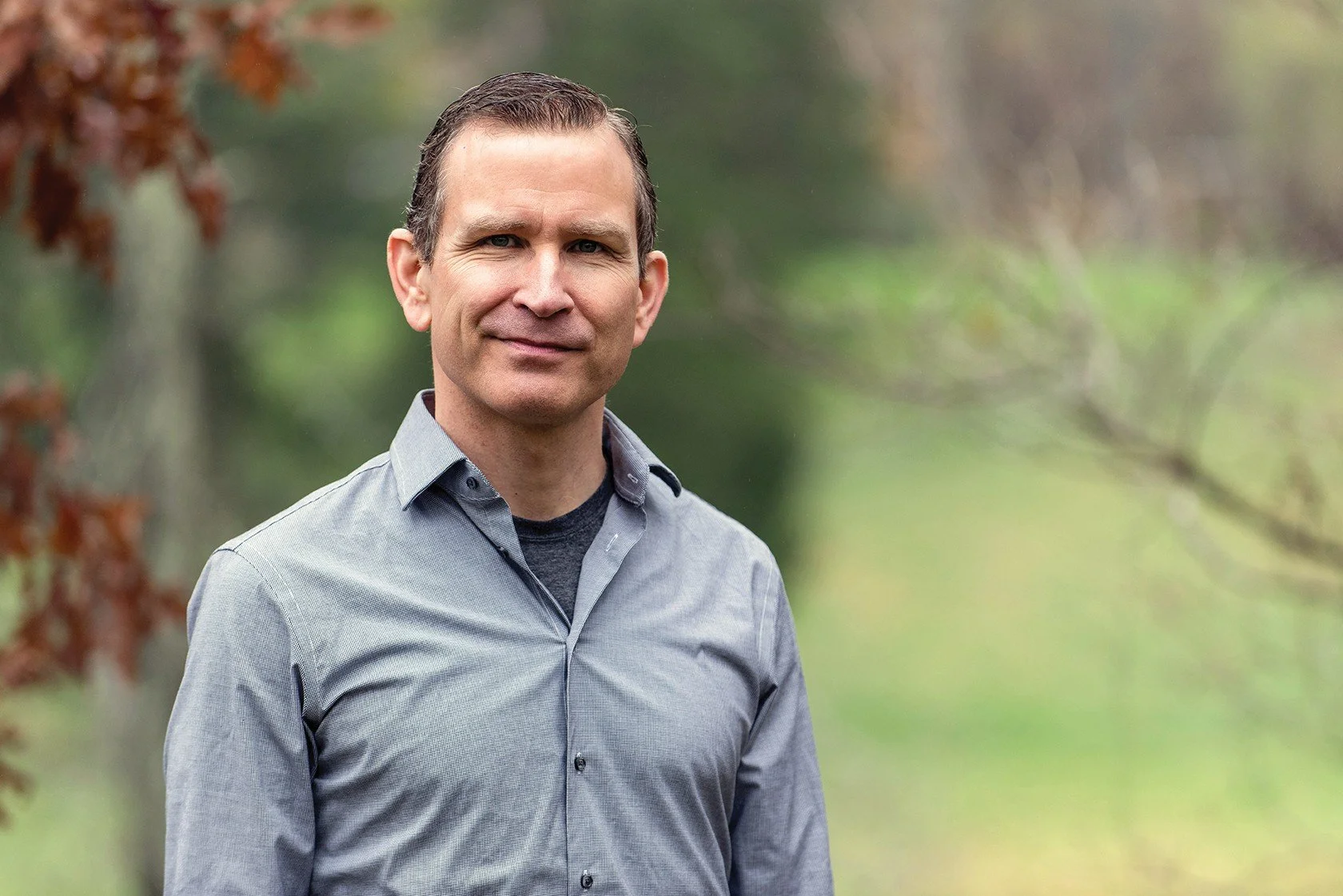
Author and activist, Bruce Friedrich, is founder of the Good Food Institute
What if the future of meat didn’t require animals at all?
In this forward-thinking and optimistic episode, Rip sits down with Bruce Friedrich, founder of the Good Food Institute and author of Meat, to explore the future of protein—and why alternative meat could reshape our global food system.
Bruce breaks down the science and differences behind plant-based, cultivated, and fermented meat—and explains why innovation, not restriction, may be the key to meaningful change.
From global hunger and climate impact to food security and economic opportunity, this conversation connects the dots between what’s on our plate and the future of humanity.
Key Takeaways:
Why meat consumption continues to rise globally—and why that matters
The hidden costs of industrial animal agriculture
The three types of alternative meat: plant-based, cultivated, and fermented
Why taste and price—not ethics—drive consumer behavior
The surprising role governments play in shaping food systems
How alternative proteins could improve food security and resilience
Why plant-based meat may be healthier than commonly believed
What needs to happen to scale alternative meat globally

Meat is available now
Episode Resources
Watch the episode on YouTube: https://youtu.be/vLZruY17ABU
We hope to see YOU at one of our 2026 Live Events! https://plantstrong.com/pages/events Use code: podcast to receive early bird pricing
To stock up on the best-tasting, most convenient, 100% PLANTSTRONG foods, check out all of our PLANTSTRONG products: https://plantstrong.com/ Use code: plantstrong10 to receive 10% off your first order.
Plant Strong Meal Planner: https://mealplanner.plantstrong.com/
Give us a like on the PLANTSTRONG Facebook Page and check out what being PLANTSTRONG is all about. We always keep it stocked full of new content and updates, tips for healthy living, and delicious recipes, and you can even catch me LIVE on there!
We’ve also got an Instagram! Check us out and share your favorite PLANTSTRONG products and why you love it! Don’t forget to tag us using #goplantstrong 🌱💪
Episode Transcript via AI Transcription Service
I'm Rip Esselstyn, and you're listening to the Plant Strong Podcast.
[0:05] Today's conversation is a crucial one, my Plant Strong cousins, and I am honored to bring it to you. I am joined by Bruce Friedrich. He is the founder of the nonprofit Good Food Institute and author of the 2026 book, Meat, that's spelled M-E-A-T, to explore the future of protein and how alternative meat could safely and effectively reshape our global food system. I learned a ton from Bruce, including the hidden costs of industrial animal agriculture, the different types of alternative meats and why innovation is key to the meaningful change that we're all looking for. From global hunger and climate impact to food security and economic opportunity, this conversation connects the dots between what's on our plate and the future of humanity. And as you know, the future certainly isn't more meat consumption, but instead it is viable alternatives. We're going to learn all about it after these words from PlantStrong.
[1:28] Let's talk about Sedona, enchanting, magical Sedona. This September 28th through October 3rd, we are going to be back in the Red Rocks for our last flagship retreat of 2026. It is going to be six days with our team, our chefs, our doctors, and our incredible community.
[1:55] People come to Sedona for all kinds of reasons. Some want to drop a few pounds. Some are sorting through a hard conversation that they just had with their doctor. And some are tired of carrying habits that have stopped serving them well. But what nearly every attendee tells us by the end of the week is that the two things that mattered the most were these. A real recalibration of their habits, and the chance to kindle relationships with people who actually get it. And that's what Sedona delivers. And it's already more than 50% full. So if you've been thinking about it, this is the moment. Head to plantstrongevents.com and grab your spot. That's plantstrongevents.com. And I cannot wait to get to know you in the Red Rock Mountains of Sedona.
[2:51] For the healthcare providers listening, we have something built for you as well. October 18th through the 20th, 2026, we'll be hosting Vital Signs. This is our educational conference at Case Western Reserve University in Cleveland, Ohio, for physicians, nurses, dieticians, and health system leaders. It's a working room, practical tools that you're going to be able to carry into the clinic on Monday morning. Real protocols, real case studies, real community with other providers that are walking this same path. The hunger for this kind of gathering is real and the room is filling up. Mark your calendars, October 18th through the 20th, vital signs. We're going to be saving you a seat.
[3:49] Here's what we hear from people after our events. The inspiration is the easy part. The hard part is Tuesday night when you're back home, the kids are hungry, the pantry is empty, the refrigerator is barren, and your meeting ran long. This is exactly why we built the Plant Strong Food line. Real chilies, real stews, granolas, cereals, pancakes, burgers, all made from whole plant ingredients that you can pronounce. No added oils, no refined sugars, no mystery ingredients. This is the same standard that we cook to at our retreats and it's ready lickety split.
[4:32] Head over to plantstrong.com, use the code podcast10 for 10% off your order. That's podcast10 at plantstrong.com. And because our food meets the nutritional integrity standard, you can use your HSA or FSA dollars to pay for it. You select TruMed at checkout and you can put those pre-tax dollars to work on your health. So we have three ways to plug into this work. You can join us in Sedona for the personal recalibration. You can join us at Vital Signs for the providers carrying this into the clinic. Or you can use the food line that makes it all stick when you're back to your real life Tuesdays. Whatever you decide, we'd love to have you with us.
Bruce's Motivating Mission
[5:28] Bruce Friedrich, I want to welcome you to the Plant Strong Podcast. Rip Esselstyn is such a delight to be here. Thank you. And you are in D.C. today, is that right? I am. I live in D.C. How long have you been in D.C., Bruce? I moved to D.C. in 1990, so gosh, about 36 years. Do you love D.C.? I do. Yeah, I really enjoy the vibe in D.C. I enjoy the people. I enjoy that lots of people are trying to, you know, make the world better. Some people, I disagree how they're trying to make the world better, but even those conversations are funny. Yeah, yeah. Well, yeah. So I think what I love, I love a lot of things about you, Bruce, but I think truly the thing I love most about you is that you really are trying to make the world a better place and, your mission. And it's all over this new book that you've just written, Meat, right? How the next agricultural revolution will transform humanity's favorite food and our future.
[6:41] It's, it is, it is littered throughout here and how you're, you truly want to alleviate the suffering, uh, that is going on in, in, you know, that is your life's mission to alleviate the suffering that's going on. And I can't think of a better mission. And so, and so I think before we dive into this book, and you've broken it up into three parts, and I kind of want to tackle, each part a little bit and give the listener a nice taste of this amazing, tour de force that you've created here. I mean, bravo, Bruce, it is phenomenal. I want to talk about you. And you do it in the beginning of the book, And I was fascinated to understand how you've had this soft spot in your heart for helping people, people that are hungry, malnutrition for a long, long time. So will you just share with the PlanStrong listener, the audience, like, what is it that drives you to really want to make such change and help people?
[7:55] Well, I mean, I oftentimes frame this in terms of my faith, but I don't think anybody needs to have faith to feel driven to try to make the world better. For me, it was when I was in the mid-1980s and my pastor brought my attention. I mean, I guess I sort of knew about suffering in Sudan and Eritrea and Ethiopia, but that was the time when sort of the images were being broadcast.
[8:25] Live into our living rooms. And I was just really shocked. And he said that we, you know, he framed it as Christians. He said, we have an ethical application to, as Jesus talks about in Matthew 25, cast our lot with and help. If somebody is hungry, we need to give them food. If somebody is homeless, we need to provide shelter. If they're sick and imprisoned, we need to visit them. And that, you know, and sort of the existential realization that I had been born into an academic family in Oklahoma through no, you know, I didn't do anything for that to happen. And a lot of people were born into dire poverty and they didn't do anything to make that happen. And sort of the challenge was. You need to focus on figuring out how to solve this problem. And that really spoke to me. And and so that is, you know, it really, really made a difference. That's what I was trying to do through politics in high school. And then I got to college and I was very active volunteering in the soup kitchen. I wrote my senior thesis in economics and focused on agricultural economics, with a focus on trying to figure out how we could eliminate global poverty and malnutrition.
[9:43] Went and worked in a homeless shelter in Washington, D.C. I came to Washington, D.C. in 1990 and ran a shelter for families in a soup kitchen in D.C. for six years. And, I mean, really, since confirmation class, Pastor Klump in Oklahoma in the mid-1980s, it's really been a significant motivating factor for me. I also, as you know, spent a bunch of years focused on animal protection, influenced by Andrew Lindsay, who wrote Christianity and the Rights of Animals. So again, the passage from Jesus where he talks about, as you did it to the least of these, you did it to me. Lindsay basically posits that animals are created by God to live their lives. And the way that they're treated on industrial farms denies them everything that God designed to them to be, to do, to want, etc. So for me, it's really, you know, it really is motivated by my faith. But obviously, I don't think somebody needs to, you know, believe in God or have faith to have sort of the same, you know, driving force in their lives. Yeah. Are your parents still alive, Bruce? My father is. Yeah. My mom got 20 years ago this May. Yeah. And what does your father think about the direction that your life and your career has taken?
[11:12] Yeah. I mean, he's been, he, my parents are, are sort of the, the typical Dr. Spock parents. So So he and my mom were completely supportive of everything I did, you know, from the moment go. I actually dropped out of college for six years to run the homeless shelter in the soup kitchen. They were very proud that I was running a homeless shelter in a soup kitchen. And I spent a couple of years to do Teach for America and inner city Baltimore and like a really rough neighborhood. And they were, you know, obviously very proud of that. They've been, yeah, I mean, they've been sort of stereotypical. Hey, look what our son is doing.
[11:50] For my entire life, which is, I know, I mean, it's like an incredible blessing, obviously. There was never, you know, even dropping out of college for six years with like no real intention to go back. And they were even supportive of that. Although I will say when I, you know, I went to Georgetown Law School and I think my dad was, you know, I think he would have been fine if I hadn't gone back and hadn't gone to law school, but I think he was pretty excited that I did that. You know, my, I'm familiar with Teach for America because my wife did Teach for America as well, uh, and then started a string of KIPP schools here in Austin, Texas. Um, so I think what, you know, in hearing what you just said there, what's interesting to me and I did something similar is it sounds like you didn't care what anybody thought you were kind of doing what you felt was right. And, and it was kind of following your truth. And I applaud you for that, hugely.
[12:52] Because it's hard, right? I mean, you must have a lot of people say, Hey, Bruce, what do you what are you doing? Um, yeah, I mean, I suppose so. Um, mostly I was surrounded by people who were doing the same thing. So when I was running the homeless shelter in the soup kitchen, it was people who were running homeless shelter in the soup kitchen. And, you know, that was sort of my tribe. Um, or when I was doing Teach for America, kind of the same thing. So it, yeah, I mean, it's definitely not what society would have expected. But my parents, very delightfully, or, you know, I was very lucky, I think, that they were, you know, they found the motivation to be noble and pure. And they may not have liked the neighborhoods I was living in and, you know, my sort of future prospects, but they were supportive. it.
Good Food Institute Vision
[13:45] Yeah. So in 2016, you founded the Global Food Institute. What is the mission of the Global Food Institute?
[13:53] The Good Food Institute. Yeah, sorry.
[13:57] Not at all. So basically the mission of the Good Food Institute, I think we're in the process of updating our mission. And now it's a thriving world fed sustainably is the vision. And our focus is to figure out how we make meat from plants and grow actual animal meat directly from small samplings of animal fat and animal muscle without the need for live animals. So how do we slash or eliminate the external costs of industrial meat production by giving consumers everything that they like about meat, but we're doing it with plants or we're doing it in factories instead of in slaughterhouses? And it turns out that you can do this because it's so much more efficient. Our expectation is that you can do it less expensively at scale. And it has a lot of massive benefits for the world. And maybe just as importantly, it's a massive economic opportunity and also an opportunity for governments and countries that are concerned about food security, food self-sufficiency, food systems resilience. So there is a very strong self-interested motivator for governments to incentivize these industries and make them happen.
[15:21] Hmm. Well, and that dovetails right into your book.
[15:27] And. It just came out. How much time did you spend writing this book? You know, trying to write the book while doing my job was awfully difficult. So I spent about, it took from when I started writing in April of, the very beginning of April of 2023 to the end of probably May of 2025 was when I finalized it. But I really did it in sort of two week morning to night stints of doing nothing but writing and researching. Um, and I probably had about a dozen of those over the course of the two, over the course of the two years. Um, and then, you know, in the off time I was shoving stuff into folders, um, that I would then take the like intensive time to read research and, uh, you know, write.
[16:23] I want to dive in, but first I have to ask you, you've dedicated this to Alka. Who's Alka? August is my wife. Oh, wonderful. We've been married for 24 years this October. And yeah, she's my mortal compass and my wife and my life partner.
Meat's Hidden Costs
[16:47] Yeah. All right. Well, let's dive in. Let's start with, as I said, you've broken the book up into three parts. The first part is really about addressing the case for alternative meats. What would you say is the ugliest part of the whole meat machine?
[17:07] The ugliest part? You know, I really, you know, as you know, chapter one is about the inefficiency of meat contributing to hunger and malnutrition.
[17:18] That was the thing that i read diet for a small planet on in 1987 and just immediately adopted a vegan diet because of the inefficiency of growing crops to feed them to animals so that we can eat animals and in diet for a small planet francis morla pay i think makes an incredibly compelling case that we live in a global agricultural economy and what that means is if 1.4 billion metric tons of food are being grown and fed to farm animals. That is driving up the price of land. It is driving up the price of food. It is extraordinarily bad for pastoralists, for smallholders, and for really everybody who is struggling to survive. And the latest FAO figure is that about 3 billion people can't afford a healthy diet, and about 700 million people are in nutritional deficit. They're literally starving. So that was the motivating factor for me. Chapter two is the environment. And I kind of take the U.N. Secretary General Gutierrez to task because he is extraordinarily compelling in explaining the problem. And one of his lines is, we're on a highway to climate Armageddon, I think is how he frames it, and our foot is on the accelerator. And I point out that if we do everything he wants us to do, what that would entail is taking our foot off the accelerator by about halfway.
[18:47] But we're still going to blow past all of the climate goals that he and the rest of the climate community say are so important. And then the range of other environmental issues. Chapter three is about antimicrobial resistance. The U.K. Government has said antimicrobial resistance is a more certain risk to humanity than climate change. We're literally... Staring down the end of modern medicine if antibiotics stop working, and that's the path we're on. And about 70% of medically relevant, of human medically relevant antibiotics are fed to farm animals, not because they're sick, but because they are kept dosed up, causes them to grow more quickly, also allows 50,000 chickens to live in a shed in conditions that would otherwise death losses, death losses would skyrocket. The fifth is pandemic risk. We just lived through COVID-19. It sent about a hundred, more than a hundred million people into dire poverty. And it wasn't particularly transmissible and it wasn't particularly deadly. Could have been way worse. And if you look at the seven most likely causes of the next pandemic, according to expert consensus. The first one is increased meat consumption.
[20:01] And the second one is the industrial treatment of animals, the fact that they're all so genetically similar and they're kept in, you know, basically disease breeding factories. So those are the four things. And I feel like independently, each of them is pretty egregious. And then I don't talk in the book very much about animals because the goal of the book and the goal of what we're trying to do is to convince governments that they should fund this transition. And I think everybody watching, listening knows that the most you can really hope for from governments on animals is that they will ban the most egregious abuses. And even that is sadly asking an awful lot. But obviously, the way that animals are treated in modern farms, the way they're treated in modern slaughterhouses is pretty reprehensible.
[20:52] So, you know, kind of all of that adds up, I think, to it'd be awfully great if we could do what renewable energy and electric vehicles do, which is give people what they like about the product that has external costs, but without the external costs. Tell me about it. Yeah, yeah. You know, you talk in the book about how there was that one article that came out in 2006, Livestock's Long Shadow, that was pretty darn powerful. I mean, why, I know you address this in the book, but I want to ask you this, why is this so frickin' hard for us to change?
[21:35] I mean, I think it's so hard for us to change for the same reason, you know, until the weight loss drugs came along. It's so hard for a lot of people to lose weight. Um, you know, I remember, uh, I remember your father talking, um, at a conference that I was at. He was, uh, he had like an obesity slide and he was like, here's five years, five years, five years. And he was not laughing exactly, but still came across as kind of incredulous at the fact that they kept having to come up with new colors. It never goes in a direction other than the world is getting more and more overweight and more and more obese. And that's not, you know, that's, it really has to do with the fact that we are a species that has been programmed and evolved to not be sure where our next meal is coming from. So we have evolved to want things that are calorically dense, that are high in fat, that are high in sugar. And there's just something super craveable about meat. And I think it's similar to we're not a species that's good at self-denial. So the environmental movement realized that the world is not going to go en masse in the direction of small is beautiful. It's certainly great to encourage people to walk more and bike more than we want. We want bike lanes and we want bullet trains and we want great mass transit.
[23:01] But inexorably, the world is going to consume more energy if it gets wealthier and there are more people. Same basic thing with driving. The world is going to buy more cars. They're going to drive more miles, even though we want sort of an all of the above strategy to deal with the external costs of that, primarily with regard to fossil fuel consumption. But we absolutely need renewable energy. We absolutely need electric vehicles. And the sad reality is, you know, you mentioned livestock's long shadow from 2006. That was front page news all over the world. It got significant editorials in the New York Times and the Times of London, lots of other papers. It was a more than 400 page report from the UN FAO. And it said whatever environmental issue you're looking at from the smallest and most local to the largest and most global, animal product consumption is one of the top three causes. And it walked through deforestation, number one, loss of biodiversity, number one, water pollution, number one, climate change, number two. And since that report came out in 2006, we're now consuming more than 40 percent more meat and extra 104 million metric tons. Every single year that FAO has measured, going back to 1961.
[24:17] Meat, farmed meat consumption, including fish, every single year, a new global world record. And as long as population is going up, as long as GDP, gross global GDP is going up, that's going to continue inexorably kind of forever. So we really do need to figure out how to make meat differently. And that's what the book is about. You know, let's give people something that is literally indispensable and less expensive, making it from plants or growing it in factories. What do you think it is exactly, if you could pinpoint it, that makes meat?
[24:54] Our favorite food. I mean, it's not yours or mine, but I think collectively it is. It does seem to be our favorite food. But why? Well, it's incredibly dense in calories. It's very high in fat and saturated fat. It's very high in protein. So it's satiating. And I talk in the book about how, you know, Daniel Kahneman, the Nobel laureate for his work in behavioral economics, wrote the book Thinking Fast and Slow. and he posits, it kind of tracks to Maslow's hierarchy of needs. And basically, if it's the base of the hierarchy, if it's physiological need, there is a quick, quick whirl thing that happens in your brain. And we simply don't consider ethics, the vast majority of us. And there's overwhelming evidence that even though people will say they consider ethics when they're thinking about food. Really, it goes back to reptilian brain. And it's, is this going to fill me up? And if I don't get food for the next four days, what do I want to eat? And your brain programs, this is what you want to eat. It's low in fiber. It's high in fat. It's high in saturated fat. It's calorically dense. This is what you should eat.
[26:05] You write in the book that I think it's the per capita we're eating about, what, 220 pounds of some sort of animal flesh a year? Yeah, it's just kind of unbelievable, right? I mean, but yeah, that's the number, and it just, you know, globally, I mean, that's the U.S. Number, and it just keeps going up. Yeah, and then, What is it doing? So around the world, other countries, they're trying to be like us. It's going up as well. Is there any place where it's flatlined or going down? It's flatlined or even going down slightly in a limited number of European countries. So I think like maybe Germany, maybe Denmark, a few others. But one of the things I point out in the book is it's not going down that much, even though it's going down a little bit.
[26:56] Everywhere else in the world that it's skyrocketing just absolutely outweigh, you know, compensates in the wrong direction for that. And what it looks like to scale the things that have allowed that to happen. I mean, the reality is, you know, most people are going to be into the future. They're going to be in Asia. They're going to be in Africa. In Asia and Africa, meat consumption just keeps skyrocketing. And the things that have worked in a limited number of countries in Western Europe, what it would look like for that to work anywhere else, you know, is a pretty massive question mark. It's also just not up to the task. So it might have flatlined, it might be down a little bit, but it's not like it's significantly going down. Not like smoking. All right, let's get into alternative meat, okay?
Plant-Based Meat Explained
[27:47] You do such a phenomenal job talking about all this but let's start there's three different alternative meats I'd love for you to talk about the first is plant based then we have cultivated and then we have fermented.
[28:00] So tell me well let's explain first what each are and then I'd love for you to tell me which one of these three you think is going to be the winner if there is a clear winner, Yeah, I mean, so plant-based meat, I think this one is counterintuitively the one that we struggle to explain the most because people think they know what it is. And they think it's a veggie burger they had 10 years ago. They didn't like it very much. It cost too much. You know, some annoying relative brought it to a potluck. They're kind of traumatized, but, you know, they felt lectured at. But, and it's interesting because when, I mean, still today, there are constantly polls done about plant-based meat where they will, where the pollsters will ask or the researchers will ask, what do you think of plant-based meat? And most people will think, you know, if they've tried it, they'll say it wasn't very good. If they haven't tried it, they'll say they expect it to not be very good. Why not eat the real thing?
[29:02] But consistently, the top two reasons that either people tried it and stopped are, or that people have not tried it, are it's too expensive and it doesn't taste good enough. And then when the researchers will say, well, if it competed on price and taste, if it cost the same and it tasted exactly the same, then would you consume it? And the numbers are pretty good. I mean, the lowest numbers are in the 20-something percent. And oftentimes, it goes up into close to 60%, which is 20 to 60 times current penetration. We're at about 1% right now. So that would be a lot more sales.
[29:41] But when the researchers say, well, why not? The top two reasons are it's too expensive and it doesn't taste good enough. People just deny the premise of the question when they're having the conversation because the human mind can't wrap its mind around the idea that the current state, the products cost too much and I don't like them, is not the forever state. And this is why humans are really bad at grappling with the concept of innovation and design improvement. And in Chapter 8, I tell a bunch of stories about that, everything from cars and planes to interstate commerce to computers to artificial intelligence. Other areas where we've struggled technologically, right? But we've actually, we've blown through and we've figured it out, right? Yeah. And the consensus in all of those cases, like I quote a whole bunch of like absolute experts in aviation, experts in computer technology, experts in all of these areas saying this is never going to work. Nobody is ever going to want this. I mean, you know, one of the most stark examples is the International Energy Agency, like the absolute authority on energy transition in 2015 saying nobody's going to ever buy electric vehicles. They're never going to make a dent in China or Europe or the United States. Nine years later, they were over 50% of sales in China.
[31:06] And about 25, but 10 years later, they were 25% of sales globally, even as like literally the global experts said never going to happen, you know, just 10 years earlier. Lots and lots of examples like that.
[31:18] The people who are, you know, poo-pooing or writing the obituaries of plant-based meat, all of the stories say the products are not good enough and they cost too much. Well, I mean, 10 years ago right now, there was no Impossible Burger. There was no Beyond Burger. We're very early in the sort of innovation experiment that is plant-based meat.
[31:40] The science looks really good. We should be able to get to indistinguishable products that cost less. And that's the goal.
[31:48] And then... Okay, so, and what's your timeframe on that? Do you have any idea? And I mean, ironically, in the book, what I say is plant-based meat might actually take longer than cultivated meat. It might be an easy, like my expectation is it's probably an easier scientific endeavor. But because there's so much confusion around what the assignment is, essentially, there are so many products that are happy to compete with one another. There are not that many scientists working on it, relatively speaking. There are not that many companies focused on it, relatively speaking. Most of the companies are happy to be, you know, niche companies for vegetarians and vegans and meat reducers, which means that the challenge, you know, in the book I say, you know, you're not going to solve something if you're not trying to solve it. Um, so my guess that it could happen, you know, more quickly than cultivated meat, uh, but not if we don't bring the resources. So a big part of what we're trying to do at GFI, um, is figure out how to really help, um, you know, sort of the global plant biology, um, chemical engineering, mechanical engineering, um, AI for that matter. Um, how do we really generate the same sort of scientific ecosystem on the plant based meat side that we have on the cultivated meat side? because I think it could happen, you know, pretty quickly if we do that. Are you doing anything, Bruce, to try and help companies like Impossible or Beyond?
[33:17] We're trying to lift the entire ecosystem. So as a nonprofit organization, we can't, you know, we can't like sort of directly help individual companies. I'm very enthusiastic about what Ben and Pat are doing. They were inspirations for GFI. And in the book, I do. I mean, I talk about chapter seven. It's about plant-based meat. And it's really about Ethan Brown and Pat Brown. No relation. The founders of Beyond Meat and Impossible Foods, respectively.
[33:49] So very enthusiastic about what they're doing. GFI's number one thing is scientific ecosystem building. So we have about 140-something full-time staff around the world. We have six GFIs, so a GFI in the U.S., and then India, Israel, Brazil, Asia Pacific, and Europe. And our number one goal is to build a maximally robust scientific ecosystem focused on these challenges. And our global battle cry is governments should be funding the science and governments should be funding the infrastructure. So all of that is super helpful, obviously, to Impossible and Beyond and helpful to the ecosystem writ large. but it's really more of a how do we lift all boats? How do we create an environment that's really good for Impossible and Beyond, but also how do we create a lot more companies like Impossible and Beyond? And maybe even more importantly, one of the really great things that's happening in Cultivated Meat is all of the B2B companies that are focused on solving the research and engineering challenges in ways that they can license that, you know, license the intellectual property, license the products that they're creating to the entire ecosystem and all of the cultivated meat companies can rise at the same time, rather than every single company having to solve every single problem kind of in a silo. It's a very, very slow way to move forward.
[35:15] So that's our focus. On the cultivated meat side, it's really intuitive. I mean, it's just like you can take a seed or a cutting from a plant and grow a whole plant. You can take a small sampling, basically a sesame seed amount of fat or muscle from an animal and grow more fat or muscle from that animal. But instead of having the inefficiency of growing massive amounts of crops and shipping the crops to the feed mill and operating the feed mill and shipping the feed to the farm and operating the farm, shipping the animals to the slaughterhouse and operating the slaughterhouse, you just have a factory like a greenhouse. Looks like a brewery, actually not a greenhouse, But instead of beer in the vats, you're growing meat in the vats. So and there are there are already a bunch of companies doing this. And really, the trick is solve some more of the R&D challenges that keep the process expensive. Really solve the engineering challenge of producing in bigger and bigger cultivators, which are basically that's what we call that. If it's a brewery, it's a fermenter. if it's.
[36:26] Meat brewery. It's a cultivator. Those are the big challenges. That, I think, you know, that I think could happen pretty quickly, especially if China is taking this as seriously as they seem to be taking it. And if the response to that from, you know, Europe and the United States is to say, hey, wait a minute, you know, we innovated in renewable energy and electric vehicles and China is getting 80% of the economic proceeds because they scaled it up. This time, let's Europe, let's the U.S., let's Australia, let's Japan and South Korea, etc. We should have our own industries focused on this rather than allowing all of the economic benefits of this to go to China.
[37:13] Assuming that what looks like it's happening is actually happening, cultivated meat, I think, could happen relatively quickly, certainly in the next 20 years. On the cultivated meat side, are there some states that have banned that? Like, did Abbott ban that in Texas somehow thinking that it was, you know, just, I don't, obviously didn't have a very good sense of what really is going on there. But, you know, that's not real meat. You know, I mean, is that your understanding that it's been banned in certain places? And this is probably is not a very, well, I like your timeline, you know, 20 years because this current administration doesn't seem very, very supportive of this line of thinking, I would imagine.
[37:58] I mean, they're not bad. It's definitely true that, you know, from 2005 to 2019, there was basically no government funding, a little bit in Singapore, a little bit in Israel, but really not a lot of government funding, almost none, nothing north of a million dollars into R&D for plant-based or cultivated meat between 2005 and 2019. And it was Donald Trump's first administration, his National Science Foundation, that was the first, they put $3.55 billion, the National Science Foundation, into University of California at Davis for a cultivated meat modeling consortium, which was focused on all the key things that we would have wanted it to be focused on. And we actually did. You know, we were a part of making that happen.
[38:45] And it was Donald Trump's secretary of agriculture, Sonny Perdue. Donald Trump's in his first administration, his FDA commissioner, Scott Gottlieb. They were the ones who said we don't need to promulgate new regulations for this technology. We can work together and create a smooth path to safety protocols, safety regulations. And that was incredibly helpful. And who knows what would have happened otherwise. During the Biden administration, two companies got approval in the first three months of the second Trump administration. I think like four or five companies got approval. So it's not like the Trump administration is boosterish on it, but they're also not against it. And there is significant bipartisan support in Congress as well. There are Republicans, there are Democrats, and that really has to do with the economic.
[39:40] Benefits of these technologies, the food security benefits of these technologies, and the fact that China is taking this seriously. Of the 20 most active patent holders, eight of them are in China, three are in the U.S., three are in Korea, and three are in Israel. And you may not be a big fan of electric vehicles or solar energy, but all of the early innovation And both of those technologies happened in the United States or Japan or Germany. And China is getting the vast majority of the economic benefits of that. I mean, on electric vehicles, it was the U.S. Department of Energy that designed both of the major advances in battery technology that got us where we are. But it's China that's bringing in $650 billion a year in revenue from battery production. So I think that a lot of countries would prefer not to see that happen with me. And if China extends its Belt and Road initiative to food, to meat production, you know, sort of their global domination is really, really going to deepen. So that is taken seriously on both sides of the aisle. Sonny Perdue, Secretary of Agriculture, that's what he flagged specifically when he was saying we need to make sure that the U.S. wins with this industry. Wow. Have you spent much time on Capitol Hill? Yeah.
[40:59] I'm also on the board of a C4 called Food Solutions Action, and we have a PAC. And so a C3 is a nonprofit organization that cannot endorse candidates, support candidates, et cetera, has a very limited ability. We do as much as we can of the lobbying, but I'm also on the board of a C4, Food Solutions Action. on it. And so, yes, a lot of time on Capitol Hill. And we have, you know, we have friends on, we have very good friends on both sides of the aisle.
Fermentation And Cultivated Meat
[41:31] What about, we were getting to cultivated, I'm sorry, fermented, and I cut you off. Yeah. I mean, I think I mentioned in the introduction of the book, so the dominant plant-based meat company in Europe is called corn, Q-U-O-R-N. And I've even heard people from corn talk about being a plant-based meat company, but actually they're a fermentation company. They do biomass fermentation. They do mycoprotein. Obviously the difference is that plants create their own food. Mycoprotein has to be fed. But from the consumer, if they're eating nature sign that they're eating better meat company, or they're eating corn, um, they think it's plant-based meat. So, um, in the book, I say, if you, if you want to know, you know, literally everything you could possibly want to know about the science of, uh, mycoprotein and biomass fermentation, uh, check out GFI.org. Um, it's all there. Uh, but in the book, I, I, uh, basically fold that into the plant-based meat discussion. And then there's something called precision fermentation, uh, for anybody who eats cheese, um, um, Up until 1991, cheese wasn't even vegetarian. So when I went vegan in 1987, cheese wasn't even vegetarian because it had rennet in it. And rennet in 1991 came from calf stomach.
[42:49] Now, really close to 100% of rennet is produced synthetically using precision fermentation, which basically involves taking, you know, in most cases it takes yeast. You program in the protein that you want to produce and then it spits out the protein from the yeast. It's also anybody who, any diabetic who takes insulin, I don't know when insulin went from, coming from I think pigs maybe, and now it's all synthetic, also precision fermentation. And for precision fermentation, you can do dairy proteins, you can do egg proteins, but the book is about meat. Precision fermentation is used to create the feed that allows the meat to grow for cultivated meat. And then a company like Impossible is using precision fermentation to make the heme in the Impossible Burger. So it's a soy heme, but there's not actually, you know, that was sort of the original. Yeah, I mean, there's not even an original. They just, you know, they program in the genetic code and yeast spits out the soy heme. You can also do that with dairy proteins, with egg proteins or with the ingredients in plant-based meat or the ingredients in the media that is used to grow cultivated meat.
Scaling Meat For All
[44:09] So in part three, you basically talk about meat for all, right? And so, you know, you've kind of touched upon this, but I'd like to ask you to expand upon it what needs to happen to like truly make this thing scale up.
[44:32] Yeah, I mean, in Chapter 9, I point out what I think is oftentimes not intuitive for people. So when I say that GFI is number one goal, because we want to build a scientific ecosystem, and the way you do that is you get governments to recognize the self-interested reasons to cause these industries to thrive. So we want government support for RMD. We want government support for infrastructure and scaling. And people, I think, very reasonably say, why should, you know, why should government have their thumb on the scale? Why should government be in the meat business? And people are oftentimes shocked to learn just how much money governments spend supporting industries. So the countries that have the most advanced biopharma industries are the companies that have the governments that are spending the most supporting their biopharma industries. The U.S. government spends tens of billions of dollars every year supporting our various agricultural industries, including the meat industry. Um, we have, you know, the United States has the most advanced, um, tech companies in the world because the U S government, the defense department, um, created the internet, created artificial intelligence. There's a really good book called The Industrial State by a British economist.
[45:55] Mariana Mazzucuto, where she looks at the iPhone and how almost every component in the iPhone is the product of government funding, government innovation, et cetera. And that's really true. I mean, this is why...
[46:12] The developed economies are the developed economies because they have governments that could afford to develop the industries that became the engines of growth and prosperity. So I walk through some of that and I point out that this is a $2 trillion industry and the governments that help these industries to thrive and survive will be the governments that whose economies benefit from dominating in this $2 trillion industry. And that's chapter nine, essentially. And then chapter 10 is food self-sufficiency, food security. Right now, the Strait of Hormuz is blocked. Fertilizer prices are skyrocketing. It's just one example. You know, when the war in Ukraine started, front page news all over the world, 50 million metric tons of wheat are going to be disrupted because that's the global export production from Ukraine. Well, as I mentioned just a little bit ago, 1.4 billion metric tons of grain, wheat, corn every single year are fed to farm animals. So that's 30 times as much almost. Right. As was disrupted by the war in Ukraine. And it is an incredibly fragile food system. Again, the inefficiency of growing all those crops to ship them to feed mills, et cetera, like that is inefficient in itself. It also makes the food system incredibly fragile and vulnerable.
[47:42] And that's why the Center for Strategic and International Studies, they produce a report on alternative proteins and they talk about the economic benefits, but they really lean in on food security, food self-sufficiency, food systems resilience, and the fragility of the food system, which can be significantly enhanced, the stability of the food system can be significantly enhanced by a shift in the direction of making meat in this much less diffuse, much more sort of, you know, we can do it all in one factory instead of all these extra factories, all these extra stages of production, all the extra fertilizer and water and everything else that you need. And, you know, my first choice to write the foreword of the book is a woman named Caitlin Welsh. She was at the State Department for about five years under Barack Obama. She was at the National Security Council for almost all of the Trump of Donald Trump's first term. Now she runs the Global Food and Water Security at the Center for Strategic and International Studies, who up until MAGA, they were considered center-right. Now they're sort of a little old school center-right. But really, I mean, they're in many, many lists the top national security think tank in the world. Um and she led the report that they wrote and she was very enthusiastic to write the forward to the book uh which i think really really puts an explanation exclamation point um on how serious this issue is yeah yeah um what would you say to the farmers that are concerned about their.
[49:11] Livelihoods if if if.
[49:15] And I got every finger crossed that, you know, alternate meat becomes meat. And that's how we see it as a culture.
[49:27] Yeah, I mean, I spent some time on that question in chapter 10. And I talk about how in the 1970s, Earl Buss, who was Richard Nixon's secretary of agriculture, Michael Pollan calls him the great sage of Purdue, I think, if memory serves very ironically. Yeah. Um, but, um, yeah, I mean, he, he really had a get better, get out, um, ethos and that's what's been happening since the seventies. Um, I think probably every single year you see ranches close, you see farms close, um, they're consolidating, they're getting larger. Um, it is getting harder and harder, um, for farmers, ranchers, everybody else in agriculture to make money. Um, um, and I point out the analysis from the world resources Institute. I mean, the thing that makes meat so environmentally problematic also makes it really hard for farmers and ranchers to make a living producing meat. And I point out that, you know, they're struggling now and plant-based meat and cultivated meat have literally nothing to do with it. There is no cultivated meat industry. The plant-based meat industry is teeny, teeny, teeny tiny. They're struggling because of agricultural consolidation. And because plant-based meat and cultivated meat require a fraction of the land. I mean, even plant-based chicken, which is, you know, chicken is the most efficient meat at turning crops into meat. It takes nine calories to get a calorie from animal-based chicken.
[50:53] You know, it's 800% food waste. It takes six times as much land as plant-based chicken. So the land that is, you know, we're still, plant-based meat is still an agricultural product. Cultivated meat is still an agricultural product. But as part of a slate of policies focused on moving away from the current extractive system and toward a system that is significantly more regenerative, a system that uses agroecological principles, a system that is focused on land conservation. I think plant-based meat and cultivated meat can be really good for farmers and be part of a, you know, basically part of a reevaluation of how we do agriculture. Because WRI says on our current trajectory, all of the meat that we're consuming, there are going to be no wild places left. We're going to need 3.3 billion more hectares of land. That is about as much wild space as we have left on the planet on the current trajectory.
[51:58] And that is not something that's going to be good for farmers. It's not going to be good for agriculture. The current trend of consolidation and people being tossed off the land and just razor thin profit margins, that's just going to get worse and worse on our current trajectory. So we need to figure out something else. Yeah, no, that's not going to fly. No. We need to figure out something that's a little bit more intelligent, like plant-based meats or cultivated meat, right? I mean, holy cow.
Defining Success In Meat
[52:30] And do you think, I mean, what does winning look like for you with this? I mean, Rip, you said a little bit ago, something like taking alternative meat and just making it meat.
[52:44] So, I mean, one of the things people will often say, well, meat is culture, meat is tradition, meat is all of these things. It's different from energy transition. And all of that is true. But the thing is, we are making meat, but we're doing it in a different way. The end product is what is a part of culture. For very few people is the industrial farm and the slaughterhouse part of culture. There was nobody in the 40s and 50s who said, actually, what we want is 50,000 chickens in a shed. Actually, what we want is massive amounts of drugs as the only way farming can continue.
[53:28] That is just what was least expensive. Industry went in that direction. And what people wanted was the end product. So that was how the problem worked to get us here. But that observation can also get us to plant-based and cultivated meat. If the product is literally indistinguishable, and I guarantee you that many people who are listening are either A, thinking that is not possible, or B, like just not even attempting to wrap their mind around it. But, you know, the challenge of the book is, what is it that you think is impossible about the scientific project of making plant fats and proteins?
[54:08] Behave like animal fats and proteins and mimicking the umami. We haven't tried very hard and we've made a lot of progress, which I talk about in chapter seven and 11.
[54:17] If we can make plant-based meat that's indistinguishable and the same price or less, I don't think everybody switches, but I think a lot of people switch. But once we get to cultivated meat, that is literally the exact same thing, but it doesn't have all of the drugs and it doesn't have the bacterial contamination. I point out in the book that there are literally 100 different drugs that USDA and FDA will allow in meat if they're low enough levels, including ivermectin and ractopamine and penicillin and amoxicillin and 96 others. And also that pork, beef, and chicken, it is now perfectly legal if an animal is just oozing cancer to simply cut out the cancer and still have the rest of the meat sold for human consumption. There's a lot about the current system that consumers didn't choose, wouldn't like if they knew about it. Plant-based meat and cultivated meat can solve for those things while giving people whatever they love about meat, the culture, the familiarity, everything else. So what I would like is a world where all meat, you know, plant-based meat, cultivated meat, and then there will be people, the Joe Rogans, the Michael Pollans, the Alice Waters, there will be people who want actual animal meat and they'll want, you know, Polyface Farms animal meat.
[55:44] That will continue, and people will, as they do now, pay a significant premium for it. But the 99% of meat that is industrially farmed, where people don't care how it's produced, they just want the end product, that will be plant-based meat. That will be cultivated meat. When was the last time you had an Impossible or a Beyond Burger?
[56:07] Um, I have both, I have both, I have both those products pretty regularly. Yeah. Yeah. I mean, I, uh, I don't have them regularly, but I, you know, probably once a month. Right.
[56:17] I think they're phenomenal. Yeah. Phenomenal. I haven't had actual meat in a long time, but, um, you know, if I'm memory serves me correctly, it's right there. I mean, it's so darn close. It really, I mean, and, and you're saying it's going to get even better than what it currently is. Yeah. And one of the things I point out in the book is that the Impossible products, they all have more protein than what they're replacing. So you're talking about a product. I think there are like 14 products now that meat eaters really like out of like 150 or something. So still not most of them. The product that I think there are like four or six that meat eaters really like a lot. The Impossible Burger is one of them. And all of those products actually have more protein than the meat that they're replacing. So they have less fat, less saturated fat, less calorically dense, and more protein, every single one of them. The Impossible Hot Dog has three times the protein of a beef hot dog. So really, they're just, you know, they're still way too expensive. But they're much more efficient to produce. As they scale up, prices will come down. And you also talk about in the book how these products, I guess even though they're considered ultra-processed, actually don't have the same deleterious health effects that the pastries and all the other kind of plant-based kind of garbage does.
[57:43] Yeah, no, the science on that is super clear. There have been multiple, there have been multiple meta studies and like the breakfast cereals that are not loaded down with sugar, the breads, kind of all of the breads and the plant-based meats and the plant-based milks, they don't have the harmful effects. You know, it's not really surprising that Coca-Cola and, you know, the various, you know, all sugar cereals and, you know, Twizzlers and like all of those stuff, those ultra processed foods, Doritos, that there's a difference between those incredibly high fat and incredibly high sugar, oftentimes both, those products and plant-based meat and plant-based milk.
[58:28] The plant-based meats and the things that make those products bad are the fact that they're incredibly calorically dense. They're really high in fat. They're really high in sugar. They're really high in salt. And when you look at the plant-based meats and the plant-based milks, they're better across all of the macronutrients. The one exception is salt, except that if you look at an Impossible Whopper and compare it to a Whopper, the salt levels are basically the same. If you look at processed meats, And plant-based meat, the salt levels are basically the same. And there was a study that the one randomized controlled trial that was done was done by a Stanford researcher, a Stanford medical school researcher, Dr. Chris Gardner. And he did something where he gave people organic beef, pork, and chicken, and then beyond meat, beef, pork, and chicken. And the products at the beginning, the beyond products had a lot more salt. But the actual total salt intake across the two groups, eating three plant-based meat servings per day or three servings of organic beef or chicken per day, the actual salt intake was identical across the two groups because when you cook meat, you salt it.
[59:42] So across all of the macronutrients, the plant-based products do better, which means that what Gardner found was people lost weight when they were eating the Beyond products. Their heart disease metrics got better, and they were just overall healthier. So I think the ultra-processed label is useful in a lot of ways, but to the degree that it indicts bread.
[1:00:06] Sugar-y breakfast cereals, and plant-based meat and milk, it's off-base. Yeah, absolutely. So you said you started writing the book in about 2023, finished in 25. What surprised you most as you dove in for the almost two years and were writing the book?
[1:00:27] A lot of things surprised me. But I think the thing that surprised me most was sort of the complexity of plant-based meat relative to cultivated meat, Which I think can be summed up by the observation that however many tissue engineers there are in the world, that is the number of people who have the basic skill set for cultivated meat. All of those people. It's basically, you know, this is a tissue engineering science and engineering challenge. Whereas on the plant-based meat side, the only reason you would try to figure out how to cause plant-based fats and proteins to behave like animal-based fats and proteins is to make plant-based meat. So we don't have this massive, massive, massive sort of bench of scientific talent in the same way, which is one of the sort of multiple observations in the book for why the plant-based scientific and engineering challenge may be quite a bit easier than the cultivated meat science and engineering challenge, but, uh, we're way, way behind in attempting to solve it. Yeah. Uh, you know, what I appreciate is, is the, the amount of research you did, the amount of, um, scientists that you, you know, interviewed and pulled into this, um, this work that you did. Um, let me ask you this, just give me a ballpark figure.
When Meat Goes Mainstream
[1:01:54] If you had to guess right now we're at 2026 when will 50 percent of the united states population hopefully it'll be the world but let's start with the united states be eating alternate meat which is now the new meat Thank you.
[1:02:13] You know, our former vice president for science and technology pointed out to me that, you know, the way that innovation adoption happens is it sort of goes like this and then you get to sort of the critical point and it goes like this. But, you know, that's what happened with automobiles. And I tell this story in the first 10 years of the 1900s, the first 10 years of the 20th century, 500 car companies went out of business in 2008. And that's because cars are really hard to start. You had to basically be a mechanic to operate them. They're really expensive. 1908, Henry Ford invents the Model T. He solves those first two problems and prices start to plummet. And literally 20 years later, it's the largest industry in America. So we need to get to the 1908 moment, essentially, for plant-based and cultivated meat, and then it will skyrocket. So, you know, however long it takes us to get to 10%, it will take us about that long again to get to 90%, essentially, would be the observation. And so I will say I will be surprised if we're not really the idea of industrial animal farming is a thing of the past by 2045. I think AI will also help quite a lot.
[1:03:38] So, and the thing that, you know, Liz says, you know, respect our scientists, like these things may happen way faster than any of us expects or predicts. In terms of the science of the book, shameless self-plug, I was super delighted that Publishers Weekly said it's one of the 10 best new releases in science. And Nature, which is one of, you know, the top two science magazines in the world, they selected Mead as one of their top five science picks. Um, it's, uh, your observation that a lot of science, uh, but there's also a lot of anecdotes. So, um, I think it's, it's, it's science. I'm not surprised to hear that Bruce. Um, and you've also got some great testimonials, Jane Goodall being one of them. Right. Good old Jane Goodall. Incredible. So honored. Yeah. Yeah. Yeah. Spectacular.
How To Help The Movement
[1:04:33] So let me, what is the first move that someone who wants to help can make? Because I have a feeling you're getting a lot of people raising their hand and saying, Bruce, I want to, I want to help make this happen.
[1:04:50] Yeah. I mean, so as you know, Rip, and thank you for asking that question. The conclusion of the book is basically a riff on precisely that. So, I mean, I basically wrote the book because so many people, I will hear from people less now, but for a while there were people who were like, this is inevitable. Why do we need a nonprofit organization? And then it just flipped. This is impossible. It's never going to happen. Why do we need to not, you know, like you're wasting your time. So, you know, really the book can be summed up as it looks like the science can work, but it's not self-executing. A bunch of stories of scientific endeavors, things that we now take for granted that almost didn't happen, if not for the sort of fortuitous actions of a whole bunch of individuals who, if you pulled that single individual out of history, something that we now all take for granted either wouldn't have happened at all or could have taken decades longer. Penicillin is one of the sort of more stark and interesting, interesting examples of that. Um, so the.
[1:05:53] I sort of walk through, if you were a journalist, if you were a scientist, if you're in college or not even in college and you're thinking about what to focus on, science, and a lot of other professions for people to look at. And then I end with, you know, for everybody else, there's an awful lot you can do to educate key people who can be incredibly influential. So the conclusion is really, I mean, it is an answer to that question. And I'll say one thing is get politically involved because it really is a bipartisan issue. It is something pretty much everybody in government recognizes that they exist to help the country, whatever country you're in, to be economically prosperous and to make sure that people are fed. And then there's the economic competition element. And in the United States, there's a bipartisan, we don't want to be the country that invents when everything's going to be produced elsewhere, which is Ezra Klein and Derek Thompson's book, Abundance.
[1:07:04] So political activity, especially if you're represented by a Republican, the arguments are really surprisingly appealing to a lot of Democrats. It's surprising that Republicans resonate with the arguments, but they're super strong. And these kinds of conversations are really valuable. And I lay out what our strongest arguments are, the things that really appeal to both Democrats and Republicans in the book.
[1:07:28] You know i want to read how you uh end the book.
[1:07:33] You say, I find it deeply motivating to know that after decades of watching industrial meat consumption's inexorable rise, we have a solution that could reverse that trajectory. The assignment, making it happen as fast as possible. Let's get to work. You know what? Let's get to work making this a reality and it will benefit absolutely everybody.
[1:08:02] Um bruce uh i envy your your brain power your your your passion for your mission all the great things you're doing with gfi congratulations on getting this this amazing important book out into the universe um you're the man you're the man i'm uh i'm such a big fan uh you have you and your father rip so um it's incredibly moving to me um and i'm just super super grateful for all of your kind words. Thank you. My pleasure. Where can people go to buy the book, to learn more about GFI, follow you, all that stuff? So the book has a website. It's meetbook.org. Not super creative. And GFI also has a website. It's gfi.org. And I am super easy to find on LinkedIn. So that's a good way to connect with me. Gotcha. So I would assume then you're not on TikTok or Instagram or Facebook. or no? I am on Facebook, but I'm not there very much. I kind of have an Instagram account that I created for the book, but it's pretty neglected. And I have literally never visited TikTok. Okay.
[1:09:18] I hear you loud and clear there. All right, Bruce, can you give me a plan strong fist bump on the way out? Boom, my plan strong brother. All right. Let's go. Meat, meat, meat, meat. Thank you so much for that. That was fun. Bruce Friedrich is out there thinking big and more importantly, thinking forward. Because the truth is, the way that we're producing meat right now, it's not sustainable. Not for our health, not for the planet, and not for the future. What I love about Bruce is that he's not just pointing out the problem. He's building realistic solutions for a planet headed towards 8 billion people. If you want to learn more about Bruce and his work, grab his book, Meat, and check out the work that they're doing at the Good Food Institute at gfi.org. I'll be sure to have those links in today's show notes. Thank you so much for listening and participating in the solution. The best way? Well, of course, it is to always, always keep a plant strong.