#354: Cancer. Heart Disease. High Cholesterol. Inside One Fire Department’s Wake-Up Call
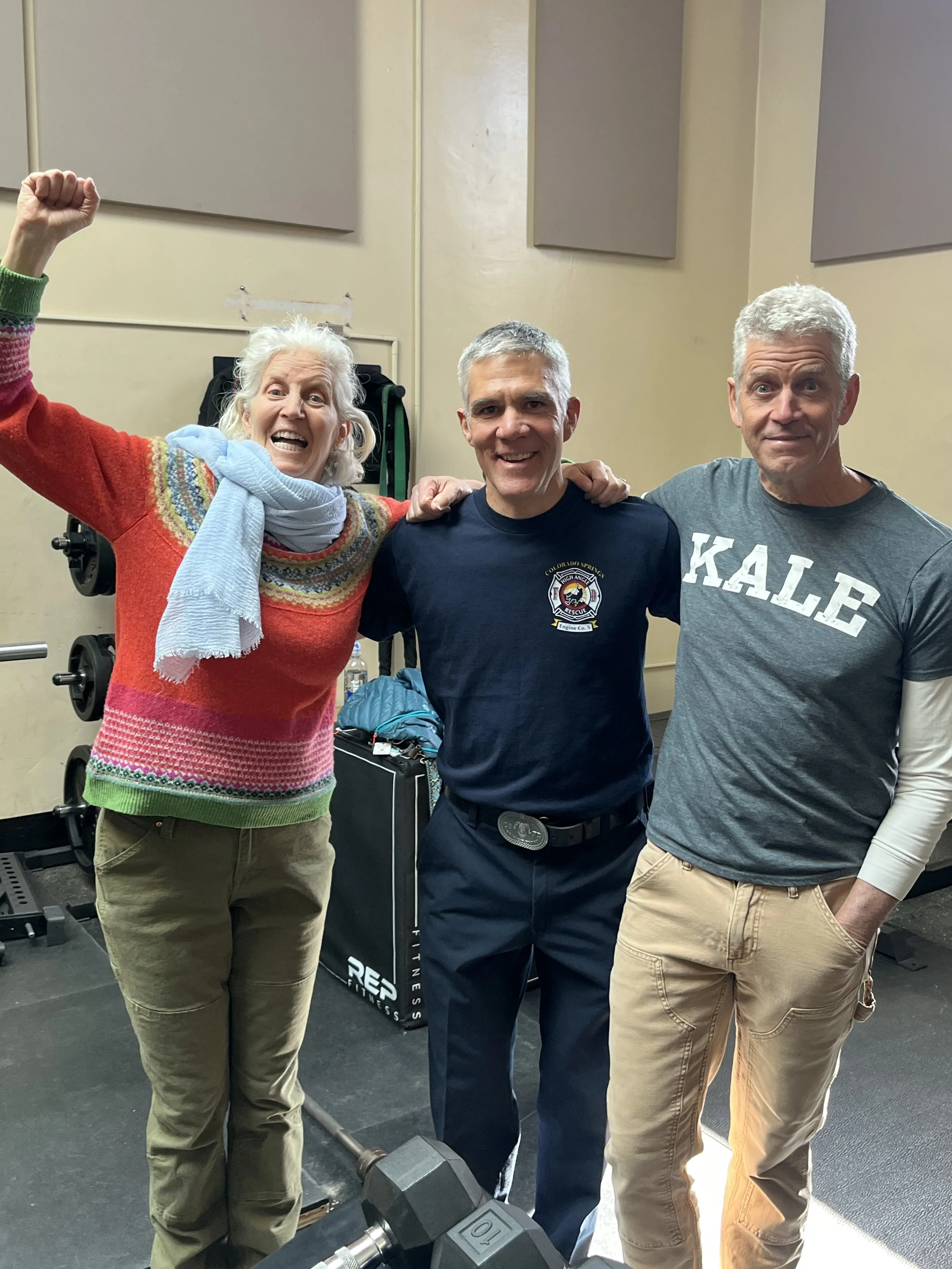
What happens when almost 500 firefighters get a full health screening—and many discover hidden risks they never saw coming?
Rip sits down with Deputy Chief Jayme McConnellogue and Lieutenant Ian Elliott of the Colorado Springs Fire Department to explore a groundbreaking department-wide health initiative—and the life-changing results.
From undiagnosed cancers to widespread cardiovascular risk, the findings were shocking. But what followed is even more inspiring: a grassroots movement toward better health, fueled by education, vulnerability, and the power of plant-based nutrition.
Ian shares his personal story—from elite endurance athlete to unexpected heart health scare—and how a whole-food, plant-based lifestyle transformed his health, energy, and outlook.
This episode is a must-listen for anyone who believes they’re “doing everything right”… and for anyone ready to take control of their health.
Key Takeaways:
Nearly 500 firefighters voluntarily underwent health screenings
Multiple cancers identified—many in asymptomatic individuals
84% had elevated LDL cholesterol (major heart disease risk)
Over 50% had high total cholesterol
Hundreds of firefighters showed signs of hypertension
Mental health culture paved the way for physical health transformation
Real change started from the ground up—not top down
Food can be a powerful tool for prevention—and reversal
You’ll Learn:
Why even “fit” individuals can have hidden cardiovascular disease
How firehouse culture influences long-term health
The connection between vulnerability and real behavior change
Why plant-based nutrition is gaining traction—even in high-performance professions
How to start making changes without overwhelm
This episode is really about leadership. It’s about culture change. It’s about vulnerability. And ultimately—it’s about the life-saving power of the food we choose to put into our bodies every single day.
Episode Resources
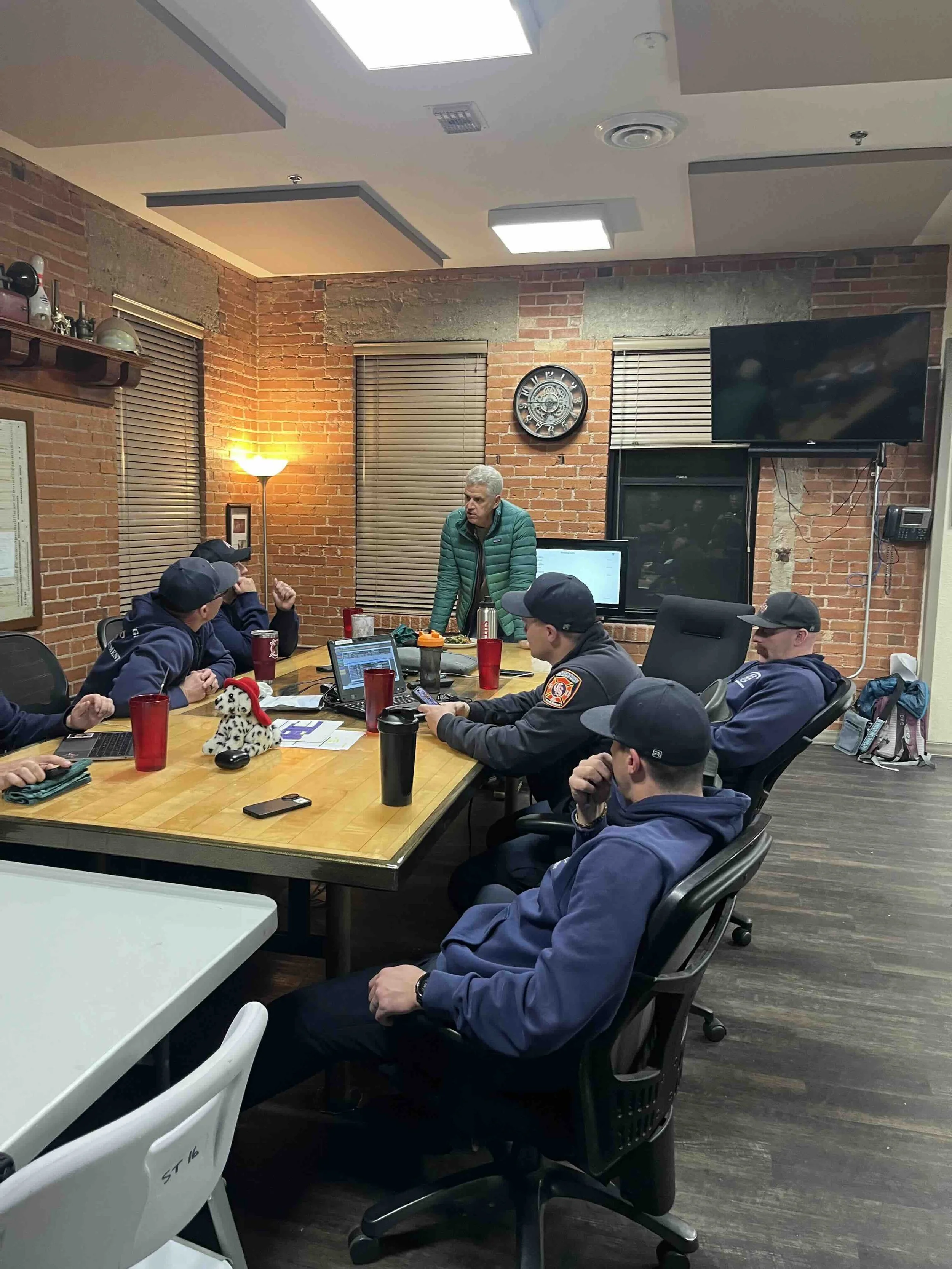
Watch the episode on YouTube: https://youtu.be/arNEq0CmQg0
We hope to see YOU at one of our 2026 Live Events! https://plantstrong.com/pages/events Use code: podcast to receive early bird pricing
To stock up on the best-tasting, most convenient, 100% PLANTSTRONG foods, check out all of our PLANTSTRONG products: https://plantstrong.com/ Use code: plantstrong10 to receive 10% off your first order.
Plant Strong Meal Planner: https://mealplanner.plantstrong.com/
Give us a like on the PLANTSTRONG Facebook Page and check out what being PLANTSTRONG is all about. We always keep it stocked full of new content and updates, tips for healthy living, and delicious recipes, and you can even catch me LIVE on there!
We’ve also got an Instagram! Check us out and share your favorite PLANTSTRONG products and why you love it! Don’t forget to tag us using #goplantstrong 🌱💪
Episode Transcript via AI Transcription Service
I'm Rip Esselstyn, and you're listening to the Plant Strong Podcast.
[0:06] Hello, Plant Strong people. I have a very special episode for you today, one that takes me right back to the heart of why I started Engine 2 and Plant Strong more than 17 years ago, and why I wrote my first book, The Engine 2 Diet.
[0:27] I want you to know that as a firefighter and as a first responder, somebody viewed by the public as a helper, a protector, and a hero, I have always believed that it is our responsibility.
[0:40] To be fit, not just fit, but truly fit for duty. And that's why it has always meant so much to me to show up in service to first responders anywhere. So when the Colorado Springs Fire Department, a department of over 500 firefighters, reached out a few months ago and invited my sister Jane and me to spend time
[1:03] with their department, I was there in a heartbeat. Today, I am joined by Deputy Chief Jayme McConnellogue and Lieutenant Ian Elliott from the Colorado Springs Fire Department, a department that made the bold and very courageous decision to take an honest look at the department's health. And what they discovered was super surprising. We're talking about firefighters with hidden cancer diagnoses, elevated cholesterol across the board, and serious heart disease risk hiding in people who thought that they were perfectly healthy. And here's the beautiful part. This story doesn't end there because this episode is really about leadership. It's about cultural change. It's about vulnerability. And ultimately, it's about the life-saving power of the food that we choose to put into our bodies every single day.
[2:05] After these words from Plant Strong, let's meet these heroes, Deputy Chief McConnellogue and Lieutenant Elliott.
[2:14] Before we dive into today's episode, I want to take a minute to tell you about the food line that we built, because everything that you're about to hear in today's interview is precisely why it exists. Now, I think that most of us can agree that we don't need another diet book or a wellness hack. What we need is real food that fits real life. And that's what Plant Strong Foods is. Real food, simple ingredients, strong standards, our chilies, our stews, our granolas, our pancakes, our burgers, all made from whole plant ingredients that you can pronounce. No added oils, no refined sugars, no mystery ingredients. And for listeners of Plant Strong, we want to make this easier for you to try. So use the code PODCAST10 at plantstrong.com for 10% off your order. That's PODCAST10, all one word, at plantstrong.com. And here's something that a lot of people don't realize. Because our food meets certain nutritional integrity standards.
[3:28] You can actually use your HSA or FSA, that's a health savings account or a flexible savings account, dollars to pay for it. You just select true med at checkout, answer a few questions, and then a letter of medical necessity will be generated. And that's it. Real food made for real life, plantstrong.com, code podcast one zero. Now let's get back to the chief and to the lieutenant. Thank you.
[4:04] All right, everybody. I have a special treat today. I have Jayme McConnellogue and Ian Elliott from the Colorado Springs Fire Department. And believe it or not, my sister Jane and I, we were out and we visited the Colorado Springs Fire Department February 17th, 18th, and 19th. We essentially did a bit of a educational, nutritional intervention, but I don't want to get ahead of myself here because I want to talk about what led to Jane and I flying out and visiting with the amazing Colorado Springs Fire Department. They are a unique, special group of firefighters, and it is my pleasure to have Jayme and Ian with me today. So, Jayme, why don't you introduce yourself first? Let everybody know. I'd love it if you could let the Plant Strong audience know how long.
[5:08] You've been with the Colorado Springs Fire Department, and what your current position is right now. Okay, thank you. So I joined the fire department in 1998. So this August, I'll be completing my 28th year with the fire department, which is hard to believe. I guess it has just gone by so very fast. And so I started as a firefighter, and I became a paramedic next, and then a lieutenant, and then a captain, and battalion chief, and now currently a deputy chief for the department. And what I like to throw in about myself is that I'm pretty confident that the first day I walked into my fire academy back in 1998 as a single mom to three little boys, I was absolutely voted the least likely to succeed. Not to my face, but I know everybody was probably thinking that. So I always like to tell our newest firefighters that I'm the living proof that you can accomplish anything in this department. And there's so many opportunities and so much potential. It's just, what are you, what are you willing to strive for? How many deputy chiefs are there? We have three. Three. Got it. Yeah. I know in the Austin fire department, we had several division chiefs that were right below the, you know, the, the chief, right?
[6:24] Yeah. Yeah. We had two deputy chiefs for the longest time, my whole career until two years ago when And we added our third deputy. So I went over operations as one of the two support services and operations prior to adding the third, which is for emergency medical services. And that's what I'm feeling now. Yeah. Well. You know, Jane and I were so impressed with you, Jayme.
[6:51] I think your leadership style, the way you carry yourself, how just comfortable you are in your skin. And, you know, being a a being a female in a kind of male dominated profession like firefighting is very unique, but also then to, you know, successfully climb, not only climb the ranks to your current position as deputy chief, but also then to command the respect of of the the firefighters is is something to me that's very unique. And the people, the firefighters that Jane and I spoke to, they spoke about you so adoringly and with so much absolute admiration and respect. So I just want the Plant Strong audience to know that you are a special woman in a field that is dominated by men. So congratulations on that. Thank you. Thank you. That is wonderful to hear. You know, there's what people say to your face, but then when you hear something like that, that's not being shared when I'm around, like that's, my heart is very full. Thank you. Yeah.
[8:05] Ian, tell me about yourself. How long you've been with Colorado Springs Fire and what's your position? Okay. Before I get started on that, I just want to emphasize Rip. I couldn't have explained it any better about Chief McConnologue. One thing I would say is you said command respect. She does not command respect. She has earned the respect by everybody in our department. And that's because she cares about the people that she's leading. So start out with that.
[8:39] I got on the fire department here in Colorado Springs in 2005. And ironically, on my oral board, Lieutenant McConnellog was on my oral board at that time. And I had an amazing opportunity to get on Colorado Springs. I've been on now for 21 years. I'm currently a lieutenant at our high angle rescue station. We take care of our city parks over at Garden of the Gods, Cheyenne Canyon, that sort of thing. And it's been an amazing career. The opportunities that this department has offered me from rescue company trainings to being deployed at a national level has really been a great opportunity in my lifetime. And yeah, couldn't be happier to fall into this career. Yeah. Yeah. Bravo. How many firefighters are there that are part of Colorado Springs Fire? 516. 516. Yeah, that's what we're authorized to. So naturally, there's just attrition that occurs, you know, so if you asked me today, how many we have, it's less than that, because we have an academy that's going on and things like that. But 516 authorized. Yeah. And how many fire stations? 25. 25. All right. So let's talk about.
Building Trust Through Peer Support
[10:01] You guys decided to do a department-wide health screening. One of you, please tell me about that screening and what inspired you to do that, and what are you hoping to achieve in 2026? I'll talk about it. I'm kind of responsible for bringing it here. So to give a little bit of backstory about how we're here, Ian is part of our peer support team. I've been responsible for our peer support team for many years. So that's the mental health side of our department.
[10:45] And we've made tremendous progress since 2004. And I'd say like we probably kind of lead the nation in how our department embraces mental health. And so we've been very, very strong. I don't want to glance over the peer support team and what you've created there because you were nice enough to invite Jane and I to come and sit in on one of your peer support meetings. And it really, truly was very special. And so if you could just talk in a little bit more in depth about what makes your peer support setting and program so kind of progressive in fire departments across the country. Yeah, well, you know, I would say that our peer support program has changed the culture of our department, and that's from many, many, many years of trying to stand it up. So back in 2004, we entered into a study with a local university here to look at critical incident stress debriefings compared to peer support models. And so we engaged in a one-year study with.
[11:55] With them. And we identified calls that were critical in nature. And then crews would run through either one of those models. And then they'd complete a survey. And overwhelmingly, our department said, we want peer support. It was kind of unheard of in the United States. It was just something that was kind of budding in Australia. So the professor at the university was really interested and used us as kind of proof and evidence. But our department so overwhelmingly appreciated that model that that's the direction that we headed in 2004.
[12:25] And so fast forward to 2026 with a whole lot of bumps along the way. It took many, many, many years to establish trust, you know, with our not only our firefighters, but also our administration, because that trust has to work both ways. Right. The administration and leadership has to trust the work that the peer supporters are doing because it's completely confidential.
[12:49] Just as much as the line firefighters that are seeking that support have to trust it as well. So we have been extremely selective with who's on our peer support team, you know, especially when we were standing this up, but still to this day, so that we know that it's people that are very diverse, you know, and I'm not talking the obvious diversity, male, female, black, white, things like that. I'm talking about strip all this away and who are you on the inside? That's the diversity that we look for on our peer support team, you know, so that they're relatable to 516 firefighters that are all unique human beings, right? So it's really built off of that. And so, as I said, we have been very successful with that. There's tremendous trust in our organization around help and support like that. But we haven't had that around physical health and people have been very afraid of their physical health, you know. but what we know is that mind and body work together, right? So it's always been a desire of mine to have something as robust on the physical health side as we do on the mental health side. So we explored some options for some grant funding to be able to.
[13:58] Um, provide, um, cancer and medical screenings for our entire department. And so we were successful, um, in receiving the AFG grant. So assistance to firefighter grant to do this work. And, um, it's not something that we wanted to force on our department because we didn't want to work against the culture that we'd worked so hard to establish of trust. So we made this a voluntary opportunity for our folks. So when we did our first testing with, we actually used Frontline, I'm going to throw their name out because they're fantastic and just wonderful company to work with that very much treated us like family, like members of their family. It's been really profound. And so voluntary fire department, we had 494 firefighters participate in this program. And I think, quite honestly, and you can chime in, but I think it's been one of the most impactful things we've done as a department for our folks. Like we had significant findings for people with cancer. I think we had 12 cancers identified and we had multiple cardiac things identified. Two people have had open heart surgery and, you know, not one single person had a symptom. Not one.
[15:17] So it was very meaningful. We also tied to that grant had some additional funding that we were able to reach out to the government and ask to retain. And we were able to run our department through a phase two version of that afterwards, which really focused on lab work, you know, cardiac blood work and metabolic blood work and things like that. And then they had an opportunity to meet with a provider as well. So it's really been something. It's been...
[15:51] Moving. And now I'm to this place where, for me, it was just trying to do this for our department because we work for a city, we're a municipality, we have budget restrictions and being able to fund this ourselves for our department. I didn't know if that was ever going to be a possibility. So getting the grant to at least do it once was, I thought, able to retire and I've met all my helps and dreams, but now it's not enough. Now that we've gone through this and we found what we found, I feel really compelled to make sure that this is something that we can continue to do annually. Go ahead, Ian. No, I said the amazing part about it is the folks that are finding things weren't expecting to find these things. So these are some of our younger, healthier firefighters, discovering that they have some major illness.
[16:49] And I think, you know, what speaks volumes is what the peer support program and the culture that it has fostered on our department and how acceptable it was to bring in this outside agency to do these tests and really to have our folks be vulnerable, to be able to open themselves up and, you know, get some, some pretty rough news. Um, cause as firefighters, you know, like we're there to fix things, but we don't want to be fixed. We're the ones that are doing the fixing, but there's nothing wrong with us. So I think what happened with our peer support program is it really changed that stigma in our department of, okay, it can't be me. Um, but we've opened up our firefighters. They're now being vulnerable. They're asking for help. They're willing to share their numbers, they're willing to go and get a cancer screen, buy if they have any issues. And yeah, our culture in our department has really, it's been a positive for our health and wellness. Yeah, no, I just want to echo what you both have said, because I think it's so important for people to hear this, that...
[17:57] I think that unequivocally, you've been able to do what you're doing right now with the health side of the equation because of what the foundation that you built with the peer support and the trust and it being okay to be vulnerable, right? And we all know the older we get, allowing yourself to be vulnerable really is one of the greatest strengths that's out there. So kudos to you guys for that. But, Jayme, tell me, how long did it take for you guys to get that AF, that grant, the AFG?
[18:34] I think it was about a year-long process to apply and awarded. And then it was a two-year grant. So the first year was really about developing an RFP and finding a vendor who ended up being frontline, which I can't use that word with them. I guess their family is now. But, yeah, it was a long process. And then once we got through that selection of someone to conduct this for us, then we were like really pressed to accomplish it by the end of the grant. But we were successful and able to do it, you know, all on duty for all of our folks. And, you know. I mean, the fact that you had 494 out of 516 firefighters volunteer to do it. I mean, what is that? Almost 90, 96 percent. That's crazy. Yeah.
Startling Screening Results
[19:22] Tell me, so you talked about how you guys were able to identify some cancers and some people with heart disease. The phase two, where you did the lab work, some of the cardiac and metabolic blood work, can you give me some of the results of what happened department-wide with that? Yeah, I absolutely can. Actually, I'm going to read something to you that comes from the report that they just gave us. I have an email drafted that I'm getting ready to send out to the line with a lot of information about you all, too, and what you have done. But the Phase II findings reflect laboratory data collected from 389 firefighters. Cardiovascular risk markers represent the most prominent area of concern across the cohort. Over half of the participants, 53%, recorded elevated total cholesterol and a striking 84% presented with calculated LDL above the recommended threshold.
[20:20] Apolipoprotein B was elevated in 69% of firefighters, and 30% had elevated lipoprotein little A, both of which are independent cardiovascular risk markers increasingly recognized as predictive of arthroscorotic disease. Triglycerides were elevated 19% of the group, while low HDL was comparatively less prevalent at 14%. Elevated C-reactive protein marker of systemic inflammation was present 12%. Hematocrit was outside the sex-specific reference range in 52% of the firefighters, and hemoglobin was abnormal in 39%. Cardiovascular disease remains a leading cause of line-of-duty deaths in American Fire Service. Results found in Phase 2 represent a population carrying largely preventable risk that, if left unaddressed, will manifest into early retirements, workers' compensation claims, disability costs, and the irreplaceable human cost of preventable cardiac units. Thank you for reading that. Yeah, that gets me goosebumps, too. Like, wow. Yeah. And is that something that you have shared with like department wide? We're just getting ready to share it right now. Okay. Okay. Got it.
[21:36] And what about blood pressure? Because when I was there, I remember you telling me a stat around, you know, the number of firefighters that had elevated blood pressure. I didn't hear that. Yeah, let me see if I can, do you have that, Ian? So yeah, that was definitely profound too. Okay, so 261 presented with hypertension stage one, 139 stage two, and two with critical hypertension. Yeah, yeah. But the large percentage of our department that have. Yeah. Well, and I think it's important to note that, you know, everything that you just shared, that's not at all unique to Colorado Springs fire, right? I can, I would bet you guys dollars to donuts.
[22:26] Plant strong donuts, that, that, that this is the, this would be mirrored at almost every fire department across the country and frankly, probably the world. And, you know, we, the one, obviously everything is, this is, anyway, this is such great information for you to have because it is so informative of the direction that everybody can go in to try and rectify what's going on here. But I think the one number that to me stood out the most is that 84% have an elevated LDL that's kind of above where you want it to be. And we now know, you know, LDL, it's the lethal cholesterol. And the American Heart Association just came out like a week ago saying the lower that you can have your LDL cholesterol for the longer, for the longest period of time is the best. So longer, lower is better.
[23:28] And so I love the fact that these firefighters, you're going to be presenting to them an option that is very affordable, very accessible to help take care of this. Um, so Ian, I think this is a great time because I want to hear your story because you've got a very, very profound, powerful story.
Ian’s Health Wake-Up Call
[23:55] And then I want you to tell me, were you the one that came to Jaymewith this wild hair idea that, Hey, you know, maybe we should bring in these Esselstyn characters, you know, for a day or two or three to talk to our department about eating, eating healthier. Absolutely. Yes. Um, love to share that. My story, um.
[24:21] Started out with, you know, I just grew up a standard American kid, uh, doing the standard American, you know, diet, uh, grew up in New Hampshire. I grew up in a family that thrived on seafood being in New England. Um, but I was the kid that was like, what's it take to get a cheeseburger around here? Um, got tired of the seafood, that sort of thing. Um, but I was always active. I was an active kid. I was into sports, started racing mountain bikes at a young age in eighth grade, um, And cycling and endurance sports have been my life. That's what I do. In the fire service, once I got in the fire service, I utilized that for my wellness to handle the stress of the job. And that was a big portion of my life. And so when the opportunity came to have the frontline screening, it was just a no-brainer. Yeah, I felt like no issues. I'm going to be fine. I wasn't worried about anything. So we had our initial screens and it was our, it was our ultrasound. And we also did a CPET, um, VO2 max test. Um, I was on the bike. We were getting our VO2 max. All my numbers came back. Great. Um, so.
[25:37] The frontline folk person there told me, said, you know, just keep doing what you're doing. Don't change anything. Keep eating the way you're eating. Everything looks great. However, you do have slight amount of air trapping going on in your lungs. And so for me, I was like, I don't know what that what's going on there. So I start Googling it. But they recommend I go and see a pulmonologist to kind of figure out what what was causing that.
[26:03] Went in, did all the tests and they said, sure enough, yes, you have some air trapping. Let's get you to go get a CT of your chest and make sure you have nothing else going on. So, of course, at that point, you know, I'm freaking out. What's the worst case scenario? Well, I've been in the fire service for over 20 years. He's got lung cancer or COPD, right? Like all of the. Yeah. But it also can be exercise induced asthma. And just so happen to be in the winter, do a lot of ski mountaineering and work, you know, skiing up at high elevation. Go and have all my checks. my lungs are fine. Everything's good. Um, so they attribute it to exercise induced asthma. Um, but the polonologist also said, well, wait a second. Um, we noticed you have some calcium in your heart. And that hit me pretty hard. I was like, calcium in my heart? What would cause that? She goes, I need you to go see a cardiologist right away. And so I did. I scheduled an appointment. And at this point, I'm pretty nervous. Like, how did this happen? Like, I've literally spent my life like eating right.
[27:10] My genetics at the time, I thought were like, oh, I've got grandparents that have lived into their, you know, my great grandmother lived until she was 105. Like, I've got, I'm good. This shouldn't be happening to me. Um, so I go to the cardiologist and the first thing they do is they prescribe me a statin and daily aspirin and then a bunch of supplements, um, to kind of counteract the effects of those medications. Yeah. And I left there rip and I was, it hit me really hard. Like I was waking myself in the middle of the night, just like, how did this happen? Like, how did I get to this point? I thought I was doing everything right. You know, like we eat well, like my wife and my children, I've got three children. and we eat really well at home. But what I was missing was, you know, the 20 years on the fire service where we were having like bacon cheeseburgers and BLTs and, you know, eggs and cheese and sausage for breakfast and breakfast burritos.
[28:08] So I started to explore a bit more. And as I was exploring, I reached out to one of our battalion chiefs, Tim Dragish, and he had gone plant-based several years prior. And I called him and just asked him, I was like, what did you do? This is what they prescribed me. I don't know what to do with this information. He said, oh, here, check out this documentary, check out, you know, Forks Over Knives, check out Game Changers. He's like these, I went 100% after this and my numbers have changed significantly. And at the same time, my mother-in-law reached out and said, yeah, I have a friend of mine said, hey, you should watch Forks Over Knives. And so I was like, okay, I better watch these documentaries. So I started watching them. And as soon as I, Heard your dad speak about preventing and reversing and knowing that there was an alternative other than medications, a hundred percent in at that moment. Like it changed that day.
[29:01] And when was that day? How long ago was that? You know, I was trying to figure out like exactly when that is. It was about a year ago, about this time. So late March, early April is when I started doing that. And then I was trying to figure things out, like how this is going to work. Um, my wife at the time, she's like, you need a second opinion. Like, how could this be? I'm like, well, this is, these are the results. So I ended up getting a second opinion. But for the time being, I, I was starting to eat a hundred percent plant-based did away with oil, did away with cheese, did away with meat, all the things I love. I love meat. Like I've grew up with, there's a, there's a restaurant in, in my former hometown that had a bacon Mac double cheeseburger. I mean, it was, I thought it was awesome. Right.
[29:49] However, so I started, I went and got a second opinion and I had been eating this way for a few months and they did my blood work and they said, I don't know what you're doing, but your blood levels are not in the risk.
[30:02] In fact, let's have you, we're going to schedule for another blood draw, um, in a few months and then we'll reassess what we need to do with your medications. So I was like, okay, this is, this is actually working. This is, this is something to it. So I started reading your prevent reverse heart, heart disease, um, China study, and just looking at all the other information that comes with the power of food. And I always thought, you know, I can eat this way, but I'm going to go for a three hour mountain bike ride. I'm totally good. Um, but I think you had said it rip where it says it doesn't, you know, it doesn't matter how hot you burn the engine. It's what you're putting in the, in the motor. And that, that, that really is echoed to this day for me. Um, okay. So moving on, um, I'm still eating this way and I'm trying to figure things out. You know, I start eating more plants. One of my closest friends at the station is like, okay, well, I'm going to eat more meat and more bacon. You're going to do that. So, um, so, and I talked to them and I said, you know, if I get deployed, I have no idea how I'm going to eat. I'm, I'm, I'm, I'm in trouble. Well, three days later, um, we got deployed, um, to the Texas floods down in Kerrville. Yeah and um it was obviously as you know how horrific that was and terrible for the families but like trying to eat on a deployment plants and trying to find anything in.
[31:30] Texas, Texas was very hard. Um, fortunately, um, the Shriner university out of Kerrville, um, they opened up their cafeteria for us and they had a salad bar. So basically I ate spinach and beans for, for three weeks. I was there. And when I came back, I left there about 192 pounds and I came back about 168 pounds and felt I was sleeping better. Um, I had more energy and i mean i definitely thinned down i didn't think i had much to lose but i couldn't you know i couldn't believe how how great i felt so went into follow up with my with my cardiologist did the blood work yeah he took me off took me off the aspirin took me off all the all the supplements and he cut my statin down to five milligrams just to kind of for the next for the next year and we'll reassess after that, but I am a hundred percent believer in this. Um, it's amazing how well I feel my energy levels, especially, um, like on my endurance, like long endurance rides. Um, and so that, that was the point to where I'm thinking about this going to gosh, you know, and not to, not to toot my horn or sound braggadocious, but like I've lived a life of, of cardio and endurance and, and physical fitness.
[32:51] Like if this can happen to me, Then what about the guys that don't do that? What about the other folks that don't do that? And we recently had some young folks in our department that had some major heart surgeries.
[33:05] We had some of our like most beloved retirees, you know, pass away from heart attack and stroke.
[33:15] So that's when I reached out to my friend, Troy and my friend, Troy, I'm like the excited young puppy that just found this like ball, right? This is amazing. This is the greatest thing ever. And Troy Valeria is named and he is a Lieutenant on our department. And he's been doing this for over 25 years. And he's been doing this silently at the kitchen table and fighting the fight for, for that long. So he's kind of the unsung hero here. Troy has been working on other crews throughout his whole career and really is kind of the model for it. And so I reached out to Troy, said, hey, you want to meet for a bike ride? So we went for a ride and said, hey, what do you think about reaching out to the Esselstyn Foundation and seeing if they'd be willing to maybe provide some resources for us, for the department? Maybe we can present it to Chief McConnelag. And he was 100% in. So we reached out. we reached out to you and to Jane and started telling our story about our department and what the chief McCullough and what others. Sorry to interrupt. Yeah.
[34:24] Anyways. Yeah. So we, we've, We've reached out to you, and once we started telling our story, not only is Colorado Springs Fire Department, we're progressive on a lot of our firefighting tactics and our EMS, but with this and our health and wellness programs, we also have the IAFF Fallen Firefighter Memorial. So our local union, local five, every September honors the families of those that are fallen. Um, and we basically are the caretakers, um, for the fallen firefighter memorial in Colorado Springs. Um, it's very, it's a huge honor for our department. And once we explained that to you and Jane, it wasn't, how can we help you? It was, when can we come and visit you? And we mentioned that to Jayme, and she was nothing but supportive in this Fallen. So it's been great. Yes. And I want to say, having visited that Fallen Firefighter Memorial that faces out to Pike's Peak, what a special just memorial to all the Fallen Firefighters. And how many are there? Almost 10,000 that are on that wall, correct?
[35:46] Yeah. I don't know the exact number, but yeah, it's up, up to, I think it was like 9,900 and something. Uh, it was, it was crazy. And you guys, you guys won the bid for that in 1984 or something a long time ago, if I'm not mistaken. Yep. Yeah. But so you brought it to Jayme.
Grassroots Change Begins
[36:12] And Jayme, what were your initial thoughts?
[36:17] Oh, I was excited about it because, you know, I kind of have this plan in my mind about how we're just going to, like, capture overall health and wellness for our department. And so I had already been sharing with the department, like, hey, in 2026, we're going to focus on nutrition, you know, because we've been doing these other things around cancer and around, you know, medical testing and that. And now we're going to bring it together. So, I mean, the timing was perfect based on what we wanted to do. But one really important thing that, you know, Ian's just described to you all that I'm most proud of in our department is we're a very grassroots department. it. We have people that have done amazing things from this department and has not been directed top down. It's gone exactly the opposite way. And it's more impactful to our department. I think we're more willing to make big changes when it's coming from people that are extremely well respected like Ian and Troy and very vulnerable to share their stories about how we even got here. Like I was like, yeah, of course, we're, we're going to do this. And timing was perfect. Yeah. I guess, I guess, you know, one of my questions, um, yeah.
Cutting Through Nutrition Noise
[37:34] For you both, is I feel like we live right now in a culture where there is so much noise and so much distraction around what is, in fact, the healthiest way to eat. Is it, you know, low carb, high fat, high protein, low carbohydrate? Is it, you know, carnivore, Mediterranean, in a whole food plant-based and there's you have the the the you know the the bro science you've got the influencer science and all these sandboxes that people are playing in so i mean what was it because Jayme this is a this isn't a small step that you guys have taken right i mean to me this is a very large, important step. And somehow or another, I think, you know, Ian, I think you did your research. And Jayme, somehow or another, I think you.
[38:37] Inherently somehow figured it out. And I'm going to say it, and then I think you guys will agree with me, that if you look at the preponderance of the peer-reviewed scientific literature, this is the more whole plant foods that you can consume, the healthier you're going to be. And you also have a really good shot at reversing any potential chronic Western disease you have. But how did you guys truly, how did that sit right in your souls is what I want to know. I tell you what, like, cause the fire service is full of traditions. I know. So like, this is our first podcast. So actually for the fire department, we owe cake and ice cream for everybody on our department. That's how it goes. And then, you know, if it's your first or your last shift of something, then you owe steaks. And so I'm going to work on that. But no, I think around the kitchen table, like the world, world's problems are solved in a firehouse. One thing that we don't talk about at the fire at the table is religion and politics and nutrition and in your own personal diet is kind of right in that same. Yeah. Right. So, you know, people are on the carnivore. They're, you know.
[39:56] Whole 30, whatever the diet is. Um, when someone brings something up, um, you know, it, it tends to like, Oh yeah. Okay. Well I'm watching this and I'm doing this and, and, and I'm doing this over here. So like talking to Troy gone, how in the world are we going to tell the folks that we're going to eat plants, you know? And he's like, I've been trying for, I've been trying for years, but I think what it comes down to is we have our anecdotal evidence myself, others that have done this in the past and then we have the scientific evidence right we have peer-reviewed studies we have the the you know your your father dr campbell you know dr gregers of the world and the the science is there the data is there and so if we just don't push it on people don't push it on them telling them this is the only way to eat you know like this is this is the only way to do it, then let them decide, but provide the information, provide the facts and provide the support if they want it. So if, if someone wants to try it, they can give us a call over at the station and, um, we can, we can support them that way. And, um, I tell you what, since you, you and Jane have left, we've had several folks reach out to us that, you know, don't want to exactly be real, um, vocal about it, but like, Hey, I've been doing it and man, and my numbers have dropped. Uh, one guy on my crew that's 34. He, uh.
[41:25] Fit kid, he's lost 12 pounds as numbers have dropped. We have a whole station that adopted it for a full set and they're working through it. Most, you know, there's a lot of people that are starting to like, you know what, there's something to this. And especially as they hear the results of our frontline, it's kind of a perfect time for our department to really look at it. And if anything, you know, to be intentional about what we're doing.
[41:56] Yeah. Anything you want to add to that, Jayme? No, I mean, my my whole goal is that we just get people talking. Right. You know, because it is kind of taboo, you know, to discuss this stuff. And I know we've had great success over past years with just getting the conversation started, you know, and I know I know our department and we cannot force things on them that will not work. So it's just trying to provide as much information as possible and helping them, you know, to make better choices. I would just like them to learn more, you know, based on what they just learned about themselves, you know, and now other ways that they can tackle what they just learned about themselves. Like, that's that's really my goal. Well, and I think.
[42:41] You know, to take, take, take a page from the peer support play, uh, playbook that you started in, I think you said 2004, right? I mean, and look where it is today, but as you said, there were a lot of, you know, a lot of, um, roadblocks along the way and a lot of hurdles, but look where you are now, almost 22 years later. And I would say, you know, you invited Jane and myself up there. Jane cooked an amazing breakfast, lunch, and dinner for the A-shift, the B-shift, and the C-shift. You let me speak to the A-shift, the B-shift, the C-shift. It went out. We did it all from the big house at Station One. And it went out in a live feed to all of the 25 stations.
[43:32] And I think what I hope is that we've planted the seed, right? We planted the seeds, as you just said, Jayme.
[43:40] The conversations are starting, and then the hope is that it will start to take root and then start to flourish, and before you know it, we've, in 5, 10, 15 years, we're starting to flip the traditions at the Colorado Springs Fire Department because it's one that truly does evolve. At a grassroots level, at a core level, embraces what it means to eat in a way that makes you the fittest, healthiest firefighter that you can be. And, you know, as firefighters, we sign up for this job and, and we kind of, you know, took an oath to be the strongest, fittest, best serving firefighters that we can be to the public. And a lot of firefighters are becoming more of a liability than an asset because of their, their health. So great stuff. Um, where does that, where does that leave us today? What is our next step, Ian and Jayme? You know, um.
[44:49] From here, you know, obviously just keeping that information, we're providing resources to the line so we have resources out there we're opening it up for anybody that's you know willing or able to have that conversation um and then share that information um also we're looking at some other things moving forward on what else we can do i know we've had some other partnerships that we're looking at um but uh yeah we're just going to keep trying to keep that forward progress and that forward momentum on getting the word out getting the information out having, you know, conversations when people need them.
[45:26] Ian, what did you have for breakfast today? Today? Oh man, I have this monster bowl of oatmeal every morning. Like enough to where people look at it and go, wow, that is ridiculous. Tell me about it. Was it steel cut? Was it old-fashioned? Was it oat groats? What was it? Yeah, it's old-fashioned oats. So I got a cup of dry oats. Then I've got a banana, an apple, Chia Flax.
[45:54] Some beet powder, um, a little maple syrup. Yeah. And, um, yeah, it's free off. Yeah. I look forward to it every morning. Like I I'm excited in the morning to get to my own meal. It sustains me for soul. Now, do you, do you already know what you're going to have for lunch today? Lunch tends to be a little bit more dynamic because it's kind of one of those ones, especially on, um, when I'm at work trying to figure out what I've got. Um, but it usually is a big, a fairly large bowl of greens and beans and, um, occasional, some temper, some tofu in there. Yeah. Do you, do you find, so you've been doing this for about a year? Yes. Do you find the other firefighters are giving you a hard time or they, are they, you know, making snarky comments them belittling you at all? Well, um, there's definitely been some of that, but, um, to be expected, right. Yeah.
[46:57] People are giving you a hard time. That's probably a bad sign. Um, but no, my crew, my crew, I would say is 90% all we have. So we're a single company. We got four folks, my firefighters gone a hundred percent. He's, he's trying it for a month. Um, and he's seeing tremendous results. I'm looking forward to his blood draws. My driver engineer, he's, I would say 95% plant-based with some, you know, occasional salmon in there. And then our paramedic, he's, he's, I would say 90% as well. So they're all intentional about how they're eating. And we're all kind of comparing what we're, what we're making for the day. We've actually.
[47:40] The thing with the fire services, we tend to make meals together. And so we've, because of my diet and because of different things over the years, we've kind of gone away from that, which is kind of a, it's not a positive thing. A lot of people like the tradition is to eat together, but we've made some meals together now and it's, it's getting much easier. So it's been, it's been good. So, yeah. Yeah. So since, since Jane and I have been there, have you started to incorporate some more plants into your routine? Yeah, I've always been pretty good, but, but absolutely. Yeah. You know, and it's, that's my goal for everybody, right? Just like, think about what you're putting in your mouths and in your bodies, you know, and they're, I mean, they're just, it's, it's so interesting. I agree with what you just said. Like all of the different options are incredibly overwhelming. Whenever I hear anybody talk about that, like you were always thinking about was the Cheesecake Factory. Like when you go to the Cheesecake Factory, you open up the menu and there's a million choices. That's what nutrition feels like right now. But hey, man, plants have been around forever.
[48:49] So it's kind of hard to argue that. And I just really want to continue to provide, tons of information to the department to help them make better choices. And I think, you know, one of the things that was really interesting for me was watching Jane prepare these meals for the firefighters at Fire Station One, And I think that they truly, truly liked the food, right? They realized, as we all know, the jokes, it wasn't, you know, rabbit food. It wasn't just salads. This was a lot of like substantial, tasty food that fills them up and makes them feel great. Yeah, they had seconds and sometimes thirds. Like, yeah. Yeah, yeah, yeah. Yeah.
[49:39] So just for anybody that's out there listening right now, I want to say, well, first, I can't thank Colorado Springs Fire Department enough for this bold move that you've made for getting the conversation started, planting the seed in the department. Um, you know, as you said, Jayme, in 2026, for you guys, it's about nutrition. And to me, this is the foundation of what a healthy diet should be. It's more whole plants, but the Esselstyn foundation, it's a 501 C three. Um, and we partner with existing nonprofits and community-based organizations just to spread the word far and wide about the power of plants. So if there's anybody out there listening right now and you want us to come out and help you out, we'd be honored to do it. And if you're a fire department, we would love to visit and do something similar to what we did with Colorado Springs. Well, Jayme and Ian, what do you got planned for the, The rest of the day. Anything exciting?
[50:59] Work, work. Yeah. Lots of meetings. Yeah. Yeah. That's what it looks like. But hey, before we get into that, like, yeah, we want to thank you all. Like we, I'm still like overwhelmed by what you all have done for us and what you've offered to us and just getting to know you all. Like just it has been just such a fantastic experience that you know the guys getting to cook with jane in the fire station you know in their own station and just how dynamic she is and it it, it's just been incredible. So we, we can't thank you enough, like from our whole department, not just me and Ian. Yeah, absolutely. It was an incredible opportunity to have you come out and, fully funded from the Esselstyn Foundation was incredible. So yeah, thank you. Well, it was absolutely our pleasure and I can't even tell you how much joy it, uh, it gives Jane in me and the foundation to do this good work. And let me say, and Ian, I sent this to you in an email, but we haven't talked about it.
Dead Hang Challenge
[52:07] So when I was there, one of the things we did after, I think it was after every meal is we went downstairs into the fitness room and we did the dead hang from the bar, right?
[52:18] And Ian, you had the record, if I'm not mistaken, of everybody that tried it, you were like a minute and 51 seconds.
[52:26] None of us got to two minutes. Uh, and there was something about that bar. It was, it was big. It was, it was hard. And I had been two minutes and 16 seconds, a couple, I think a couple of days earlier on my bar. But as you know, Ian, shortly thereafter, on March 6th, my mom got the Guinness World Record with two minutes and 51 seconds. Can you believe that? That's incredible. I know. And 90, 90. I mean, if that isn't a testament to the power of movement and plants and just being consistent, I don't know what is. Agreed. It's amazing to watch your mom. I think it's on Jane's YouTube channel of her dragging the tire. It makes you smile every time. It's pretty cool. Yeah. Yeah. All right. Well, Jayme and Ian, I wish you guys all the best. I know that I'm going to see a lot more of you, you two and Colorado Springs. Can't tell you how much I love the visit and love your... You opening us or welcoming us with open arms and open hearts. Thank you. Thank you. Thank you. Yeah. Hey, plant strong, fist bump on the way out. Boom.
[53:53] This was a powerful episode for me, but it's not just about firefighters. This is about all of us. Because the truth is, you can feel strong, you can look healthy, and you can still be at risk. And here's the empowering part. You have so much more control than you ever thought. What you eat every single day can either move you toward disease or it can move you away from it. And what I love about what Jayme, Ian and the Colorado Springs Fire Department are doing is they're not forcing anything. They're just starting conversations. They're planting the seeds. They're building, in a very patient way, a culture of wellness and health from the ground up. And that's how real change happens. If this episode resonated with you, please share it with someone that you care about because the most powerful tool in medicine is the right food. Continue to honor those heroes and first responders in your life. And as I like to say every single week, always, always keep it plant strong.