#348: Disease Reversal Is Real — Why Medicine Won’t Admit It with Michael Klaper, MD
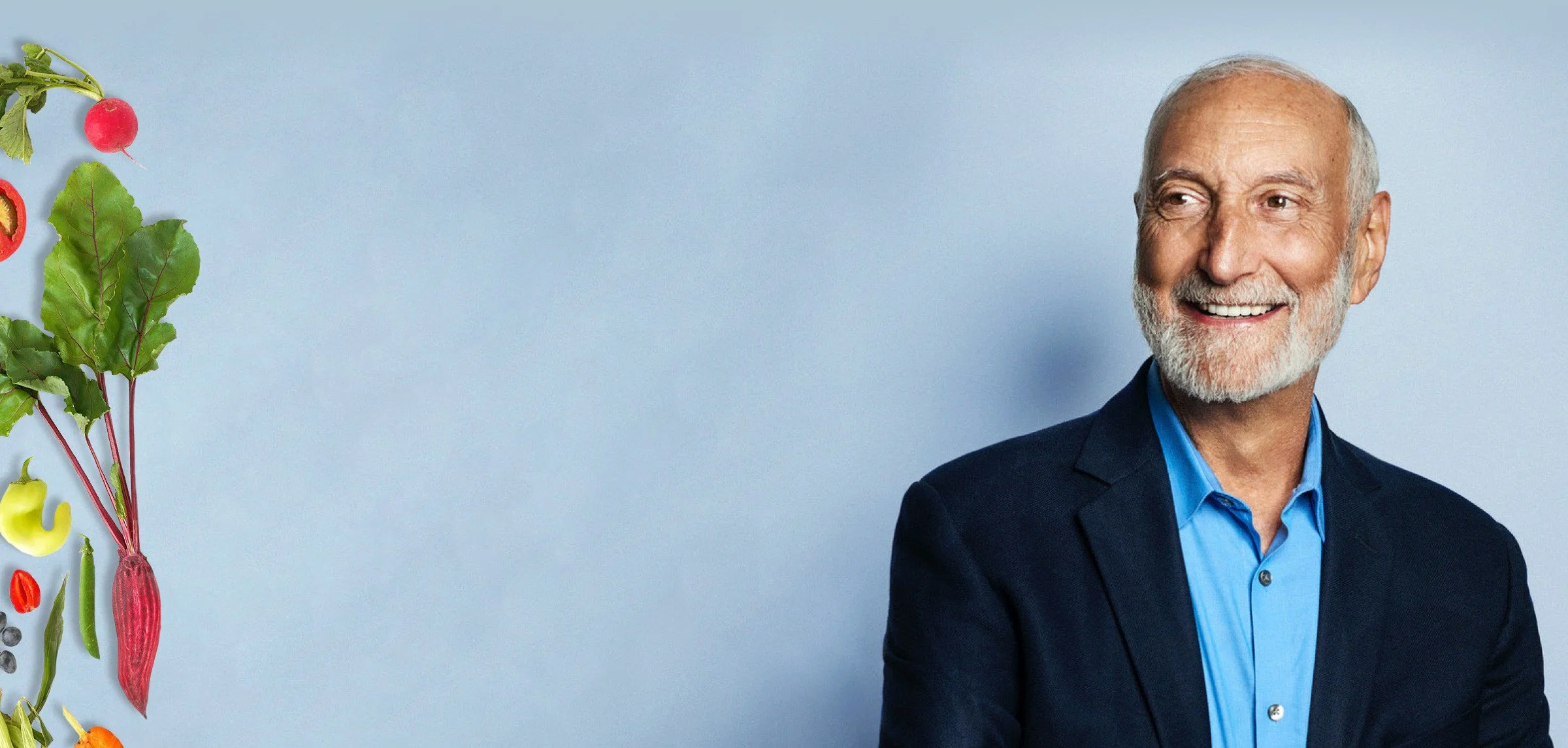
Learn more about Dr. Klaper’s Moving Medicine Forward initiative
For over 50 years, Dr. Michael Klaper has practiced medicine. And today, he says something that stops you in your tracks:
“I am profoundly embarrassed to be a physician in America today.”
Why?
Because most doctors are never trained in the most powerful tool available to prevent and reverse chronic disease: nutrition.
In this deeply personal and wide-ranging conversation, Rip sits down with Dr. Klaper to discuss his new book, Moving Medicine Forward: What More Doctors Should Know About Nutrition and How It Can Save Your Life.
Dr. Klaper shares:
How witnessing violence in a trauma unit led him toward a philosophy of nonviolence
The moment in the operating room that changed his understanding of heart disease forever
Why “etiology unknown” is no longer an acceptable excuse
The concept of the “Toxic Red Tide” flooding the bloodstream after animal-based meals
Why obesity is a state of chronic inflammation
How GLP-1 drugs should (and shouldn’t) be used
What a true “Disease Reversal Clinic” could look like
How doctors and patients alike can help move medicine forward
This episode is both a wake-up call and a roadmap. Because some chronic disease isn’t inevitable. And healing can occur.
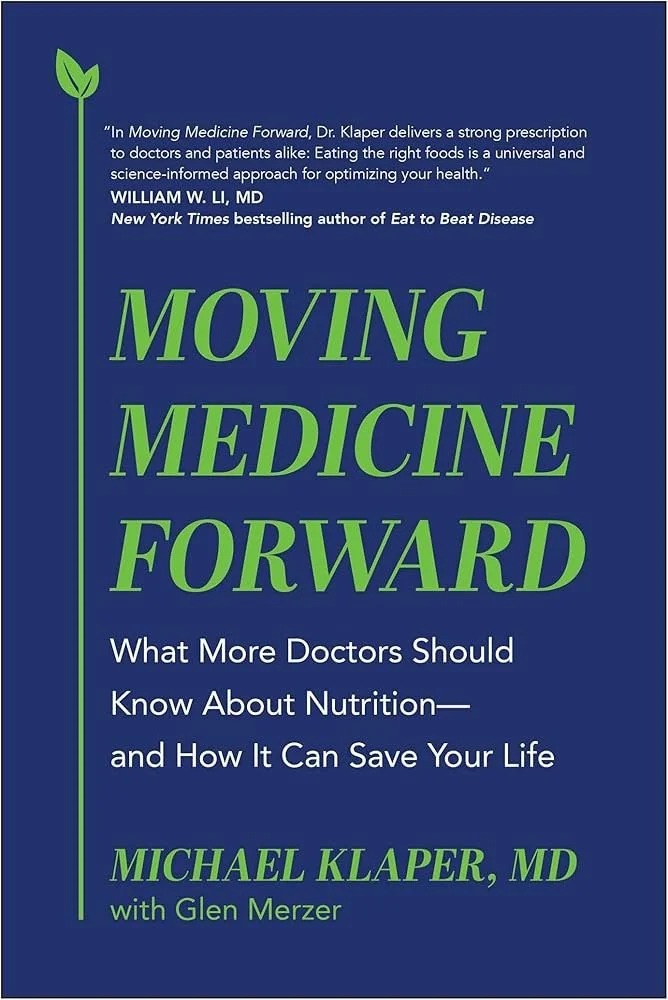
Moving Medicine Forward is available now
Episode Resources
Watch the episode on YouTube: https://youtu.be/LJ0VtH64OGU
Moving Medicine Forward: https://www.movingmedforward.org/
We hope to see YOU at one of our 2026 Live Events! https://plantstrong.com/pages/events Use code: podcast to receive early bird pricing
Plant Strong Meal Planner: https://mealplanner.plantstrong.com/ - take $20 off with the code SPRING20.
To stock up on the best-tasting, most convenient, 100% PLANTSTRONG foods, check out all of our PLANTSTRONG products: https://plantstrong.com/ Use code: podcast to receive 10% off your first order.
Give us a like on the PLANTSTRONG Facebook Page and check out what being PLANTSTRONG is all about. We always keep it stocked full of new content and updates, tips for healthy living, and delicious recipes, and you can even catch me LIVE on there!
We’ve also got an Instagram! Check us out and share your favorite PLANTSTRONG products and why you love it! Don’t forget to tag us using #goplantstrong 🌱💪
Episode Transcript via AI Transcription Service
I'm Rip Esselstyn, and you're listening to the Plant Strong Podcast.
[0:05] Today's episode is one of those really important conversations. I'm sitting down with my good friend and multiple podcast guest, Dr. Michael Klaper, Gandalf, a true legend and someone who has been practicing medicine for, get this, over five decades. And here's the thing. After all those years, he says something that should stop all of us in our tracks. Doctors are missing the most powerful tool that we have to prevent and reverse chronic disease, and that tool is nutrition. In fact, he's laid it all out in his brand new book, Out This Week, Moving Medicine Forward, What More Doctors Should Know About Nutrition and How It Can Save Your Life. We're talking about heart disease, diabetes, obesity, why they're not inevitable and why the system isn't set up to fix them and what we can do starting immediately to take our health back. This is about moving medicine forward, not only by teaching about pills and procedures, but starting with what is on your plate. We're going to have this powerful conversation right after these words from Plant Strong.
[1:34] I want to tell you a quick story. We had a man named Jim who came to one of our retreats. He was in his late 60s. He was on three blood pressure medications, a statin med, borderline diabetic, nothing unusual. His doctor told him, you're stable, but stable meant managed decline. He came not looking for a miracle, just trying to get some clarity. By the end of the week, his blood pressure had already started to come down, his fasting glucose shifted, not dramatically, but enough to show direction. And more importantly, he understood why. Not just what to eat, but what was happening inside his arteries, his insulin response, his inflammation. That's what changed everything. Our Black Mountain Retreat is sold out, but we'll be back in Sedona, September 28th through October 3rd. We're going to bring the physicians, we're going to bring the data.
[2:31] We're going to bring the food, real simple meals using the Plant Strong nutrition plan and whole ingredients. You bring your numbers. And if you're someone who wants to go even deeper into, into the clinical side of things, I would encourage you to join us in Cleveland, Ohio, this June for our Vital Signs event, where we're working directly with providers on how to apply this in practice. If your numbers are trending in the wrong direction, this is 100% worth your attention. Go to plantstrongevents.com, and if you need support or intervention right now, you can join our meal planner, which includes real human support. It's not just recipes. It's not an AI tool, but you get access to a live food coach, someone that you can message, email, or even hop on a one-on-one call with when you're stuck. When you're traveling, when you're cooking for your family, when you're trying to stay consistent, you're not doing this alone. You also get all kinds of personalized recipes, smart grocery lists.
[3:40] Full nutrition breakdowns, and even grocery delivery options. And when I say personalized recipes, I mean meals that you're actually going to look forward to. Things like crispy black bean and sweet potato quesadillas, mushroom stroganoff that is pure comfort in a bowl, and Mexican cauliflower tacos that are weeknight easy and seriously delicious. Food that makes this lifestyle feel completely effortless. Right now, it's just 99 bucks for the full year and a buck 90 a week. And we've extended this promotion through April. You can take $20 off with the code SPRING20. And if you've been looking for an easy button to make this stick, this is it. Just head to mealplanner.plantstrong.com and get started. Dr. Michael Klaper, my good friend, it is so wonderful to see you.
[4:37] Great to see you, Rip. We've got lots of good memories to share here and lots of good visions for the future, no doubt. Yes, yes, yes. And those memories are not done. We'll be making more memories in the future. But I want to welcome you back to the Plant Strong Podcast. It's been a beat since you've been on the podcast.
Celebrating a New Book
[4:58] But early on, when I launched the Plant Strong Podcast, you were an absolute regular. I mean, I just like, so the audience knows. And if you want to go back and listen, Michael was on the podcast, episode number nine, episode number 10.
[5:16] Episode number 32, number 36 and number 64. So this will effectively be your sixth time on the podcast, which means Michael, you are in rarefied air. Well, people will think we're going steady. And I'm okay with that. Same here. But here's the thing, you know –, I'm bringing you back on the podcast. This is our sixth year of the podcast. We're now up to episode about 250-ish. And it's for good reason, because you have done a phenomenal job writing a book. I want to absolutely applaud you on this sensational book. I know you've poured your heart and soul into it. You've done a phenomenal job. I can't give it enough of a ringing endorsement. there it is. Can you kind of hold up what it looks like so people can see? I know you don't have a copy there, but that's just, just like moving medicine forward, right? Yes. Moving medicine forward. And, and basically it's like the byline there is what more doctors should know about nutrition and how it can save your life. So, um, I want to talk all about what and motivated you to write this book. And...
[6:43] And what people can get out of it. So I think just kind of to set the stage, Michael, you do such a phenomenal job in the beginning of the book talking about your personal story, why you got into medicine. And then you talk about kind of how it took you a while to really get your underpinnings and your sea legs with a form of medicine that actually, was taking care of your patients. And so I want to talk about that before I talk about how we collectively can help move medicine forward. Does that sound like a good plan? Sounds like a great plan. Absolutely. Okay. Okay. So, and for starters, I just want to say like the first sentence of the book, like stop me in my tracks, as I think it will everybody that's reading this book, because you basically say, I am profoundly embarrassed to be a physician in America today.
[7:51] Unfortunately, that's true. So many people will communicate with me, why doesn't my doctor know anything about nutrition? Why can't he or she tell me about what I should be eating? And or else I get other, the patient's been told, you need to eat a carnivore diet. And it's embarrassing to hear my colleagues give this kind of really dangerous advice, but really unscientific advice to their patients when they're in this very vulnerable space. And we're talking about their eating habits for the next months, years, however long the patient will follow that advice, and the damage it may do to their body. And it's embarrassing, especially with what we know today, how a plant-based diet will prevent and reverse these diseases. So yes, too often I feel embarrassment for my profession. Yeah. And you've been practicing medicine now for how many years? 54 years now, 55 years, good heavens. But yes, I graduated from the University of Illinois College of Medicine in 1972. I do the math, but it's somewhere around 53 years or so. Yes. Yeah. Mercy. It's incredible.
[9:13] So I want to dive into at what age do you remember thinking, I think I want to be a doctor. I want to be a physician. Oh, when I was a kid, my uncle's dairy farm.
The Journey to Becoming a Doctor
[9:31] During the 1950s, the great polio epidemics would sweep through the nation's cities. And my parents, living in Chicago, as soon as school ended in June, my brother and I would find ourselves on a train up to my uncle's dairy farm in northern Wisconsin to get us out of the city, away from the polio epidemic. And for my first 16 summers, I was living in this wonderful world of the Wisconsin countryside. My days were filled with obviously lots of animals, both the dairy cows and the chickens, et cetera, but also the wild animals, the deer and the fox and the mink.
[10:16] And whenever there was an injured animal, when one of the sheep got hurt, I was the kid on the group. There were five children on the farm, and I was the one who wanted to make sure everybody was okay. I would patch up that we had a sheep who broke its leg. I splinted its leg. And when my brother got his thumb caught under a rock, and I was the first one there to stop the bleeding, I just want, it's just my personality. I want everybody to be okay and to be safe and feel good. And that's been with me throughout my life. And my love for biology and for science made it kind of inevitable that this impulse to help heal people and animals would finally emerge as becoming a doctor of medicine. So it's in my DNA for a long time. Yeah. Well, and you talk about how in high school, you really love the subjects of like physics and chemistry. What was it that drew you to physics and chemistry?
[11:24] Oh, because it explained what we're seeing in the real world. It's so easy, especially these days, to feel divorced and mystified by everything from jet planes to computers to the chemistry in your dishwasher. But once you understand some basic physics and chemistry and biology, it all starts to make sense. And knowledge is power. Once you understand how something works, now you can understand ways to influence it. And so I view the sciences as just real keys to understanding the natural world. And good heavens, we certainly need more understanding of the natural world these days in our own lives and in the wider world, for sure. Yeah, no, isn't that the truth?
[12:09] And so you went to medical school. You said the University of Illinois, is that correct? Correct. Yeah. University of Illinois. And how was your experience at medical school? Did you enjoy it? Oh, I loved it. Again, physics and chemistry explain a lot about what's happening in the natural world. The basic science of medicine, the anatomy, how things are structured, the physiology, how things work, the biochemistry of how the body turns food into energy, pathology, how disease happens, pharmacology, how medications affect the body. Every one of them was an insight, was another powerful tool to put into my toolbox.
[12:51] And it just made so much sense. And without being too googly-eyed about it, there's a beauty to the human body. There's a beauty to the anatomy and to the physiology, even to the pathology, the way disease happens. There's a rightness. There's a poetry to it. There's a reality to it. And again, knowledge is power. Once you understand that, when you're confronted with a patient with X, Y, or Z disease, the physician's mind, the physician's eye can see what must be happening in that body. And I had a professor say that medicine is 10% science and 90% common sense because people mostly are causing these diseases is by how they're treating their body. And if you can get them on a more salubrious path, many of these diseases resolve.
[13:46] This I learned over years of treatment. My professors didn't tell us this, but it's become obvious. Help me out because, you know, your vocabulary is quite enviable. Salubrious, what does salubrious mean? Oh, Spanish speakers know salud means health. And so something that's salubrious is something that fosters health in the body. And so you promote a salubrious way of eating.
[14:17] Salud. In your book, you have a sentence that I want to read because I think it very well illustrates what you just described as far as one of the things that you love so much about medical school and learning about the human anatomy. And it's, how can one not love a science that describes the muscle that bends the small fifth finger as the flexor digiti minimi? The flexor digiti minimi. As soon as I saw that, it's like meeting a beautiful woman and falling in love. There is such a great insight into that. The beauty of medical terminology, it tells you what it's trying to communicate there. And that's just a great example of it. And so much of medicine, people get put off by the terminology. But actually, if you actually study the word, it's giving you the key to what you're looking at. And I just love medical terminology for that. Yeah, yeah. It really is beautiful.
[15:23] So in your fourth year at medical school, you were doing a stint in the trauma unit at Cook County Hospital. And I'm bringing this particular incident up because I know a lot about you, right? And I had never heard this story before. And I think one of the things that I want the Plant Strong listener and audience to understand is that you really are a special human being in so many ways.
[15:58] And you're so compassionate and you have this nonviolence about you in everything.
Witnessing the Impact of Violence
[16:06] And so when I read this, it made me realize that this is one of the things that really helped inform people, you and your path towards nonviolence. And so I know it's kind of horrific, and I'm just wondering if you wouldn't mind describing that one incident that you saw, witnessed the results of, that kind of changed the way you looked at violence. Absolutely. So here I was, a fourth-year medical student at University of Illinois in Chicago, And I had gone through most of my clinical rotations, obstetrics, living babies, and pediatric children in internal medicine. And I wasn't sure what, so what do I want to do? What kind of specialist do I want to be? Do I go into the internal medicine side or do I go into the surgical side? So I decided to, let's see what surgeons do. Let's see how they deal with acute situations. And there is no better place to see acute surgical situations than in the trauma unit of big, bad old Cook County Hospital in Chicago. Those folks who remember the old TV program, TV series ER, young George Clooney, that was filmed at Cook County Hospital. That's the old white palace on the south side of Chicago.
[17:29] And so they have a big trauma unit there. And so instead of going out with the girls on Saturday nights, I went to the trauma unit and said, I'm here to basically to look. I'm a fourth year student. I'm here basically to observe. But if I can help in any way, please don't notice that you're calling. So Saturday night after Saturday night, I watched the worst of what human beings do to each other come through that door. And the gunshots, and the shotgun blast, and the machete cuts, and the glass bottles in the face. It really was stressful, to say the least.
[18:10] And again, this is what one human is doing to another. There would be one accident, there would be true accidents, but by and large, it was intentional violence. And it was hard on my soul to watch this. But the one that got me the most was a young woman was brought in. She was maybe 30. And she had gotten into a fight with her lover. And the lover, the ex-lover for sure now, picked up a baseball bat and took a swing, clearly a full velocity swing. And the basal bat caught her right under the bridge of the nose. And the blast of energy went up, just shattered the four connection, bony connections that the face has with your skull. There's four bony connections. And it blew all of them apart. And I watched the head trauma surgeon and the facial reconstruction surgeon come in. And I watched as they took this woman's face, she was a massive purple from all the bleeding that was happening there. But they took her face and they moved it over to the right and they moved it over to the left and they moved her entire face and pulled it down because it was no longer attached to her skull.
[19:34] And for the only time in my life, I got a little queasy that I had to go sit down when I saw this. And again, the sense that one human being, especially someone that you had been intimate with and a woman of all, how can you hurt a woman for any reason, let alone on this level?
[19:52] And I was so shaken by it. Every Sunday morning after the night in the trauma, I would come out. I had to sit down for an hour and just let what I saw pass. But this one was the capper on it. And I realized at that time I saw the malevolence force that violence is in the human's condition. And I vowed that if I couldn't – and, of course, that's extrapolated out to domestic violence, but even political violence, wars, all of that. And I said, if I can't rid the world of violence, at least I want to get it out of my own life and my violent thoughts, my violent words, what I'm reading. And I vowed to live a life of nonviolence to the greatest extent possible. So I became a student of this concept. It's called ahimsa. It's a Sanskrit word meaning no violence. And I read the books by Sajdananda and Mahatma Gandhi and the Indian Saints on how to live a life of nonviolence. And I really try to incorporate that, still do, into my daily life to leave a little trail of trauma behind in my wake as I move through this daily life. So all that violence really turned me into one who advocates nonviolence to the greater extent possible.
Embracing Nonviolence
[21:13] Yeah, that is...
[21:18] It's a remarkable story, Michael. And, and, and, you know, the fact that it sent you down the path of studying, you know, MLK and Mahama Gandhi and Nelson Mandela. And, you know, the fact that you loved so many of the qualities that they personified, like courage, and, you know, dedication to nonviolence and humility. Those are all such, you know, wonderful qualities that we as human beings really need to embrace more. And it would be nice if we saw that on the stage a little bit more, right? Every stage. Yeah. I agree. Let's, so I'd love to talk about, so, you know, you finished medical school, you went out, you started practicing medicine.
[22:09] And for the first five years of practicing medicine, you were pretty frustrated, if I'm not mistaken. Oh, absolutely. I thought I was a good GP and I was spending my time wagging my finger at patients with a high blood pressure. You got to take those pills, keep that blood pressure down. And my patient, diabetes, got to take your metformin, got to take your insulin, keep that blood sugar down. But the more that I would wag my finger, every month a patient would come back, and most of them, they weighed more. Their blood pressure was higher up. Their blood sugars were up. So I'd raise their doses of insulin. I'd raise their dosage of beta blockers. All for naught.
[22:56] I'm still getting calls in the emergency room that your patient, Joe Smith, is in with a big heart attack, and your patient, Mary Jones, is in with a big stroke. and I felt like a complete failure as a doctor. I can't even keep these people out of the hospital with these diseases that they're paying me to protect them from. And so I felt like a complete failure as a physician. It was a really desolate time in my life. And I had to do something about it. Well, if you don't mind, I'd love to read just a little passage from your book. This is from page 20. And you say, after almost five years of general practice, my days in the office began to fall into worrisome ruts. Repeating patterns of climbing weights and increasing blood sugar and cholesterol levels painted most every patient's chart. Monthly visits from these same patients.
[23:51] Turned into dreary episodes of fretting over worsening symptoms, furrowing my brow over ominous lab results, and then writing prescriptions for stronger medications designed to, at best, delay some metabolic disaster. And so you were so frustrated, you decided to try something new, and you tried to do frontier medicine, right? Absolutely. And so tell us about that. Tell us about the frontier medicine. So where'd you go and how did that go? Right. Uh, So I said, well, maybe I can just leave all this chronic stuff behind.
[24:29] Because of my early years on my uncle's farm, I had a great love for being out in a rural setting. And I said, gee, what if I could be a doctor up in some isolated hospital in some small town up in the north hinterland? And where people just, you know, I'm just fixing broken arms and suturing up cut extremities. And that I can handle. And so I got some more postgraduate training in surgery and anesthesia and obstetrics and orthopedics. And after that, I headed northbound looking for my rural hospital and found it on a Native American Indian reservation in northern California, just below the Oregon border, about 60 miles inland from the coast, where the Trinity River flows into the Klamath River. And this is the Hoopa Indian Reservation.
[25:29] And there's about 4,000 Native Americans on this 12-mile-square reservation and about 4,000 loggers and regular European folks. And between the Native Americans and the Europeans, they kept, we called it the local knife and gun club. And they kept the emergency room pretty busy on a Saturday night. There's a lot of alcohol consumed and lots of trauma. And, but yes, I fixed lots of broken arms, delivered lots of babies, and did all that frontier stuff. But the truth was that most of my patients who were sitting in the ER waiting for me to suture up their arm or fix up their fracture, most of them were overweight, most of them had diabetes, most of them had clogged arteries, Most of them have the very same diseases that I was dealing with that I ran away from in my general practice years earlier. You can't run away from truth. And so I'm still, wherever you go, there you are. And I ran away from there, exactly, right. Well, okay, so you tried the frontier medicine. How long did you do that before you basically threw in the towel as a general practitioner? Right. Three and a half years. Wow. Yeah.
The Frustrations of Early Practice
[26:58] Well, you kind of gave it the good old college try. Yeah, absolutely. But after sewing up the same person every Saturday night, I began to feel on a treadmill. So at that point, I decided to become an anesthesiologist. And so I went back to Vancouver and became a resident in the anesthesia. And because they're the anesthesiologists, you know what you're doing. You know the task in front of you, get them through the surgery, and you've done your job there. And so everybody's a winner on that one, so I thought. Right. Right. Well, what's so interesting there, Michael, is that But you – and I know that you –.
[27:47] You have such an insatiable curiosity for, you know, for knowledge and life. It's to me, it's one of your, your, your best qualities, but it sounds like in reading the book, I didn't realize that you did like, you know, a six month stint in anesthesiology. You did general surgery, you did orthopedics, you did plastic surgery, you did obstetrics. I mean, you, I think you tried it all. What, just to kind of see maybe where you might best fit in. No, I knew I was headed up to the hinterlands, and I had only done one year of internal medicine as an intern. And I knew if I was alone in some isolated emergency room, someone would come in and put a chainsaw under their leg. I didn't know what I was doing. And I said, I better do some general surgery. I better do some orthopedics. And I know I'm going to be delivering babies. I better learn how to do a cesarean section. And so, no, I went back. I knew I was going to be suturing lots of faces. I wanted to do plastic surgery. So, no, this was to get more arrows from my quiver or more tools in my toolbox before I headed out to the hinterlands there. That was the purpose of those rotations. Got it, got it, got it. Well, it's funny because landing in anesthesiology, you really don't do much talking with the patient, do you? Yeah. You do and you don't. You're with them in this very intimate moment where they're about to undergo surgery for some life-threatening condition.
[29:14] And you've got their life in your hands, literally. When they're on the operating table, you can feel. You have to keep your finger on their pulse. You can feel the heartbeat. You can feel the force of their breathing in the bag. You can feel the life force in their hands there. And so I made it a point when you go see the patient the night before, explain what's going to happen, you know, take a good medical history. And then I tell them, I'm the man who's going to put you to sleep and watch over you and make sure everything goes okay. And so when I had them the next morning on the table, as I'm about to inject the sodium pentothal there, we didn't use propofol yet, I'm stroking their head, and I lean down and whisper, and I say, you're going to go to sleep now. I'll watch over you throughout this procedure and I'll be here when you wake up and everything's going to be okay. And that's the last thing they heard as the pentothal put them to sleep. And that's exactly what I did, of course, is to make sure everything went okay. I didn't lose a single patient. And it's a beautiful, intimate moment. And again, with that connection with the life force in their pulse and their breathing, I wouldn't say it's as intimate as sex, but it's a pretty intimate interaction. It sounds really beautiful. It is. It's very sensual. It's very beautiful. It's sacred. It's a sacred introduction. Yeah, that's a good word, sacred.
[30:42] I want to go back just a sec because one of the things that to me is so –.
[30:50] I'm going to use the word, well, it's intense, but it's also the way you make yourself so vulnerable in the book. And you basically, you're not afraid to tell us how you felt about yourself. Like when you say that you could no longer continue with this deception and that these people deserve a real doctor and you felt like a total imposter.
[31:16] And so tell us, I think it's fascinating. So you started doing the anesthesiology, and somehow through anesthesiology, you were able to somehow connect the dots with diet and disease. Is that right? Yes, absolutely. How did that happen? Right. Well, I did two years of regular anesthesia, rotating through the various operating rooms. And in the middle of my third year, I found myself on the cardiovascular anesthesia service, dealing with people's hearts and blood vessels. And day after day, I'm putting patients to sleep. And I'm watching surgeons open their chest and open the coronary arteries in their heart. And from these arteries, they're pulling out these globs of this yellow, greasy gut called atherosclerosis. And there are already studies in the medical journal. This was 1981. There was already studies showing that this yellow stuff that's causing angina and heart attacks and strokes is largely the oxidized fats and cholesterol from the animals that these people are eating. And there was also studies in the journal showing that this stuff can actually be melted away on a plant-based diet. And so I'm getting a message from what I'm seeing in the operating room every day, especially.
[32:41] Because my father died of clogged arteries, and I am, so did my older brother. And I know I've got those genes. And so I'm getting this message from what I'm seeing in the operating room to adopt a plant-based diet.
[32:56] And after a while, that message sunk in. And so along with another impetus that I received from another setting, I adopted a plant-based diet. Well, my body loved it. Within 12 weeks, a 20-pound spare tire of fat around my waist melted away. My high blood pressure came to normal. My high cholesterol came to normal. I felt great waking up in a nice, lean, light body. And finally, it dawned on me why my patients back in those general practice years were all getting fatter and sicker and clogging their arteries. Duh, it's from what they're eating. It's the food. It's the food. It's the food. And uh and so there was no running away for you can't unring the bell once you see that i wanted to experience my own life uh i i knew well i didn't i knew i didn't want to be an anesthesiologist anymore and spend my career putting people to sleep literally i'd rather go back to general practice and help them
A Shift in Perspective
[33:56] wake up right uh because i'm a gp at heart and uh that's really where i belonged. And so that's what I called. And much to my parents' despair, I had six months left to go in my anesthesia residency. And they said, do you know the money you are giving up by walking away from this profession? But it wasn't in truth anymore. I really wanted to go back to general practice and really help my patients get healthier. And so that's what I did.
[34:22] And so I went back to general practice, found some people in my area who would give plant-based cooking lessons, and I would send my patients to them. And those who could adopt a whole food plant-based diet experienced the same wonderful changes I did in my body. Their weight came down, their blood pressure came down, their cholesterol came down, their lipids, their diabetes got better. And suddenly, I'm the happiest doctor I know. My patients are getting healthy. What more could a physician ask? And so, again, you can't unring that bell. There's no going back once you see that. So I've been a plant-based physician ever since.
[35:00] Yeah. So it was that residency in anesthesiology in 1981 that really, you know, was the first solid, you know, insight into diet. It i i i want to go back to a dinner that you had with a a fellow um uh student of yours uh john and you talk about how you guys were you guys were at a steakhouse yeah yeah yeah go ahead go ahead go ahead well we're another ass Caesar resident we're out for dinner and uh and the conversation turns to my passion about living a non-violent lifestyle and I'm spouting out all these platitudes from Gandhi, et cetera, while we're polishing off a porterhouse steak at the local king in Vancouver.
[35:53] And John's looking at me with great compassion. And he says, that's all very nice, Michael. But if you really want to get the violence out of your life, you might want to start with that piece of meat on your plate. Because in satisfying your desire for the taste of flesh in your mouth, which is really what this is about, you are paying for the death of the animal and for the next one in line at the slaughterhouse. Well, as soon as he said that, I got tight inside because I love these animals. I know those big, gorgeous-eyed cows and these wonderful, energetic chickens that would jump up on your lap. I didn't want to be paying for their death.
[36:35] And so when he said that, the old rationales jumped into my head. Well, the animal's dead already, and that's what they raised them for. But before I could get the words out of my lips, the little voice on my shoulder said, you know, he's right. He's right. And I am paying for the death of these animals. And when I went up to pay for the steak dinner, I felt complicit in a crime against these magnificent creatures. And I knew at that point that was the end of my meat eating between what I was seeing in the operating room every day. Because I knew if I could change my diet, there was going to be my body on that operating table with that striker saw going up my sternum. And I sure didn't want that. And what I knew in my heart that night in the restaurant, there's no going back. And so that was the end of my meat eating. Dairy products followed a week or two later. I could no longer, when I realized the truth of dairying, that the dairy barn is a short stopping off place on the way to the slaughterhouse for these cows. That was the end of the dairy.
[37:43] And again, there's no going back at that point. And so between my operating room observation and the truth of my heart that night in a restaurant, I became a vegan physician in 1981. And there's no looking back from that. And so in 1981, when you became a vegan physician, was that first at that urgent care center in Florida? Right.
[38:11] I left anesthesia shortly after that, and I had fallen in love with a woman in Florida. So I moved to Florida, and I had to make a living. And I have all these skills of surgery, plastic surgery, and orthopedics. And so by the early 80s, this phenomenon of urgent care clinics were just starting to come into existence. And I had to make a living somewhere. And so I signed up to be a staff physician at a local urgent care clinic outside of Orlando, Florida, and started seeing patients. And most folks, you sew them up and out they go. But every once in a while, a tourist would come in, a heavyset guy, on four medicines for blood pressure and two for blood sugar. And he either lost his pills or he ran out or whatever. And he'd ask me for a refill. And I would give him, of course, to refill his medications. But I would also give him a handout saying, it's largely from what you're eating here. And it would have a low-fat, plant-based diet. I said, eat soups themselves and steamed veggies and chilies and stews, but stop the meat and the dairy to the greatest extent possible.
[39:21] And some of them, I'm sure, just threw it our way as soon as they left. But a number of them, they got it.
[39:29] And a month or two later, I'm working in the clinic, and the nurse said, Mr. Jones, you saw him three months ago. He wants to talk to you on the phone because you seldom see patients back again. And so I talked to him. He said, Doc, you know, remember me?
The Power of Plant-Based Eating
[39:46] You gave me the medication and a diet? Yeah. He says, well, I've been following the diet. It's been three months. I've lost 18 pounds. I'm feeling great. And I'm taking these blood pressure pills. I'm standing up, and I feel like I'm going to pass out.
[40:01] And what's going on? Well, I knew what was going on. and he no longer had high blood pressure. And these pills were dropping his blood flow down to his leg veins when he stood up, and that was low blood pressure going to pass out. So I said those fateful words. I was told never to say, stop your blood pressure pills, man. You don't have high blood pressure anymore. And as soon as I said that, I thought there'd be a puff of smoke behind me. And the ghost of my internal medicine professor would appear, what did you say? Stop his medications. Nobody stops his medications, his life's high medication. Well, that's simply not true. And so I was able to get people off their blood pressure pills, still do it on a daily basis. And the same thing was happening with my patient with diabetes, these high blood sugars. Well, they lose the weight. Their insulin receptors that have been all clogged up with fat open up. And so their own insulin works, and their blood sugar comes down. And not only can you get them off their injectable insulin, you have to get them off before that blood sugar drops dangerously low. So already these diseases that I thought were forever diseases, they're clearly not. They're conditions that are produced, temporary conditions produced in the body from putting the wrong fuel in, put the right fuel in, and most of these conditions resolve themselves to go away. What a wonderful key, what a powerful key to have in treating patients at the root cause of their disease.
[41:29] Now, I take it that you were not their primary physician at this point. I could be wrong here. And so they would then go, probably go back to their primary physician and they'd say, Oh, I don't know what you're doing, but just keep doing it. And so what, what really kind of chat, you know, steams my clams and you talk about it in the book is just, and you use the word in curious physicians.
[41:55] I mean, that is to me, It's inexcusable that one of their patients is getting well, and they don't want to know exactly to the letter what they're doing.
[42:07] Exactly. A physician, by definition, should be our nature. We are seekers of truth. When you got an x-ray with a spot on the lung, what is the truth of that lesion? It could be an infection. It could be a cancer. What's the truth? That's the only thing that matters. And once you know the truth, boom, you go right to it and you tailor your therapy according to the reality of what you're dealing with. Well, you would think that when a physician is given the key to actually reversing these dreadful chronic diseases and they see evidence that's happening or the patients come back, he's 30 pounds lighter on office medications, how can they not tell me what you did? I want to learn about this. I want to share with my other patients. If they truly have a medical more than curiosity, if they have integrity.
[42:55] If they learn that one medicine X is better than the medicine Y they've been using, boy, they changed the medicine X because they have integrity. Well, it should be the same with diet therapy. But, ooh, that's something they don't want to deal with for various reasons that we can talk about. But it's sad and it's embarrassing, again, that my colleagues do not jump on this, but they're holding back for many reasons that we can explore. Yeah. There's so many different directions that I could take this conversation right now because your book is so thorough and so well-written, and your chapters flow so nicely. But I think where I'd like to go next, Michael, is just to start with.
[43:44] Chapter one, where, you know, and the way you connect it, which I think is brilliant, is you talk about how, you know, you had that dinner at the steakhouse, your friend challenged you, you started exploring the path of nonviolence, you read about, you know, all these great nonviolent thinkers, and one of the qualities you loved about them was their humility. And then you kind of you you dovetail that into how one of the sayings i think you learned it in medical school was etiology uh uh unknown right and you said one of the things that at first drew you to it was there was a certain humbleness about that we just don't know but now you you think otherwise correct oh absolutely it's uh and as you said originally when i was first reading okay and it's true there's there's a world of discoveries that need to be made as we tease out the interactions between specific genes and specific enzymes and new medicines will be uh designed to uh tinker with these various uh uh mechanisms, But to say that there's so much unknown yet, it's not even worth getting to the root cause. It's all genetics anyway.
The Role of Nutrition in Disease
[45:03] And I accepted that during my early medical career. Now I realize when I see the effect that a change in diet to a whole food, plant-based diet can do to reverse these diseases, then that becomes a feeble excuse. Ideology unknown. Ideology means the cause. Ideology unknown. We don't know a doctor. How can you possibly, with a straight face, seeing what Americans are eating and seeing the diseases you are treating day after day in your clinic, the clogged arteries, the obesity, the diabetes, how can you see the straight face that we don't know the cause of these diseases? Yes, there's a genetic component, absolutely. And yes, there's lifestyle issues. But as your father and others have said, it's the food, it's the food, it's the food, it's square one. It's not all you have to do, but it is square one. That's what opens the door to actual reversal of these diseases. And so etiology unknown, we know the etiology. There's diet and lifestyle with a little pinch of genetics. It can be very important pinch of genetics if you've got LP little A in your bloodstream and all that stuff. But start with the fruit. And I say, doctor, you're facing a steady river of patients that have these common characteristics. They're statistically overweight, hypertensive, atherosclerotic, insulin-resistant, and inflamed.
[46:28] Welcome to medicine in the 21st century. This is Mr. and Mrs. America that you're going to be dealing with. Look at what they are eating. That's the place to start if you want to get them truly healthy. Yeah. You have a whole chapter. It's called The Toxic Red Tide that I think is such a brilliant way of describing it. And in that, you say that most people are...
[46:52] Unwittingly suffering from the self-inflicted wounds of the toxic red tide. How would you describe and paint that picture? Because in seeing you give a lecture around this subject probably now 20 times, I find that nobody does it better. Right. Well, when you see the TV commercials around dinner time and you see those big juicy burgers and then buckets of fried chicken and you'll get your gastric juices going and oh i want one of those burgers i want that pepperoni pizza uh and you eat it so it tastes good for 30 seconds and it's going okay what's next well out of sight out of mind maybe but it's not out of your bloodstream the reality is that is not only a highly unnatural food. No gorilla eats pepperoni pizzas. But it's also turning out to be a fairly toxic fuel mixture because when you think about.
[47:53] What is in that greasy cheeseburger, the beef that's chosen to be fatty beef, and it's grilled on a grill, a slab, put a piece of artificial cheese on top of it, and sugary ketchup on a white flour bun, and you eat that? What floods through your tissues? within minutes and for the next four or five hours, your blood is running thick with a platoon of toxic molecules. There's the oxidized cholesterol, grilling the burger, frying the chicken, boiling the steak, oxidizes the cholesterol in the animal muscle. And so now you're eating oxidized cholesterol that is more avid in burrowing into the artery walls.
[48:42] When you grill meat and carbohydrates, you produce what's called advanced glycation end products, AGEs. These are oxidized proteins that are teeming with free radicals. These are atoms that are missing an electron, and they're molecular terrors. They'll rip an electron off your DNA, off your cell membranes. Well, there's a flood of them that floods through your bloodstream, these free radicals and advanced glycation end products. The saturated fat that makes that burger juicy are pro-inflammatory molecules that drive inflammation throughout the body. And knowing what we do now about the role that inflammation plays in virtually every disease process from arthritis to depression, here you are flooding the tissues with pro-inflammatory saturated fats, which our vaunted Secretary of Health and Human Services is, Oh, eat more beef tallow, eat more, we're ending the war on saturated fats. Well, Mother Nature has not ended that war. Wait to see what she says as it responds to that. The...
[49:52] The animals in the feedlots are fed bushels of grains that are sprayed by herbicides and pesticides, and they're given antibiotics and hormones as a growth promoter. And every burger you bite into, every finger-licking good chicken breast, flood your tissues with these pesticides and herbicides, and that accumulates in the tissues. Now the fish are loaded with microplastics that lodge into our brain and our bone marrow. So there's 17 on my slide and in this book of toxic molecules. And all together, we call it the red tide that floods through your tissues from the bacon and eggs for breakfast. And then five hours later, there's a cheeseburger for lunch and another surge of red tide goes through your tissues. And at dinnertime, the pepperoni pieces, hour after hour, Americans are flooding their tissues with these toxic red tide molecules. Well, how can you say that 20, 30, 40, 50 years of that is not going to have some dangerous changes in your blood vessels and your entire body? And going to a whole food plant-based diet, the red tide stops.
[51:08] The tissues finally have respite. They can repair themselves. So people don't realize that, On your DNA strands in every cell of the body where your genes are strung out like a spring of pearls, you've got these globular proteins called DNA editing enzymes. And they spend all day going up and down your DNA strands looking for damage and mismatched nucleotides.
Understanding the Toxic Red Tide
[51:33] And when they find them, they fix them. They don't ask your permission. They just repair your DNA 24 hours a day.
[51:39] When I read that in the book, I put the book down and I thought, that's so brilliant. But those wonderful repair mechanisms cannot work effectively if every four hours the toxic marauders of the red tide flood through with fragments of animal muscle and free radicals and vegetable oils. And so once you stop that, these enzymes can get out, they're tissue repaired. And now, instead of every burger and buffalo wing bringing in this, the toxic red tide, now every salad, every bowl of vegetable soup, every plate of steamed green, yellow vegetables, every bowl of bean chili floods the tissues now with these plant-based phytonutrients that promote free, that consume. Quench-free radicals that promote tissue repair, that repair the DNA. It's changing from an animal-based diet to a plant-based diet. It changes everything in the physiology. The blood is more free-flowing. It's less viscous. The acid-base balance, the inflammatory balance is different. It goes from a pro-inflammatory to an anti-inflammatory balance in the tissues.
[52:52] Hormone levels are different. You're going to change the microbiome in the gut as you change the food flowing through the gut. Everything changes. It's a different physiology, one that permits these amazing changes of arteries opening up and blood pressures coming down and insulin receptors opening up.
[53:11] The food changes so many things in the body. That changes us from a package of disease processes to a multiverse of healing in our body on every tissue level. So when I talk to the medical students about what a profound tool this is to bring to your patients, they can do it with confidence, knowing that it's the most powerful clinical tool they will ever wield. And in fact, in my slide presentation to the medical students at the end, I ask a provocative question saying, knowing how reversible these chronic diseases are, that you're going to spend the majority of your clinical time in your career treating.
[53:56] Knowing how reversible they are with a whole food plant-based diet and a healthy lifestyle, you want to heal these patients. Or you just want to manage their chronic disease. If you're just going to manage their diabetes and manage their high blood pressure, you'll leave medicine. It's a dismal way to practice medicine. You want to heal these patients? Then get real, doctor, about why they're sitting in front of you with these bodies, overweight, hypertensive, clogged up and inflamed, and help them adopt a truly healthy diet and lifestyle. It's the most exciting transformation in medicine. You'll see these people regain their health, and you'll become the happiest doctor you know. I leave the clinic every day saying, yes, we're looking at all the wonderful changes these people are bringing about in their lives. And every young doctor can do that as well. And that's the purpose of our book.
[54:45] Yeah. Well, so I think that's the perfect transition, Michael, to a chapter that you have later in the book, and it's called DRC, right? Disease reversal clinic, you know, basically reality or fiction. And I don't know if they exist today, but if there was that just had a bunch of micro Klapers, it certainly would. Indeed. Indeed.
[55:14] Yeah. So what can you tell me about like your vision for what medicine could look like if we had a disease reversal clinic? Right. You know, you go into any hospital, you'll see orthopedic clinic, EMT clinic, pediatric clinic. Well, I want to see the science as disease reversal clinic. And the truth is every doctor's office should be a disease reversal clinic. Right. But concept, we are going to reverse your diseases. And in this chapter, I assume the voice of the chief resident on the disease reversal service welcoming new doctors on for a month's rotation saying, here's what we do on the surface. We get to the root cause of these diseases, largely the food and their lifestyle, and here's how you can introduce to your patients and how you can help them make these changes. And to introduce the concept of disease reversal is so profound because in medical school we get the opposite message. Diabetes, the ones on insulin, always on insulin, always on insulin. The high blood pressure, they'll take these pills, the rest of their lives.
[56:19] Nonsense. At the disease reversal clinic, we shatter those old ideas, and we help people actually regain their health. And it's the most exciting form of medicine to practice, and I wanted to put that model into the young doctors and the old doctors, too. Any doctor will benefit from making themselves into a disease reversal specialist, and that's what that chapter is designed to do. Yeah. Well, you also have a whole chapter on kind of the reasons that the establishment resists.
[56:53] And, you know, we could I don't want to talk about every one of them right now, but but, you know, I think based upon what you just said. And so tell me, how would you answer this question? Michael, disease reversal clinic, it sounds wonderful. It sounds very idyllic. But how in the world am I going to make money as a physician if I tell them and I prescribe them kale and steel cut oats and broccoli? How am I going to make money? How am I going to make a living?
Addressing the Financial Model in Medicine
[57:26] That's a real issue. And we can't just skip over that. And it's one of the main reasons the establishment resists because adopting a plant-based diet and reversing these diseases hacks away at some very powerful constructs that medicine is built on. As far as the cause of disease, they think it's just genetic and pesticides in the environment or whatever when it's really the food which they don't want to deal with.
[57:57] It challenges the practice model I'm saying find a plant based dietitian bring her on to the treatment team so do your practice good medicine, take the history your physical exam or your labs get a diagnosis, get them on medication if you need to, but then connect them with a plant strong dietitian which can even be in another city, you can do it all by telemedicine but say this is miss contact info. You contact her, do a telemedicine consultation with her.
[58:30] She's going to give you a handout, show you videos, help you ease into a plant-based diet style. You eat like she's telling you for a month. You come back and see me in a month. Let's see if you're not leaner and healthier. Let's see if we can start cutting down these medications you're on. And I said, this is the model. This is a new practice model that doctors need to start building their family practice around. Well, that, of course, is a different model than the usual family doc has in mind. And then finally... The challenge is the financial model, of course. Modern Western medicine is built on procedure, doing things to people. You've got to put in a catheter. You've got to cut them open. You've got to do something to them. And the insurance companies will pay for that. But unfortunately, you put a half-million-dollar worth of care into a patient through their coronary artery bypass. For what? So they can leave the hospital and head to the fast food restaurant and start eating more cheeseburgers. to keep the cycle going. So it's discouraging for us doctors in disease reversal in lifestyle medicine. So it's clear that the entire model has to change at this point. We've got to start rewarding doctors for keeping their patients healthy. And there are such models. It's called value-based medicine.
[59:57] And for a given set of patients who don't come back into the hospital after you need them, the insurance company can pay the doctor and the patient for staying healthy. There are ways for the bean counters to change the way the beans are flowing to actually reward doctors and patients for staying healthy. And it's going to take some creativity, going to take some courage, And there's probably going to be smaller programs started in smaller hospitals or pioneering doctors will work with insurance companies. I'm waiting for there to be a vegan insurance company. Who really rewards people for eating a plant-based diet. That will help more than anything. But as doctors change their financial model and start making money off of it, everyone's going to follow it. The public is going to demand it.
The Future of Value-Based Medicine
[1:00:49] So we're right on the cusp of it. It's not going to be an easy battle. It's the last stand that the old guard is making to keep the money flowing the way it is. But it can't stand. We're as it is. We're going bankrupt, paying for all these procedures that aren't making anybody healthy. And so people need to be aware. Keep doing searches for value-based medicine and compensation. And let's make it all happen. It's going to take work on individual doctors, individual hospitals. But it's the only way forward.
[1:01:23] I like that concept a lot, value-based medicine and compensation. Is Kaiser Permanente doing a little bit of that? They were. They had, back in 2014, they came up a big push in plant-based medicine because you would think Kaiser, who has to pay for their patient surgeries, etc., the fewer surgeries they have to pay out money, the more their bottom line profit is going to go up. So you would think, and in 2014, they did make that policy, and they wanted their frontline doctors to promote plant-based medicine. They wanted the doctors to start eating plant-based diets on their own. They started serving plant-based entrees.
[1:02:06] But that was 12 years ago, and there's been changes in the top of the Kaiser administration, and their enthusiasm for that has faded away. Yeah, now the frontline family docs at the urgent care clinics in the Kaiser hospitals, they don't talk about nutrition at all. But Kaiser knows better. And I encourage in the book to ask your patient, your Kaiser patient, or just your regular doctor, Doctor, do you think my diet has anything to do with this? And how would you suggest I improve my diet? Just ask those questions. Don't come in shaking your finger and being very controversial and confrontational. But ask the doctor what they think about nutrition, if they can guide you. But meanwhile, like the Nike commercials say, just do it yourself. Just have a nice plant-based breakfast, oatmeal and fruit.
[1:03:06] Start eating plant-based lunch soup and a salad and a sandwich, but make it a hummus sandwich and a vegetable soup. And for dinner, find a plant-based entree or spaghetti with tomato sauce and mushrooms or whatever. Well, start getting plant-based meals into your daily diet. You don't have to do it all at once. So if you do it all at once, you're going to get the most response. And just do it yourself. Your doctor really doesn't have to be holding your hand here. In fact, you'll wind up teaching your doctor as you come back leaner and healthier and ready to get off your medication. So when I do things, please, well, I can find a plant-based doctor. You really don't need one. In fact, you'll make your own doctor a plant-based doctor as you improve your own health.
[1:03:51] I just want to talk for a second about, and I think this ties into, you know, one of the reasons why the establishment resists, and it's obesity. And you specifically talk about how I think the population at large, I think, according to the CDC, we're about 75% of America's overweight and or obese. When it comes to doctors, what did your fact-finding mission reveal when it
The Challenge of Obesity in Physicians
[1:04:22] comes to doctors? How many doctors are either overweight or obese? Oh, again, it's embarrassing. for so many about 40 percent of physicians are overweight or obese and when the doctor opens the door of the exam room and walks in to greet the patient if he's got a big protuberant abdomen and a pocket full of statins and blood pressure pills you know it's hard to tell the patient they ought to be eating healthier there and again it's another reason i'm embarrassed by my profession there.
[1:04:51] And then when you add these new GLP-1 drugs into the obesity mix, then again, it's the easy way out. Always easier to just grab that prescription pad, just tell everybody to take these pills, you'll lose weight, everything will be fine. Well, it won't be fine, doctor. Your obese patient, they'll lose 20, 30 pounds. Instead of weighing 280, they'll be weighing 250. They're still obese. And as the weight loss plateaus out. And they get a host of side effects that are well-known by now. Most people stop the drugs in a few months.
[1:05:28] But I'm not totally opposed to the GLP-1s if they're used responsibly. And by that, I mean I think the only responsible way to use these powerful drugs that do work initially is to give the patient a prescription with this understanding. I'm giving you a six-month supply that I'm not going to renew. And during these six months, yes, you'll get the weight loss and you'll get some of the benefits. But during these six months, I expect you to learn how to eat a whole food plant-based diet. So when you stop this drug, your weight will not balloon back up because that's the fear. It keeps everybody, oh, I got to keep taking these drugs because if I don't, the weight's going to come back. That's right. If you keep eating cheeseburgers and buffalo wings and pizzas, yes, the weight will come up. But if during those initial six months you've adopted to a plant-strong diet, like Rip is suggesting here, and you're filling your belly up with these high-fiber, high-water content plant foods with the soups and salads and steamed veggies, your weight won't go up. So I view the use of these GLP-1 drugs, the only responsible use, is as a transition, as a bridge to a healthier eating program and getting some interesting pharmacology working for you in those six months so you get some initial weight loss. But it's the food, it's the food, it's the food. And you've got to be honest with the patients about that. Yeah.
[1:06:51] Is obesity a disease state? Oh, it's a disease state, but it doesn't fall out of a tree on you. This is created by flooding the tissues with fat and sugar, meal after meal after meal. But I certainly agree with you, and I want to emphasize that it's a disease state, because now the fat acceptance movement says, well, you can be healthy at any weight. In my book, no, you can't. And the reason why I'm not fat-shaming, the reality is, is that if you've got 20 or 30 pounds of visceral fat coating your abdominal organs around your small intestine, your liver, that fat in your belly is not inert. That fat is pumping out inflammatory molecules, inflammatory cytokines, interleukin-1, interleukin-6, that fan inflammation throughout the body. It's called metabolic inflammation.
[1:07:51] And so obesity, in my book, is a state of inflammation. And as I mentioned, we now see the role that inflammation plays in most every disease state in the body. Having a big abdominal fat collection is like having an alien being in your belly there that's pumping out these inflammatory molecules. So in my book, yes, obesity is a disease state. But fortunately, it melts away. You can't hold weight on a plant-strong diet. It's mostly fiber and water, and you pee out the water, and you poop out the fiber. And if you go back for a third bowl of vegetable soup, who cares? It doesn't matter. And that's the joy of eating this way. It's guilt-free eating. It's no carb counting, no calorie counting. Just eat my child and fill it up your tummy with these whole plant foods, and nature will reward you with a lean, healthy body with open arteries. What a bargain.
The Whole Food Plant-Based Approach
[1:08:46] Yeah, what a bargain, right? to me it's curious and you talk about this, in the book, how I think one of the beautiful things about, and you actually refer to this.
[1:09:03] Way of eating as whole plant food diet, as opposed to whole plant-based, a whole food plant-based diet, because plant-based can get misconstrued, right? Correct. Right. I mean, a candy bar can be plant-based, but it is not really healthy. So that's why we say a whole plant diet. Yes. Yeah. Yeah. So it's so curious to me that a whole plant food diet.
[1:09:31] You don't have a specific diet that cures heart disease and cures diabetes and, you know, lupus and then, you know, Alzheimer's. I mean, will you explain how you really have one dietary pattern to basically cure and reverse them all, right? Absolutely. Because all these conditions that you mentioned, the clogged arteries, the obesity, the diabetes, the inflammatory disease, they're all stemming from the same pathological problem. It's the wrong fuel. It's like you're putting diesel fuel, kerosene, into a gasoline-burning engine and the spark loads kick up with carbon and the catalytic converter gets destroyed. It's the wrong fuel. And we are plant-eating hominids. We evolved to eat plants. We've got small big jaws that open up with big fangs. We've got small mouths with flat, grinding molar teeth and rotary jaw joints and fingers on our hands instead of claws. We're plant-eating hominids. And if we get back to that whole plant food stream, then depending on people's genetics.
[1:10:40] With the meat-based diet, some people are going to develop lupus, some will develop high blood pressure, some will develop diabetes, but it's all coming from the same misbegotten source of the dietary choices. And we are whole plant-eating creatures. That's what our hominid ancestors developed on. And when I see these paleogousness carnivore, high fat, high fat.
[1:11:07] Back a million years ago, fats are a rarity out in nature. And carbohydrates are you can dig up roots and tubers. You can harvest berries and leaves. And there are lots of carbohydrates around. And that's what we were designed to eat. Now, for heaven's sakes, the digestive enzymes in our saliva are starch digesting enzymes. If that's not a clue from the universe about what we should be eating.
[1:11:34] And fats, I said, rarely. Even the wanted antelope and the animals that the caveman has supposedly hunted, these are lean animals with very little fat on their muscles. To be consuming these huge amounts of fat like the carnivore guys are promoting, it's so unnatural, so unphysiological, so ahistorical. It's an excuse. Like Dr. McDougall used to say, people love to hear good news about bad habits. and these guys, oh, you can eat all the stint you want. You can eat all the hot dogs you want. Yeah, well, Mother Nature's got something to say about that. And so when my colleagues and those in the plant-based movement are despairing, oh, no, vegan restaurants are closing and people are turning away from it. I say, wait, that pendulum, yeah, I'm swinging in that direction now. But I guarantee you, in the next 12, 18, 24 months, the medical journal are going to erupt with articles, carnivore diet linked to increased colon cancer, paleo diet increased dementia risk. You're going to see these studies showing up, and those veggie burgers are going to start looking pretty good. That pendulum is going to move the other way as it shows up in the 6 o'clock news. So don't be dismayed by the winds that are blowing now.
The Evolution of Plant-Based Eating
[1:13:00] And finally, I know it might be going a little long here, but I read an article, people despairing, that the vegan ideal seems to be diminishing and vegan restaurants are closing. But the nice thing about an article I read about that in The New Yorker was, yeah, that may be true. But now, you know, when I came into the movement in the 80s, you couldn't get a plant-based meal at any restaurant. There was no health food stores. Now it's everywhere. Every single restaurant has a vegetarian section there. And the article says, you know, maybe we don't – the battle's been won. You know, it's now in society's understanding about having a plant-based meal. And, you know, maybe you don't need all these vegan restaurants. The more we have, the better. But maybe it's because we've already inculcated into society as a whole. And that's a victory. And so despair not as the carnivore winds blow. They're going to taper off, I guarantee, in the next year or two for sure. I think you're 100% correct. You know, whenever I talk to Dr. Michael Greger.
[1:14:10] We always typically end in, you know, I say, Michael, what's the one diet to rule them all? Because, you know, I love Lord of the Rings. And for people that don't know, I love referring to Dr. Michael Klaper, as Gandalf, because to me, he epitomizes kind of that wisdom, that kind of very protruding figure. Michael, you're what, 6'4", 6'5"? 6'4". Um, and, but also at the same time, so gentle, so loving, so humble, so wonderful, just like Gandalf, um, and full of magic. But, um, you know, as, as, as you are kind of winding down your career, I think it's fair to say you're in the sunset of your career. I admire so much the way you are doing everything in your power to truly like leave a legacy. And how long has it been now that you have been going and talking to medical schools and medical students?
[1:15:13] Well, thank you for that very important question because in my later years now, as I've become just a fluent, plant-strong physician, and seeing the power of these chronic diseases being reversed with a whole food plant-based diet, the most powerful clinical tool a doctor can ever wield more than any antibiotic or any beta blocker. I'm thinking doctors need to know about this, and especially the medical students. Somebody needs to tell the medical students about this before pharmacosclerosis sets into their brains and they think that drugs and surgery are the only treatment. It's the food they need to understand early on in their career. And on their basic sciences, they need to understand this anatomy and physiology about digestion. as they go through the clinical.
[1:16:04] Rotations through obstetrics, obese women having big babies in these cesarean sections. It's the food they're eating. And children, they're getting obese. They're getting strokes from the food they're eating. All the medical specialties are dealing with food-related diseases. I'm saying somebody should tell the medical students this.
A Legacy of Education
[1:16:26] And the little voice on my shoulder says, how about you, doc? And so for the last four years, I've been going to the nation's medical schools and giving them my lecture, what I wish I learned in medical school about nutrition. I wish someone had told me diabetes was reversible. I wish someone told me high blood pressure is reversible. And the students are very receptive to this. They are so excited to get these clinical understandings. And so we've been doing this. I was doing it in person until 2020. and as a gift from the COVID virus, and we're now doing it online. And so I speak at two, three medical schools every week virtually. I spoke at Harvard a few weeks ago. I'm speaking in Washington, St. Louis next week.
[1:17:12] And I'm reaching the medical students and the young doctors, the residents, with this plant-based message twofold. One, the diseases they're treating are largely reversible, and a whole food plant-based diet is the key to that reversal. Every doctor needs to know that. Every medical student needs to know that. And so I've been doing this. And then somebody, you know, you ought to put this into a book. And for years I knew I needed to do this. But finally, thanks to the urging of my co-author, Glenn Mercer, and the Vendella publishing folks, we actually wrote the book called Moving Medicine Forward. And so that's how the book came about. Yeah. And at the very, the last chapter, you, I think, do a wonderful job letting physicians know what they can do to help move medicine forward. You let patients and the public at large know what they can do to help move medicine forward. So I love that you have actionable takeaways for people if they want to kind of help collectively move medicine forward, because it has to. It has to. It absolutely has to.
[1:18:26] So, you know, Michael, you know, as as one of our very good friends, Beth, Beth Summers has referred to you as a national treasure. I feel the absolutely the same way about you. I am so glad that that you've been in my life in a very intimate way with the with the retreats for I think it was almost seven, eight years. And I got to know you in such a, you know, in a close way because it makes me a better person knowing you and the way you rub off on me and everybody. So I just want to say huge congrats on getting Moving Medicine Forward out there. I know how hard you worked on it. And I just want to say how grateful I am for this salubrious conversation. Thank you so much.
Conclusion and Call to Action
[1:19:23] Thank you. And the book is available on Amazon for presale. So I encourage your listeners to get a copy, sign up, and you'll have one delivered to you real soon. So thanks for making that available. Absolutely, Michael. Hey, so give me a plant-strong fist bump on the way out, Gandalf. Boom! Go get them. Thank you, Rip. Great interview. You did a great job. Thank you so much.
[1:19:50] Dr. Klaper,'s book, Moving Medicine Forward, is out today, and I'll be sure to have a link in today's show notes in case you'd like to purchase this. Dr. Klaper, has been doing this important work for over 50 years, and he's still pushing, he's still teaching, still fighting to help people understand that we can prevent and reverse chronic disease. So here's my ask. Take one step. Make your next meal plant strong. Share this episode with someone that you care about or start asking better questions the next time you're in a doctor's office. Because the truth is, medicine isn't going to change overnight, but you can. And when enough of us do this, this is how we can move medicine forward. Until next week, remember to always, always keep it plant strong.