#349: Food as Medicine - Dr. Elizabeth George and Chef Nick lula Share How Whole Food Plant-Based Eating Reverses Disease
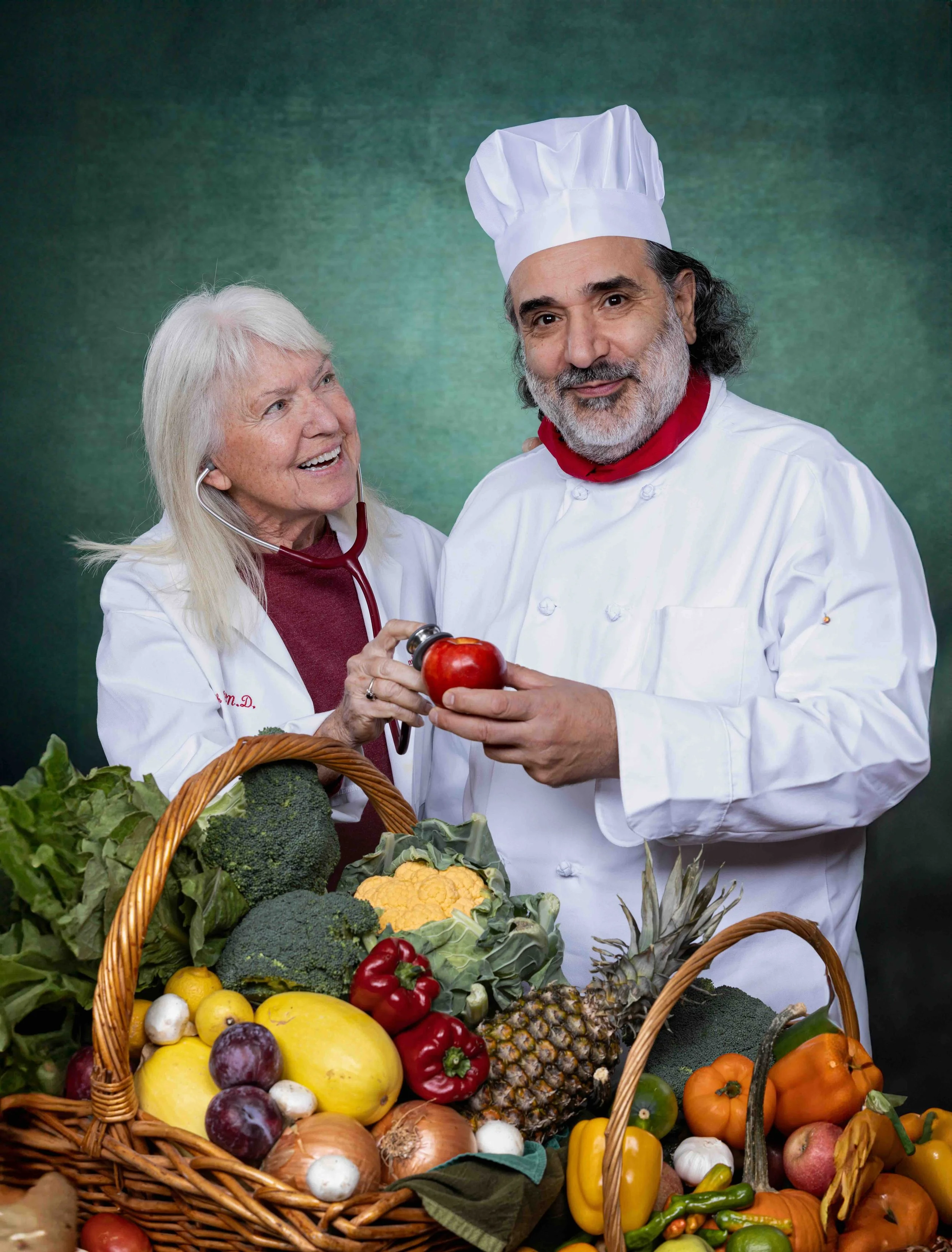
A Doc and a Chef take you on a Healthy Eating Adventure
Rip sits down with Dr. Elizabeth George and Chef Nick Iula, co-authors of Healthy Eating Adventure, to explore how whole food, plant-based eating can transform health and lives.
Dr. George helped launch the Healthy Eating Adventure program more than 15 years ago, helping hundreds of participants reverse chronic disease through nutrition.
Chef Nick Iula joined the program after decades in professional kitchens and, after he changed his own diet, he experienced a dramatic health transformation — losing weight and eliminating multiple chronic conditions.
Together, they combine medical science and culinary expertise to show how plant-based eating can be both lifesaving and delicious.
In this episode you'll learn:
Why doctors receive little nutrition education
What chefs are taught that harms health
How whole food plant-based eating reverses disease
How taste buds adapt to real food
The science behind food as medicine
How Chef Nick lost weight and eliminated chronic illness
Practical strategies for cooking without oil, salt, and sugar
How to make plant-based food deeply satisfying
This conversation proves that real food is the most powerful tool we have to live longer and stronger.
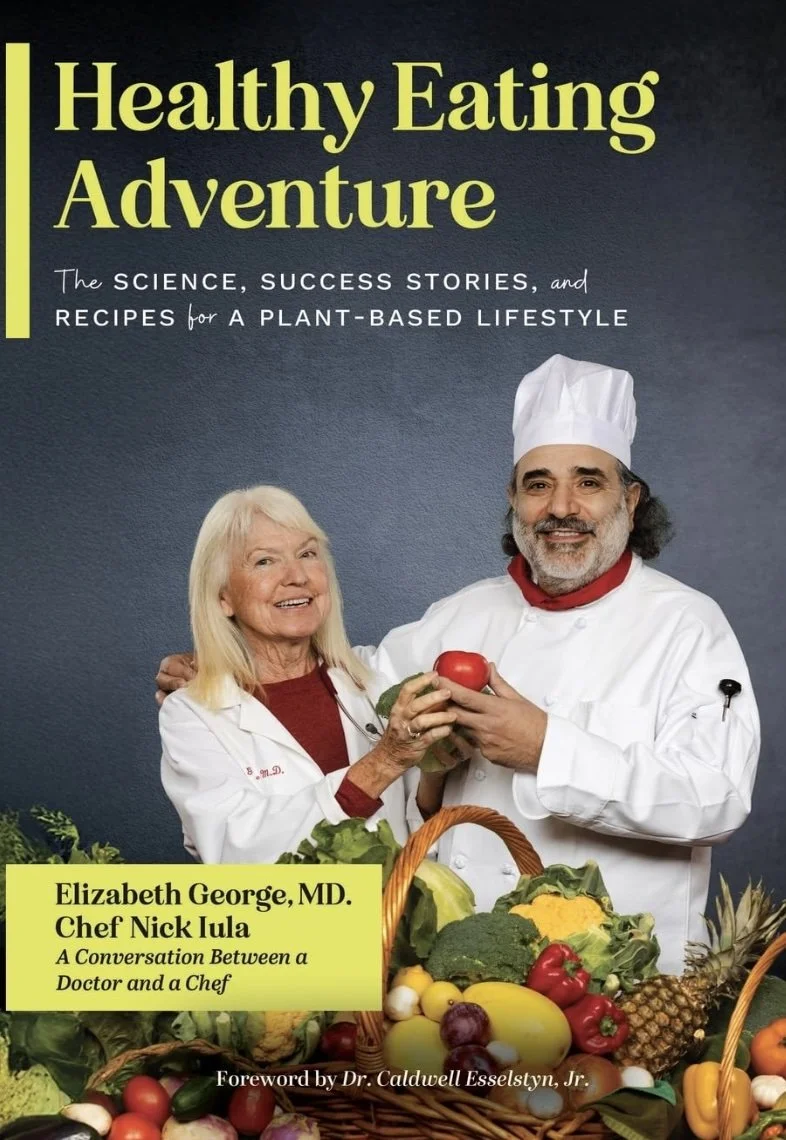
Healthy Eating Adventure is available now!
Episode Resources
Watch the episode on YouTube: https://youtu.be/t_jx6q0k2Ks
Healthy Eating Adventure: https://www.healthyeatingadventure.org/
We hope to see YOU at one of our 2026 Live Events! https://plantstrong.com/pages/events Use code: podcast to receive early bird pricing
Plant Strong Meal Planner: https://mealplanner.plantstrong.com/ - take $20 off with the code SPRING20.
To stock up on the best-tasting, most convenient, 100% PLANTSTRONG foods, check out all of our PLANTSTRONG products: https://plantstrong.com/ Use code: podcast to receive 10% off your first order.
Give us a like on the PLANTSTRONG Facebook Page and check out what being PLANTSTRONG is all about. We always keep it stocked full of new content and updates, tips for healthy living, and delicious recipes, and you can even catch me LIVE on there!
We’ve also got an Instagram! Check us out and share your favorite PLANTSTRONG products and why you love it! Don’t forget to tag us using #goplantstrong 🌱💪
Episode Transcript via AI Transcription Service
I'm Rip Esselstyn, and you're listening to the Plant Strong Podcast.
[0:04] Today, I'm sitting down with two incredible humans, Dr. Elizabeth George and Chef Nick lula, who have come together to bridge the gap between medicine and the kitchen in a way that could truly change your life. Their book, Healthy Eating Adventure, shares what doctors aren't taught about nutrition, what chefs aren't taught about health, and what happens when you finally connect the dots between the two. Imagine spending decades in professional kitchens cooking with butter, cheese, salt, and oil only to discover that the very foods that you were trained to use were slowly destroying your health. That is exactly what happened to Chef Nick Lula. Today, alongside Dr. Elizabeth George, he shares how a whole food, plant-based lifestyle didn't just improve his health, it saved it. From reversing chronic disease to completely rethinking how we cook, this is one of those conversations that just might change the way you eat forever. We'll have their full conversation right after these words from PlantStrong.
Understanding the Cost of Health
[1:28] Let's talk about cost for a second, because when people look at something like one of our retreats, the first reaction is, that seems pretty expensive, and I get it, but here's the question that I will throw back at you, compared to what? So for example, if you have a stent put in, the average cost is going to be $46,000, and that's for a drug-eluting stent procedure. If you're going to have open heart surgery, right? And open heart surgery is anywhere between $100,000 to $200,000, depending upon the hospital. If you're going to try one of these GLP-1 drugs, that's typically $1,300 to $1,500 per month. That's going to cost somewhere between $13,000 to $18,000 per year. So the system, right, is expensive. And what we've built is different. It's not a vacation. It is an intervention, which feels like a vacation, and it's a chance to understand what's actually driving your cholesterol, your blood pressure, your blood sugar, and how to change that trajectory. Our Black Mountain Retreat is sold out, but we'll be back in Sedona, Arizona, September 28th through October 3rd. You'll get to spend six days with physicians who practice this kind of lifestyle medicine.
[2:52] You'll get to eat the way we recommend using real food and our Plant Strong products, and you'll leave knowing exactly what to do next. For a lot of people, it is the first time that everything comes together and makes sense. And if you want the deeper clinical layer, you can join us in Cleveland this June for Vital Signs, where we're working directly with providers on how to apply this in real world care. because at some point, the question becomes...
[3:23] Do you keep paying for sick care or do you invest in understanding how to actually get better? You can learn more at plantstrongevents.com. And if you're not ready for a retreat, but you know you need support right now, our meal planner membership is designed to help you stop wasting time, money, and energy. Because let's be honest, most people spend money on groceries they don't use, ingredients that go bad, recipes that look good, but then didn't work out in real life. This is different. Every recipe is tested by real people. Every plan is designed to be practical, repeatable, and actually stick. And most importantly, you get real human support. You have a food coach that you can message, email, or even meet with one-on-one. So when you're stuck, you're not guessing. You're not starting over. You're getting the guidance that you need. And right now it's $99 for the full year, comes to about $1.90 a week. And we've extended our spring promotion through the end of April. Use the code SPRING20 for $20 off. And if you want to stop spinning those wheels, this is the best place to start. Just head to mealplanner.plantstrong.com.
[4:51] Okay. I want to welcome Dr. Elizabeth George and Chef Nick lula to the Plant Strong Podcast. And you guys came together in a very, very wild way, which we're going to get into. And you guys have written this really extraordinary book called Healthy Eating Adventure. and it's a conversation between a doctor and a chef and... I'm telling you, you guys did a phenomenal job with this book, packed with so much fantastic, valuable information and so many recipes. I mean, it is really spectacular. So I want to dive in and talk to you guys about this work of art. And I think where I want to start is kind of at the beginning, because Dr. Elizabeth George and I, we go back to this place called Mercersburg Academy. me. Liz, you can see I'm wearing my Mercesburg swimming shirt. This is as thin as toilet paper. I got this in 1981 when I was there, my first year at Mercesburg. And it is literally one of my favorite shirts. You can see how thin it is. You can almost see my skin.
[6:08] But Liz, I would love it if you would share with our listeners how you and I came to get to know each other. Okay. Well, you know, Mercersburg, like lots of towns across the country, were having increasing levels of, well, I'm a family physician in an office and they're having increasing levels of all the chronic diseases, hypertension, diabetes.
[6:39] GI problems, all of those. And I was really concerned. And then in 2009, the word came out from the CDC that this upcoming generation was going to have shorter lifespans than ours. And that really, really set me on the trail of looking. And then I was reading the Mercer's Berg Alumni Magazine, and there's this picture of this guy. And it says he's written a book called Engine 2, Engine 2 Diet, and that he had gotten his comrade firemen to take on a healthy eating diet. And it changed their lives, got rid of their diabetes and their hypertension and everything. So I go, okay, that sounds like we could do that for Mercer's Berg. So I, cause he went to Mercer's Berg Academy. I said, Hey, I called him on the phone. I was amazed. I said, Hey Rip, this is Dr. Liz at Mercer's Berg Academy. You came here and I saw your, I saw your book and, um, Hey, come to Mercer's Berg and start, start something like that for the, for the community. What do you think? And he said, and he said, and I said, let's do it. Let's do it. Sounds, sounds great.
[8:00] Yeah. And that's kind of how it, how it all started. And you set up all these, lectures for me to give at like auto parts stores and banks and at the academy and, and schools. I mean, it was really remarkable. You like, you put me to work in a big way. And you were a good sport. You really were. Yeah. Yeah. But, but it was at the time though, did you have a name for it? You didn't, it wasn't, it wasn't called the healthy eating adventure back then, was it?
The Birth of the Healthy Eating Adventure
[8:34] When you coming, we called it engine two diet. Yeah. And then shortly after that, we got to be engine two Mercer's Berg. And so we were that for a few years.
[8:45] Yeah. And that gave us good headlines. Well, and then and then we were able to drum up what about 70 plus people to actually do the 28 day challenge with the before and after biometric screenings. Yep. Yeah. And it was amazing. I was like, this is amazing. You know, and the and so the other coaches, they all came to me and said, Dr. Liz, this is amazing. We've got to keep this going. we've got to keep it going and what's amazing is 15 years later it's still going it is it really is yeah you guys have achieved something remarkable and how many people that you know of have been through the healthy eating adventure you know 28 day challenge um and it's spread in several is it several states now? Oh, well, it went out to Yuma.
[9:42] Arizona for a bit. And we've been in other counties in Pennsylvania. We'd love it to spread other places. We've done it virtually during COVID and we had a couple of different states then, but mostly it's around our area. People are welcome to take it on though. There's an outline for how to run your healthy eating adventure. Yeah, yeah, there is. And so you started doing these in different counties. And if I'm not mistaken, that's how you encountered Chef Nick, right? Was that in Shippensburg, if I'm not mistaken?
Meeting Chef Nick Lula
[10:19] Shippensburg. And Chef Nick, you have quite a storied career in food and beverage. I mean, what, 45 plus years, award winning chef. And how did it come to pass that you and Dr. George were sitting at the same table and started this conversation? Well um dr liz came to see me at shippensburg university and she wanted to book a a catering for the healthy eating adventure group and she's making liz makes these requests well you can't have any added salt and it has to be very very low fat and no added sugar and um and i'm thinking Because in culinary school, we were taught for food to taste good, you have to have one of these three items, fat, salt, or sugar. In fact, if you have all three, it's a triple crown. And Liz said you can't use any of that. And then on top of it, it had to be low processed. She explained why. It was necessary to do that and why it was healthy. And unlike many chefs, I have a bit of a scientific background. So that made a lot of sense to me almost instantaneously.
[11:47] And I said, I'm going to give it a try. I hadn't read any literature. All I knew was no fat, no salt, no added fat, no added salt, no added sugar. And I jumped on board. I remember when Liz left my office, I immediately called my wife up on the phone. And I said, Roberta, let's try this new lifestyle. And I explained the diet to her. And she said, that's okay. You do whatever you want, as long as I don't have to cook. As long as I don't have to cook. So she jumped on board with me. Wait, you forgot to mention no animals. Oh, no animals, of course. Yes. Yes. No animals. Yes.
[12:28] Yeah, a small little omission. No animal, no animal bypass. Yes. Yeah. Nick was very proud of his choice of healthy Jesus. I know.
[12:40] Well, you know, so what is remarkable to me is, so Nick, you, you know, you grew up in a family that it sounds like you guys just revered food. You had like several refrigerators, freezers, ovens. I mean, and so at a young age, you really got immersed in food. Yes.
Nick's Culinary Journey
[13:03] Yeah, we had two kitchens. We had an upstairs kitchen, which was the main primary kitchen. And my dad built a second kitchen in the basement for overflow cooking. One wasn't enough. And and when you when you started your chef career you you were um you were fairly healthy right i was very i i thought i was very healthy i was lean i was young um.
[13:32] I mean, I could run, I could do things. And I mean, I was probably just healthy because of my age. I was, you know, in my mid-20s, so. Yeah. And what was your waistline? 29 inches. Yeah. Yeah. And what did it happen to balloon up to when you met Dr. George? I think it was about 52 or 53. It was like a triple X when I bought stretch pants in the low 50s. Once you pass 48-inch waste, they all kind of meld together for a while there. Yeah. And is that because...
[14:11] You were just eating all of the food that you were preparing for people or sampling a little bit more than you should have or what? I probably, believe it or not, I was probably eating less food in terms of like pounds of food and in terms of weight. But I was just eating ridiculously, absurdly fatty foods. And it was probably a combination of the fat calories and then the water retention from the sodium and then the calories from the sugars. But I thought I was living a healthy lifestyle. I knew I was big, but it was like, hey, I might be fat, but I'm eating healthy. I'm eating wonderful cheeses. I'm eating delicious lamb chops. I'm eating lots of fruit, lots of fruit. I was following what I thought was the Mediterranean diet. Yeah, and, of course, olive oil. Oh, tons of olive oil. Yeah. And a family of two, my wife and I, we went through, you know, those big tins of olive oil. I think they hold three liters, three full liters. We went through one of those tins every month. Every month I'd buy a new tin. Wow. Wow.
[15:27] Yeah. All right. So you're eating lots of meat and seafood and expensive cheeses and sauces and olive oil. And you're like, yeah, I'm doing the Mediterranean thing. I'm healthy. And so, and so Dr. George springs this on you and you're like, all right, I'm, I'm, I'm, I'm amazed at having a chef's background that you had such an open mind. And so I give you a lot of credit for that.
[15:53] You know, the last day I ever had, I call it contraband. The last day I've had contraband, Liz, was that day. Since then, I've never had any animal product.
[16:08] I've never added salt or sugar. When I do use sugar, it's unprocessed sugar. I might use a little maple syrup or blackstrap molasses, something like that. But, yeah, I changed my lifestyle that day and stuck to it. I handed him your dad's book, Prevent Heart Disease. Yeah, I handed him the book. Oh, yes.
The Transformation Begins
[16:31] Or did I send him into diet? I have one of those. Yeah. Let's just say both. So I want to come back to exactly, Nick, the kind of transformation that you had, because it was very transformative. Before we do, I want to actually ask both you similar questions related to your field because you have a whole chapter on each. And so the first question I want to ask Liz is what were you not taught in medical school that you wish you would have been taught? We weren't taught any of it. I mean, I was kind of lucky because my mom didn't like processed food. So I sort of started from there. But we weren't.
[17:24] The medical school is totally unaware of whole food plant-based eating. And even now. And they didn't really talk about how the way you eat impacts your health. I mean, they talked about vitamin deficiencies. and that was about the only thing they didn't talk about the interaction between what you eat and your body system at all i mean it's just not included in the science of yeah yeah um, it really wasn't until the last 20 years where they started recognizing some of this like the impact of you know the wrong the gut bacteria and everything it's it's pretty amazing but it's, What's crazy now is it's still not included that much. And now we know so much about the interaction between the foods we eat and how everything works. That's amazing. Yeah, no, it is.
[18:22] And, you know, in light of the new U.S. dietary guidelines that just came out, you know, they still don't have it right. They have some things right, but there still is lots of room for improvement, as we all know, having lived this now for many, many years.
Medical School Insights
[18:42] But the doctors still, I mean, they're encouraged to hand out a pill before they even sit down and talk to the people about lifestyle. Now, lifestyle medicine is starting to take hold.
[18:57] Or suggesting that, I mean, you can change so much by changing how you eat to whole food, plant-based eating. And it's incredible that that's not the first thing that is served up or talked about in a doctor's appointment. Yeah. Well, it's interesting, you know, in reading the book, Liz, you have, I think it was in 2010, as a family practitioner, you were seeing a 10-year-old young boy. And if I'm not mistaken, he was 150 pounds at the age of 10. Yeah. And I think you looked at the mother and you realized that she never really learned how to cook. Right. Right.
[19:42] And it was kind of, this was like a parallel path, I think, to you being, connecting all the dots from, you know, your childhood, your, you know, the way your mother raised you, maybe some of the shortfalls that you received in medical school. And then, you know, looking, you were, you were on the prowl for something, maybe you didn't know what it was. And then when you saw that book review in the Mercersburg alumni magazine, it just kind of, that was your opportunity and you pounced on it yeah you really you really did yeah and i think it's i want i want the the plant strong listener to know that you know you were.
[20:29] You thought outside the box for a while and spoke your mind i mean you you i think it's really cool like you got the Chambersburg Hospital, if I'm not mistaken, to stop smoking, right? Yeah. I walked into the, to see a patient one day and then nurse came in and wanted me to sign permission for him to go to the, go out and smoke. And I went, Really? No, not going to happen. And I went down to the family medicine department meeting the next day and said, hey, this is what we're doing. And we were on it, getting rid of it in the hospital. I have to admit, the hospital did a good job agreeing to get rid of smoking. And you know who were holdouts, though? Some of the cardiologists. Wow. It was nutty. It was funny. Why do you think that is?
[21:31] Well i guess doctors hadn't all figured out and they just weren't ready to give up their smoking it was really crazy all right okay so these cardiologists were smokers so right okay yeah they were okay with getting rid of it for patients but they didn't i we were saying nobody is going to smoke in the hospital and you're not going to stand outside and smoke we just because you couldn't be inconsistent like that and expect patients. And, you know, being in the hospital is the opportunity for them to quit smoking. Yeah. So we got it all through. Well, what I also think is impressive, and I think this part of this is a testament to you growing up with five brothers, is you were able to speak your mind and you weren't intimidated by some of these male figures. And one of the stories that I really enjoyed reading in the book, and you have so many, so many great ones, but is when you heard about the.
[22:34] Um, when women were giving childbirth, them sanitizing the vagina and, and, and what a, uh, horrendous mistake that was. Will you explain why? Well, well, the first it started with, they, they said the vagina is a dirty place. That's right. That's right. I said, excuse me, the vagina might not be sterile, but it isn't dirty. And we actually were able to get rid of doing that, but it turns out it is super important because that's a very important place where babies get their gut microbiome.
[23:13] And that's why C-section babies have a little more things like eczema and stuff at first because they don't have their microbiome functioning, but it's really an important factor. So it turned out to fit right in. I got the Gloria Steinem Golden Scrotum Award. Successfully intimidating all the male doctors. Oh my goodness gracious. And is that an annual award that's given out at Chambersburg hospital or what no at this point women you know female doctors have their own, i mean there's there's not there isn't, it was it was funny well what a glorious uh award for you to have won well deserved for sure, And, you know, another thing that growing up and maybe you still do it. One of your favorite sandwiches is peanut butter with lettuce and pickles. Yep. I mean, I mean, tell me, Chef Nick, does that fly in your kitchen? I'm not familiar with that particular sandwich.
[24:37] You know what's funny, though? I fixed it for my grandkids once, the peanut butter pickle. They loved it. Wow. So really, Nick, you should try it before you. Yeah. You know, so let's talk about how you guys came together and all these synchronicities. How, like, Liz, I know that in your mind, you were thinking about writing a book. Nick, in your mind, you were thinking about writing a book. Liz, where did you go to medical school? I went to Brown. Which is in what city? Providence, Rhode Island. And Nick, where did you go to culinary school? Johnson and Wales. Which is where? Also in Providence, Rhode Island. Yeah. Isn't that funny? Yeah. It is so, so wild. And so you guys were sitting, is this, when you guys were sitting, deciding to put your heads together and write healthy eating adventure, was this before or after Nick's transformation?
[25:41] That was after. After, yeah, yeah, yeah. Quite a few years after, yeah. Got it, got it. Can we read you that section? Please, go ahead. You got it, Nick? I got it, yes. Okay, so I said, we were sitting eating together, and Nick had made one of his. Nick, this dinner is so good. Everyone always talks about the delicious and beautiful plant-based menus you create for holidays. I have so much fun cooking this way. And as I've often said, this whole food plant-based lifestyle saved my life. It's so different from what I learned in culinary school. Everything was supposed to have plenty of sugar, salt, and fat.
[26:27] Fascinating. And in medical school, I was never taught nutrition. And now look at both of us. Look how much we've learned out of healthy eating adventures. I've been thinking I want to write a book, What I Wasn't Taught in Culinary School, and in the book include Plant Strong Cooking How-To Strategies and Recipes. That's so funny because I have been wanting to write a book too entitled What I Wasn't Taught in Medical School. I was planning to include the results, the fabulous results we've seen for healthy eating adventure participants and some of the scientific evidence that explains why this way of eating is so beneficial. We should write a book together. We weren't taught in school. Conversations between a doctor and a chef. Bravo.
[27:23] Yeah. So let me, let me, let me, let's dive in a little deeper there. Because Chef Nick, I love to know, like in culinary school, you... First and foremost, it wasn't about the health of your clientele, right? It was about just making it incredibly delicious. Making it delicious and inexpensive to prepare. Okay. And tell me, I'm going to just throw out something, and I want you to tell me how important it was as far as your culinary education.
[28:03] Animal protein at every meal. Critical. Absolutely. Oh, you had to have some form of animal protein on your entree. Actually, every course. You should have had a little bit of animal protein. All right. What about fresh herbs and produce? Fresh herbs and fresh produce was also desirable. Fresh herbs became more popular in the 80s because they're a little pricey. In the 70s, it was nice to use fresh herbs, but dried herbs were okay as well. Yeah. What about cheese and full-fat dairy? Critical. Absolutely, yes, yes. Sauces, everything had some form of dairy in it, everything.
Culinary School Experiences
[28:47] In the real fancy restaurants, you'd smear steaks with butter before you'd broil them because there's not enough fat in them. Right, right. So you just said butter. So did you ever skimp on the butter or did you go just the opposite direction?
[29:04] Prior to my lifestyle change yes when you were yes yes as a chef no i never skimped on butter no yeah butter and cheese i know uh yeah my house we were about a one pound a week family on butter you know for two people that's that's a good amount i think oh sure yeah it sure is what about desserts words.
[29:29] But desserts always had to be sweet, and it was nice if they had some type of animal fat in them like cream or butter, eggs. Eggs was really important in desserts.
[29:47] Having a dessert such as maybe just like a fresh bowl of cut-up fruit wasn't unheard of, but it was rare. Yeah, yeah.
[29:59] What about your use of salt? Oh, that's ridiculous. Yeah, I can't imagine when I think back how much salt I used to go through. When I made this life change, I took all my salt, I put it in a container, and I hid it away in one of my food pantries in my house. Because I didn't just have regular salt. I had some real, I had this pink Himalayan salt and I had this blue Korean salt. I had all these crazy salts from all over the world. Salt was pretty good. I mentioned in the book, in most restaurants on the service line, there's a small bowl, usually a small bowl that's about 80% salt and maybe 20% black ground pepper. And when the chef is finished with his plate he puts it he puts it on top of the service line and the waiter picks it up but the chef this is after the food's been seasoned after the sauces have been seasoned after everything will sprinkle a little bit of that salt and pepper mixture on top of the plate because because you just you know you can't have too much salt so the finishing touch is a little more a little more of sodium yeah what about did you use, Whole grains or refined grains, typically?
[31:26] Well, as a chef, I've always used refined grains. You know, whole grains was considered second class. Like, I never used whole wheat, never used brown rice, never used chia seeds or flax seeds or anything like that. It was just always – and if we made gnocchi, for example, would be we would remove the skin from the potatoes and we would use a white flour. What about frying? Were you a big fan of frying back in the day? Frying was made food. We believed it made everything delicious. You know, we had a joke. If you get a piece of cardboard and you dip it in egg batter, flour, and a little breadcrumbs and you deep fry it, it's edible. Yeah. What about organ meats?
[32:24] This is crazy, but the nicer the restaurant, the more apt they were to have organ meats on their menu. The more typical family restaurants, other than liver, they've seldom had organ meats. But Cervell, Brains, Sweetbreads, the timers gland, kidneys, they will often be served. And they were considered delicacies. Wow. So if you wanted to impress, you had to do the organ meats. In a nicer restaurant, at least have it on the menu. Yes. Wow. Yeah. Your patrons were expecting to see that on the menu. Absolutely. How about hydrogenated fats? Very important. Very, very important.
[33:08] Hydrogenated fats make, if you're cooking with the, like if you usually the hydrogenated fats were used in baking or in deep frying. And deep frying, it made the oil last much, much longer. And in bacon, I mean, when you're baking with the hydrogenated fast, such as Grisco, it makes the product flakier. Although I say it makes it. It's perceived as it's being flakier. I mean, you don't need that stuff. You don't need it. Well, so given everything we just talked about there, right? I mean, everything that we just talked about, except for the fresh herbs and produce to me, is as you so eloquently said earlier, basically contraband in this new way of eating. So how did you make this 180 degree shift from what you learn in culinary school to not using 90% of that? I mean, how did you educate yourself and make it work? I am.
[34:16] There were several factors. Initially, my food probably wasn't as tasty as it is today, but I was motivated because my health improved dramatically quickly, quickly. I mean, I was losing the weight quickly. My sleep apnea disappeared quickly. My restless leg syndrome. And those are excellent motivators. They're really good motivators.
[34:45] But I used science to help me.
The Shift to Whole Food Cooking
[34:49] I know what makes food taste good. I did things like I layered my ingredients one ingredient at a time and then mix it in. I concentrated my flavors. So like if I was making a stock, I'd really simmer the stock longer than typically because I knew I wasn't going to be adding any salt to it.
[35:14] Um yeah i looked for foods that were strong in umami and you know where everybody's familiar with that with the standard taste buds they can taste sweet bitterness saltiness and sour and it wasn't until the year 2002 when in the united states scientists recognized umami as the fifth taste bud it's often described as savory and rip i went to town on umami i i learned all i could about it and uh all the recipes really focus on a lot of umami uh umami is basically uh glutamate but it's glutamate in its natural form it's not monosodium glutamate and it makes food You know how sometimes you taste food and it's lip smacking and you go, oh, that's tasty. And that's what umami does. And umami is found in high doses, high levels in garlic powder, onion powder, sun-dried tomatoes, all mushrooms. Mushrooms are loaded with umami.
[36:26] And seaweed. Seaweed is loaded with umami. So I incorporate seaweed whenever I can into the recipes, and it doesn't taste seaweedy at all. No one would ever in a million years know that there's what you would think seaweed is in the recipe. But it helps disguise the fact that there's no salt. You don't need it.
[36:56] Well, what would you tell somebody –, that is out there and they just think that the food won't be tasty enough. Can you actually train your taste buds to enjoy this bland food? Well, first of all, I never use the word bland because it's not bland. It's far from bland.
[37:23] Your taste buds mature. They grow up. They're no longer childish. They get rehabilitated. Yeah. Basically been sabotaged and overwhelmed by all the salt, fat, and sugar. And the dopamine centers have become inured to them and need more and more and more and more. So you're basically rescuing your taste buds and your I'm full buttons too. So you're rehabilitating these taste buds because your taste buds actually are very sensitive. So if you give me something salty now, it's like, it's too salty. But it's more not, it's rehabilitating them so they can experience this. I like that way of, yeah. Yeah. Now, that's one of the things that I talk about at the beginning of the book is how did our ability to cook get sabotaged, but how did our appreciation for flavors and tastes get sabotaged? And that's what the processed food does. Yeah. Okay. Go ahead. Food takes on a different, it's different. Everything tastes so yummy.
[38:33] Especially like fruit. Having fresh fruit for dessert, it's very satisfying. You know, 15 years ago, maybe not so much. But, you know, now, you know, some fresh strawberries or blueberries, boy, that's a treat. It tastes really, really yummy.
The Benefits of Plant-Based Eating
[38:54] Yeah. I'm not missing anything. I'm not. The guy who's eating hot dogs and roast beef sandwiches, he's not enjoying his food any better than I am. Yeah. We really notice when people come, that people are taking the program that by about two weeks, they're really like tasting flavors of things and they taste all the potluck dishes and they're really able to appreciate them, which is, it's exciting to see it happening. Yeah.
[39:25] In the book, Chef Nick, you say that the food that you and your comrades are serving people in restaurants around the world, basically it's like a slow poison fueled by sugar and grease. And then you said that what you love about this whole food plant-based lifestyle, and you said it's not a diet, it's a strategy. So explain to me, because to me, that's a huge shift. Why do you use the word strategy instead of diet? Well, I've always thought diet has like a negative connotation, but it's a strategy because it really involves more than just food. Of course, it starts with food. But, you know, in my case, I noticed after about six months of this lifestyle, I got I got I was more peaceful, I was more internally spiritual.
[40:39] If somebody were to say to me today, oh, this rips incorrect. Everything he says is no good. You know what? I would still stay this. I would still eat this lifestyle. I would still do this lifestyle because of how it makes me feel. And it makes me feel good about myself because I'm not harming animals. I'm not hurting the environment. I mean, the amount of pollution caused by methane gas from dairy farms and cattle ranches, it's absurd. It's ridiculous. And plants do the opposite. They don't pollute. They clean.
[41:20] No. Yes, they do. Yeah. So let's Liz, Liz and Nick, what I'd love to do right now is.
[41:28] Walk through where Nick, where you were before you took this healthy eating adventure challenge and then kind of where you landed and really where you are today. So your weight, you had ballooned up to 300 pounds. Where are you today? This morning, I was at 224, which is heavy for me, and a little bit heavy, but usually I'm around 218, 215. Well, that must feel a lot nicer than 300. Oh, yes. It feels a lot nicer than 250. And would you say that with this lifestyle, you are eating copious amounts of this strategy. You're eating copious amounts of food. That's the beauty of this lifestyle. I love to eat and I don't count calories, but I love eating. And I eat until my butt, until I'm stuffed, until my gut is stuffed every night. But if you're not adding, if you're not putting any added fat, you're not eating any animal products, The only, there's not a lot of veggies, fruits that have fat in them. Avocados. Yeah. I have about two avocados per month. They're my treats. You know, I have, um...
Weight Loss and Health Improvements
[42:48] You know, you just can eat, you can eat. Yeah. Well, the, all of the fiber and that actually takes up a lot of volume. Yeah. Yeah.
[43:01] Yeah. Yeah. Liz, feel free to jump in here as well as we're going through this. And I'd love to, you know, hear from your medical side, you know, why these things are happening so obviously you know these foods they're calorie light they're loaded with water fiber you can eat copious amounts and so you know this is this has allowed nick with this eating strategy to go from 300 to 200 and whatever 15 20 but you know you're you're you're at a good fighting weight now yeah how about your cholesterol your cholesterol what was it at in the back in the day? It was, I'm going to say it was over 400. It was very, very, very, very high at its peak. And now it's usually about 170, between 150 and 180. And are you off medications for that, right? Oh, yes.
[43:59] And within four or five months, I was off of all my medications. I was taking medications for my triglycerides were through the roof. I remember they once tested at 2,000. And yeah, believe that or not, that's the truth. And my cholesterol was 4, 5, 6, 7, 100. Wow. I had, I had gout, which we call the chef's disease. You know, a lot of chefs have gout because of all the rich foods we eat. And is that your blood pressure? Oh, my blood pressure was through the roof. It was probably about two, I think at its peak, it was maybe about 240 over 200 or 240. It was, it was very, very, it was dangerously high. And now it's usually about, I'm going to say, I think the last time I had it tested, it was like 145 over 75, something like that. Well, that's certainly better than 240 over 200, right, Liz? Yeah.
[45:07] Well, you're getting rid of the salt and everything, but you're putting things in your body that actually help your blood vessels kind of rejuvenate. But your greens have lots of help you make more nitric oxide and helps your endothelial, the lining of your cell wall, make nitric oxide. And so these are dilate and they relax better. So that kind of counterbalances what those other foods do in terms of causing hypertension. So it's not just getting rid of the salt, which is really, really important, but there's a whole bunch of things about the food itself that helps. Well, and every time you say the word endothelial cells, a bell rings and my father gets very happy. So nicely done. Yeah. There's a lot of other benefits to this lifestyle. For example, cleaning. Cleaning afterwards is a breeze. Oh, yeah. Cleaning the pots and pans. You don't have the crusty stuff on the saute pans and stuff.
[46:15] Before, even though I have excellent ventilation in my kitchen, And right above my range, I would always have like a cloud painted on the ceiling from all the smoke from sauteing oil and butter. I don't have to do that anymore. That's interesting. I don't think they ever talk about, but that's probably bad for your lungs too. Right? Yeah. It can't be good. Yeah. And we're a cat family. We always have at least three cats. and in the old days trying to eat dinner with three cats, was virtually impossible because they'd be all over the table because they'd want to eat food from us now they don't even give us the time of day and I'm still a pro-runner and I can eat a piece that's nice, um um.
[47:06] All right. So you mentioned you had the gout, you had the fatty liver, you had acid reflux, restless leg syndrome, I think I heard you say earlier, sleep apnea. And so are all those things either faded or gone today? They're all gone. Every single one of them is gone.
[47:26] I joke in the book about I used to take Tums every night. And probably in my lifetime, I've taken 15,000 Tums. But see, you trick yourself into thinking you're healthy because Tums, you read the instructions in the Tums, it says, do not take more than six per day. I took only two. I'm real healthy. Everybody's taking six. So you kind of trick yourself. Every morning I would take aspirin because I'd wake up with a headache. Um i think in the last 12 years i have probably have taken 12 aspirin and 12 years yeah and all of them are probably new year's day yeah um yeah so so chef nick tell me this are are you for work these days are you still a chef and if you are are you are you you know making the the contraband? Are you making the healthy stuff or like, how have you, how have you reconciled that? Well, I've been, um, I've been retired for about six years, but prior to being retired, um, I ran the food service operation at Chippensburg university. That was my last assignment where I, um.
[48:47] A contraband. And when I changed my lifestyle, I, what I did was I, I, I had like a station at the, for the students where they could eat healthy, what I thought was healthy.
Chef Nick's Retirement and Cooking
[49:03] And it might not have been fat free, but it was way less fat than they, than they were used to. There was no sodium added. Uh, we used, we used to use a low salt, a low sodium tamari to salt our food with yeah um and um we we we won several awards we won uh you know peter are you familiar with the organization peter oh yeah we won uh like the best vegan option best vegan menu for any college university in the united states we won that one year um well yeah no congratulations on that. When I came out with, I think it was the Engine 2 Diet, PETA awarded us the friendliest fire station in the United States. That's cool. Yeah. And for people that don't know, PETA is the People for the Ethical Treatment of Animals. Yeah. You know, one thing we did at Chambersburg, they did take on always having a whole food plant-based option at the meals.
[50:09] So they were early, Chambersburg Hospital was early in that, and it came out of what we were doing. And they still do it, thank goodness. Yeah. It's the perfect time for patients to learn it, learn the option. Just prior to my retirement, I had a six-month assignment at University of New Orleans in New Orleans. And I said, what the heck? What the heck? So we introduced a vegan station, and it went over hugely popular. This is in New Orleans in New Orleans. I mean, the epitome of butter and oil and stuff, and it went over very, very well.
[50:58] You know what? We haven't talked about it all, and I want to mention it because it's such an important part of the book, is really the last half of the book is just, it's you, Nick, diving into all of your expertise and tricks that you've learned over the years on how to actually make this way of eating deliciously healthy. And you have everything from international dishes to desserts to um hors d'oeuvres wait hors d'oeuvres hors d'oeuvres hors d'oeuvres yeah hors d'oeuvres to soups to main dishes and literally i mean help me out how many recipes do you have in this book you know it's about it's at there's a little over 300.
[51:55] Oh, my gosh. Yeah. So it's literally like 100 page 130 to 320 is just you talking about food and different recipes.
[52:07] One of the things I want to stress to the reader of the book is recipes are just guides. If there's 15 ingredients required in the recipe and you have 12, the chances are pretty good if you just go with those 12, it'll still taste yummy and delicious. Yeah and that oh that's that the vegan cheese no that's one of my favorite recipes is uh no this is this is your oatmeal velvet cheese that's the one that i i love that because um i i missed i not anymore because there's many other options but initially i did miss cheese and uh that's such a healthy way of making your own cheese it's got oatmeal and has nutritional yeast red peppers in it there's some turmeric lots of umami with the garlic powder onion powder the fresh garlic yeah and you blend it all together and it's yellow creamy delicious yummy and you can make make it's great to make pizza it's a fantastic you know if you love pizza and if you want to do a baked pasta dish you can pour that on top of that for big pasta dish um.
[53:25] But uh i like that a lot i use that quite a bit in my house yeah so under and you you know there's so many incredible recipes i'd love to talk about but you know you've got this one and it was a there's a great story around it where you had some celebrity and they asked for this sid caesar and what did he ask for what did he ask for uh uh shredded wheat pudding that's Shredded weed pudding, that's it. And I was the maitre d' at the plantations room in Rhode Island at that time. And I usually didn't wait on tables. But Sid Caesar came in and I said, well, I'm going to wait on him myself. So I went in and I asked him what he wanted and I took his order. And he said, I'm coming in for breakfast tomorrow. Can you do this for me tonight? And he got me some shredded weed and, you know, mix it with milk. I don't use milk. I use plant milk. And mix it together and put some dried fruit in it. And then the next day he came in for breakfast, and that's what he had. And I have some in my refrigerator right now. I make about a week's worth at a time. It's very, very satisfying. And it's just like a soft pudding. And if you want, you can soup it up. You can put a little bit of vanilla in there if you want.
[54:51] But I just like it with a little bit of maple syrup or some type of a nice syrup. Not a lot. Very, very, very, very little. And lots of dried fruit, blueberries, cranberries. Yeah. No, that definitely caught my attention. Liz, I'm going to swing it back over to you here for a sec. So, you know, we talked about Nick's transformation and all the things that, he was able to get rid of.
The Power of Whole Food Plant-Based Nutrition
[55:23] Explain to the listeners why you truly believe that whole food plant-based nutrition or strategy, however we want to phrase it, is the most powerful medicine in the world.
[55:37] Well, we've seen so many different diseases be healed during the time that people We've seen autoimmune. We've seen mood. We've seen autism. We've seen GI concerns. It just seems like every system that can go awry when you put in whole foods, plant-based, it heals them. And one of the major things is the microbiome. And the microbiome relies on, to have a healthy microbiome, relies on high fiber. And the microbiome produces deuterate, among other things, and that's what your gut eats. Your gut wall uses as energy. And then you end up with a healthy gut wall, so you're making your lymphocytes right, and you're not having leaky gut. So that keeps out inflammation and abnormal molecules. And the other thing is that, and it lets your body pick up what it needs for neurotransmitters. And the other thing is when you're putting in the healthy foods and leaving out the animal stuff and the processed foods, you're getting rid of a whole slew of bacteria and unhealthy bacteria that are very damaging and cause inflammation. They're the bacteria that take...
[57:03] That take choline and chew it up and make trimethylamine. And that means to trimethylamine oxide. And then that's what damages, one of the things that damages endothelium. And it causes all sorts of other inflammation. So a lot of the diseases we're seeing today, we actually realize on a cellular level and molecular level that it's the inflammation that's triggering them. And also in diabetes, the fat building up in the cells is a big problem. So you could look at any one of the, in fact, in the book, we mention all of these diseases that have cleared up. And then I put in the science behind them and you can see what difference it makes. But, you know, it kind of makes sense. Why would we think that we can put in stuff that isn't really food? It's not really plant. And why would we think that our body would know what to do with it?
[58:01] And it really, we've had so many people that don't need their medication. We had one woman who, she stood up in her second week and she said, you know what? My joints don't hurt anymore. I was diagnosed, she says, I was diagnosed with ankylosing spondylitis three weeks ago. I'd had problems for years, years, and they finally saw it. And they wanted to put me on methotrexate. And my doctor said, no, go to healthy eating adventure. And now it's gone. So it got rid of the inflammation that was driving it. And we've seen that in rheumatoid arthritis. We've seen it in psoriasis, kids' acne. I mean, it's just amazing, but it's not really surprising because you're getting rid of the stuff that's causing the damage.
[58:49] Yeah, it seems so incredibly obvious to us. When you can go upstream, when you can go upstream and get the food right, everything downstream takes care of itself. Nick, did you want to say something? I was going to say, you know, if we compare ourselves with our friends and family who are similar to age to us, but don't live this lifestyle, I bet you dollars to donuts, they're taking 10 plus medications a day, maybe 15 plus medications per day.
Reflections on Lifestyle Changes
[59:25] And the only difference, really, they probably grew up like we did. They probably grew up in our neighborhoods. but they just have a different lifestyle. Yeah.
[59:35] Nick, you mentioned that you were retired.
[59:41] What are you doing to fill your days? Oh, boy. I love being retired because now I can cook all the time. I mean, I cook about four hours. I shop a couple of hours a day. I shop for fresh produce. I go to different grocery stores. Even if I don't need anything, this might be something that excites me. And I could probably, between all my freezers that I have in the basement, I could probably not shop for six months and have enough food for Roberta or not. Well, you're ready for the big storm that's approaching this weekend. Yes, I am. When COVID hit. Some days Nick would not sit down and write the book, work on the book because he was in the kitchen having fun. I remember when COVID hit this area, I thought to myself, oh, finally, I'll be able to. I can't go out. So I'll be able to use all the food I have in my freezers now. And Liz, what about you? What are you doing in retirement? I'm writing a book.
[1:00:55] I've got grandkids. We're still running the healthy eating adventure and sharing that. I jog a couple miles a day and I go bike riding. You see my lake behind us. I do a little volunteer work, play with the grandkids. Yeah. And tell me. And travel. it all sounds wonderful and so is are your grand children have they embraced this lifestyle or this strategy they well they're they do eat lots of fruits and vegetables when they come over to my house they're really they i have they enjoy making tofu in fact if i've made tofu that i'm going to put up for you know my the rest of my meals they come in there and they grab it by the handful and eat it and the fruits and the vegetables they do they're still they do still eat meat um their mom doesn't eat meat and my both of my daughters are whole food plant-based but that there's you know there's always someone in the family that.
[1:02:07] Oh yeah embrace it in terms of they have fun cooking with it when i cook it and they eat it And we make tofu stir fry. We make tofu sandwiches, peanut butter and pickle. You know, they don't turn their nose up at it whatsoever. They don't look at things and think it has to have meat, it has to have cheese. You know, they don't use a lot of processed food either. Very little processed food. Well...
[1:02:38] Elizabeth, Nick, you guys really have hit it out of the park. And I just want to let everybody know this really does, it does a phenomenal job diving into the science. You have so many great success stories. Like you said, Nick, hundreds of recipes, methods, like you said, how to concentrate flavors, how to layer flavors, tricks for how to steam, how to stir fry, you name it. Nick has got it all around a whole food plant-based lifestyle. So a conversation between a doctor and a chef. Look at these two beautiful human beings and both of them wearing their white coats.
[1:03:26] Rip, I have to say, this is so exciting. We're celebrating 15 years and thank you for, You were so significant at the start. I really appreciate it. And thank you for sharing the book. My pleasure. And, you know, everybody, the forward just happens to be by my father, Essie. Yeah, nice. Nick, were you going to say something? I was going to say, Rip, I want to thank you and your family. And Liz, I want to thank you because I say this sincerely. I don't know. If I hadn't changed my lifestyle, I don't know if I'd be here today. I mean, I really don't.
[1:04:10] But I don't know. Yeah. Well, Nick, are you in your 60s? How old are you? I'm 69. 69. Well, I think that if you weren't dead, you would not be doing well, especially where you were before that 300 and cholesterol. All in the, you know, yeah, you, yeah, you were a bit of a, you're a bit of a mess. And now you're just a absolute gorgeous hunk of, of chef. When I lived in Houston, I, I, I got my blood tested and my triglycerides were 2000. And I remember I had a Vietnamese doctor and with a very, very thick accent, he said to me, he goes, I'm not going to duplicate his accent because I don't know if i should let you leave you i might need to check you in yeah because my blood work was so poor yeah and you well you mentioned houston and you also mentioned how one of the favorite things in houston is to have a corn of corn on the cob with mayonnaise and grated cheese grated cheese yeah oh my gosh yeah you know they taste so so delicious just steam them and eat it you know it's nature's candy so delicious yes.
[1:05:37] Isn't it amazing how everything tastes so sweet these days pepper bell pepper wow this is sweet, Exactly. Nick, I hope I get to meet you one of these days. And Liz, it was so wonderful to see you a couple months ago at the Plant Strong Retreat in Black Mountain. That really was special. And I appreciate you making the effort to get there and spend a week with us. It was great. That's great. I love being there with everybody. I mean, when you're surrounded by plant-based people. It's just joy. Joy. I mean, it's just beautiful. It was. It was joy and happiness and lots of laughter. Energy.
[1:06:21] That's right. Good energy. All right, you two, on the way out, if you could just give me a nice plan, strong fist bump for healthy eating adventure. Boom. Go get them, Nick and Elizabeth. Thank you.
Closing Thoughts on Health Choices
[1:06:39] Imagine that. A doctor and a chef coming together to show us that the most important decisions that we make about our health don't happen in a hospital. They happen in our kitchens. Their book, Healthy Eating Adventure, is available now. And I'll be sure to put a link in today's show notes for you to purchase. If this episode lit a fire in you share it with someone who needs to hear it a friend a family member somebody who's ready to take their health into their own hands and remember you don't have to be perfect just start one meal one day one step at a time thanks so much for listening and always always keep it plant strong.