#347: What It Really Takes to Be Forever Fit with Maxime Sigouin

Maxime is founder of Mavy Wellness
What does it really mean to be “forever fit”?
Rip sits down with fitness coach and author Maxime Sigouin to explore sustainable strength, whole-food plant-based nutrition, and the mindset required to stay fit for life — not just for a season. It’s all in his new book, Forever Fit.
Maxime shares his personal journey from loss and hardship to helping thousands of people transform their health through his Forever Fit framework.
They also unpack the misunderstood topic of body recomposition, protein myths, stress, self-sabotage, and why loving yourself enough to care for your body is the real foundation of lasting health.
This episode is essential listening for anyone interested in longevity, plant-based performance, and building a body that supports the life you want to live.
Key Takeaways
What “Forever Fit” actually means
What holds people back from prioritizing fitness?
Maxime’s “Forever Fit” Blueprint, including exercises and how to change your body composition in a healthy way
Whole-food plant-based nutrition and longevity
Muscle, metabolism, and aging well
Protein myths and real food sources
Stress, self-love, and sustainable fitness
Why perfection fails — and flexibility wins
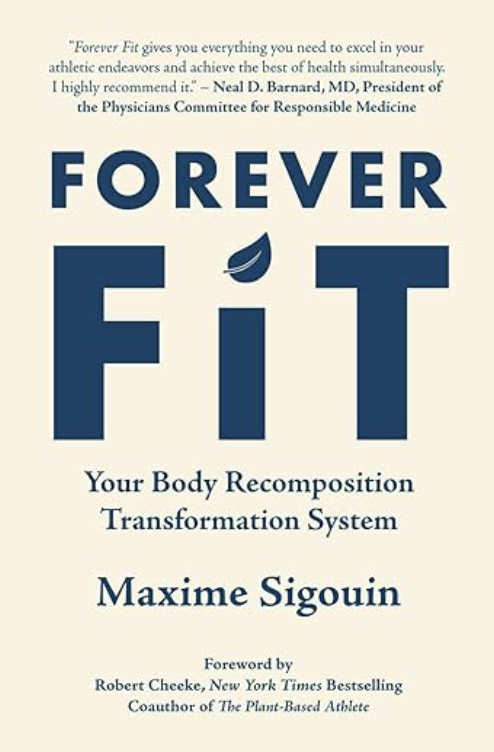
Maxime’s “Forever Fit” is available now
Episode Resources
Watch the episode on YouTube: https://youtu.be/gWQcJNgddEg
Mavy Wellness Website: https://mavywellness.com/
Buy the Book: https://foreverfitbook.com/
We hope to see YOU at one of our 2026 Live Events! https://plantstrong.com/pages/events Use code: podcast to receive early bird pricing
Plant Strong Meal Planner: https://mealplanner.plantstrong.com/ - take $20 off with the code SPRING20.
To stock up on the best-tasting, most convenient, 100% PLANTSTRONG foods, check out all of our PLANTSTRONG products: https://plantstrong.com/ Use code: podcast to receive 10% off your first order.
Give us a like on the PLANTSTRONG Facebook Page and check out what being PLANTSTRONG is all about. We always keep it stocked full of new content and updates, tips for healthy living, and delicious recipes, and you can even catch me LIVE on there!
We’ve also got an Instagram! Check us out and share your favorite PLANTSTRONG products and why you love it! Don’t forget to tag us using #goplantstrong 🌱💪
Episode Transcript via AI Transcription Service
I'm Rip Esselstyn, and you're listening to the Plant Strong Podcast.
What does it really mean to be forever fit?
[0:06] What does it really mean to be forever fit? Well, today I welcome back to the Plant Strong Podcast, Maxime Sigouin, to help answer this question with his new bestselling book by the same title, Forever Fit. Maxime's story is one of resilience purpose and redefining what it really means to be fit for life and fortunately he's made it his mission to share what he's learned with all of us we're going to talk about whole food plant-based living muscle and longevity stress self-love and why fitness should never be a punishment, but a pathway to freedom. He also outlines his entire program to help us understand how best to lose unwanted
Embracing Change with Plant Strong Retreats
[0:59] weight, gain muscle, and completely transform our bodies in a healthy and sustainable way. If you've ever struggled to stay consistent or wondered how best to build strength that lasts into your later decades, we'll get into it right Right after these words from PlantStrong.
[1:23] Every once in a while, it's necessary to shake things up and step completely out of your routine.
[1:33] This is what our Plant Strong Retreats are all about.
[1:38] I want you to know that our Black Mountain Retreat is officially sold out. But good news, our next retreat experience is coming up. It's in Sedona, Arizona from September 28th through October 3rd. And if you've never been to Sedona, it is so wonderful and magical and powerful. And this is a full week where everything is completely aligned with your health. The meals, the education, the conversations you're going to be having, the people that you're surrounded with. And you'll be learning directly from our physicians and our team. You'll see how to apply this in real life. and you're going to be doing this in a place that makes you want to slow down and reset. And for a lot of people, this is where things finally click. If you've been thinking about taking that next step, this is a great opportunity to do just that. You can learn everything about the retreat at plantstrongevents.com and I look forward to seeing you and the Red Rock Mountains of Sedona, Arizona. One of the biggest challenges that people face when they're trying to eat Plant Strong, it's not motivation, it's not willpower, it's support. And this is why we built the Plant Strong Meal Planner.
[3:06] A lot differently. This isn't just a meal planning tool. When you join, you are going to get access to a real live food coach, somebody on our team who understands this lifestyle and is there for you. You can message them. You can email them. You can even hop on a one-on-one video call with them. So when you're stuck, when you're traveling, when you're trying to figure out what do I want to eat tonight with my family, you're not alone in doing it. And then yes, you also get everything that you'd expect from a meal planner, personalized recipes, smart grocery lists, full nutritional breakdowns, even grocery delivery options. But it's that human support layer that really makes this different. And that's what helps people actually stay consistent. And when I say personalized recipes, I'm talking about meals that you're actually going to look forward to Things like crispy black bean and sweet potato quesadillas.
[4:08] Mushroom stroganoff's that are pure comfort in a bowl, and Mexican cauliflower tacos that are drop-dead delicious. Food that makes this lifestyle feel completely different. Effortless. And right now it's just $99 for the full year. It's about $1.90 a week. And we've extended our spring promotion throughout the entire month of April. So take $20 off by using the code SPRING20.
The Journey of Resilience and Transformation
[4:39] If you've been wanting an easy button to make this stick, this is it. Just head to mealplanner.plantstrong.com and get started.
[4:53] Maxime Sigouin, it is fantastic to have you back on the Plant Strong podcast. Do you realize, young man, that it has been two years and two months since you last were on the podcast? It was November of 2023 and a lot has happened since then. And so I'm savoring the opportunity to catch up with you and all the fantastic new stuff you have going on in your life and with your business. Thank you. Well, thank you for having me on, Rip. And yeah, it's crazy. Time has flown by in the past two years and so many beautiful things have happened. So I'm grateful to be here again chatting with you. Yeah.
[5:38] You know, our audience has grown substantially since you were last on the podcast. And for anyone that would like to go back and listen to that, it was episode number 223, where we really dive into kind of your background. You're an interesting cat, Maxime. Super interesting.
[6:00] And, you know, you hail from Quebec, Canada. uh, uh, just to kind of do a little bit of a rehash before we dive into some new stuff. How much time did you spend hitchhiking around the world, basically trying to find yourself in the meaning of life? Yeah. And I, yeah, I didn't find the meaning. I didn't find the meaning of life. Um, you know, I was about like a year to a year and a half that I, that I hitchhiked around and was able to meet a lot of interesting characters. And it took me out of my comfort zone forced me to develop a personality and be highly adaptable, which are skills that I'm grateful for now. But it was a beautiful time. I just didn't want to let the fact that I didn't have money prevent myself from exploring the world and having cool experiences. So hitchhiking was free. So I went with it. Yeah. And remind me, because I know closely what it is. At one point, your bank account got down to, was it $34 and 27 cents? Don't you have it tattooed somewhere? Yeah, you're close. $34 and 37 cents. Yeah. I got it tattooed on my finger. 34, 37.
The Mission Behind Helping Others
[7:11] And you have that there as a reminder of what exactly?
[7:16] Of where I was before I started this journey and this kind of mission that we're on. I had $34.37 in my bank account, but also had minus 70K in debt from paying for cancer treatments and medical bills and all that. So that's the only cash I had on hand at that time, which is when I started the business that we're running now and that we're on this mission to help people. It was a challenging time. I had just lost my corporate job and I took a risk on hiring a coach to help me start my business online because I had the passion. I had the purpose. I had the mission. I just didn't have the vehicle as to how to get it done. And so made my initial investment into that mentor. And then, yeah, here we are almost six years later. Yeah.
[8:03] How old were you when that went down when, you know, you had 34, 37, went hitchhiking, were you in your early 20s? No, so I was late 26, early 27 at that point because my late partner, when she got diagnosed with cancer, I just turned 22 at that point. So it was about like a four and a half year journey before I got to the point of starting the business. And then she passed away within a year of starting the business. Yeah. And we talk about that in the last podcast, but basically to get people caught up, this woman was your fiance. And ended up, unfortunately, succumbing to breast cancer.
[8:51] And you're, you know, in a lot of your writings and whatnot, very grateful, I think, to her. She's part of the dedication of your new book, Forever Fit. What was her name? Jennifer. Jennifer. Got it, got it. Yeah, I mean, and was it Jennifer or what exactly was it that compelled you to dedicate your life to helping others, you know, get the most out of theirs? Yeah, that chapter of my life was more of a confirmation that I should be spending my time and energy in that. Initially, it started when I went, you know, when I went vegan, whole food plant based. It's over 11 years now. And then shortly after my grandfather got diagnosed with cancer and he passed away from cancer. And that's around the time that I watched Forks Over Knife. And I was like, hey, there's a connection here. And I was, you know, I was the preacher. I was preaching to everyone. I was preaching to my parents and my aunts and my uncles because my grandfather just passed away. And I just kind of discovered this movement.
[10:00] And so I was already on that path of like, I want to help people in that way. And then when she got sick, I was like, hey, there's this thing, whole food plant based. There's a lot of studies showing that it's highly beneficial to like, you know, prevent cancer. So if it's helped, it's good for prevention, it's probably good for reducing the risk of it or, you know, helping to get rid of it. And so like we showed in the other podcast, doctors gave her a year to live. She lived four and a half years. It's really good quality of life when she transitioned to whole food plant based and obviously sleeping more and exercising more and kind of taking care of herself to a higher degree than she had previously. But when we added three and a half years to her life like that really sealed the deal for me like this is the lifestyle if it's going to help someone that is already at a high level of sickness imagine what i can do for someone that's not there yet like how much is it reducing their risk of dealing with these things so that kind of locked it in for me like this is the way to live this is the way to eat and then yeah that kind of covid happened lost my corporate job i was like i I want to, I need to make money because I can't get, I would work five jobs if I could to pay for all the treatments, but everything was shut down. So I was kind of forced to go online. And then that's kind of what started this, this journey there. But I was like, that really sealed it for me when she added three and a half years to her life. I was like, Hey, there's no other way to live. Yeah.
Unveiling the New Book: Forever Fit
[11:21] I want to dive into your new book. You've, you've written a new book. It's called Forever Fit, Your Body Recomposition Transformation System.
[11:32] And I know you've poured... Your heart and soul into this book. You spent over a year writing it. It really is an amazing blueprint for people to follow if they are seeking something as wonderful as being forever fit, which I think ultimately each and every one of us strives for. You seem to have found Unlock the Code, which is I think why you've written the book and you've worked with literally thousands of people. In the book, I am blown away by the number of success stories that you have, confirming that this does in fact work. Before we jump into the book though, I do want to just say, it's 2026. You mentioned before we went live here that you are just coming off a seven-day social media detox. How, so that must mean that you are like, your brain is as fresh as ever right now. Yeah, I think the best way to put it is I feel like myself again. It was definitely a big month of December with finalizing the book and rebranding the company and everything else we had going on. Yep, I do those every single month, the first seven days of every month. I take seven days off, no email, no Slack, no social media, no TV, no YouTube, no nothing.
[13:00] The first seven days of every month. Yeah, yeah. So I only work three weeks out of the month. It's basically what it comes down to. Yeah, yeah.
[13:08] Well, I think that we all could heed that a little bit. I don't know if we all have the ability to take a whole week off, but I like the thought of taking a week off of social media. Yeah, or even a weekend for people. It makes a big difference.
The Importance of Social Media Detox
[13:27] It took me years to build my life this way, for sure. It didn't happen overnight. Right. Yeah. Well, I just my family and I, we just went to Big Bend National Park and you're completely off the grid there. You can't get a signal even if you wanted to. And so we had a basically a forced, you know, social media moratorium for almost five days. It was so nice. So wonderful. Yeah. Oh, my gosh. And then you're also celebrating. You said, is it how many years is it with your wife? You obviously, Jennifer passed, you decided to keep living large and you met another wonderful woman and you got married to Ivy. When was that?
[14:08] Yeah. So January 5th, we just celebrated two years of being a big married. Wow. Huge congrats on that. Thank you. All right. So let's, let's give the plant strong listeners something that they can really like take home and take to heart. In addition to, um, obviously we want them to, to purchase your book because it, it, it has a lot of the keys here, but let's give them a little taste, right of, of forever fit. And I, I think I'd like to start by saying, so do you mean to tell me Maxime that I can't just eat kale and do squats every day and be forever fit? That's not gonna, that's not gonna do it.
[14:49] You will be a level of fit. Will it be the level of fitness that will allow you to, um, last until your eighties and your nineties and hopefully until your hundreds as kind of science evolves and technology evolves. Uh, I don't, I think there would be a little bit more to it than that in terms of exercise squats are great but there's also other great exercises we can throw in there yeah well so all right so in your in your in your opinion and you wrote about this you know in the book what exactly does it mean to be forever fit yeah so i think there's two nuances to it one is being fit is very different for everyone if you're talking to someone that competes in bodybuilding, they'll have, and we've had people that are in their fifties wanting to compete in bodybuilding. So if you want to compete for bodybuilding versus if you want to run a half marathon versus if you just want to be able to go hike with your friends and play with your grandkids, fitness is going to have a very different definition. So to me, being fit is where your body isn't a limitation to the life that you want to live. Right. So everyone wants to live a different life. So therefore, fitness will mean something completely different to them. And so whatever that means to them, where the body is not a limitation to them living their best life, that's what fit looks like.
Understanding the Concept of Forever Fit
[16:08] Um and the other nuance of forever fit is you know for people to understand it's not because you follow the blueprint that you'll be fit and you'll never get out of shape for the rest of your life right you will realistically get in and out of shape multiple times for the rest of your life the idea is to have the tools to get back on track whenever life throws you a curveball so there's a difference between you know doing the wrong way like doing three hours of cardio every day and starving yourself to like be simply lighter on the scale which doesn't mean fitter, and then rebouncing back and eating a ton of food and putting all the weight back on that's not a a proper getting out of shape there's exercising and being to a level of fitness again that allows you to live your best life and then life throws your curveball your partner gets diagnosed with cancer you lose your job your house burns down like life happens and yeah maybe you can't go to the gym as consistently because you've been throwing a big curveball maybe you can't be on top of your nutrition as much as you'd like to because life throws you a curveball and then you get out of shape for whatever that looks like for you and then whenever life does throw you those curveball then it's like do we have the tools and a blueprint to help us navigate these moments to potentially just stabilize during that time and then whenever life kind of quiets down a little bit then we can kind of get back to the level of fitness that we enjoy so for people to understand that is just some tools in the tool belt for whenever life throws your curveball, then you can get back at it after.
[17:33] So let me ask you this. Outside of the curveballs that life will inevitably throw every human being.
[17:43] What would you say are some of the behaviors that hold most people back.
[17:53] From being forever fit i think the two like obviously the most common one i'd say like just stress like not managing stress properly a lot of people are going to use food as a way to cope with stress so they'll eat more food than than they should or eat certain foods that are not necessarily the best for them um honestly another one two other ones is and they're rough to say but some people don't love themselves enough to take that time for themselves to exercise they will find their self-worth in being the yes man or the yes woman and caring for everyone else and saying yes to everyone else but forgetting to say yes to themselves and they have to get to the point where they their cup is bone dry and cracking before they realize that they have to pour into their own cup yeah and so i would say an indirect lack of of self-love and the other one is kind of tied to it but not feeling like they deserve it like the amount of people we've coached that were doing so well and just randomly decided to subconsciously self-sabotage and i was like what was happening it's like i had when we really dove down deep into it it's like i had so much energy and i felt so good that it made me feel uncomfortable i didn't know what to do with it right and i've been there at a point in my life too it's like you have so much natural energy like this is annoying. I feel anxious because I have so much energy and I don't know how to deal and process living a life at that level.
[19:19] And then people subconsciously self-sabotage and revert back to levels like tiredness, having to drink two, three coffees per day, eating some junk food certain nights a week.
Overcoming Personal Barriers to Fitness
[19:29] So I would say those are like kind of like the big ones that prevent people from being able to stay in that state long-term. Yeah. Well, it certainly is interesting. I think if we were to take a poll of a hundred people, I think the majority... Um, don't love themselves and actually in many ways are either, you know, um, repulsed by themselves or, um, don't like what they see in the mirror, unfortunately.
[20:01] And, um, and you're right. Um, I think that's a great place to start is learning how to, how to like yourself again. Right. Yeah. And that's, and that's disguised as I don't have time to exercise. I don't have time to meal prep. Why? You're saying yes to all these things. You know, you don't have to say yes to everyone. You can say a little bit of yes to yourself and there's a balance there. Well, it's interesting you say that because you know, you and I are both really good friends with Adam Sud, right? A plant-based addict. And when he was in rehab, you know, for breakfast, lunch, and dinner, he basically was eating whole food, plant-based, very consistently. And he said each one of those meals was an act of self-love and self-care for himself. So no matter what else he was, you know, was going on with him, he knew that he was doing something beneficial for himself. And that went a long way. And as you and I both know, he's working now with rehabilitation centers across the United States to he's done research studies,
The Connection Between Self-Love and Health
[21:03] all kinds of impressive stuff. Yeah. You know, he's doing fantastic work and yeah, it is. it is a form of self-love that people need to start making that connection, that it is a form of self-love to fill yourself properly. Yeah.
[21:21] Yeah. And then to your point, when you're, when you can connect all the dots, you're eating well, you are, you know, you're, you're doing the, a little bit of cardio, you're doing a little bit of body weight, strength workouts, all those things just kind of collectively combine. And then all of a sudden you like, you start feeling this body that you're in, right? And falling in love with it. You know, one of the things that you say is that most people fail.
[21:51] And then, or succeed because of one limitation. And that's what's between your ears. Yeah, because, you know, you can give someone the, you can get someone the best workout plan in the world and the best meal plan in the world, but unless they implement it, it's just a really good plan on a piece of paper.
The Role of Mindset in Fitness Success
[22:10] And so the, how can you get someone to take action on that plan? Well, that's a very complex thing to handle because for some people you have to go like, hey we're gonna go for a walk 10 minutes every day right or we're gonna strength train 10 minutes three times a week when realistically you want them to do like 30 minutes or 40 minutes so some people you have to build them up some people you have to look at what's on their plate and it's like hey how can we potentially move some of those things delegate some of those things or say no to some of these projects for now while you can get to a better place for yourself and so there's so many different approaches you can use to get someone to start to do the plan because you know you've been an athlete for for your whole life you understand that and i'm sure you've been out of shape like injuries happen where i'm recovering from a concussion and an ankle and so many things when you get out of shape you get back into it your muscles are way more achy you're more sore you're more tired but then once you kind of get that energy back and that muscle connectivity and you feel that strength you're like oh i'm hooked again this is fantastic i want to continue feeling like this so you just need to get people past that little moment of like where they get hooked. And then they're more self-motivated at that point. Yeah.
[23:24] Your, your mom, you wrote, you have a story about your mom in the book and her success story. Um, tell, tell the plant strong audience, where was your mother? And then where is she today? Yeah. So my mom came in and she was like end of her 55, like early 56.
[23:46] She struggled with her weight, you know, my whole life that I've known her, right. She used to weigh about, she's five nine. She used to weigh about like 184, 85 pounds. And my goal as a teenager was to be as heavy as her because I was trying to be a bodybuilder and put on some muscle.
[24:02] Now looking back, I can see that that probably didn't make her feel good. I was trying to be as heavy as her. I didn't think about that back then um so i saw her do like atkins and keto and maker's diet and eventually she had little containers that were made specifically for almonds little containers are made specifically for like olives and she did a whole ton of weird stuff to lose the weight so when i started the company i was like hey let me kind of help you do this properly but you have to go whole food plant-based like that's the only thing like i'll help you but you have to eat this way she was like fantastic and i think she was even more compliant because she didn't want to let me down because i was her son but you know she managed to lose about like 50 ish pounds um in nine months and has kept it off and she's she turned 60 so it's been over you know five years now that she's kept the weight off because we went through reverse dieting with her and helped her kind of increase her body's capacity to eat a bit more food to keep the weight off which is something she'd never done before. But yeah, my mom is super jack at 60 and she was never in this kind of shape. Last time she was probably like in her thirties when she was that fit. Well, you said an interesting term there. You said reverse dieting that I want to come back to here in just a second, because that's an interesting.
[25:17] Interesting term that I'd like to explore with you. Your mother also, I think, came up with the saying slow is smooth and smooth is fast, right?
[25:26] Yeah. Which is very interesting. Can you explain that? Yeah. Slow is smooth and smooth is fast is...
[25:37] When you go slow, which for most people is going to be more sustainable, right? Because you don't have to exercise three, four hours per day and cut your food by 90%, right? If you go slow, you're going to learn the lessons that come with going slow.
[25:52] So to me, slow is more sustainable pace, something that you can manage. Even when life throws you certain curveballs, because like we said, life's going to keep doing its thing. Sometimes you get small curveballs like a flat tire and then big curveballs like your partner getting sick. So when you go slow you're able to kind of learn these lessons but because you're not rushing and not sprinting you have time to learn the lessons and implement them and then that journey just feels so much more smoother after but when you're sprinting you're learning the lessons to maintain a pace of sprinting and you've run races you can't sprint the whole way right life's a really long race you can't sprint a marathon you can't sprint an ultra marathon you have to pace yourself. So whatever pace you go at are the lessons that you're going to learn to be able to maintain that pace. So if you want to learn something that's going to be sustainable, go at a sustainable pace and you'll learn the proper lessons. And it feels like a much more enjoyable and smoother ride than trying to sprint and trip and fall and trying to get back up because you're such in a hurry to get to the end goal. Yeah. It's such great advice. I know about But 11 months ago, I decided that I was going to start lifting weights again. I haven't lifted weights, literally lifted weights in probably...
[27:10] 25 years, right? I do pushups and pull-ups and body weight stuff all the time. And so a guy gave me a workout and he's like, what kind of shape are you? And I said, I'm in great shape. And so it was really aggressive workout. I ended up doing two of them. I was so sore after the first one that I was a mess. I mean, a mess for like four days, five days, literally.
[27:34] And then I did another workout, maybe another. And I just was like, so I can take to heart, you know, slow is smooth and smooth is fast. And this allows for consistency and sustainability and, and a certain level of permanence as well. Right. Yeah. Yeah. And you need to, I think as a perfect example, like it is such a higher stressor on your nervous system to use some weights and isolate some of those muscles and there's a different love level of muscle engagement as well that yeah it creates that like deep soreness that you can't sit down to on a chair without everything hurting your back touches the chair and your muscles are so sore yeah you gotta yeah you ease into it or you just train really hard and you're sore for maybe three four weeks and then you're fine you're you're caught up at that point yeah yeah so i'll definitely be getting back into it especially after reading your book and getting pumped and motivated in the right way to do this. You know, I'm older than your mom. I'm 62. Yeah. Right? So it's high time for me to hit the weights again.
[28:48] Let's talk about a couple of terms that you have in your five-phase forever fit blueprint. I don't want to go through all five, but I just want to toss out a couple of them for you to talk about. So you have a whole thing on body recomposition.
[29:08] What exactly does that mean? Yeah, so it simply means we're shifting the ratio of muscle to fat in the body. So you can do it a negative way, put on fat and lose muscle, which is what most people do as they get older. We want to focus on putting on muscle and decreasing the amount of fat, just because increase in muscle, there's connections to longevity and then decreasing the amount of fat, there's connections with, you know, decreasing the risk of dealing with chronic illnesses.
[29:32] So it's simply kind of shifting those two variables in a positive manner. I like it simple simple explanation now let's come back to reverse dieting you mentioned that i think with your mother and so and so reverse dieting i love the term but what does it mean yeah i'll try to keep it as concise as possible so it's basically where we increase your metabolism post body recomposition phase to get your body accustomed to eating more food to maintain the weight that you've lost after because most people have the side effect of just simply going back to eating more food in one go and because of the body's adaptation process it just puts on a bunch of fat after so you kind of have to trick it basically over time and so am i um so am i starting with more calories or less calories you're starting wherever you finished your body of recomposition at okay and then from there you're going to increase slowly back up to your new maintenance calorie because if you're 30 pounds lighter you need less food to maintain that yeah um but yeah it takes like three to four months to do that yeah and i want people to know that you do have a whole um.
Strategies for Body Recomposition
[30:53] It's an equation that everybody can run based upon your, um, your, your, I think it's your, your weight and, um, male, female, um, and I think is height involved with it or not. Yeah. High physical activity. Yeah. Yeah. And it basically gives you a, uh, a number based upon this is the number of calories that you burn without doing anything. Just kind of, you know, your basic, I think you call it your, uh, basal level metabolism is that correct uh metabolic rate bmr yeah yeah yeah and i and i i ran that that calculation and it was very interesting for me it was about 1800 yeah right yeah yeah yeah so that would be your floor and then you would add exercise on top of it so you'd be a little bit higher but you know it's um it decreases a little bit as you age which is why when you're like 18 you can just eat pretty much any amount of food and you know won't put on a ton of weight um but yeah and it's like it's a and it's for people like it is a theoretical number right so based off of the population of your age your height your weight your level of activity so some people might be a little bit under some people might be a little bit over so it's just kind of playing that out but it gives you a ballpark of roughly where you're going to end up yeah yeah um, Lean muscle building. Yeah. I think everybody, everybody seeks lean muscle.
[32:22] So how do we get it? Yeah. So basically through similar process as body recomposition is just our nutrition is going to look different. All right. So in terms of training, we're always going to train to stimulate the gain of muscle to tear those muscle fibers so they can recover stronger through rest and proper nutrition and stretching and all those things. But it's simply that when we put our body in a state of calorie deficit there's there's not enough energy coming in to fulfill everything that you're demanding of it that's how we're able to induce fat loss if we do it improperly we can lose muscle at the same time which we don't want to which is why we go really slowly with the body recomposition phase there's like that's a big reason why we go slower also but in order to do a purely muscle building phase we actually need to go in the opposite direction we need to go in a slight calorie surplus so we need to give the body more slightly more energy than it needs. So it has more than enough to recover from your strength training workouts.
[33:18] And so what that means is that you're also not going to be in a state to lose body fat, which is why we do it after we've lost the weight and we've reversed dieting, we've reversed dieted, but we do need that state of slight surplus so that there's enough energy to just recover from the demands that you're going to be putting on your body. And it's a fantastic phase because you get to eat more food you feel so much stronger because there's actually like weight like there's more than enough food to fuel everything so you feel like superman or superwoman yeah and how would how would you say you discovered all this was it was it through books was it through you know you're you know basically doing this yourself or was it with your with your clientele because you know you've you've assembled quite a a very I think, specific body of knowledge around this particular, you know, goal.
[34:14] Yeah, I've been an athlete my whole life. But a lot of my early athletic journey was in the bodybuilding world. So bodybuilders are really good at manipulating your body composition. That's literally what they do. They'll put on a ton of muscle during the offseason. And then when it's time to show that on stage, they have to be able to manipulate the body to look a certain way to achieve a certain level of leanness, achieve a certain level of like, we need more muscle here, we need to have a V shape or look a certain way. So i've always found that if i want to be really good at something study the people that are really good at it so i've studied it i've also got my personal training certification read tons of book but i also went through the process myself and then helped other people along the way way before i started this company and so then i was able to kind of experiment with my own body other people's body and realistically when you go through so many of these transformations like for yourself and for other people you notice common patterns right there's certain rules that apply across the board to be able to achieve that specific outcome. And so when it came to starting the company, I was like, okay, these specific rules apply. But then instead of eating, you know, chicken, steak and fish and eggs, let's do it whole food plant based.
[35:26] And then first, I tested it on my body first because it was a lot less protein compared to when I was eating a meat-based diet over 11 years ago because I was consuming like 300 to sometimes upwards of 400 grams of protein per day. It was an absurd amount of protein. Yeah, my digestive system was not too happy.
[35:46] When I transitioned to whole foods, I was like, okay, like what's the amount, right? And a lot of studies led to that 1.6 gram per kg of body weight or 0.8 gram per pound of body weight. And I guide people towards like ideal body weight because if you're 40 pounds overweight, there's no need to fuel the excess 40 pounds, right? So it kind of gives you a ballpark for body composition for someone that's trying to build muscle. I tested it for myself. It worked fantastically. I tried it with other people again, way before I started the company. And then I was like, all right, cool. These principles apply. I have the studies to back them up. And then when I started coaching people you know almost six years ago now a lot of people in like their 20s and their 30s were working with me just because I was in that age group and they were getting fantastic results I was like all right cool once you've done 100 people and you see the patterns are the same it's like let's just do this on repeat and we did more people and instead of working with people that were a little bit older and older and older and almost four years ago now we work with 50 to 87 Pam has got her birthday so it's 87 she's our oldest client And the principles apply the same. The speed and the approach is slightly different, right? At which we go for those transformations. But the principles apply across the board, which is basically what I put in the book. Where are you located? And are you doing this in person? Some of your training with your clients?
The Process of Building Lean Muscle
[37:06] No, everything is 100% online. So we've helped like 1000s of people 100% online. We do do workshops in person once a year. So we just did Vancouver in 2025. We're looking at Cabo and 2026. I'm actually supposed to fly out there and maybe like a week or two to go lock down the location. But we do workshops in person once a year. And that's where kind of we kind of do a little bit more hands on. But we found ways of being able to do that online because members can submit videos or coaches can film video providing feedback. Or the coach and film a video of themselves from like, hey, your knees did this or your elbows did this kind of flare it out here. So we've kind of mastered, you know, coaching online over the past six years. You're six, two. When you were six, four, you're six, four. Yeah, I'll take the extra two inches.
[37:57] When you were bodybuilding, what was your weight? Oh, I wasn't very big. So when I stepped on stage, I was maybe 165, 165, but veins crawling up my stomach and my chest. I was an anatomy chart at that point. And you're six, four. Yeah. 165. Oh man. You probably had 2% body fat. Three. Yeah. I was in the, I was in a three to four range. Like my, my glutes were striated. You can see like all the fibers in my bicep. When I flex, I was a, an unhealthy level of lean. Wow. Incredible. All right. Let's talk protein because I know this is something that is important to your Mavi Wellness kind of fit, forever fit kind of methodology.
[38:56] And you know the U.S. dietary guidelines just came out yesterday, and I think that you probably agree with me you know there's some real progress there especially around the ultra processed foods that we're trying to get people to stay away from.
[39:14] Protein now sits at the center of the guidelines and they have a recommended intake of 1.2 to 1.6 grams per kilogram of body weight, um, in order to support, you know, uh, our, our muscles as we, as we age. But I would say, um, And I totally get it for, you know, getting strong and building muscle. But I wonder about the amount of long-term outcome data that's showing, you know, protein levels at this amount and how it improves heart health, chronic Western disease, you know, in fact, longevity. And so I don't want to get into an arm wrestling match with you at all about this. I just, I just know that for you, you know, you are pretty adamant that you want people to be consuming 1.6 grams of protein per kilogram. And, and right now it's sitting at half that, like, right. The world health organization recommends 0.8 grams per, per kilogram of body weight.
[40:27] So let's, let's talk protein. I mean, it's everywhere right now. Yeah, for sure. yeah oh my god i was at the grocery store and you're like there's sparkling water with protein there's popcorn with protein people are inventing all sorts of stuff with protein in it so now like i agree with you that 1.2 to 1.6 gram per kg of body weight is kind of where we tend to be with our members if they're actively looking to improve their body composition what i tell to people like if you want to be healthy and live a really long life don't worry about protein eat whole food plan based focus on diversity move your body you'll be you'll do be doing very well yeah, wanting to improve your body composition is a is a is a specific goal that requires a bit more of a precise approach to achieve that outcome but you know we've had people we've talked to and they're like hey like i just want to be healthy and live for a long time and it's like i don't want to improve my body composition it's like hey exercise eat within your you know your your maintenance calorie range because if you overeat on whole food plant based in terms of calories you'll still put on fat, right? If you eat 5,000 calories of dates and mangoes, you'll still put on some weight, which would be impressive if you could eat that much dates and mangoes. It's too much sugar. My throat can handle it.
[41:38] So if you don't want to improve your body composition, you don't actively, you're not actively trying to, don't worry about it. Exercise, eat whole food, plant-based, focus on diversity. To me, I see improving your body composition as the cherry on the sundae. Not everyone needs to do it. You want to put on muscle. Yes, that's going to be important. Your protein content will matter a little bit if you're trying to put on muscle. But if you're not trying to like lower the amount of body fat and really kind of optimize your body that way, I would say don't worry about it. Yeah um it's just it's like it's a weird analogy but if i'm trying to save for a house i'm gonna have to budget and be conscious and put more of my money aside for a down on a house it's kind of the same thing it requires a unique approach for the goal and then now this is a new goal that will require a unique approach if you train for an iron man the nutrition and the proportions will look very different than if you're trying to improve your body composition right we go a lot more carb heavy because we want more glycogen to fuel the race so it just the goal demands a different approach that's basically what it is yeah yeah well well well said Maxime um i think the thing that you know i i'm just coming back to the u.s dietary guidelines for a second here and um i think the thing that kind of steams my clams is that unfortunately people are going to be completely fixated on protein.
[43:06] And I think you and I both know that if we could be fixated on.
[43:12] Fiber, right? And just getting that 50 to 60 grams of fiber a day instead of 16 for women and whatever it is, 20, 26 for men, but doubling that.
[43:25] We as a country, United States and Canada would be so much in such better shape and so much healthier. And I just don't feel like the takeaway from this pyramid and these guidelines is ultimately, um, the appropriate one.
[43:46] We'll see. Yeah. Yeah. Well, you know, we still have, and I know you want to talk about that eventually, like why we changed the name of the company, but it's one of the reasons is tied to that. I think we, as a, as a community will have to, I think kind of tailor and tweak our approach as we progress over time to be able to get more people educated on the work that we're doing and why whole food plant-based would be a better way to go and you know even if you know fiber is super important but even get people to be like hey that protein target but instead of meat and chicken and fish let's do whole food plant-based like just that alone would make a significant difference in the health of the country um and i think the the the fight against protein for meat eaters is such an uphill battle with people because it's like ah muscle important for longevity and blah blah blah and if we can make them understand that just simply switching the source of it would make a significant difference and you know heart disease and all these issues then we'd already be doing a step forward but now i agree with you the focus needs to be elsewhere than on the protein conversation um and and that's why i think like you know a lot of people in the industry are kind of shifting their approach as as to how they're educating people when putting more efforts in.
[45:01] In in different ways yeah yeah yeah i just find it i find it fascinating um, all the noise right now around nutrition. And, you know, you look at Dr. Michael Greger and his book, you know, how not to age. And he specifically talks about reducing the level of protein if you're going ultimately for longevity as opposed to increasing it.
The Debate on Protein Intake
[45:30] And, and just because of what, you know, what it can do. But I want to talk about, you have some interesting facts, little like, um, I think let's call this calm facts on protein. And one of them is you say that the lifespan of protein is right around two days. It's like, who knew that? That's super interesting. Yeah. And, and that's why it's important to, again, I say it's important to eat it, but we're always consuming it through all the food that we're consuming. So it's always kind of being topped off, but you know, this protein is just a combination of amino acids and those amino acids are building blocks for necessary needs in the body like repairing muscle tissue um so yeah it does last a pretty long time but people don't need to worry too much about it because yeah either you can eat a buddha bowl without tofu and you still have some protein in there yeah yeah you also say that protein is the least efficient form of energy oh absolutely of all mac of all macronutrients but i think it's important and i bring that up because i don't think most people understand that.
[46:38] Right yeah so so for a lot of people that are like on the on a keto train on the low carb train the carbohydrate is the body's preferred source of energy and there's i can't remember the movie is but it's ryan gosling and he's like screaming at the girls like you're you need carbs your brain needs carbs to function it's like a really funny scene in the movie but yeah your body's preferred source of energy is glycogen and that's why your body when it's hot outside or when it's cold you're craving some of those like starchier foods or like fruits and bananas and mangoes and dates or like rice and stews and potatoes and things like that.
[47:14] The body operates on glycogen. And so if you don't give it enough glycogen to restock the muscles and all the function, and if there's some missing, your body will turn to protein to convert it to glycogen as a form of energy, but it costs a lot of energy to convert it. And it's just a much, I was going to say shittier but it is a shittier source of fuel for the body to convert protein to carbohydrate so that's why there's no need to go for like the bodybuilding s like one gram of protein per pound of body weight or two grams of protein per pound of body weight because if you're eating that much more protein and to stay within a normal amount of healthy calories for your body weight that means you're gonna have to cut on the other micronutrients so it means you're gonna be eating less carbohydrate for the most part and then when your body runs out of glycogen it's gonna go for that protein and trying to convert it, but you won't have that like natural energy. You won't have that fullness of your muscle. You won't feel the same way. And which is why when you go into lean muscle building phase, you can actually lower your protein a little bit more because you're not in a catabolic state. When you're in calorie deficit, you can actually increase, eat more carbohydrates, lower your protein a bit because you're in a state of abundance already. And your body can use that extra glycogen to train harder and do more things.
[48:27] And of the three macronutrients, and you talk about this in the book, protein is the one macronutrient, the other two being carbohydrates and fat that you can't store. Yeah. Right. We can store fat all day long. We're really good at fat. And then we can store, we can store carbohydrates is what glycogen and glucose. Yeah.
[48:49] Yeah. That's why protein, you have to keep consuming it. And that's why, again, you have to keep consuming it. But again, it's in all the foods that you're eating. If you make a Buddha bowl with broccoli and mushrooms and some hemp seeds in there and some taff, like you'll have like a good amount of protein in there. Yeah. But the glycogen, I'm going to say that. Your body does store glycogen and glucose.
[49:12] And that's the reason why people go keto or Atkins or they cut out all their carbs. Like, I've lost 10 pounds in five days. I'm like, you didn't lose 10. You lost 10 pounds on a scale. That was 10 pounds of glycogen. When I did my bodybuilding show, I lost 12 pounds in three days. That was glycogen and the water retention that came with it. So to most people, that gets them excited. They're like, oh, down 10 pounds. So it's just glycogen and water. As soon as you re eat potatoes and rice, you're restocking that up and the weight's coming right back up. Well, explain. So how much, um, I'm trying to think of the way to, way to express it, but how much water weight do you have per whatever of glycogen? Is there a, do you know what the, uh, no, I wouldn't know that on top of my head. I would remember that. i remember reading it somewhere but um there's always a for for for glycogen being stored there's always a little bit of water being stored with it and so depending on the size of the individual you're going to store more glycogen or less glycogen so some people if they deplete their glycogen tank or lower as much as possible it could be like if they're really petite it could be like five pounds going up to like 15 pounds 20 pounds depending on the size of the person but it's not fat it's just glycogen and water so uh for people on the mavi program what are some of the.
Nutritional Foundations for a Healthy Lifestyle
[50:35] Some cornerstone foods that you like your your clients to eat for sources of protein, yeah uh tofu tempeh edamame beans lentils chickpeas black beans um quinoa taff rice sprouted oats some people like sprouted bread um we don't really touch seitan just because it doesn't sit well with a lot of people i'm not a big fan of of of seitan like it's a great source of protein also but we tend to stay more on like the tofu tempeh edamame beans lentils kind of train um and then obviously like nuts and seeds also are going to be valuable but at a.
[51:15] Lower dose simply because not because it's bad for you but it's a higher calorie content and if we're trying to be in a calorie deficit you're gonna use a lot more of it on those foods um so those would kind of be like the go-to as terms of main and then every adjacent ingredient in the dish is going to bring in additional protein. So if you throw in like broccoli and mushrooms and all those things, that's also going to contain protein. Yeah. What are your thoughts on protein drinks?
[51:42] Uh, so I'm a fan of, of protein drinks, um, just because I think it makes it a little bit handier to get your protein intake to the level where it needs to be for most people, especially when they're newer to it and then don't fully comprehend how to make a meal to be able to hit that certain amount of protein per day to be able to improve their shift in body composition. Um, and in terms of calorie costs per gram of protein, especially if you're in a calorie deficit, I'm not saying as a lifelong thing but if you can get you know 20 grams of protein for 120 150 calories if you're to have 20 grams of protein from tofu you'd have more than 150 calories for that 20 grams of protein so if you just have like one shake a day which is kind of what we do for my wife and i put a scoop of protein powder in there with like you know it's made from from hemp protein then you can throw like kale and spinach and you know raspberries and blueberries and strawberries you can it's an opportunity to really load up on nutrients while keeping it lowish calorie and then being able to kind of just give it a little protein bump. I like that. Um, let's talk about the forever fit training framework. Um, we've talked a lot about, you know, I think nutrition, you and I are both huge advocates of whole food, plant-based. Um, but when it comes to like training.
[53:09] What do you, what do you like your, like, let's say I came to you and I said, you know, Maxime, I want to go through your, your body, you know, recomposition program. Uh, where do I start with the, with the weights or the cardio? I mean, what's, um, what's the protocol here? Yeah, for sure. So I do an extensive consultation with you to kind of figure out where it is that you're at and what you're used to. So as an example, you mentioned you started strength training, and then you said you were advanced and a trainer gave you a workout and you were sore for four days. To me, that workout's too intense. So I would kind of bring it back and build you up to that level. But you know, at a minimum, we like to do three strength training sessions a week.
[53:54] Right and then like we we hover around that three to four range for most people we do have members that are a little bit more advanced have been more of that like athletic endeavor in them so we can go up to five and depending on the the style of training but three to four is a sweet ballpark for the majority of people because it's something you can maintain for the rest of your life and then we look as to like hey rip how many times a week can you train you're three to four how long can you train for? I only have 20 minutes. I have 30 minutes or I can do 40 minutes or I can dedicate an hour, right? Cause I have to drive to the gym and back and all that stuff. So we figure out how long you can train. And then we'd build a workout program to make fit that timeframe. So if you do three times a week, like an easy split is three full body sessions, right? So we get to tackle the body three times a week. If you do four times a week, we can do upper body, lower body, upper body, lower body, or push, pull legs, full body. Like there's so many different training splits we can go with. And I would decide that based off of your previous experience with exercise and how you were training previously. Do you tell me you're doing a lot of body weight for you? I'd probably start with three full body workouts a week if you're going to be using some weights just to kind of build that muscle connectivity with the weights because now you're isolating muscle way more than you were with body weight exercise.
[55:11] And also just to kind of put a little bit of stress around the nervous system, let it rest, put a little pressure on it and let it rest. Because your experience that you shared with me tells you it was too much for your nervous system if you were that sore from it.
[55:24] And so I would probably start you off there. We like to do a workout for about four weeks, right? Because it takes about four to six weeks for your body to get accustomed to a new stressor.
[55:36] So if you always do the same amount of pushups, if you always do the same amount of squats, eventually they become easy. And every time you keep doing those things, well, the body has no reason to build more muscle. The body has no reason to have to be fitter. That's why when you train for an Ironman, you slowly have a progression on your workout and your distances. And then you kind of dial back for a week and you rest and then you go and you build yourself back up until you're able to do a race. It's the same principles for strength training. So the first week of your workout, usually you sweat your coach a little bit because He's like, oh, damn, this is really hard. The second week, you swear a little bit less. The third week, you're feeling pretty confident. He's like, okay, I got this. Fourth week, you're like, wow, this is easy. And then, bam, we restart the cycle again. You swear to your coach a little bit at week one, and then we just repeat that over and over again until we build you up to the level of fitness that you want to have for the rest of your life. Hmm.
[56:27] Um, and I'm sure that you work with people that maybe have never, ever been in the weight room before. Do you recommend that people like go to a gym or YMCA or something like that? Or, or if they have it in their house, maybe they can make it work in their house. Yeah, we 100% meet people where they're at. So honestly, I'd say right now, it's maybe like a 60-40 split. So 60% of people are going to be at the house, 40% are going to be at the gym. So some people are coming to us and they're newer to exercise, but they feel comfortable enough to go to a gym. And some people come to us and are like, hey, I'm really not comfortable going to a gym. It feels intimidating. I don't know what I'm doing.
Tailoring Fitness for Individual Needs
[57:14] I don't want to look stupid when I'm going there. So we'll start them off at their house. so what we ask is minimum if you have resistance band but to understand that eventually you'll be too strong for those resistance band and you'll need to buy some weights and there's always a point in that progression of like okay you bought weights you're too strong now it's like do you make an investment in a home gym or do you get a gym membership like that's a choice people have to make at some point but we we meet them where they're at just because i get it for some people it's intimidating to go to the gym especially if they're if they're newer to it so they like to train from the comfort of their house to get started yeah and i just want the listeners to know that you know this is something that's striking a chord with you and you're interested.
[57:55] Um what i really appreciated in the book maxime is like you laid out for people for i think it was at least four weeks like every exercise every muscle group to do and then so it's not intimidating You actually refer people to your YouTube channel where you show people exactly how to do every single exercise. So it's very palatable. And you do a really nice job walking people through each exercise and how to do it, which is important. Thank you. Yeah, I think there's over 100 exercise videos and I have another day booked to record another 150. They take a long time to record. But that's the most important part, especially because you work with people 50 and up. A lot of them are just afraid to get hurt just because recovery takes a little bit longer if they do get injured. So making sure that they have the form dialed in. So that's why I really go in depth in those exercise videos, which is why it takes so long to record.
[59:04] But literally, I put everything in the book. So for the people that don't need accountability, that are able to kind of do it themselves, like the book is the program, right? Like in the program, we have like, we could check-ins and private calls with coaches and blah, blah, blah. But for the people that want to get started on their own or don't need any of that, like the book is intended to replace our coaching program. And that's just because of the big mission that I'm on, which is why I'm counting every books sold as a life change, because that's kind of my way of getting to a million people by 2050. That's a lot of people to work with. So for people that haven't listened to the first podcast, explain your goal about getting to a million people by 2050.
[59:48] Yeah. So when my lead partner passed away, she was a little bit older than me. She passed away I will be 39. She was 12 years older than me. So I made an admission. I was like, I want to help 10,000 people in her honor by the time I turn her age. So the initial goal was to help 10,000 people by 2033 get lean, thrive, and reduce their risk of dealing with chronic illness. And then I was like, at the pace we're going, I was like, I'm going to hit that. I was like, I need something bigger. So I was like, okay, a million people by 2050. So then we added the million people by 2050 about five years ago. And on my journey to being able to impact that many people, I count one life transformer, someone that got all the information to do what we do to help people eat whole food, plant-based, be their level of fit and live a sustainable life. So everyone that worked in our program is how I counted it. I didn't count it as a YouTube subscriber or email subscriber or anything. It was like someone we actively worked with. And I was like, okay, a million people is a ton of people. How can I reach more people? I was like, I need to write a book, but I'm going to write the book in a way that they have all the information they need so that I feel comfortable counting it as a life transform. So that's kind of how the book came about over a year ago. Yeah. It's a fantastic goal. Helping a lot of, helping a lot of people with that. um how did you meet uh meet ivy.
[1:01:14] Instagram i met ivy through instagram um yeah just a quick dm exchange when we started talking and the day we started talking on instagram we went for we went we were supposed to go for coffee that day and we end up going for dinner and uh that was october 2nd of 2021, And that's, we've been together ever since. So we've been together over four years, married over two years now. But yeah, Instagram, the dating platform.
[1:01:49] You know, you, you, you are a big proponent of positive self-talk. You talk about in the book, how you start every one of your weekly calls with people kind of going around and sharing their wins, which is kind of a great way for people to get into that, that mindset.
[1:02:14] And you also talk about how like you're a huge fan of this also for, for kind of the long-term transformation.
[1:02:25] Where, where did you develop this, this love for optimism and positive self-talk?
[1:02:34] Yeah i think it started when i was 15 i got given the my parents gave me the book waking a giant within 20 robbins um because i had asked for it because i had heard about it was like oh it sounds it was my first introduction to i have the ability to improve who i am as a human that's crazy i never thought of that when i was 15 and i started got i started reading the book got into self development. And that's kind of what opened up that door to that whole world of like, I have the ability to change myself. And obviously, as I've progressed, and I've grown, I was like, all right, there's, there's a few key factors, you can't have more good, if you don't see the good, if you're not grateful, how can you see all the other blessings that are in your life. So that's kind of something that I kept along. And then when my late partner got diagnosed with cancer, and she went through her journey, I dove deep into my own head and my own heart to try to deal with my things because i couldn't make it about me because it was about her and i need to take care of her but in order to take care of her i need to make sure that i was okay so internally i would try to be like oh why am i upset at this why am i impatient with this and i really it really forced me to grow up fast because i was 20 i was you know i just turned 22 at the time yeah so it forced me to grow up fast and and learn how like okay you have bills now you have cancer treatments to pay you have rent to pay you're the only one making money how do we deal with all of this and not go crazy.
[1:03:56] So that was really like a big growth period that forced me to be like, I need to see the good that's there, even though there's not a lot, I just need to take in what's there.
[1:04:06] So that's kind of where it stemmed, kind of announcing the wins for members, because yeah, if you can't see the good you have now, you're not going to see the good that's going to come that's going to come in the future. And then the second part to that was, But seeing the wins also helps you see how awesome you are and it helps to reinforce your own identity because everyone's made a mistake in their life. Everyone's done things that they're not proud of. If you only focus on those things, you would see yourself as that person that always does these kinds of mistakes or these types of actions. But if you focus on the good and the things that you've done and you help to reinforce that into your identity, eventually you start to live and be that person. And eventually you are that person and you live that life. And that's how I built myself, right? I used to sleep in my car because I had no money for rent. And my story is crazy, but I've built myself up through focusing on these things
The Importance of Positive Self-Talk
[1:05:01] and being like, no, I'm awesome because I've done all these things. And I'm a little wall of accomplishment behind me. So whenever I do feel down, I can look back and go, I've done this. I've done that. I've done this. And that just helps to reinforce a new identity that I'm building and that our members are building for themselves.
[1:05:17] Good stuff. I think it maybe is under your mom's success story. You referred to something called the flexible dieting approach, which I like. I'm a fan of it because I think too many people are, trying to be perfect. And I think we all know that trying to be perfect, you're just setting yourself up for disappointment and typically failure. So talk to me about flexible dieting approach and how you came upon it. Yeah. So flexible dieting, I came from it from the nutrition side. So back in the day, and I wasn't vegan at the time, but I had done my bodybuilding show, very severe, very restrictive, developing a really unhealthy relationship with food, put on 50 pounds in 30 days post bodybuilding show.
[1:06:12] What were you doing to do that? Were you eating jars of peanut butter? I was eating so much crap rip because I was so restrictive and so unsustainable. And I was my first experience with cutting down that unfortunately that became the blueprint in my head if i want to be lean this is how you do it which is why i'm trying to teach a healthier blueprint of doing things but yeah i went from shredded six pack to man boobs in 30 days it was crazy like i've gotten so out of shape um and then it took me like a year i would try to lose weight i was like on monday i'm gonna start i was a typical client on monday i'm gonna start on the weekend i ate all the crap because like on monday i'm changing my life i'm eating clean i'd last two days and it was so restrictive because that's the blueprint i had in my head then i eat crap on wednesday and i'd be like oh screw it i'll throw away the rest of the week and i'll start on monday because next monday is super magical and there's gonna be something special that's gonna happen so anyways did that for about like a year and i was on youtube and found these bodybuilders that i was following and are doing something called flexible dieting they're eating pop-tarts and ice cream but they had six packs and i was like i want that i like pop-tarts and ice cream i want six pack.
[1:07:18] And then explain their principles that as long as you stay within your calories and you hit your your macros your protein carbs and fat goal you can get lean and i was like i like this i can eat crappy food and get lean which is what i want and so that's what i did i went on a four-month plan that i created for myself where i just i tracked all my food protein carbs and fat so ultimately staying within my calories because the math is made up of that i ate oh all the crap rip.
[1:07:47] Ice cream, Pop-Tarts, whatever. But I got a six pack in four months for meeting all the crappy food. But that was a very important lesson for me because I was like, wow, I look phenomenal, but I feel like crap. I had so many pimple. My digestion was terrible. I didn't have energy. I would drink like three energy drinks every day. I was like, all right, cool. I look great. Now I want to feel good. So I need to change the quality of the food I'm eating to fit within those numbers. So then i changed that and i got in shape and i felt good i was like fantastic so that's kind of stuck with me throughout all of my 20s that was my approach eat good food make it fit within the metrics which is basically the the basis for a body recomposition phase it's like it's your wedding anniversary with your wife right and you guys want to have a slice of vegan cake.
[1:08:37] Not the end of the world eat the slice of the vegan cake enjoy yourself be present to the experience in a moment right if you can make it homemade it's even better but a lot of times people at a restaurant, right? Eat it, make it fit within your metrics for the day. You're still on track.
The Flexible Dieting Approach Explained
[1:08:51] Just like one slice of vegan chocolate cake is not going to destroy you, one salad is not going to save you, right? Or one Buddha bowl is not going to save you for eating McDonald's the rest of the time. So it's about having that mental flexibility to not feel like you have to be so perfect all the time. Because like, as you said earlier, like that destroys people. If they make one mistake and they're slightly off, they're like, pfft. They throw in the white flag and then they eat crap for the rest of the week. Right. And that's brings them back so much further than if they just ate the piece of cake. And the other thing I want to be. Empathetic to. Is the people that.
[1:09:31] Really do need to be careful. And, and, and if they have that one piece of vegan chocolate cake or whatever, the next thing they know, they have just gone down a very, very dark path with their food. It's almost like it, it sets, it sets something in motion, right? And it's a trigger. And so I think for those people that are listening, you know, yourselves, you know your your bodies and your mental inclination and so for those of you maybe that isn't the right approach but otherwise you know it it can it can fit into this lifestyle very nicely.
[1:10:14] Yeah. And I'll throw in that in there. Like we have two coaches that are like, have studied that in helping people improve the relationship with food and have done it for years. So we've had people like that. We've turned them around to being able to just have a slice of cake, just have a tablespoon of peanut butter, but it takes time and a willingness to want to improve.
[1:10:36] That's the big part. Some people are like, Oh, I'm okay with the time, but they don't want to confront why that behavior is there and so therefore if we can't figure it out then it's really hard to undo it but we have turned people around from that like a ton of people it's just yeah it takes time and a willingness to want to change what's the starting point rule taking imperfect action um i think is something that drastically changed my life i would not be here if it wasn't for that and rip you wouldn't be here if it wasn't for that if you waited for everything to be perfect to start your podcast to start your food company none of us would be here so being okay with taking imperfect action that means being tomorrow i'm going to go work out and you don't have the perfect gym outfit on because it didn't come from amazon yet you go to gym with like a random pair of shoes not your new running shoes that you want to wear to go to the gym right or you just meal prepped a little something that you had in your house to make a healthier decision with your food or it means going to the gym and deciding to do a workout today i think too many people wait for certain components of life to be in place to get started yeah or i think in our industry to be honest with you a lot of people are how can i say that.
[1:11:52] They're trying to make sure they have all the information up front before they get started. It's like, I need to know everything about nutrition before I start eating whole food plant-based. I need to know everything about exercise before I get started, right? For anyone that's super advanced in those two worlds, you realize that the more you know, the less you know.
[1:12:09] There's so many like depth of knowledge you can do. You can go specific on, you know, some people spend their lifetime studying water, right? You think you understand water. Some people spend their lifetime studying water. So imagine nutrition, such a broad and complex topic. So you won't have all the information because a lot of people like to buy all the books and all the courses and watch all the YouTube videos and the podcast, which like, Hey, I'm grateful for the support and everyone is, but eventually you do have to take some form of action on the information. So even if it's like, Hey, going for a walk for 10 minutes and doing 10 body weight squats, that's a start. And it starts to slowly build momentum over time. Yeah.
[1:12:50] Yes. Yes. Um, embraced imperfection, you know, for you right now. Um, what is it? Is it 11 o'clock there? 12 o'clock? Yeah. 11. Yeah. 11 o'clock. I love to ask you. So what have you eaten so far today? And have you moved yet today? Yeah, for sure. I already had an hour workout, shoulder and tricep workout, a little bit of basketball with my wife, because I always knew that as a warm-up um amazing shooter now yeah she almost beat me um and then you know for breakfast i had some oatmeal i had some hemp seeds i had some chia seeds i had mixed berries so it was raspberries strawberries blueberries and and blackberries and i had a little bit of maple syrup on there so i did my workout fasted just because i feel better when i train and then that's what I had before we did our podcast. Yeah. Yeah. Perfect. I like it. Yeah. I had a huge bowl.
[1:13:50] Actually, I had seven different types of fruit. I had an orange, grapefruit, banana, three different types of berries, kiwi, and a banana. And then I also had just some oats in there and pecans and walnuts. And then a little bit of almond milk was so delicious. And then I I swam this morning with my master's group for an hour from 7.30 to 8.30. So just a fantastic way to kick off the day. What do you do...
[1:14:21] Uh, Maxime, you know, you talked about earlier how, you know, if you're feeling like maybe not as confident as you want and kind of look around and see all your successes and all your wins, but do you ever get down? And if you do, what do you do to kind of turn that around?
[1:14:38] Yeah, for sure. Oh, for sure. I feel down. Anyone that runs a business definitely has those down moments for sure. Um, honestly, like one of the first things I try to do, like one is going to take like really take really big breath because i find if i'm feeling down i'm really in my head and i'm starting to feel anxious and my breath starts to get shorter so i'll really make sure that like i really take like a big belly breath like really fill it up like four or five times and usually that calms me down enough to kind of be centered and just kind of take a step back from whatever is the thing that's making me feel down and if that doesn't work then usually i'll go for a walk outside i'll try and go for a walk outside taking some sun just no phone have have space to reflect because i think a lot of the times when we do have those moments it's because we're in our head and the wheel is spinning and if there's a constant input of music podcasts or emails or messages it's really hard to kind of take that step back so i'll go for a walk um usually that does it for me if i'm really really really feeling down i'll go talk with my wife that always makes me feel better um but for a little moment sometimes i'll just pause and i'll turn i'll turn my chair around look at my library i'll look at my photo with you know tony robbins or some of the certifications sort of things and i'm like you know what like those were dreams at one point like i'm so blessed to be here what am i complaining about yeah right on um.
[1:16:06] You have a certain dream that you are pursuing right now. And it's how you got that concussion. And that is, you really are adamant and passionate about trying to become a professional basketball player, aren't you? Yeah, well, my last attempt at it, so summer of 2026 will be my last proper try. Just because summer of 2025, it started off great, but then I ended up getting hit in the face and got a concussion. So couldn't do too much after that for a bit. Yeah, yeah. But I mean, what is driving this, I'm going to use the word obsession, with you playing pro ball?
[1:16:52] Joy for life i think that's the main thing i started to play i played basketball in high school and college and i stopped for a long time and when i turned 30 a few years ago i was so stressed i was like i need i need an outlet i'm like right you know i love i'm surrounded by women i'm with my wife all the time a lot of our employees are women a lot of our members are women i was like i need i need a bit of testosterone so i want to play basketball and it's like elbows hitting and you know talking crap and i was like oh this is this is a great outlet to have to play and uh honestly it wasn't even my idea to try to do this i was playing with people that play d1 that play professionally overseas and they're like hey where where do you play i haven't played in like a decade this is me getting back into it they're like you're pretty darn good i was like you can you can dunk the ball which i couldn't when i was 18 and i can now it's really very odd um and they're like you're really good like you should actually like try to get a contract i was like ah you can get a business i'm too old for this you know because everyone's like 18 19 when they're competing and then i sat on it for six months i kept playing for fun i kept kicking butt and i told my wife i was like hey are you okay if i give one last go at this just to kind of close the loop you know in that that chapter of my life Cause I left college and kind of went on to do other things.
[1:18:17] She's like, yeah, of course. Like I support you in doing that. I was like, all right, I got a basketball coach. I got my strength and conditioning coach for basketball. And I started training really hard for like five months, went to Las Vegas for a scouting event. And, uh, yeah, was a captain of the team played really, really great until I got hit in the head. And then you had the concussion, but joy for life is the thing that's driving it because.
[1:18:40] You know, I got this tattoo on my hand. It says, make time count that I got after my late partner passed away.
Pursuing Joy: The Basketball Dream
[1:18:46] And I got one life here. So, hey, my niece can still handle it. Why not give it a shot? And if nothing comes out of it, then I'm already happy with how far I've come. I'm a much better player than I've ever been my entire life. So it's just a why not moment. When I'm 70, 80, I can look back and be like, I was crazy enough to give it a try. Yeah, you're going for it. And I got to give you huge kudos for that. I saw the YouTube video, I think it was, maybe it was Instagram, of you. You're in a squat and you're dribbling like this, two balls, and then you do this, you're doing this. I mean, and you were doing it for like several minutes. I mean, it was impressive. Very impressive. For sure. Thank you. Have you ever played basketball with Doug Lyle?
[1:19:35] No. I don't think I've heard of Doug, but I've never met Doug in person. Yeah. Well, Doug... He is like a little Steve Nash. He is so fast. He is such a great shooter. If you ever get the opportunity to be in a city with Doug, challenge him to a little pig or horse or one-on-one. Yeah, perfect. I'll definitely do that. Yeah, you guys have a lot of fun. So tell me, Maxime, huge congrats on this new book. What's the best, if people are interested, how can they get a copy? How can they contact you? All these things. Yeah. So to get a copy, they can go to foreverfitbook.com. And there's going to be a button here and I'll redirect them to Amazon. Or they can simply go on Amazon if they want to. And to get a hold of us in terms of coaching, maviwellness.com would be the best place. Man and so why the switch of name from fit vegan to mavi wellness.com yeah so there became a point maybe three years ago where i was starting to see the limitations of the name that i had picked almost six years ago when i started the company which was you know fit vegan is very.
[1:20:59] Niche. I think it would be the best way to put it, right? Like it was, it was speaking to specific audience, but then as we started to expand and work with more people.
[1:21:08] I started to realize that a lot of people that were interested in plant-based eating or whole food plant-based eating didn't want to be associated with the word vegan. Even guests for the podcast that were not in a plant-based world, but that were potentially in the human behavior or psychology aspect that I'm good friends with. I was like, Hey, I'd love to have you on a show interview because I think it would provide value. And they're like, the name's fit vegan podcast. I was like, I love you, but I don't want my personal brand associated with the word vegan i was like i respect it i wouldn't go on a carnivore podcast right like i same thing on my side so i kind of created some like private accounts and played around on reddit and asked some questions to like groups of people and i asked was like hey are you if you're interested in plant-based and whole food plant-based would you ever look at a vegan recipe or like a vegan workout or anything like that and the majority of them were like no i wouldn't like i'm just in plant-based but i want nothing to do with the word vegan just because of how loaded it's become over the years yeah and when i spoke to my wife i was like hey we're starting to feel the limitations of that with like the reach that we can have with the referrals of people sending people our way that are interested in plant-based but vegan is a little bit too intense for them and i told i was like hey like i just want people to eat whole food plant-based and reduce their risk of dealing with cancer like that's why i started all of this and right now this specific word is is preventing me from being able to do that at the higher level that I want to.
[1:22:35] And if I have to let go of that word to be able to have the impact that I want to have, which it's the same mission, right? Just a different front.
[1:22:43] Then that's what we have to do. And three for three years, I've been wanting to change the name and I never had the guts to do it.
The Name Change: Fit Vegan to Mavi Wellness
[1:22:51] Because, you know, if you were to change the name of your company right now, it would be a lot of legal paperwork to do all of that. And then just branding online and everything but honestly rip when i got the concussion it was the biggest blessing in the world, because it knocked the fear out of me. I had no filter anymore. There was no like, oh, what would this happen? It was just gone. It was like, we changed the name. Cool. It just makes sense to me. So that's what started the process of me changing the name of the podcast and of the company so that we could have that broader impact that we want to have. And we've already had people that like have joined our program that have been looking at us for like three, four years that didn't want to because of the name. And now that it's a different name, And magically, they want to work with us. So we're already starting to see the benefits of that. Well, good. It sounds like this will help you reach your million people that you helped by 2050. Yeah. Honestly, it's going to be such a cool moment. I hope I'm on stage somewhere at some point whenever we hit that million. Yeah. Yeah, for sure. And you're 30. Are you 32 now? How old are you? Yeah, 32 with the knees of a 50-year-old. Wow. So it's really, I mean, Maxime, it's incredibly impressive what you've done at 32 years of age.
[1:24:13] I can't wait to see what unfolds over the next decade, two years, whatever. It's going to be fantastic. You've got the mindset. You've got the, sounds like you've got the team. You've got the experience. You've got a great ecosystem. Way to go, my plant strong brother. Thank you. I appreciate that. And, you know, I appreciate tremendously your, you know, your support with the book and throughout the years and for first having me on, like I said, you know, two years ago, like I was telling Robert, I was like, man, I can't believe I'm doing a podcast with Rip. Like I converted to veganism because of him and in the documentary. So it's really cool that we're, you know, sitting here having this conversation. Yeah, absolutely. All right, Maxime, make it a great, great, plant-strong day. Can you give me a plant-strong fist bump on the way out? Absolutely. Bam!
[1:25:08] Got a little injury there, don't I? Yeah, I got busted fingers from basketball too. I hope that this conversation helped to reshape how you think about fitness, food, and longevity. Being forever fit, it isn't about being perfect. It's about building the tools that allow you to come back stronger again and again through whatever life throws your way.
Building Tools for Lasting Fitness Success
[1:25:38] Maxime's book, Forever Fit, is a powerful blueprint for doing exactly that. And I'll be sure to put a link in today's show notes so you can learn more and purchase the book. As always, I want to thank you for spending your time with us here at Plant Strong. Fuel your body with real food, move with intention, and always, always keep it Plant Strong.