#337: Jet Benitez - The Keto Diet Almost Killed Him. So, He Turned to Plants.

In this episode, Rip sits down with Jet, a 66-year-old husband, father, hiker, and former keto devotee whose health collapsed despite doing “everything right” according to low-carb gurus. After a terrifying calcium score, debilitating angina, and near-widowmaker blockage, Jet found himself out of breath, unable to hike his favorite mountains, and feeling an impending sense of doom.
A reunion — and one shocking scar from a friend’s open-heart surgery — jolted him into action. Jet pivoted from years of high-fat keto eating to a whole-food, plant-based, SOS-free lifestyle inspired by Dr. Caldwell Esselstyn. Within weeks, his symptoms vanished. Within months, he was summiting mountains he hadn’t touched in over a decade. Today, his cholesterol is stellar, his A1C is normal, and he’s hiking peaks he hasn't done in years.
Jet’s story is an inspiring reminder that the body can heal when given the right fuel — and that it’s never too late to turn your life around.
Key Topics Covered:
Growing up in the Philippines on a fat and sugar-heavy diet
The moment Jet realized keto was harming — not helping — his heart
How a reunion wake-up call shifted his perspective
The emotional and physical toll of worsening symptoms
Why he finally chose a whole-food, plant-based lifestyle
The shocking improvements in angina, energy, cholesterol, sleep, and mood
His new life of hiking, strength, and vitality at 66
Advice for anyone curious but hesitant to go plant-based
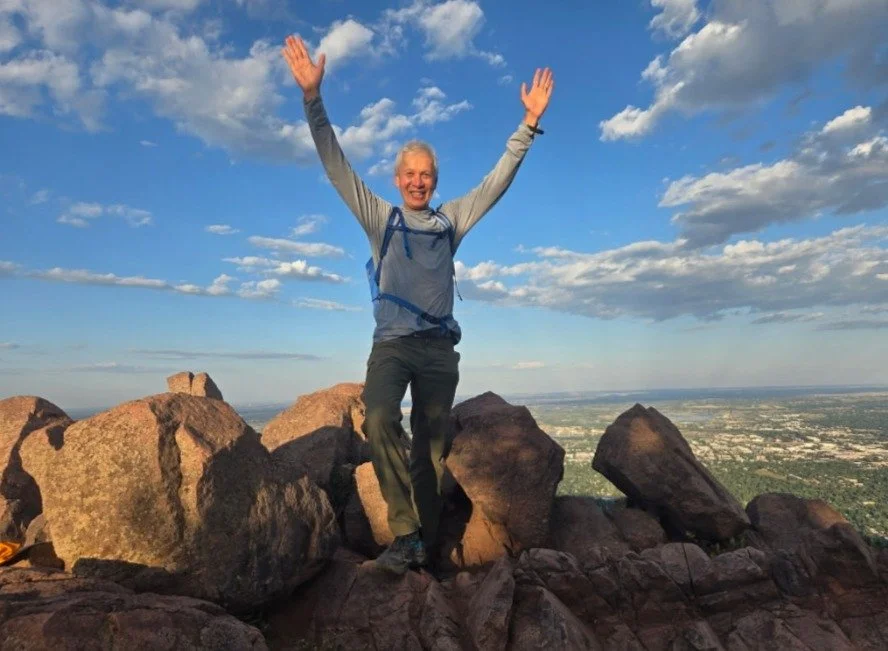
Jet is now on top of the world!
Episode Resources
Watch the episode on YouTube: https://youtu.be/cdIURQSjDoo
Watch the Filipino translation of the episode on YouTube: https://www.youtube.com/watch?v=8gNZ-BJDcQA&t=105s
Click HERE to watch a Filipino translation of the episode
Connect with Jet on Facebook or email: jetkaivegan@gmail.com
We hope to see YOU at one of our 2026 Live Events! https://plantstrong.com/pages/events
Join thousands committing to 30 days, 30 minutes of movement, and 30 different plants each week with our FREE Real 30™ program
To stock up on the best-tasting, most convenient, 100% PLANTSTRONG foods, check out all of our PLANTSTRONG products: https://plantstrong.com/
Give us a like on the PLANTSTRONG Facebook Page and check out what being PLANSTRONG is all about. We always keep it stocked full of new content and updates, tips for healthy living, and delicious recipes, and you can even catch me LIVE on there!
We’ve also got an Instagram! Check us out and share your favorite PLANTSTRONG products and why you love it! Don’t forget to tag us using #goplantstrong 🌱💪
Episode Transcript via AI Transcription Service
I'm Rip Esselstyn, and you're listening to the Plant Strong Podcast.
[0:05] After several years on a severely strict keto diet, Jet Benitez watched his heart disease worsen until a wake-up call led him to a whole food, Plant Strong lifestyle, and the results, no surprise to any of you, were astonishing. His angina disappeared, he conquered personal best hikes, and his cholesterol numbers stunned even his cardiologist. Listen as Jett shares his raw, life-saving truth about changing his diet and subsequently his life. We'll have his story right after these words from Plant Strong.
[0:50] I want to take a beat to talk about what we're seeing at Plant Strong with Real 30 right now. People are cooking more. Yay.
[1:02] Thinking less and realizing that when your pantry is stocked with real whole plants, eating well stops feeling complicated.
[1:13] That's why Real 30 participants get real savings on Plant Strong Foods to make it easier to build meals around whole plants every single day consistently without defaulting to the ultra-process shortcuts. If you're listening and you're still curious, it's not too late to jump into the Real 30. You can start where you are and the link to join is always available at plantstrong.com. And for all of you clinicians and healthcare leaders out there and anyone working at the intersection of food and medicine, I wanna share what we're building next. This June, we are hosting Vital Signs. It's a live event designed specifically for healthcare providers who are ready to move beyond theory and into real world application of nutrition as medicine. This is about evidence and implementation and giving providers all the practical tools that they can actually use with their patients. Full details are available on our website, liveplantstrong.com. Click on events. But if food is medicine to you, Vital Signs is one to put on the calendar. I hope you'll join us June 16th to the 18th in Cleveland, Ohio at Case Western Reserve University.
[2:42] Plant Strong Cousins, today's episode is a powerful reminder that information matters and that action changes lives. Jet Benitez did what so many people are told to do for heart health. He went all in on low carb and keto, but instead of healing, his heart disease continued to progress, his energy waned, and his world started to shrink because he could no longer do the things that he loved to do. And it was at a college reunion and a shocking scar from a friend's open heart surgery that jolted him into action. He pivoted from years of high fat keto eating to a whole food, plant-based, SOS-free lifestyle, that's salt, oil, and sugar-free lifestyle, inspired by my father's book, Prevent and Reverse Heart Disease. And guess what happened? Within weeks, his symptoms started to vanish. Within months, he was summiting mountains that he hadn't touched in over a decade. And today, his cholesterol is stellar, his A1C is normal, and his love of life is palpable. Let's meet this bundle of energy, Jet Benitez.
[4:05] Jet Benitez, I want to welcome you to the Plant Strong Podcast. You are a Plant Strong brother. Thank you, Rip. I'm so excited to be here. I've been following you and your family for years, and it's such an honor for me to be here. Thank you for having me. Well, listen, it's one of the things that we love doing on the Plant Strong Podcast is we love highlighting people that have really spectacular turnaround stories. And that is you. You have done a phenomenal job. And so I want the Plant Strong audience to kind of hear about your journey because it's a pretty spectacular journey. And I think it's one that.
[4:50] All of us, collectively, there's some really wonderful takeaways from your journey. So I think a great place to start is tell the Plant Strong family, where did you grow up? Because you weren't born and raised in the United States, correct? No, I was not. I was born in Manila, Philippines, and I grew up with a big family. I'm one of nine children. I'm number eight of nine. You think you have a big family? We have nine. We're nine brothers and sisters. I grew up in the city, but I grew up at a time when Manila had a lot more open spaces and less traffic than it has now. So we had open fields growing up beside our house. And it was almost idyllic because we had, like, there was a woman who raised, who was like a, she had cattle that she would bring up and down our street, like two cows. I mean, our neighbors had a horse. And this is in the middle of the city. At one point, my grandmother gifted me with a calf, which I raised when I was eight or nine years old. So it was idyllic.
[6:12] Beautiful, beautiful. Much different from Manila now with high rises in condos. Yeah. What did your parents do for work in Manila? Yeah. My father was a diplomat, so he worked in the Department of Foreign Affairs, and he was an ambassador at large. We used to tease him because he said he was ambassador at large. He didn't want to travel with a huge family. He was ambassador with a large family. We grew up meeting a lot of people from all over the world, usually ambassadors, who would come to my parents' beach house. And they much preferred that than having diplomatic dinners, which they had the option to. My mother was a businesswoman. She ran an insurance company. And both of them are very busy. And my siblings and I, we were fortunate. I was fortunate I was one of the younger ones. The older ones would sort of watch over some of us. And we had, it's different in the Philippines. We had a nanny who watched over us, all of us. Can you imagine? A nanny who took care of all of us. And it was just wonderful. Great time. Wow.
[7:32] So by Filipino standards, did you grow up in an affluent household?
[7:42] We didn't think so as we were growing up because with nine kids, my parents always made sure that we ate all the food on our plates and we didn't get all the new toys and all the new shiny things that our friends got but we were happy we were really happy and so tell me uh jet, and and and you know before we go any farther i i am curious because, love your name jet how did you get the name jet and is that your real name, Yeah, you have to learn this about Filipinos. Most of them will have nicknames. Some people have doorbell names like our president, Bong Bong. I have a friend named Ding Dong. I have a friend named Ding. My name is a contraction of my full name, which is Juan Eugenio Tomas. And the initials are J-E-T. So that's John Eugene Thomas. So Jet. Yeah, that's great. And it's a great shortcut. Three letter names are good, as you know, Rip. Yes, yes. I'm a big fan myself.
[8:54] Okay. Give me an idea. What is, like you mentioned how you grew up with nine. There were nine of you. Nine, what? Six. Six. Six sisters and three brothers. Wow. And you said that you guys basically always finish your plates. What was usually on those plates? What does a typical Filipino diet look like? So we ate a lot of rice. We ate adobo, which is like a stew with pork and chicken. On Fridays, we always had mung beans because my parents wanted to remind us of the difficult times they had during world war ii where all they had to eat really was mung beans and rice we would eat pancit we would eat lumpia and these are familiar to some americans who have eaten at filipino friends homes everybody's mother's adobo is the best right my mother didn't really cook, Our adobo is quite good, and I know how to make quite good adobo now, not using pork and chicken. Well, you just said a couple words that I don't know what they are.
[10:17] It was a type of meat? What did you refer to it as? So we have something called lumpia. What's that? Which is a rolled up pork.
[10:28] It's pork roll, egg roll with pork. That's very popular in Filipino parties. It comes with a sweet-sour sauce. Now, you can make it vegan, and I've made it vegan now. But we have other dishes like kare-kare. Kare-kare is curry.
[10:51] It's an Indian-influenced dish, Filipino dish, but it's a peanut-based curry. So I make that now as well. And that usually uses oxtail. Now, as a child, I didn't have an expanded palate. And my go-to meal as a young child of maybe three, four, this is one of my earliest memories, I would eat white rice, egg yolk, sugar, all mixed up. And I would be sure to eat that up. And I carried that on for years eating raw egg yolk. And rice. Now, did you and your brothers and sisters, did you go to a public school, private school? We went to a school, a private school. Our grandmother actually founded a school in the Philippines. It's called the Philippine Women's University. And she had, as part of that school, elementary school.
[11:59] Uh section called jose abad santos memorial school after a chief justice in the philippines who was martyred during world war ii and he was a good friend of my grandfather that's called jasms, so we all went to school there and that was a great school co-ed we loved our principal was a wonderful woman. She was American, Doreen Gamboa, and she loved the freedom that she gave us freedom. So we explored, we had a rice field beside our school. We were taught how to plant rice. We could run around in the mountains. It was wonderful. I did that until the third grade. Then my parents decided, Jet, it's time for you to go to a more traditional school, meaning.
[12:51] Catholic boys school all boys school so i went it was so hard for me to leave my friends yeah uh i've been in touch with them lately but then i went to an all boys school, which um it was great as well and i'm in touch with friends from jasams as well as la salle while i went to school uh people are very firstly fiercely loyal to their schools in the Philippines, and there's a big rivalry between schools. So I'm very fortunate to be able to go to those schools. And then I went to college in the University of the Philippines. Very fortunate to go to school there as well. Gotcha.
[13:35] What did you usually do for breakfast? Breakfast wasn't also the rice, the sugar, and the egg, was it? So as children, we would have things like garlic fried rice.
[13:49] Beef tapa, which is beef shredded and fried in soy sauce. And we would put a sauce on that of vinegar and onions and tomatoes. And that's pretty traditional. And we'd have fried eggs or we'd have Spam.
[14:14] And my mother liked to cook Spam fried with butter and sugar. And we had something called longanisa, which are pork sausages. And they're kind of sweet and we always had pork and beans because that was sweet, and we had a lazy susan so can you imagine lots of kids my mother had a bell in our house and she'd ring the bell for for meals and we rushed we we we had to be there and when the lazy susan pass in front of you you grab what you could because you didn't know if it if it if it would come around again. But we were pretty nice to each other. Yeah. Well, I can appreciate the lazy Susan because every Esselstyn family has a lazy Susan in their dining room. It's just kind of a tradition in our family. And yeah, when it's in front of you, you better take some while it's still there. That's right. Now tell me this though. So, you know, with nine...
[15:27] Nine kids. What was the spread? What was the difference in age between the oldest and then the youngest? The oldest? Well, me and my older brother, we're 14 years apart. My eldest brother and our youngest are 17 years apart. Okay. Okay. So do you stay in touch with your brother and sister? We are in touch at least once a month on a Zoom call, and we are in touch daily because we have an app, WhatsApp, where we always know what's going on in everybody's lives. Yeah. And I have family in the Philippines and in the U.S., and a sister and brother-in-law who are in Switzerland sometimes, but now they're in the Philippines. So we're always in touch. All right. Well, let's jump into your move from the Philippines to the United States. And when did that happen? And why did you decide to leave the Philippines?
[16:33] So, in about 1987, I was doing triathlons at that time. My sister had a friend, American friend, who she met in New York. And my sister had moved back to the Philippines. This is my youngest sister. And she invited her friend. Her friend was named Rachel. And she said to Rachel, come and stay for a month. And she came. Rachel came. And I knew her as Trevor because Rachel, also known as Trevor, she was known as Trevor Kunz. She came to the Philippines for one month, and she must have liked it because she ended up staying 18 years. I mean, long story short, we had a whirlwind courtship. So in one month, she figured out that she liked the Philippines or she liked me because she went back to New York, put her stuff in storage, and came back to the Philippines. And a year later, we were married. Wow.
[17:41] Okay. And then we lived in the Philippines. Yeah, you were asking about that. So we have pretty soon after we had two sons, both born in the Philippines. And then about 10 years after our youngest son was born, we had a daughter. So we have three kids and I have an older child from another relationship. So Rachel and I have four children, the eldest of whom now is 42 and the youngest is 22. Wow. So, but when we moved to the U.S., that was in 2006. Our sons were getting to the age where they were going to high school, and we wanted them to go to college in the U.S. So we were prepared to move.
[18:36] And it was very logical for us to move to Colorado, where we are now, because my father-in-law lived in Boulder. My mother-in-law lived in Boulder. And another mother-in-law, ex-wife of my father-in-law, also lived in Boulder. So it was very logical. We moved to Boulder and we had three households that could help us with. Our youngest child, Tana, was two years old at that time. So it was so nice to be able to have grandparents nearby to help us if needed. Yeah. So you left the sea and the beaches and the pork in the Philippines, Manila specifically. And you came to Boulder with the mountains and a lot of steak and barbecue and burgers. That's right. I don't know if the change was for the better, but when I came here, I thought, oh, my gosh, steak is so inexpensive in America. In the Philippines, it's not. It was available all the time. So every time we had a celebration, it would be ribeye steak or porterhouse or burgers. It was so inexpensive. My wife and I noticed the first time we came here.
[19:55] The servings are so big, huge servings. And we're like, we're not going to eat all of that food. But give us a few months. And we were eating all of that food. We were eating all the big servings in the restaurants. And that wasn't too good for me, it turns out. Yeah. And so what was your initial kind of telltale sign that something wasn't going on? My understanding from reading a little bit is you saw a documentary called The Widowmaker, and for whatever reason, that kind of inspires you to get a coronary calcium artery scan, right? And then that came back a little bit suspicious? Yes. So...
[20:44] I watched The Widowmaker, which is a great documentary. It really talks about why a calcium scan can tell you if you have heart disease. So I took it, and I was shocked. My initial score was over 400, and ideally, your score is zero. It means you don't have calcification in your arteries. So when my score came back over 400, I thought, oh, my gosh, this was like the end of the world for me. I took the day off from work. I was up in the mountains contemplating the rest of my life, thinking this score is so high. How could it be? I was so shocked that I would have such a score because I exercise.
[21:27] As a young person, when I was younger, like I said, I did triathlons. I did athletics. I was always doing physical stuff. And I thought I ate well. I ate a lot of vegetables. Even though I ate meat, I ate a lot of vegetables. I didn't I don't drink soft drinks I just it was just a shocker to me that my score was so high so I resolved I was going to do something about it I was gonna not just sit back you know so I researched I researched and in my research I read lots of books one of them was your father's book, prevent and reverse heart disease yeah I've heard of it now I also researched other books and And I went to YouTube a lot, and maybe this will caution some people. On YouTube, I found basically there were two different schools of thought on calcification of arteries. One was that you could reverse it.
[22:29] Remove the calcium from the arteries. And this was using a ketogenic diet. And the other one was more your father's camp. And your father's camp was more like, you know, the calcification is not what you worry about. What you worry about is forming new arterial plaque, which will become calcified. So I was more on the ketogenic side, maybe because.
[22:55] It was easier for me it was more appealing you know i could eat meat they encouraged you to eat a lot of meat and i thought hey this is not bad so all i did was cut out the carbs so i'd make my own bread for example i follow the recipe for the healthiest bread you know and and make it with almond flour. I did not eat much rice. I got myself one of those keto sticks, and I would pee in it, and I'd make sure I was in ketosis. I started following the advice of a chiropractic doctor who was advocating using a ketogenic diet, and he used it in conjunction with supplements, which he sold as well and these were expensive they were expensive supplements but i was prepared to pay that amount i mean it was over 250 a month but i would pay it and i thought i was going to be.
[24:01] Real i was going to be taking out the calcium that was the whole idea taking out the calcium reducing the calcium and then of course every year i'd go and get more calcium tests every year i I did it and my score just went up.
[24:20] And up and up and i did this for five years rip five years i mean i didn't, know any better i guess but by the end of five years my score was well over 900, getting close to a thousand nine hundred to you know that that level is the omg range they call it that's like you're gonna have a cardiac event in the next five years it's it's that serious yeah So, wow, I was so dismayed that that was happening. Well, tell me this. Let's take a breather for a second. Because five years, you followed a ketogenic diet and you took the supplements that your chiropractor suggested would also help to clear out the calcium from your arteries. What did a ketogenic diet look like for you? Like, give me an idea of what you would be eating for breakfast to lunch and dinner. Okay. So for breakfast, I'd have bread, the healthiest bread that I made, and I'd put butter on it. And maybe I'd put a little bit of honey. I did not eat anything. Well, I ate the fruit. I ate fruit, but not too much. I would eat...
[25:45] I don't know. Wow, I'm trying to recall now what I ate, but I probably had some ham with that bread, too, and definitely cheese. So I'd have a big breakfast, you know, basically ham and cheese. And for lunch, I'd have some vegetables, no rice. I would eat leftovers from dinner which might be I don't know, might be adobo which would be pork and chicken or steak or.
[26:22] Some other dish that we had made but, wow, it's surprising to me to think I ate all of these things and I don't mean to cause you any pain by having to rethink about eating those things because you've been off them for a long time. But what was happening to you over those five years? Were you feeling okay, feeling bad? What was going on with your weight? Were you gaining weight, losing weight? Yeah, definitely. My weight increased. When I moved to the U.S. my weight was probably 160 pounds and when I went on the ketogenic diet over the years, My highest weight was 173. So I know because my waistline, my pants were size 34, and I had to get new pants each year. And aside from that, my ability to climb the mountains that surround us here in Boulder, I mean, wow, it just declined. I used to climb these mountains close to us. We have one that's one of our favorites because we can walk to it from our house. That's Mount Sanitas. I would go up that. And you might be familiar if you've been here because people do that.
[27:51] People run up that. And after a while, I couldn't even go up Mount Sanitas, which is the shortest of five peaks we have in Boulder. And when I first moved, I was going up the highest peaks. The second highest is called Bear Peak. The highest is called South Boulder Peak. I would go up those mountains and then gradually I could go maybe the smallest one, Mount Sanitas, and then, And until three years ago, I couldn't go up Mount Sanitas and I hadn't been up Mount Sanitas for a long time. Like I would go up a little bit. I'd bring a book. I'd read, spend time in nature. That's all I could do.
[28:34] I'd go uphill for maybe 200 yards. That's all I could manage. I'd bring a little folding chair. Or if my wife would go up, I'd go with her up the road of Mount Sanitas, 200 yards. I'd read my book and go with her on the way down. That's all I could manage. I went on a trip, for example. Beautiful trail. My daughter treated me to a trip. My eldest daughter treated me to a camping trip in Hawaii. So we went to the island of Kauai. This was three years ago. And she rented a camper and we had a cooler.
[29:10] And i couldn't carry my half of the cooler she had to carry it herself we went to this beautiful trail called the kalalau trail which is 11 miles and it's one of the most beautiful napali trail yeah yes it's one of the most beautiful trails in the world and i i was just thinking this is a lovely trail and you could go two miles into it without getting a permit so i said we can do this and I went and after 200-300 yards I had to turn back I couldn't even do that it was just terrible and, My physical abilities had diminished so much, and I just thought, I'm getting older. This is what happens when you get older. Three years ago, I was 63 years old. I thought, oh, maybe this is why. You know, I'm just getting older. And when I looked around at my coworkers here in the U.S., yeah, people my age were definitely slowing down, too. Most of them were more overweight than I was. And most of them were in worse physical shape than I was. And I was in touch with my friends in the Philippines.
[30:22] And they were the same. They were gaining weight. They were experiencing diabetes and beginnings of heart attacks. Several had died from heart attacks by that age. It was crazy. Yeah. Yeah. What about your wife? Was your wife on board with a ketogenic diet as well? Or did or did or not no no she was not she she's been very steady rachel has been very steady she eats a lot of vegetables she eats until now she's an omnivore until now but she didn't go to that extreme like i did you know eating all of the no carbs i would make my own ice cream rip i'd make it from whole cream oh my gosh and i'd put chocolate i'd make my own chocolates because I was so fond of chocolate. I'd make it with egg yolks. Oh my gosh, I shudder to think of what I was eating back then. Yeah, yeah, I shudder too. Well, let's talk about the big turnaround because –, You know, you started the keto in 2018, up until like 2022. You're at a scuba diving reunion of a buddy of yours.
[31:43] And what happened? Yeah, so this was a great reunion of ours. In college, we were together diving. And so those of us in the U.S., some of us in the U.S. decided we'd go to his house. He lived in New Jersey, so I was there. And he had this big gathering. We were probably eight people. Lots and lots of food. And in New Jersey, there are a lot of Filipinos. So there's a particular place, Jersey City, where you can order a lot of Filipino food. So that's what my friend did. He had ordered a lot of food. So there was like, of course, lumpia. There was lechon kawali, which is lechon is like roast pig, but this is fried lechon kawali. There was kare-kare oxtail. This is really delectable food that, you know, we grew up with in the Philippines. All of us were there feasting and all of this, a lot of this meat. Yeah. And when our friend comes around to see how we're doing, he goes, you guys, how do you like food? We go, it's great.
[32:56] And he goes, his name is Mike. He says, you know, you guys enjoy that, but I'm not eating that anymore. And we asked him, what? Why? And me, I'm eating with my keto diet, all of the meat. And he pulls up his shirt to expose a scar. He goes, this, I got this last year. He had a quadruple bypass the year before. You know what we call that? We call that he's a member of the zipper club. Yeah. Anyway, we saw that. And we asked him a little bit more about it because we never heard about it from him. He said, yeah, but you know what? I've been eating better. I don't eat meat. I don't eat anything with a face or a mother, he says.
[33:40] And I walk a lot. You know, I walk at least four miles a day where he lived. There were a lot of hills, and he wasn't taking any medication.
[33:50] And we thought, oh boy, I thought, is that vegan? Yeah, yeah. Well, it's whole food, plant-based, like Dr. Esselstyn says. Oh, I could never do that. And you might find this interesting, Rip. He mentioned at that time that he was following your father's advice, reading Prevent and Reverse Heart Disease. And he had gotten such good results. This I find out later, that he called your dad, and your dad called him. Well, he emailed your dad, and your dad spoke to him and his wife for 45 minutes. Mike was not his client. Mike was not his patient. All Mike said was, you know, I'm feeling so good. Thank you for doing this. And your father has such a kind heart. He reached out. He reached out. And the first thing he said to Mike was, Mike, is your wife available? So Mike calls his wife. And he spoke to them and encouraged them. And that's just, you know this, that's what a wonderful person your dad is. It's just such a good heart, a man for others. Yeah. No, I see it. I see it every day. Nothing that he enjoys more these days than just talking to people for free.
[35:10] About what they can do to prevent and reverse heart disease. Did you ever have a chance to talk to my father? No, no, I have not. I would love to. You are his surrogate. I'm just so happy. Give him my best. Give him a big hug from me. I want to thank him. So let's get back. So you left the scuba diving reunion with Mike. And there must have been something in the back of your brain going, And then two months later, you start getting back pain and angina.
[35:45] And so did that somehow kind of trigger you to...
[35:51] Pick up my dad's book again? That it took a while because I couldn't believe that I was having heart issues. I couldn't believe it because I was following the advice of the chiropractic doctor. I was doing everything to reverse my heart disease. So I was very stubborn, and I can be, as my wife. I was so stubborn. I go, no. No. And my physician's assistant, she wasn't the doctor, but she was the PA. She said, Jet, you should really go for an angiogram. Why am I going to go for an angiogram? It's not going to be. It's impossible. And of course, I had watched that documentary, The Widowmaker, which talked about stents. And in my mind, angiogram equals stents. You get an angiogram, It's like you're giving your consent to the doctors to put stent or stents in you if needed. So I resisted that for so long. And finally, I found a cardiologist, very good, reputable, and famous cardiologist in Boulder. He had so many patients, but he had the best reviews. So I was able to get an appointment with him. And even when I talked to the doctor and he said, you know, we should really do an angiogram after checking everything.
[37:18] He was so nice. He goes, Jed, if you were my brother or my uncle and he puts his arm around me, he's such a compassionate guy, I would strongly, strongly suggest get an angiogram. And it's, you know, so I did. I get this angiogram. And an angiogram, if your listeners don't know, you sort of are in twilight. They go through your groin. You could go through your radial artery, but in my case, they went through my thigh. But I was awake during the whole time, and I could hear the doctors and all the nurses talking about it. And I could see sort of behind me.
[38:00] They inject a dye through your arteries, and they're able to see. And take pictures of your heart and see where there is any blockage, if any, in your heart. So when I come out of it, they wheel me into the waiting room with my wife. The doctor comes in and he says, Jet, good news and bad news. I go, good news first. I go, good news.
[38:30] We didn't have to put a stent. I go, great. I really didn't want a stent. He goes, and then I go, what's the bad news? He goes, you have 50 to 60% blockage in your left anterior descending artery. And I knew exactly what that was because I watched The Widowmaker. And the Widowmaker documentary talks exactly about that. They call it the Widowmaker artery, the L-A-D, left anterior descending. Most people don't have an inkling that they have a problem until they get a heart attack, and it's usually fatal. You get it there. I thought, oh my gosh, I have it right there. Oh my gosh, I was just shocked. But I was happy again. I was happy. And then that's when I thought, oh, my gosh, because my doctor after that, he says, okay, you do this.
[39:25] We're not doing STEP now, but let's monitor it. And you take statins and let's see how you're doing. See me in two months. So that time I thought of my friend, Mike, and no medication. You know, what? No medication. I don't want to take that. I was already taking medication, Rip. And I still do, because I've had an irregular heartbeat from the time I was maybe 30 years old. So I take medication, which is a blood thinner, and I take one which regulates my heart. So I don't want to add more medication to this.
[40:02] And... Also, at that time, I was thinking not another one. I was like pre-diabetic at that time. So I thought, oh, another medication. And I was taking something called metformin for pre-diabetes to sort of ward it off, even though I wasn't diabetic yet. So I thought, okay, I'm going to try this vegan thing. And it was so convenient because, you know, when they decide to do something, I can do it, right? But still, it's not an easy transition. You're turning completely. I'm going one way with all the meat and all the saturated fat, and I'm going to go opposite direction.
[40:48] But there was an opportune moment because I had implants that were done, so they had to pull out two of my molars. and my dentist at Jet just eat soup and ice cream. I go, this is perfect time. This is what I'm going to do. I'm going to make these smoothies with kale and vegetables and fruit, and this is what I'm going to do. So I did it. And for the time when my jaw was all swollen, I was drinking that. But, you know, it was amazing. It was so, like, maybe within, I would say within 10 days, my chest pain, my back pain, it was gone. I was just like, what? This is amazing.
[41:38] And before this... A little more background. Before I switched, I had some other things going on, like I couldn't sleep well at night. We're in Colorado. We have, you know, marijuana gummies. I take those so I could sleep. I had lipomas in my arms. Two of them, they were the size of marbles. Lipomas are like fat deposits, and some people have operations to get them out. I had pimples on my back. I had a whole slew of things. I had a wart in my hand and a wart in my feet. Okay, just background. But anyway.
[42:20] That's a really good way, I think, of persuading people to go easy on the meat and the dairy is if it causes hand warts and plantar warts on your foot. Yes, it does. Yes. And you also you also you also had these feelings of impending doom. I did. I did. This was just so strange that I felt that in at that time three years ago. I thought, oh, why is this? You know, I've always been a positive person, but I felt like like I was going to die. And I was so resigned. I thought, oh, if I die now that year, we just we had the reunion in South Carolina, where all my children were. Even my daughter from the Philippines was there and all my kids were there. And I saw a lot of my brothers and sisters. And I go, if I die, it's okay. I've had a good life. I've seen all my kids, told them I love them. Can you imagine? I was just so resigned to it.
[43:21] But within 10 days, my chest pain was gone. That feeling of lightness was there. I started breathing easy. In Colorado, when I first moved here, we have allergies, but in my case, it was more mucus buildup and, That was just when that went away for the first time ever, I was breathing normally. Even in the Philippines, I wasn't breathing like this. I could take a breath.
[43:55] And I don't know if you appreciate this because you've been healthy for over 40 years eating your diet. But for somebody who just changes at age 63, it's so dramatic. It's like, huh, night and day. It was amazing. Yeah, well, that's what I find to be spectacular, but I'm also not surprised because we see this, what can happen in just seven days at our, at our six and seven day retreats, it's how quickly the human body can start to heal itself and repair itself at a cellular and molecular level. Um, and you experienced that. And, and again, it's, you know, just to kind of continue to beat the drum, you were eating a, while you were doing the ketogenic, you were doing a low carbohydrate.
[44:48] High saturated fat uh diet that was very low in fiber and you went to uh you transitioned to one that was high in let's just call them unprocessed carbohydrates high in fiber high in um you know low saturated fat uh whole food plant-based and that is like that's the bullseye right high in antioxidants, phytonutrients, water, fiber, all these wonderful nutrients that will allow our bodies to really purify itself. And so you experienced that. And so in two weeks, what happened? Were you able to mow the lawn again and do some other things? I think my wife loved that part because before this, I couldn't even mow the lawn. I couldn't carry these 40-pound bags of pellets for our pellet stove. And now I was carrying two 40-pound bags. I was mowing the lawn. I had so much energy. I climbed up Mount Sanitas. I hadn't been up Mount Sanitas in 10 years. Incredible. And then I kept on going higher and higher. And I sent pictures to my family like, I'm here. I'm going. So Mount Sanitas is the lowest one. The next one higher is Green Mountain. The next month, I was up Green Mountain. So I didn't do this all in one go. It's a progression. Next highest after Green Mountain is...
[46:16] Already is is bare peak and i thought bare peak on my third month i was trying to go bare peak no i couldn't do it i'd go up part way and no i can't do this and go down so it took me another two months by my fourth month i was up bare peak wow that was such a celebration for me this is the second highest but it's you could call it the highest peak in boulder because i hadn't been up Pear Peak in 17 years. I get up there and I take my phone and I ask this young woman to take my picture and she could see just how excited I was. She goes, yeah, congratulations. You've done it. You don't understand. I couldn't even go up Mount Sanitas, which I pointed down there. I couldn't go up that mountain four months ago. And now I'm here and haven't been up here in 17 years. I was just so excited. Yeah, well, I can tell. I mean, how exhilarating. And did she ask you, like, well, so what, did you do something? Of course. Did you tell her the story? Of course, yeah.
[47:20] Wow. Woe to those people I encounter on the trail, because they're going to hear my tale of how I couldn't go up Manzanitas and now I'm here. More than that, I climb a lot more than that now. I mean, it's just amazing. I've been able to climb and climb and just Well, yeah, I mean, yeah, well, you know, you have your life back and you're able to do things that you never thought you'd be able to do again. And that's just so and you do it with relative ease, right? Your your body is now working with you as opposed to against you. And that's a spectacular feeling. Tell me this. You transition back and what has happened to your cholesterol, your LDL, your pre-diabetes and all that stuff? Oh, that's great. So going back to my cardiologist, wonderful guy. So two months after my angiogram, he was supposed to see me and see my numbers. So I go back to him and he looks at my numbers. He goes, Jet, your cholesterol is gone. It was 225. And now it's 130. Your LDL was 130. Now it's 58. At that time, we had COVID. So we were all wearing masks like this.
[48:38] And I told him, Doctor, this is great. Because he says, the statins are working for you. I told him rather sheepishly, Doctor, I'm not taking statins. And you could just see the expression on his eyes like, wow, that's great. But you should take those statins. I'll see you in six months.
[49:05] Did you tell him that you were doing whole food plant-based? Yes, I told him that. In fact, I told him that when we first, when he said, you know, your numbers are so high. I told him, doctor, I'm going to change my lifestyle. I'm going to eat whole food plant-based. And what did he say? At that time, that doctor said, sort of like, good luck. Like, good luck. And my wife, I said, you know, my wife knows that when I decide something and she told the doctor, yes, when he decides something, he's going to do it. She knows how determined I can be. And Rachel knows how stubborn I am. So, yes. But anyway, so after two months, doctor says, this is great, but take the statins. So six months later, I come back. My numbers are great, even better than before. And he looks at me suspiciously. Jet, are you taking statins? I go, no. He sits down. This guy has hundreds of patients, hundreds. He spends 15 minutes talking to me, telling me why this is the standard of care and why I should take statins. And he goes, I'll see you in one year. So one year later, I go back.
[50:21] And he looks at me again your numbers are good yet tell me are you taking statins i go no this time i asked him doctor do you have other patients who are eating whole food plant-based heart patients who are doing well and this guy from his hundreds of patients he says yes one this guy came to me he was overweight he had a heart attack so we gave him bypass and stents and he lost the weight, he started feeling so good that he wanted to go back to work. His employer would not hire him back until they had proof that he was reversing his heart disease. And how do you get the proof? You get another angiogram. Now, angiograms are expensive.
[51:09] Three years ago, my insurance company he paid $62,000 and it's expensive. Boulder's expensive. I ended up paying $2,000. Anyway, his insurance company would not pay it because he had no symptoms. He was just feeling energetic and exercising. So his employer paid for the angiogram and it showed that he was reversing his heart disease. Just like your dad's pictures. That inspired me so much. I go, Oh, that's great. That's what I'm hoping is happening to me, Rip. Because I'm not about to spend $62,000 on an angiogram. But my numbers are great. They're just, everything's good. I do have like an elevated TSH, which I'm trying to figure out with my doctor. So this is not a miracle cure, but it's certainly helping me in so many different ways.
[52:04] Aspects. It's wonderful. Yeah. And so what are some other unexpected health benefits that you've received? You talked about the clear skin, no more pimples, better sleep. How about for the men that are listening, all the men, how has the sexual function been? Oh, that's just greatly improved. It's amazing. And I learned why this is happening because, you know, our arteries in our heart, you know, they're a certain size. And, of course, you have arteries all over your body. You can imagine the arteries to your penis. They're tiny. Yeah. And this is why... When you go whole food plant-based, it's not just working on your heart. It's working all over your body. And I found that out. I mean, it's amazing.
[52:57] If you watch that documentary and you were in it, Forks Over Knives, this older gentleman talks about he was raising the flag again. That's me. It's amazing. It's like no need for Viagra or any blue pills. I mean, it's just, ah, it's impressive. Well, and then just a little interesting tidbit about the anatomy. So where we have more endothelial cells than any other part of the body per square inch is the penis. And so once you're eating whole food plant-based and you're restoring your endothelial cells ability to pump out the nitric oxide, right, that allows your vessels to dilate, it's no wonder that, you know, you can go from being, you know, impotent, right, having erectile dysfunction to raising the flag again. And, I mean, you talk about something that is a nice demonstration of manhood and virility.
[54:01] I don't think too many things speak as loudly. Yes, it's amazing. It's just for all the men out there. And I'm sure the women too, because women, you won't be raising flags. But, boy, with all of that blood flowing to our sexual organs, it's just amazing. Yeah, it is. It is. And then, so your A1C that was pre-diabetic, are you good there? It was 5.7, which is pre-diabetic. And my latest one is 5.5, which is not pre-diabetic without taking any medication. So it's great. It's just wonderful. So tell me this, because I think you're well aware, you know, you...
[54:50] You kind of fell for the allure of the ketogenic diet because you're like, well, it will allow me to eat meat and butter and cheese and all these things that I really don't want to say goodbye to. And you were going low carbohydrate. They do a good job of selling it, no doubt about it. What would you say to somebody that's listening right now and is considering whether to go down the ketogenic path or more of a whole food, you know, plant-centric lifestyle. What recommendation or advice would you give? I would say just like Mike, my friend in New Jersey told me, I'd say, do your own research. This is what works for me. And now I can tell people I've done both. I've done the ketogenic diet. I'm one of not very many people have done this. They go ketogenic and they go whole food plant, or maybe a lot of people have done this. But I can say in my experience, definitely, definitely whole food plant-based will give you a longer life, give you better numbers.
[56:05] Everything just improves so much. But you don't know how this is going to affect you until you try it. And I would say to people, try it for at least 30 days, at least 30 days. Because as you know, in my case, in two weeks, I had fantastic results. But I would tell people, just try it for at least seven days.
[56:28] I have a book written by somebody you know. Yeah, yeah. I do. I know that character. He talks about seven days, and you talk about seven days and turning people's lives around. I say at least 30 days. Why 30 days? Because you're going to get into a habit at 30 days, and anybody can do something for 30 days. If you're doing it for your health, if you're somebody my age, you probably are willing to do this. Yes it's different yes it's uncomfortable yes you're gonna get strange looks from your family and friends and probably some comments but you can do it i would say you know something like.
[57:10] If they're making comments like are you eating this rabbit food and just say something like well i'm doing an experiment on myself and let's see that way you're not pressuring them and you're not making them feel like they're they're not as strong as you by by not following this lifestyle but it's so powerful and i think in the end of those 30 days you'll see for yourself everybody will you will see you'll feel so good it's just yeah it's amazing rip it's amazing tell me this jet what is your why oh all right so i've always liked to help other people and this is great i'm able to
The Awakening of Compassion
[57:58] help other people right but that was so like up there uh when i first started It was for my health. But pretty soon, I had this feeling of compassion that just surfaced and...
[58:26] Okay, there's a term for this, and it's cognitive dissonance. I've learned this, because I've always loved animals. Like I told you, my grandmother gave me a pet cow when I was seven, eight years old. I would love that cow. I called her brownie. I gave her grain. I gave her salt. She would lick me with her raspy tongue. I'd ride her like a cowboy until she got too big and had to go back to the farm and probably ended up on somebody's plate, maybe even mine. But I love animals. And now I don't have to eat them. Wow. I love animals. This is great. And my wife is like, I think she notices this, you know, I break for squirrels, right? I will take things out. We have cats and we had the cat one time would always be, you know, attacking bunnies around our yard. Stop the cat from attacking. So I love animals and I don't have that cognitive dissonance. But more important than that, what gets me up in the morning is really not just my health, because for me, it's almost a given. I'm healthy. I'm good. Yeah.
[59:43] I love to help other people. And maybe some people who are watching this now are watching this because I told them, watch this show because I'm going to be there and they're probably watching now. And they are people that I've met on the trail. And they have people I've met at work. They have people I've met, friends from the Philippines that I've reconnected.
[1:00:10] And when they see how excited I am, maybe, or how vulnerable I am because I have shared all of these health issues, they open up to me as well. And, of course, I'm not a doctor. And I'm the first one to tell them, you know, I'm not a doctor. This is what's working for me.
[1:00:30] And I link them up to your channel and link them up to other medical doctors. You know, take vitamin D12 and stuff like that, but... This is my why, Rip. This is why I'm retired now. But this gives me such joy. I can help other people. And I've seen it. I've seen people. And they're able to help them. Let me ask you this. What do your six sisters and two brothers think of what you're doing?
[1:01:00] Some of them, I think lately they're more like, okay, maybe we'll eat more vegetables and fruits. The two of my sisters definitely are more leaning this way but nobody's whole food plant-based completely they'll they'll still eat fish or or meat occasionally but i think they've seen the value of it maybe from seeing me um i have friends who i've shared my story with so when my story came out in forks overnight. I was so excited. Of course, I said it to my friends. And one of them is a friend in the Philippines. He has a three-letter name, Rip, just like you, just like me. In fact, he has the same name as me. There are very few people with my name, right?
[1:01:52] And he went to a school, which was our rival school. So I've known him sort of as a friendly rival through the years. I shared him my story. He told me, Jad, I'm very interested in doing this. And he told me his heart is his problems as well. And he started doing it. He and his wife and he and his brother and his brother's wife. And they're getting amazing results. Their cholesterol is down. They have lost weight. They are feeling good because this is great. Just like what I'm telling you. Yeah. So it's a snowballing effect. I feel that if I'm able to help one person and they are able to help one or two or 10 or 100, I mean, it's a snowballing effect. And it just works like that. And it's just amazing. And I think as you've seen, as I've seen literally thousands and thousands of times, when you...
[1:02:55] When you do this and you do it correctly, it always works. It does. It always works. You don't have many anomalies or exceptions to the rule here. You do it right and you unlock the key to really an amazing, healthy life. Let me ask you this because I'm sure there's lots of people that think, oh, it's just too hard and I don't know what I'm going to eat. So how do you respond to the people that say it's too hard and what am I going to eat? Okay. First of all, I tell them the goal is progress, not perfection. Everybody's going to make mistakes. It's nice to set a high standard. I'm going to eat whole food plant-based. But maybe you're not like me. Maybe you're not going to switch overnight. Maybe you're going to start by eating more fruits and vegetables, more whole grains and rice. I'd say, why don't you start with breakfast? Breakfast is pretty easy. What can you eat for breakfast? Oats. I eat steel-cut oats every day. I put chia seeds and flax seeds, and I put some walnut in the Philippines. What can you eat? They have oatmeal in the Philippines. You can have a meal in the Philippines with rice and try to make it brown rice, like a rice porridge.
[1:04:16] Some people think that, but there's not enough protein in this. But rice has protein, oats have protein, and they have protein in really the right percentages. It might be 10%, 8%, but that's all you need. What we really want is to let people know that it's not the protein that's the problem. The problem probably is you're not getting enough fiber. So when you eat oats, when you eat brown rice, you're getting fiber. When you eat vegetables and fruits, you're getting a lot of fiber, a little bit of protein. and, You know, from your dad's friend, T. Colin Campbell, in his book, The China Study. I mean, we know that you don't need that much protein. Your body is going to thrive with the lower amount of protein.
[1:05:08] And just think in human milk. Human milk has maybe 6-7% protein. And some say that's low, but that's for human. That's what it's supposed to be. Do you want to drink cow's milk with a higher percentage? No. Why would you? It's unnatural. And people, like I say, if you're not able to do it right away, that's okay. Start with breakfast. Maybe the week after that, put more vegetables and fruits in your meal. But don't make the transition too long.
[1:05:50] Don't transition over a year. like some people might do that. If you're going to see effects, you've got to do it pretty quickly. Try to do it within maybe a month or so, two months or three months, and you're going to see the effects. And that's going to inspire you to keep on doing it because you feel good. Yeah, yeah. No doubt about it.
[1:06:14] Give me a typical – so you said that you love the steel cutouts for breakfast just about every morning with some chia seeds. I think you said ground flaxseed meals, some walnuts. Do you put any fruit on these steel-cut oats? Yes. Yeah, I use frozen fruit a lot. Yeah. They're cheaper. I use frozen blueberries. I use frozen mango. That's my go-to meal. And I use soy milk. Yeah. This is available everywhere. I mean, we can have meals like this everywhere. What do you typically do, Jet? What does a lunch or a dinner look like for you? I eat a lot because I'm very active. And I figured out early on, you know, salads are always good. I always have a lot of salad. But salads don't have a lot of calories. So I figured out I will always build my meal around brown rice and beans. And then I'll have a salad. So I'll have fresh salad and then brown rice and beans. And these beans might be a chili I made or mung beans. In the Philippines, like I told you earlier, I'm used to eating mung beans because
Culinary Adventures in Plant-Based Cooking
[1:07:27] we ate that once a week as we were growing up. So I always have that. I would have tofu as well.
[1:07:36] And I can cook tofu in many different ways now, Rip. I mean, I make feta cheese with tofu. Oh. Yeah. So I use air-fried tofu. I can make tofu and mushroom adobo. So take out the chicken, take out the pork, use tofu and mushrooms instead, which are available everywhere. And it's really amazing. Bravo, bravo. So it sounds like you're the cook of the family. I am, yeah. Well, my wife cooks too, and we have a refrigerator. And she's always complaining because I live with my wife, my 22-year-old daughter, and my 93-year-old mother-in-law. And they're omnivores. But I take up half the refrigerator.
[1:08:27] So we have a freezer where I have some frozen stuff and another. Yeah, we make it work. What about, have you checked in with Mike to let him know all your progress? Yes. Mike is... What a guy. He says, Jet, I'm not 100% like you. I want to be, but I'm inspiring Mike now. Yeah, how about that? Yeah. So I have a good story about Mike because I spoke to him when I knew I'd maybe talk to you. I asked him, how are you doing, Mike? He says, yeah. He goes, Jet, guess what? My doctor, who's seen me through all of this, my bypass and all of that, and this is a doctor that's taking care of his kids, his general practitioner.
[1:09:22] Mike's been talking to him about eating whole food plant-based for years and years and years. And the last time Mike saw him, the doctor said to Mike, Mike, I'm eating whole food plant-based now. Really? And Mike says, why? Because my brother-in-law, he got a heart attack and he started eating this way. And I thought, okay, I'm going to do it. So now even his doctor was so resistant to this for years. He's eating that way. Thank you.
The Ripple Effect of Change
[1:09:52] Yeah. No, that's huge. It's huge. And I've heard, I'm hearing more and more stories about doctors who have been influenced by their patients that have almost against their wishes gone whole food plant-based. And they're like, all right, we'll just keep doing what you're doing or let me know how it goes. And it goes swimmingly well and their influence because I think that they realize that.
[1:10:18] You know, you and I have heard this saying a jillion times, but it's so true. This is the best way to get to the root causation of whatever ails you. And, you know, without just, you know, taking a pill or looking to a procedure where you're just not addressing the root causation, you're addressing the symptoms. Yeah. And Rip, I got a compliment from my cardiologist because I saw my cardiologist last week. And for the first time, he didn't ask me if I was taking statins. He did tell me that I have to go back to do a 2D echo because I do have something called mitral valve prolapse that I've had for over 30 years. So every five years, I get like a 2D echo. So I'm going to be doing that. But he said, and this is about the highest praise he can give me. Because I asked him, doctor, do you have other patients? Because I wanted to hear other stories of other patients. And he goes, yes, I have dozens and dozens. I go, great.
[1:11:25] And he goes, Jet, you're one of my more successful patients. I thought, ah, that's wonderful.
[1:11:33] I just feel so good. Yeah, yeah, fabulous. um jet if people want to know more about you find out you know more about uh your great progress is there uh do you have a a website or instagram or anything like that i have i use facebook a lot yeah and i have um an account that filipinos will recognize it's jet kv gun that's jet j-e-t space K A K, I-V-E-G-A-N. And that's a play on words. Because in the Philippines, kaibigan is friend. And kaibigan, the root word for kaibigan is ibig, which means love. So I think it's so appropriate. Because this is somebody who you share love with. Not necessarily your lover. But friends in the Philippines are always sharing love. and that's what I want to do. So Jet, Kaivigan, meaning Jet, your friend who shares in love for you.
[1:12:47] Jet, this has been a real honor. Thank you so much. It's an honor for me, Rip. Keep doing what you're doing. You're just affecting so many people's lives, you and your family, and you especially with your food line and your books and the inspiration you give all of us. Thank you, Rip. Thank you. Thank you. Well, can I get a Plant Strong fist bump on the way out, my Plant Strong brother? Boom, boom. Keep it Plant Strong, Jet, and I hope to see you one of these days. Yes, Rick. Thank you. All right.
[1:13:23] Jet's journey is proof that it is never too late to take back your health and that the body has an incredible capacity to heal when we give it the right fuel. Jet's story isn't about perfection. It's about progress, courage, and choosing plants one meal at a time. If this episode resonated with you, take that spark and let's turn it into action. Try adding more whole plant foods to your plate. Move every day and see what your body can do. Thanks so much for listening. I want to appreciate you for being part of this community. And as always, always keep it Plant Strong. I'll see you next week.