#336: Joe Gagnon - The Simple Formula for a Healthier, More Meaningful Life
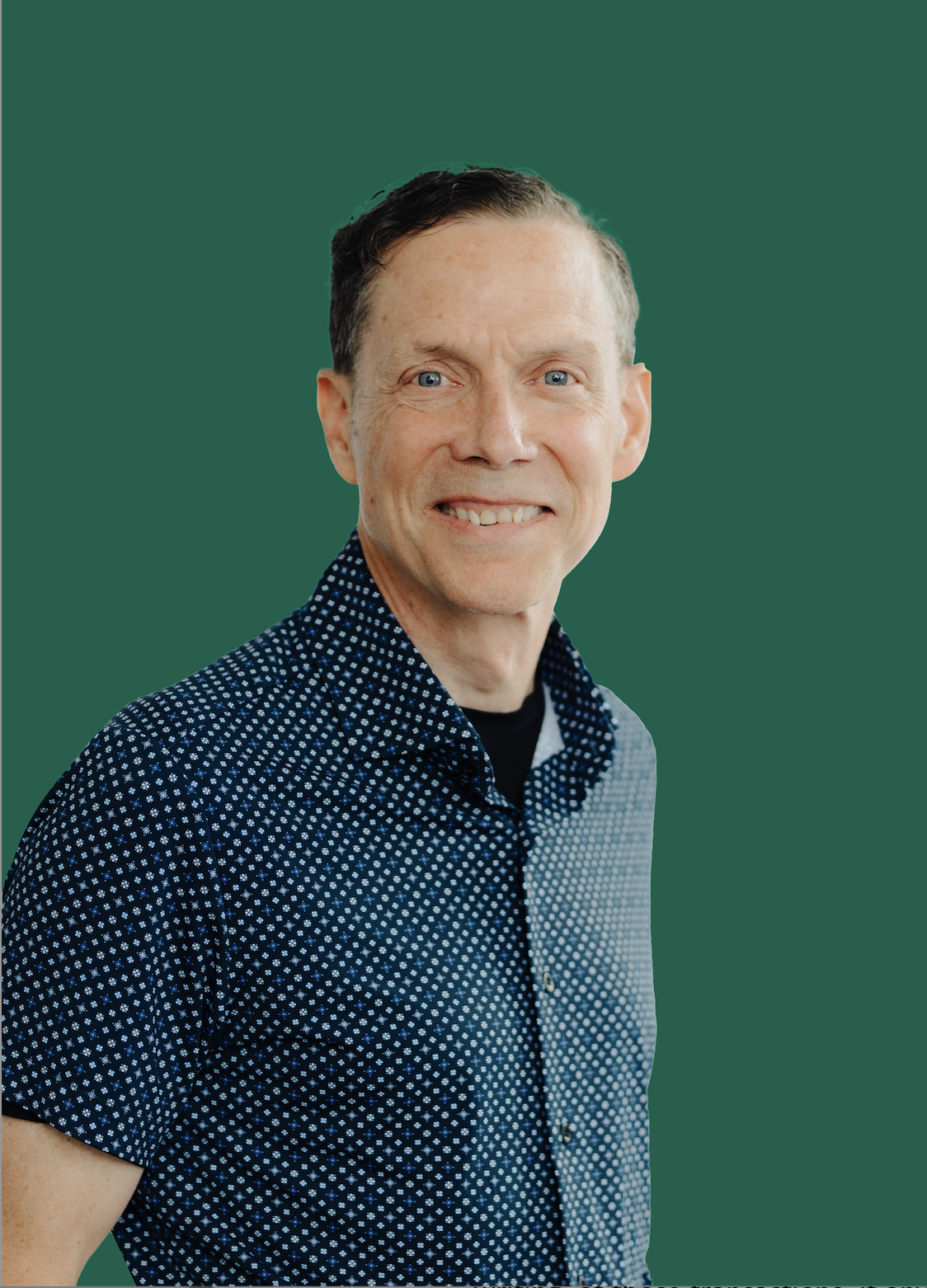
Author, Joe Gagnon
What does it mean to live intentionally?
In this inspiring conversation, Rip sits down with endurance athlete and author Joe Gagnon, who shares how he shifted from chasing external success to living with deeper purpose and awareness. Joe explores the mindset and habits that fuel his growth — from building strong health pillars and saying “yes” to new challenges, to embracing discomfort as a teacher.
Through endurance racing, reflection, and a plant strong lifestyle, Joe has learned that intentionality, courage, and consistency aren’t just traits of high performers — they’re the foundation for a fulfilled life.
If you’ve ever wondered how to align your life with what matters most—or how to find meaning in the face of any challenge and discomfort—this episode will help you reflect, reset, and take the next step toward a more intentional life.
Key Takeaways
Living intentionally starts with understanding your purpose.
Failure is not the end—it’s an opportunity for growth.
Grit, grace, and groundedness are vital for personal fulfillment.
Reflection on how you spend your time helps align your life with your values.
You are responsible for your own happiness and legacy.
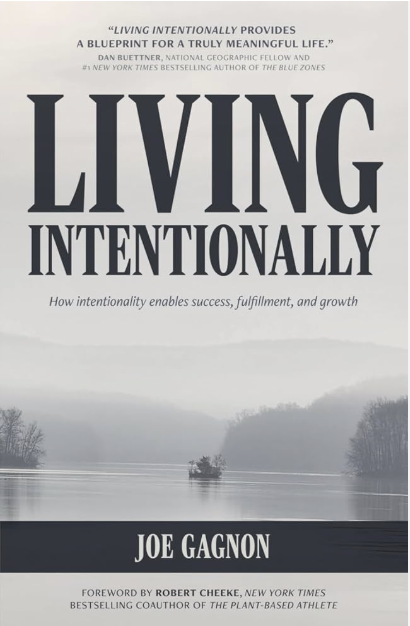
Order Living Intentionally
Episode Resources
Watch the episode on YouTube: https://youtu.be/4BkGPCIFmzg
Order Living Intentionally
Follow Joe’s Substack at https://joecurious.substack.com/
We hope to see YOU at one of our 2026 Live Events! https://plantstrong.com/pages/events
Join thousands committing to 30 days, 30 minutes of movement, and 30 different plants each week with our FREE Real 30™ program
To stock up on the best-tasting, most convenient, 100% PLANTSTRONG foods, check out all of our PLANTSTRONG products: https://plantstrong.com/
Give us a like on the PLANTSTRONG Facebook Page and check out what being PLANSTRONG is all about. We always keep it stocked full of new content and updates, tips for healthy living, and delicious recipes, and you can even catch me LIVE on there!
We’ve also got an Instagram! Check us out and share your favorite PLANTSTRONG products and why you love it! Don’t forget to tag us using #goplantstrong 🌱💪
Episode Transcript via AI Transcription Service
Rip Esselstyn
00:00:00.160 - 00:02:20.400
I'm Rip Esselstyn and you're listening to the Plant Strong podcast. Joe Gagnon turned a life of stress and relentless pursuit of success into one that was filled with purpose, balance, and growth.
From finding his why to embracing discomfort and building health pillars, Joe reminds us that real transformation starts small and with courage, commitment, and consistency. Gotta love those three Cs. And yes, that also included a whole food plan. Strong diet. We'll have a remarkable story right after this.
What does it mean to truly, truly live with intention?
Today on the podcast, Joe Gagnon shares insights from his book, Living Intentionally, a bold guide to finding clarity and purpose in today's utterly chaotic world.
As a ultra distance athlete, CEO and high performance coach, Joe has tested the limits of what's possible, whether right running six marathons on six continents in six days. Can't even believe it. Completing Badwater 135, or leading innovative companies. But his greatest discovery isn't about crossing finish lines.
It's about the inner work of defining purpose and then creating habits that lead to to a more grounded and fulfilling life. From finding your why to embracing discomfort and building health pillars, Joe reminds us that real transformation starts small with the three Cs.
Courage, Commitment, and consistency. Please welcome to the Plan Strong podcast, Joe Gagnolin. All right, Joe Gangon, I want to welcome you to the Plants Drawing podcast.
It is an absolute pleasure.
Joe Gagnon
00:02:20.400 - 00:02:24.120
Thank you, Rip. Thanks for having me on. Looking forward to this conversation.
Rip Esselstyn
00:02:24.360 - 00:03:33.790
Oh, I am too. And for those of you that aren't aware of who Joe is, he just wrote a book. This is it. It's called Living Intentionally. And the.
It's how intentionality enables success, fulfillment, and growth. And it's going to be sitting on my bedside stand for a. For a long time because there's so many incredible takeaways.
This is kind of like you've kind of pulled out your inner. Like Wayne Dwyer and Tony Robbins. It's. It's pretty remarkable. And you've really kind of put it all on the line.
You've made yourself incredibly vulnerable, and there's so many incredible takeaways. So I would love Joe to just kind of dive in. I think from. From the start, it's a great place and you know, you.
You open up the book by basically talking about how you're suffocating from the American dream and you had it all, but yet somehow or another, you had nothing. So can you explain that to the Plan? Strong audience?
Joe Gagnon
00:03:34.790 - 00:08:02.570
Yeah. Thanks, Rip. Boy, you tell your story and you sometimes think like, is that really true, what happens in the Bronx.
And all of us have these identities from early in our life. Right? That's really what happens. And then something happens, we get influenced and then can we shed who we were and become something new?
Right, That's. And it's easy to sort of tell the story afterward. I don't know that I was so intentional. No pun intended really, like when it happened. But no.
I graduated college. It was a tough time to get a job. I got this ridiculous job. I was making $7 an hour.
I always tell people, like the first week of work, my car was stolen, my girlfriend broke up with me and I had to move back in my parents basement. And it was like the end. Like that was the end, you know, and instead of the end, I made it the beginning.
It was the first of many beginnings, but they were mostly career beginnings. Over the next 19 years, like I focused on outworking the world, right?
I didn't have this background to trade on, you know, I wasn't the son of a Olympic athlete. I didn't have a big diploma. I had nothing but, you know, sort of what was between my two ears and in my heart. Married that, we had two kids.
I was focused on saving money for college. College. And somewhere along the way turned 39 years old and sort of just.
I don't know that I woke up one day in that suffocating feeling, but I was like, this can't be it. Like I'm making a million dollars a year, got everything we want, bought a big house, the BMW, the country club. Like the whole thing seemed perfect.
I didn't laugh. I would watch the kids, they'd laugh like, why are they laughing? You know what's so funny?
Like I was so serious, you know, I missed holidays because I had to work. I couldn't barely take a vacation. And I was like, this just can't be the next 50 years of my life. I probably wouldn't have 50 years.
And so I tried to run a mile and do a push up.
I couldn't do either, you know, look, I wasn't plant based back then and I was pretty good at drinking alcohol, you know, And I had to shed all of that. I had to rebuild myself. I had to walk away.
I left that million dollars a year for a hundred thousand dollars, which by the way, I know is still a reasonable amount of money, but it's a lot to walk away from. But I was so happy to walk away from it.
I went into a startup, sort of had a lot of aspiration and probably not realistic expectations, but it was the beginning of me starting to create the next version version of myself. And you know, when we fast forward and we'll come back, but you know, Was it like 25 years later? It's remarkable what you can go create.
So I don't care when you start. It's always a new beginning. Yeah. And I thought the most important lesson I took away was whose life was I living?
Why was I living what I thought everyone told me I should do? You know, why wasn't I doing the things that I wanted to do? You know what, why couldn't I show up for vacation or have a good time?
Why couldn't I go out on a five mile run? Couldn't do any of those things. And so I started saying, look, the only thing that matters is prioritizing differently.
Me first, family second, work third, is if you don't show up, well, you can't show up for anything. Well, you know, I had a very tolerant. And I'm sure that some of your listeners will feel this. People excuse your bad behavior. It's okay.
He just working a lot, right? That's okay. They didn't show up. And, and no one calls you out on it. And it's like, yeah, maybe they don't have the responsibility to do that.
But I'm glad I woke up, you know, all these years later. Then, you know, became plant based. I stopped drinking alcohol, exercise every day. I started writing.
I started having intention, you know, and a set of values. And, and so it started building. But it was, you know, year after year, and I can, you know, pause.
But the key was this idea that I realized the life that we live needs to be our life. And that. I don't know, Rip, I'm sure, like you, I've never met anyone who ends their life saying, boy, I just wish I had more money in the bank now.
Like, you know, I had less. More meetings to go to. Like, the things that we know, we absolutely know this conclusively. And yet we fall into the trap.
Rip Esselstyn
00:08:02.890 - 00:08:04.210
Yeah, we sure do. Yeah.
Joe Gagnon
00:08:04.210 - 00:08:14.370
And pull ourselves out. Don't wait for someone to pull you out. If you're lucky enough that someone does that, great.
But otherwise, like, let's get some agency and take care of ourselves. Yeah.
Rip Esselstyn
00:08:14.370 - 00:08:36.580
Yeah. Well, you say that, you know, you were just stuck in this unconscious trap of doing instead of being. And so, and so when you.
So when you started being instead of doing, how did that go over with your wife and your family? I mean, was that, was that, was it even perceptible or was it kind of a. Kind of a gradual transition?
Joe Gagnon
00:08:36.900 - 00:08:50.020
Mostly gradual. And it went this way. Used to get up at 7 o' clock. If you want to do something else, you better get up at 6:30 or then maybe 6 or 5:30 or 5.
I started realizing that no one cares what you do at five in the morning.
Rip Esselstyn
00:08:51.470 - 00:08:51.870
True.
Joe Gagnon
00:08:52.030 - 00:10:01.590
You know, it's like I found some time, I found an hour of time that could be mine that I could start to rebuild. And they started appreciating that, you know, I could show up and go for a walk or negotiate.
Because when you had the breakthrough, then what you start do, doing sort of reflects back into the rest of your life. So they were actually pretty happy about it. Like, I got still married 37 years later. I met. Married a saint. She put up with me, still puts up with me.
She let me be the person that I am. And so as she saw this, probably the guy she met, you know, before, right. Was starting to develop again. It really started to work in my favor.
Now admittedly, you know, when I started doing a lot of racing, no one showed up at the races but me. It wasn't like they were coming along to cheer me on. They're like, okay, good, go have some fun, do your thing.
And then, you know, I replaced the alcohol with riding and running and that was the best move I ever made because if I needed an outlet, just go out for a run and then everything was fine. So I think they appreciated the change because it made everyone else's life easier.
Rip Esselstyn
00:10:02.870 - 00:10:13.280
Well, you mentioned you were, you were. You did the running and the riding instead of the alcohol. Like, how were you doing a lot of alcohol? Were you an alcoholic or. No.
Joe Gagnon
00:10:13.280 - 00:11:44.120
People always ask that question. I don't think so, but I'm like, I'm. This is one of the rules of life that I have. You know, one equals n zero, always equals zero.
So if you don't have any, it's really easy. If you have one, I don't know what's going to happen. Like one is whatever, right. My intensity reflected everywhere in what I did.
So it was never a little of anything. It was always a lot of everything. So you wanted to take those things out of the system. So running three miles is great, but running 15 is better.
Having one drink is great than nine are good. And so it was easier. It's just easier. Zero. You don't negotiate, you just decide.
And then you leave your executive function for the important decisions in your life. Not, oh, can I survive one now? By the way, I Didn't like the idea that you would drink and get in a car either.
And so, you know, that was never a good. Like, that was like Russian roulette every time. So it was very easy to stop.
It helped my performance in the beginning when I was doing Ironman, and I just could tell the difference if I had a beer. You know, I lost a minute on the bike, and I got so dialed in that everything was easy. It was like, I've never missed it. Not one day.
Never missed me one day. All of it fit back to the person I was building. So it was easy.
Rip Esselstyn
00:11:44.360 - 00:12:42.410
Well, okay, so I definitely want to get into, you know, obviously, your. Your athletic career and some other things. But before we do, I just think it's important, and I'm kind of. I've picked.
I've picked parts of the book that I want to talk about. There, There. I mean, this is a. It's an amazingly well written book, well organized. You've done such a spectacular job. So what I want.
My goal here, Joe, is to have the plan, strong audience leave with just a bunch of pearls and nuggets. And then I. I'm telling everybody, get the book read. Will elevate your life. And I just read it in the last couple days, and I already have.
Have implemented a lot of things in the book. But let's start, Joe, with this.
You talk about there's a big difference between the word yes and the word no, and I'd love for you to speak about that.
Joe Gagnon
00:12:42.650 - 00:15:57.100
Yeah. Well, there are two parts to that, right? So that on one side, we have so many conditionals in how we think that we miss opportunity in life.
So if you lead with yes, it opens up opportunity in ways that, like, Rip says, hey, Joe, you want to come to Costa Rica with me? I'm like, yes. I didn't say, hey, Rip, will you let me know what it costs? What am I going to do there? Why am I going to be like.
Too many times we put so many conditionals that we never get there. Right. It doesn't mean you shouldn't make a judgment or not, but lead with yes. Lead with an open heart. And it started open opportunities for me.
It put me in places I never would have been. Like, oh, I'll go to Australia for that business meeting, you know, or I'll go do that race, or I'll try that, or I'll help you.
And the other thing that happens, Rip, is the more you say yes, the more people include you, the more they want you around, because they're like, you're always there for me. You don't have it make it hard that I don't want to ask. Then the second thing is the no part, which is that I just say, don't hold on to no too hard.
Now, I grew up, you know, in an Italian family. My mother was first generation. You know, we ate meat every day. We lived a certain way. And so I was never not going to eat meat.
I was never not going to have a beer. I was never going to. Not all these things and then. But I had a reason, I had a purpose, started to make sense.
And so I started challenging the depth of the no. Was the no this tradition? Or was it my belief system? Did it help me be better or did it get in the way? And what was I trying to become?
And so when I started combining these, this was like the lottery ticket that I cashed and I had the winning number.
I was like, figuring out life through these lenses of opening opportunity and being able to move behind constraints, beyond some constraints that were put in place by others, not by me. Now, if you agree that that's what you want to do, amen, that's cool. People should decide. We all have agency.
But just because it was doesn't mean it is what it should be, right? And so it's helped me immensely turn almost everything into a beginning versus an end, no matter where we are.
You know, you probably read the books on failure and suffering and struggle, like discomfort, all of that are the pathways to growth. The pathway to growth is through the word no over it. The pathway to growth is through the word yes. Like, I live in the dictionary, rip.
Like the dictionary opens up your mind. If you think of those words as enablers, not disablers. And so that's what started to happen.
And my gosh, the funniest part about it, you would think everyone would copy you. Like, oh, my God, the kid got the secret. He's working on all the projects because he always says yes. You know what they do? They say no.
Like, it's just. I don't understand. Like, this is the thing you have power of to do.
Now, it doesn't happen just instantly, but it does compound, just like compounding interest. And it creates great career, great life. Everything becomes beautiful.
Rip Esselstyn
00:15:57.500 - 00:16:43.150
Say yes to life. Say yes to life, and you will have that much more of a rich life. I absolutely love it. That is so well said.
So you say that the starting point of intentional living is finding out what your why is and that that then creates your North Star that will help guide you Home when you are lost in all of the noise of daily life. So for the listener that's sitting here, how do we go about creating our why?
And were you able to create your why like that, or was it something that obviously has grown and evolved over time?
Joe Gagnon
00:16:44.190 - 00:16:51.130
First, I'm sure you have a very wide Ange range on the podcast, right? So it could change over our life.
Rip Esselstyn
00:16:51.130 - 00:16:53.530
You know, when you're 20, 20 to 9 to 99.
Joe Gagnon
00:16:53.610 - 00:18:50.200
There you go. Like, when I'm 20, my why could be different than when I'm 70, right? Because we are at different stages in our life development.
You know, one, we're establishing ourselves as ourselves. Then we establish ourselves in the community, then we establish ourselves as a contributor back to community, community.
And at each of those stages, we can have a deep level of purpose. You know, the purpose is the reason we're here. And so I do think it evolves, and I think it has to be representative of not just the stage, but your.
Your priorities are. So I don't think it's a hard answer, and I don't think it's a simple answer. This is not something that should intimidate any of us.
I wrote in the book, and you saw this, right? There's some questions. Just be with yourself. What matters to you? What do you want to put yourself into? How do you make this a better world?
Like, instead of saying what you don't like, how do you want to role model behavior? Who do you want to become? So much of what I've realized is that we need to respect ourselves deeply first.
And when we do, then we hold ourselves accountable to a higher standard and a set of values, and then we can lean into our purpose. So the purpose becomes easier to develop when you start to feel good about that you've accomplished some of your own objectives.
You know, probably read about in the book that there was a point when I was trying to find an accountability partner. I didn't have a friend like Rip, for example. So I built a spreadsheet. I wrote down what I did every day for the past 25 years.
It became my accountability partner. It built confidence in me. I started to believe in myself. I'm like, look at that. You can do this for 150 days in a row.
You can do this for a thousand days in a row. Oh, my God, look at how much power you have. And from that, then you can get bolder about your purpose. Right?
You know, and so for me at this stage, it was about building myself so I can help build others and.
Rip Esselstyn
00:18:50.360 - 00:19:03.320
And, yeah, and Joe, you. You know, speaking of accountability and kind of getting on a roll, how many days in a row now is it that you have done your.
Is it your blog, if I'm not mistaken?
Joe Gagnon
00:19:03.320 - 00:19:07.480
Yeah, 4,720 days in a row I've written the blog.
Rip Esselstyn
00:19:09.240 - 00:19:10.280
That's remarkable.
Joe Gagnon
00:19:10.360 - 00:20:46.120
That's really remarkable because, like, it is the process. You know, there's a. I do a lot of podcasts like you probably. Someone says, what are the three things you do every day?
I'm like, well, yeah, forget brushing your teeth and eating and sleeping. You know, like, I always. Right, I breathe and I move. And so they are part of me. You can't say, when are you going to stop?
Because I'm like, well, am I going to stop living? I don't really understand this thing, you know?
So it's become a method for me to stay true to the vision that I created and actually to the purpose that I have. Because if I'm going to be so bold as to say that I can help build others, then I have to have been down the path myself.
I have to have had the experiences, the discomfort, the struggle, the hard part, and the good to see what it takes so that I'm not telling someone how to live, but I want to at least give them a reference point.
And so the other part is, we don't have to be so precise about our why, but what's most important is building the foundation to support it, because it's easy to write down our purpose. And then a year later, we're like, yeah, but I never did anything about that. And so that's what the first part of the book was about.
And, you know, really, the inspiration behind the book was. Joe, it took you 25 years to figure this out. Don't you think you should share it?
Don't you think you should try and create some framework that if someone was interested in being intentional, so it says, okay, I got my why. It's where we all start. And then the next part is build the pillars, right? Build the pillars of healthy living. You talk about this all the time. Then.
Then master reflection, you got to be able to keep looking at yourself well before you.
Rip Esselstyn
00:20:46.120 - 00:21:19.040
Before you go on to. Before you go on to the reflection. Do you want. Do you want to talk about those three pillars? Because I think that they're.
I think they're pretty good. And I think, you know, I look at. I look at people that I think have been able to break. Break through the.
The veil, so to speak, and find that intentionality and, you know, not really care what other people think and find their. Their purpose and stuff. And I think it's. A lot of it is grounded in those three pillars. So.
Joe Gagnon
00:21:19.040 - 00:24:03.870
Yeah, yeah. So there.
There are like, the health pillars that are foundational, like later in the book, which is, you know, sleep, exercise, eating, mindset, and community. Those are like your operating system or your firmware, right? This is like, we all need that, like, for the computer to run or for us to run. We.
We don't run if we don't actually have them be solid. But on top of that is like, sort of the next layer of the foundation, which is this idea of grit and grace and grounded.
And so if we recognize how life plays out for us, like, this is the experience that we have the ability to have grit, which is this idea of sort of perseverance over time, the ability to. To endure through difficulty, but also show up with a level of integrity.
And I think that everyone can sort of say, yeah, you know, I can sort of feel that I sometimes have grit.
Sometimes, you know, that that willingness to push through on the other side is the being grounded, integrity, having values, having principles, having ethics, not negotiating on them all makes sense. And I think high performers do very well with grit and being grounded. And where we mostly fall is at grace.
Having the ability to accept us for who we are, for the mistakes we make, for the way that we go about life. When we're not perfect for not being. Feeling bad about that something happened, it's okay, right?
Like, when you combine three, it actually sort of compounds on itself, and it gives us this, like, very unique characteristic that people are like, that person's sort of a little bit different. I wonder what it is about them. You know, they sort of walk with their shoulders back and their head high, but they're not arrogant.
They don't have ego. They're not sitting in this only milestone mindset. The accomplishments are who I am, right? They are the path.
They're not walking the path because they integrate almost like the best recipe you'd ever make. The recipe doesn't taste like the three ingredients. It tastes like the output from that. And so they were, for me, especially working on grace.
And I think you probably read the story about my wife with the pink robe. But, you know, we always want to make sure that if we can explain how we're feeling, the world will accept us. The world will accept us.
It will never be critical. Like I say, hey, Rip, I'm not feeling that good today. You change how you feel about me. In that moment.
But if I come right at you because I'm fussy, you'll be like, you're defensive then. So that's what Grace does. It opens up the world to you to be your best version of yourself with your grit and your groundedness.
Rip Esselstyn
00:24:05.950 - 00:24:31.210
You have already spoken a fair amount about discomfort and suffering, and obviously that's something that you have done a fair amount of, especially in all of your athletic endeavors. Tell me, like, in your opinion, why is discomfort where the growth really happens?
Joe Gagnon
00:24:31.850 - 00:26:27.100
Well, there's two parts. There's a physiological part, muscles. Everyone knows, right? You go and you lift a lot of weights, and all of a sudden you're sore.
Well, your muscle fibers ripped, and now they got to build again. So that discomfort, we might call it pain, is a natural growth process. So there's this physiological, biological process.
That discomfort is a noisy system, right?
Like, we don't have the time to let it just sort of, like, be nominally painful so that it would go over days and days and you wouldn't feel anything because we would never grow. We need a dynamic response. And then the second part is that our emotional system is similar. We need to test it.
We need to build up more resilience in our autonomic nervous system in the way that our neuromodulators work, in the essence of the way our whole body works, right? Neurons get built bigger. And so everything that we've convinced people we should avoid is the path to thriving.
And then if we go into the path of comfort, is only surviving. And I don't know who really just wants to survive. Like, surviving means this idea of balance, which I object to significantly.
There is no balance in a vibrant, exciting, amazing life, right? Integrated, sure, but not balanced. It's intense. It pushes lots of different pieces.
So to me, when we learn to embrace the discomfort, the suffering, the failure, the strain and the struggle, we are on this growth path. When we send out why, why we didn't grow. That's pretty simple. We avoided the method. This is literally the method.
Somehow we defined these words as the obstacles, not the method. So isn't.
Rip Esselstyn
00:26:27.340 - 00:27:05.660
Yeah, isn't that. Isn't that. I think that everything. The way you and you come back to that theme in the book several times. You know, you, you and you.
You quote Marcus Aurelius like, what? What stands in the way becomes the way. And Buddhist teachings that suffering isn't the enemy, but it's the teacher, which is so beautiful.
So we're almost, you know, if we could. If we could teach our children and and ourselves. Listen, get out there and fail. Fail, fail, fail. It's okay. It's the best teacher out there.
But we're all so scared of suffering and failing.
Joe Gagnon
00:27:06.140 - 00:29:15.770
Yeah. So, like, my favorite example, like, is we're all so darn afraid of the rain. Oh, my God, it's going to rain. Yeah. What's going to happen?
Like, in my coaching world, I say to someone, look, next time it rains and it's not 32 degrees, go out without your jacket on and walk around for a half hour and get soaked to the bone. And then go back in your house and change into your dry clothes. And you'd be like, I think I'm okay.
This is, like, a simple way to realize that we've overdramatized something into an obstacle that we can't get over. Like, if you're going to go ultra marathoning, you better be used to being out in the rain, right? Or the cold or the something.
Because it's the only way to get to the end. But I think that the other part about it is that, like, so I have this, like, deeply intense curiosity. I want to know how it feels.
This is a privilege. I want to know, like, when I went and ran six marathons, six content, six days, the first day I wrote myself a note, the lows would be the highs.
Yeah. I wanted to go feel how bad it could feel. I was like, that is, like, incredible. And everyone would be like, I don't want to feel like that.
I'm like, yeah, but this is something, like, literally you could go do and see, now you are unique because you felt something. And by the way, as you know, in the book, I said at the end, it was like, that wasn't that hard. I wonder why it wasn't that hard. I'm like, oh, dope.
Mindset, mindset, mindset. You had defined the lows as the highs. The highs became the whole thing. There were no lows. It never really was that hard.
I was like, ah, but it just shows what's possible. Mine is always this, like, no, we're not talking about something that has massive consequences in a negative way. Right.
We're talking about all this normalized risk. That's not going to really. It's okay. It really is.
And by the way, if you can't do it on your own, there are friends of yours, I bet, who will do it with you, who will tell you it's okay. It's okay. I got your back. I'm here for you. Like, I would be here for everyone. Yeah.
Rip Esselstyn
00:29:17.210 - 00:29:58.270
So you, you have littered throughout the book. You have some great anecdotal stories. Obviously you start off the book with the, the, the six marathons in six days on six different continents.
And the quote that you just said, you know, you're, you're, you're embracing, right, to let the lows be the highs. And you were able to pull it off dramatically.
In 2022, you did the Sea to the Sea 300 mile adventure race that you said it was an odyssey that, that redefined your concept of endurance. Like, tell, tell, tell us a little bit about that. I, I want to understand how, how difficult that was.
Joe Gagnon
00:29:58.910 - 00:30:30.522
So this is from the Gulf of Mexico to the Atlantic, across Florida, canoeing, biking, trekking. This is without any map, but just, I mean like a, it's a compass and a map but no directions. And you have to find your way.
We ended up canoeing 50 miles, which, by the way, is harder than running 100 miles. And we had to go from station to station with our equipment, all of it, and 70.
Rip Esselstyn
00:30:30.618 - 00:30:32.090
70 stations, is that right?
Joe Gagnon
00:30:32.090 - 00:31:33.610
Yeah, 70 stations. It was going to give us 72 hours to finish this race. 300 miles. And you basically, unless we tried to sleep.
We slept for about 30 minutes across the 70 hours. But where they hid these checkpoints was like in the middle of these palmettos and you just scrape up your legs.
Like, I've realized afterwards why everyone was wearing long pants and I was wearing shorts. This was a major tragic process problem because my legs looked like, literally I'd have fight with 25 cats.
So putting on sunscreen killed it and trying to clean it killed it. Like it was extraordinary painful to walk through that. And you had to like, we canoed for 15 straight hours.
The blisters that formed on our back were as bad as anything you could imagine because you were just rubbing for 15 hours of this canoeing. And then like it was a funny thing, I got off the canoe and I went for a 10 mile run.
It was the easiest run I had ever done because I wanted to be out of the canoe.
Rip Esselstyn
00:31:34.250 - 00:31:34.730
Yeah.
Joe Gagnon
00:31:35.690 - 00:32:35.640
But the dynamics of adventure racing are interesting because usually the issues are the interpersonal relationship issues. The navigator has an idea, you might disagree. You can't say that. Someone says, why are you going so slow? Why aren't you going faster?
You know, should we stop the food? And it's this interpersonal dynamic under stress that creates another layer that you don't expect, especially if you're on your own.
You just sort of decide, you know, I'm going to go do this and you keep moving. And so you got to move as a team. And it can flare up as we get more tired.
And 70 hours is a long time to be up with that kind of physical exertion in the hot sun in Florida, et cetera, et cetera. Your ability to use your executive function goes down and down and down. And so now you're into this survival thing and bad decisions happen.
Let's go here, let's go there. And yeah, it just makes for, you know, the end. Never seems close.
Rip Esselstyn
00:32:35.880 - 00:32:37.080
Was it teams of two?
Joe Gagnon
00:32:37.560 - 00:33:32.490
It was teams of two.
We did hook up with another team of two and I pulled off the miracle of the entire race because it was a couple, the other two, and it was me and my friend Dirk. And Dirk and the other guy wanted to try to go do something and I knew it was wrong.
So I told the guy's wife, you need to tell your husband you're not going to go do it because he'll listen to you. But no one would listen to me. And she did. And they're like, oh, okay, we'll listen. So that was one of the things I pulled off.
It just stopped us from doing an extra 10 miles for no good reason because we'd have gone the wrong way. But they were so insistent that they were right. This is the dynamic, you know, this is like.
What's so interesting about adventure racing is you, you add the interpersonal challenges under stress to the ultra endurance activity such that you can make some mistakes.
Rip Esselstyn
00:33:32.970 - 00:33:52.890
Yeah.
Well, what's funny is that, that I can't even imagine 72 hours without sleep because it certainly isn't part of your five pillars of the firmware at the end, which is, you know, sleep, community, nutrition, exercise, and what am I leaving?
Joe Gagnon
00:33:53.130 - 00:33:54.490
Mental mindset.
Rip Esselstyn
00:33:54.570 - 00:34:00.010
Yeah, exactly. No, you're, you're, you're a big fan of Diana Nyad.
Joe Gagnon
00:34:00.090 - 00:34:00.570
Yes.
Rip Esselstyn
00:34:00.970 - 00:34:18.040
And find. Whose mantra is find a way. You know, I'm, I am a former swimmer. I appreciate what she was able to do.
How, how, how inspirational was she in, in kind of your thinking?
Joe Gagnon
00:34:18.680 - 00:35:43.850
Yeah. You know what was amazing, right.
Was so she was so accomplished before she ever took on the Cuba to Florida challenged that she had no reason to do this. Like, she didn't. She could have traded on her history as an amazing endurance swimmer. Right.
Athlete and everything, but she set out with this idea, and not at a young age either, to do something no one ever had done. I think it was 60 years old. And I thought, okay, that's pretty interesting. And she failed. And she said, I'm going to go back.
But in the middle of it, she had to. Everyone told her no. Right. And all of her support didn't want her to do it again.
And she kept going through because she knew inside her she had the ability to do this. So the circumstances had to contribute in her favor a little bit.
But I never felt someone who was so committed to achieving an objective like she was against the odds. Because I do think that if you're going to go on the path of intentional living, you will have detractors and people telling you no.
You have to be ready for that. You have to believe it deep in your heart that you're doing the right thing for you and the rest of the world.
And so she reflected that back to me, which is like, no, don't quit just because other people tell you not to do it. And I fall into that category now.
Rip Esselstyn
00:35:45.209 - 00:35:47.610
She had a documentary. Did you watch that documentary?
Joe Gagnon
00:35:47.690 - 00:36:35.980
I did, yeah. It was amazing. Yeah. And the book. And then, you know, Jodie Foster was in the actual movie that they did. And so I thought, you know, of.
Of the people in the stories of history, you know, we got athletes who are just, like, at the top of their game for a short period of time, and then you never hear from them again. You know, I actually think we need to be athletes our whole life.
We just don't have to focus on the milestone of seconds or minutes or miles, but we have to have the athlete mindset, the mindset that this system is made to move. It's made to be vibrant. It has a lot of vitality, but it only shows that when you use it.
And so I like looking for people who are going to do this to the last day. And that's my plan.
Rip Esselstyn
00:36:36.300 - 00:36:48.140
Yeah. When you first started your foray into competitions and Ironmans and ultra endurance races, were you concerned about the clock?
Joe Gagnon
00:36:49.210 - 00:37:21.960
Oh, yeah. Like, I lived for that. I lived for seconds and minutes. I had three different coaches along the way.
You know, I was trying to qualify for everything from the Boston Marathon to go to Kona. You know, I wanted to be competitive minimally in age group. I started so late that I was not going to be competitive at the level of the entirety.
But IN IRONMAN In 2011 or 12, you know, I came in 200 out of 3,000 people, you know, and so where was that?
Rip Esselstyn
00:37:21.960 - 00:37:23.200
Was that. Was that in Kona?
Joe Gagnon
00:37:23.200 - 00:37:24.040
Panama City.
Rip Esselstyn
00:37:24.040 - 00:37:25.320
Panama City. Nice.
Joe Gagnon
00:37:25.320 - 00:37:48.340
And so I was always aiming for that, like, yeah, I don't anymore. But it played a big role. The first book I wrote was Living the High performance life, right? Seven years later, I write living intentionally.
Something happened to this boy for sure since then that realize that maybe I'm not my accomplishments. Yeah, maybe I'm more than that.
Rip Esselstyn
00:37:48.820 - 00:38:16.740
Isn't that interesting? Maybe I'm not my accomplishments. That's, that's something that I think is we all need to kind of sit and reflect on.
So let's, let's, let's move to reflection.
Because you talk about how reflection really is the, the operating system for intentional living and how there's micro and macro insights and how it also doesn't have to always be a solo act. So can you expand on that?
Joe Gagnon
00:38:17.140 - 00:38:38.500
Yeah, I think that this idea of by default rather than by design, you know, our system, the way the human system works, it's good on repeat. And so we can do the same thing over and over again. Whether you worked in a manufacturing job, you're a runner, you're an office worker.
We could do the same thing exactly every day. And in that, no learning really happens.
Rip Esselstyn
00:38:38.500 - 00:38:38.590
We.
Joe Gagnon
00:38:38.740 - 00:41:41.000
We plateau, right? And when you're in a plateau, it's one of the most important times to reflect. Like, okay, I've learned something. What else do I need to know?
But we need to step back and embrace that. Like, don't let it just sit there. And so that's part one, which is to know when we've plateaued.
And we can do that through both a feeling maybe of boredom, right? Which is a bad feeling. Like, if you feel bored, that's personal responsibility to take care of that.
If you don't feel progress happening, if you don't feel growth, if you're not learning, these are all signals that I should step back and look at objectively. What am I doing? How am I doing it? It's great to ask people, right? Do it with your mouth zipped closed. Tell me, Rip, what do you think?
And just be willing to listen. Like, we should. Look, everyone knows, like, you know the old story, right? If you have something on your shirt, no one tells you it's still there.
Like, please tell me. Like, come on. Like, I need to know. It might feel bad for a few seconds, but it is there as the sort of the jumping off point to our improvement.
So first is take a look in the mirror. Do you like what you see? Are you accountable to yourself? Do you have integrity?
The second is open yourself up to other people who know you, who will give you feedback. And the third is to look for role models in the world that you can learn something from.
You know, you mentioned some names you know, like whether it is a Ryan Holiday or Marcus Aurelius in the world of the Stoics, or it could be an athlete that you deeply respect. It seems like we sometimes respect people further away from us than people close to us. So if that's the way to do that, it's a good way to reflect.
Say, how did they get there? What would I have to do to get there?
And then the accountability part is the other part of reflection, which is we need to be very, like it's intentional but with a plan. The plan then gets measured and that allows us to then achieve the objective. Right.
And so that was what was so great about my spreadsheet, or it continues to be, is because I can look very objectively at what I did and did I accomplish the goal? And then if not, then you could ask yourself the question, like, what happened? And so you get better at the questions. I had this story one time.
I think a 365 day goal is great. Do something every day of the year, Whatever, anything, literally anything. 365 days will test your abilities. So I was push up.
Goal time was 375 push ups a day. I flew from Boston to New la, got in late, Uber was late, got to the hotel room 2am, got to get up at 5 and then I'm getting ready to bed.
I'm like, oh my gosh, I forgot to do my push ups.
Rip Esselstyn
00:41:41.320 - 00:41:42.440
3 75?
Joe Gagnon
00:41:43.080 - 00:41:43.560
Yeah.
Rip Esselstyn
00:41:45.000 - 00:41:46.620
Wait, you doing them in sets of.
Joe Gagnon
00:41:46.620 - 00:41:52.740
What, 50 or 75, something like that? Okay, I do 500 a day now.
Rip Esselstyn
00:41:55.540 - 00:41:56.580
Oh my gosh.
Joe Gagnon
00:41:57.140 - 00:43:22.850
So I got, I'm in the room by myself. There's literally no human in contact with me. And you start the discussion, you know, you did them yesterday, you're going to do them tomorrow.
No one will notice. And at that moment your brain switches like, oh my gosh, did I really just say that no one will notice?
This isn't, no one's involved in this, you dope. Like, this is you. You made the commitment, get down and do the push ups, you'll be fine.
And I do the push ups and I go to bed and like, you have to learn how to overcome the objections that come from inside that you blame on the world. Right? This is what reflection is about. This is this active monitoring of what we're doing.
And what it builds is this level of resilience that carries you through an ultramarathon or through a difficult business meeting or through a tough time in your life because you've built up this tolerance, your system is stronger. Like the Navy SEALs, right? They just do hard things and then they can take on any kind of challenge. We can do that as well in our lives.
But you got to simulate it because you got to build it because the system only responds. Remember, doing nothing is comfort. Surviving. Doing something is active and thriving. That's where we build and grow.
That's why we got to always have, you know, movement and activity and measurement and reflection is part of it.
Rip Esselstyn
00:43:24.130 - 00:43:31.270
When did you go from 375 to 500 a day? And how. When was the last time you missed a day of push ups?
Joe Gagnon
00:43:32.380 - 00:43:54.620
I don't know. Push ups, probably like four years ago. Started with 350, then the next year was 375. Then the next year was 425.
And this year I said, I wonder if I could do 500 a day. I wonder if I added up it's like a half a million in the past four years. But just because I humor myself too, Rip, I do 100 pull ups a day.
Rip Esselstyn
00:43:55.100 - 00:43:55.820
Seriously?
Joe Gagnon
00:43:55.900 - 00:43:56.460
Yeah.
Rip Esselstyn
00:43:57.710 - 00:44:11.750
Joe, Joe, Joe, stop for it. Stop for a sec. I am, I am. I am floored right now. What I'm hearing. So you do 500 push ups, you do 100 pull ups, 300 crunches, and.
Joe Gagnon
00:44:11.750 - 00:44:13.710
Then I run seven miles every day.
Rip Esselstyn
00:44:14.030 - 00:44:14.670
Every day?
Joe Gagnon
00:44:14.750 - 00:44:15.710
Every day. So.
Rip Esselstyn
00:44:15.870 - 00:44:20.590
So do you spread this out throughout the whole day or do you do it all in one chunk?
Joe Gagnon
00:44:20.750 - 00:44:44.590
I mean, my normal routine, I get up, do the a hundred pull ups, the sit ups, run seven miles, then I write for a little while, then I go to work and I come back. Of course, I've eaten through the day. And then after. The hardest thing is I do the. Write the blog and do the 500 pushups at the end of the day.
So there's only one way to bed is through those two activities.
Rip Esselstyn
00:44:44.910 - 00:44:49.070
Oh my gosh. Through the blog and then through the pushups. That's.
Joe Gagnon
00:44:49.750 - 00:44:55.110
You can't miss them. Like, this is like, if you can't do them, you don't go to sleep. And I know I need to get to sleep.
Rip Esselstyn
00:44:55.350 - 00:44:56.470
That is phenomenal.
Joe Gagnon
00:44:56.470 - 00:44:56.870
What.
Rip Esselstyn
00:44:56.950 - 00:44:59.910
Tell me, how tall are you and how much do you weigh?
Joe Gagnon
00:45:01.190 - 00:45:42.730
Just about 5:11. And I weigh about 147, give or take. I need to eat more.
But, you know, just because we're humoring each other, in December two months ago, I wanted to see how many pull ups I could do in 12 hours. And so I did 2,000 pull ups in 11 hours and 40 minutes.
And part of it was I wanted to see what it would feel Like, I'm like, what would hurt the most? What would fail first? How would this be? Like, oh my gosh. I was so curious to see, like, what would happen.
And there was so many things, was just like, oh, I. I feel so lucky to be able to do this.
Rip Esselstyn
00:45:42.970 - 00:45:51.930
Wow. How, how many did you have a pattern? Cause I know David Goggins was trying to do six pull ups a minute for 24 hours.
Joe Gagnon
00:45:51.930 - 00:46:26.640
I did five every 90 seconds. And so I'm going back at it in November, December to do the 24 hour and see if I could get. Yeah, David.
I think he's done some of the things I've done after me. So I think he's copying me. He doesn't know that, but everyone talks about him like a 200 mile race. I ran it before he did, by the way.
He's a lot younger than me and so I think he should be able to do more. But I'm holding my own, so, you know.
Rip Esselstyn
00:46:26.880 - 00:46:27.840
How old are you?
Joe Gagnon
00:46:28.880 - 00:46:31.360
We're a couple days away from being 65.
Rip Esselstyn
00:46:31.760 - 00:46:32.800
Okay. All right.
Joe Gagnon
00:46:33.390 - 00:46:33.790
That's.
Rip Esselstyn
00:46:34.030 - 00:47:03.050
I am right now.
I can't even tell you how pumped up I am hearing, hearing your gusto for life, how you're just putting one kind of, you know, goal out there after another. You're building resilience. You're living this incredibly active, rich life. I am pumped. So tell us about the bison effect.
Because I read about that and I was like, that is cool. And you even have, you even have tat. A tattoo of bisons, right? Where are they?
Joe Gagnon
00:47:03.450 - 00:47:05.770
Somewhere here. There they are.
Rip Esselstyn
00:47:06.810 - 00:47:08.170
Oh, yeah, there they are.
Joe Gagnon
00:47:08.410 - 00:47:11.850
Better image there. There you. There you go.
Rip Esselstyn
00:47:11.850 - 00:47:14.170
So why the bison? Why, why, why bison?
Joe Gagnon
00:47:14.970 - 00:49:40.490
So, like, if you had a spirit animal, right. Should define the characteristics of what you stand for, right? And so first, the bison has deep, deep history in the United States.
And I do want to correct everyone that we have no buffalo in the United States except in a zoo. Buffalo don't live in North America, they live in Africa. Although we call these animals the same thing, the bison of the North American animal.
They've been here forever. Sadly, we killed most of them off, but we still have thousands of them still roaming. They are massive creatures. They're plant based.
Gotta love it, right? They get up to £2,000 and nine feet long and they can run 30 miles an hour. They also mind their own business. Look, I'm okay, man. Just leave me alone.
I'm good. I'm doing my thing. I'm eating my grass. Don't mess with me.
Oh, but if you mess with them, they're just gonna say, look, I'm here, so just don't mess with me. Right? So they have this intensity, but they never show it because they don't need to. They also know this idea. They're smart.
Like, this whole thing I wrote in the book, they, if a storm comes, they go through the storm to get through it faster. So they're smart. So they figure out if I stand here, it's freezing cold.
By the way, they have nine layers of insulation, so they can stay out there at any temperature. Even though they look like they're freezing, they're actually warm because they have nine layers of insulation.
So they're designed for the environment. And then they're bold. They're just, like, stinking bold.
They're just like, we're going through the storm because it's shorter to go through and be on the other side than stand here while the whole thing comes over us. So they just have so many of these amazing attributes. And then, yeah, one of the things RIP was I was never going to have a tattoo.
Like, I didn't do that. But both of my daughters drew mountain scenes, and I thought, wow, what if I had those as the tattoos? And I'd have their art with me all the time.
And so I put them on my forums. I have artwork from Julianne and Kimberly. Carry it with me. They're with me all the time.
And so it's just like this blessing, like, every day I look at it, I'm like, oh, my God, I can't believe I have. This is such a cool thing, but I love the bison. Now, this isn't an animal you go and pet. This is like, you know, they are.
They're wicked and amazing, and they also know how to survive. And so that's what we want to be like. I want to reflect a lot of those attributes.
Rip Esselstyn
00:49:40.970 - 00:50:16.080
Yeah, I. I absolutely love that you've. You've done so many different races, and you talk about some of. In the book, you talk about how the Leadville 100 race really was one that.
That taught you a major lesson. You also talked about how you were doing a 50 mile or.
I can't remember where it was, but yes, it was in Tucson, and it was that DNF that really taught you something that all the others hadn't. So I'd love for you to talk about whichever feels appropriate.
Joe Gagnon
00:50:17.440 - 00:50:23.120
I think that this idea of the DNF is great for everyone because we all hit this moment.
Rip Esselstyn
00:50:23.920 - 00:50:27.200
And for people that don't know what DNF means, it means did not finish.
Joe Gagnon
00:50:28.800 - 00:53:21.500
So I had built this identity of this tough guy, right? You can do everything, anything, take it on.
By the way, you know the other thing I just want everyone knows, like I have run six different software companies. I'm not a professional athlete. I don't only do that. I still have started and run six companies. So that part.
I still run a software company today and I do this so it's not like I'm this one dimensional. That's all I do. But back to the race. My friend Joe and I were down Tucson and we signed up for a 50 mile race.
And it was like late, early spring, supposed to be a fine day. Long story short, monsoon came in. No one expected. We were not dressed for it. All of the course markings got blown off the course. I got lost.
I was lost in the mountains. It was pouring rain in the low 30s and I was getting hypothermia.
You know, like you don't over dramatize because we never know what could have happened. But I was rescued by the National Guard. They had to send people in to get us out. I could not find my way.
And I was wandering for hours and hours and my body temperature had gone down to like 94 and so I needed some care. I probably wouldn't have made it. So fine. You survive.
You're like getting ready to go back to the car and drive back to the airport and like, oh my God, I gotta write my blog tonight. Oh my God, I didn't finish. How the heck am I going to tell the world I didn't finish? I'm the tough guy. Oh, this is. I can't, I can't write it.
What am I going to do? Like, how do I admit this? This is like so embarrassing. What's the matter with you? You couldn't finish the race. And I was spinning and spinning.
Oh my gosh. I was like. Because I had so created this identity that I wanted the world to think of me that way because I was a tough guy.
Finally wrote the blog, pushed it out and I got more notes back from writing that blog about like, my God, we're so happy you're alive. We never thought you'd ever survive these kinds of things. Thanks for not going to the finish and trying to, you know, kill yourself kind of thing.
And I was like, oh, no one really cared about the guy's tough guy. They just wanted me around, you know, get out of your head and accept that this is the grace piece. Okay? Like it's okay. We're not here.
Measured by that moment or any moment for that matter. Not by the dollars in our bank account, the time in your marathon, the anything that you've done that is not the measurement of the person.
But I had to, you know, my sort of thick headed nature, I needed to go through that moment to find that where I was and the world were, I could intersect in a good way. In a good way. Still could push hard. Great. But don't push hard at all expense.
Rip Esselstyn
00:53:21.740 - 00:53:25.260
And so you did your blog. Did you also do the 500 pushups after that?
Joe Gagnon
00:53:25.420 - 00:53:27.060
Well, that was before I was doing them every day.
Rip Esselstyn
00:53:27.060 - 00:53:28.020
Okay, okay, okay.
Joe Gagnon
00:53:28.020 - 00:53:37.100
This is about 10 years ago. And I was doing a different thing back then. I was doing the Sally push up challenge. And so that was another. Yeah, okay. Entertain myself.
Rip Esselstyn
00:53:37.970 - 00:53:55.730
So tell me, you also, you talk in the book about how you did the Tahoe 200 and that of all the races, that one broke you wide open and you realized what about yourself?
Joe Gagnon
00:53:56.930 - 00:55:03.560
So just the fast story on it, right? So that year I had done six marathons, six continents, I had run 10 other marathons. This wasn't hard enough. Like, what the heck's the matter with me?
I gotta go run a 200 mile race. Everyone's like, why are you doing this? Like, because I need to. Like, no one's shaking their heads.
So 200 miles around Lake Tahoe, three and a half days, rainstorms, you're out there by yourself in the middle of the woods.
Like things just epic proportions, you know, I slept one hour one night, one hour, another night, the next night, two hours, I'm literally falling apart. Turn my ankle swollen as big as my calf, maybe as big as my thigh. The last 20 miles took me 20 hours. Walking one mile an hour with poles.
I could not move faster than that. But I'm going to make it. It's now 92 hours into this race. Come around big hill. I see the finish line and I literally burst out in tears.
Not because my ankle hurt. And at first I'm like, why am I crying like this? I'm like sobbing, literally sobbing.
Rip Esselstyn
00:55:03.960 - 00:55:07.800
Have you, have you, have you, Joe? Have you ever sobbed like this before?
Joe Gagnon
00:55:08.440 - 00:56:48.120
Never another race? No. Not barely even at a funeral. Literally. No. Like, wind me tighter than, you know, most people.
And like, now I know what happened, so I can say it as though it happened in that second.
But what I realized then was I was on this journey from this little kid who grew up in the Bronx, made fun of, bullied, to the career we had no advance. Everything that I was Doing was fighting the world and trying to prove that I belong here. Like, I am a tough guy, I am a performer.
I am all these things. And then I realized that I was just trying to prove to myself that I should be here.
Like, you know, I needed to accept myself and fall in love with myself. That self actualization, this ability, say, I belong, I'm important, and I can love myself.
And, you know, every time I say it, especially on stage, I typically tear up because I can feel it inside me every time. And that's now eight years ago.
But rip, ever since then, you know, it was as if this, like, world opened up to me in a way that peace in my heart, the elements of everything that I was fighting against made sense. I know why I'm here. I know that I should be here. As I talked to one of my philosophy friends, I fell in love with that little boy who got me here.
Not because of the strain, but because it was the pathway. So that, you know, was so unexpected, like completely unexpected. This was not what I was like. It was not a design, but it was what was happening.
Rip Esselstyn
00:56:49.320 - 00:57:01.640
So was it at that moment in time that you feel like you finally were able to look in the mirror and love yourself, or was it Definitely, definitely. So not before that? So much.
Joe Gagnon
00:57:02.920 - 00:58:23.960
I think I was much better adjusted as a human, but had not fallen then. And I don't know if people really fully understand what you say when you love with yourself. It's not like this weird thing.
This is about a sense of peace in our hearts. Like we're all trying to figure out life, right?
Whether it's human consciousness and what that means, whether there's a higher power, whether we're doing what we're supposed to do, whether we're making good decisions. But it all comes back to us at the end of the day.
And it comes back to having purpose and values and integrity in this person that you've become so that you can contribute back to society, you can be a good actor.
Like, you can have a social conscious and share in the abundance that we have, you know, that you can support and help people grow, that you can be here, you know, to make it a better world for all of us. And that's where I live every day, with this deep level of care for the rest, for all, for all of us to have equal party to this amazing life.
I didn't realize that's why I was here or why we all are here sharing that. And so it came out in an interesting way, but I'm really glad it did.
Rip Esselstyn
00:58:24.190 - 00:58:47.710
Yeah. Well, you know, you also have some quotes kind of around that subject about, you know, it.
You say it's about meeting yourself in the dark and not running away. Right. And kind of facing yourself. And then you say, as this guy S.N. berman suggests, at the end of every road, you meet yourself.
Joe Gagnon
00:58:47.870 - 00:58:49.630
You know, I felt that so much.
Rip Esselstyn
00:58:50.020 - 00:58:51.140
I do, too. Yeah.
Joe Gagnon
00:58:52.260 - 00:59:05.700
You know, the. When it's quiet and we are by ourselves, it's not really hard to ask the question, do you like who you are?
You never have to tell anyone the answer to that, but you should ask yourself the question.
Rip Esselstyn
00:59:06.260 - 00:59:06.780
Yeah.
Joe Gagnon
00:59:06.780 - 00:59:26.580
And if you don't like the answer, shouldn't we do something about it? Like, this is up to us. This is our choices. We are the product of the choices we make. That's it. The noise, Rip.
The noise in the world is loud, but the signal is clear. If you pay attention there.
Rip Esselstyn
00:59:27.060 - 00:59:27.500
Yeah.
Joe Gagnon
00:59:27.500 - 00:59:31.620
Just whether we choose to want that or not, we choose to listen to the noise.
Rip Esselstyn
00:59:32.020 - 01:00:03.150
Yeah. And there is a God smacking of noise out there right now. And so you really gotta, you know, bifurcate yourself from it.
And I think as you talk about, you know, be reflective and, and, and find that signal, you talk in the book about you, Joe. And I've heard it loud and clear here. You've got a superpower, right? And it's the C3. Superpower. What are the three Cs?
Joe Gagnon
01:00:03.470 - 01:00:06.110
Yeah. The courage to make a commitment to consistency.
Rip Esselstyn
01:00:06.590 - 01:00:07.150
Yes.
Joe Gagnon
01:00:08.230 - 01:02:49.840
Yeah. So courage. Yeah. We all could sort of believe that there's courage inside us somewhere, you know, this bravery, this willingness to do something.
Commitment. I don't think most of us know what that word means. Starts here. Make a commitment to yourself. If you can do that, then it's a commitment to the world.
But, like, are you sure about what you're deciding or did you just say something? So you got to go and evaluate. What did I just say? What am I doing? And then consistency.
The desire and willingness to show up again and again and again. Now, most people think consistency is boredom, drudgery. Anywhere of the word you want, it's mastery. Consistency is where mastery happens.
So if you put the three together, you have this courage to make a commitment to consistency. Your life changes. Your life changes in ways you can't even imagine. Because the more we do something, the more refined our system becomes.
Our brain, our microbiome, every bit of it, you know, our heart, our nervous system, because it's made to be used. This is a system that we will never find the end of our potential. Right. We'll never find it, not in our lifetime.
There's so much more sitting inside us. Try to unlock it. And the way to unlock it is through consistency, because it forces us. Like, I was riding my bike 15,000 miles a year for a while.
I said to my wife one day, I'm like, anthea, I think I know how to ride my bike. She's like, what the heck are you talking about? I'm like, no, no, don't you understand? Like, I really feel like I am part of it.
She's just shaking her head like, I don't understand this guy. He's a nut job. But it was all of those miles that took it to another level. Could never feel it otherwise.
Like, you can't even describe these things sometimes. So I love consistency. Like, you know, I fell in love with eating peanut butter and jelly for, oh, my God, my whole life.
Every day I'd be like, oh, my God, I get to eat peanut butter and jelly today. This is the most amazing thing in the world. I love this.
It's like, turn everything you think is a problem into, like, the success, like, into the enabler. Into, like, oh, wow, like, I can figure out how to eat if I eat the same thing. Imagine you figured out the perfect balanced diet.
Breakfast, lunch, dinner. It met all your macros, all your micros, everything. But you had to eat the same thing every day. But it made you this powerful person.
Everyone would be like, I'm bored. Like, what's this board thing? Like, why is bored getting in the way of performance or intentionality or living a great life?
I'm like, I don't understand. Like, why do we use this language as the defense against what we sort of think we want?
So anyway, if you see someone who's amazing, they've mastered the three Cs, they just don't know that that's the language they use.
Rip Esselstyn
01:02:49.840 - 01:03:40.220
Yeah, you know, it's interesting. I'm going to come back to you, you know, finally figuring out how to, like, ride that bike, maybe efficiently. It's like, I.
You know, I've been biking and swimming now and running forever, and I finally feel, just in the last two years, like I learned. I've learned how to pedal the bike in a way that's efficient, that's powerful. That's where I'm feeling the pedal all the way around.
I'm swimming now in a way where instead of swimming so much with my hands, I'm kind of grabbing the water with my armpits. And it's incredible the amount of Power and efficiency I'm getting without getting the fatigue. So it's. You just never stop learning.
But I find in order to get better, you have to be mentally engaged and be thoughtful about what you're doing.
Joe Gagnon
01:03:41.020 - 01:04:20.600
Big time. Okay, I appreciate the comment. In the beginning, you said, I wrote a well written book. Yeah, I've written for 4,000 days.
Wouldn't I become a better writer?
Like, I mean, it's like, I appreciate that and I'm really happy for that, but if I wanted to be a good writer, if I'd written this book 4,000 days ago, it would never, ever be as good as what it is, even though it could be better.
And the same thing, like, if anyone listening on this today starts playing piano and they do it for the next 25 years, do they think they would be a good piano player? I think so. They'd probably be pretty darn good. Like, this is.
This is like, I don't understand why we're looking for magic somewhere when it's actually straight down the middle.
Rip Esselstyn
01:04:21.000 - 01:05:02.080
Like, yeah, it is. You know, Joe, this is called the Plan Strong podcast, in case you didn't know.
And, you know, we've kind of briefly touched upon you going plant based. But, you know, you talk about in near the end of the book building, you know, our own personal health forum in the five pillars.
And obviously you've got nutrition and sleep and mindset and community, but because this is the Plantstrong podcast, I'd love to understand what was it that shifted your viewpoint, your perception around. You know what, maybe I should look into this plant based thing.
Joe Gagnon
01:05:02.240 - 01:08:10.270
Yeah.
Back to, like, wish I was a genius and knew everything, but I had this first thing was when I was 35 years old, every time I ate red meat, I got sick. That was pretty easy. Like this. It was pretty easy. Like, take the spoon out of your eye when you're poking yourself in your cup. Right.
So that was easy. And that was like a breakthrough. I'm like, oh.
And then I would just still eat, you know, the white meats, so to speak, for the next, whatever, five or 10 years. I don't remember exactly, I started realizing that I started having more gut issues.
When you're an athlete, you always thinking, like, where's the bathroom? I was realizing it was what I was eating was causing a lot of that issue. And so I was like, oh, what if I.
Because I was so performance focused, like, when I took the beer out, I was like, what if I stop eating this meat stuff, like chicken and pork and all that? And I'M like, oh, this is working. Feels like I have more energy. It's hardly easier to digest. Everything is working so nicely. I did it in stages.
The last thing I just had loved sushi at the time. It was like I felt the connection to the whole concept of what the master sushi guy did.
But then, you know, I started reading about how animals are taken care of. I was working sometimes in Bentonville, and I saw Chicken Barns, and I'm like, oh, my God, this industrial food complex is a horror show. I couldn't.
I couldn't. I brought my kids there and they thought they were going to die. Like, they were so sick seeing it. And so we all changed our habits for multi reasons.
First, mine was very performance focused. Made me perform better. Then I saw the horror of the industrial food complex. I couldn't believe what we do to animals.
And so I started building these multiple levels and reasons, you know, to the point where I just feel so good. Like, this is one of the questions Rip I get often because I'm. Most people think I'm extremist. I'm like, they said, why do you live this way?
If you could feel this good, why wouldn't you? Like, I don't understand. This is like, the magic is all these elements together, they're so aligned that it's incredible.
Like, I didn't need to get a printed lottery ticket. I got it because I figured it out. And so, yes, it was a process and I did have to go through.
As I mentioned before, like, you know, 10 years after stop eating, my mother would still say, would you like a piece of chicken? I'm like, sure, I'll have some more pasta. You're like, not everyone understands it's okay. And I'm not an. I would love anyone wants to know.
We'll both talk to anyone about it. I'm not trying to change everyone's life. Like, I can't do that. If you want to know, if you want to lean in, man, I am here for you.
Any of you, on any level. Business, athletic life, food, all of that.
But I think we just need to role model the behavior so that others see it and see the benefits that come from it, and then maybe they'll go on their journey too.
Rip Esselstyn
01:08:10.430 - 01:08:21.070
So is that what you just said there? You know, being a role model and then them going on their journey. Is that your idea of. Of legacy and why we should care?
Joe Gagnon
01:08:21.310 - 01:10:07.530
Yeah, absolutely.
You know, I think the noise that you talked about, which we won't talk about explicitly in terms of the dynamic of Culture and politics that are going on here and around the world. And we're creating divisiveness where there's no need. We're creating selfishness where there's no need.
There are some of us who have to show there's another way. It can be values based, right? We can have core values we don't negotiate on. Start with respect, you know, have integrity.
Like, we don't need to be selfish, right? We can support each other, we can celebrate each other, we can take care of the planet. This is a limited resource, but it's also abundant.
But how we use it matters. And so instead of being a negative person about what others are doing, I'm going to show this alternative and I want to talk about it.
And I want to be out there not for anything other than everyone should see. There are other choices than what we hear on the news.
And you can see, look, the life you have and the way you've lived in the community you're part of, it's amazing and beautiful. We should see more of that. There's not enough of us living this way.
And it's sort of why we need to tell this again and again for as many times as people will listen. Because it comes from a place of heart, right? It comes from a place of sort of like the depth of what the human system is meant to do. Right?
Is a shared community that works when it works together, and it works together to help everyone thrive. And I don't think there's anyone who has a right to change that. And so that's what we do. And look, I'm doing stuff all the time for people every day.
If you ask, I say yes. You know, I'm not gonna say no.
Rip Esselstyn
01:10:07.770 - 01:10:08.170
Yeah.
Joe Gagnon
01:10:08.170 - 01:10:43.340
And I just. Cute, like, had a. So ridiculous how easy it is to surprise and delight.
Someone hit me on Instagram, they said, you know, I'm reading your book on Kindle. I'm really enjoying it. I'd love to buy a hard copy, but I have bad eyesight, so I don't know if the font size is good enough.
And I wrote back, I'm like, what's your address? I'll send you a copy. And you can figure it out. They're like, you mean you really do that? I'm like, yeah. Like, why wouldn't I do that?
Like, oh, I can't even believe you're doing that. I'm like, this is pretty easy. Like, I'm just trying to help. And, you know, wrote back, like, I can read it. This is amazing.
I'm like, man, the bar is low. Rip, the bar is low.
Rip Esselstyn
01:10:45.740 - 01:11:09.810
Oh, Joe, Joe, so true, so true. So you. Your last chapter is about.
Basically you're telling people to start that thing that's whispering to you, and the world needs more people that are alive and that are intentional. What do you suggest is the best way to start.
Joe Gagnon
01:11:11.890 - 01:11:12.460
The that.
Rip Esselstyn
01:11:13.020 - 01:11:14.380
To go after that whisper?
Joe Gagnon
01:11:15.500 - 01:13:24.050
I think in the beginning, because we're sort of this. The one funny part about the human system is we have this emotion called embarrassment. I don't know why, but we do for whatever reason.
So maybe in the beginning, just do everything and don't let anyone know you're doing it. Like, just, like, if you want to make mistakes, but just start like anything, literally anything.
One step, you know, one less bad food, you know, one less hour on TikTok. Like, just start small. Like I used to say to people, like, look, there's 168 hours in the week. That's a lot of hours.
Subtract sleep and work, we still got a lot of hours. This is ours. This is our currency. So I used to say, just take an hour a day for yourself.
And then someone said to me, people don't think they have an hour. I said, okay, then 15 minutes. Like, let's just start there.
Just control 15 minutes a day and start to build some agency, some confidence in yourself that you could do something you decided to do that maybe the rest of the world didn't want you to do. But it's for you. Remember, the priorities sound so odd. You first, family second, work third.
Because you have to be powerful, resilient, and vital to be able to support the rest. So you have to invest in yourself. This is not selfish.
This is actually the most giving thing you could possibly do, is to build yourself stronger, right? So that you can be there, so in the legacy you can support people, right? And so that's it. Just start. Pick whatever you like, I think. Write it down.
Find an accountability partner, someone who's willing to do it with you. There are a lot that's been written. I'd love if you read my book, but there's other books on habits and other disciplines that we can bring together.
Any forward motion will be compound. We know this in finance.
Put money in the bank when you're 20 and when you're 70, you got a lot more money than when you were 20 and you didn't have to do much. And our health and our life is the same way. It compounds, it builds. And then before you know it, you're like, wow, I'm getting a breakthrough here.
This is pretty amazing. I didn't think this could happen because that's the way the human system works. All you have to do is lean into it and life becomes magical.
Rip Esselstyn
01:13:24.690 - 01:13:38.380
Yeah.
Well, you know, I've told the plan strong listeners this in the past on different podcasts, but I just look at my parents, Ann and Essie, that are now. My mom turned 90 in July. My father's going to be 92 in December.
Joe Gagnon
01:13:38.620 - 01:13:39.260
Amazing.
Rip Esselstyn
01:13:39.580 - 01:14:00.230
And they both have leaned into so many of the pillars that you talk about in your book. But really, you know, the nutrition part, starting in 1984. And they epitomize what a robust, full, healthy life can look like in your 90s. Early 90s.
Pretty cool.
Joe Gagnon
01:14:01.430 - 01:14:47.200
Yeah. Like, everything. If you want to build something strong, you build a foundation, then you can put anything on top of it.
If you have bedrock underlying it, it works. Like, if you have Styrofoam, maybe not so. But this is like, I think the message for everyone is, like, don't ever feel defeated.
Don't ever feel defeated. This is. We got a lot of time. Be patient. It's okay. It took me 25 years to get to this place. I wouldn't trade a minute of it.
The whole thing was worth it. And it's only getting better. Like, I'm still leaning into the future. Like, it's hard to say I'm 65 because I don't feel.
I don't even know what that means. Like, it seems like that's when you're supposed to sign up for Medicare. I'm like, what the heck?
Rip Esselstyn
01:14:47.520 - 01:14:50.360
Well, Social Security starts at 62 if.
Joe Gagnon
01:14:50.360 - 01:15:25.640
You want, but it just is saying that this is the benefit that you could get. I use essentially no healthcare. Right. I haven't been sick, like, God help me, in 10 years. Nothing. I don't even know if I could.
10 years might not even be it. I never got Covid. I don't ever feel bad. That isn't a coincidence. It's not. It's like I literally built a very strong immune system.
A strong, powerful system that can work through. But if we don't, then we know we're compromised. And that's when it gets harder.
Rip Esselstyn
01:15:25.800 - 01:15:30.520
Joe, what is your go to breakfast in the morning?
Joe Gagnon
01:15:31.880 - 01:15:41.970
A protein shake. A vegan protein shake. Um, I simple keeps me with. I'm. I have this goal of getting to 120 grams of protein a day.
Rip Esselstyn
01:15:42.210 - 01:15:42.650
Yeah.
Joe Gagnon
01:15:42.650 - 01:16:07.650
And without that, it's hard. Uh, so that's probably typically my best start. And I'VE been doing that for a long time. So 50 grams of protein.
It's a clean just like pumpkin and pea and quinoa and flaxseed seed. And it's just got this great profile. A small manufacturing island that makes this vegan protein. It's delicious.
Rip Esselstyn
01:16:07.650 - 01:16:14.610
So, so, and so you don't have like oatmeal or something like that. It's just a shake. That's all you need. That's all you need in the morning, huh?
Joe Gagnon
01:16:14.610 - 01:16:26.210
But I got rip. I'm not even hungry. This is the problem. It makes me full to like 2 in the afternoon, 300 calories. And I'm like, I'm not hungry.
Like, it's the craziest thing.
Rip Esselstyn
01:16:26.600 - 01:16:27.800
What. Have you had lunch today?
Joe Gagnon
01:16:28.360 - 01:16:31.160
I did because I had a business meeting for lunch.
Rip Esselstyn
01:16:31.320 - 01:16:32.280
So what'd you do?
Joe Gagnon
01:16:32.760 - 01:17:28.820
Oh, I had some tofu and noodles at a Thai restaurant, so that was fine. You know, I, I do eat the same breakfast and lunch every day pretty much.
You know, it's the, the protein shake and then peanut butter and jelly at lunch. And then dinner is a variety of vegetables and some plant protein, you know, that I can figure out.
And, and then if I'm really hungry, the biggest snack that I use is nuts. I probably eat more nuts than nuts. I am. I did have a moment somewhere in my 50s when I was trying to lose weight to cycle. And yeah, I sort of.
I'm trying to overcome my hesitancy to eat high calorie food, except I need to eat high calorie food. So nuts are great. I eat tons of cashews, almonds, walnuts.
Rip Esselstyn
01:17:29.460 - 01:17:33.700
Is your, is your wife on board with the whole plant? Strong?
Joe Gagnon
01:17:34.260 - 01:18:40.330
95, 98. So this is one of those interesting examples.
When Anthea's dad passed away, he said to her, I would like for you to eat a lobster on the anniversary of my passing every year. And so she couldn't deny him that wish. And I was like, respect that because, you know, that's something that. She lost him too early.
And so she's always felt that connection was unfair. He died when he was 72. And yeah, so otherwise, yeah, she's dope. But like, we are a member of a csa. This community supported agriculture.
Oh God, we get the best food ever.
And there's so much that we freeze these bags and we have like these bag freezes of this beautiful vegetables that we can cook anytime during the winter. Oh my gosh. So we do that a lot or every year. And it's fun to support the farmer as well. So it's a. It's a pretty good deal we have going on. Yeah. Yeah.
Rip Esselstyn
01:18:41.290 - 01:19:22.830
Joe, I just can't even tell you the, the impact that your book has had on me, the impact of this conversation getting, getting to meet you, because it's the first time that, that we've ever met. And you know, I love the way that you've. You.
You present something that can truly be life transformational, but you also have a really nice sense of humor, self deprecating, and there is a serious fire burning within you, my man. And I, I. I am very envious of it. Way to be.
Joe Gagnon
01:19:23.070 - 01:19:52.340
Thank you. I appreciate it. I can feel it. And I think it's there for everyone. I really do. Because I didn't have it. It built and it grew and it's getting better.
This is like the craziest thing is, like, it's not over. Like, I love keynote speaking.
And on the stage, I always like to tell people, I can't only tell you about what I did and what I learned, but I want to tell you about what I'm going to do. The one thing we didn't cover, Rip, was I ran the Badwater 135 this summer. It's not in the book. You did? Yeah.
Rip Esselstyn
01:19:52.340 - 01:19:54.220
Oh, my. How. How did that go?
Joe Gagnon
01:19:54.540 - 01:20:46.960
Oh, my God. So for everyone who doesn't know, Badwater 135 is 135 miles to death Valley. Oh. This race has had less people finish it than climb Mount Everest.
Like, only a thousand people. July 7th, it's 120 degrees and you got to go 135 miles over three mountain passes and you finish halfway.
Go from the lowest point in the country, actually North America, 266ft below sea level, and you end at 8, 300. Halfway at Mount Whitney first. I never thought I'd get in, Rip. I mean, I had the qualifications, but you got to write essays.
It's such a select group. I thought I had literally gotten into Harvard. When they accepted me, I was like, oh, my God. My training changed like nothing you've ever seen.
I didn't run in a short sleeve shirt from February through July, ever, everything was long sleeves. Like, I'm showing here. As hot as I could be. I was in saunas all the time. I've become addicted to saunas. They're like, incredible.
Rip Esselstyn
01:20:47.360 - 01:20:50.160
Wow. You're a fan now of the sauna, huh?
Joe Gagnon
01:20:50.160 - 01:23:11.080
Oh, yeah. Amazing. The heat training there and my meditation in a sauna became incredible.
Like, I measured it by how long could I go without looking at my watch? And thinking about nothing. And I got to 39 minutes at 195 degrees. Like, I was just so in it. Oh, incredible.
And so the race is very unique and different because it's inhospitable, right? This is the place that nothing can live. But you have a crew and the crew is there and they drive a van two miles up the road.
You run, they resupply you. And they do this 65 times throughout this process. First third of the race was remarkable. I felt amazing. 115 degrees didn't matter.
Go up the first mountain pass, ran down the second. Second day, you start to bake, it's 120. Sun is on you. Radiant temperature combined with the ambient temperatures, like 140.
Go through the second night. And the hallucination started and I couldn't walk straight line. And I was crazy. They would.
You always have a pacer with you past mile 42, so someone's following you and there's a white line is supposed to stay on. And I'd be wandering to the road, like, come on back. I'm like, I am. My God. I was so, so out of it. The hallucinations were amazing.
Like, I couldn't believe how much I was seeing, you know, because electrolyte imbalance, lack of sleep, the heat, the whole thing, it got down to like 95 degrees overnight. And I'm like, this is cold, Give me a jacket. So the crew finally. I was trying some five minute naps and then they finally gave me a seven minute nap.
And that's all you're getting is seven minutes. And I woke up and the whole thing cleared in the last 35 miles were amazing.
I power hiked up Mount Whitney and I finished this thing feeling so positive. And my recovery from that race has been nothing short of remarkable. I started running two days later. I've run 60 miles every week since then.
I have never felt better in my life. I'm like, I thought that was the toughest foot race in the world. And I just. I wouldn't say I crushed it because I came in the top three people. But.
But I felt amazing going through that experience. And I just.
Rip Esselstyn
01:23:11.560 - 01:23:12.040
Wow.
Joe Gagnon
01:23:12.280 - 01:23:13.560
And say, enough about it.
Rip Esselstyn
01:23:13.720 - 01:23:16.600
Wow, is it? What's the time limit on that?
Joe Gagnon
01:23:16.840 - 01:23:24.840
48 hours. I finished in 43. I think if I did it again, I could finish in 35.
Rip Esselstyn
01:23:25.000 - 01:23:27.520
But we don't really. We're not obsessed with time anymore.
Joe Gagnon
01:23:27.520 - 01:23:49.220
No, no, no. It's just meaning, like I was moving great. I lost a lot of time with my meandering. I couldn't keep up the pace. Like, this is all expected.
And by the way, like, one of my neuroscience buddies said I had metacognition because I saw the hallucinations, and I knew they weren't there, but I still saw them. Yeah, you don't need psychedelics. You just should run an Ultramarit.
Rip Esselstyn
01:23:50.900 - 01:23:54.860
You know, I'm sure you've heard of a guy named Harvey Lewis. You know, he's.
Joe Gagnon
01:23:54.860 - 01:24:04.830
Harvey was out there. I. His wife was my coach. Harvey's amazing. He wrote a endorsement in my book. Yeah, Harvey came in seventh that day.
Rip Esselstyn
01:24:04.830 - 01:24:05.430
Yeah.
Joe Gagnon
01:24:05.430 - 01:24:07.550
Yeah, he's like. He's wicked.
Rip Esselstyn
01:24:07.630 - 01:24:08.510
Yeah, come on.
Joe Gagnon
01:24:08.510 - 01:24:16.830
Like, I'm. I'm just trying to get to the finish line. No, he's amazing. Love Harvey. Yeah, I respect. That's a guy. Like, he's next level.
Rip Esselstyn
01:24:17.310 - 01:24:18.550
Yeah. Yeah.
Joe Gagnon
01:24:18.550 - 01:24:20.190
But, yeah, it's crazy.
Rip Esselstyn
01:24:20.830 - 01:24:21.870
Yeah, it's amazing.
Joe Gagnon
01:24:21.950 - 01:24:35.420
She made this bracelet for me. Oh. I don't know if you can see it, but there we go. And it has, like, on the back, it says BW135. So I'm a swifty with my own bracelet here.
You know, Dang.
Rip Esselstyn
01:24:36.060 - 01:25:21.360
Well, that. That was a great story to. To end. End this conversation. Joe. Let me. I. I just want to.
I want to finish by reading the dedication that you have in your book to everybody. You say, for those who dare to dream, who choose purpose over comfort, and who live each day with intention, this is for you.
Through quiet courage and meaningful action, a path is lit for others to follow towards growth, reflection, and the belief that more is possible when we live with intention. My plan strong brother. Can you give me a plan Strong fist bump.
Joe Gagnon
01:25:21.520 - 01:25:22.080
Yeah.
Rip Esselstyn
01:25:22.480 - 01:25:33.040
This is to intention. Boom. Now, Joe, Joe, where can people go to find. Learn more about you, read your blog, buy your book, all that stuff?
Joe Gagnon
01:25:33.360 - 01:26:16.600
So the book is on Amazon. It's easy living intentionally Joe Gagnon. So that's easy to find there.
My blog is daily published on Substack and at Joe Curious, sort of an interesting one. So at Joe Curious, every day you'd get a blog post, either an email or you can just go to Substack. It's not.
Doesn't cost anything to join Substack and you can get some great content there.
I have a website under my old branding, the high performance life.net and I'm on Instagram at the High Performance Life also, so you'll see a whole bunch of stuff on Instagram. I'm not like, trying to post, like, for anything other than the inspirations that I feel every day. So. Yeah. Thank you rip. This has been amazing.
Rip Esselstyn
01:26:17.000 - 01:26:27.720
Oh, tell me about it. I'm going to carry this one for a while. All right, Joe. I look forward to the next time we get to chat or meet in person.
Joe Gagnon
01:26:27.960 - 01:26:29.400
All right, look forward to it, too.
Rip Esselstyn
01:26:30.040 - 01:27:15.740
Bye. I hope that Joe's message inspires you to reflect on your own life and how you're spending one of your greatest assets, time.
Remember, living intentionally. It isn't about giant leaps. It's about the small, consistent choices that align with your purpose.
And then when you stop running on autopilot, you create a life that's not only successful, but deeply, deeply meaningful. I want to thank you all so much for listening. And until next time, keep moving forward with intention. And as always, always keep it plantstro.