#362: Why You Eat When You’re Not Hungry — and How to Stop with Dr. Jud Brewer
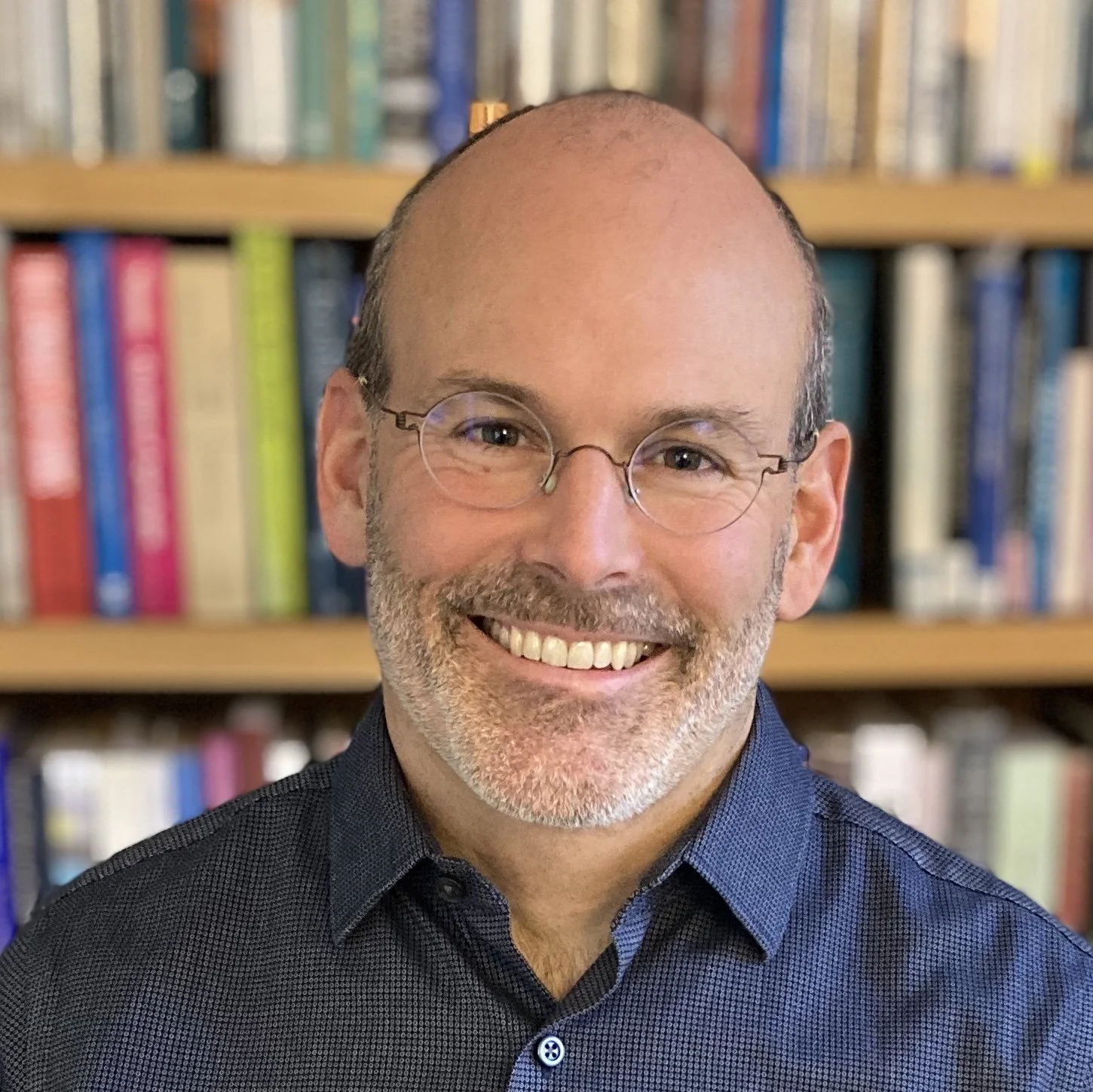
Rip welcomes Dr. Jud Brewer, an addiction psychiatrist, neuroscientist, professor at Brown University, and author of The Hunger Habit: Why We Eat When We’re Not Hungry and How to Stop.
Dr. Jud has spent decades studying addiction, anxiety, cravings, habit formation, and mindfulness. His work reveals something incredibly important for anyone who has ever struggled with overeating, late-night snacking, emotional eating, or shame around food: these patterns are not personal failures. They are learned habit loops in the brain.
Rip and Dr. Jud explore the difference between true physical hunger and what researchers call “hedonic hunger” — eating driven by emotions, stress, boredom, celebration, cravings, or cues in our environment. Dr. Jud explains why ultra-processed foods are engineered to hit the “bliss point” of sugar, fat, salt, crunch, and mouthfeel, making them especially hard to resist.
They also dig into why willpower is such a shaky strategy. Most diet programs rely on some version of “just don’t eat that,” but Dr. Jud explains why shame and restriction often backfire. Instead, he teaches a more effective path: awareness.
By paying close attention to how overeating actually feels — and how it feels when we stop at satisfied — the brain can begin to update the reward value of those habits. In other words, we can learn, through direct experience, that certain behaviors no longer serve us.
This episode is a compassionate, science-backed invitation to stop blaming yourself and start getting curious.
You’ll Learn:
Why cravings are not a character flaw
The difference between true hunger and hedonic hunger
How ultra-processed foods are engineered to keep us eating
Why willpower often fails
How shame becomes part of the habit loop
The role of awareness in changing behavior
How curiosity can interrupt cravings
Why self-kindness is more effective than self-judgment
How whole plant foods help reconnect us with true hunger and fullness
Why listening to the body is more powerful than influencer advice
Episode Resources
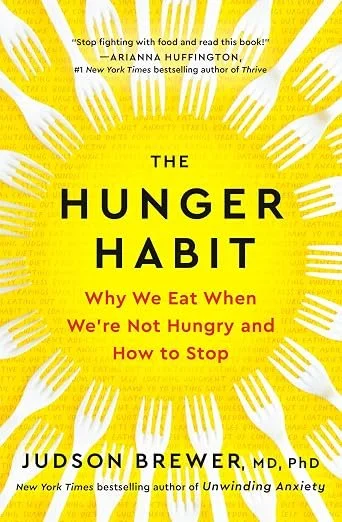
Order The Hunger Habit
Watch the episode on YouTube: https://youtu.be/75WLDduRd0o
Order The Hunger Habit: Why We Eat When We’re Not Hungry and How to Stop
Dr. Brewer’s Substack: https://judbrewer.substack.com/
Dr. Brewer’s Website: https://drjud.com/
We hope to see YOU at one of our 2026 Live Events! https://plantstrong.com/pages/events
To stock up on the best-tasting, most convenient, 100% PLANTSTRONG foods, check out all of our PLANTSTRONG products: https://plantstrong.com/ Use code: podcast to receive 10% off your first order.
Plant Strong Meal Planner: https://mealplanner.plantstrong.com/
Give us a like on the PLANTSTRONG Facebook Page and check out what being PLANTSTRONG is all about. We always keep it stocked full of new content and updates, tips for healthy living, and delicious recipes, and you can even catch me LIVE on there!
We’ve also got an Instagram! Check us out and share your favorite PLANTSTRONG products and why you love it! Don’t forget to tag us using #goplantstrong 🌱💪
Episode Transcript via AI Transcription Service
I'm Rip Esselstyn, and you're listening to the Plant Strong Podcast.
[0:05] Hey, hey, Plant Strong family. I hope that your summers are going swimmingly well. And as we head into the heart of July, you are doing your best to stay cool. Today, I am joined by Dr. Jud Brewer. He's an addiction psychiatrist, neuroscientist, Brown University professor, and author of multiple books, including Unwinding Anxiety, The Craving Mind, and The Hunger Habit. And truth be told, who amongst us hasn't given into food cravings and then polished off something that we didn't really want, and then we wondered, what in the world just happened? Well, Dr. Jud is here to tell us that this is not a character flaw, and it's also not a lack of discipline. It's something called brain wiring. In this conversation, we dive into cravings, emotional eating, why willpower so often fails, and how shame can become its own habit loop.
[1:13] But importantly, Dr. Jud gives us a way forward, One that's rooted in awareness, curiosity, self-kindness, and learning to reconnect with our true hunger signals. And here's what I appreciate. This approach, it dovetails beautifully with a whole food, plant-based lifestyle. When we eat real food, food that's as close to grown as possible, and actually pay attention to how it makes us feel, the body starts to become our greatest teacher. So buckle up. This one may change the way you think about cravings for a long, long time. Dr. Jud Brewer is coming up right after these words from PlantStrong.
[2:02] I'm going to share with you a fantastic summer refresher and it's also a great alternative to alcohol and it's a fun trick. This is what I want you to do. Freeze our Plant Strong Raspberry Hibiscus Tea, into ice cubes with fresh raspberries, mint leaves, or you can cut up a lime and use these lime wheels and you tuck these inside. Then once they're frozen you drop them into plain or flavored sparkling water, and you get a bright, beautiful drink that feels festive, it's cooling, and it's perfect for this hot summer. You can find our raspberry hibiscus tea and all of our other family-sized iced tea flavors at plantstrong.com, and be sure to use the code podcast to save 10% off your order. Also, as summer winds down, which I realize is a good another month and a half away, and we start thinking about fall routines, renewed focus, and getting back to what matters most, we want to invite you to something really special. It's our Vital Signs event. It's coming to Cleveland, Ohio, October 18th to the 20th.
[3:16] It's a first of its kind, Plant Strong Conference, created specifically for healthcare providers, or coaches, dietician, nurses, really anyone that's passionate about wanting to use food and lifestyle as a powerful tool for change. And this is where evidence meets practice. It's where real food meets real medicine, and where providers can reconnect with.
[3:44] With the reason that they got into this work in the first place, to help people heal. Vital Signs will feature leading voices in lifestyle medicine, practical tools that you can bring back to your patients and your clients, and meals that show exactly what this work looks like in real life. Healthcare providers may also be eligible for CME credits. Join us in Cleveland, Ohio this October for Vital Signs. You can learn more and register at plantstrongevents.com.
[4:22] Hey, Dr. Jud Brewer, I want to welcome you to the Plant Strong Podcast. It is a pleasure to have you. Thanks for having me. Yeah, listen, absolutely. And I can't even tell you how excited I am to dive into your expertise and your latest and greatest book, The Hunger Habit. You know why? Here it is, gang. Just let me show you right here on my phone. The hunger habit, why we eat when we're not hungry.
[4:53] I would say that's probably 90% of us and how to stop. I mean, Jud, if this is actually if we can do what you say we can do, I would think that this is a silver bullet to get America away from the obesity epidemic. So I can't wait to dive in. First, though, so you teach at Brown, is that correct? Yep. Wow. I mean, how much do you love Brown University? I love it very much. We are a fabulous community. The students are amazing. My lab, my postdocs are amazing. It's just a really beautiful, close-knit community. Yeah. I wonder, you know, I have a nephew that went to Brown, probably graduated seven, eight years ago. How long have you been there? About eight years, actually. Okay. Okay. Okay. His name was Gus, Gus Esselstyn. So probably didn't have him. And I have a daughter that's thinking about going to Brown. We'll see if she can get in. All right. Yeah. Fingers crossed. Exactly right. So, well, let's just bob and weave through through some questions related to your book and, you know, your practice and what you've discovered. Let's just start here. And then I want to learn a little bit more about you. But let's say that tonight at.
[6:19] 8.30 PM. I am like elbow deep in a bag of Doritos.
[6:25] Are you telling me that this is not a character flaw and this is pure and simple brain wiring and I should not feel shame, but it's due to science. Is that right? Yes. A hundred percent. It starts with the science of all the Doritos engineers. You know, my favorite peer review journal, The Onion. Right. Yes. Right. They had a headline that says Doritos celebrates its one millionth ingredient.
[6:51] So yeah, those things are perfectly engineered. The orange is on purpose. There's a reason that same orange is on Cheetos. You know, there's a reason there's this particular mouth crunch and feel. You know, if you look at Cheetos, for example, they have this, uh, basically this diminishing, you know, this, this evaporating caloric density thing where you put it in your mouth and it disappears. Your brain says, I didn't All these things are engineered to get us addicted. And I know you go into this in great detail, but is that what we call the bliss point effectively?
[7:28] Yeah, in a nutshell, and there's been really good research on this. I think Michael Moss wrote a book on this over 10 years ago now around, you know, how all these things are designed to be addicted. But the bliss point is really the sugar, fat, and salt sweet spot that kind of hits all three, just the right proportions to get us really, really addicted. That's why ice cream is so particularly addictive for a lot of people. Well, and the also thing about ice cream is, I mean, are you really masticating it or are you just kind of like, I mean, it's like you don't even have to work for it, right? Right, right. And true confession for me, I didn't even notice how I was jonesing for the next bite without even tasting the stuff that was in my mouth. I mean, what a waste if you're not going to even taste it. Yeah, yeah, yeah, for sure. Um, and then in the book, you also mentioned how, you know, and I had no idea it was this old that the whole, you know, I bet you can't just eat one. Uh, was that Lay's potato chip goes back to 1963. Yep. Same year that Weight Watchers was founded. Yeah. Yeah. I mean, how, wow. I mean, I'm, I'm amazed that, uh, like.
[8:46] Obesity or being heavy was even a thing back in 1963. I mean, it, it wasn't as much of a thing, but it was beginning, beginning to be much of a bigger thing. And it only has gotten worse since then. I mean, if you would have bet me, I would have bet you a thousand dollars that Weight Watchers didn't begin until like the eighties or nineties. I know, I know, I know. Would have lost that one big time.
Why Habits Beat Willpower
[9:13] All right. So you're an, addiction psychiatrist. You are a neuroscientist. How in the world did you become the kind of habit and cravings guy? Yeah, it was an accident on my part, for sure. I started meditating in medical school as a way to I'd deal with my own stress and anxiety, and it turns out when I decided to pick a specialty for residency in my career, psychiatry was so interesting because there were so many people that struggled with all types of addictions that really drew me in, and there were very little treatments for it. So it was a really good sweet spot in terms of becoming a researcher, but also a clinician.
[10:04] And the habit piece came from me really struggling to help my patients, you know, quit smoking, quit cocaine, death, all these other things. And I was really disenchanted with the current treatments that we had. Not many great medications. There are a couple that are useful, like buprenorphine is a really good one for opioid use disorder. And Verniclean has helped a lot of people with smoking. But the medications are not a silver bullet and a lot of people struggle with them. And then there are all these other addictions that really hadn't been touched. And that's where I started looking at the behavioral approaches to see where we were struggling and found that a lot of the stuff that I learned in my own meditation practice could be very applicable to addiction treatment. And nobody had actually looked at that at all. So even during my residency, I did my first, I couldn't wait to start doing research.
[10:58] I did my first study with just testing out like mindfulness approaches to helping people with alcohol and cocaine use disorder. And it worked really well. And then we did a randomized control trial with smoking cessation ready for this. We got five times the quit rates of gold standard treatment. Wow. Yeah. Yeah. And then we did the neurobiology and did the neuroimaging and all of this. And it turned out, so we were developing these programs for smoking and found that it was a really good way to approach habit change. And then we realized that we could actually apply this to eating because it was the same process. And so, you know, it's like one habit after another, you could apply the same neuroscientific principles and then develop, you know, really good clinical tools. And then of course we could test them as well. So, you know, in the lab, we'd look at the theory, I develop a program and implement it in the clinic and then do randomized controlled trial and test that back in my lab. And we could just do this iterative process. It's, it's been a fascinating 25 years. So tell me this between, so I know you specialized in anxiety, obviously addiction, smoking, you just mentioned, um, now, now food, would you say that.
[12:15] When it comes to addictions and whatever you want to call the, the hunger habit, if that's an addiction or, or a habit, But how would you rate our... Habits with eating compared to addictions to meth, cocaine, gambling, sex? Is it lower? Is it higher? Is it somewhere in the middle? I mean, just comparatively, I'd love to know what you think. Yeah, it depends on what consequences you're looking at, right? So for example, and we're seeing this growing more and more with gambling as gambling has become more and more legalized online in the US, especially young men, you, know, college age, whether it's sports betting, I would say sports betting is a big one, but even people day trading, you know, with these.
[13:10] Having access to the, to the stock market that can ruin somebody financially pretty quickly. So those addictions are pretty severe. Alcohol can ruin somebody's life pretty quickly and also can have that long burn where you're burning out your liver. Cigarettes are a much slower burn where a lot of people can be addicted to cigarettes for a number of decades before they develop emphysema or lung cancer or something like that. So it really depends on what the scope and scale and timeframe is that you're looking at. Eating is an interesting one because we don't have to gamble or smoke or drink alcohol to survive. Yet, obviously we have to eat to survive. And so it adds a layer of complexity, that is really challenging for a lot of people. So I would say from a complexity standpoint, it's one of the most challenging ones because of that fact. Yeah. And you've tackled it, haven't you? Well, we've certainly done a lot of research around it and developed some programs that it seemed to work pretty well.
What Is the Hunger Habit?
[14:18] We're going to, we're going to find out about that. So your title, the title of the book, The Hunger Habit, what exactly is a hunger habit? I don't really, I mean, I've read the book, I know, but like the listeners have no idea. Yeah. So the reason we came up with this title and kudos to my publisher, we waited, we debated the title for a long time, but the hunger habit really captures this. There is a term that had to be developed in the last several decades that wasn't even a term because it wasn't a thing. And it's called hedonic hunger. And I say it's not a thing because true hunger is homeostatic hunger. That's where we need calories. Our stomach says, put something in here and we eat. That's a survival strategy that's helped us you know, for every single organism, you know, get its ATP so that it can keep going. The hedonic hunger was developed by researchers when the phenomenon was started to be, you know, observed more and more and more, which is that people were eating not because they were hungry, but because of their emotions, hence the hedonic hunger piece. And that can actually form a habit. So if you think about homeostatic hunger.
[15:39] The physiologic healthful type, our brains are set up to learn to remember where food is, right? So before refrigerators were invented, when our ancient ancestors had to actually remember where food was, and it wasn't in our, you know, all we have to do now is remember where our refrigerator is, where the kitchen is. Yeah. There was this system called positive and negative reinforcement. And the way it works is that you find food. You eat the food and then your stomach sends this dopamine signal to your brain that says, remember where you found this, right? What you ate and where you found it. That's positive reinforcement. That's at its most basic sense or element, right? Eric Kandel got the Nobel Prize showing that this is evolutionarily conserved back to sea slugs. So very evolutionarily conserved process.
[16:26] The negative reinforcement side of things is the same thing where if you go out, you're foraging for food and you see, something that's going to eat you for lunch instead of you eating it for lunch, if you run away and survive, the reward there is that you can remember where the dangerous part of the savanna is. And that's called negative reinforcement. In modern day, the dangers of the world are very different. I mean, sure, there are still real dangers. If you step out into a busy street and you haven't remembered or learned to look both ways, you could get hit by a car. So the survival strategies are still in place. Yet on top of this, We have learned to eat not when we're hungry, but on top of this, when we're celebrating. So every time we eat dessert when we're not hungry, our brain learns, oh, eat some dessert because that feels good. We also learn to eat when we're stressed and stress eating or binge eating and things like this. And all of those form into this category of hedonic hunger where we're eating, related to our emotions. We're basically eating our emotions rather than eating because we're hungry. And so that whole term hedonic hunger wraps up into the title of the book, which is, you know, the hunger habit where we form these habits around eating
Hunger Versus Cravings
[17:40] that have nothing to do with actual need for caloric intake. Yeah. So tell me this. Um.
[17:47] And thank you for that explanation. What's the difference between, because these are some terms you talk about in the book, what's the difference between true physical hunger and conditioned cravings?
[18:02] There is some overlap in the felt experience, but the true physical or physiologic hunger comes from a caloric deficit where all of our homeostatic mechanisms, this is why it's called homeostatic hunger, is that our homeostasis just means you're at balance, right? Your energy is balanced. Everything is balanced. When you go out of balance, our bodies and our minds are exquisitely tuned to sense when we're out of balance. And when we're out of balance, those sensors kick in and say, hey, get back in balance. So if we don't have the calories that we need, We go out of homeostasis. Our stomach says, hey, I'm hungry. So we have this feeling, this urge to eat some food. And there are certain signals that come with that. Right. Our stomach growls. We can feel irritated. We can feel tired. We can be you know, there can be all of these things that are associated with homeostatic or physiologic hunger.
[19:01] So that can lead to a true physical and physiologically based craving different from this. But having overlap in that Venn diagram is hedonic hunger, where we can be frustrated, irritated, distracted, bored and all of these other things that can cause a craving to eat. And then we eat, you know, we eat something based on that. So there can be there can be overlap in how they feel. And in fact, a lot of people, I ran a clinic for a long time that worked with people with binge eating disorder in particular. And a lot of my patients could not distinguish between the homeostatic and the hedonic hunger. One of my patients put it this way. She said, well, I have a craving and I eat. You know, when I asked her about how she knew when she was hungry, she didn't know when she was hungry. She couldn't tell when she was hungry. She had to relearn that. Yeah. And, uh, and that's something that you teach. Yeah. Yeah. And a critical skill for anybody to learn. Well, so unlearned it. Yeah. So do you feel like.
[20:09] I mean, given your research and what you've discovered, what percent of this country do you feel has lost touch with what, you know, true hunger signals? That's a great question. I don't have an accurate answer, but I could give you some baseless speculation, a BS answer. That's what I would like. Basic speculation, BS. That's beautiful. Yeah, here's my baseless speculation. I would say it's probably between 10 and 20% of people, just based on the patients that I see in my clinic, and the number of people that are just mindlessly eating. It could be higher than that. It could be lower, but I would guess, if anything, I'm giving a conservative estimate. Yeah.
Jack’s Corn Nut Trap
[20:56] You dedicate this book to Jackie and Rob and all those who have fraught relationships with food, which it's a lot of us. It's a lot of us. And you have some great stories in there. you have the story of Jack and, his addiction to corn nuts and pasta and bagels. Do you want to talk about that for a second? Then maybe Rob? I just think that those stories really illustrate the problem that many of us have. Yeah. Well, first I want to give props to all the people that offered to let me share their stories with the readers because it's really these stories that highlight how we struggle and also how we can overcome our struggles. So I just want to thank Jackie and Rob and Jack and all the others in the book for being very generous with allowing me to use their stories. And in fact, they were so generous that they let me use their real names. These are the real names of the real people who've struggled.
[22:05] Uh, Jack in particular was an interesting patient in my clinic, uh, who basically, you know, was referred to me because he really struggled. The first thing we talked about was these corn nuts, you know, and for those that haven't eaten corn nuts, there are these things you can generally find at truck stops that have a shelf life of probably a thousand years. Uh, and there, you know, again, talk about bliss point where they've got the crunch, You know, it's basically, I think this is based on a South American, dish where, you know, you basically deep fry, you know, a corn or maize where it's got this crunch. It's got tons of salt. If you've eaten corn nuts, they're extremely salty, right? And they just, you know, want to keep going in one after another. And that's basically what happened to Jack was that he, you know, he couldn't just eat a few. He would have to eat like the whole bag basically. And so that's what he came to me, you know, with his struggle with, but then, you know, we started pulling on that thread and he talked about, I think he's, um, has Italian heritage. And so, you know, there was a strong pull of pasta for him and then there were bagels and then there's everything else where he basically hadn't realized how much he was eating his emotions.
[23:26] Why do you say eating his emotions as opposed to something else? Like, just, just, just like, I mean, I mean, I have, I've been there where, you know, I'll, I'll be coming back from some practice. I'll go by the bagel shop. They're warm bagels. And before I know it, I will have eaten 10 on the way home. 10. Yeah. I mean, and it's, I don't think it's emotions. I'm just like, this is good. Yeah. Yeah. Well, you're highlighting a couple of things and I don't remember bagels have, they're amazing at their caloric density, right? I don't know what, how many calories a bagel has, 350 probably. I just down 3,500. Yeah. Right. Right. So you're highlighting something really important, which is if something is, is pulling to us, it's like that siren call, you know, where it's like, Oh, this smells good. I love a fresh bag. Who doesn't love a fresh, a really good fresh bagel, right? Really hard to resist something like that. So especially when we're starving, like if you've had a really hard workout, and you're starving, if you can get them in fast enough...
[24:41] They don't hit, like that caloric gut bomb doesn't hit for a little while, which is why if you look at all the hot dog eating contests and all the other food contests, it's about getting the food down as fast as you can before you hit, your body's like, nope, nope, no more. Yeah. Yeah. We need to have an interview with Joey Chestnut. He's the master.
Why Willpower Fails
[25:05] Yeah. Yeah. Well, let's, you know, you talk a lot in the book and you have a whole section on willpower and why willpower fails. So why does willpower, would you say, almost always lose against cravings? There are a number of reasons, and I'm glad you bring this up because this is really important. So willpower has been debated for hundreds, if not thousands of years in terms of how strong of an effect it actually is. And some philosophers would argue that there's no such thing as willpower. It's more a myth that we tell ourselves. So you could look at it on that end of the spectrum of like, it's just a myth.
[25:46] On the other end of the spectrum, you could think of it as a resource that gets depleted.
[25:52] When you look at the neuroscience, there's actually no good evidence that willpower actually exists. So it may be more what the philosophers have been talking about in terms of a story or an illusion that we tell ourselves that kind of fits with how we live our lives. And we can tell ourselves that we have more control than we actually do, because it's probably very scary the amount of control that we actually have. But let's say that's a resource that can be depleted. So that means it sets us up to blame ourselves for something that we probably don't have very much of in the first place. And so if you look at every single diet program that I can think of, and there are tons of them out there, every single one is based on willpower. Just eat this and not this, right? Just count your calories and do this. And you can see the various iterations of this over the decades, whether it's calorie counting or points or whatever, it's all the same thing veiled, with different language, which is, hey, just don't do the bad thing and do the good thing. So when we fail at that, which inevitably happens because at best, it's a resource that gets depleted, but probably more accurately, it's not anything that's real. And it's something that we ascribe to working when we think we have it and not working when we think we don't.
[27:20] The key thing here is that it sets people up for shame spirals where they think there's something wrong with them or they don't have what other people have and can make things worse for most people who are struggling one way or the other. So I want to highlight that because it's really not a failure of people's genes, or just not being lucky enough to have been trained in self-control or whatever. And there are even these experiments that go back to the 70s. There was this famous Walter Mischel study about the marshmallow experiment where they would give these kids a marshmallow and say, if you wait to eat it for five minutes, we'll give you two marshmallows.
[27:59] It turns out that this was done on a bunch of Stanford faculty members' kids. And so they did this famous study where they're like, oh, we could predict all these outcomes 18 years later. Well, guess what? But if you're a Stanford faculty member's kid, you're going to do pretty well. So these studies actually couldn't be replicated. There's a great episode from the podcast, Your Hidden Brain, I think, Shankar Vedanta, where he interviewed somebody who went back and actually studied this and looked at all the sociodemographic variables that actually contributes to this. So another myth for willpower. So long story short, more myth than muscle and a way that we beat ourselves up, which makes things worse for people who are struggling. So that's really important for people to know that they shouldn't be putting all their energy into trying to develop more willpower. But I would suggest put your energy into learning how their brain works, because guess what? That's a winning strategy. Yes, yes, yes, yes. So interesting to hear you say all that, that diets don't work, measuring doesn't work, all that stuff doesn't work.
[29:12] And let's understand exactly how the brain works. Um, so, I mean, with that being said, um, how do we work? How do we work with our brain? Like what's, what's, uh, what's the key here? Yeah. And just as a, you know, for all the diehard measurement fans out there, this isn't to say that measurement never works for anybody, right? So for some people just kind of having a sense for how many calories they're putting in can give them, if that compared to not having any clue, can give them a ballpark of like, oh, I just ate 10 bagels, which is 3,500 calories, for example. Right. So that type of general metric can be helpful for some people.
[29:58] The key really is to understand how to play that off of how our brain actually works. So whether somebody likes to measure or hates measuring, they can actually use a strategy that works. And this is all the research that we've done over the last decade, which really highlights the process in our brain. Actually, we've already talked about it, which is reinforcement learning, right? So we've talked about positive and negative reinforcement about how we learn to form habits. And that's actually how every single habit that we have is formed is through positive and negative reinforcement. So if we have formed the habit of eating when we're not hungry, we can leverage that same process to actually break the cycle. And it's simple and surprising. I wouldn't say it's easy for people, but it is surprisingly simple. It doesn't take some big thick book of formulae that you need to memorize.
[30:53] It's dependent on one thing, which is awareness. Okay. Which might seem counterintuitive. Like what does paying attention have to do with helping us break any type of habit?
Awareness Changes Reward
[31:04] So go ahead. Well, what I love about that is it, it goes back to, I think why what you've created here is so unique. And maybe you're one of the first is because you said it traces back to you, your meditation, right. And how you were able to utilize that. And I think, I mean, I personally think being present and being aware of, of, of, you know, your, your decisions and what you're doing is absolutely crucial. Right. But so how, how do we, how do we put ourselves, our brain into that, that place where we are aware?
[31:46] Well, let's talk about why it's important first, because this can actually motivate people to want to do it in the first place. Good, good. So the way that the math behind how habits form is also relatively simple. And two researchers by the last names of Riscorla and Wagner really simplified this equation back in the 70s. And we even still use their versions of their equation now in our lab. And the idea is that we when we do a behavior, our brain is going to categorize it in terms of how rewarding it is at that time. OK, so let's say that we as we're growing up, we learn to associate eating ice cream and cake with birthday parties. You know, so for a lot of kids who've had the privilege of growing up and going to birthday parties that were fun, they've learned to associate eating ice cream and cake with celebrations, for example. OK, so we I think of this as you set a reward value for ice cream and cake and then you forget about the details. Once it becomes a habit, our brain doesn't have to relearn how good ice cream tastes. We kind of already know we see ice cream. We're like, oh, yeah, that's good stuff. I'm going to eat it again.
[32:59] Now, the only way to change that reward value, and it depends on context, too, right? It doesn't mean that we we can suddenly stop liking ice cream, but we can look at ice cream in terms of like, are we actually hungry? Or are we overindulging, for example? And we can talk about the, what I talk about in the book is the pleasure plateau later. But the basic principle is that if we pay attention when we're, and we eat something when we're not hungry, okay, we're going to get what's called a negative prediction error, where our brain says, if we really pay attention, our brain says, whoa, you just put that thing in there that didn't need to go there. There wasn't space for it. And anybody that's overeaten at a holiday meal or a party, they know what this feels like if they think back to it. It's like, oh, the gut bomb, right? It doesn't feel good. We have to associate that gut bomb with the behavior or we won't learn to change. And so this is where awareness comes in. We have to pay attention as we do the thing. I'll give an example of a study. We published a couple of studies on this a couple of years ago where we had people pay attention as they overate.
[34:09] And it only took five to 15 times of overeating for that reward value to drop below zero. Now, when that reward value drops below zero, we reset that value on that behavior. Again, it's not that ice cream is going to taste bad, but it's going to be much easier to see that overeating ice cream doesn't feel good. And so our brain learns, oh, this isn't such a rewarding thing. And it's much easier to not do it. Notice how that has nothing to do with willpower right, right right so that's key and so you then take away the shame yes right in all of that yeah so the other side of the equation is called the positive prediction error and we can do the same thing with just not overindulging, so well you tell me not to quiz you on this but what's it feel like when you've eaten just the right amount of food as compared to overindulged? Does it, how's it feel?
[35:09] Feels great. I mean, I feel in a good place. I don't have brain fog. I don't want to take a nap. Yeah, you're just like ready to go. All the good stuff. That's called a positive prediction error, meaning if we've habitually overeaten and we don't overeat, right, it feels good and our brain registers that. So we get a positive reward for not overeating and we get a negative reward for overeating. And both of those require the same thing, which is awareness. If we pay attention, and we overeat, we get a negative prediction error, which gets us resetting that, like overeating doesn't feel good. If we don't overeat, that actually feels good. And in Japan, there's actually a term called harahachibu. Have you heard this? Yeah. 80%. Yep. Yep. So we can even find the sweet spot, which might for some people be even, you know, you're talking about like, we keep our energy levels optimal. We don't need a nap afterwards. Right. So when we don't, when we even, you know, are finding that sweet spot where we're not overindulging, there might even be even more reward there, which is why they have a whole term for it.
[36:22] And in the book, you have got different worksheets that I think allow people to, like, as I'm listening to you talk right now, and if I didn't know it, I'd be like, okay, that sounds great, but how am I supposed to actually –.
[36:41] How am I supposed to –, like activate this. Right. And so you have worksheets, if I'm not mistaken, and you, you kind of fill those out based upon different things that I think allow you to, enhance your awareness with the, um, the, at this exercise. Yes. Yeah. Yeah. And in fact, the, uh, the primary, the application part of the book is set around a joke, which, which is it's set up as a 21 day program, But the joke is that there's this book from the 1960s, literally entitled Psycho-Cybernetics, that was written by a plastic surgeon who offhandedly talked about how it took about three weeks for his patients to get used to their new nose jobs. And that became this internet myth that it takes about three weeks to change a habit. But just having some fun with this, I loosely structured the chapters into 21 bite-sized pieces.
[37:45] Of how we can actually put this into practice through these daily or more of a structured program.
Measuring Mindfulness
[37:54] It's not like somebody can nail the program in 21 days, but it's structured that way as a joke. Yeah. Well, so I want to come back to the 21-day program in a sec. You teach a course at Brown called Measuring Mindfulness. Is that right? Yes. I mean, I would imagine that's a very well-attended course. I mean, I would want to take that because it seems like in this day and age, people are measuring everything. And are you trying to tell people in this course how not to measure stuff and how we're better off if we're not doing that? Like I, just to give you an example, I don't measure anything. I mean, I don't even measure my sleep. I don't have a Oura ring. I don't have an Apple watch. You know, I've never tracked, measured anything with food. I like just to keep it simple. Yeah. I love that. Well, the, and so I think keeping it simple is probably the best way to go with one critical condition, which is that we've got to be in tune with our body. Yeah. And my guess is that you are. I'd like to think that I am, unless I'm, you know, coming back from swim practice and I down 10 bagels with the occasional. Yeah. Yeah.
[39:14] The other thing that I found very adorable in the book was when I think it might've been Valentine's day or it was Christmas and you were with your wife and like, she had to like, share something with you and you're like, oh my God, what has she been cheating on me? What's going on? And she said, I've been tracking. Yeah. Yeah. She's got this love hate relationship with tracking for years that goes back to college and societal expectations for women, you know, in particular in the U S it's in the Western world. There's really a very strong societal standard that gets ingrained early on and it's really tragic for a lot of people.
[39:52] So the measuring mindfulness class is really, you know, it highlights a couple of things. One is how hard it is to actually measure something that's ineffable because mindfulness is really about paying attention and being in touch with our felt experience and, and even being in touch with seeing our thoughts and et cetera. And so the whole class goes through a survey of all the different ways that we can bring together different facets to measure mindfulness because it's really tricky. So I think of it as the, you know, there's this analogy of the blind and the elephant where, you know, there are a bunch of blind people trying to describe what an elephant is to each other. And one grabs a tail, one grabs a trunk, one grabs a leg, and they all describe different parts.
[40:38] And all of those are true. And without the composite, you don't know what the whole picture is. And I think that's what it's like for a lot of these things, especially around mindfulness, which is this quality of awareness that is extremely hard to measure because anytime you add something by trying to describe it, you're actually taking away from what it is. So that whole semester long course is based on using mindfulness as a metaphor for teaching all these different methods for measuring things, whether it's neuroscience or social science. And it's really fun to really help people feel into the experience of awareness, you know, through all these different facets. And it highlights something really critical, which it sounds like you've already tapped into yourself, which is self-awareness is critical, right? This interoceptive awareness is especially critical. Interoceptive just being.
[41:35] Really in touch with our felt experience, which going back to eating is really important. If we don't know what hunger is, how can we start? Yeah, I love that word. Interceptive. Hmm. That's good. Um.
Breaking Shame Spirals
[41:50] So is there anything I want to move into, unless you want to say something else around the 21 day challenge, I'd love to move into the way you reframe shame with kind of self judgment and how people can use that as fuel for this habit loop, I think, which is genius. It's pure genius. Well, it's a very important thing for people to pay attention to. So often shame and eating get wrapped together, right? So if somebody feels ashamed about something and they've learned to hedonically eat, you know, shame can lead to eating, which makes them temporarily feel better. One of my patients put it this way. She said, I numb myself. This is somebody who would binge eat on entire large pizzas in single settings. So the shame can lead to eating, which can then lead to more shame. So for her, she would have an echo habit loop of shame would lead to eating, which would lead to more shame, and then it would kind of spiral that way. So just recognizing that shame spirals can be habits is really empowering for people. If it's a habit, if we've learned it, we can unlearn it.
[43:06] So that's the first piece. But then we can learn to be empowered around shame where we bring in the book I talk about finding these bigger, better offers. So if shame doesn't feel good and we realize that shame doesn't get us anywhere and just makes us feel bad, we can get that negative prediction error when we pay attention and ask, what do I get from shame? Which is like more shame and guilt and more stress and anxiety. So we become less excited to perpetuate those shame spirals and that frees up the space to bring in something better, which is self-kindness or self-compassion. And when we just compare being kind to ourselves to shame, it's a no-brainer. It just feels so much better. And even if it's simply stepping out of a shame spiral and reminding ourselves, you know, some of the phrases that my patients use are like, this is hard or doing the best I can. Even that is not it's not a platitude it's not some you know aspirational you know um or you know thing where they're just trying to tell themselves into a better mood you know the the that type of thing, the aspirations haven't been shown to have good you know.
[44:20] Let's just say they're not reproducible and also it can get us in cycles of like i need to say four positive things to myself to feel better, you know, they get in these, these, these expectation habit loops. So here, just feeling into the not beating ourselves up feels better than beating ourselves up, just like feeling into not overeating feels better than overeating. Does that make sense? Yeah, completely. Um.
Retraining Healthy Cravings
[44:49] So I don't think anybody comes out of the womb liking the taste of alcohol, liking the taste of, you know, smoking cigarettes, any of that stuff, right? And so my question to you is, can I believe that we can kind of retrain ourselves to crave healthier foods? Would you say that's accurate?
[45:18] Yeah. And that actually, it comes from the same thing, which is paying attention. So I found this for myself.
[45:26] I used the example of gummy worms in the book where I used to be addicted to gummy worms. And then I started paying attention and realized that they really, to me, it was like kind of this petroleum product. That was the best way I could describe it was like, it's sickly sweet. It like never left me satisfied. And then I started comparing it to eating blueberries.
[45:47] And for me, blueberries are the bomb, right? So, well, I could go on and I could wax poetic about blueberries, but on top of this, especially if they're the hard big ones. Yes. Yeah. Well, blueberries also provide a level of intermittent reinforcement where, you know, some are sweeter, some are slightly tangier, some have, they'll pop in your mouth, some are softer. Yeah and so not every blueberry is exactly uniformly the same and so if we really pay attention as we as we eat blueberries like we might get like oh there's this there's this pop of like a little bit of sourness which is for me i love that, but there might be one that's really sweet and there might be one that there's this and that but overall blueberries taste really good, they and to me i get this great energy from them but i also don't feel like i have to keep eating them until they're all gone because they fill my stomach with the fiber that says, okay, you've had enough. And so we get these natural signals, these natural feedback signals that tell us when we've had enough, which is very different than gummy worms, which would say, eat me until the whole bag is gone.
[47:00] Well, so you make a really, I think, interesting point there. You know, this is the Plant Strong podcast, right? And so most of the audience here is very interested in a more whole food, plant-based type of lifestyle. And so we, you know, I recommend that people move towards more of a whole food, plant-based eating style that is eating food as close to grown as possible, minimally processed, that is high in water, high in fiber, all those things that, you know, kind of signal in our stomachs, you know, I'm full. I've got the water, I've got the vitamins, minerals, the phytonutrients,
Trust Your Body’s Signals
[47:44] all these things. I've got the fiber. And I'm just wondering, in your opinion, do you recommend to people eat a certain way? Well, I'll say from my own experience, ever since college, I've been largely, in a plant-based diet and for a long time was fully vegan. But from my own experience...
[48:14] It feels so much better to have, you know, it's like, I, I've always been trying to kind of optimize energy levels for sports and just for having energy, you know, that's sustained throughout the day. And, you know, just comparing eating meat, for example, to eating a whole food plant based diet, you know, it's just really hard to, it's pretty, I should say, it's pretty easy to see the difference where, so, you know, sure I would, for my patients, do I recommend primarily plant-based diet? Yes. If you look at the science more and more and more and more, it's saying that's what people should primarily eat.
[48:55] I would say everybody's individual. And so it's not that, you know, this goes, it's very important not to have a rules-based diet where it's like, I have to do this or that. I think what we can do is listen to our bodies and, you know, put stuff in and pay attention and see what we get from it, which will naturally incline us toward the things that are best for us. And so for, you know, countless patients and for myself, you know, primarily whole food plant-based diet is it's like, so I just love doing it. Well, especially if you're implementing it correctly. And what I find is to be a shame is how many people are confused and they don't know who to believe or who to listen to. The bro science, the influencer science, they don't know what the- The influencer and science should not be used in the same science. Well, it is a bit of an oxymoron. Agree. But people like you wouldn't believe the, oh, I just saw this doctor talking about how, you know, fruits are bad. I just saw this doctor. I mean, it's like people are so confused, right? Oh, bananas have mold in them. So, yeah. So let me just, what have you found in your practice? What doesn't ultimately happen?
[50:18] Peaceful relationship with food look like? I would say the one thing I would say is listen, listen to our bodies and not to the influencers. Yeah. Because our bodies are going to tell us everything that we need to know. And it can take a little while to dial that up so that we're really good at paying attention carefully. Because sometimes like I've even had, I remember somebody telling me how it, she realized that when she would have some type of a milk product, It was like three days later, but she could reproduce this. It was three days later that she had some effect of it. And she's like, oh, wow, that's, you know, there's a really delayed effect, but it was real because she could reproduce it. And then she just cut milk products out of her diet. So for everybody, it's really important to pay careful attention so they can really get that clear cause and effect relationship. And I would say if somebody wants to keep it simple and start somewhere. Yeah. I would say, you know, my opinion, and this is just based on my own experience is you, it's, there's nothing that's been shown to be wrong with having a primarily plant-based, mentally processed diet, like full stop. And our buddies, our bodies are going to tell us that it just like, when you eat a good meal, that's just been like freshly prepared. It is hard to beat that. Yeah.
How Long Change Takes
[51:37] What have you found, like typically how long does it take for people before they start experiencing a shift utilizing the tools in your book?
[51:49] It can take up to a month, right? So this isn't something that's going to be, instantaneously. But I would say for significant shifts to happen, you know, it can take a month or two. And we see this even in our studies. I mentioned, you know, five to 15 times of really paying attention when we overeat. And that's with the low-hanging fruit, so to speak, where overeating, for example, is relatively straightforward to see how that doesn't help us and that we get that negative reinforcement pretty quickly with that. But with the more subtle things like you and I've just been talking about around, for example, for me, it took a long time to cut dairy out of my diet, but I was getting Achilles tendonitis. And, you know, when I finally cut that out, like I, it went away and it never came back. And so there can be subtle things that can take much longer to associate
[52:41] once we've really dialed everything else in. Yeah. Bravo. Um, Dr. Jud Brewer, tell me if people want to follow you, know more about you, where can they go? How can that, how can they do that? I've got a website, just drjud.com, D-R-J-U-D. And I also write a weekly Substack newsletter called Inside the Curious Mind. So they can just find me on judbrewer.substack.com.
[53:09] We'll be sure to put all that in the show notes.
[53:13] The Hunger Habit. Good stuff. So Dr. Jud, appreciate you being on the Plant Strong podcast. You make it a great day. And can you give me a Plant Strong fist bump on the way out? Boom. I love it. Thank you, Jud. Thank you. All right.
[53:33] Dr. Jud Brewer reminds us that cravings are not a character flaw. They are learned habit loops. And with awareness, curiosity, and self-kindness, we can begin to unlearn them. This week, I want you to pay attention to how food makes you feel. Notice what gives you energy, what leaves you foggy, and what helps you feel truly, truly satisfied. No shame, no judgment, just curiosity. That's how we begin to rewire the hunger habit. One plan, strong choice at a time. The hunger habit and all of Jud's books are available now. And I'll be sure to link to his site in the show notes today to make it super easy for you. Every bite is another opportunity to come home to yourself. And every bite is also a chance to always always keep it playing strong see you next week.